-
-
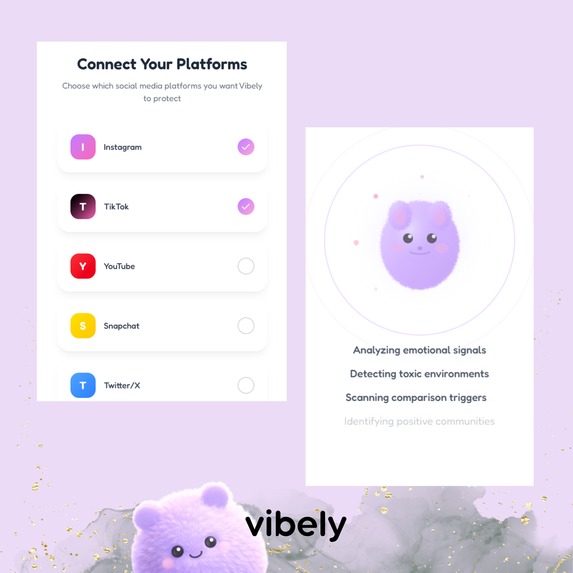
Vibely connects to your social apps and quietly reads the emotional atmosphere of your feed before you even notice it.
-
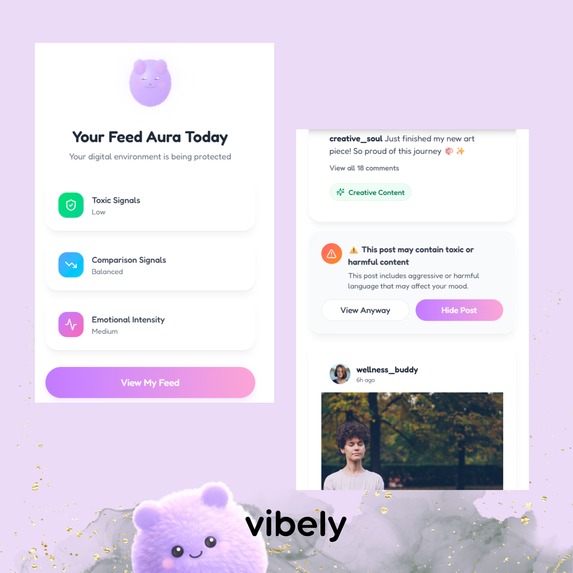
Your feed now has an aura. Vibely detects toxic signals, comparison triggers, and emotional intensity in real time.
-
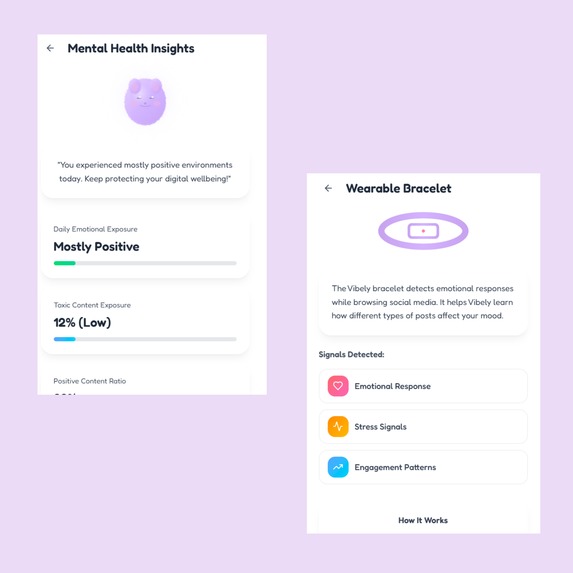
The Vibely bracelet learns how different content affects you and helps personalize your digital emotional shield.


Inspiration
Smartphones and social media have quietly become part of almost every moment of our day.
For me, it often starts the same way. I wake up, pick up my phone, and open Instagram with a completely neutral mood. Within seconds, I see an influencer posting a “#wokeuplikethis” photo in a perfectly styled room. It looks effortless and natural, but deep down we know it’s staged, edited, or even shot in a rented space.
Still, our brain reacts before logic does.
Suddenly, you start comparing your life to someone else's highlight reel.
Later during breakfast you open YouTube and watch someone's “perfect morning routine.” Again, everything looks ideal , the productivity, aesthetics, discipline and you start questioning your own day before it has even begun.
As the day goes on, the exposure continues. You scroll through comments full of aggression, negativity, or people putting others down. Eventually you feel less confident about posting anything yourself.
Social media has become one of the biggest parts of our lives, and it can be an amazing place for creativity, humor, and community. But it can also expose us to emotional environments we aren't prepared to sense.
That realization sparked the idea behind Vibely.
What if we could actually sense the emotional atmosphere of social media before it starts affecting us?
What it does
Vibely acts like a digital sixth sense for social media.
Instead of only showing content, Vibely analyzes the emotional signals behind posts, comments, and communities.
It helps users detect things like:
- Toxic comment environments
- Comparison-triggering posts
- Emotionally draining content
- Positive and supportive communities
The system then visualizes these signals so users understand the emotional atmosphere of their feed.
If harmful content appears, Vibely gently warns the user and provides options such as filtering the post or viewing it anyway.
To make the system even more personalized, Vibely also integrates with an optional wearable bracelet that learns how different types of content emotionally affect the user over time.
How we built it
Vibely was designed as a speculative product experience using Figma.
We focused on building an intuitive interface that could visualize invisible emotional signals in a way that feels natural and easy to understand.
Key parts of the system include:
- A feed analysis system that detects emotional signals
- A "Feed Aura" interface that visualizes the emotional atmosphere
- Content warnings that allow users to decide whether to engage
- A wearable concept that learns behavioral patterns
- Mental health insights that help users understand their digital habits
The prototype demonstrates how Vibely could integrate directly into everyday social media usage.
Challenges we ran into
One of the biggest challenges was designing for something that people cannot normally see.
Emotional environments are invisible, so translating them into clear visual signals without overwhelming the user required a lot of iteration.
Another challenge was balancing protection and freedom. We didn’t want Vibely to feel like censorship or restriction. Instead, the goal was to provide awareness while still letting users make their own decisions.
Finding the right tone for the interface was also important and it needed to feel supportive and calm rather than judgmental.
Accomplishments that we're proud of
One of the things we're most proud of is turning a complex psychological idea into a clear product experience.
We were able to design a system that:
- Makes invisible emotional signals visible
- Encourages healthier digital habits
- Still allows users to enjoy the positive side of social media
The addition of the wearable concept also helped extend Vibely beyond a simple app and into a larger ecosystem focused on digital wellbeing.
What we learned
Working on Vibely helped us think about social media from a completely different perspective.
Instead of designing another product that competes for attention, we explored how design can help protect attention and emotional wellbeing.
We also learned how powerful emotional signals are in shaping people's online experiences , even when those signals are subtle or unconscious.
What's next for Vibely
In the future, Vibely could evolve into a more advanced digital wellbeing system.
Possible next steps include:
- Training AI models to better detect emotional signals in online communities
- Expanding wearable sensing capabilities
- Allowing users to customize how their feeds are filtered
- Creating tools for healthier digital habits and reflection
Ultimately, Vibely aims to help people navigate social media with more awareness and control.
Because maybe the internet doesn’t need to completely change.
Maybe we just need better ways to sense it.
Built With
- design
- figmamake
- prototyping
- ui


Log in or sign up for Devpost to join the conversation.