-
-
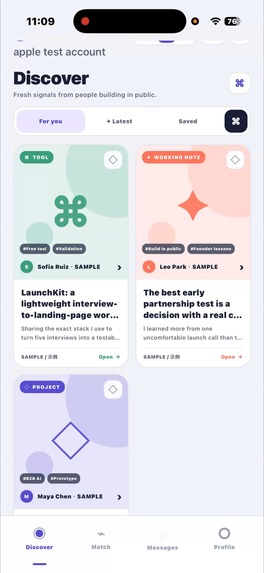
Discover Projects and Ideas
-
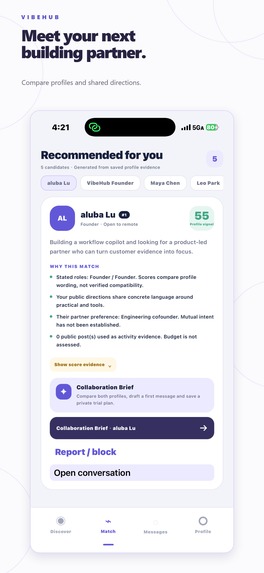
Find Complementary Cofounders
-
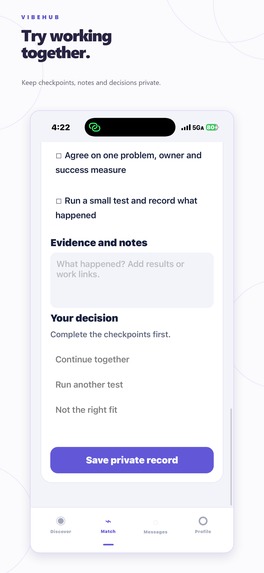
Private Collaboration Trial
-

App icon

Inspiration
After leaving my job at a mining company, I felt uncertain about what came next. I knew I wanted to build a business in AI, but entering the field showed me how little industry experience I had. I explored AI programming and large language models, then started recruiting teammates through Xiaohongshu.
I met people with similar ambitions: they wanted to create something of their own, but changing industries meant starting without much experience or a professional network. AI made it easier to build a product. It did not automatically give us industry knowledge, customers, or people we could work with.
After forming a team with three other people, I faced a different set of problems. Promotion was difficult to scale, online communication and collaboration were slow, and our attention increasingly went in different directions.
Those experiences shaped VibeHub. I want to help aspiring founders exchange ideas, learn from different industry experiences, find people with complementary skills, and explore working together before making a bigger commitment.
What it does
VibeHub connects discovery with a practical next step:
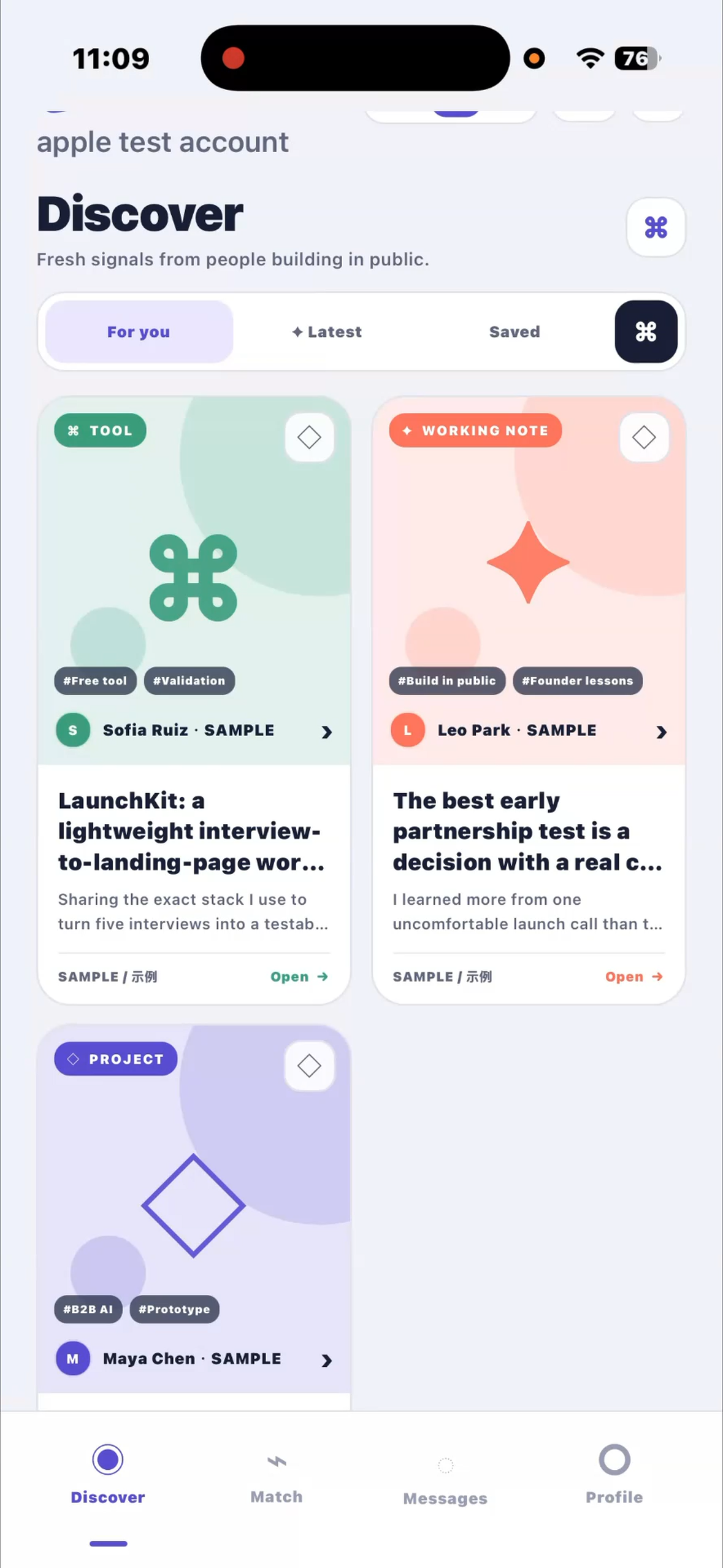
- Discover what people are building. Create a founder profile and share projects, working notes, or useful tools.
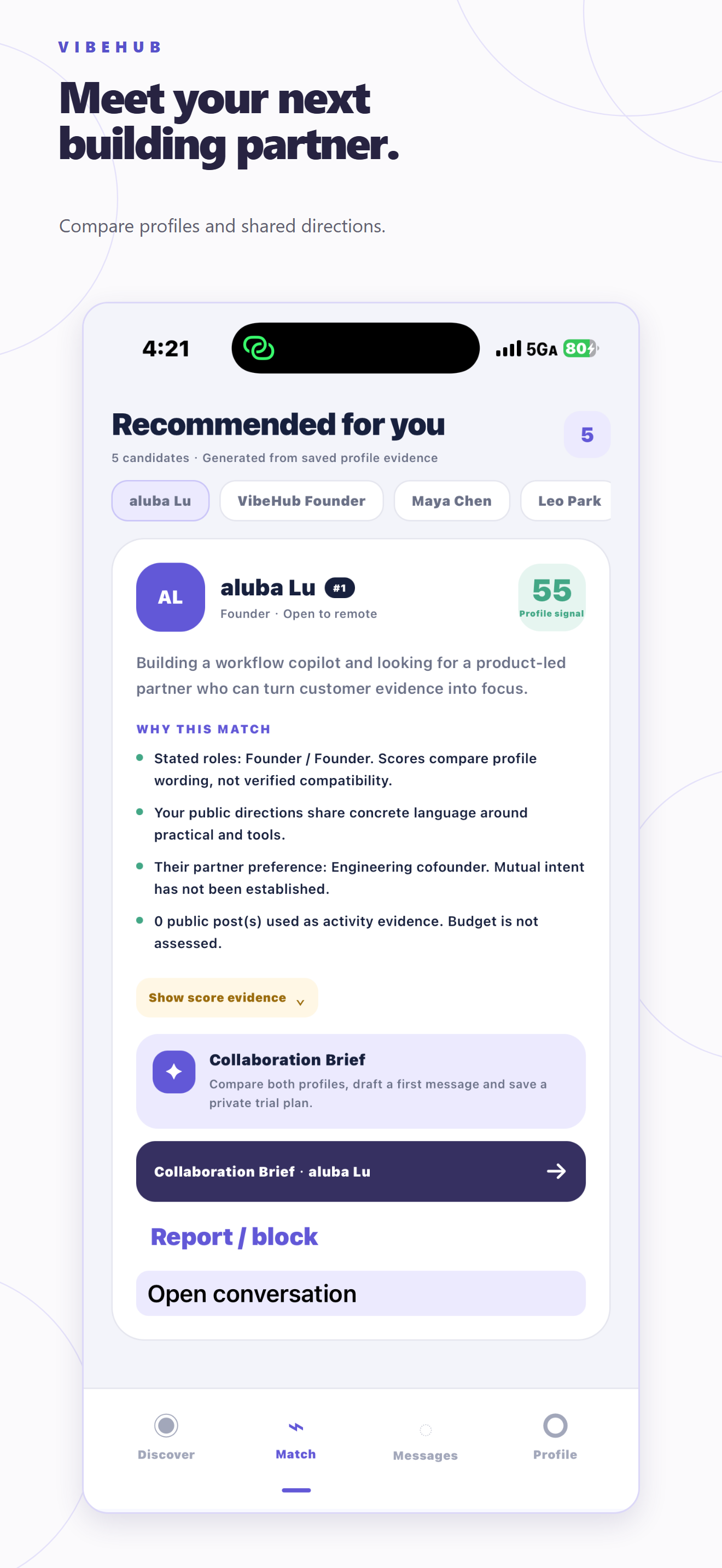
- Explore potential collaborators. Find recommendations based on profile information and approved public activity, and inspect the signals behind each match.
- Start a conversation. Message other founders and control new conversation requests.
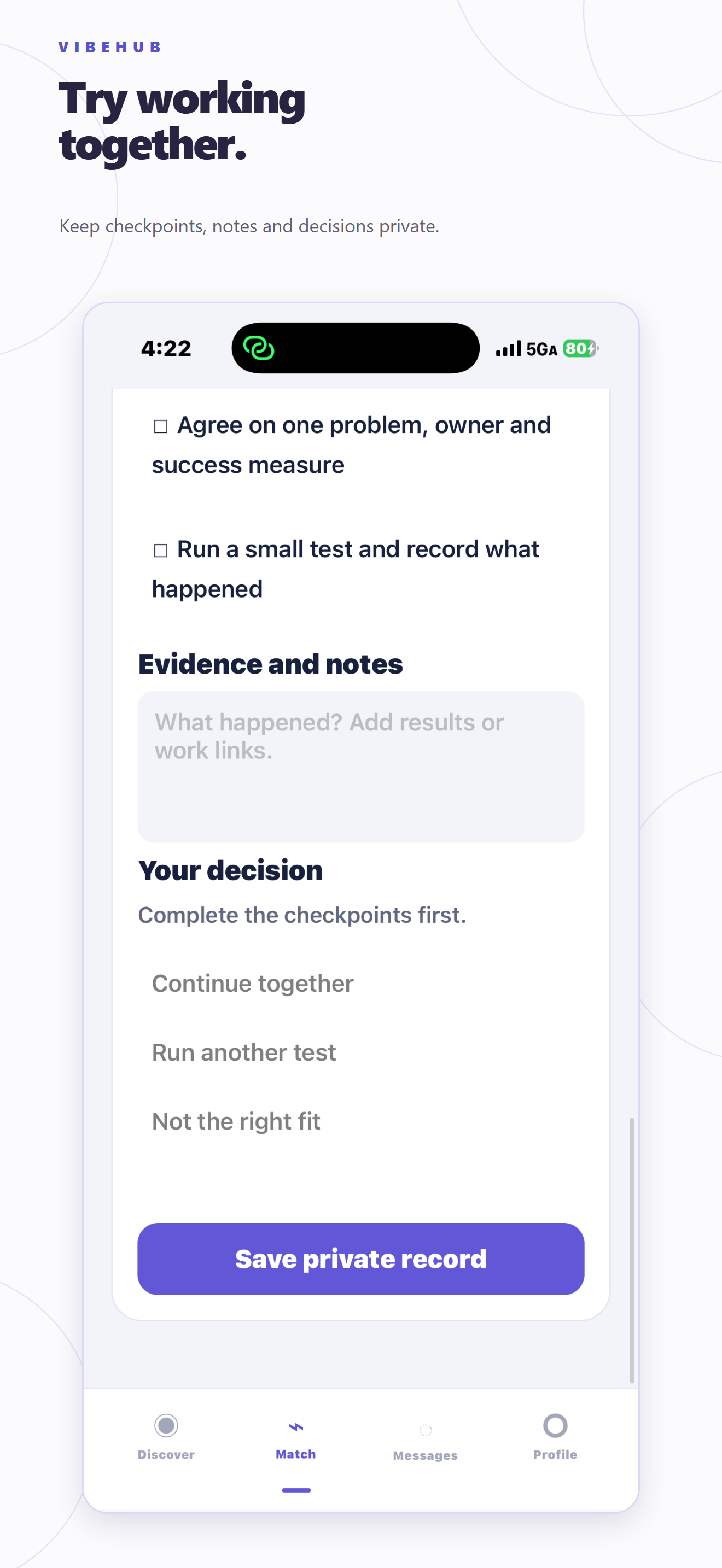
- Plan a small working trial. VibeHub Pro provides collaboration briefs and private records for checkpoints, notes, and decisions.
Match scores are suggestions, not proof that two people will work well together. Trial records belong to the person who creates them; they are not a shared team workspace or a mutual commitment.
The app also provides profile-visibility controls, blocking, reporting, data export, and account deletion. New public posts and profile revisions go through a review queue before they become visible to others.
How I built it
The iPhone app uses React Native, Expo, and TypeScript. A dedicated Cloudflare Worker API and D1 database handle accounts, profiles, posts, messages, privacy settings, and private collaboration records. Sign in with Apple and Google Sign-In support account access.
RevenueCat powers the Pro subscription integration and paywall. The monthly and yearly products unlock the same Pro entitlement. The app checks subscription access, supports Restore Purchases, and the backend independently verifies the entitlement before saving paid collaboration records. Existing records remain readable when Pro expires.
Matching and collaboration briefs use profile-based rules. They are not presented as AI research, identity verification, or guaranteed compatibility.
Challenges
My earlier team experience made the distinction between meeting someone and working well together especially important. The product needed to offer a useful next step after a match without suggesting that a score could settle such a personal decision.
The implementation also had to distinguish public discovery from private decisions. Public content has visibility and moderation controls, while trial notes remain private to their owner. Subscription access is checked on the backend as well as in the app.
What I am proud of
VibeHub now brings profiles, project discovery, match explanations, messaging, and private trial records into one working iPhone app. The Pro tools are connected to RevenueCat, and the app and its subscriptions have been submitted for App Store review.
More personally, the project grew out of difficulties I actually encountered while changing industries and trying to build a team. Its starting point is a problem I want to keep learning about with other founders.
What I learned
Product-building tools can make an idea tangible much sooner, but experience, trust, and commitment still develop through people working together. I want VibeHub to make it easier to begin those conversations and experiments, while leaving the decision about a partnership with the people involved.
What's next
The next step is to complete the public launch and learn from real use: whether people can find relevant projects, start useful conversations, and turn those conversations into small working trials. Those observations will guide improvements to discovery and the collaboration tools.
Built With
- cloudflare
- d1
- expo.io
- ios
- native
- react
- revenuecat
- sqlite
- typescript
- workers

Log in or sign up for Devpost to join the conversation.