-
-
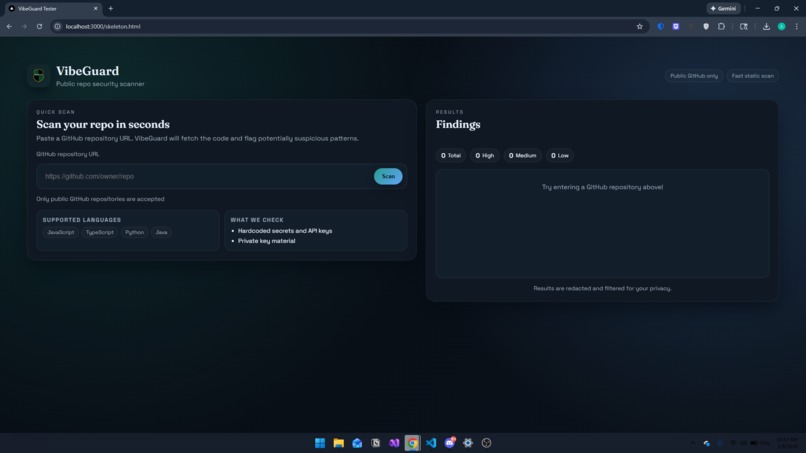
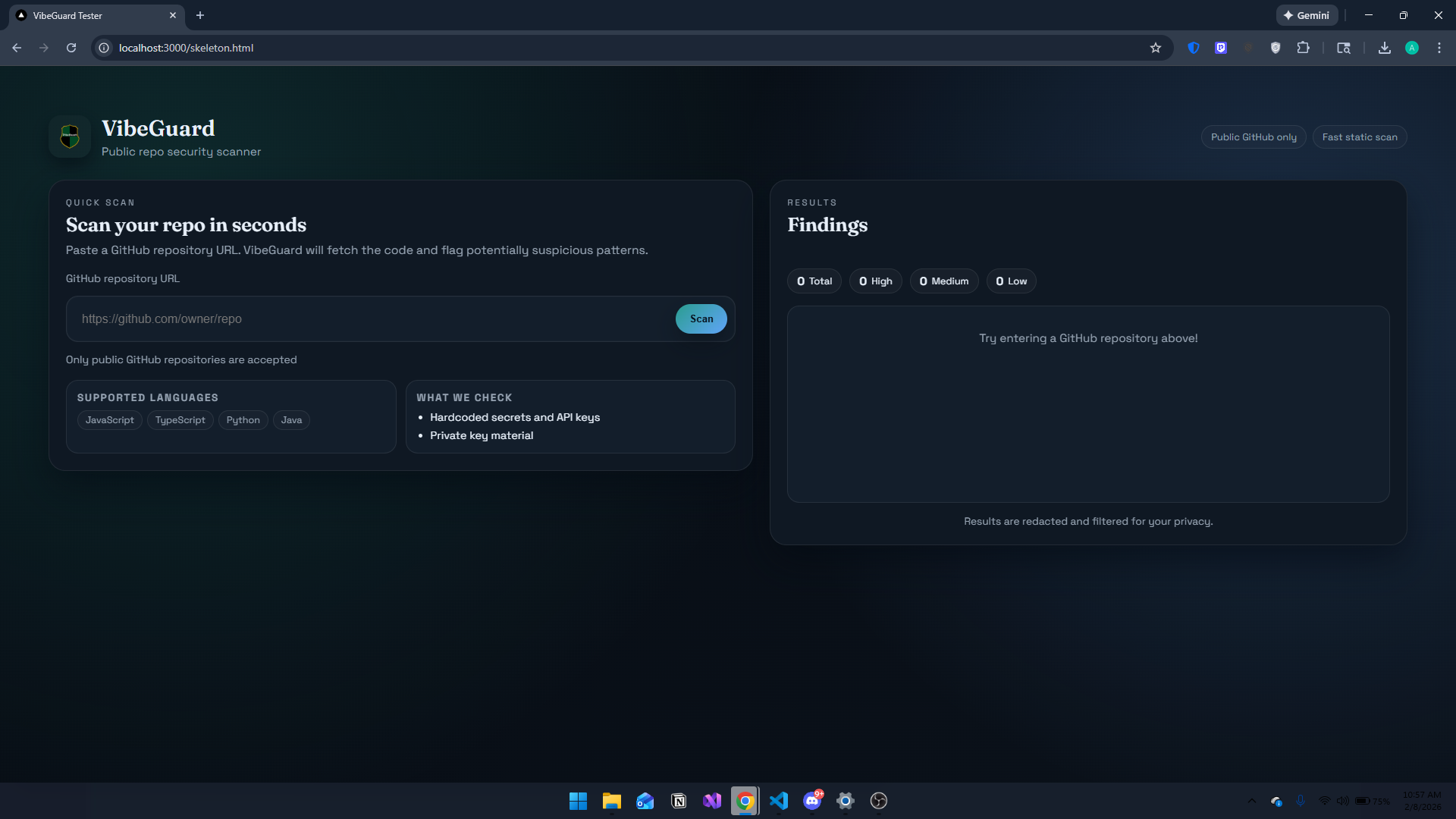
Image of VibeGuard webpage
Inspiration
Interest in building real projects with real-world impact has been higher than ever, and with the rise of AI and vibecoding, the barrier to entry is lower than ever.
Five months ago, a student accidentally pushed his Google Cloud API key to GitHub. He thought it was private, but by the time he realized, it was too late. He received a bill for over $55,000.
Vibecoding doesn't just include people who know how to code, it's also people who've never printed a "Hello World!" in their lives. With that in mind, you'd never expect them to know how to secure the code they generate either.
VibeGuard aims to bridge that gap; VibeGuard aims to help identify dangerous patterns before they become costly mistakes.
What it does
Points Out Potential Vulnerabilities: When you enter the link to your public GitHub repository, VibeGuard scans a zip archive of the repository and highlights potential vulnerabilities. We do NOT retain any files, so your potentially exposed secrets are safe and never stored!
Easy UI: See the vulnerability, what type it is, the severity, and where it is! Learn exactly what you need to fix so you can push your best project.
How we built it
Frontend:
- Node.js
- Next.js
- HTML, CSS, JavaScript
Backend:
- FastAPI
- Python
Challenges we ran into
- It was our first time using FastAPI and Nodejs, and for some of us, Git
- It was hard to figure out how to download the zip archive properly
- Setting up development environments and resolving merge conflicts was challenging at times
Accomplishments that we're proud of and what we learned
- How to build and structure an API using FastAPI
- How to create a full-stack application with Next.js
- How to collaborate effectively using Git and GitHub
What's next for VibeGuard
- Potential pre-scan/automation
- IDE integration
Built With
- css
- fastapi
- html
- javascript
- nextjs
- node.js
- python


Log in or sign up for Devpost to join the conversation.