VibeFinder
Overview
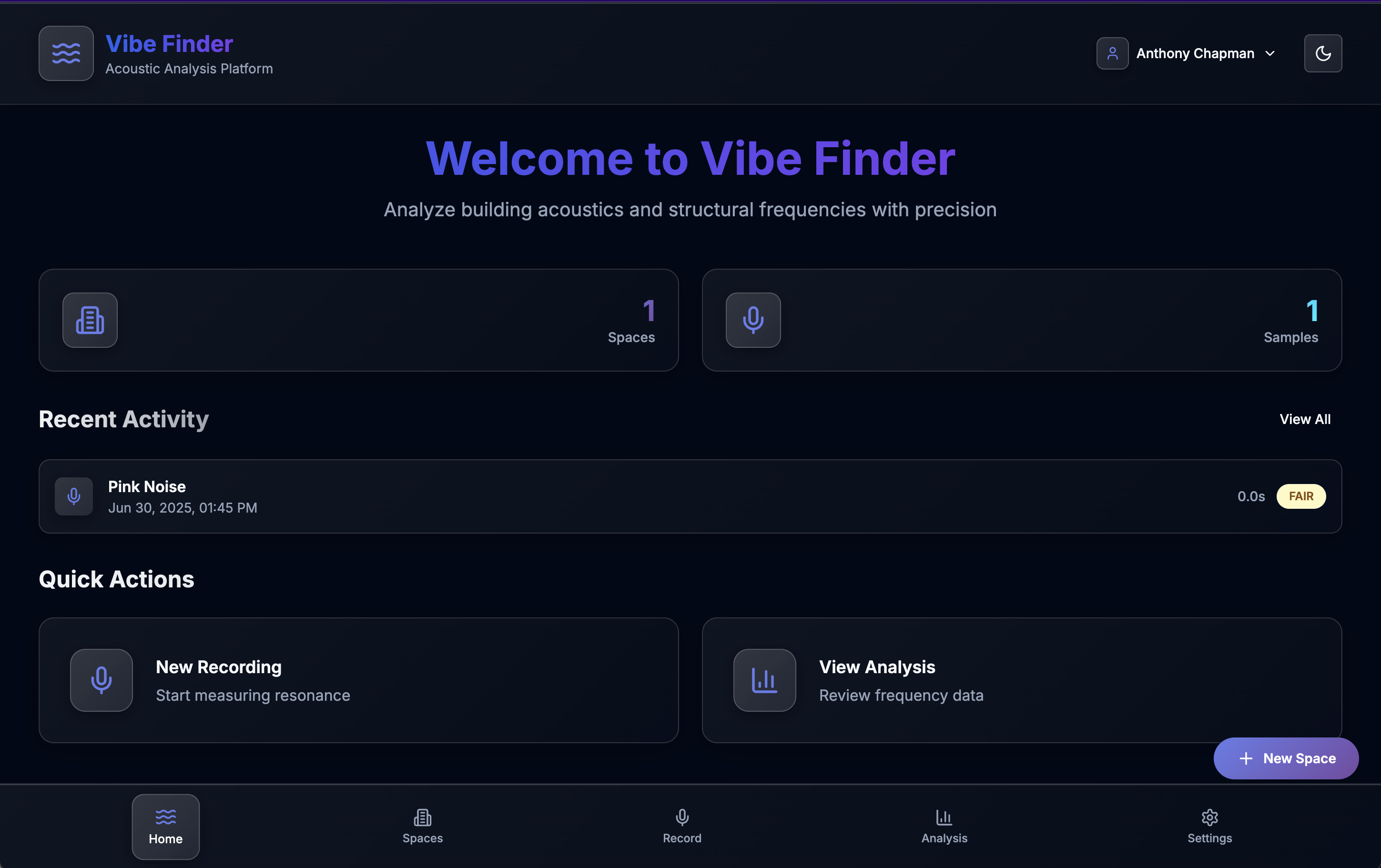
VibeFinder is a web application originally conceived as a tool for musicians to analyze how a performance space affects the quality of their performance. By leveraging advanced audio processing techniques, the app provides insights into the acoustic properties of a space, helping users optimize their sound and performance.
While the initial focus was on aiding musicians, the potential applications of VibeFinder extend far beyond the music industry. It can be used in:
- Architectural acoustics
- Sound engineering
- Environmental noise analysis
- Educational purposes
The Story
Initially called "Resonance Detector," the vibe-coded nature of the project and domain availablity led to a rebranding to "VibeFinder." The project was planned out as a 6-phase development cycle with each phase build by Bolt and refined through user testing. While the goal was initially to have an all-local app for mobile phones, the initial web app version was build with Next.js and React in order to create a working version that can be later ported over to React Native to launch on mobile devices.
The complexity of the project soon called for a more robust backend solution, leading to the integration of Supabase for user authentication, database management, and serverless functions. This allows for secure storage of user profiles, spaces, and audio samples, enabling users to manage their acoustic analyses effectively. Supabase, Netlify and Bolt came together to create a fully functional web app that is both user-friendly and powerful in its capabilities.
The recommendations and insights powered by Bolt added a more detailed analysis and more far-reaching applications for various industries, creating an app with great potential for diverse applications beyond just music.
Key Features
Audio Analysis:
- Analyze audio recordings to understand the acoustic characteristics of a space.
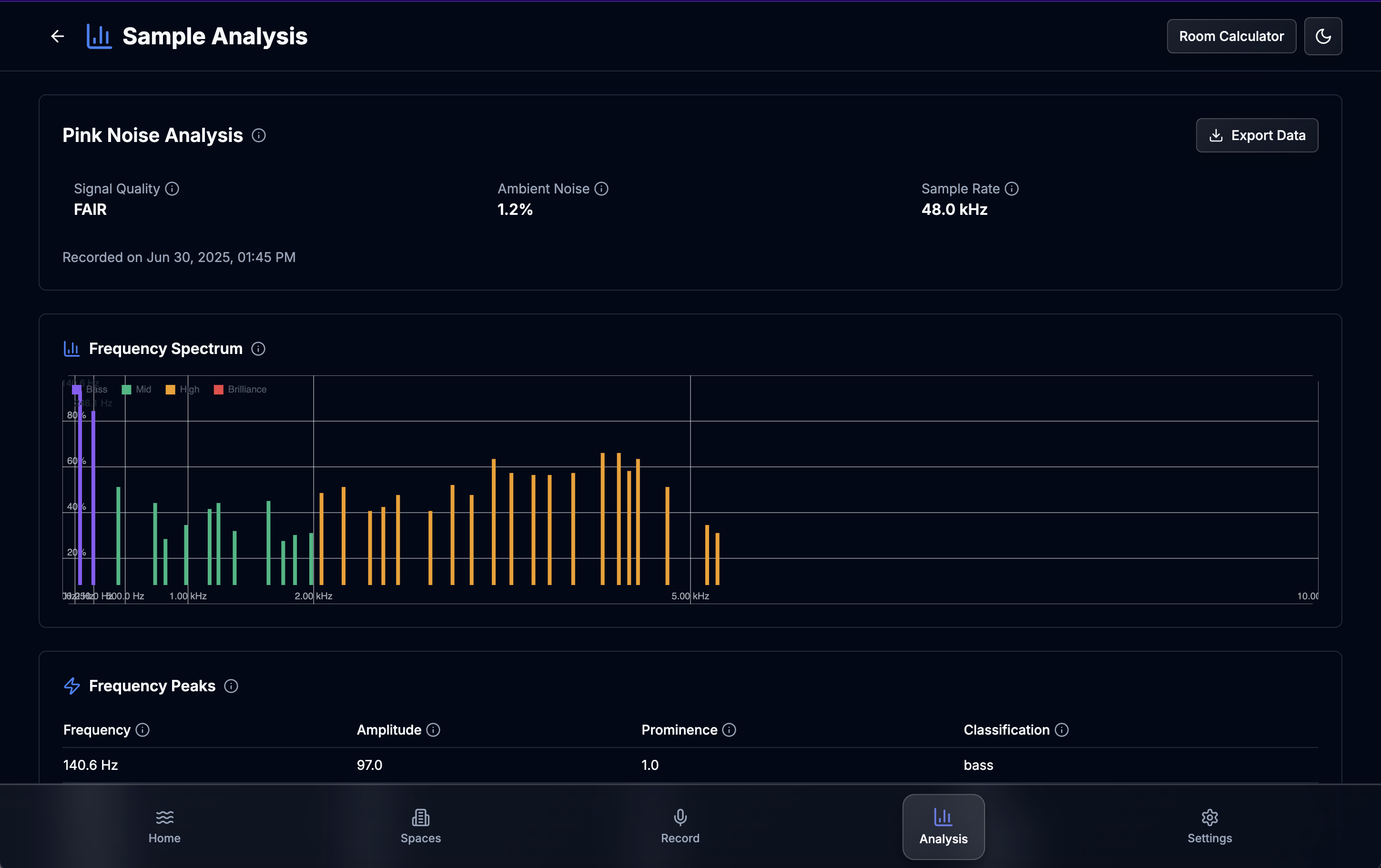
- Visualize frequency response, room modes, and sound levels.
Space Management:
- Create and manage spaces to store analysis results.
- Take multiple recordings to compare different room locations and sound types.
- Use professional quality sound sweeps to gain detailed insights.
User-Friendly Interface:
- Intuitive design for easy navigation and interaction.
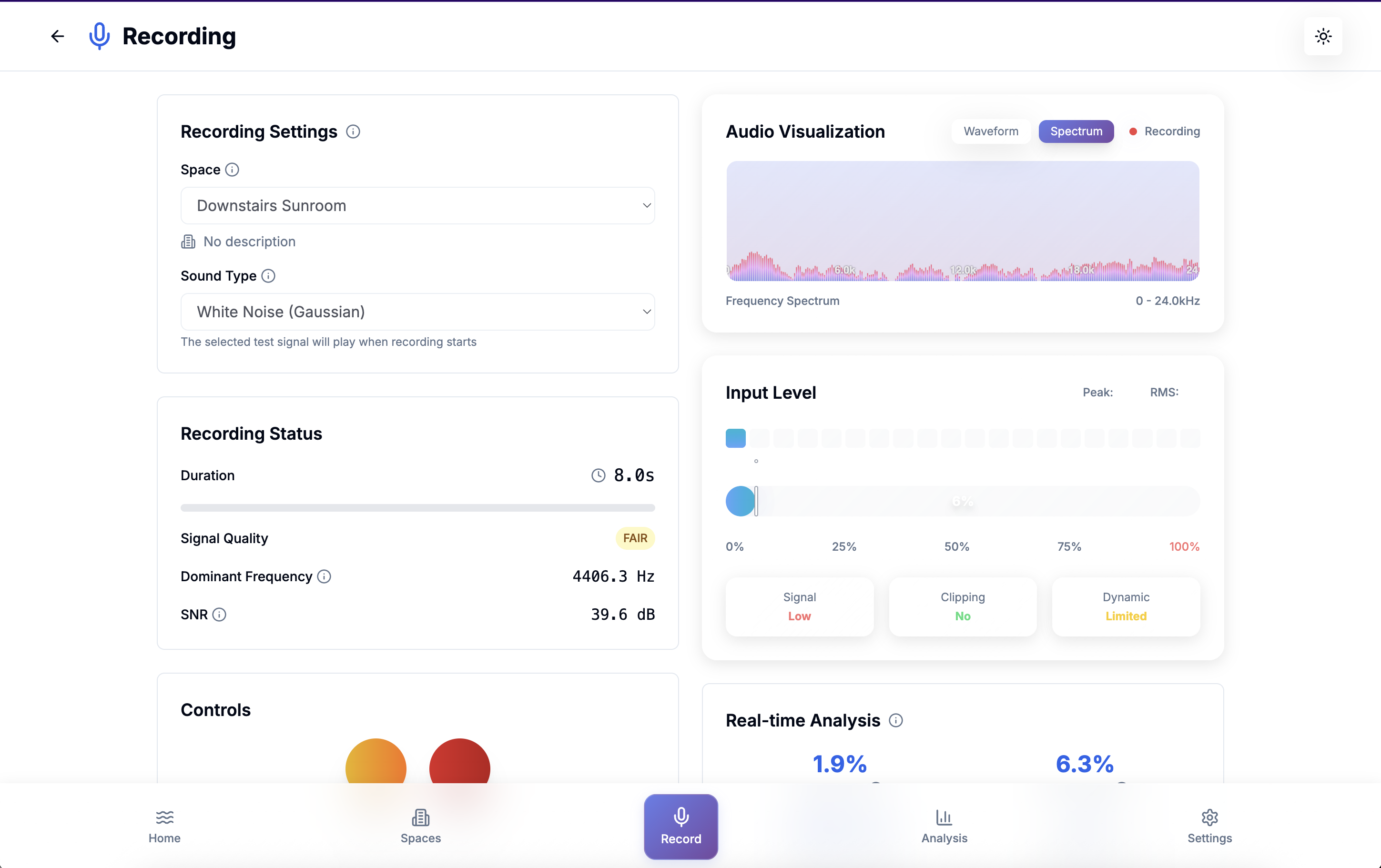
- Real-time feedback during audio recording and analysis.
- Light and dark mode support using modern, attractive design.
Integration with Supabase:
- Secure user authentication and session management.
- Database storage for user profiles, spaces, and audio samples.
Technical Details
- Frontend: Built with Next.js and Tailwind CSS for a modern and responsive user interface.
- Backend: Powered by Supabase for authentication, database management, and serverless functions.
- Audio Processing: Custom algorithms for frequency analysis, waveform visualization, and room mode calculation.
- Professional Quality Sound Sweeps: Utilizes high-quality sound sweeps to provide multiple reference points for analysis, as well as ambient recordings for sounds produced in real time.
Future Potential
VibeFinder has the potential to evolve into a comprehensive tool for:
- Acoustic consulting
- Virtual reality soundscapes
- Smart home audio optimization
- Research in psychoacoustics
How It Works
- Users record audio samples in a space.
- The app processes the audio to extract key acoustic metrics.
- Results are visualized and stored for future reference.
- Users can compare spaces and make informed decisions about sound optimization.
Conclusion
VibeFinder is a fun and engaging way to explore the acoustic properties of different spaces. Its applications are vast, making it a valuable tool for musicians, sound engineers, architects, and educators alike. As the project evolves, it aims to provide even more features and insights into the world of sound and acoustics.
What it does
How we built it
Challenges we ran into
Accomplishments that we're proud of
What we learned
What's next for VibeFinder
Built With
- bolt.new
- netlify
- next.js
- react
- supabase
- tailwind

Log in or sign up for Devpost to join the conversation.