Inspiration
AI coding agents can now build real apps, but only for people who already speak code. They answer in terminals, file names and commands. A shop owner, a teacher or a nurse often knows exactly which small tool would save them hours, but they can't follow what the agent is doing, so they can't trust it or steer it. We wanted the people with the ideas to be able to build them.
What it does
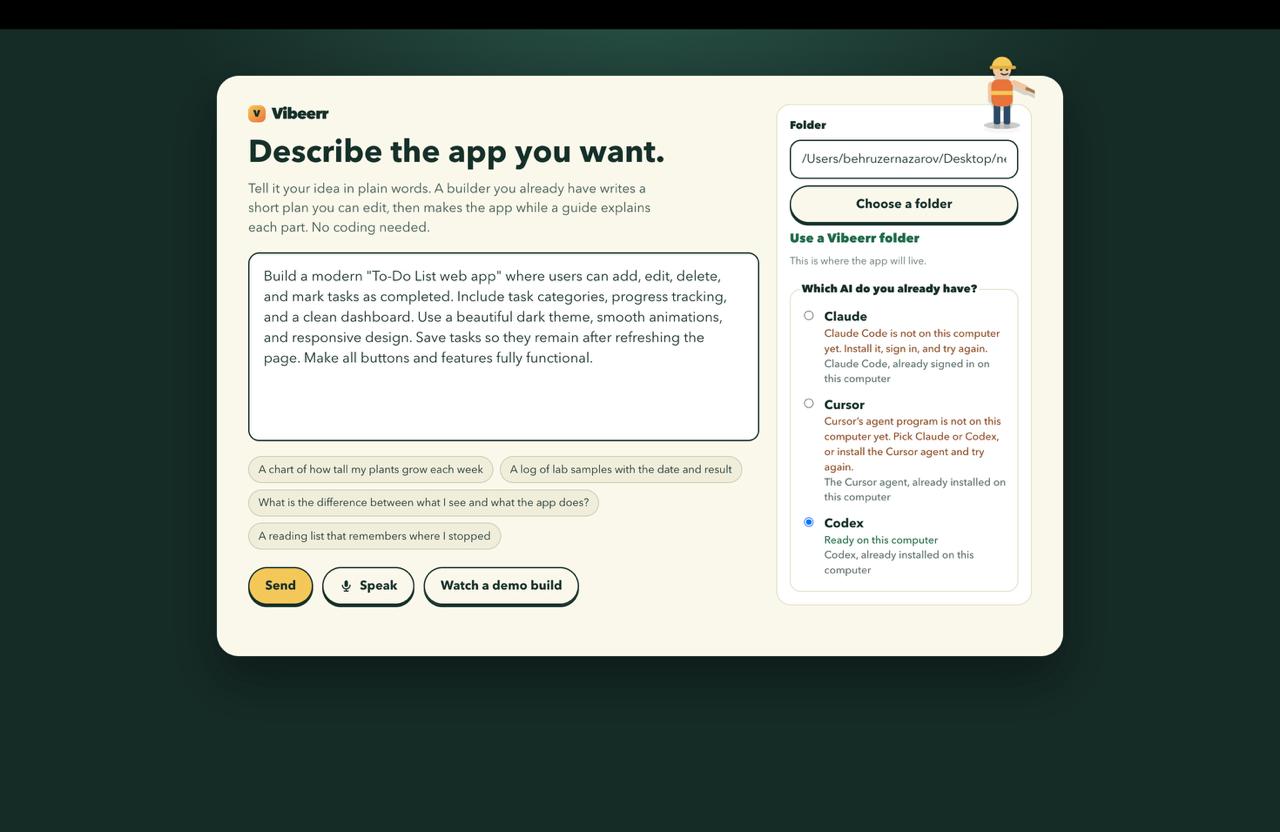
Vibeerr is a friendly wrapper around an AI coding agent for people who don't code. You type an idea, pick a folder, and pick an AI you already have (Claude, Cursor or Codex). Vibeerr starts it, and a guide turns everything it does into plain words.
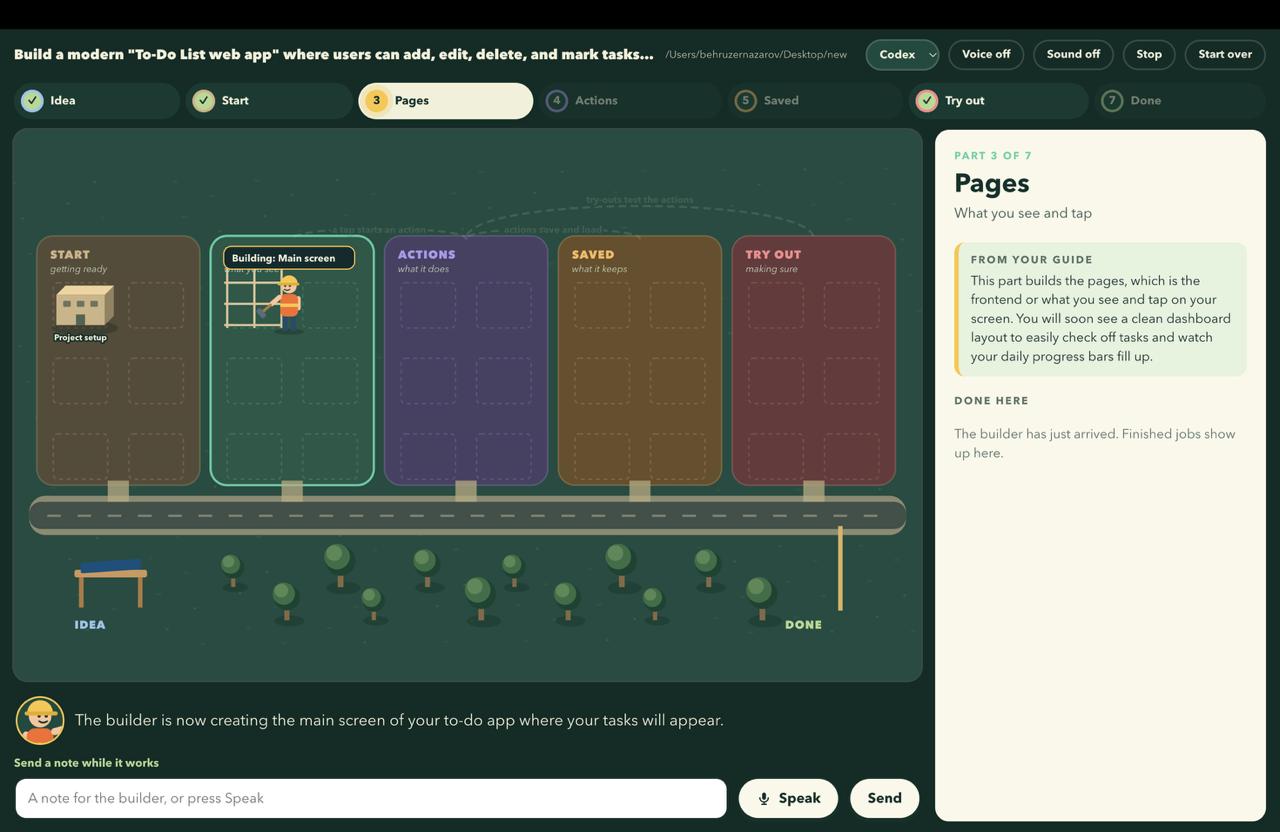
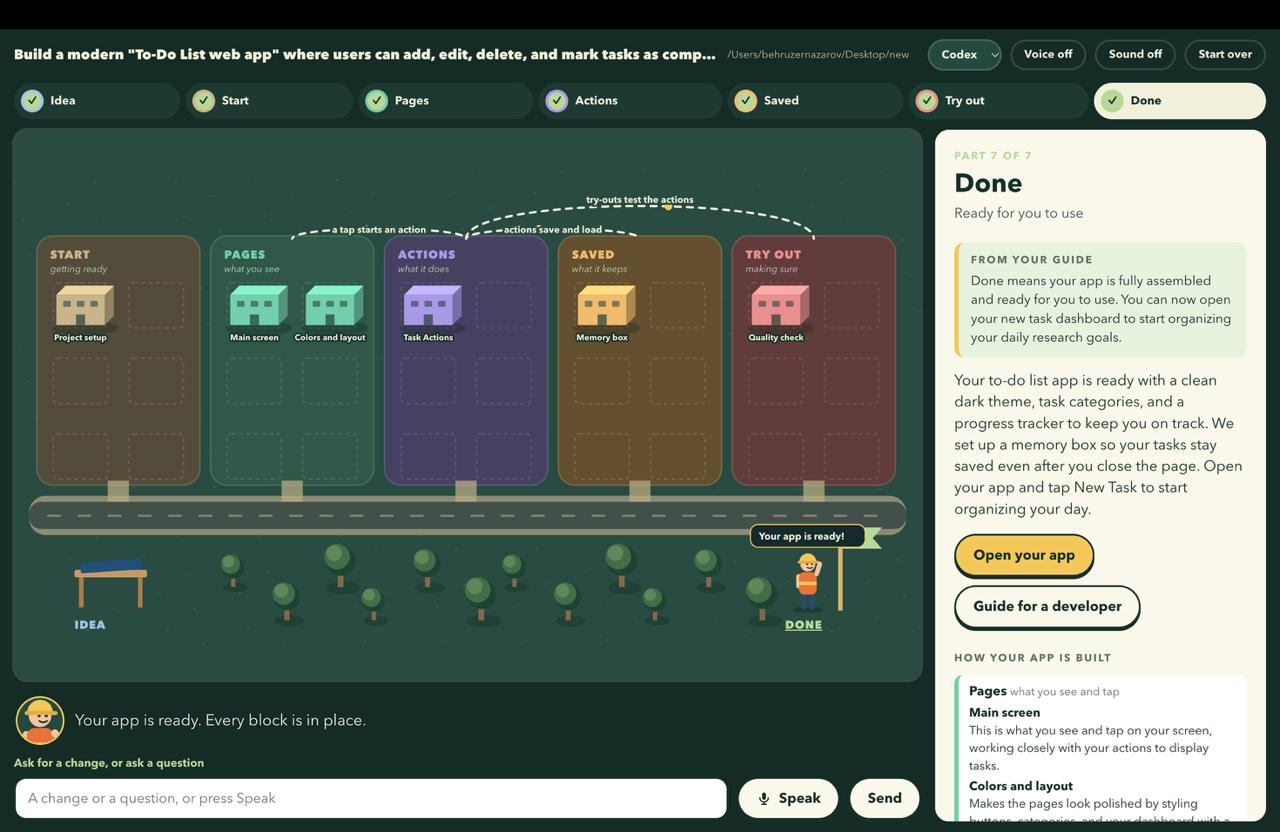
- A building site, not a terminal. The build appears as a site with seven districts: Idea, Start, Pages, Actions, Saved, Try out and Done. Every part of the app is a block, and a builder walks between them.
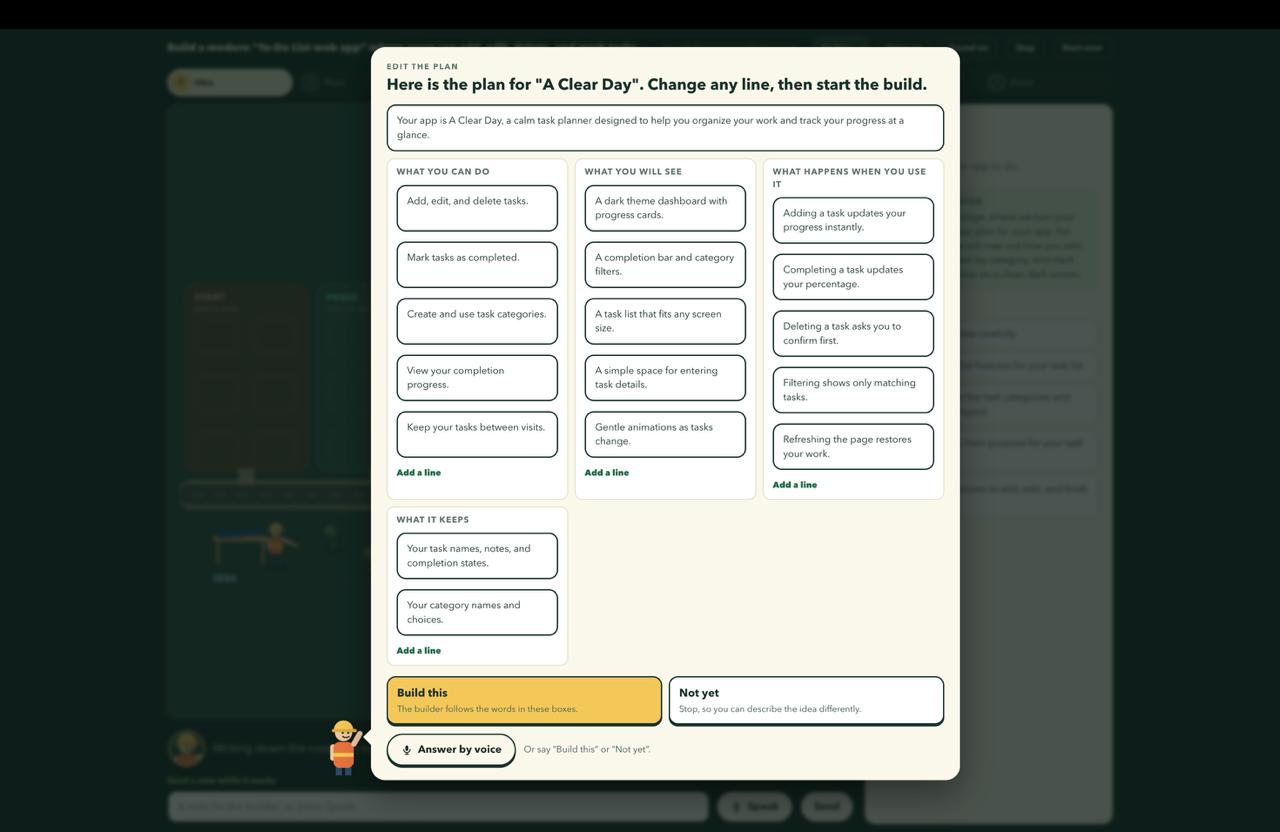
- You approve the plan first. You edit a short plan before anything is built, and every approval question is explained in plain words with a recommended choice.
- A guide that talks. It narrates aloud, explains the idea behind each step during quiet moments, and you can answer or give commands by voice.
- One chat box. A question gets a plain answer, an idea starts a build, and a note during a build is saved for the builder.
- A second opinion. When the app is done, Grok reviews it with a score and concrete ideas. One click sends an idea back to the builder.
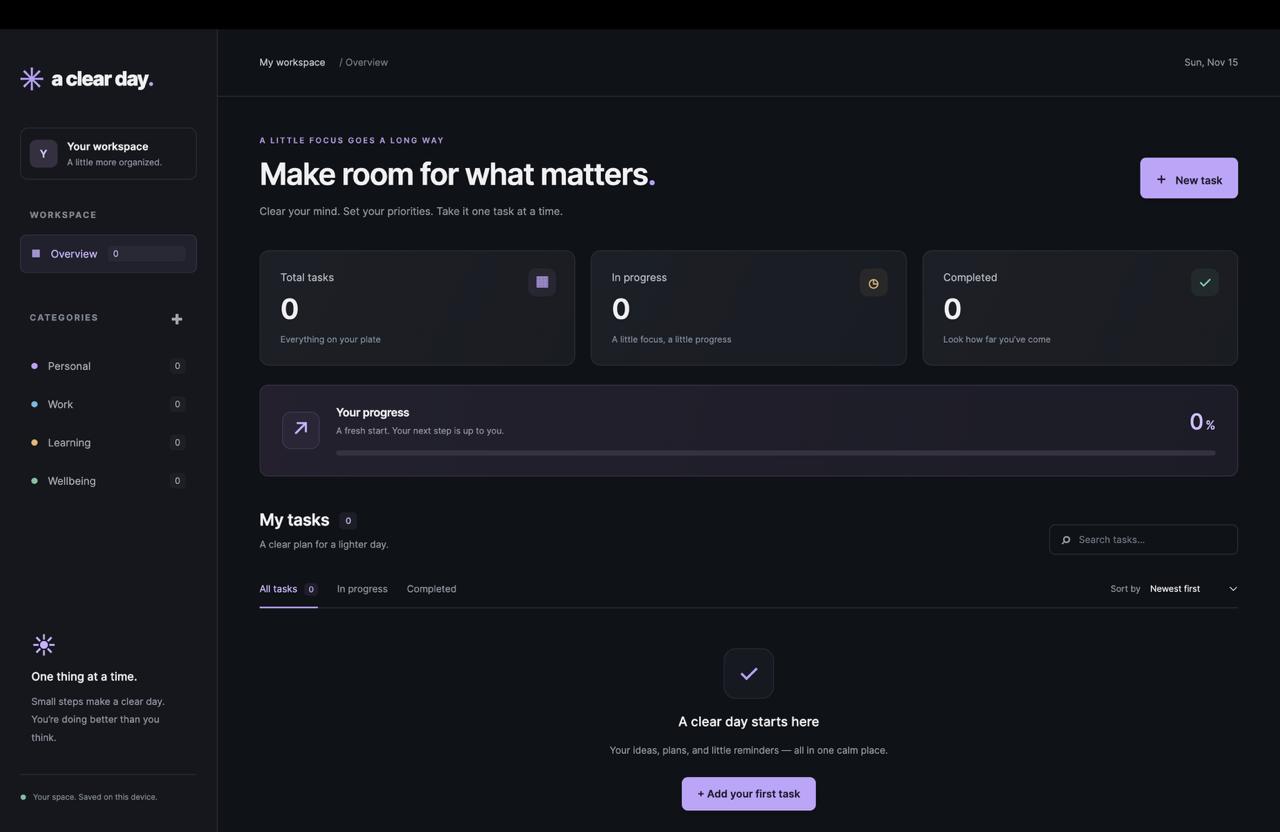
- A handoff. You get a plain summary, a live preview, and a guide for any developer who joins later.
How we built it
- Cursor was our core AI coding agent while building Vibeerr, and Cursor is also one of the builders Vibeerr can run. It writes a plan, stops, and only continues after the person edits and approves it.
- Grok (xAI API) is an automated reviewer in the workflow. When a build finishes, Vibeerr sends the finished app to Grok, which returns a score, what is good, and ideas with reasons. Each idea has an "Ask the builder to do this" button that starts the next build.
- Gemini API is the guide. It turns batches of raw agent steps into plain sentences, works out whether a message is a question, a new idea or a change, answers questions, and writes short lessons for each stage.
- ElevenLabs gives the guide a natural voice and understands short spoken answers. The browser's own voice and speech recognition take over without a key.
- The brain is a local Node server (Express plus WebSockets, bound to 127.0.0.1 with an Origin check). It starts the chosen agent, receives its steps through hooks, maps each step to a stage, and sends only plain story messages to the browser. Code and commands never reach the screen.
- The front end is Vite and TypeScript with a hand-drawn SVG world, synthesized sounds and physics confetti. A shared brief file lets different AIs take turns on the same project.
- We also used Claude Code and Codex as coding assistants during the weekend.
Challenges we ran into
- Keeping the guide's narration in sync with an agent that sometimes works in bursts and sometimes goes quiet. We batch steps every few seconds and fill quiet moments with explanations, and the build waits until the explanation is done.
- Approving by voice safely. Only the recommended choice can be confirmed by speech, and any other choice needs a click.
- Pausing the voice when the person speaks or types, then resuming exactly where it stopped.
- Making everything work with no keys and no network, so a recorded demo build always plays.
Accomplishments that we're proud of
- A non-coder can go from an idea to a working app without seeing a single line of code.
- Four AIs working together, each with a clear job: a builder, a guide, a voice and a reviewer.
- It works on the AI subscriptions people already have, with no paid API required.
- It is accessible: the voice reads everything, it works fully from the keyboard, and it respects reduced motion.
What we learned
- Plain language is a product feature, not a translation step. Every sentence had to make sense to someone who has never coded.
- Trust comes from visibility. When people can see the stages and approve the plan, they're comfortable letting an AI build.
- Building a bridge between several AI services means designing a graceful fallback for every one of them.
What's next for Vibeerr
- A desktop app, so anyone can install it without a terminal.
- Publishing a finished app to the web in one click.
- More languages for the guide and the voice.
- Templates for common tools like trackers, booking pages and small shop sites.
Built With
- claude-code
- codex
- css3
- cursor
- elevenlabs
- express.js
- gemini
- google-gemini-api
- grok
- html5
- javascript
- netlify
- node.js
- svg
- typescript
- vite
- web-speech-api
- websockets
- xai
