-
Screenshot
Inspiration
As creators ourselves, we know the feeling of having a brilliant idea but getting stuck in the "blank page" phase. The initial process of brainstorming, finding visual inspiration, and creating a cohesive project plan can be slow and disjointed. We were inspired by the "no-code meets innovation" theme of the Open Vibe Hackathon to build a tool that automates this initial friction. We wanted to create something that would empower anyone—from a solo designer to a full marketing team—to jumpstart their creative process and go from a fleeting thought to a tangible, beautiful plan in seconds.
What it does
VibeBoard is an AI-powered creative launchpad. A user inputs a single, simple concept (e.g., "a minimalist skincare brand for Gen Z" or "a retro 80s arcade game"). In under a minute, VibeBoard generates a complete creative kick-off package: A Visual Mood Board: A collection of unique, AI-generated images that capture the look and feel of the idea. A Cohesive Color Palette: A set of hex codes extracted directly from the generated visuals, ensuring design consistency. A Professional Creative Brief: A detailed document outlining the project's mission, target audience, tone of voice, and key messaging, all generated by GPT-5. Essentially, VibeBoard transforms a spark of an idea into a shareable, actionable creative direction.
How we built it
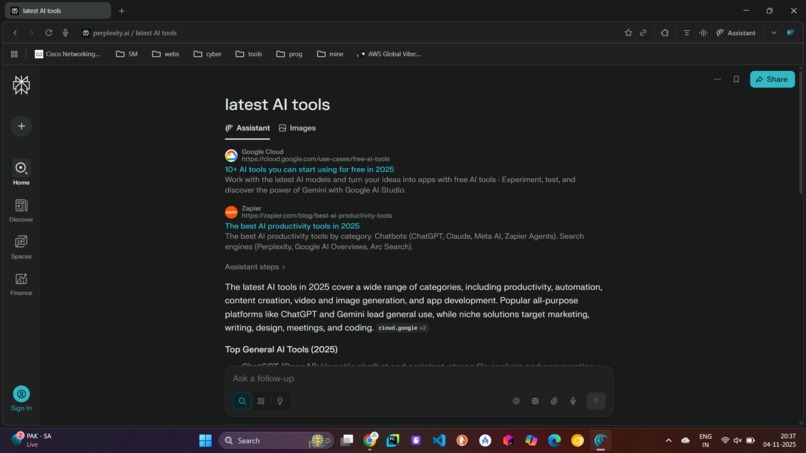
VibeBoard is a testament to the power of a modern no-code and AI-driven stack. User Interface: We used Bolt DIY to create a clean, intuitive, and fully responsive front end. This allowed us to build the user-facing app without writing a single line of complex UI code. Core Logic & Generation: The magic happens with GPT-5. When a user submits their idea, we send a series of chained, sophisticated prompts to GPT-5. It first interprets the concept, then writes detailed image generation prompts, crafts the creative brief, and finally, analyzes the visual output to create the color palette. Research & Ideation Backend: We integrated Perplexity AI and Comet as our "idea expansion" engine. This allows the system to pull in relevant concepts and keywords to enrich the prompts sent to GPT-5, resulting in more nuanced and creative outputs. Hosting: The final, functional prototype is hosted on Vercel, making it instantly accessible and shareable.
Challenges we ran into
Our biggest challenge was prompt engineering. Getting GPT-5 to generate a cohesive set of images and a brief that perfectly matched the user's intent was tricky. Initially, the results were too generic. We solved this by developing a multi-step prompting system. Instead of one massive prompt, we created a "chain" where the output of one AI step (like defining the brand's core essence) becomes the input for the next (generating the actual image prompts). This created a much more focused and high-quality result.
Accomplishments that we're proud of
We are incredibly proud of creating a tool that feels like magic. The moment you type in a simple phrase and receive a full-fledged, beautiful creative package is genuinely exciting. We successfully integrated four different platforms (Bolt DIY, GPT-5, Perplexity, and Vercel) into a seamless workflow in just 24 hours. More than anything, we built something that we would genuinely use every day in our own creative work.
What we learned
This hackathon was a masterclass in the power of leveraging specialized AI tools. We learned that the future of rapid development isn't about being a master of one tool but about knowing how to creatively orchestrate multiple AI and no-code services to build something greater than the sum of its parts. We also learned that the quality of your AI output is 100% dependent on the quality and creativity of your prompts.
What's next for VibeBoard
The vision for VibeBoard is huge. Our next steps are focused on adding more features and customization: Style Modifiers: Allowing users to select specific styles (e.g., "Photorealistic," "Vector Art," "Vintage"). Team Collaboration: Enabling multiple users to collaborate on a single VibeBoard and leave comments. Export Options: Adding features to export the brief to PDF, the images to a ZIP file, and the color palette directly into Figma or Adobe Creative Suite. "Vibe-to-Website": A future-forward idea to use the generated brief and assets to create a one-page landing site prototype automatically.
Built With
- api
- artificial-intelligence
- bolt-diy
- comet
- generative-ai
- gpt-5
- no-code
- perplexity-ai
- vercel

Log in or sign up for Devpost to join the conversation.