-
-
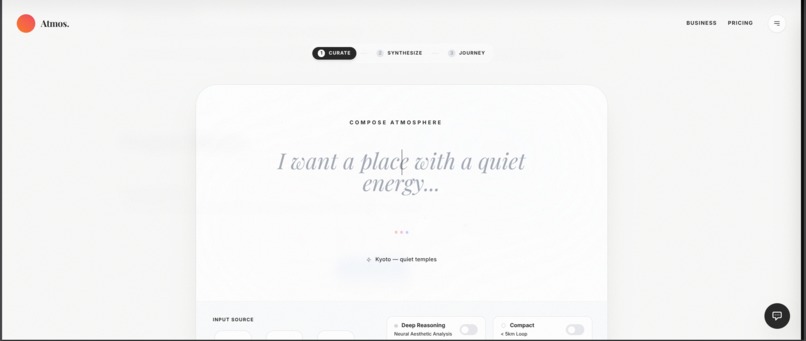
Landing page
-
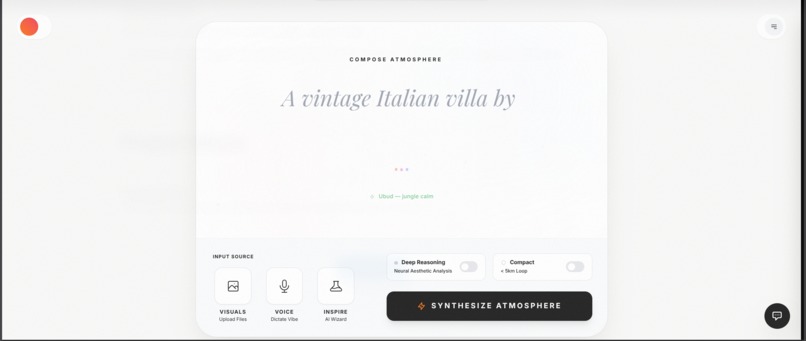
Landing page
-
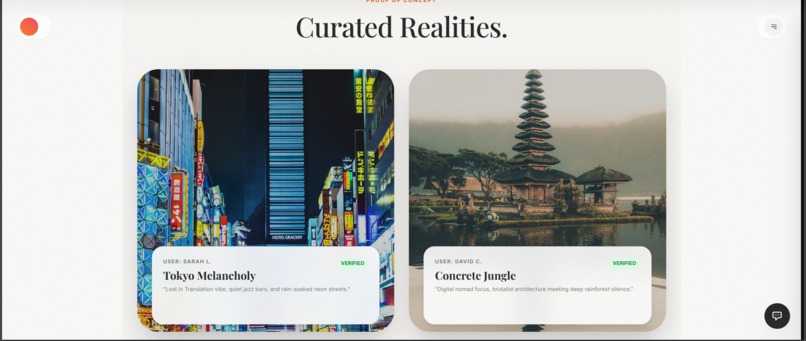
Proof of concept
-
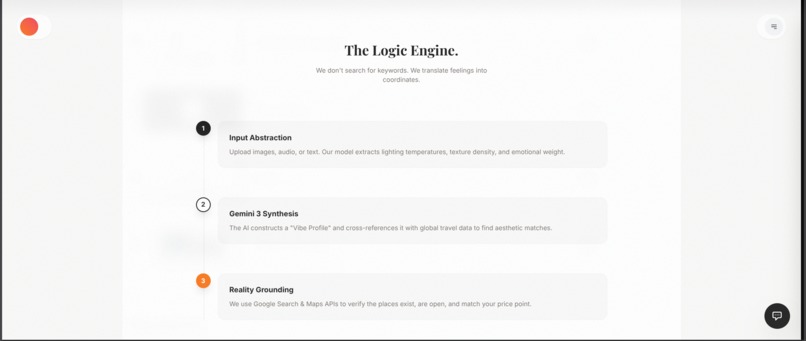
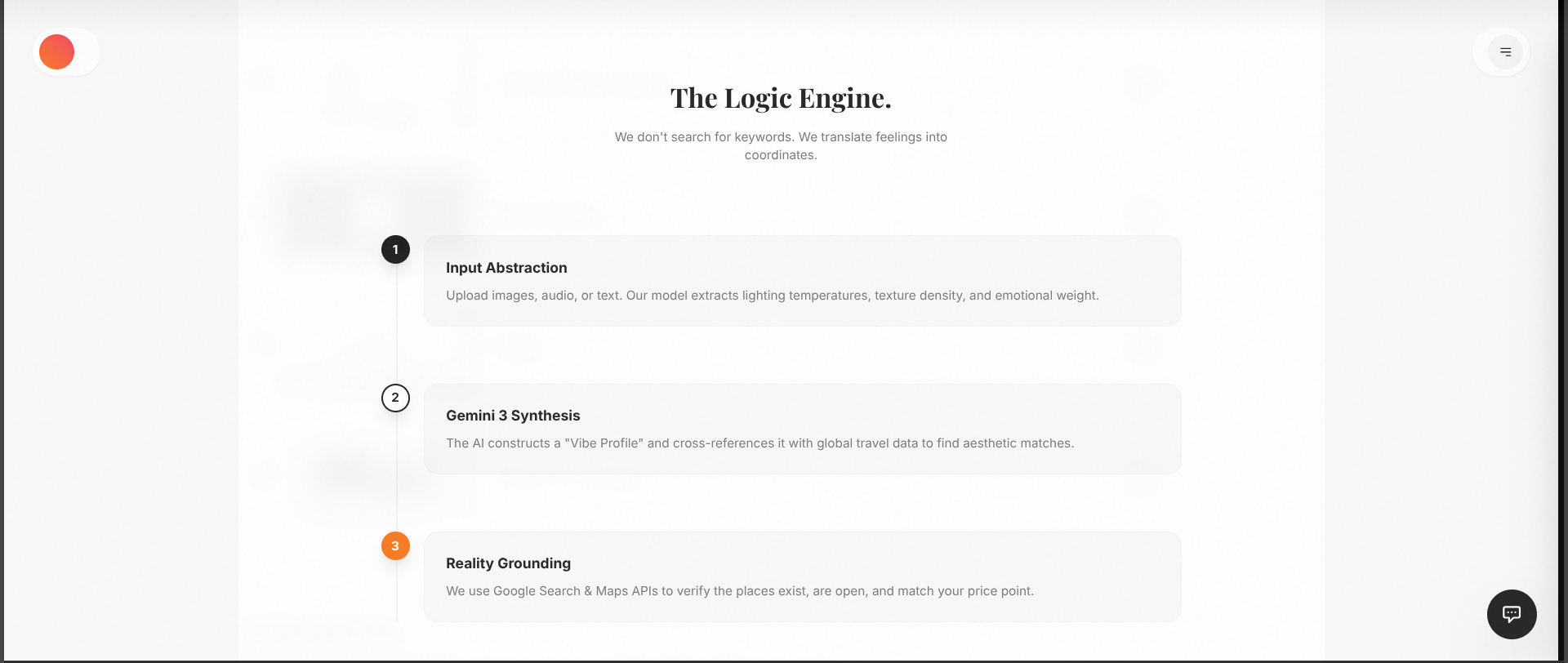
Logic engine
-
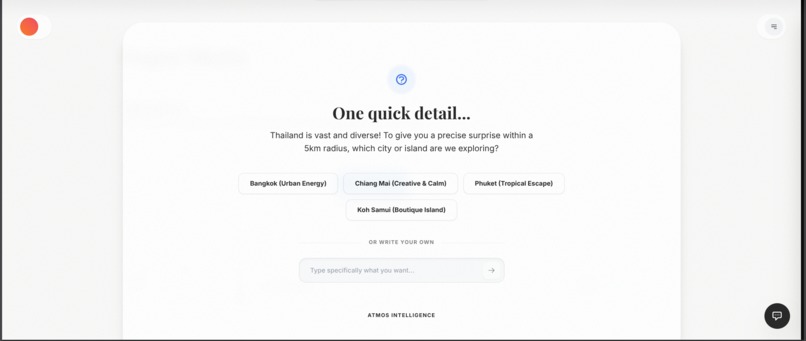
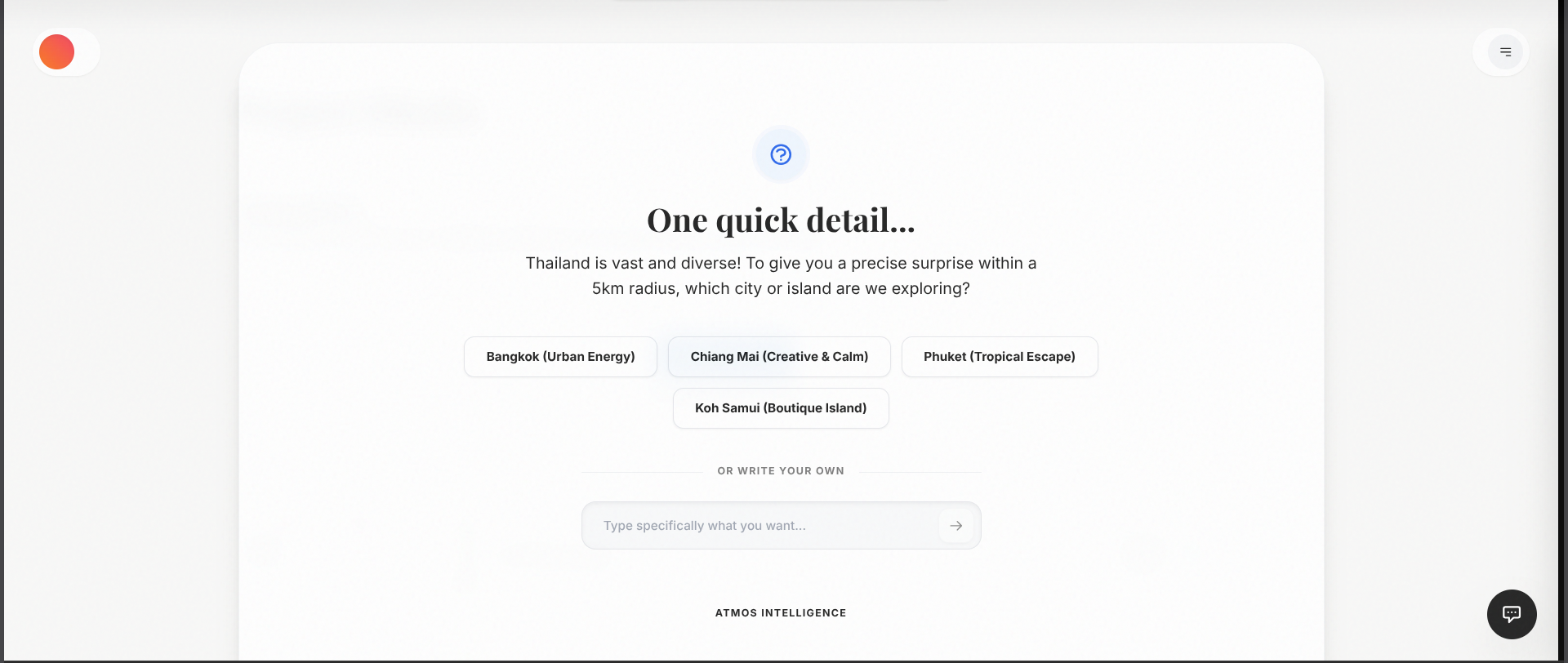
Quick details to get more context
-
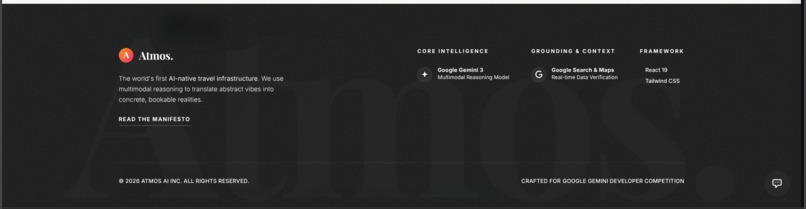
Footer
-

Processing
-
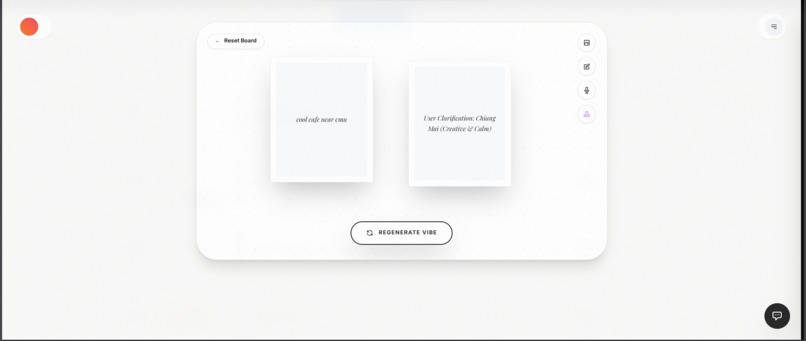
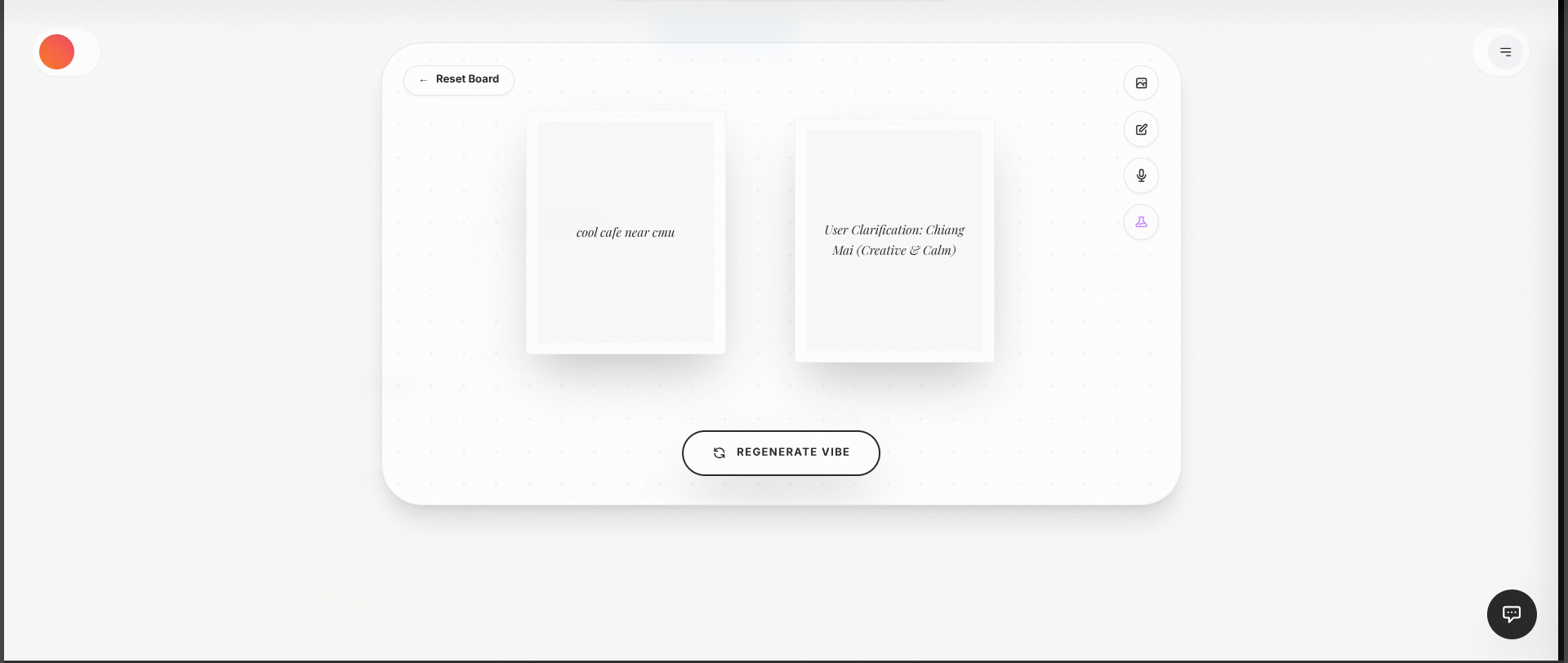
Moodboard
-
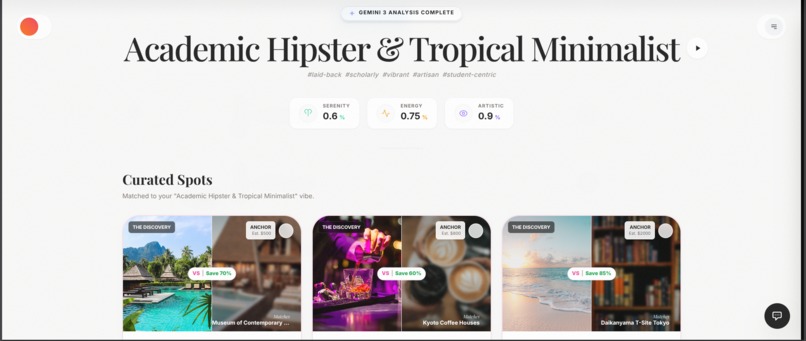
Output from Curated Spots
-
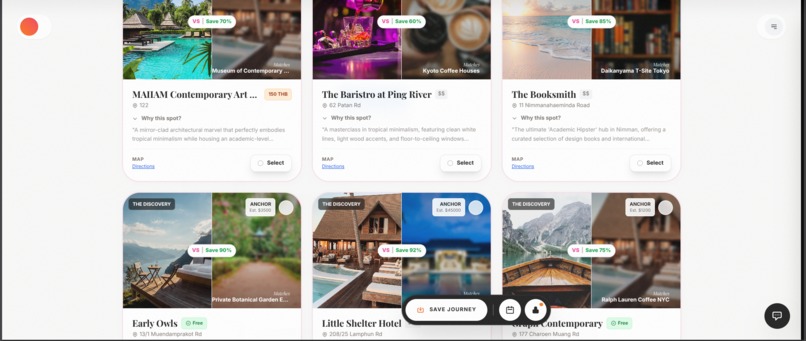
Curated Spots
-
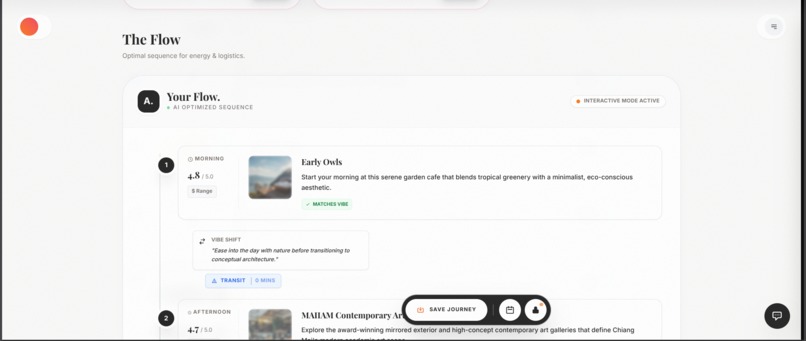
Flow journey
-
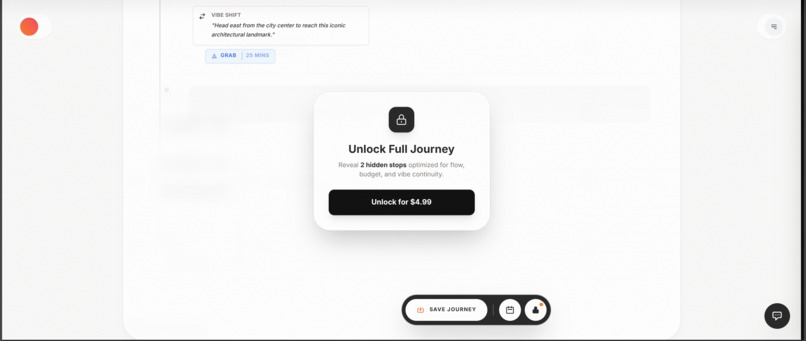
(purchase) Unlock flow journey
-
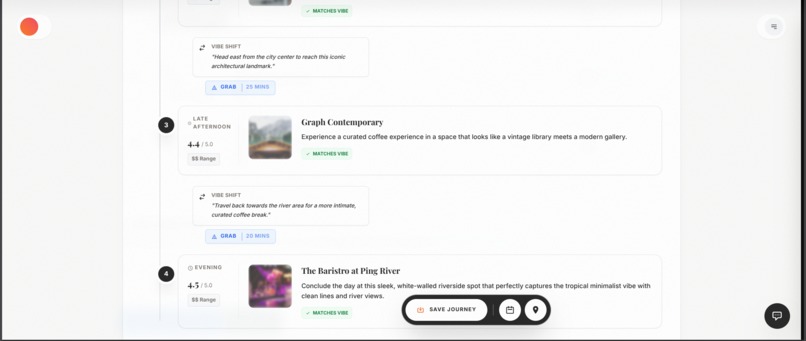
Unlock flow journey
-

Save journey
-
Origin


Inspiration
Current Online Travel Agencies (OTAs) are essentially spreadsheets wrapped in a UI. We search by logic (dates, price, star ratings), but humans decide by emotion (atmosphere, aesthetic, "vibe").
Modern travelers—especially Gen Z—don't just look for a bed; they look for a specific feeling. They want "Wong Kar-wai cinematic neon," "Quiet Luxury," or "Brutalist Silence." Standard search engines fail at these abstract queries.
Atmos was born to bridge this gap. We built an AI Curator that understands the nuance of human taste and translates abstract sensory inputs into bookable realities.
What it does
Atmos is a multimodal travel discovery engine powered by Gemini 3.
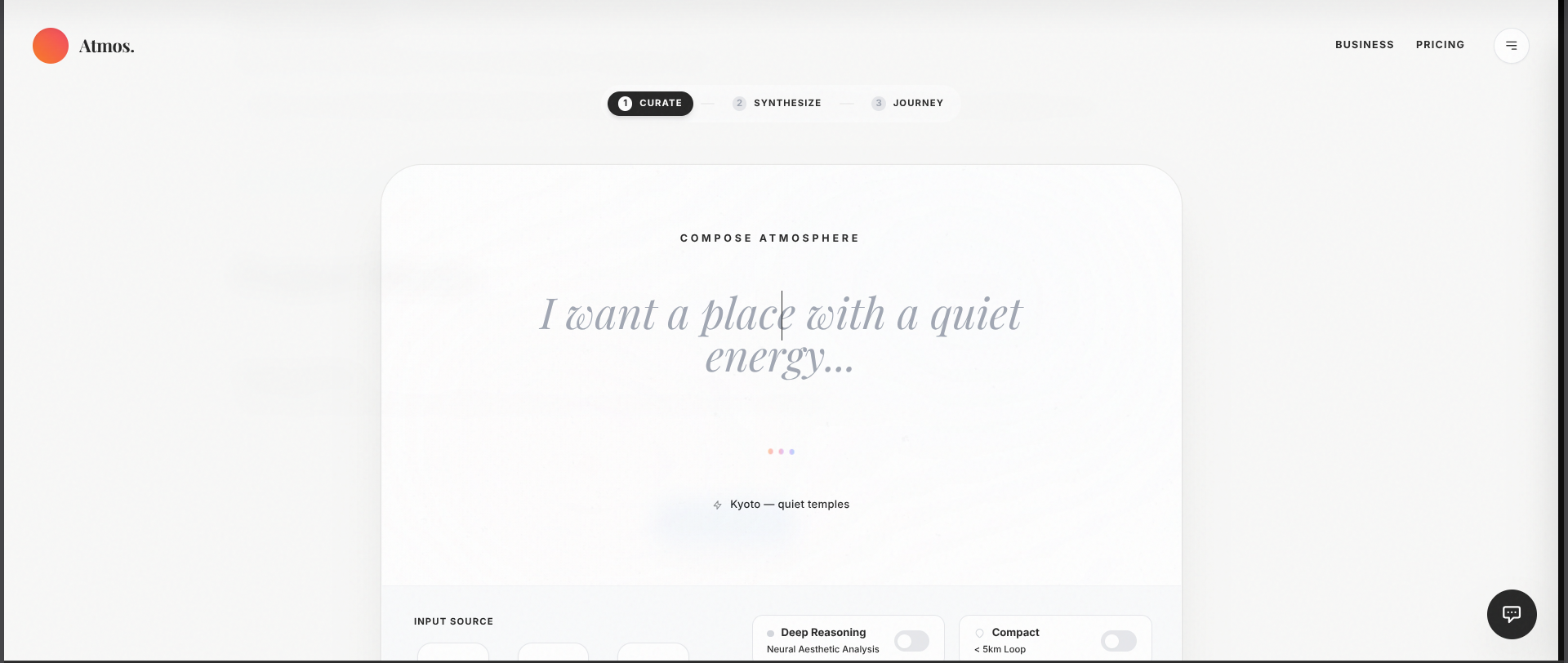
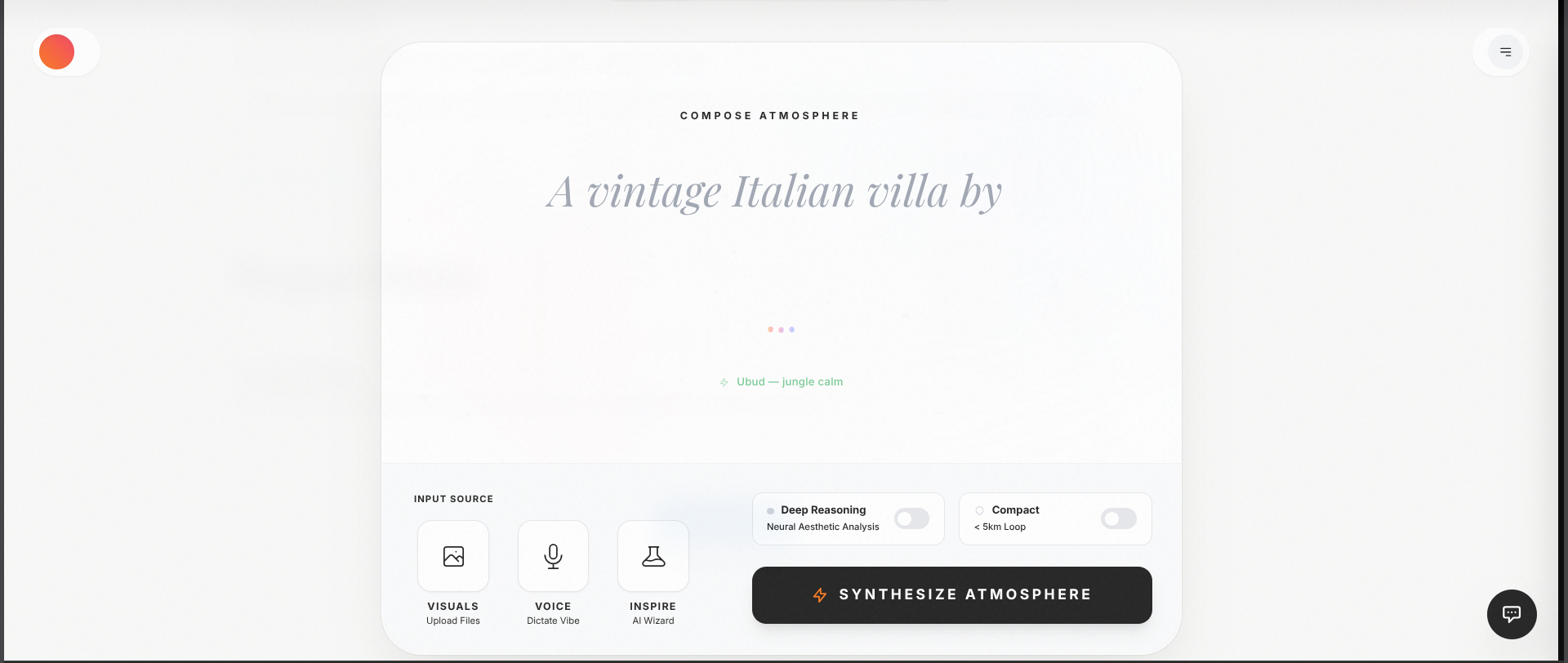
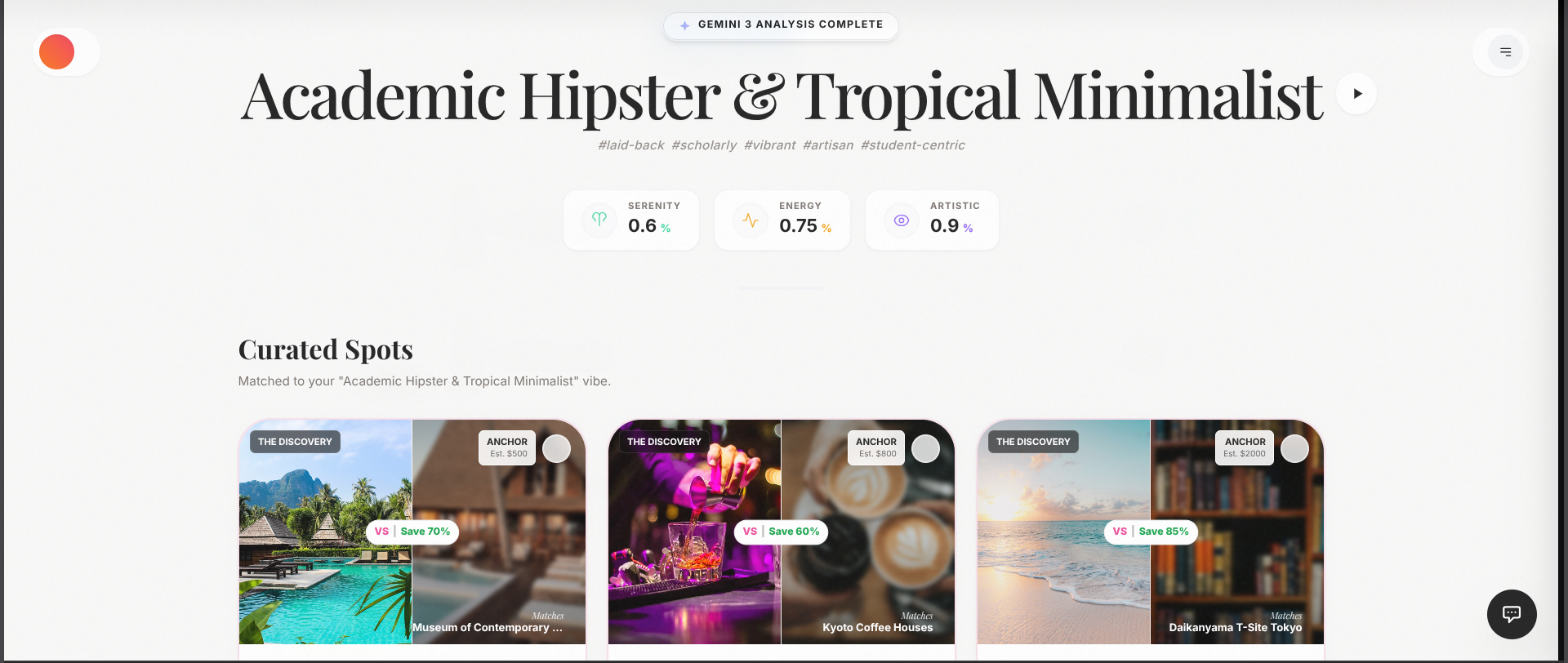
Multimodal Vibe Decoding: Users can upload a moodboard image, record a voice note, or type an abstract poetic phrase. Atmos extracts the emotional signature behind the input — such as lighting, texture, and architectural style — and maps it to real-world locations.
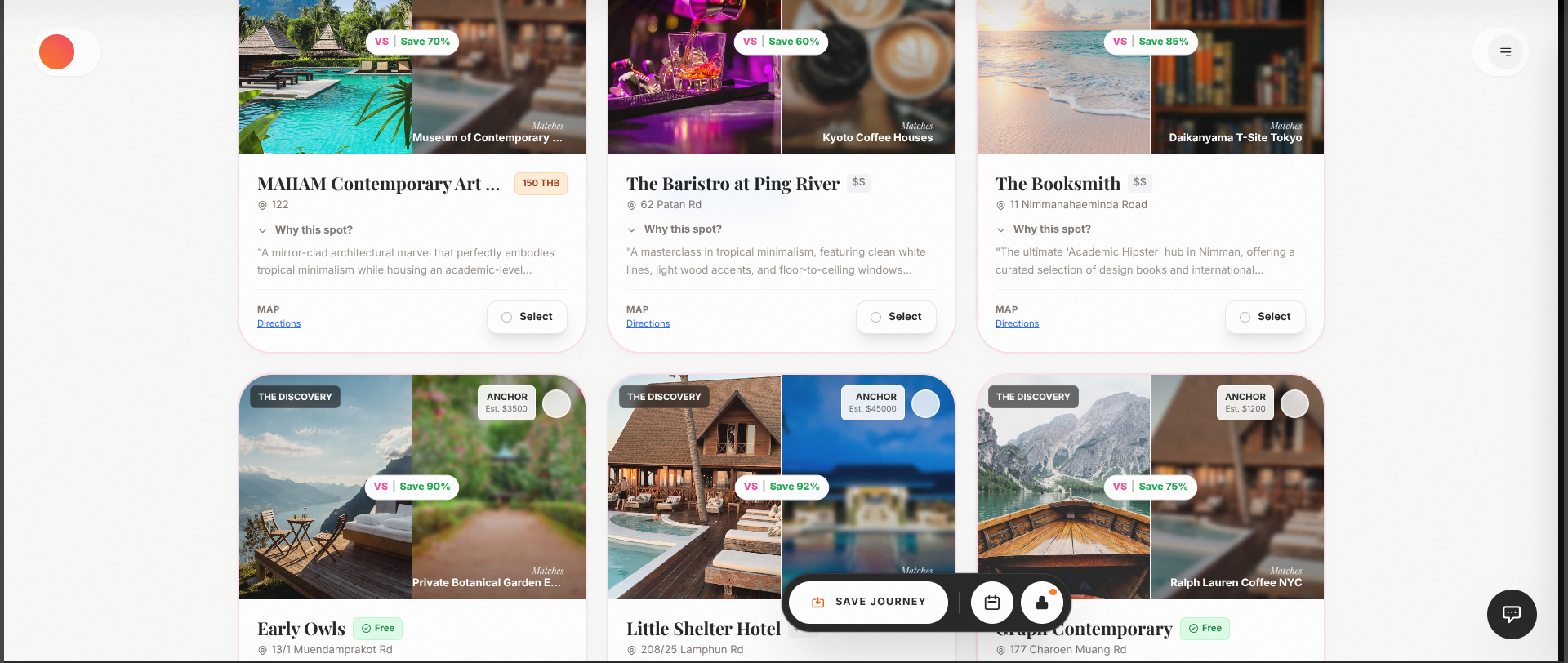
The "Vibe Dupe" Engine: Our core business logic. Atmos can identify a "Luxury Anchor" (e.g., a $1,000/night Aman hotel) and find an "Affordable Alternative" (e.g., a $150/night boutique spot) that shares the exact same aesthetic DNA.
Deep Reasoning & Grounding: Unlike generic chatbots, Atmos uses Gemini 3’s thinking process to deduce why a place fits the vibe, while strictly validating every recommendation against Google Search & Maps to ensure the place exists and is open.
How we built it
We prioritized a "Cinematic" User Experience backed by robust AI architecture:
- The Brain: We utilize Google Gemini 3 (Flash & Pro). Flash handles real-time conversational latency, while Pro is triggered for "Deep Reasoning" tasks to analyze complex visual aesthetics and cultural context.
- Truth Layer: To eliminate AI hallucinations, we implemented Google Search Grounding. Every recommendation is cross-referenced with real-world data before being presented to the user.
- Frontend Engineering: Built with React 19, Tailwind CSS, and Framer Motion. We designed a custom "Glassmorphism" UI with film-grain overlays to evoke a premium, editorial feel.
- Audio Intelligence: We use the Web Audio API to capture raw PCM data and send it directly to Gemini’s multimodal endpoint, allowing the AI to analyze the tone of voice, not just the text transcript.
This architecture allows us to scale both consumer experiences and future B2B integrations without changing the core system.
Challenges we ran into
AI Hallucinations: Early versions would invent beautiful hotels that didn't exist. We solved this by implementing a strict Grounding Protocol—if Google Maps can't find it, Atmos won't suggest it.
Subjectivity: "Chill" means different things to different people. We built a dynamic Clarification Loop; if the AI detects ambiguity, it generates specific follow-up questions to narrow down the intent.
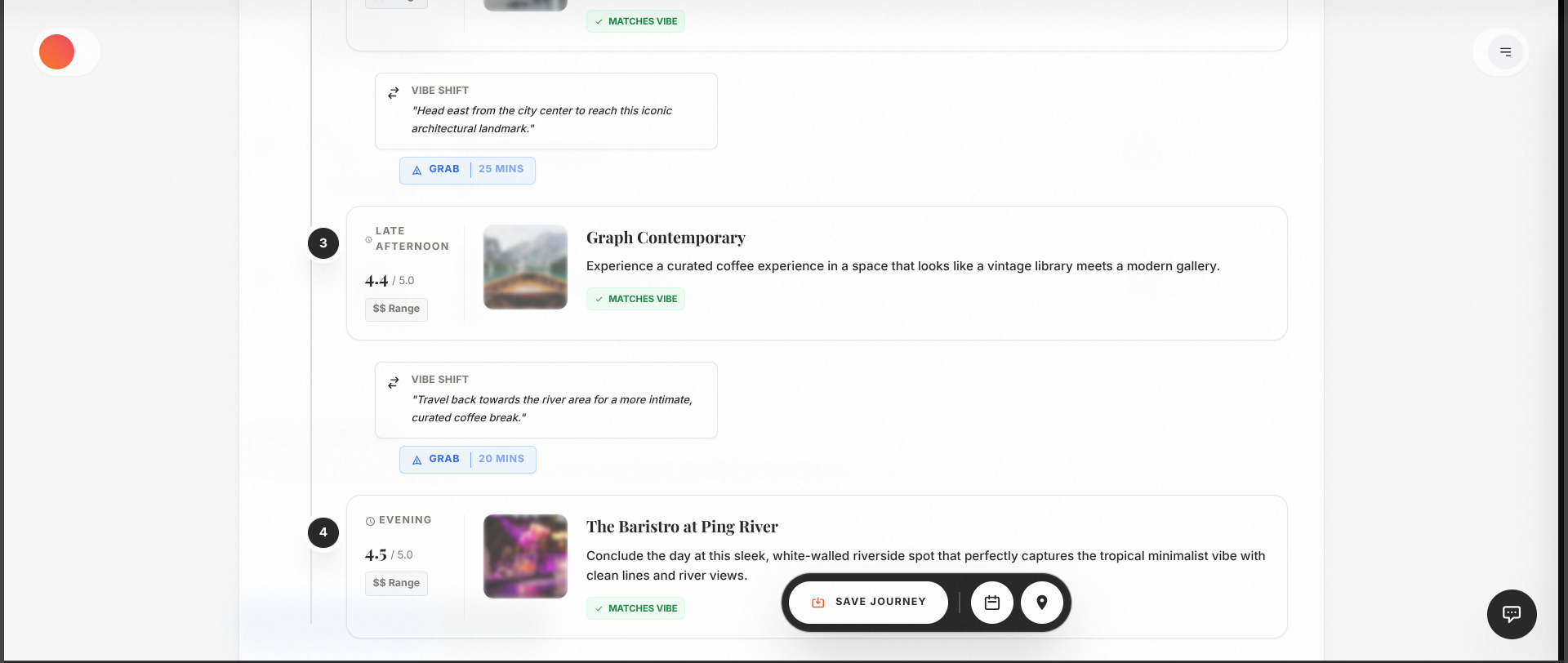
Latency Management: "Deep Reasoning" takes time. Instead of a spinning loader, we built a "Transparent Thought Process" UI that visualizes what the AI is analyzing (e.g., "Scanning architectural patterns...", "Checking price parity..."), turning latency into a trust-building feature.
Accomplishments that we're proud of
- The "Vibe Dupe" Algorithm: Successfully using AI to solve a real economic problem (finding luxury aesthetics at accessible prices).
- Visualizing Logic: We display Gemini’s reasoning_trace to the user, demystifying the black box and proving why a recommendation was made.
- Design System: Moving away from the cluttered dashboard style of traditional OTAs to a calm, single-focus interface that feels like a luxury magazine.
What we learned
The "Vibe" is Quantifiable (with the right prompt) We learned that abstract concepts like "Wong Kar-wai atmosphere" aren't just poetic—they are data. By forcing Gemini to break down an image into lighting temperature, texture density, and architectural era before making a recommendation, we transformed subjective feelings into objective search parameters.
Reasoning > Retrieval Standard RAG (Retrieval-Augmented Generation) wasn't enough for the "Vibe Dupe" feature. To find a hotel that feels like a $1,000 Aman Tokyo but costs $150, the AI couldn't just keyword match. It had to perform Deep Reasoning to understand the essence of luxury (minimalism, stone textures, silence) and find those attributes elsewhere. This proved that Gemini 3 isn't just a chatbot; it's a logic engine.
Latency as a Trust Mechanism We initially tried to hide the AI's processing time. We learned that was a mistake. When we exposed the Reasoning Trace (showing users how the AI was analyzing their request: "Checking weather patterns...", "Comparing price parity..."), user trust skyrocketed. In complex decision-making, users prefer a thoughtful pause over an instant, hallucinated answer.
Grounding is Non-Negotiable In the travel industry, a hallucination isn't a glitch; it's a ruined vacation. We learned that Google Search Grounding cannot be an afterthought. It must be the gatekeeper. If the AI cannot verify a venue's existence and open hours via Google Maps, the system is designed to reject the recommendation, no matter how "perfect" it fits the vibe.
The "Dupe Economy" Opportunity From a business perspective, we validated that Gen Z users aren't loyal to hotel brands; they are loyal to aesthetics. They are willing to switch from a major chain to an unknown boutique hotel instantly if the "Vibe Match" score is high enough. This confirmed Atmos’s core value proposition as a discovery engine for the mid-market.
What's next for Atmos.
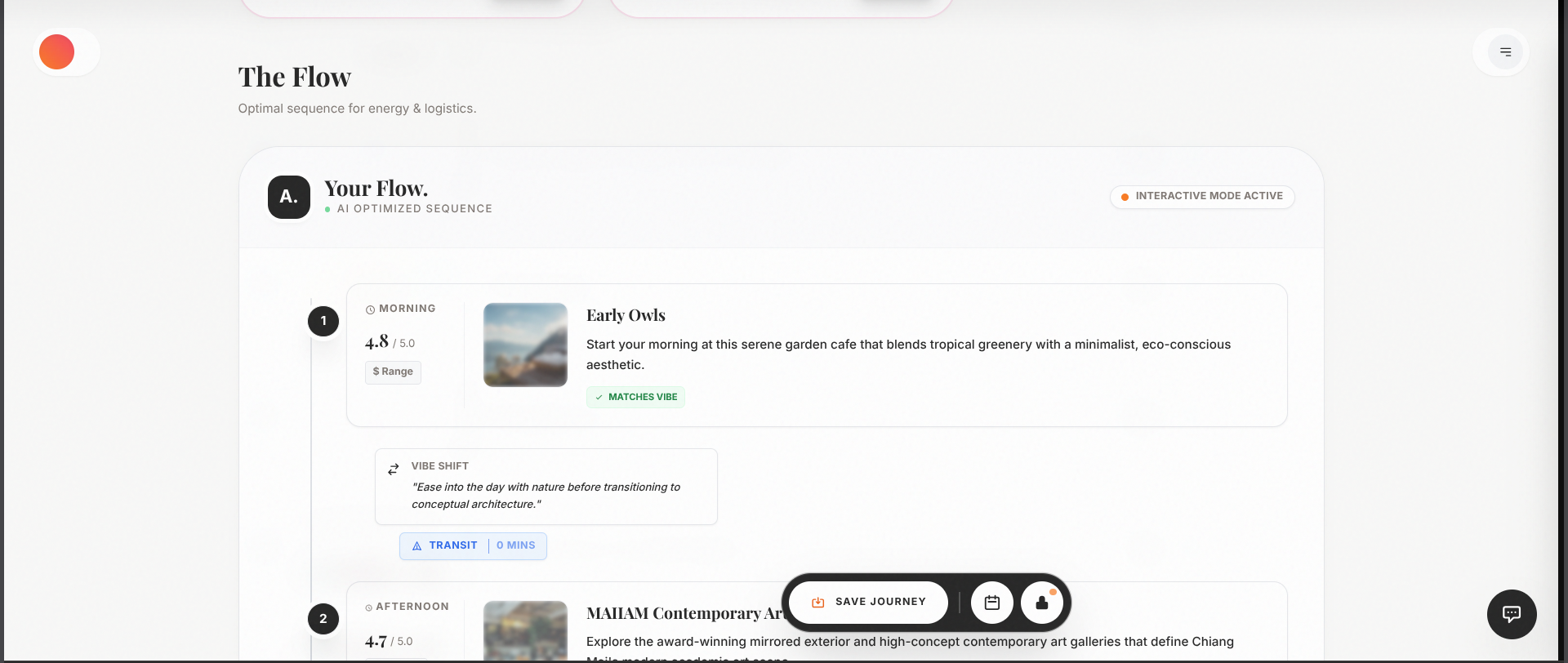
- Dynamic Itinerary Logistics: Using Gemini to calculate travel times and optimal routes between the curated spots.
- Social Vibe Matching: Allowing groups of friends to upload their individual moodboards and finding the "aesthetic intersection" for a group trip.
- B2B Integration: An API for boutique hotels to submit their "Vibe Data" directly to our engine for better matching.
Built With
- framer-motion
- gemini-3-flash-preview
- gemini-3-pro-preview
- google-search-grounding
- react
- tailwind
- typescript


Log in or sign up for Devpost to join the conversation.