Inspiration
Spotify is not good. While Spotify’s algorithm tries to match our moods, it often misses the nuance of what we’re actually feeling. Music should understand the listener better — not just through skips and likes, but through genuine emotional context.
What it does
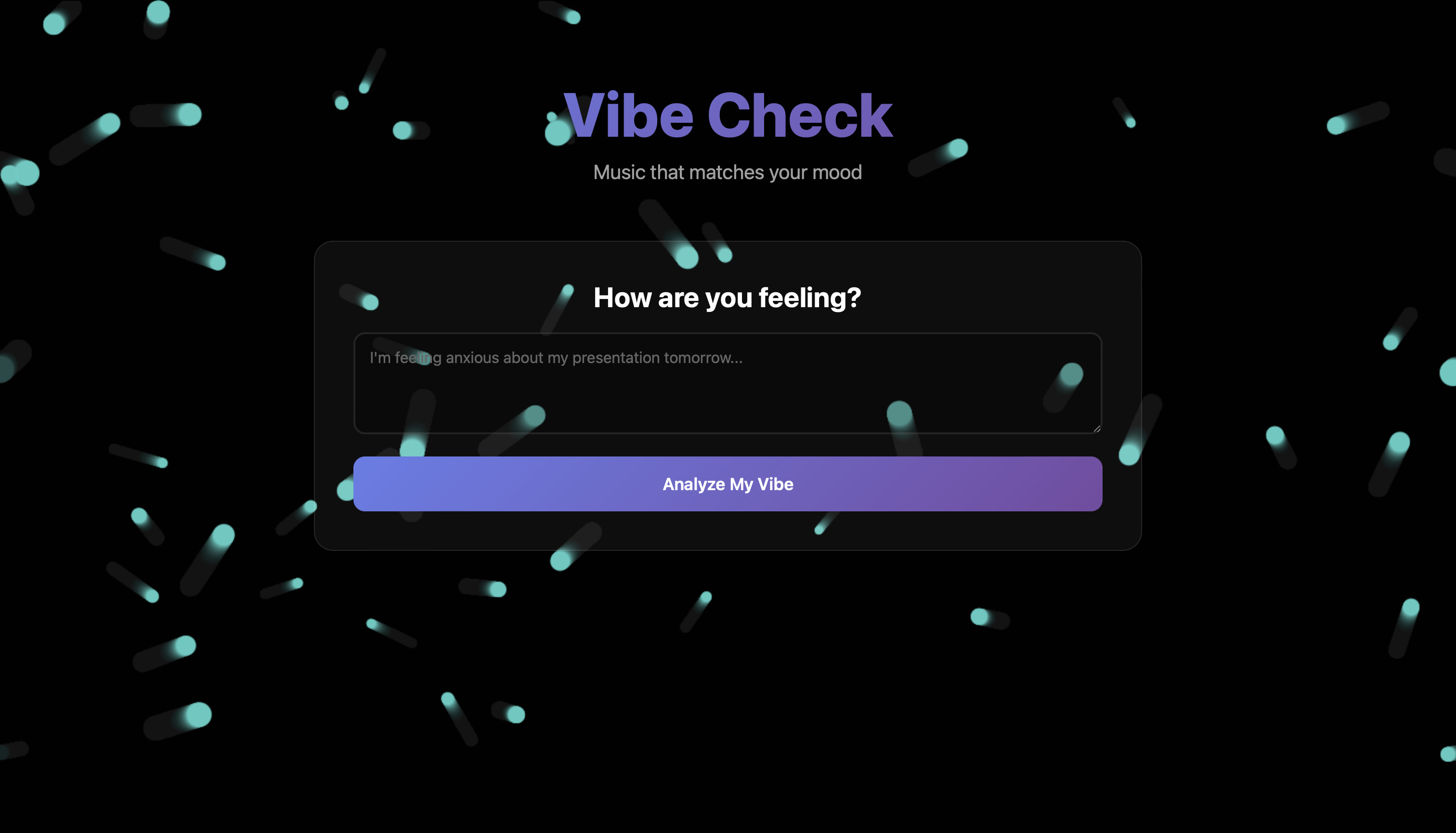
Vibe Check analyzes your emotional state either by reading a picture of your face or by interpreting a written description of your mood. Based on that analysis, it generates a personalized Spotify playlist designed to match or improve your emotional state — whether you need motivation, comfort, focus, or calm.
How we built it
We combined computer vision and natural language processing to interpret emotions from both images and text.
- Used a pre-trained emotion recognition model for facial analysis.
- Used a sentiment and tone analyzer for text-based input.
- Connected to the Gemini API to generate playlists tailored to the detected mood.
- Built in JavaScript, integrated APIs, and developed a simple frontend where users can describe their emotions.
Challenges we ran into
- Mapping emotions based on the users descriptions and creating a playlist based on the description.
- Managing Gemini API limitations and authentication tokens.
- Claude API was not free, thus we had to alter all of our code to fit into Gemini API.
Accomplishments that we're proud of
- Finishing the project, although we did have to scratch a good amount because of the API problems.
What we learned
We learned how to merge emotion analysis with real-world applications using APIs. We also discovered how powerful emotional data can be in creating more human-centered digital experiences, when handled ethically and responsibly.
What's next for Vibe Check
- Add voice-based emotion detection.
- Integrate wearable or physiological data (like heart rate) for deeper insight.
- Let users track their emotional trends and music patterns over time.
- Deploy as a web or mobile app for broader accessibility.


Log in or sign up for Devpost to join the conversation.