-
-
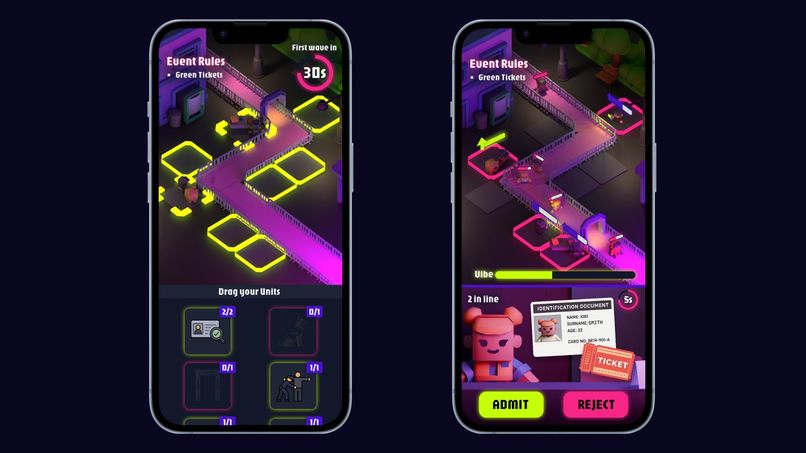
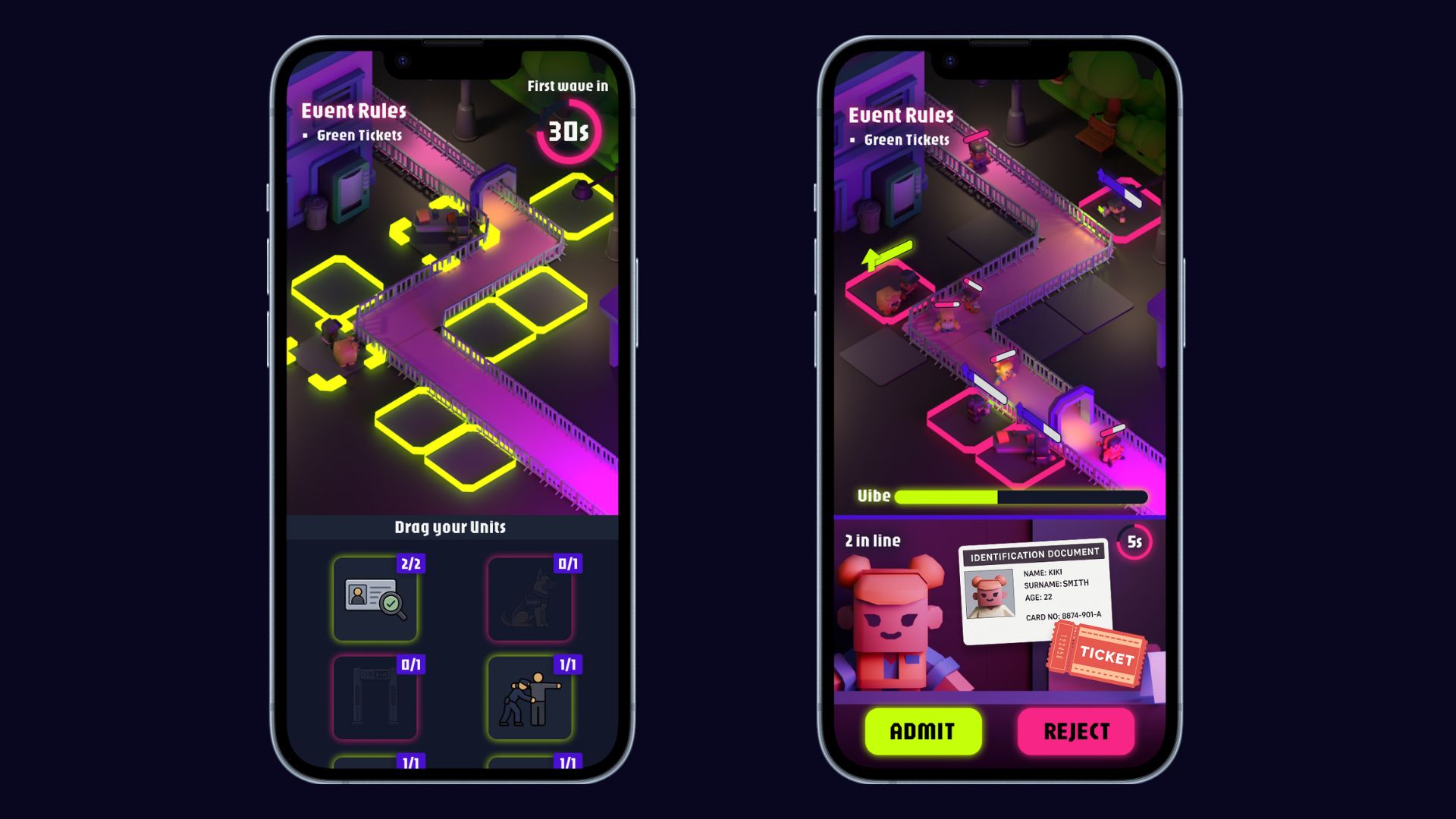
Setup Before Wave and During Wave Screens
-
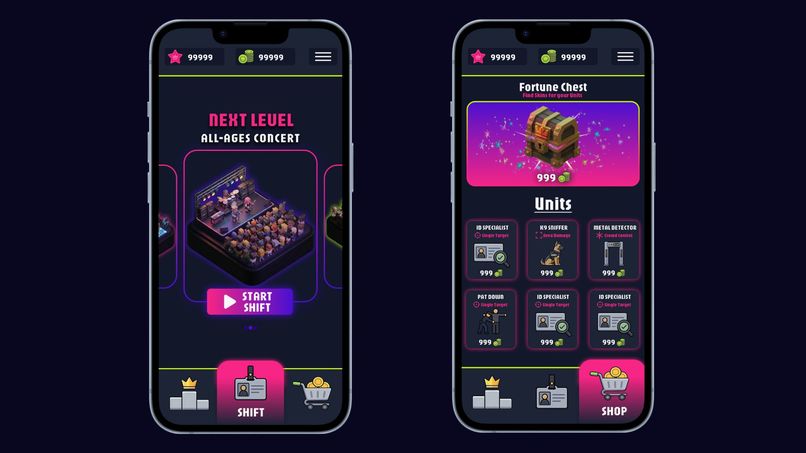
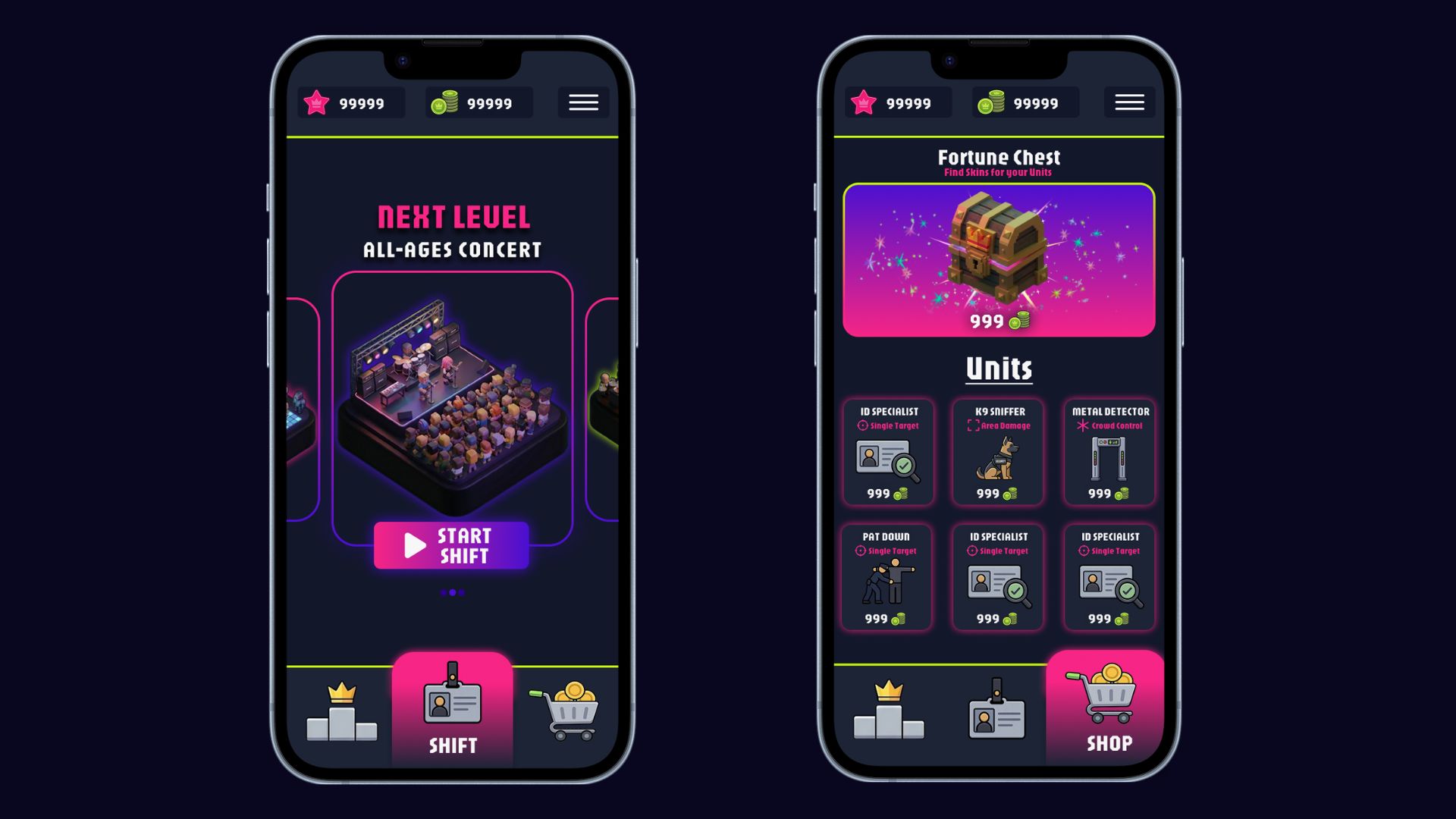
Main Menu and Shop
Inspiration
The inspiration for Vibe Check came from analyzing a core limitation in the mobile Tower Defense (TD) genre: the passive waiting problem. In traditional TD games, players place their defenses and then passively watch the wave resolve. We wanted to eliminate this downtime and concept a state of "controlled panic" by introducing high-stakes multitasking. By fusing the macro-strategy of lane defense with the frantic, micro-management of a Papers, Please-style manual evaluation desk, we designed a gameplay loop where the player's tactical placement directly dictates their real-time manual workload.
What it does
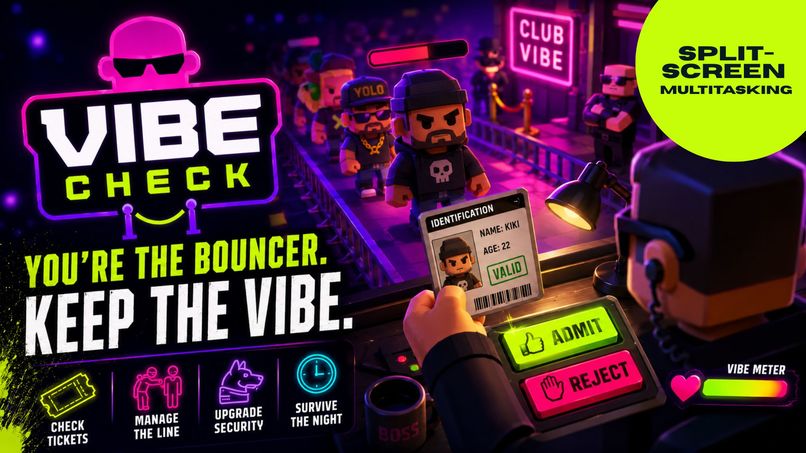
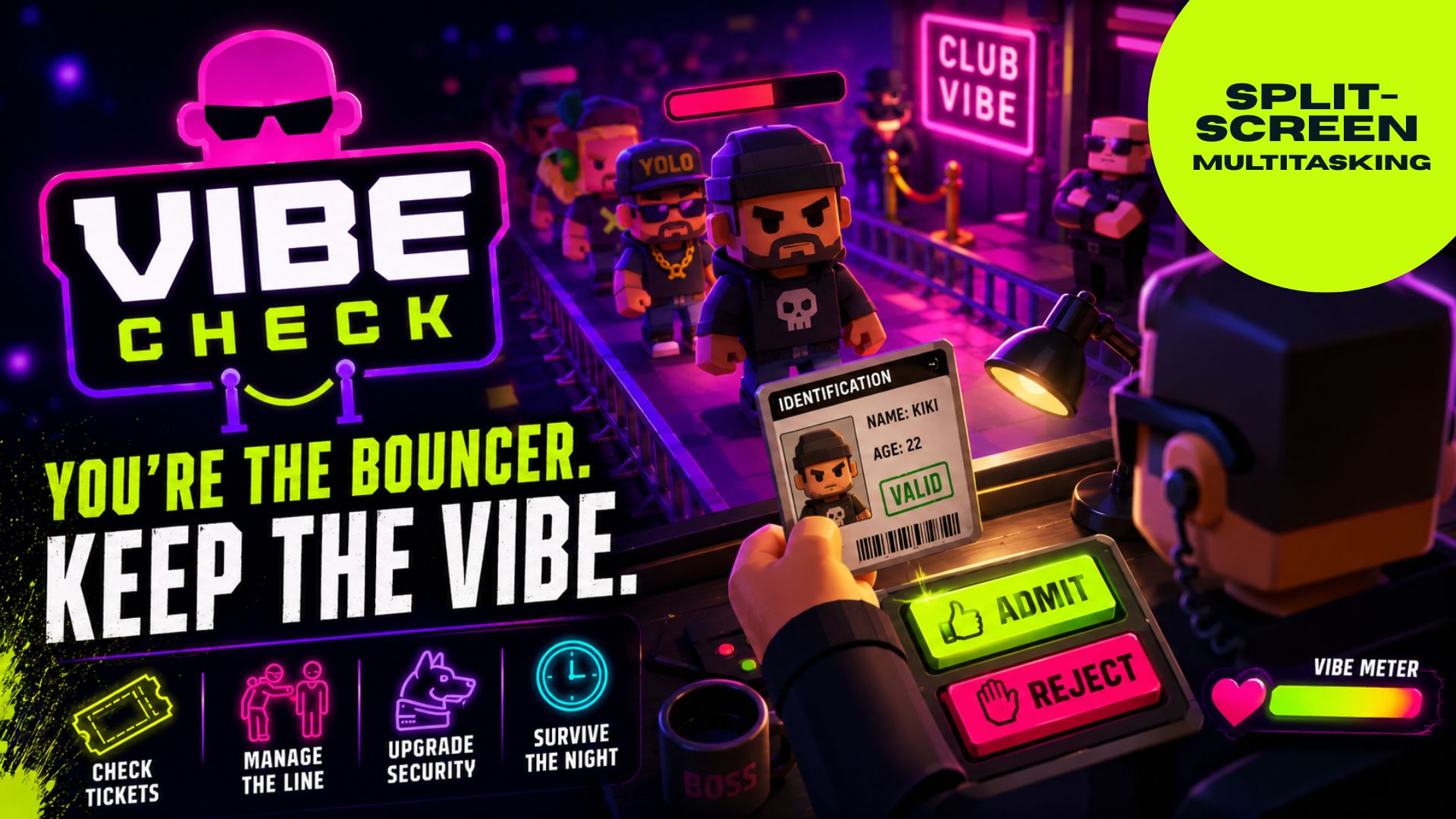
Vibe Check is a conceptual hybrid lane Tower Defense and real-time strategy game where the player acts as the Head Bouncer of Meta Horizon's most exclusive virtual nightclubs. The goal is to keep the venue's Vibe Meter at maximum through automated and manual filtering.
The core design dictates that gameplay happens simultaneously across a split-screen interface:
- The Guest Line: A macro-layout where the player places and upgrades specialized bouncer structures (Towers) along the entrance lane to automatically damages out obvious threats using intimidation, physical tossing, or distraction.
- The Doorway: A micro-management zone where any incoming guest that survives the defensive line triggers an immediate, face-to-face confrontation at the doorway desk. The player must manually verify their data against the night's Event Rules, look for contraband, and decide to Admit or Reject them before a countdown timer expires.
How we built it
The project was fully conceptualized through a structured design workflow focused on high-fidelity mapping and documentation:
- Brainstorming & GDD: We began with paper-based brainstorming to lock in the split-screen loop. We then drafted a comprehensive Game Design Document (GDD) to lay out the core mechanics, unit branches, and game loops.
- Player Journey Map: We created a focused Player Journey Map and flowchart detailing the exact user experience across the initial 1 to 15 minutes of gameplay. This map defines how mechanics and interface demands scale smoothly across distinct phases to prevent player fatigue.
- Visual Identity & Mock-ups: We established a targeted moodboard and color palette to match the exclusive virtual nightclub theme. We then utilized Figma to design the interface mock-ups for mobile screens and Blender to render 3D concept screenshots of the Guest Line and Doorway desk.
- Production Plan & Submission: Based on our design assets and the defined Minimum Viable Product (MVP) framework, we developed a structured production plan to outline future feature scaling. We thoroughly reviewed all design components before final submission.
Challenges we ran into
The primary challenge during the design phase was conceptualizing the layout of the split-screen multitasking interface to ensure the layout felt challenging rather than frustrating. Because actions are designed to happen simultaneously, we had to carefully design the visual workflow so that a poor defensive line wouldn't visually overload the player at the manual desk. Conversely, an overly restrictive automated defense had to be designed with clear consequences, such as accidentally throwing out paying VIPs and starving the player's economy. Mapping out this visual layout and structural balance within the GDD required careful theoretical iteration to maintain the intended feeling of an overwhelmed but capable gatekeeper.
Accomplishments that we're proud of
We successfully solved the theoretical passive waiting problem of mobile TD games by designing a visual layout that keeps the player fully engaged throughout the entire match duration. We are also proud of the dynamic scaling established in our design documentation between the strategic unit concepts (such as the ID Specialist or the Metal Detector) and the escalating layout of the manual checks, which evolve from simple color-coded ticket validation to intricate face-to-photo matching.
What we learned
This project highlighted the importance of progressive complexity layering and structured retention systems in mid-core mobile design. Through drafting the GDD and Player Journey Map, we learned how to gradually introduce concepts to prevent player fatigue, transitioning smoothly from Minute 1 basics to complex choices by Minute 15, such as deciding between a premium bouncer or upgrading the manual ID scanner. Additionally, we realized how essential long-term progression loops—like regional leaderboards, Daily Loyalty Rewards, and Daily VIP Tasks—are to establishing a compelling metagame concept.
Built With
- blender
- canva
- diagrams.net
- figma
- google-docs


Log in or sign up for Devpost to join the conversation.