-
-
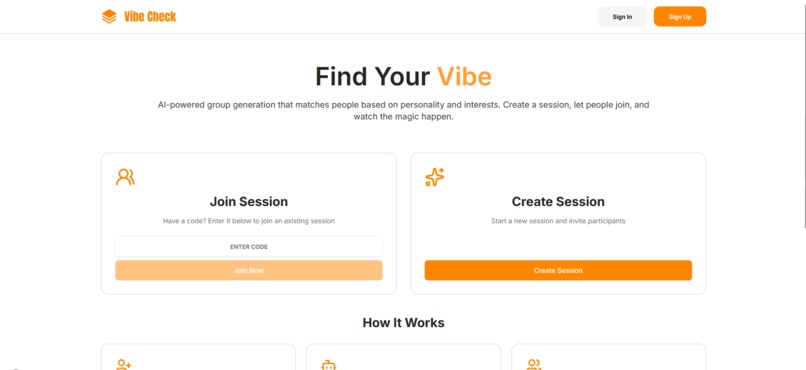
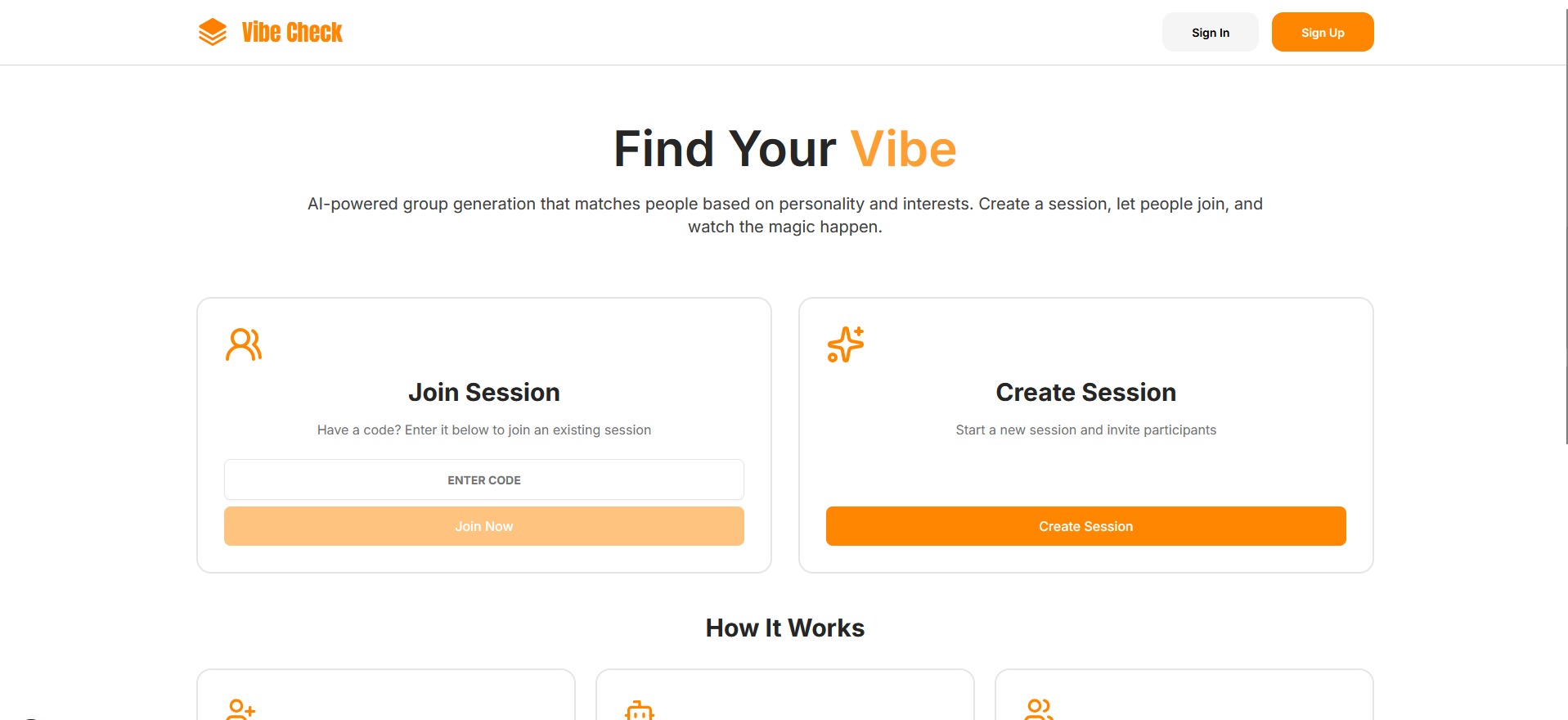
Hero Page
-
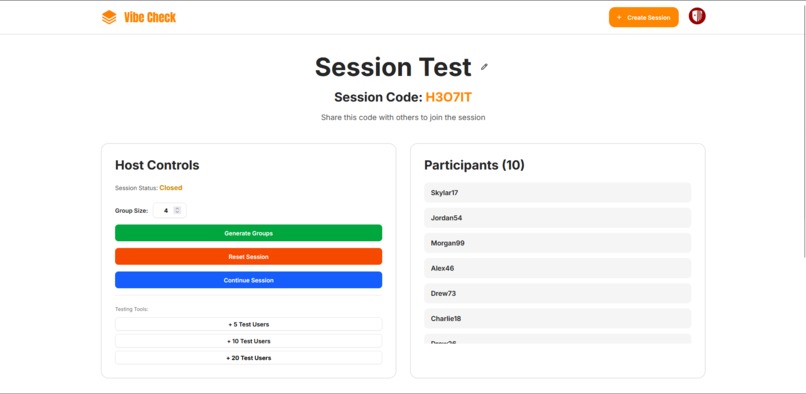
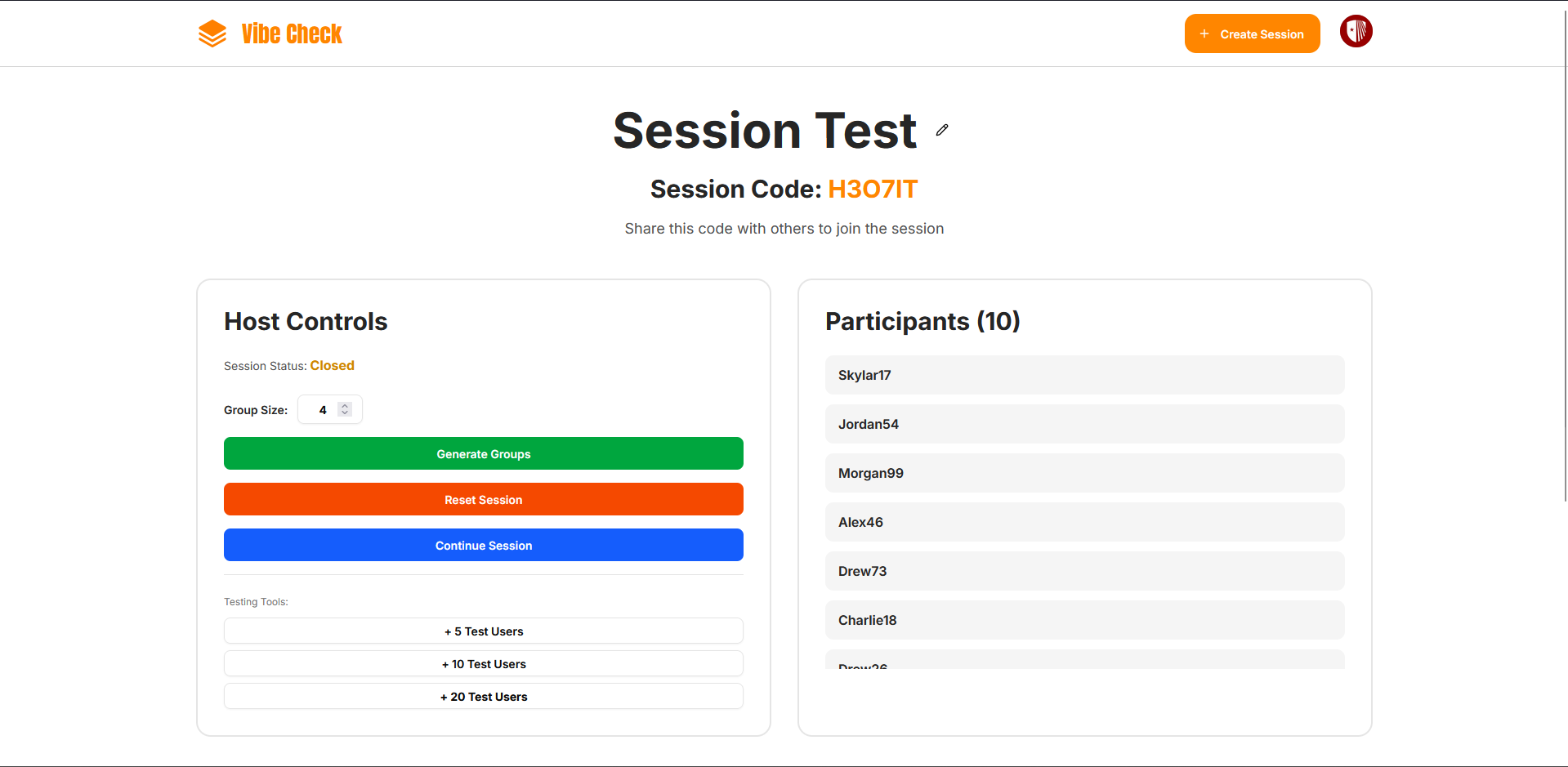
Generating Groups Control
-
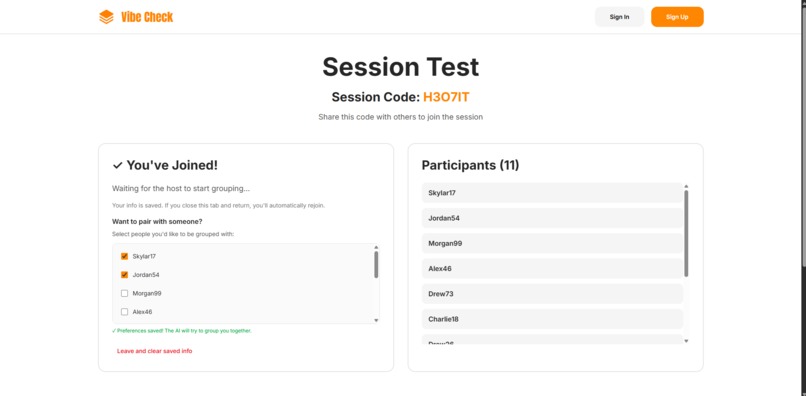
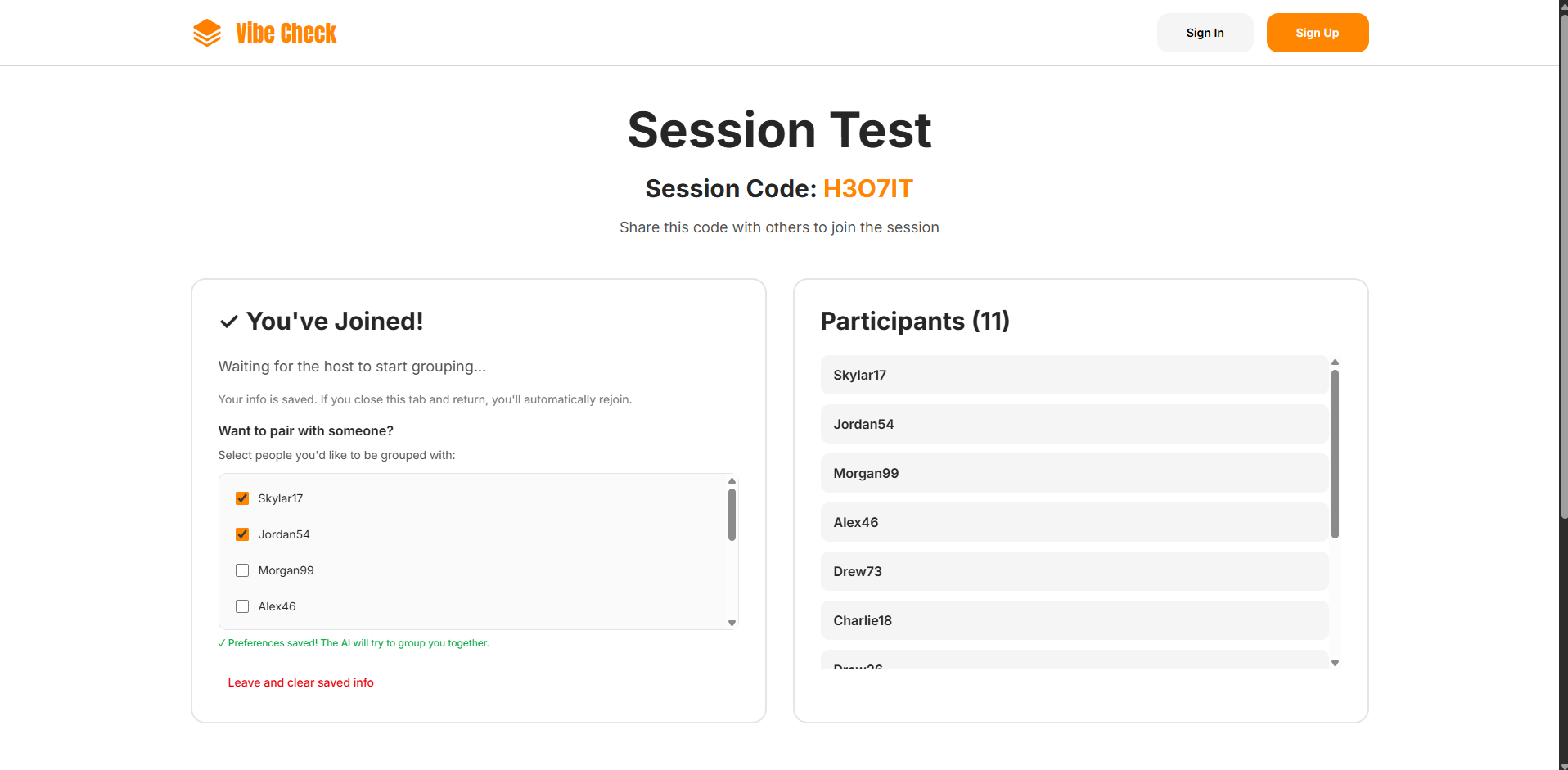
Participant Control
-
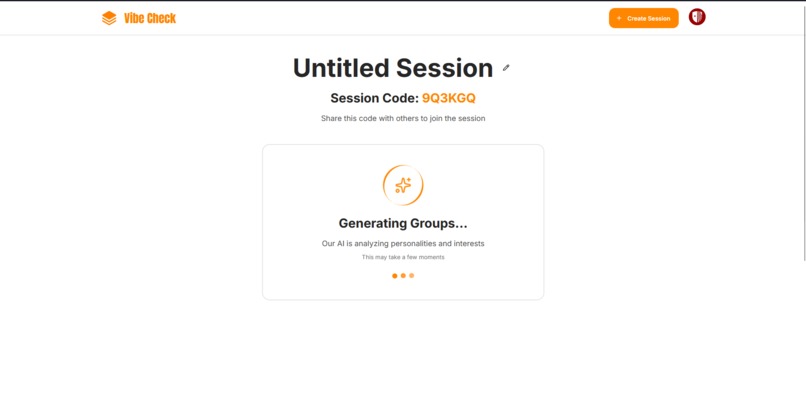
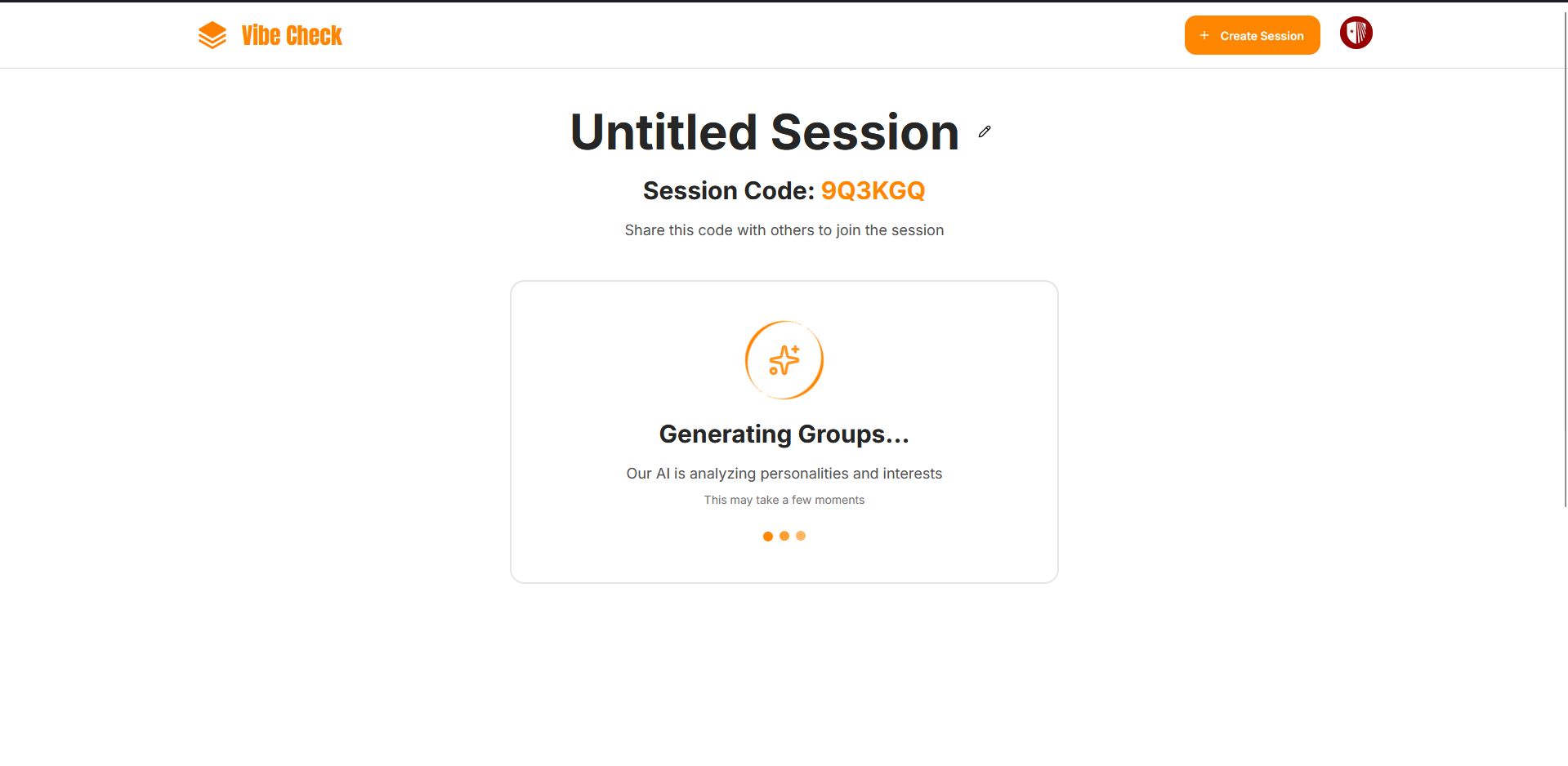
Loading Groups
-
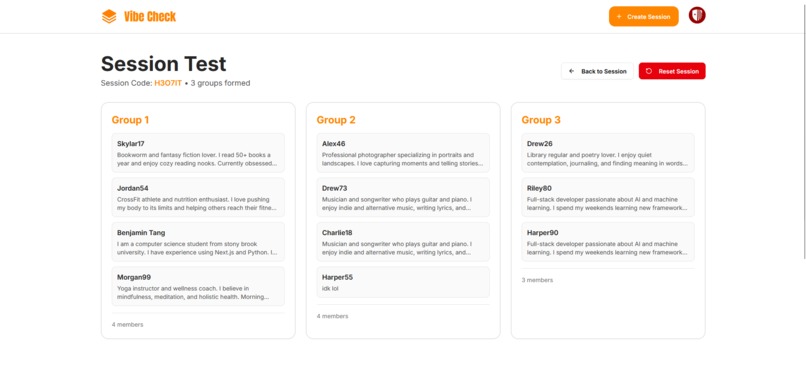
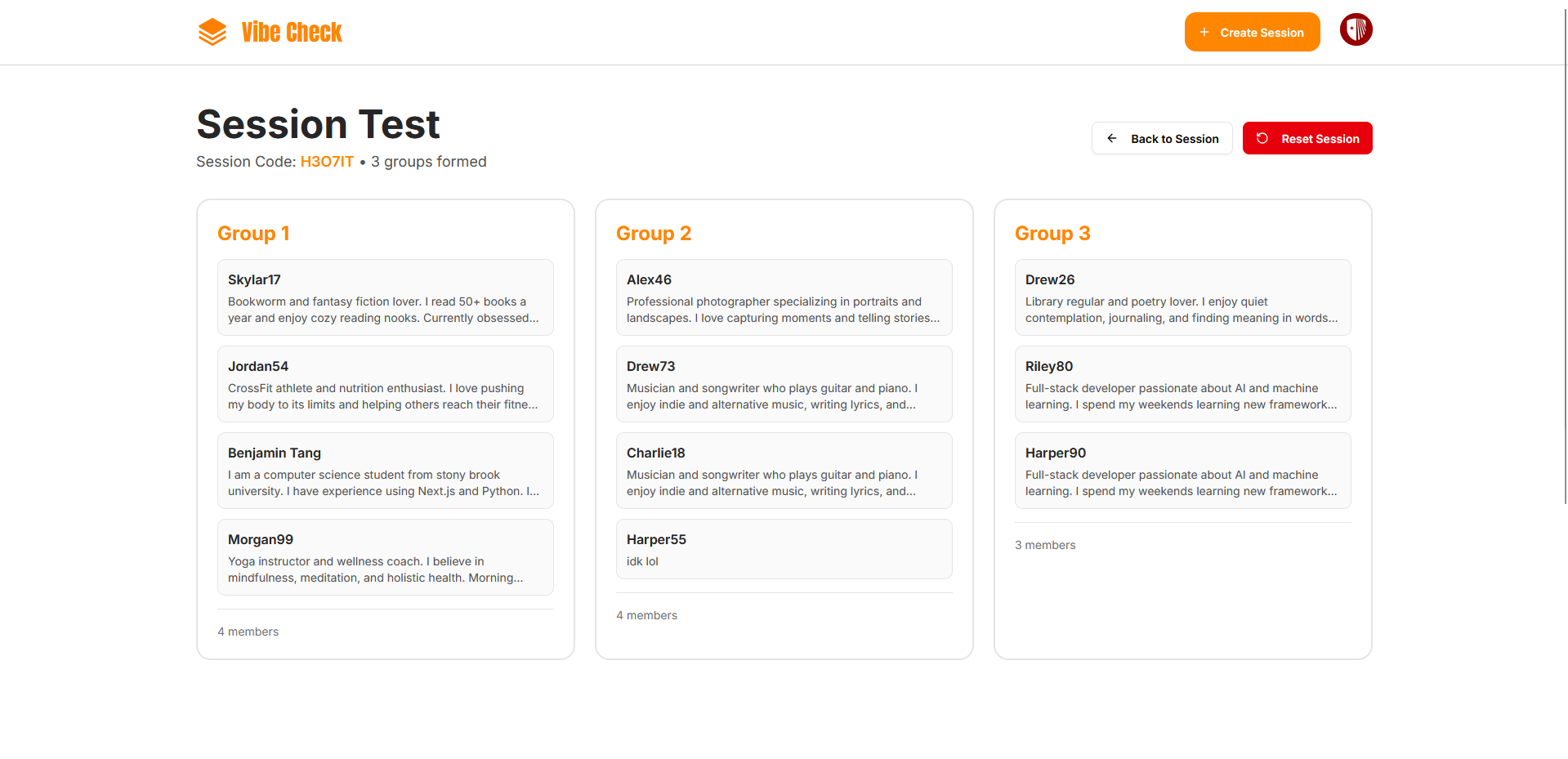
Session Master Group Overview
-
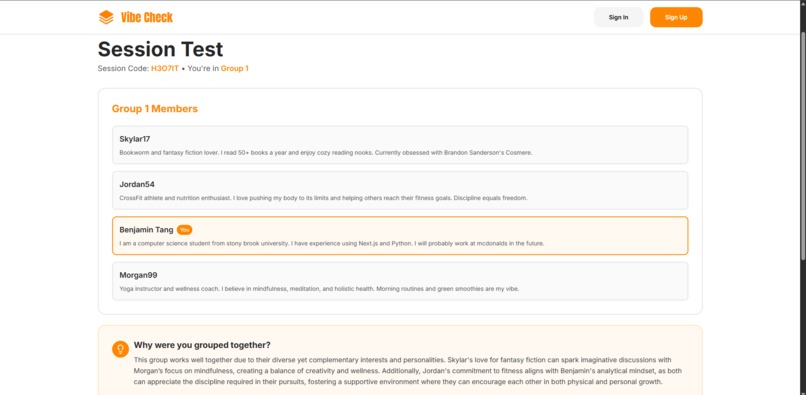
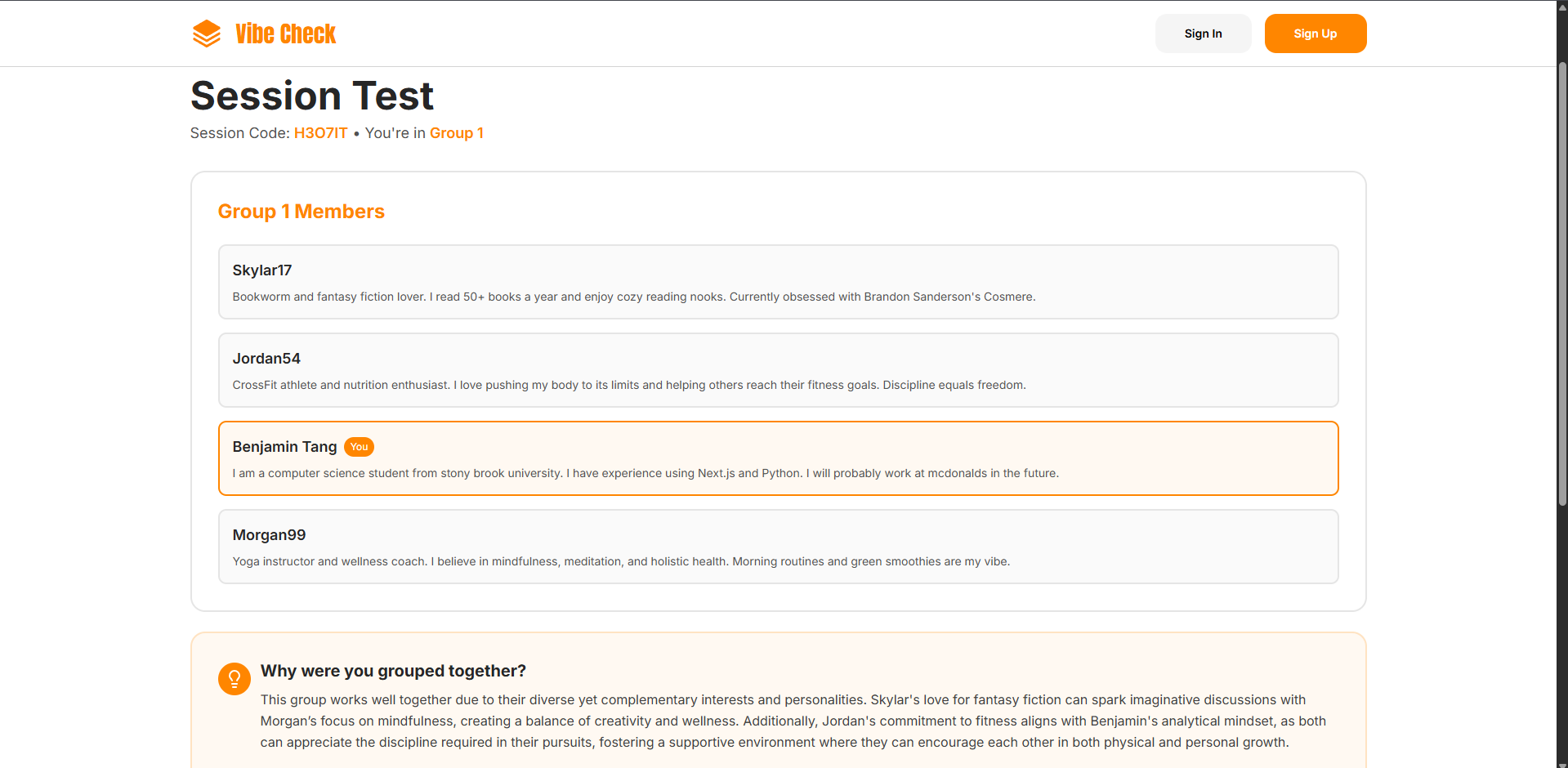
Participant Group Selection with AI Reasoning
Inspiration
This was our first hackathon, and as three strangers, we experienced the group formation problem firsthand. We noticed many solo participants claiming they 'didn't care' who they paired with, but this indecision was masking the real challenge: efficiently matching compatible people. We built an AI-powered solution to transform this chaotic process into smart, instant team formation.
What it does
Inspired by the interactive style of Kahoot, our platform allows a session “master” to create and manage a team-formation session using a unique join code. Participants enter the code to join, while the session master gets a real-time overview of everyone in the room.
Each participant provides their name, a short personal summary, and details about their skills, strengths, and interests. This information helps the AI understand their background, personality, and preferences. Participants can also indicate people they’d like to team up with (though pairings are not guaranteed).
Once the session master closes the room, no additional participants can join. The master can then set the desired team size and generate teams with a single click. Using the OpenAI API, the system automatically creates balanced teams based on compatibility, skills, and preferences.
After teams are generated, participants can view their teammates along with an AI-generated explanation describing why the group was formed the way it was, turning what is usually a chaotic process into a transparent, intelligent, and efficient experience.
How we built it
The project was built using Next JS for the front end, Clerk Auth for authorization, Supabase for database, and Open AI API for the AI. We wanted something that could be built quickly and cheaply.
Challenges we ran into
As three strangers participating in our first hackathon, one of our biggest challenges was learning how to work effectively as a team under intense time pressure. We had to quickly understand each other’s strengths, weaknesses, and working styles while simultaneously building a functional product. Balancing collaboration, communication, and rapid development was a learning experience in itself.
From a technical perspective, ensuring real-time synchronization between the session master and participants proved difficult. Keeping the session state consistent, especially as users joined, submitted information, and waited for team generation, required careful handling of live updates and edge cases. Making the experience feel seamless and responsive while managing shared session data was one of the more complex parts of the build.
Accomplishments that we're proud of
We successfully participated in and completed our first-ever hackathon as a team. Beyond just building a project, we learned how to collaborate under pressure and turn an idea into a working product within a limited timeframe.
We also gained hands-on experience integrating a full tech stack into a cohesive full-stack application and deploying it to the web. Seeing our idea move from concept to a live, functional platform was a major milestone for all of us.
What we learned
We learned how to work efficiently under pressure, make fast decisions, and prioritize core features within tight time constraints.
We gained hands-on experience building and deploying a full-stack application using a modern web stack, understanding how frontend, backend, and deployment fit together.
Most importantly, we learned how to integrate AI as a core feature that drives intelligent decision-making and enhances the user experience.
What's next for Vibe Check
If developed beyond the hackathon, Vibe Check could evolve into a scalable team-formation platform for hackathons, classrooms, and corporate environments.
Future improvements would focus on optimizing performance to handle larger participant pools and more complex matching scenarios. We would refine the AI matching algorithm to better balance skill diversity, personality fit, and user preferences, making team formation even smarter and more transparent.
We also envision expanding user control, allowing participants to provide richer input, track team success metrics, reshuffle or regenerate teams, and compare multiple grouping options before finalizing.
Long term, Vibe Check could offer customizable session templates for different event types and API access so organizers can seamlessly integrate intelligent team formation into their own platforms.
Built With
- clerk
- next.js
- openai
- shadcn
- supabase
- tailwind


Log in or sign up for Devpost to join the conversation.