-
-
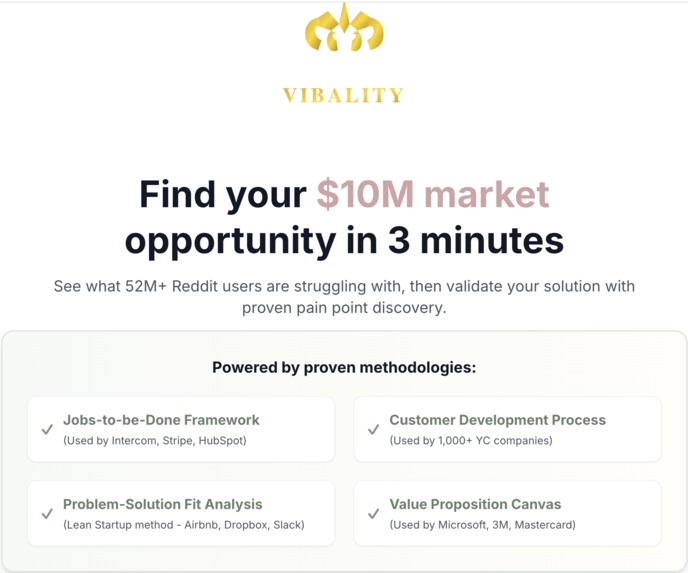
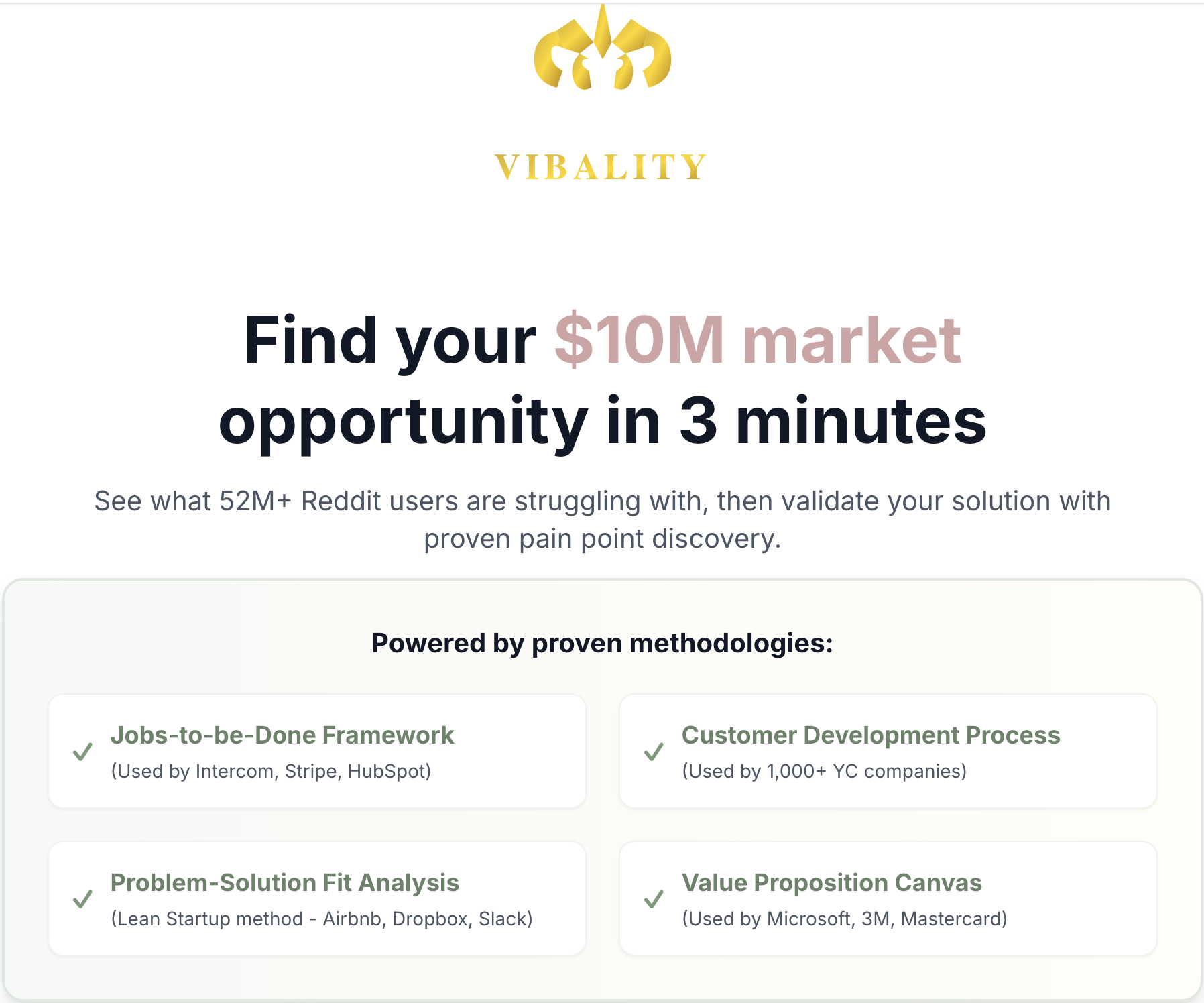
Home Page
-
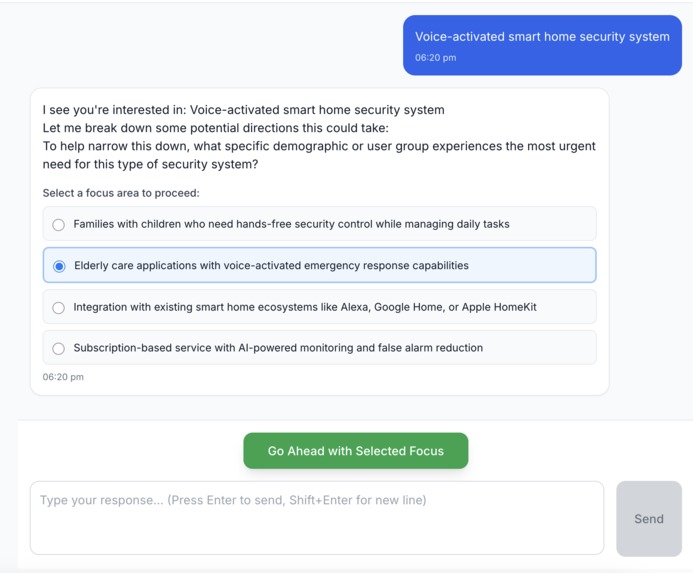
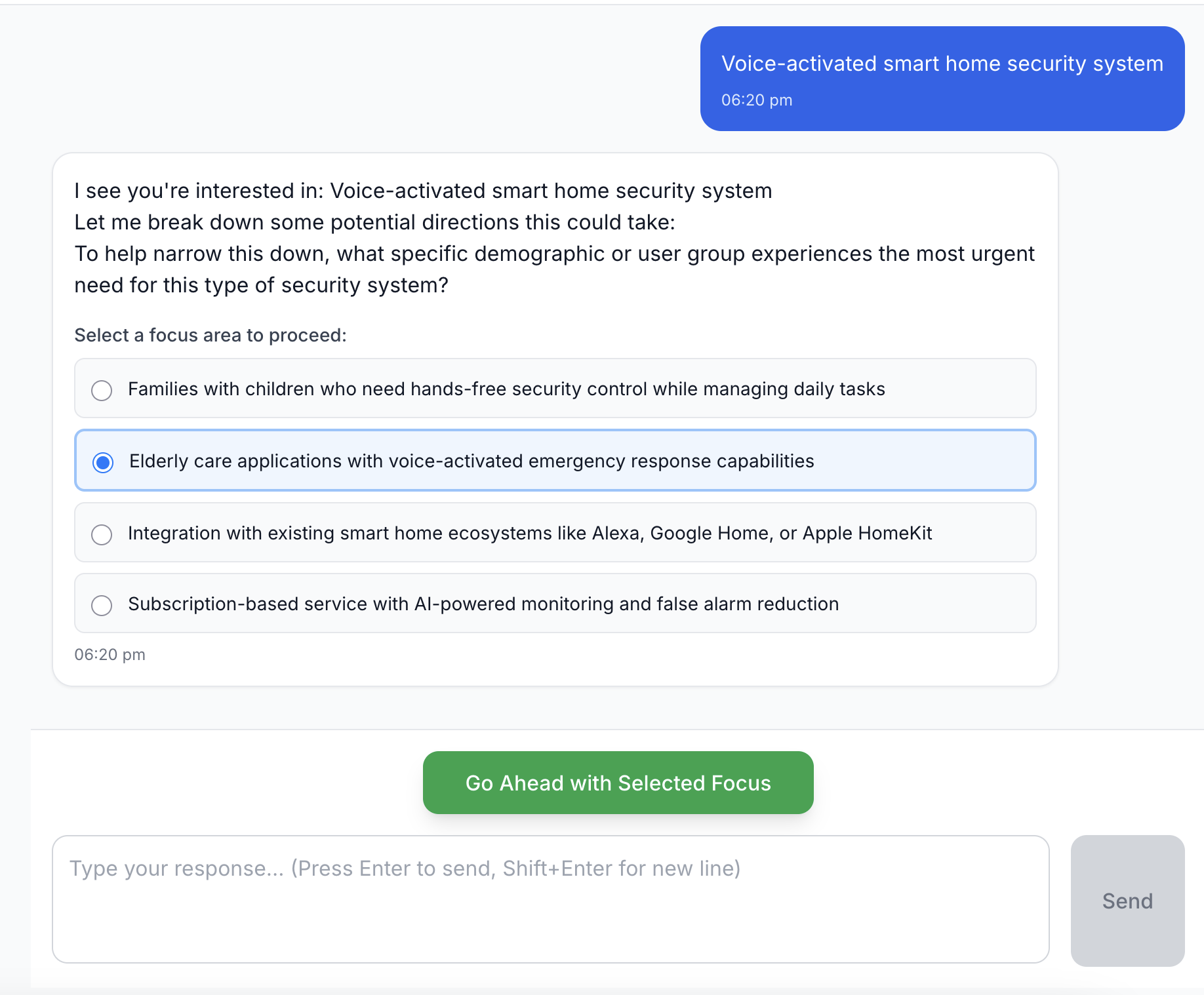
The AI Chatbot talking to the user
-
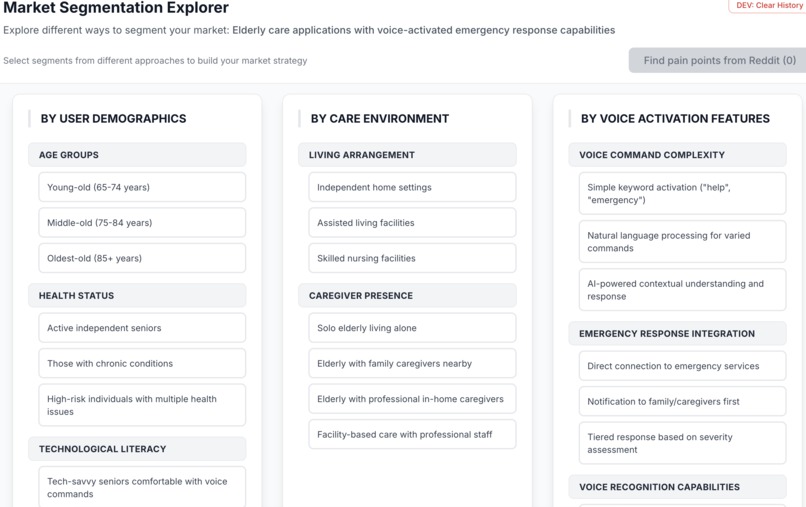
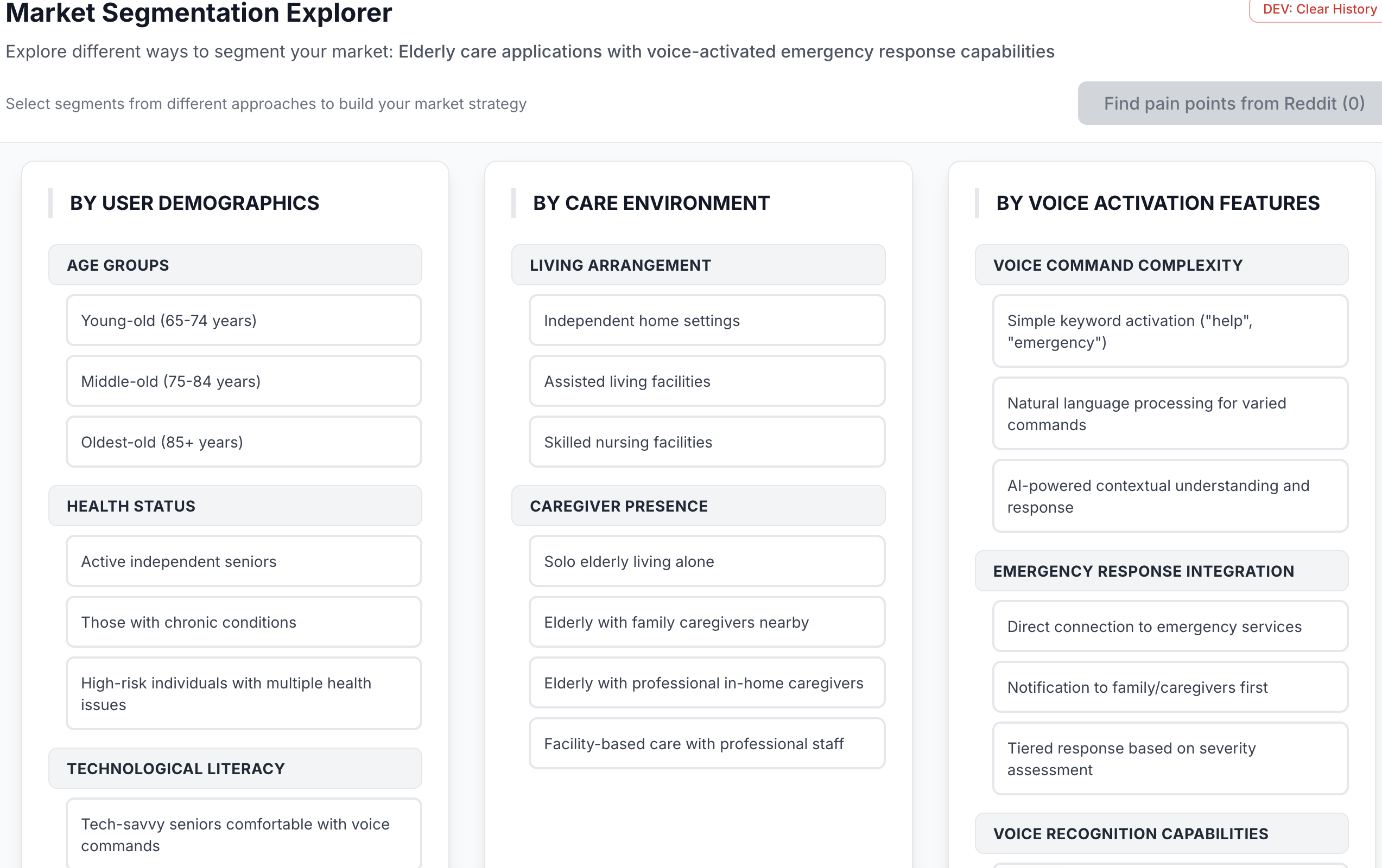
The Market Segmentation
-
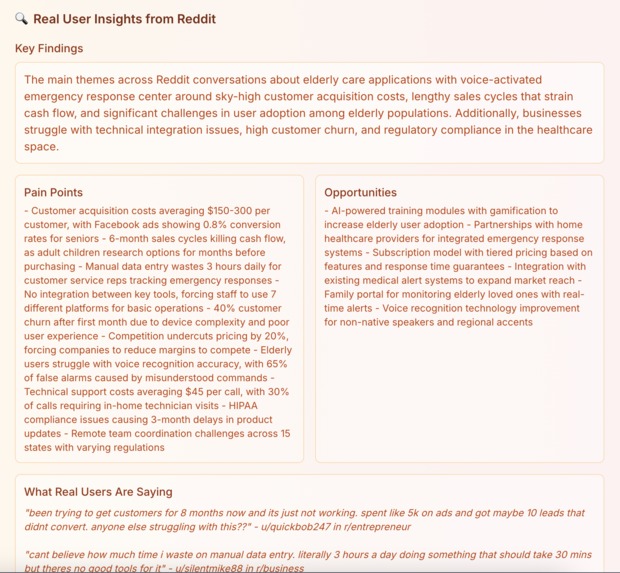
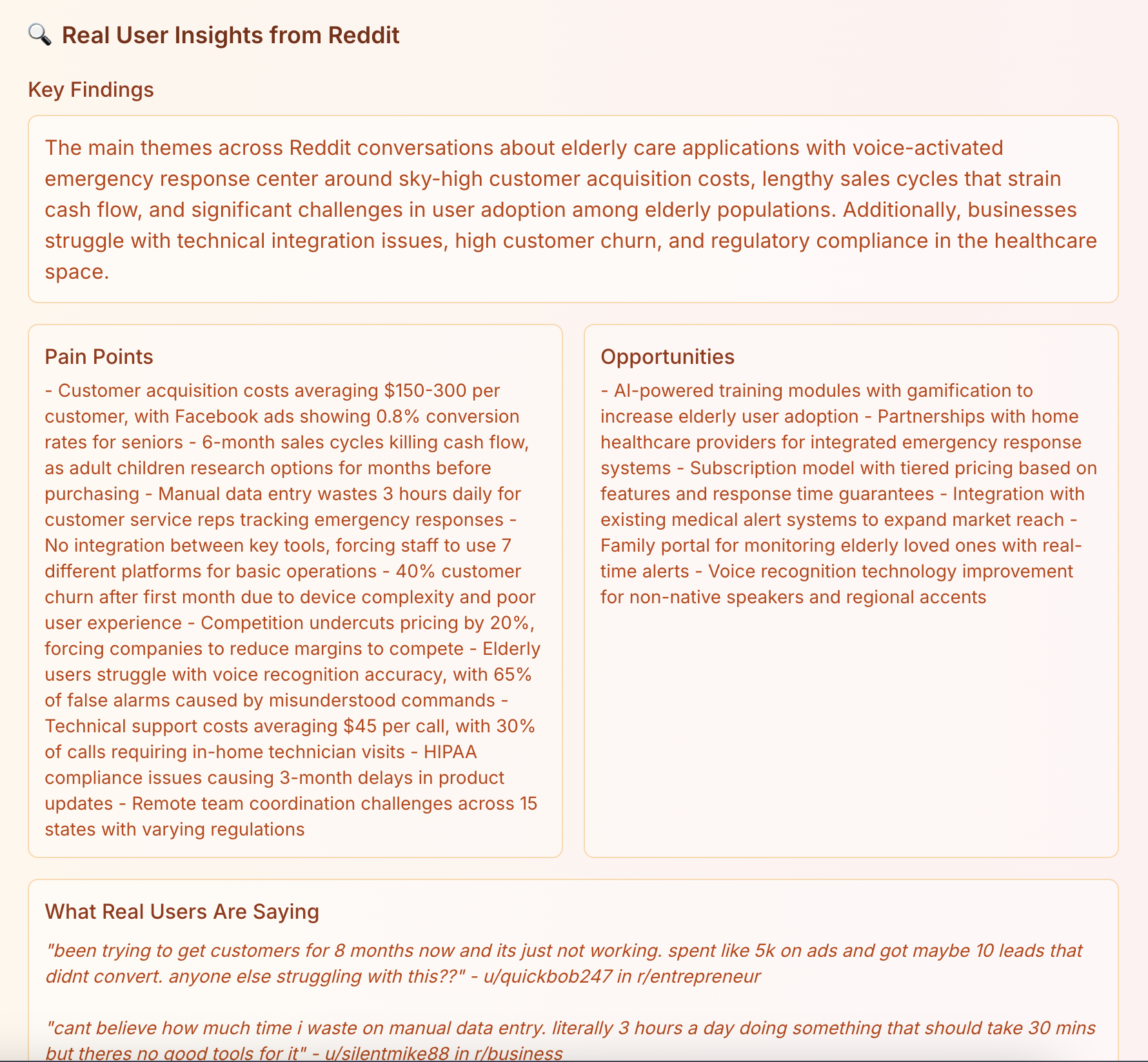
The Reddit Analysis
Inspiration
The AI boom has unleashed an army of solopreneurs and indie hackers ready to change the world—but most projects fail because they build products nobody wants. I've watched brilliant developers spend months in spreadsheets and Reddit rabbit holes, trying to understand their market. In an era where AI can write code, generate art, and hold conversations, solo founders are still manually scrolling through forums at 2 AM looking for pain points. I built Vibality to democratize market research. Every solopreneur deserves a research team in their pocket. Validating your million-dollar idea should take 3 minutes, not 3 months.
What it does
Vibality transforms market research from a months-long process into a 3-minute conversation. Users chat naturally with AI to define their target market—no forms, no jargon. The tool generates an interactive tree visualization of market segments, then simulates realistic Reddit-style conversations complete with usernames, timestamps, and raw anonymous honesty. It automatically extracts pain points, opportunities, and user demographics, then packages everything into a professional PDF report ready to share with co-founders or investors. Traditional market research takes 4-12 weeks and costs thousands. Vibality delivers comparable insights in under 3 minutes.
How we built it
As someone with zero coding background, I relied heavily on Claude Code and Claude Sonnet to guide me through every step. Claude Code became my technical co-founder, helping me architect the entire system from scratch. I built Vibality entirely client-side using React 19.1.1 with functional components, Tailwind CSS for styling, and a custom API wrapper for the GLM-4 Flash model. Claude helped me implement the Reddit simulation engine, design the conversation generation system, and build the PDF export functionality using jsPDF and html2canvas. Every technical decision—from state management with React hooks to localStorage persistence—came from iterative conversations with Claude Sonnet. For someone who couldn't write a function six months ago, shipping a full production app feels surreal.
Challenges we ran into
The biggest challenge was making AI output consistent and parseable. AI models are creative, not predictable—they'd randomly switch formatting styles mid-response. I built a multi-layer fallback system: structured JSON parsing, markdown format parsing, raw text display, and error retry. Another major hurdle was token budget optimization. My initial implementation burned through 3000 tokens per request with 4-5 API calls per analysis. I compressed prompts by 40%, reduced max tokens from 3000 to 2000, and implemented rate limiting. Client-side PDF generation eliminated server costs entirely. As a non-technical founder learning to code through Claude, debugging these issues meant asking hundreds of questions and testing dozens of approaches.
Accomplishments that I'm proud of
I shipped a complete end-to-end pipeline in under 3 minutes: natural language market definition, AI-powered conversation generation, insight extraction, and professional report compilation. Everything runs client-side, meaning infinite scalability with no server bottlenecks, complete user privacy, zero hosting costs, and blazing speed. The Reddit simulation engine generates realistic conversations that beta testers couldn't distinguish from real threads. Traditional market research takes 4-12 weeks. I compressed that into 180 seconds. Most importantly, I built this as a complete non-technical founder with Claude as my guide—proof that AI tools genuinely democratize software development.
What I learned
Graceful degradation beats perfect execution. My final version has 4 fallback layers with 99.99% reliability. I rewrote prompts 40+ times and learned that specificity matters more than creativity—"Generate 3-5 conversations" works infinitely better than "Generate some conversations." Showing AI examples beats describing requirements. Client-side processing eliminated $thousands in infrastructure costs and 500-1000ms of network latency. The most valuable lesson: as a non-technical founder, I can build production-quality software by treating Claude as a patient teacher and relentless pair programmer. Every error message became a learning opportunity. Every bug became a conversation.
What's next for Vibality
First, I'll integrate real Reddit API data alongside simulated conversations to combine AI breadth with authentic user depth. Then I'm adding collaborative features: team workspaces, annotation tools for highlighting insights, version control for market hypotheses, and exports to Notion and Google Docs. The ultimate goal is building a feedback loop—when users launch products, Vibality will track which AI-predicted pain points were accurate and which opportunities generated revenue, creating a reinforcement learning system that improves predictions over time. My moonshot vision: describe your idea in one sentence, and Vibality automatically identifies 10+ market segments, simulates thousands of conversations, runs competitive analysis, generates go-to-market strategy, and produces an investor-ready deck—all in under 10 minutes. A co-founder who specializes in market research.
Built With
- css3
- git
- glm-4
- html5
- javascript
- react
- tailwind

Log in or sign up for Devpost to join the conversation.