Inspiration
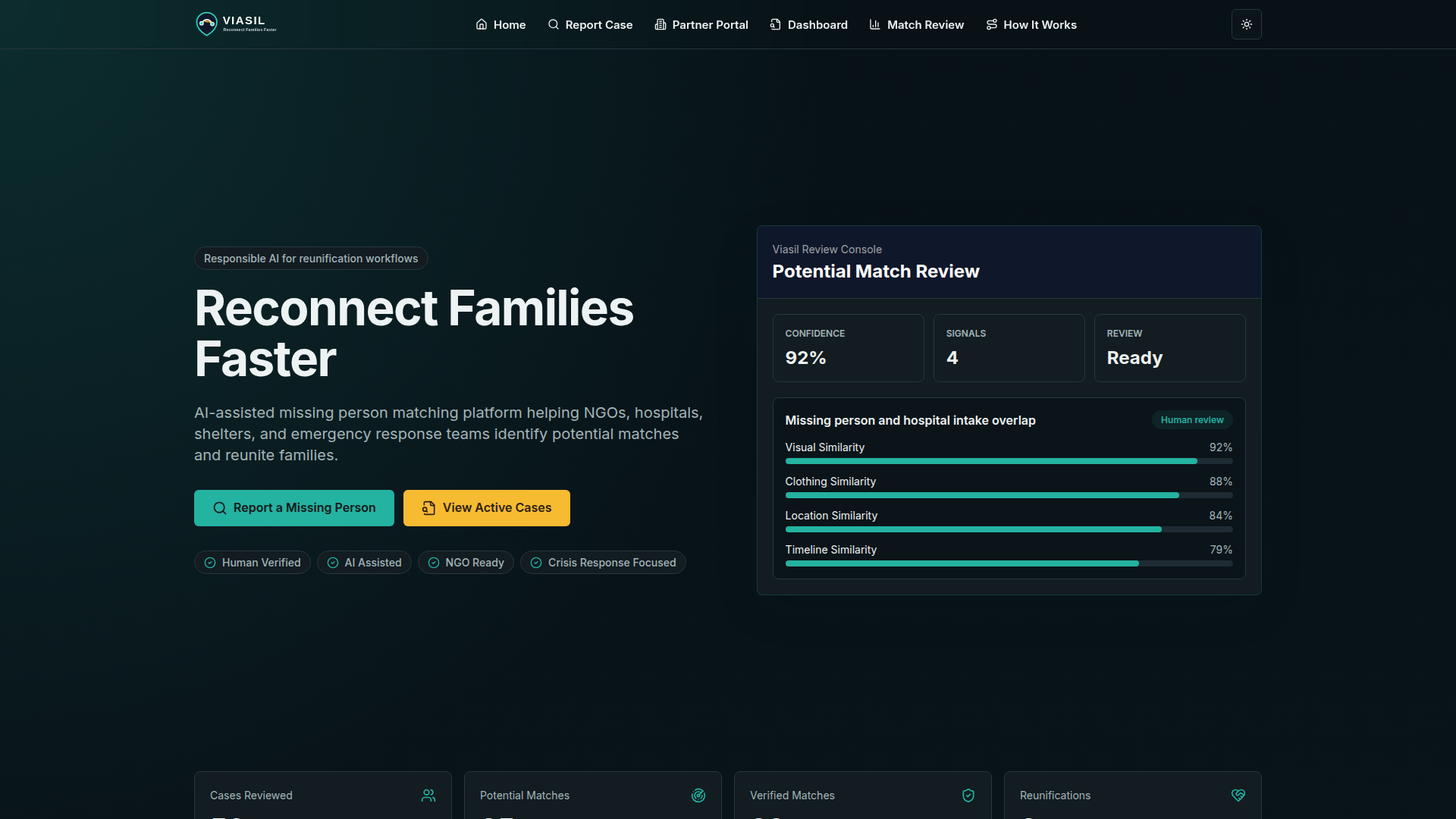
Viasil was inspired by a simple but important problem: when a missing person is reported, information is often scattered across families, NGOs, clinics, and humanitarian organizations. Each organization may have a piece of the story, but there’s no simple way to quickly connect the dots. “We wanted to build a platform that helps responders organize information, identify possible matches more quickly, and support rather than replace human decision-making.
What it does
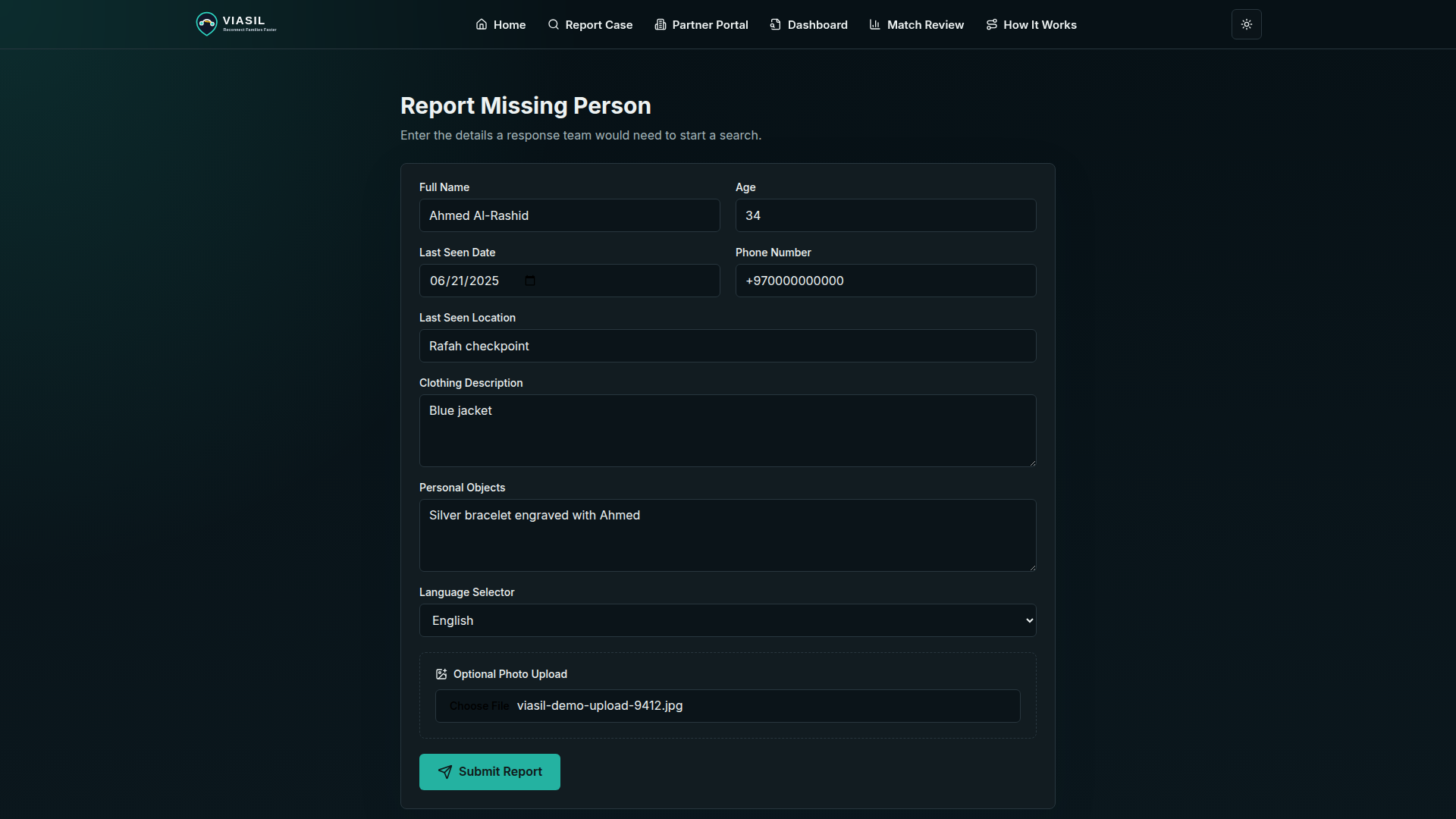
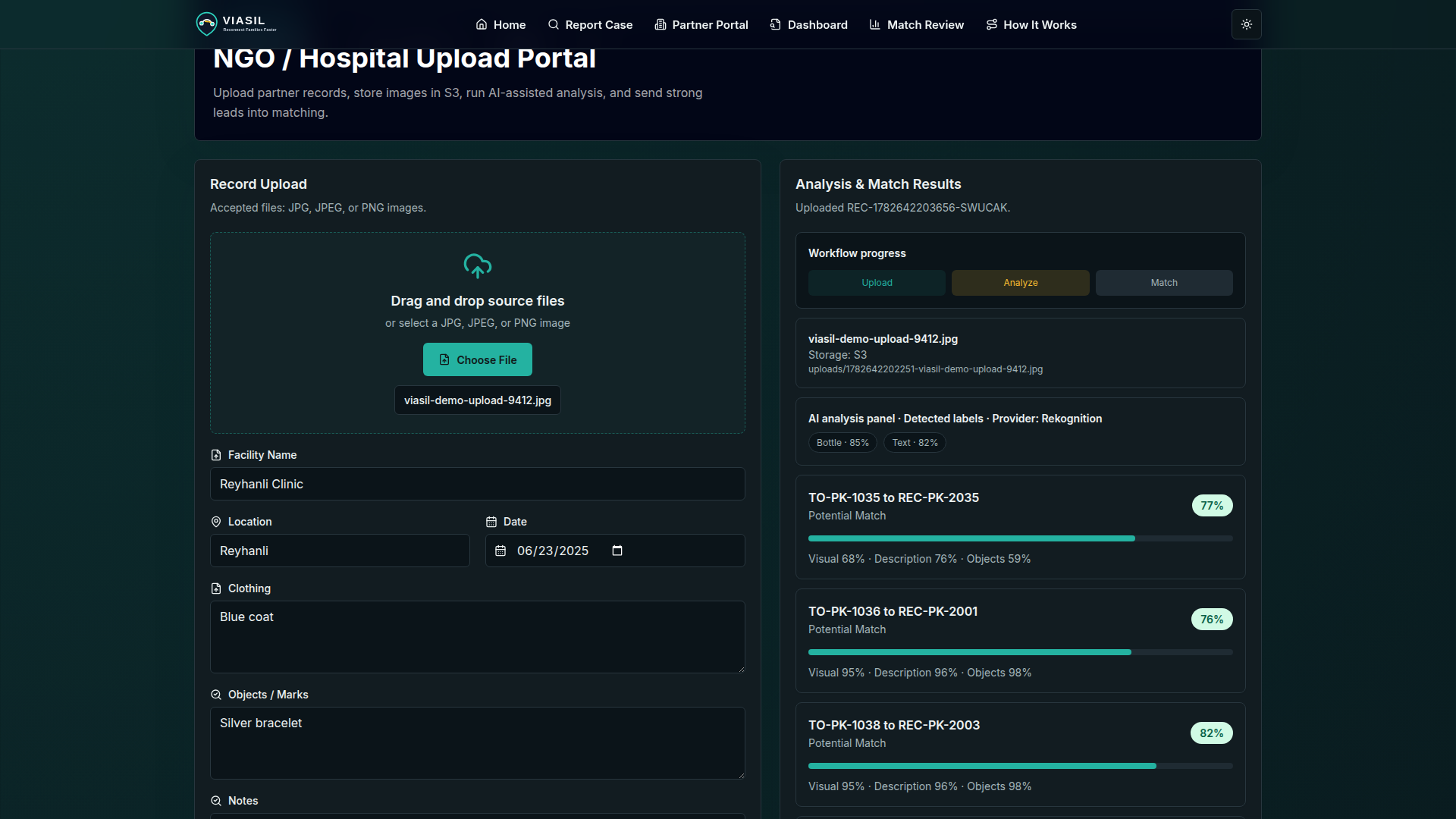
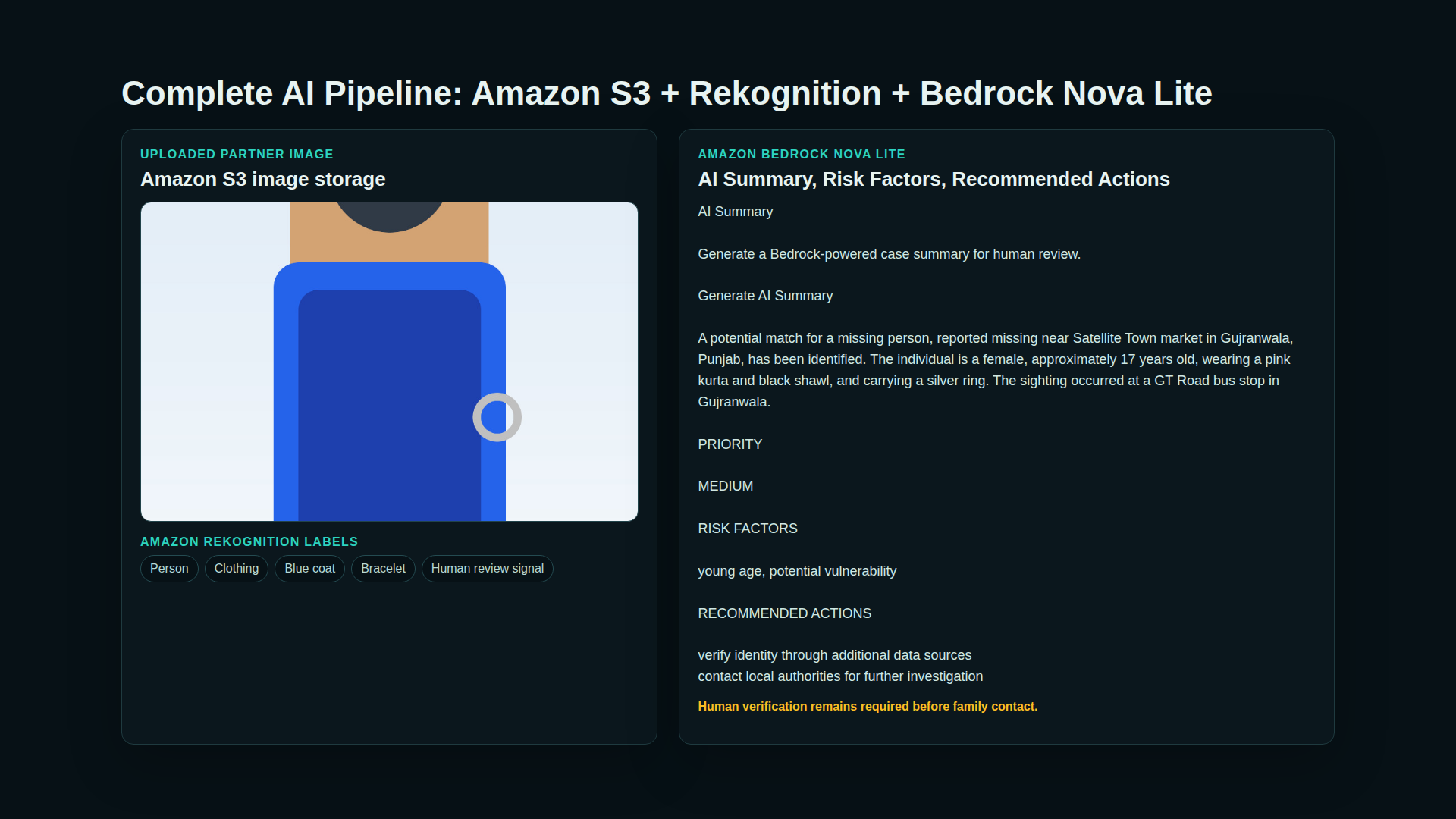
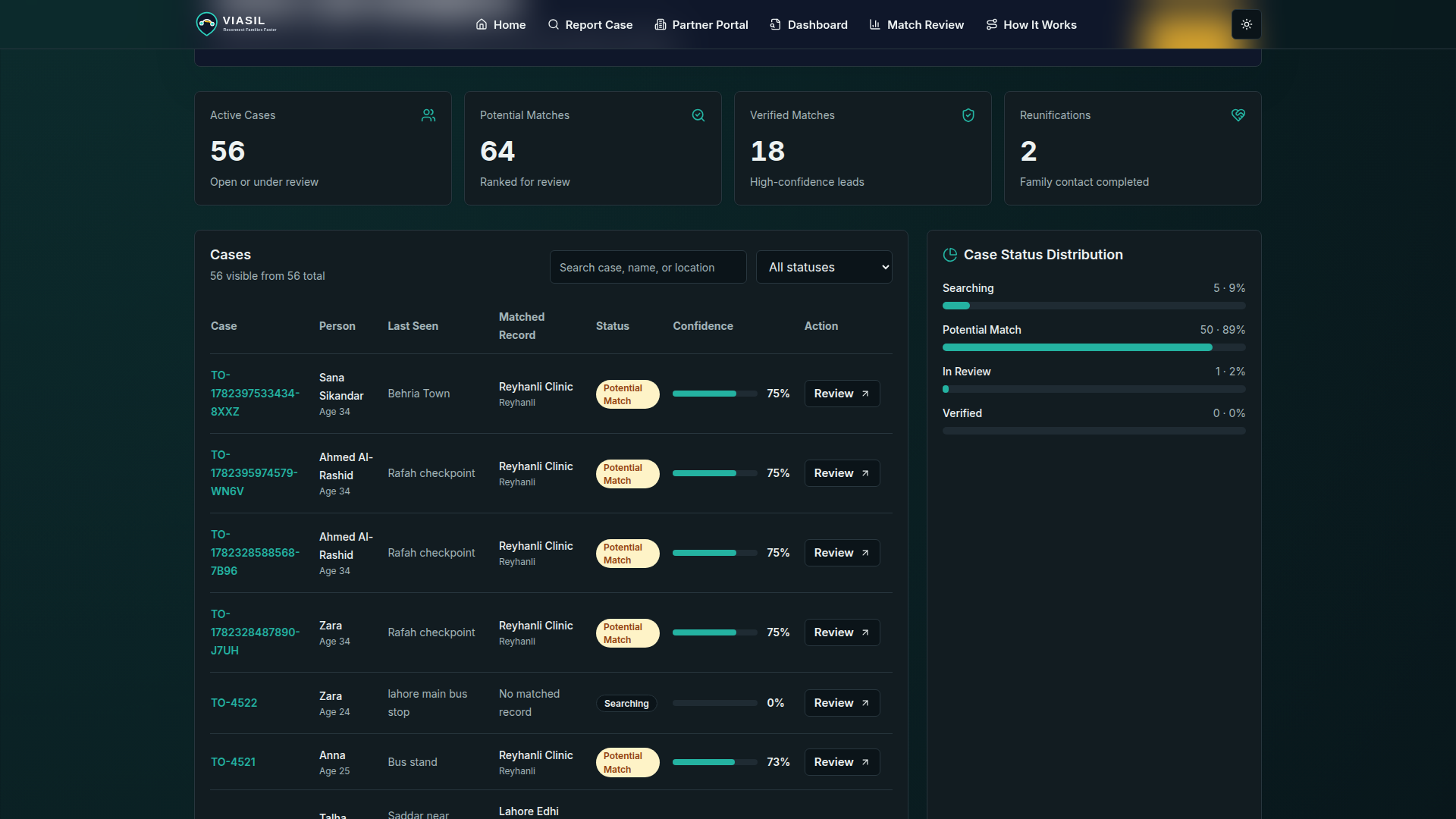
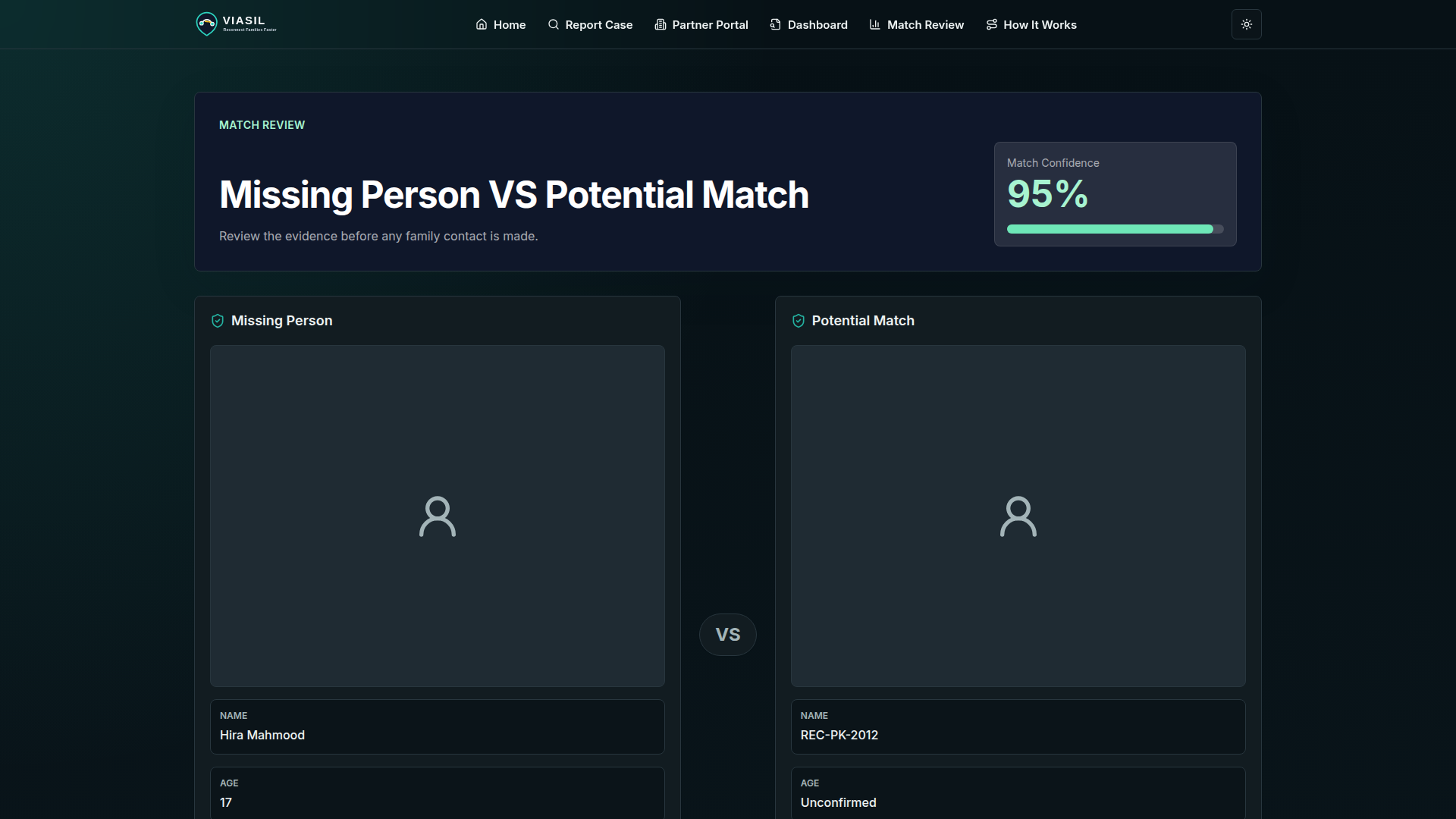
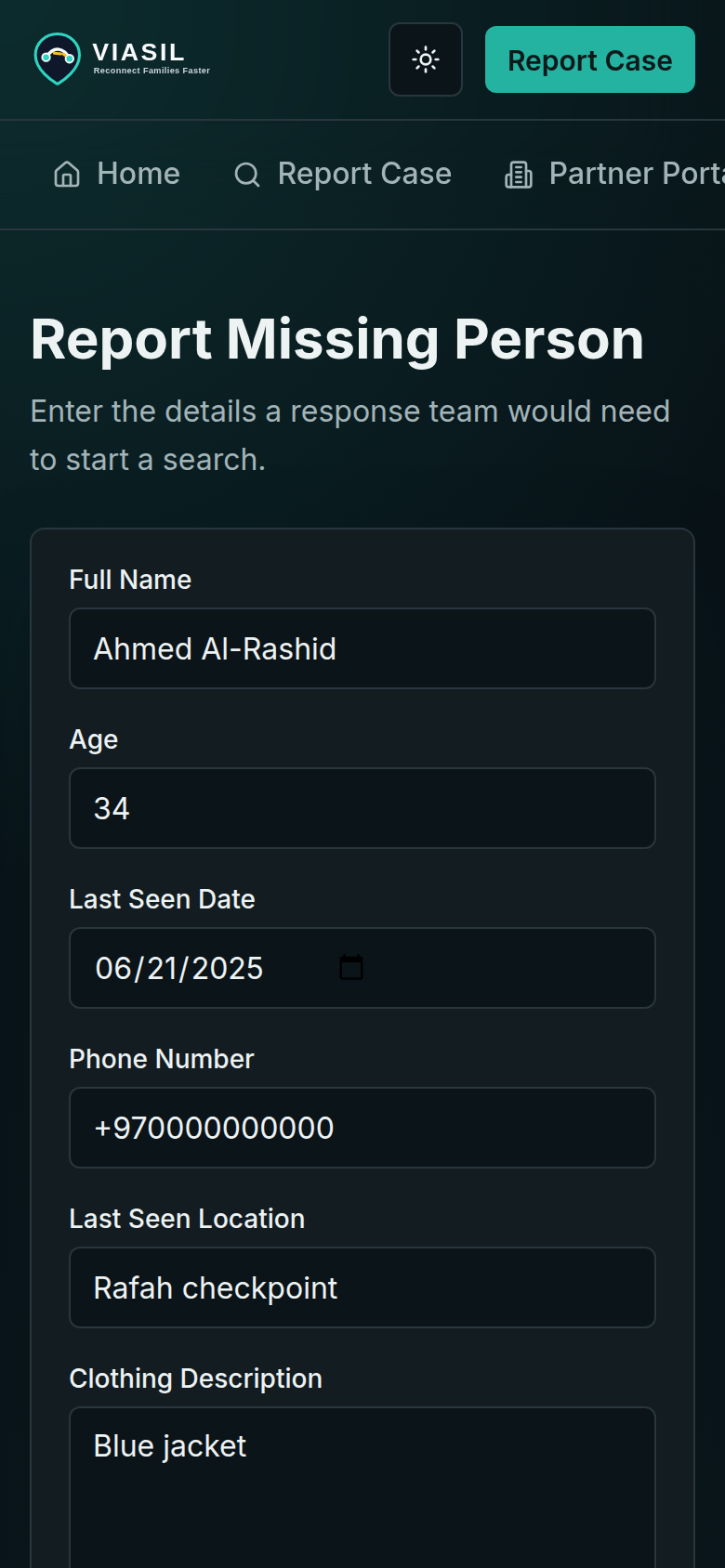
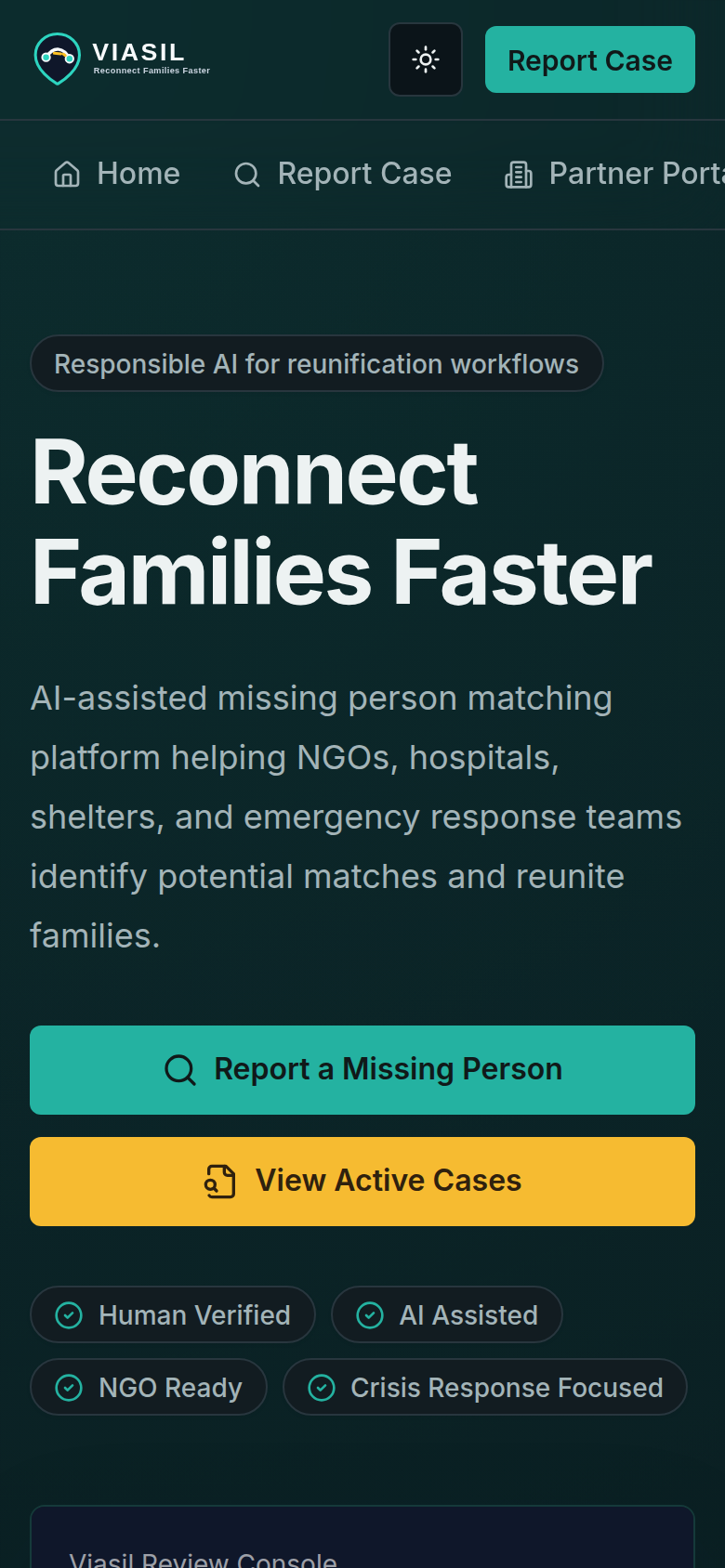
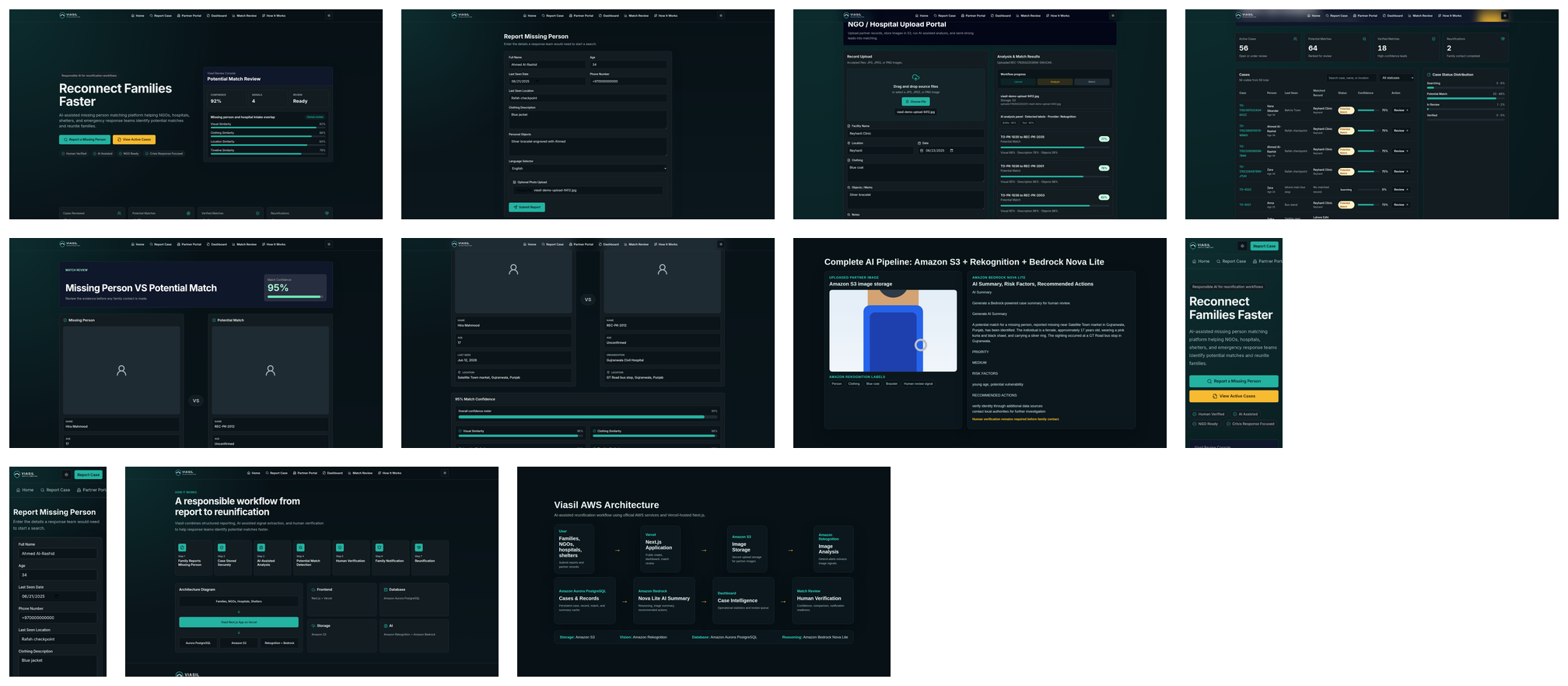
Viasil provides a centralized workflow for organizations to report missing and found persons, upload supporting images, and review potential matches. The images are securely stored in Amazon S3 and then processed with Amazon Rekognition to extract visual features like clothing, accessories, and other attributes. Those results are stored in Amazon Aurora PostgreSQL, along with report information, which is structured.
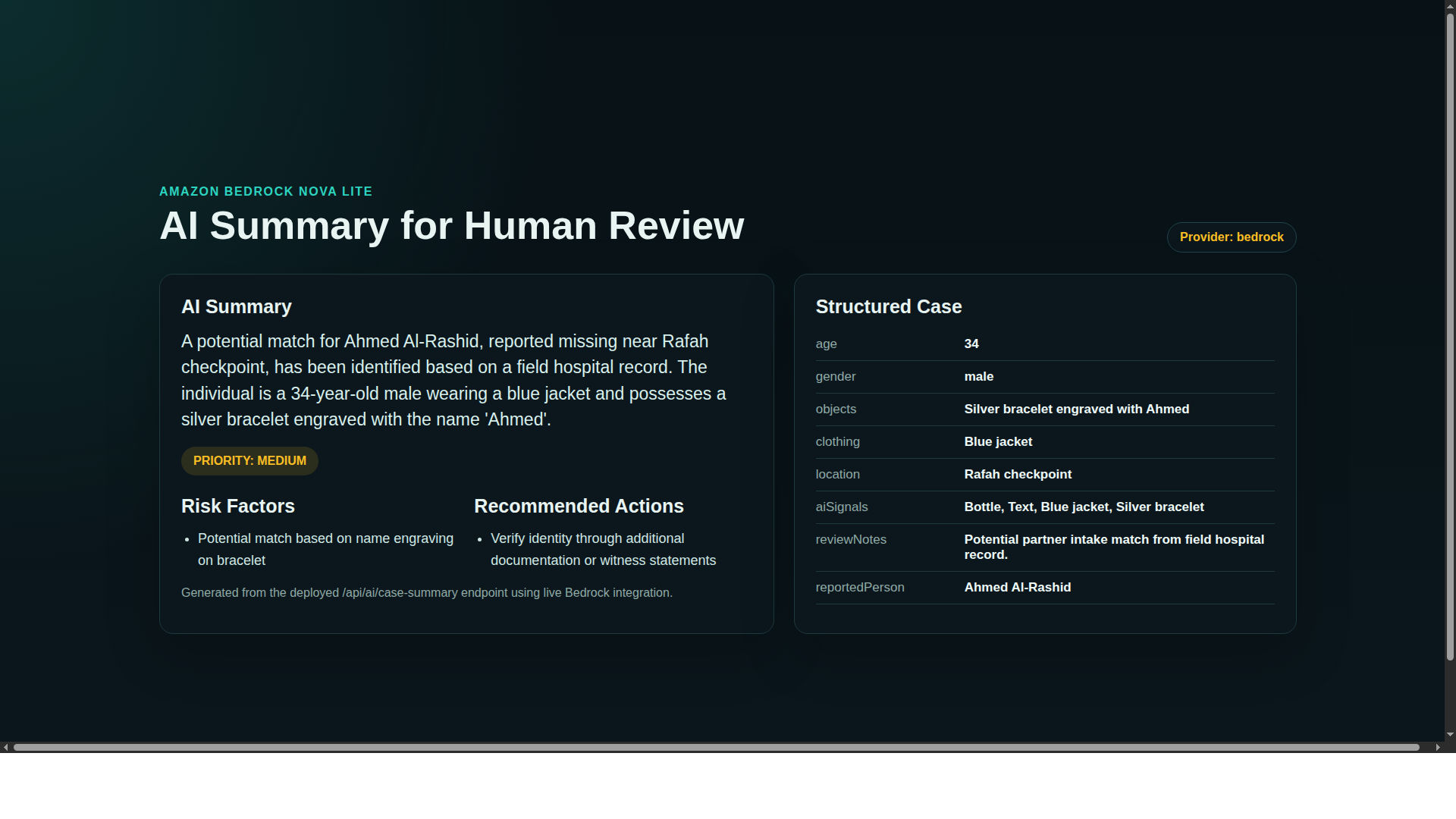
Amazon Bedrock (Nova Lite) helps investigators by creating short AI summaries, highlighting risk factors, suggesting next steps, and explaining why a potential match should be reviewed by a human. The final decision is always with the investigator.
How I built it
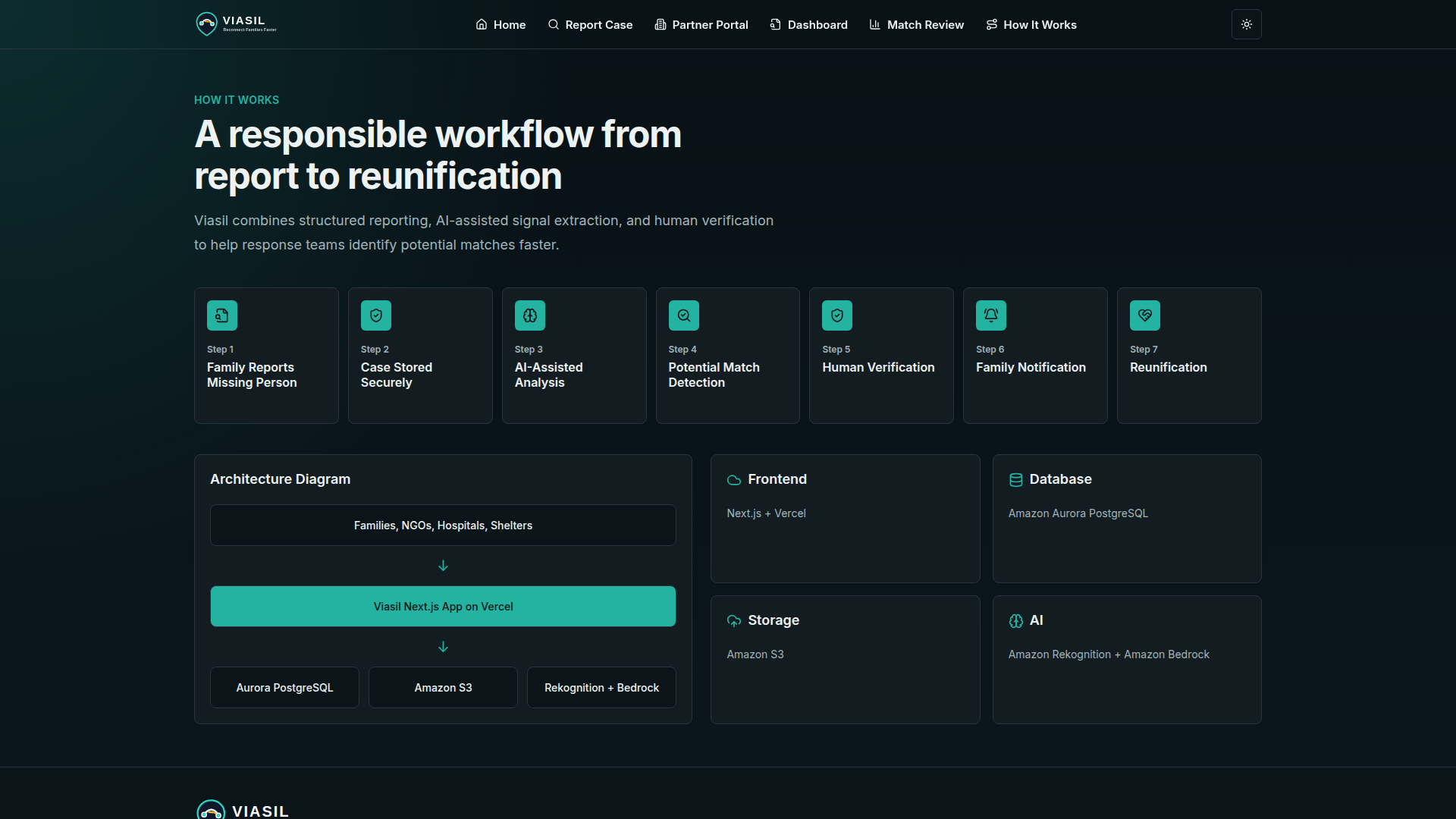
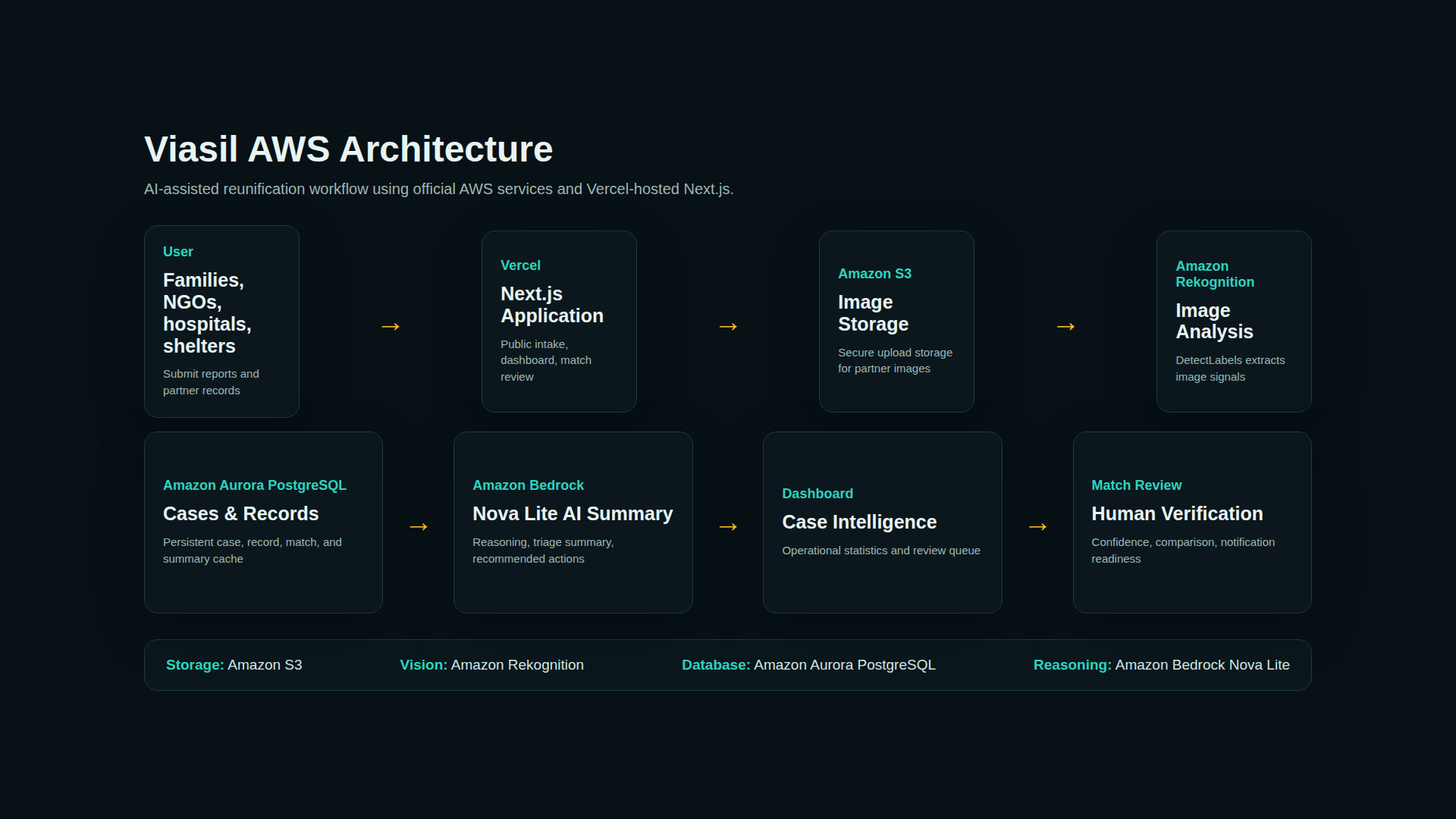
The app is made with Next.js and deployed on Vercel. To build a production-like architecture, combined many AWS services:
Secure Image Storage on Amazon S3 Amazon Rekognition image processing Amazon Bedrock (Nova Lite) for AI reasoning, case summaries Amazon Aurora PostgreSQL for storage persistence Serverless APIs + Vercel Deployment
Also added caching for AI summaries to reduce latency and control inference costs.
Challenges ran into
The main challenge was making several cloud services work together as a reliable workflow. We worked a lot on fixing Aurora serverless connection timeouts, making connection pooling better, adding retries, and making database initialization idempotent. Another challenge was to design the system so that the AI supports investigators rather than makes decisions automatically. Bedrock is only called when needed, and Rekognition is only used for image understanding.
Accomplishments that proud of
This project taught me that building an AI application is not as simple as just plugging in a language model. I learned how to build a complete workflow by combining specific AWS services, optimizing cloud resources, improving reliability in serverless environments, and creating AI features that provide explainable assistance, not black-box automation. This produces a working system that illustrates how cloud services and generative AI can be combined to aid humanitarian response.
What learned
I'm proud of building an end-to-end AI-powered platform that combines Amazon Web Services into a practical humanitarian workflow. I used Amazon Web Services to make this platform work. I used Amazon S3 to store images in a place, Amazon Rekognition to look at the images, and Amazon Bedrock to make summaries and give recommendations, and also used Amazon Aurora PostgreSQL to keep the data safe.
One of the accomplishments was solving tough engineering problems. These problems included making sure the Amazon Aurora server was working correctly, setting up the database to save the answers from the AI to save money, and making a platform instead of just a test. I made sure that the AI-powered platform was helping people make decisions, not making the decisions for them. I wanted to keep people involved in the decision-making process. The AI-powered platform is helping investigators do their job; it is not replacing them. I am proud of our AI-powered platform. What it can do for humanitarian work.
What's next for Viasil
My goal is to grow Viasil into a tool for humanitarian groups working in many areas. I want to add features like support for many languages, so more people can use Viasil. Some other plans include using Amazon Rekognition to compare faces, ranking cases to help responders focus on sending notifications in real-time, and allowing different teams to work together securely.
I also want to get more out of Amazon Bedrock by giving responders information to investigate, helping them search past cases easily, and providing clear reasons for our AI suggestions. This way, responders can make decisions quickly. As Viasil grows, I plan to use AWS tools to keep an eye on things, understand how Viasil is used, and make sure it is secure and affordable. I want to keep AI clear, affordable, and focused on people.
Built With
- amazon-aurora-postgresql
- amazon-bedrock-(nova-lite)
- amazon-rekognition
- amazon-web-services
- aws-sdk-v3
- github
- next.js-15
- node.js
- postgresql
- prisma-orm
- react
- rest-apis
- tailwind-css
- typescript
- vercel

Log in or sign up for Devpost to join the conversation.