-
-

-
-
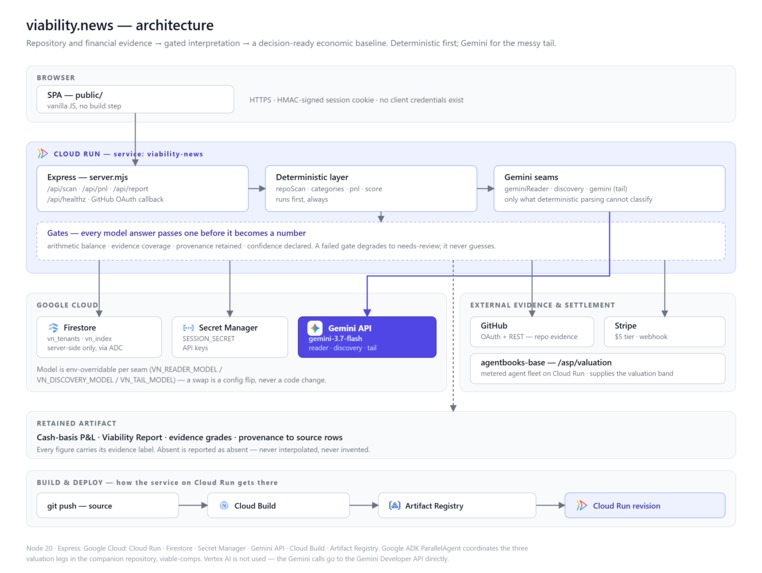
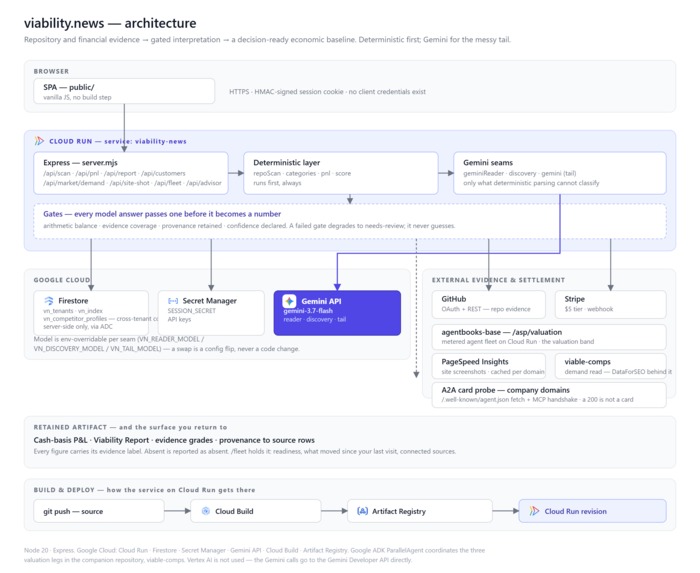
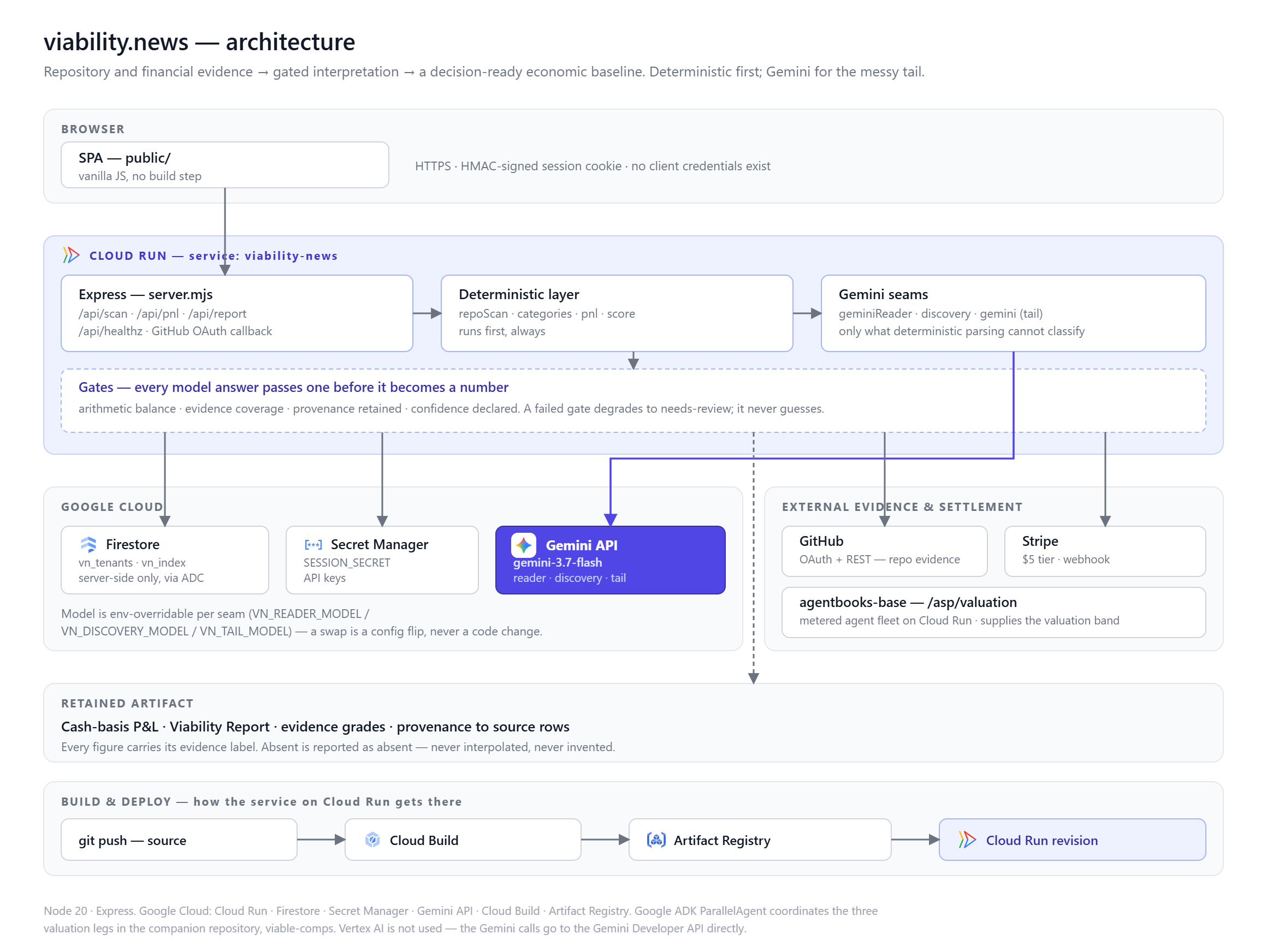
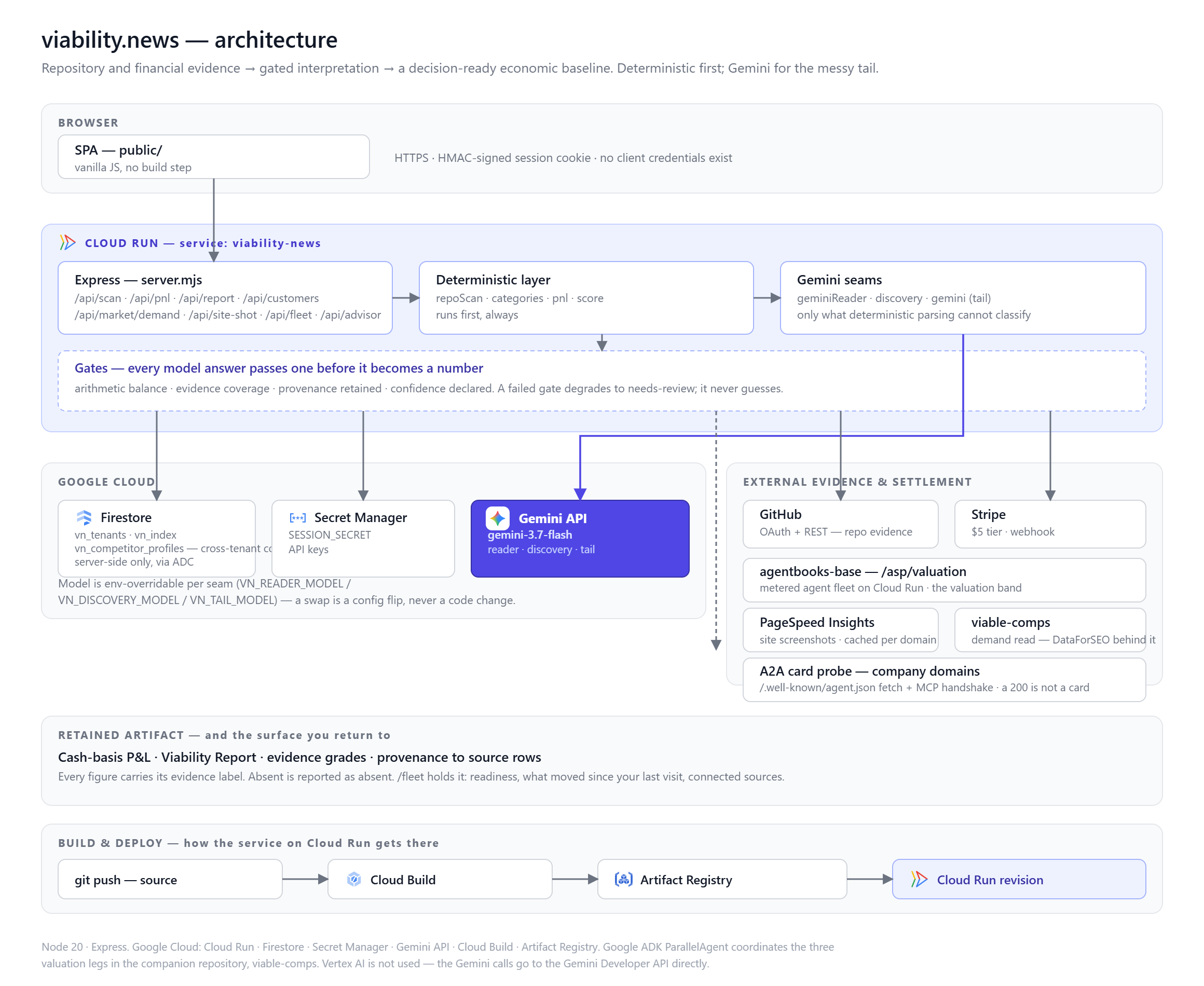
viability-news-architecture
-
-
-
-
-

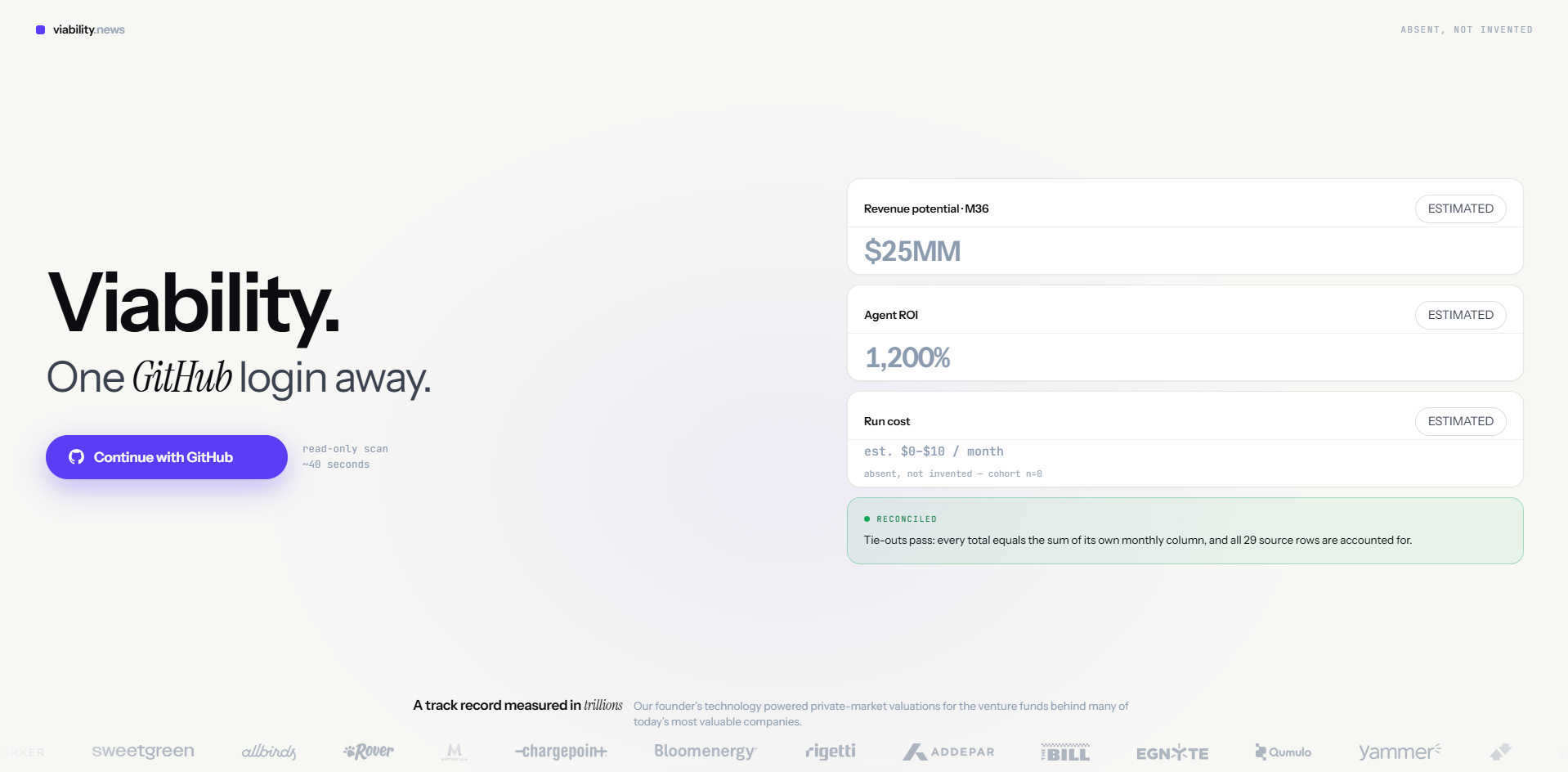
Every business needs an agent. Every agent needs books.
Sixty-two live agents already read evidence, pay and get paid in a network token, and post real accounting entries — with a human approving anything that matters. This site is the case that that loop is a new category, and the tests that could prove it wrong.
Product thesis and falsification brief viability.news · agentbooks.news · hitlbooks.com · onbooks.news · ratecard.dev · chatproofs.com · wrapped.news · agentbase.news Market research current through August 17, 2026 · product and live-service state re-verified August 31, 2026
The network, in numbers
| Measure | Count | As of | Re-verified 2026-08-31 |
|---|---|---|---|
| Live agents with wallets | 62 | 2026-08-17 | Not re-verified. A later internal submission record (2026-08-22) counts 63 registered wallets; neither figure was independently re-counted on 2026-08-31, so no current number is quoted. |
| Network properties | 7 live, 1 pending | 2026-08-17 | Confirmed by live probe. All 7 answered HTTP 200 on 2026-08-31 (wrapped.news via redirect to www); agentbase.news remains unreachable — still DNS-pending. |
| Network token (wNEWS) | 1 | 2026-08-17 | Confirmed. GeckoTerminal's API answered for the Base contract 0xEd14…76bA on 2026-08-31. |
| Exchange & marketplace listings | 3 | 2026-08-17 | Not re-verified. At least one listing change (a delisting on one venue) is recorded internally since 2026-08-17, so this row must not be quoted as current. |
| Listings in review | 2 | 2026-08-17 | Not re-verified. A later internal record (2026-08-22) reports the Circle endpoint runtime-verified at 95/100; not independently confirmed on 2026-08-31. |
Every count above is an observed count of the network's own surfaces on the stated date. A count that could not be re-observed on 2026-08-31 is marked so — the document's own discipline forbids restating a stale count as current. Every percentage later in this document carries an explicit evidence label, and the labeled ones are assumptions or third-party forecasts rather than measurements.
The live trust-to-transaction path
flowchart LR
    A["email"] --> B["sender verified"] --> C["routed"] --> D["paid"] --> E["parsed"]
    E --> F["gates"] --> G["staged"] --> H["pending queue"]
    H --> I{{"operator approves"}}
    I --> J["tenant extraction"] --> K["ERP dry-run"] --> L["ERP post"]
    L --> M[("ERPNext")]
    L --> N[("QuickBooks outbox")]

    %% amber = human authority. Reconciliation green (#0FA958) is reserved for
    %% reconciled evidence and is deliberately not used anywhere in this document.
    classDef human fill:#A8701A,stroke:#7a5011,color:#ffffff,font-weight:bold;
    classDef sink fill:#eef2ff,stroke:#4f46e5;
    class I human;
    class M,N sink;
Money and records only move after a person approves.
Contents
- Executive claim — and its boundary
- The network — one network, eight surfaces, one shared ledger
- The market — two gaps, one reciprocal wedge
- How value is made — the speedometer was never the engine
- Agent-native operations — with humans in command
- Sustainability — priced at full cost
- Technical annex — the math, in one place
- The product proof standard
- Falsification program — ten ways to kill this thesis
- The honest counter-thesis
- Evidence and source register
1. Executive claim — and its boundary
The product promise is literal, but it needs a precise boundary.
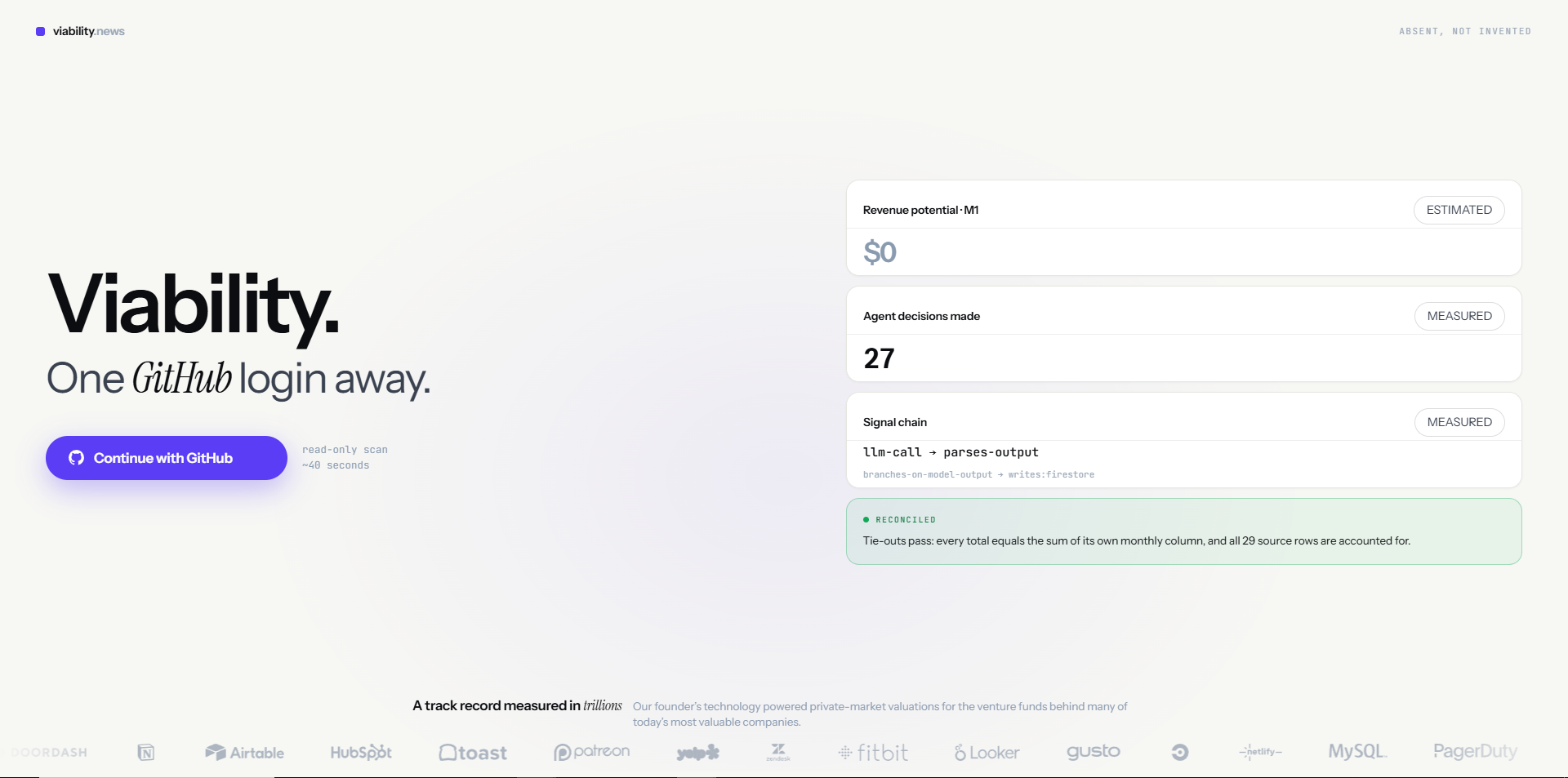
A GitHub login can create economic value before the user changes a line of code, sends an invoice, or receives cash. The login authorizes agents to transform scattered evidence into a retained information asset: an economic map, a double-entry state, an interpretation of value drivers, a set of options, and a history that can be improved over time. In decision theory, information has value when it improves the best available decision or expands the option set. The value need not wait for a completed transaction.
But the universal version — every login always creates positive value — is false. An empty repository, bad evidence, excessive analysis cost, or a confident model error can destroy value. The defensible claim is:
One login creates positive net economic value when the generated baseline is relevant, faithfully grounded, retained, and capable of improving a current or future decision — and when its benefit exceeds analysis cost and expected error loss.
That is not a retreat from the product thesis. It is the standard that turns the thesis into a measurable product. Human review can increase confidence and authorize consequential actions, but the economic baseline exists as soon as the system has produced and retained a useful, grounded artifact.
1.1 What the login actually creates
The repository is not the business, but it can be the cleanest available doorway into how a modern business or agent works. Code, issues, pull requests, releases, dependencies, tests, workflows, deployment files, and documentation encode operating choices. A login provides identity, consent, scope, and a versioned evidence surface.
The product then creates five linked forms of value:
| Artifact created | Economic contribution |
|---|---|
| Information | Reduces uncertainty about the system, its dependencies, costs, risks, and economic drivers. |
| Options | Identifies decisions, partners, improvements, or software paths that were not previously legible. |
| Control | Creates thresholds, reconciliations, alerts, and approval points before a weak signal becomes a cash crisis. |
| Coordination | Gives humans and agents a shared economic state instead of disconnected dashboards and opinions. |
| History | Retains evidence and interpretations so learning compounds rather than resetting every session. |
For a business, a human-in-the-loop can correct classification, supply context, approve material actions, and assume accountability. For an agent, the books can begin automatically with cost capture, confirmed income, balances, provenance, and reconciliation. The public AgentBooks repository independently demonstrates these core pieces: a framework-agnostic double-entry ledger, inference/runtime/custom cost capture, confirmed income, balance-sheet state, a financial health score, source-tagged entries, and cash-flow reconciliation.[^1]
What the public repository does not independently prove is the complete one-login, business-facing path: GitHub OAuth, full repository instrumentation, the quality of every inferred economic driver, or the promised human-review workflow. Those are product-level claims and should be verified by black-box tests and live telemetry.
2. The network — one network, eight surfaces, one shared ledger
Each property does one job. Together they form a loop: evidence comes in, agents interpret it, humans approve what matters, books record what happened, and the network publishes what can be trusted.
| Surface | Status | Job |
|---|---|---|
| viability.news | LIVE |
The public viability layer. An externally legible, carefully qualified view of whether a business or agent is economically viable — calibrated signals, scenarios, provenance, uncertainty. Publishes /work-timeline and /openapi.json. The product itself now runs a five-step scan flow and a fleet surface — see §2.3. |
| agentbooks.news | LIVE |
Books for agents. Git-native double-entry books: revenue, cost, assets, obligations, ownership, and payouts attributed to the agent. First books for every new agent. |
| hitlbooks.com | LIVE |
Human-in-the-loop accounting. Agent-priced bookkeeping with an operator approval queue. Agents propose; humans authorize; entries post with full provenance. |
| onbooks.news | LIVE |
Client onboarding for books. Bookkeeping client onboarding with evidence intelligence — trial-balance and tax-return understanding feeding straight into the books pipeline. |
| ratecard.dev | LIVE |
Deterministic pricing for agents. A deterministic rate-card system so autonomous agents can quote, meter, and settle work without ambiguity. Provisional patent filed. |
| chatproofs.com | LIVE |
Proposer / verifier reasoning. One service, two brains: a proposer model drafts, an independent verifier adjudicates, a human substantiates. Proof, not prose. |
| wrapped.news | LIVE |
The network token (wNEWS). The settlement asset agents use to monitor, pay, and get paid for economic value exchanged in furtherance of customer goals. Quoted on GeckoTerminal and Uniswap. |
| agentbase.news | DNS PENDING |
Identity & directory. Canonical identity, permissions, economic role, operator, host, customer, adoption, and history for every agent in the network. Domain currently re-pointing — the directory service runs on Cloud Run. Still unreachable on 2026-08-31. |
Status re-check, 2026-08-31. Each
LIVErow above was re-probed on 2026-08-31 and answered HTTP 200. A note on aiops.news, where this brief is published: the domain currently serves a deliberate "opening soon" page through the current submission window; the network's surfaces themselves are the live evidence in the meantime.
2.1 Where the network already trades and ships
| Venue | What is listed | Status | As of |
|---|---|---|---|
| OKX.ai exchange | Two network agents listed, including okcomps |
LIVE |
2026-08-17 — not re-verified; a delisting on this venue is recorded internally since, so do not quote this row as current |
| Base marketplace | basecomps listed on Base's agent marketplace |
LIVE |
2026-08-17 — not re-verified |
| GeckoTerminal · Uniswap | wNEWS quoted and tradable — token details at wrapped.news | LIVE |
re-verified 2026-08-31 (GeckoTerminal API) |
| Slack marketplace | AgentBooks app (HITLBooks in Slack) | IN REVIEW |
2026-08-17 — not re-verified |
| Circle agent market | Agent "Viability" — submission pending | IN REVIEW |
2026-08-17 — a later internal record (2026-08-22) reports the endpoint runtime-verified 95/100; not independently confirmed |
2.2 Live infrastructure — agent-readable, human-checkable
These aren't screenshots. They're the running services: the machine-readable API spec agents consume, the agent directory, the fleet monitor, and the paid agent fleet itself — all public, all answering right now.
| Endpoint | Response | Class | What it is |
|---|---|---|---|
viability.news/openapi.json |
200 |
API SPEC | The machine-readable API contract — what an agent reads before it integrates. Re-verified 2026-08-31. |
| ABN directory | 200 |
CLOUD RUN | The AgentBooks Network directory service. |
| Fleet monitor | 200 |
CLOUD RUN | Continuous monitoring across the agent fleet. |
Paid /asp/* fleet |
200 |
CLOUD RUN | The metered agent-service fleet — where work is priced and settled. |
| Work timeline | — | EVIDENCE | The versioned, human-readable record of what shipped and when. |
agentbooks.news/.well-known/agent.json |
200 |
A2A CARD | A live agent card declaring 120 skills — served at request time, not a file in any repo. Verified 2026-08-31. |
| OralInsulin agent card | 200 |
A2A CARD | oralinsulin-667990366434.us-central1.run.app/.well-known/agent.json — a real 4-skill card (list_claims, get_claim, get_gate_status, run_scenario) over the site's evidence layer. Verified 2026-08-31. |
| OralInsulin MCP server | 200 |
MCP | The card's declared service URL (/mcp) answers a JSON-RPC initialize as oralinsulin-evidence-layer v1.0.0. Verified 2026-08-31. Every one of its eight product evidence gates returns "Under review" — an agent asking whether the product works receives the gate status and the evidence standard, not an efficacy claim. |
Interpretation note. A
200proves the service answers. It does not prove the answer is correct, complete, or economically material. That is what the falsification program in §9 is for. The OralInsulin rows matter to the thesis for a second reason: they are a worked example of "is this agent discoverable and callable" as a checkable fact — a live card fetch and a protocol handshake, not an assumption — which is exactly the instrument §2.3 describes.
2.3 The product surface — what one login now runs
This subsection describes the shipped product as of **2026-08-31, verified against the repository at commit 536036b and its live endpoints. Every capability named here has a route, a module, and tests behind it; the committed suite runs **690 tests* at that commit — a measured count, not an estimate.*
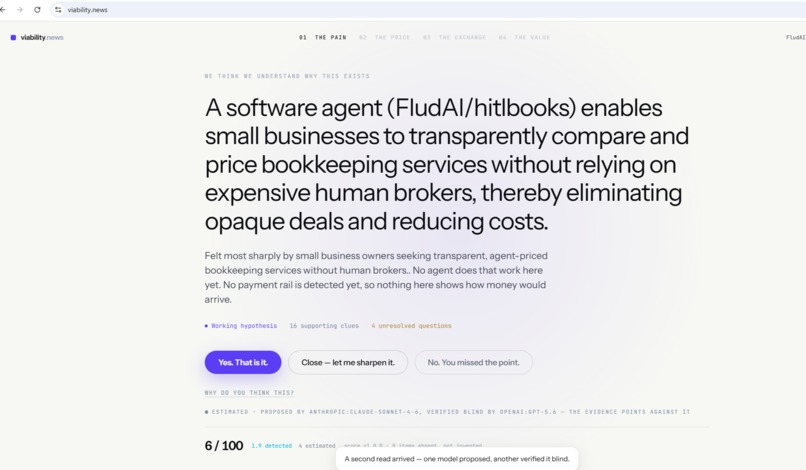
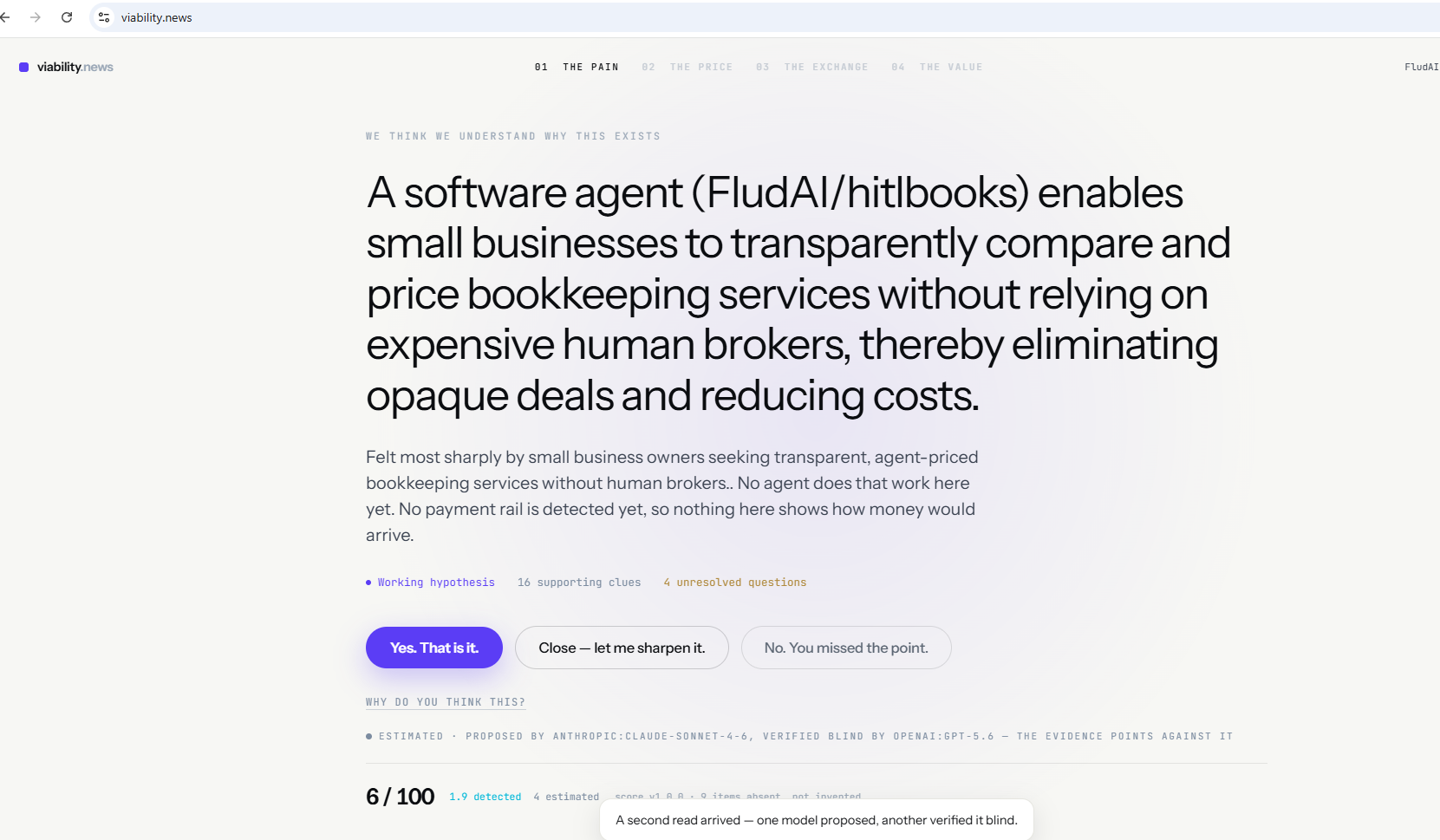
The viability.news scan is now a five-step flow:
flowchart LR
    S1["01<br/>the pain"] --> S2["02<br/>the price"] --> S3["03<br/>the competition"] --> S4["04<br/>the market"] --> S5["05<br/>the customers"]

    classDef stage fill:#eef2ff,stroke:#4f46e5,color:#1e1b4b;
    class S1,S2,S3,S4,S5 stage;
| Step | What ships | Evidence discipline |
|---|---|---|
| 01 · the pain | The founder's problem statement anchors the scan. | Declared input, labeled as such. |
| 02 · the price | Pricing against a live anchor and the founder's own declared price. | Declared vs. measured, never blended. |
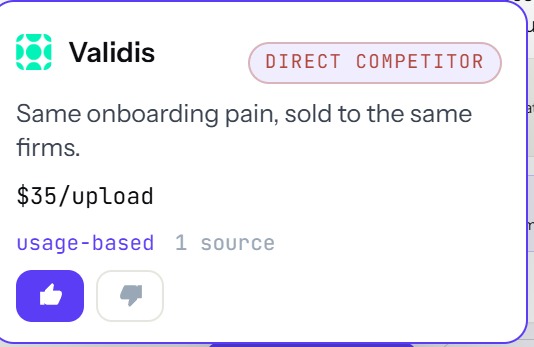
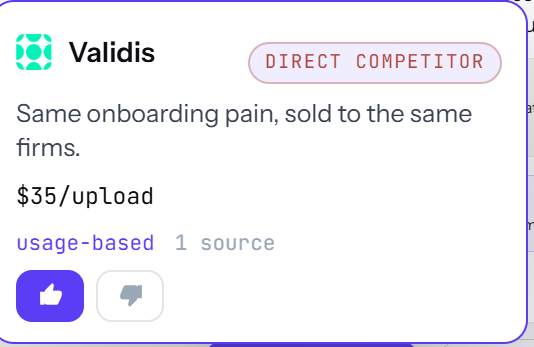
| 03 · the competition | Competitor discovery with citations: a grounded model pass proposes companies, every entry must carry a real http(s) source, and grounding-redirect URLs (vertexaisearch…) are refused as homepages — a citation must lead somewhere real. Rulings render as a coverflow; site screenshots arrive via PageSpeed Insights (a real Lighthouse audit), cached per-domain. Revenue carries a named estimator — "Growjo estimate", "FY2025 10-K" — attributed or omitted, never bare recall. |
Attributed-or-omitted; the estimator is named on the card. |
| 04 · the market | The demand axis: an organic-search-traffic read per competitor domain (third-party estimate, provider named), one cached read per domain, and a public-comps tape that prices the ruling. | third_party_estimate, provider and unit stated; a name without a measurement is a row that says why, never a zero. |
| 05 · the customers | Shipped 2026-08-31. The founder pastes their customers' websites; screenshot, traffic, and revenue-with-estimator all derive from that one ask. The empty state asks "Who has paid you?" and the headline recomputes as customers are added. Lookalike matching is not built — the count states its basis ("the count will derive from firmographic and demand similarity to these accounts") instead of showing a number. | Absent-with-reason, enforced by test. |
Three instruments sit under the flow:
- The A2A card probe (
src/lib/agentCard.mjs) — a live fetch of/.well-known/agent.json(and its two sibling paths) that rejects SPA-JSON: a single-page app that answers200with JSON for every path does not get to count as an agent card, and the card's declared service URL is carried forward so the MCP probe can verify the endpoint actually speaks the protocol. This makes "is this agent discoverable" checkable rather than assumed — the question the whole agent-economy thesis turns on. - The fleet surface (
/fleet) — readiness per scanned domain, a return diff against the founder's last visit, and connected-source management with a retention dial: every stored connection is listed, retention is the founder's choice, and disconnect deletes the stored key itself. - The cross-tenant company corpus (
vn_competitor_profiles) — one document per company ever discovered, shared across tenants on purpose (these are third-party companies read from cited public sources, never tenant data). Prices, revenue notes, screenshots, demand reads, and card probes accumulate under merge rules that never overwrite a priced note with silence. The corpus survives tenant wipes and grows with every scan — the network-effect claim of §6, implemented as a data structure.
3. The market — two gaps, one reciprocal wedge
Most American businesses don't have a working AI agent. Almost no AI agents have real accounting. Each side is the answer to the other's problem.
| Gap | Figure | Label | Basis |
|---|---|---|---|
| U.S. small businesses with no visible Git footprint | 34.1M of 36.2M (94.1%) | ESTIMATED · working center |
36.2 million U.S. small businesses is an SBA count;[^5] the 94.1% share without an observable Git footprint is a declared working center, not a measured population statistic. |
| Economically active agents with no standalone double-entry books | 99.5% | ESTIMATED |
No authoritative census of agents with books exists. Under a strict definition — revenue, cost, assets, obligations, ownership, and payouts attributed to the agent — 99.5% is a working center. |
Roughly 34 million of America's 36.2 million small businesses have no versioned record of how they operate. Most don't have a deployed agent either. Census found overall U.S. business AI use at 17%–20% between December 2025 and May 2026, with use among the smallest firms below 20%.[^6] Because deployed agents are a subset of the broader category "uses AI," the Census data support a floor on the no-agent share — not a direct agent-adoption estimate.
On the agent side, Microsoft reported more than 3 million agents created in one fiscal year[^8] and, separately, more than one million custom agents in a single quarter across SharePoint and Copilot Studio with more than 230,000 organizations using Copilot Studio; it also cited a sponsored IDC projection of 1.3 billion business AI agents by 2028.[^7] The forecast is not a census. The direction is enough: identity, permissions, observability, books, and accountability become more necessary as agent populations grow.
3.1 The opportunity equation
Two big numbers don't make a market.
$$ \mathcal{O}t \;=\; B_t \times A_t \times p{\mathrm{match},t} \times V_{\mathrm{outcome},t} $$
where $B_t$ is the addressable business population, $A_t$ the economically active agent population, $p_{\mathrm{match},t}$ the probability that the right business and agent can be matched, trusted, integrated, and retained, and $V_{\mathrm{outcome},t}$ the verified value of the resulting outcome.
Value only exists when the right business meets the right agent ($p_{\mathrm{match}}$) and the outcome is verified and worth something ($V_{\mathrm{outcome}}$). Distribution raises the match rate. Books make the outcome measurable — and billable. The formula exists to prevent the central TAM error: treating two large gaps as if every business needs every agent.
Estimates disclosure. All percentages labeled working estimate, working center, or planning range are declared assumptions or third-party forecasts — not direct population measurements. They are published to make the model testable.
3.2 The reciprocal wedge
- Give a developer, company, or agent its first books.
- Give a company adopting agentic books its first book-native agent — one that can discover partners, find paths, write software, and improve demand or ROI inside explicit gates.
Businesses provide market volume. Agent projects provide distribution and automation. Git-native double-entry books provide the missing trust and monetization layer.
Why now, and why for the foreseeable future:
- Creation cost has collapsed. Agents can read, classify, reconcile, model, and generate code at a cadence that would be uneconomic with human labor alone.
- The evidence is increasingly digital. Repositories, APIs, payment rails, ERP systems, communications, and operational logs can be connected to a versioned record.
- The control gap is widening. More autonomous work increases the need for identity, provenance, permissions, reconciliation, and economic attribution.
- Human judgment becomes more valuable, not less. Agents compress reading and comparison; humans contribute context, intuition, relationships, ethics, authority, and accountability.
Built With
- a2a
- anthropic-claude
- base
- bigquery
- cloud-run
- erpnext
- express.js
- firebase-admin
- firestore
- gemini-api
- google-cloud
- node.js
- openapi
- python
- react
- resend
- secret-manager
- solidity
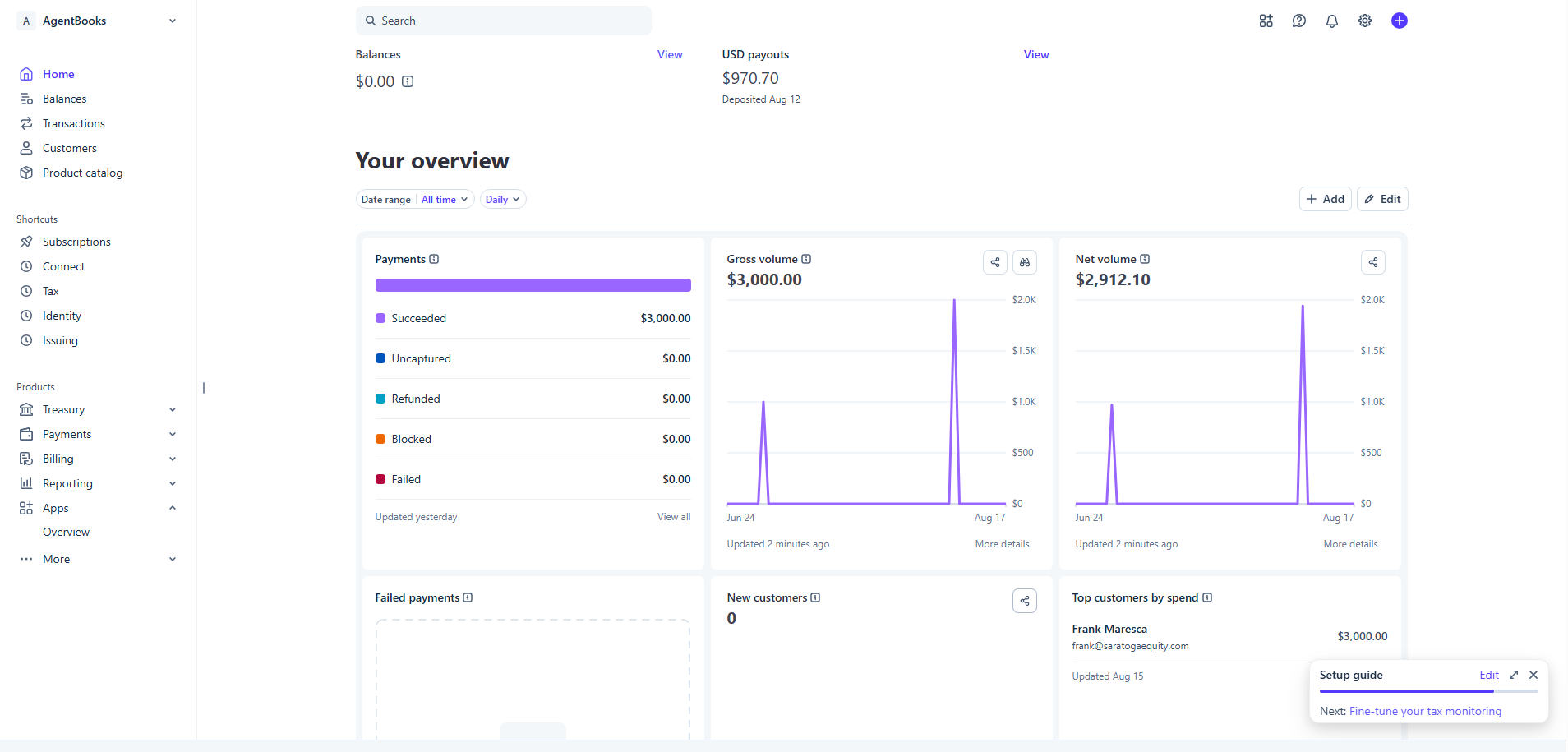
- stripe
- tailwind
- usdc
- viem
- vite
- x402


Log in or sign up for Devpost to join the conversation.