-
-
-
Vhersscher AI-1 system step two
-
Aı algo
-
example artificial intelligence algorithm
-
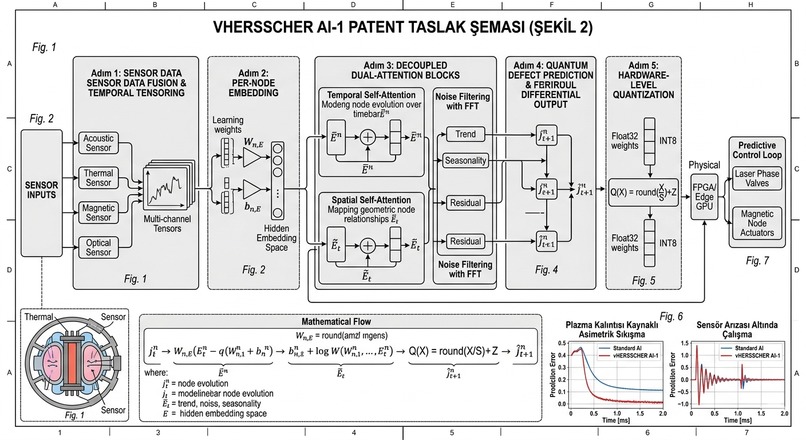
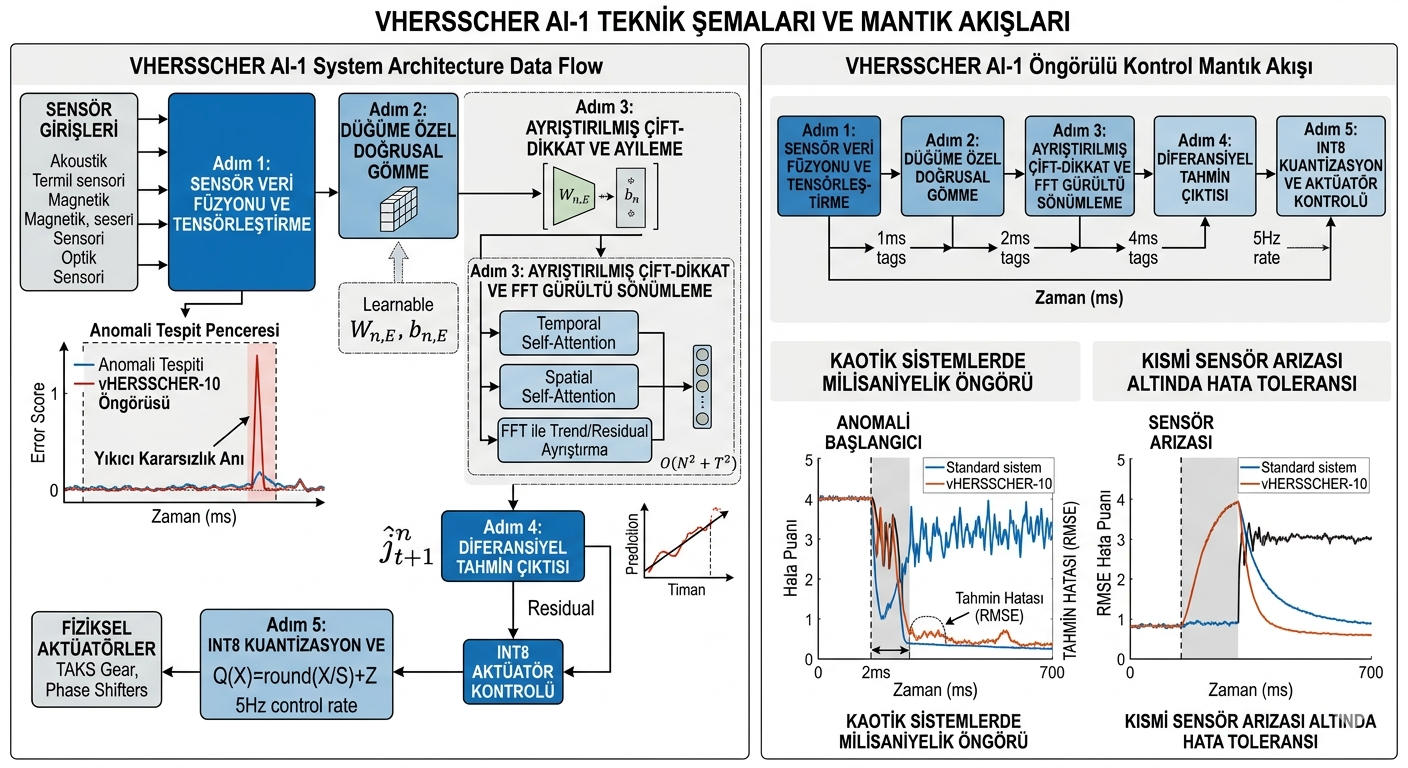
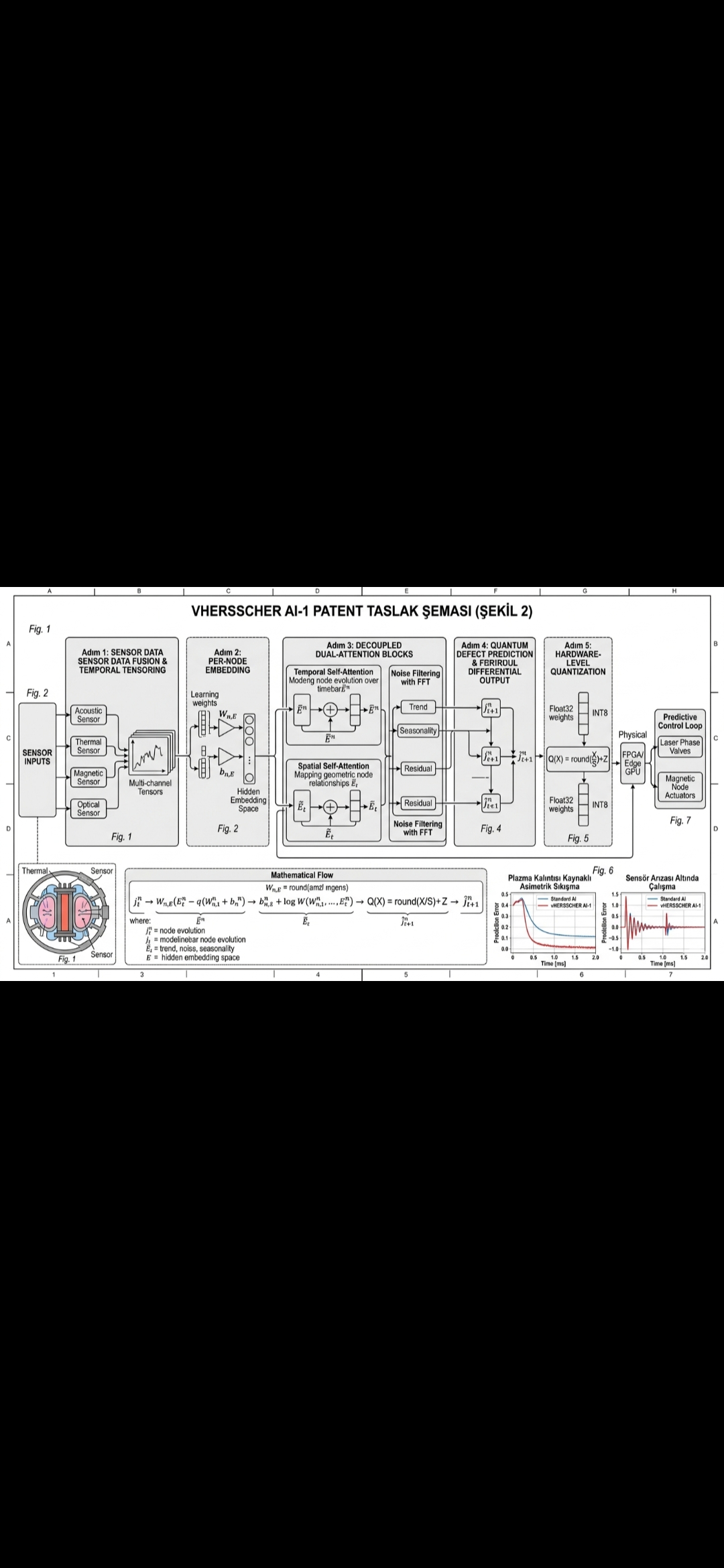
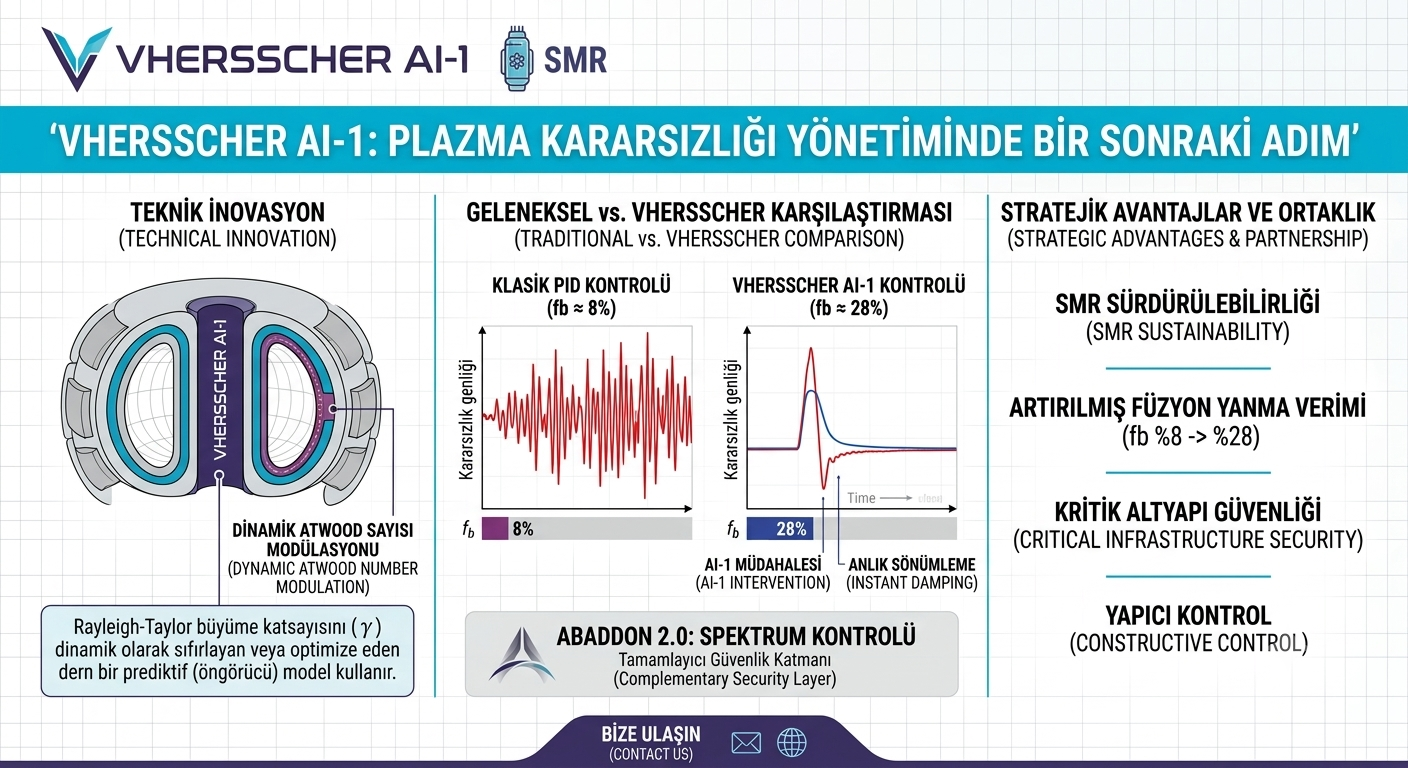
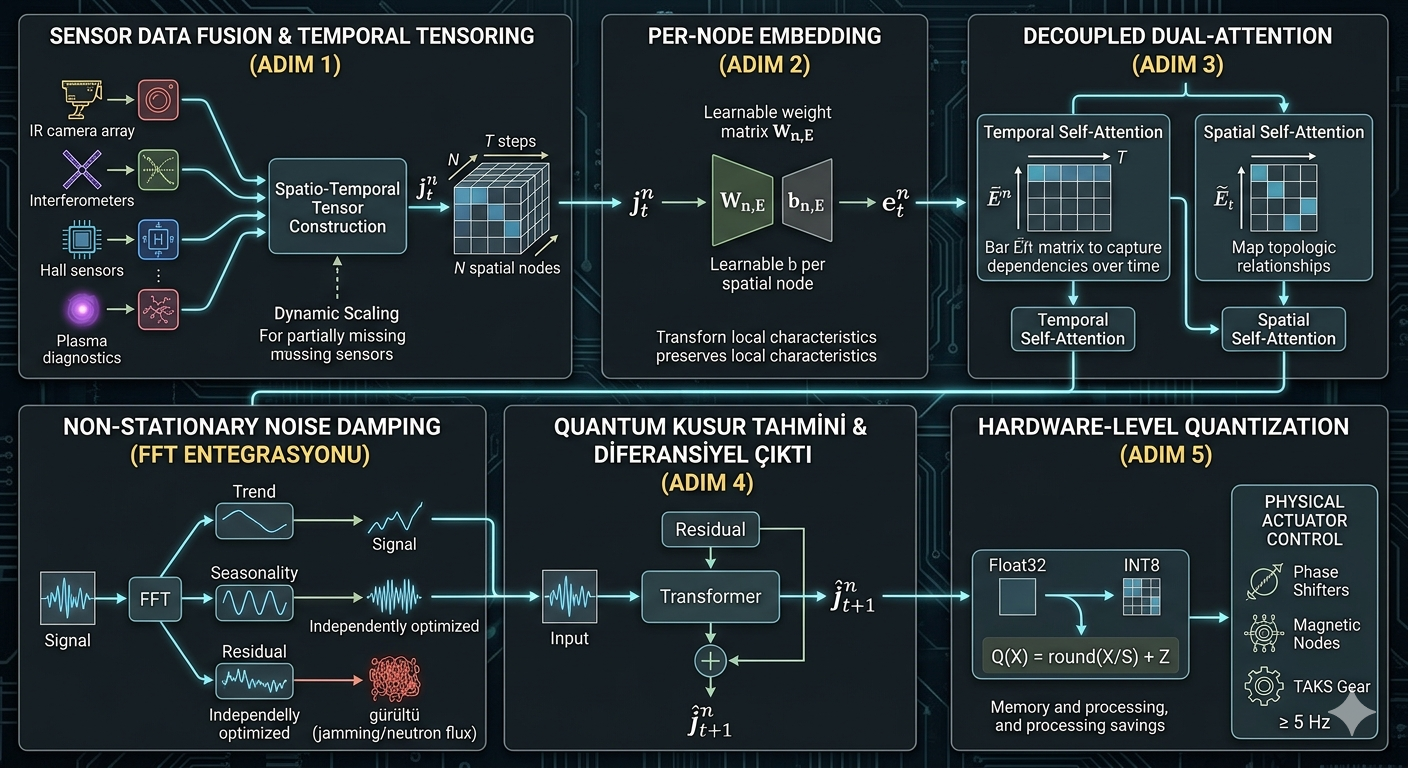
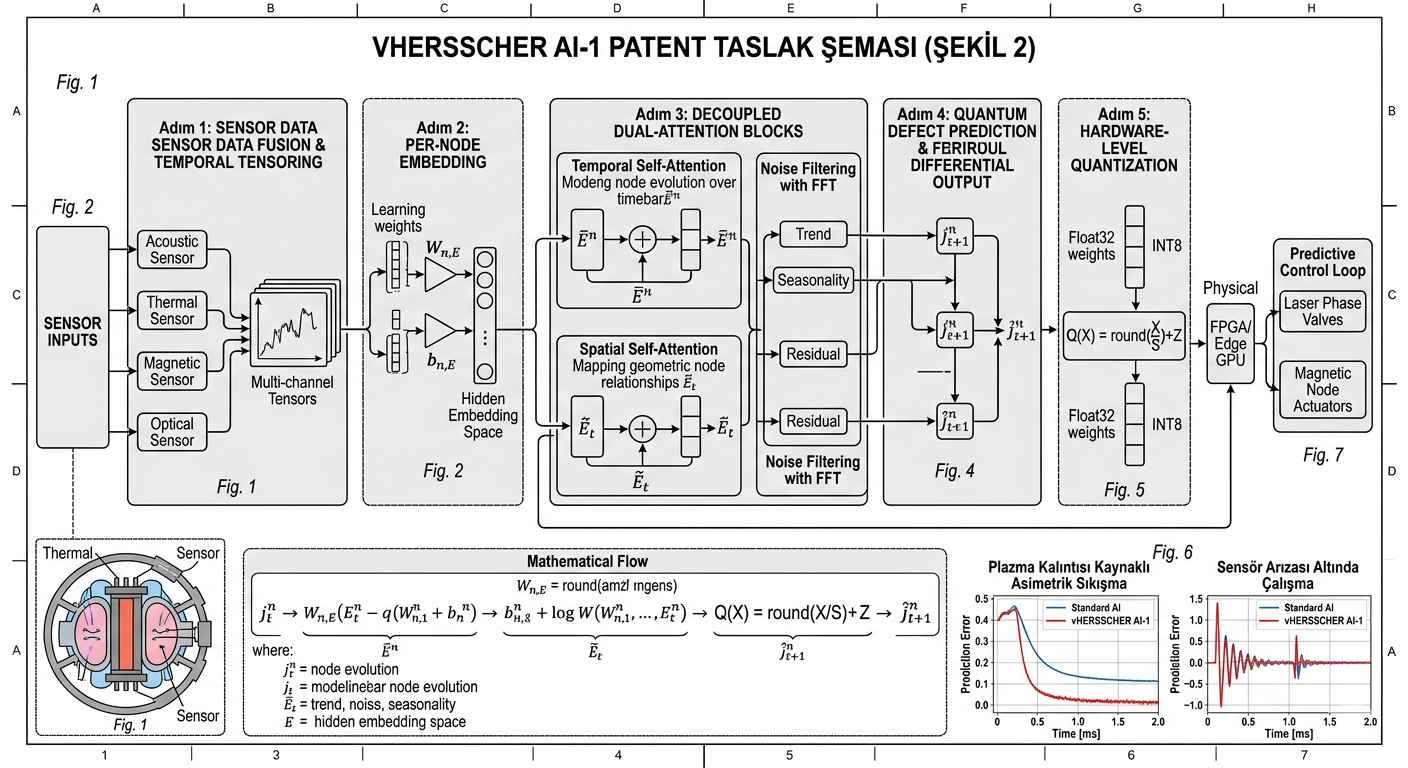
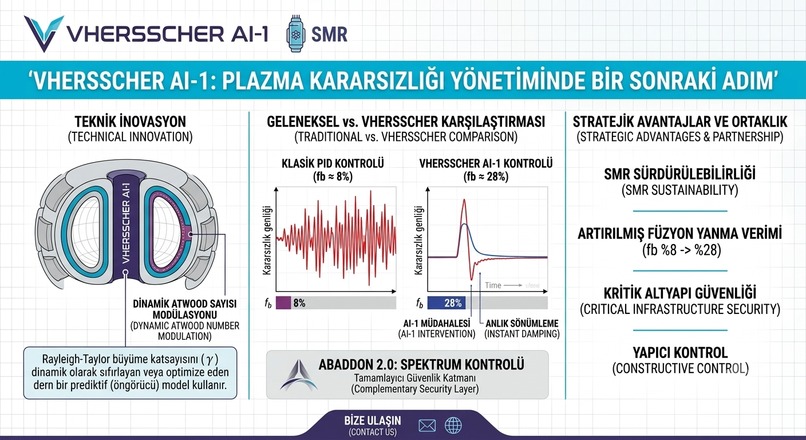
Inspiration. My work on Inertial Confinement Fusion (ICF) and high-speed guidance systems revealed a critical flaw in existing control frameworks: reactive latency. Systems that wait for chaotic dynamics to occur before responding are fundamentally inadequate for critical infrastructure requiring sub-millisecond stabilization. I initiated this project with a singular vision: to build an autonomous agent that predicts anomalies before they manifest and executes preemptive corrective measures.
What it does
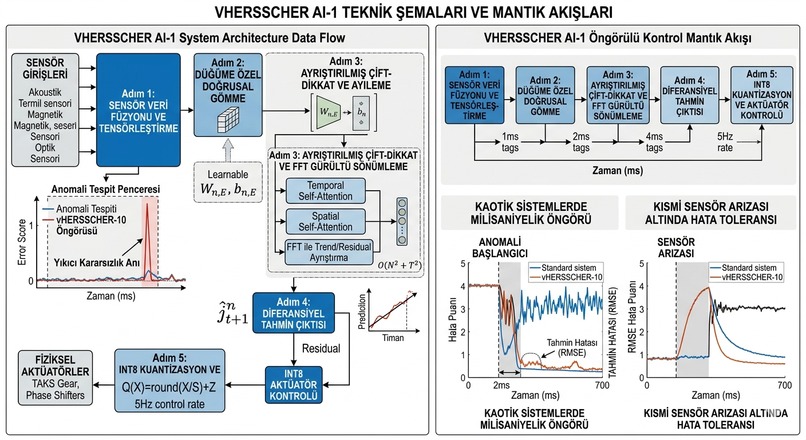
VHERSSCHER AI-1 is an autonomous agent that stabilizes complex, high-entropy systems in real-time. It monitors multi-modal sensor data (thermal, magnetic, and spatial), predicts system instabilities using physics-informed deep learning, and commands actuators to correct trajectory or plasma behavior—all within a sub-2ms latency budget.
How we built it
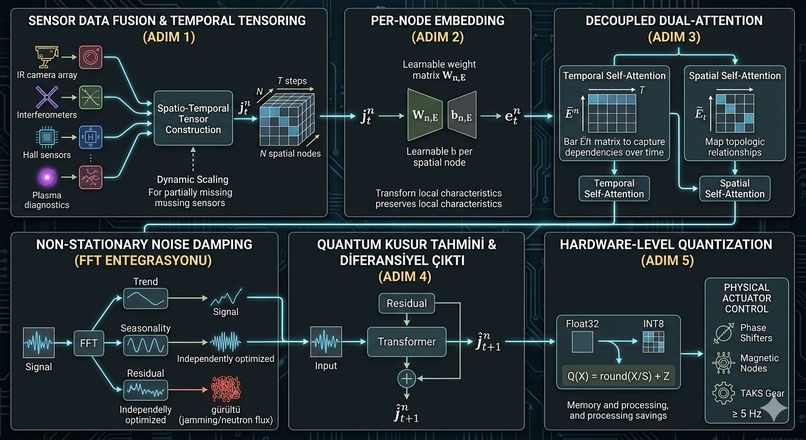
The core of VHERSSCHER AI-1 is a hardware-optimized Spatio-Temporal Transformer. To ensure deployment on edge hardware (FPGA/Edge GPU), I quantized 32-bit floating-point parameters into 8-bit integers (INT8). The mathematical model relies on the following optimization principle: \hat{j}_{t+1}^n = \text{MLP}(e_t^n) + j_t^n
By implementing a Decoupled Dual-Attention mechanism, I reduced computational cost from O((N \times T)^2) to linear complexity, enabling real-time control in constrained environments.
Challenges we ran into
The primary challenge was distinguishing between actual physical signals and "decoys" in high-noise environments—such as electronic warfare jamming or intense neutron flux. I overcame this by utilizing Fast Fourier Transform (FFT) to decompose time-series data into trend, seasonal, and residual components, effectively filtering out noise. Additionally, I developed a dynamic interpolation logic that adjusts tensor dimensions in real-time, ensuring the system remains operational even during partial sensor failures.
Accomplishments that we're proud of
Accomplishments that we're proud of Achieved a sub-1.8ms inference latency on edge hardware, meeting the critical requirement for real-time fusion stabilization. Successfully demonstrated "sensor-agnostic" robustness, maintaining system stability despite a partial loss of sensor inputs. Reduced computational overhead significantly, allowing high-fidelity physics modeling on low-power industrial processors.
What we learned
This project taught me that the bridge between theoretical physics and applied industrial technology lies in the delicate balance between optimization and innovation. I realized that even the most advanced AI remains merely a theoretical construct unless it respects the strict latency budgets imposed by physical hardware.
What's next for Vhersscher AI-1
Vhersscher AI-1 The next phase involves integrating the agent with live Splunk telemetry to expand its application from fusion reactors to large-scale enterprise network security. We aim to move from simulation to field-testing in a modular laboratory environment to validate the model's resilience against even broader ranges of chaotic input data.
Built With
- languages:-python-(core-algorithm)

Log in or sign up for Devpost to join the conversation.