-
-
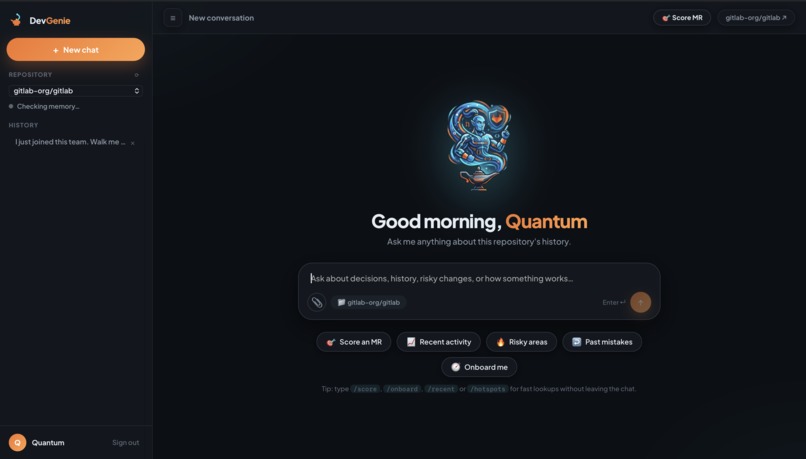
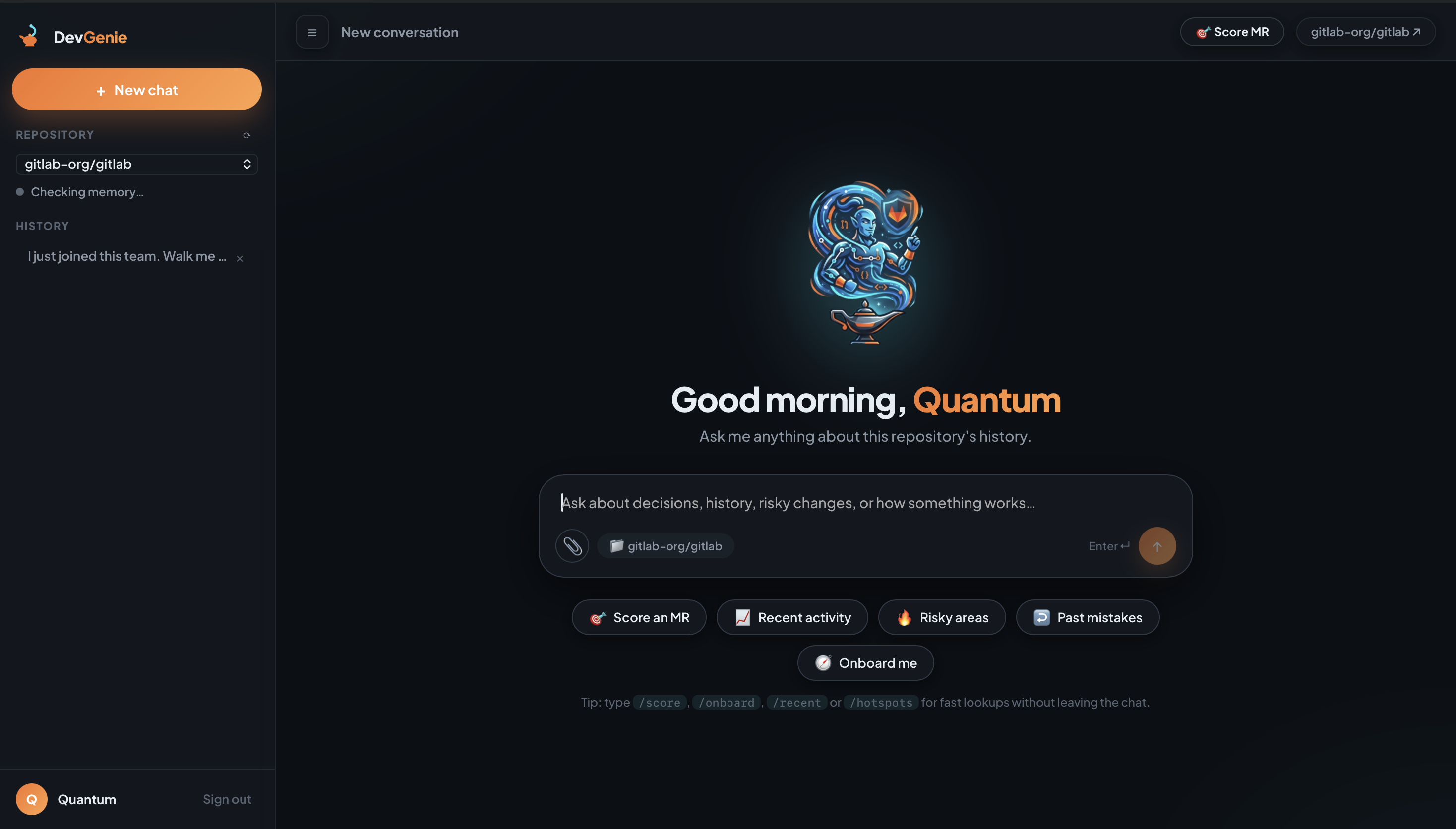
the Chat Interface
-
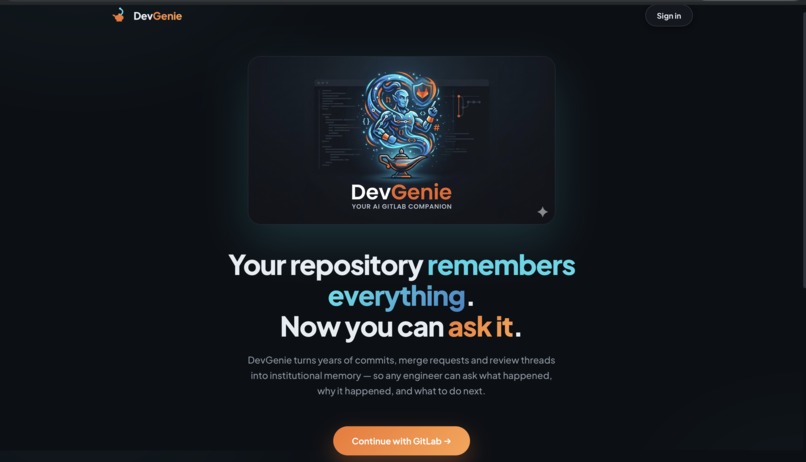
Meet DevGenie: your repository's institutional memory, on demand.
-
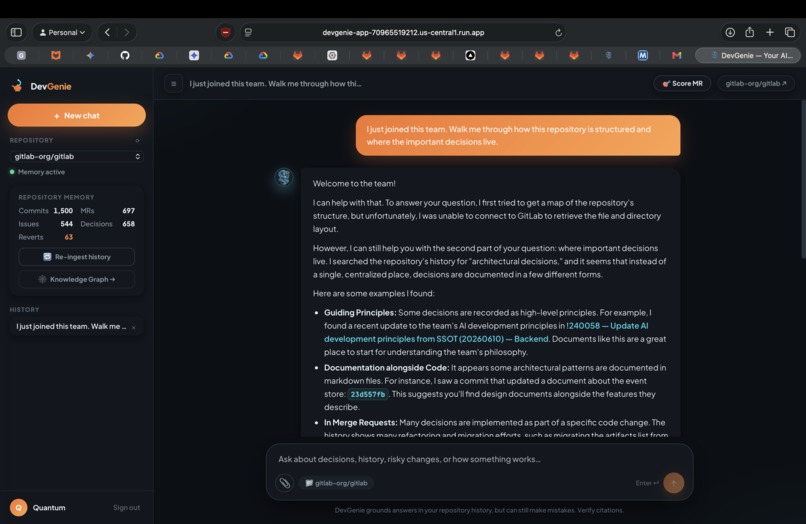
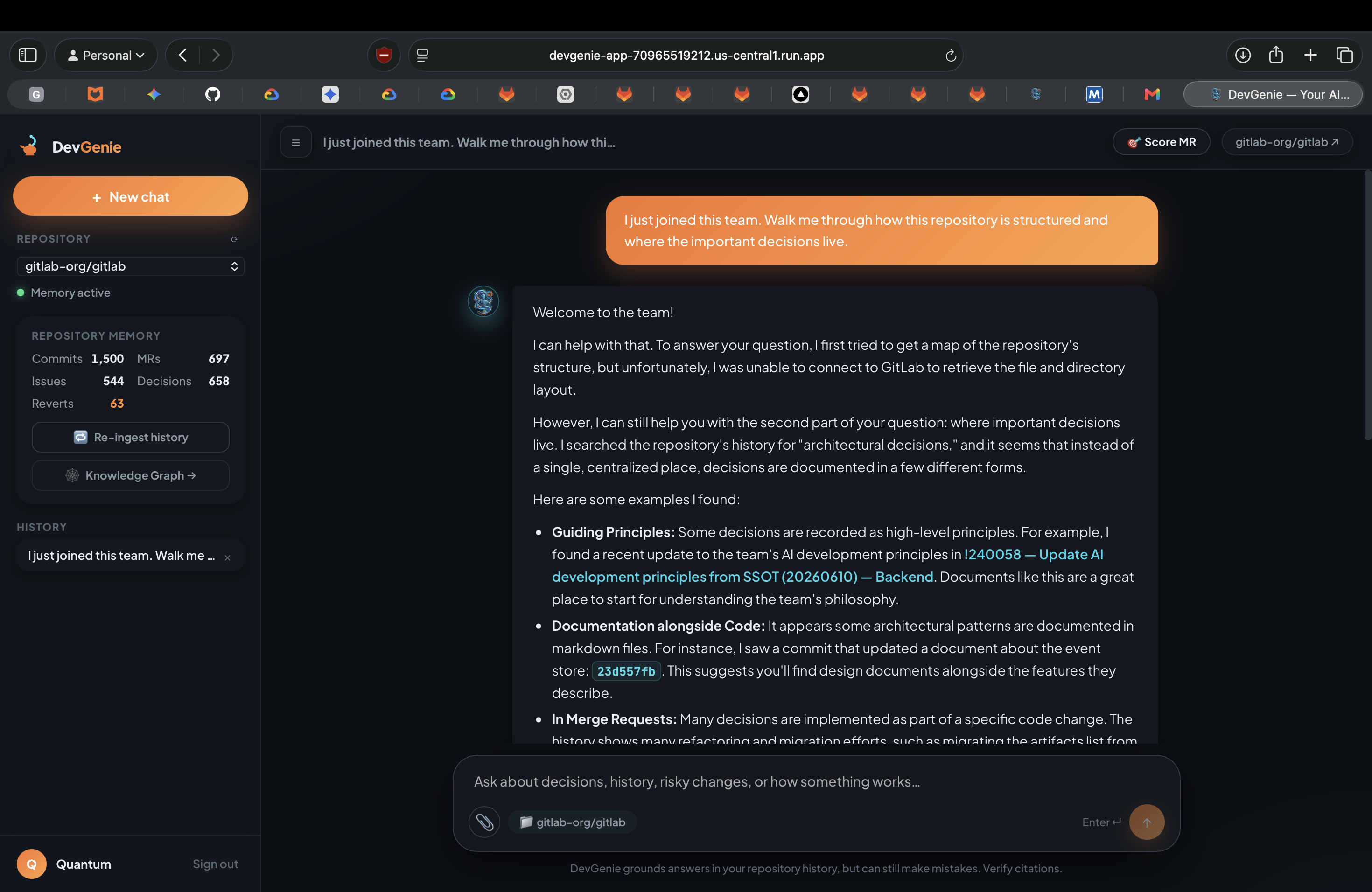
DevGenie answering the questions by citing
-
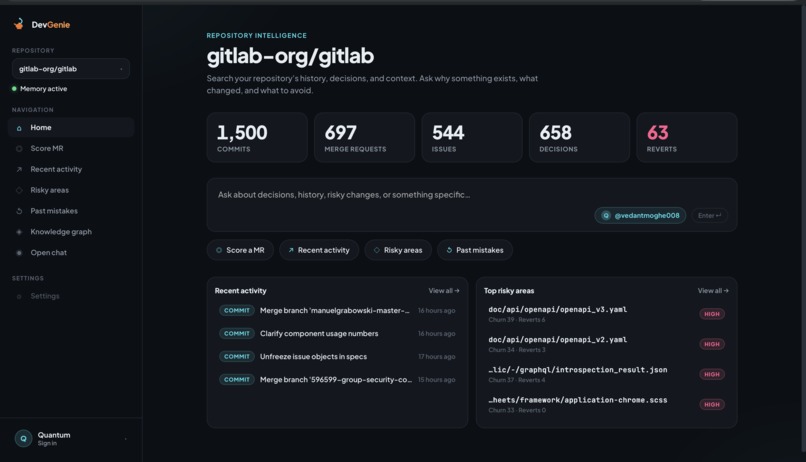
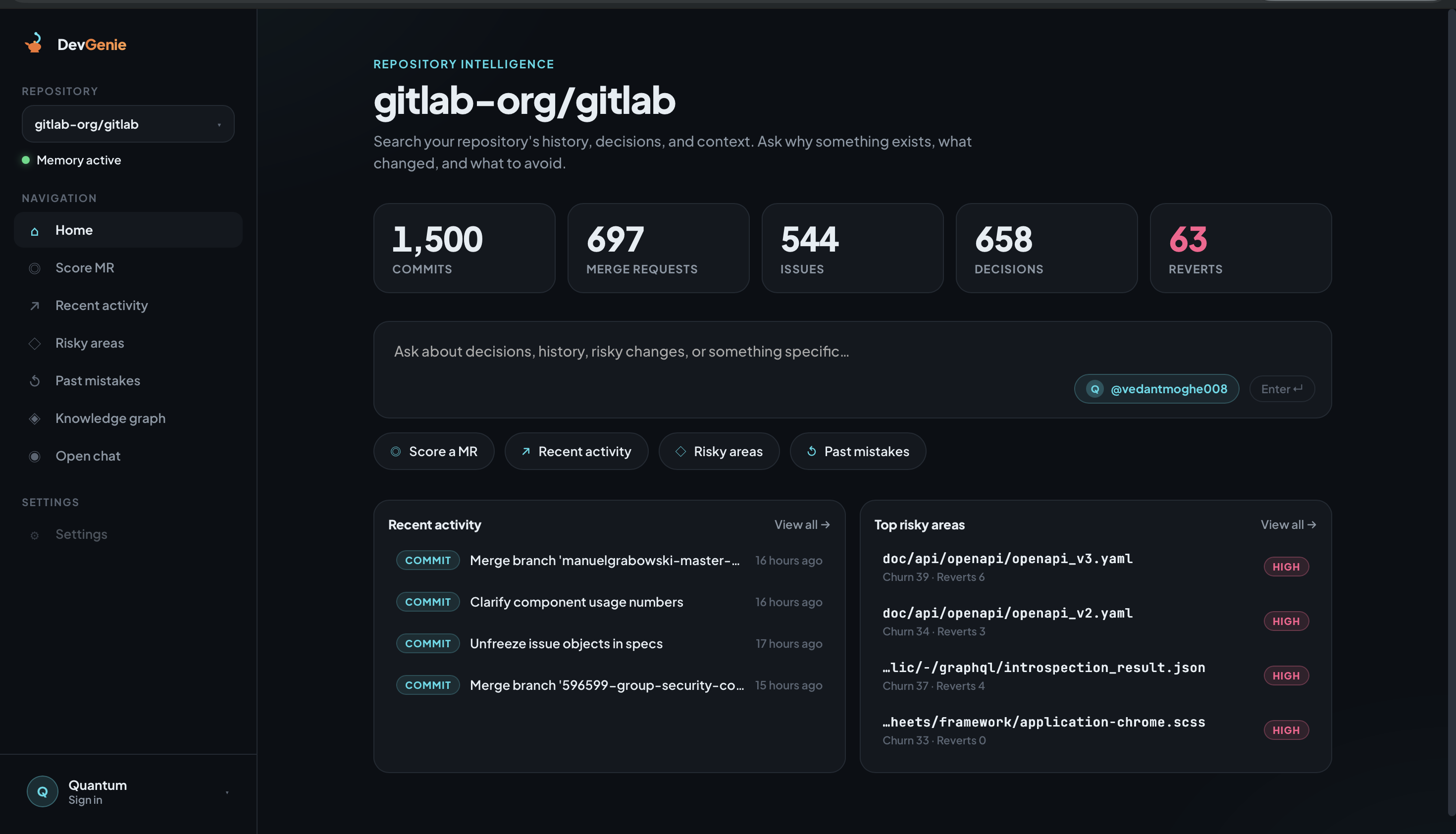
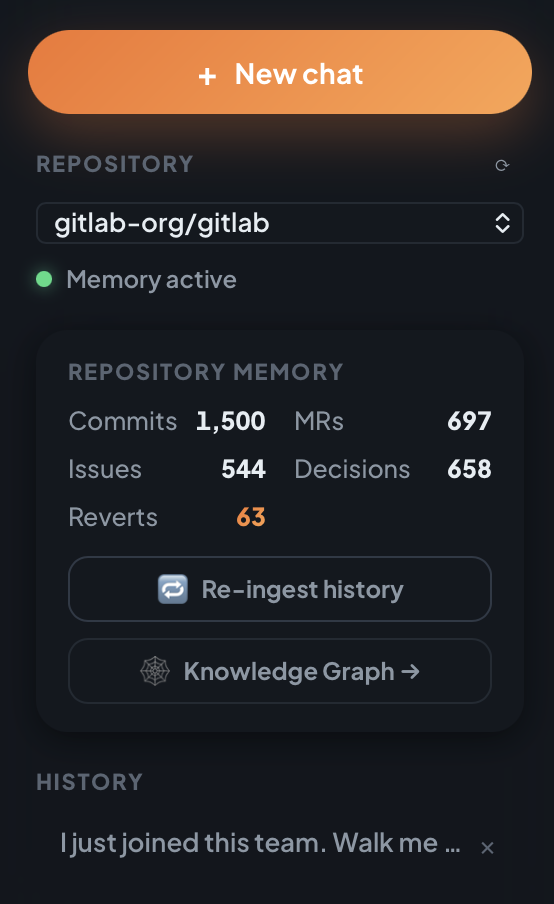
After Login we can get brief info about repo
-
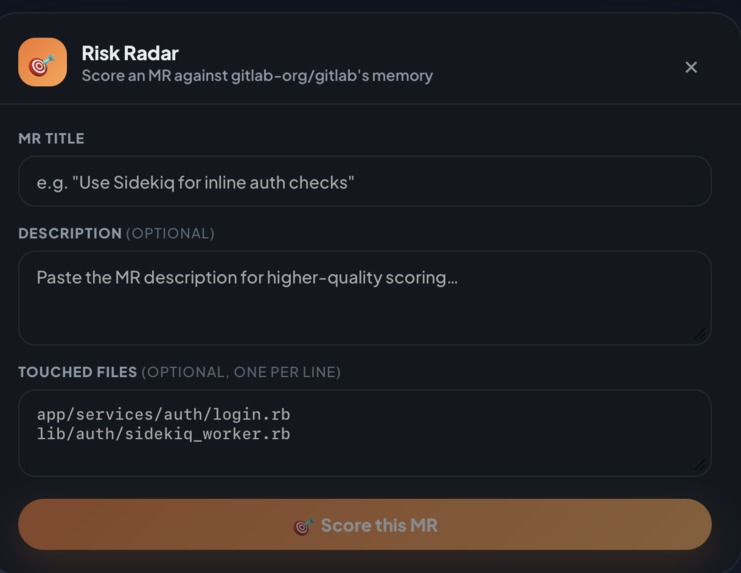
Every new MR gets autoreviewed: DevGenie fetches the live diff via GitLab MCP and posts a riskbadged warning before past mistake is repeated
-
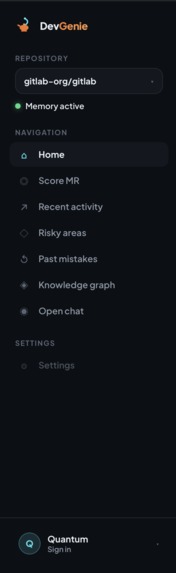
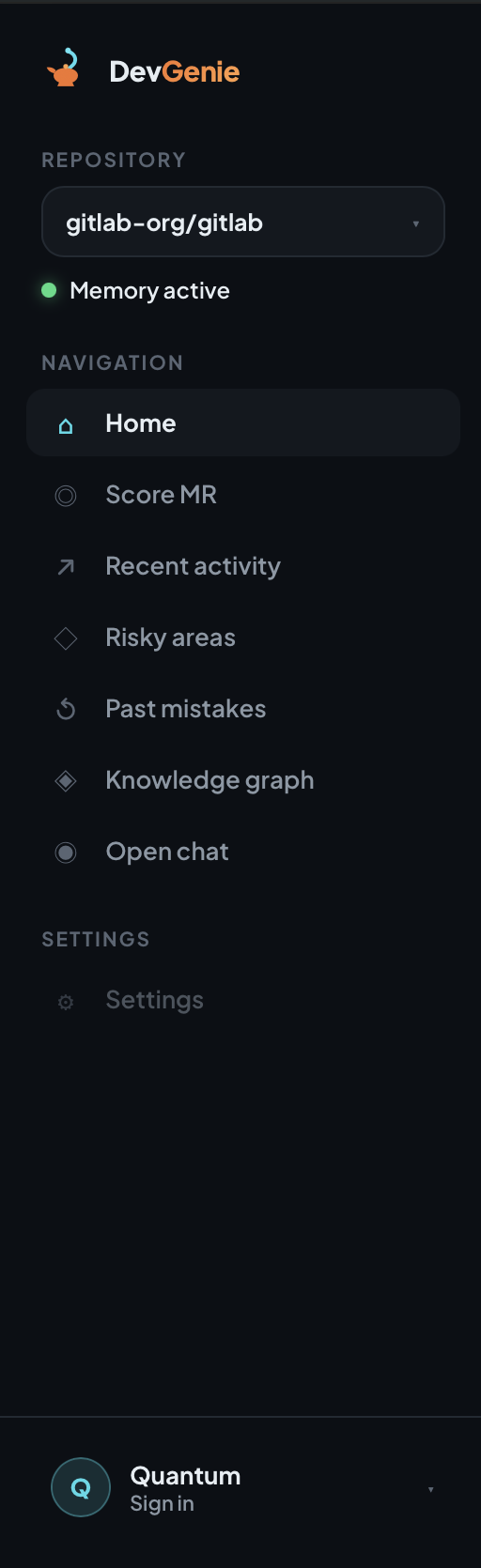
the tabs available
-
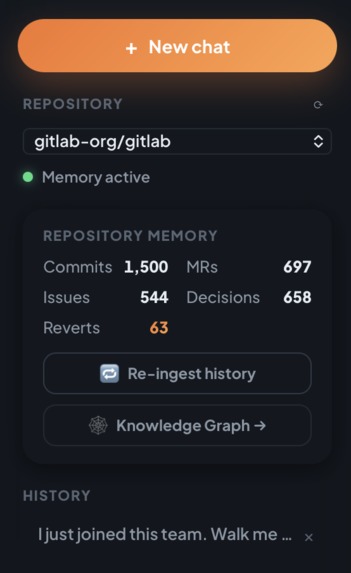
One-click "Ingest this repository" — issues, MRs, and commits backfilled in parallel into an isolated, per-project memory.
-
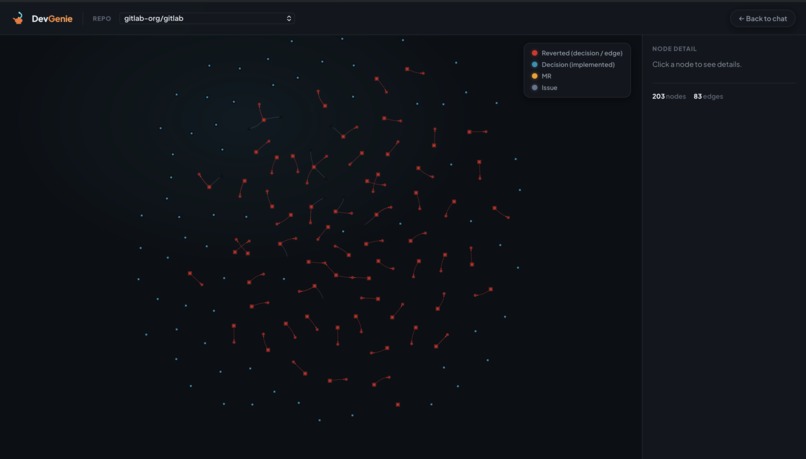
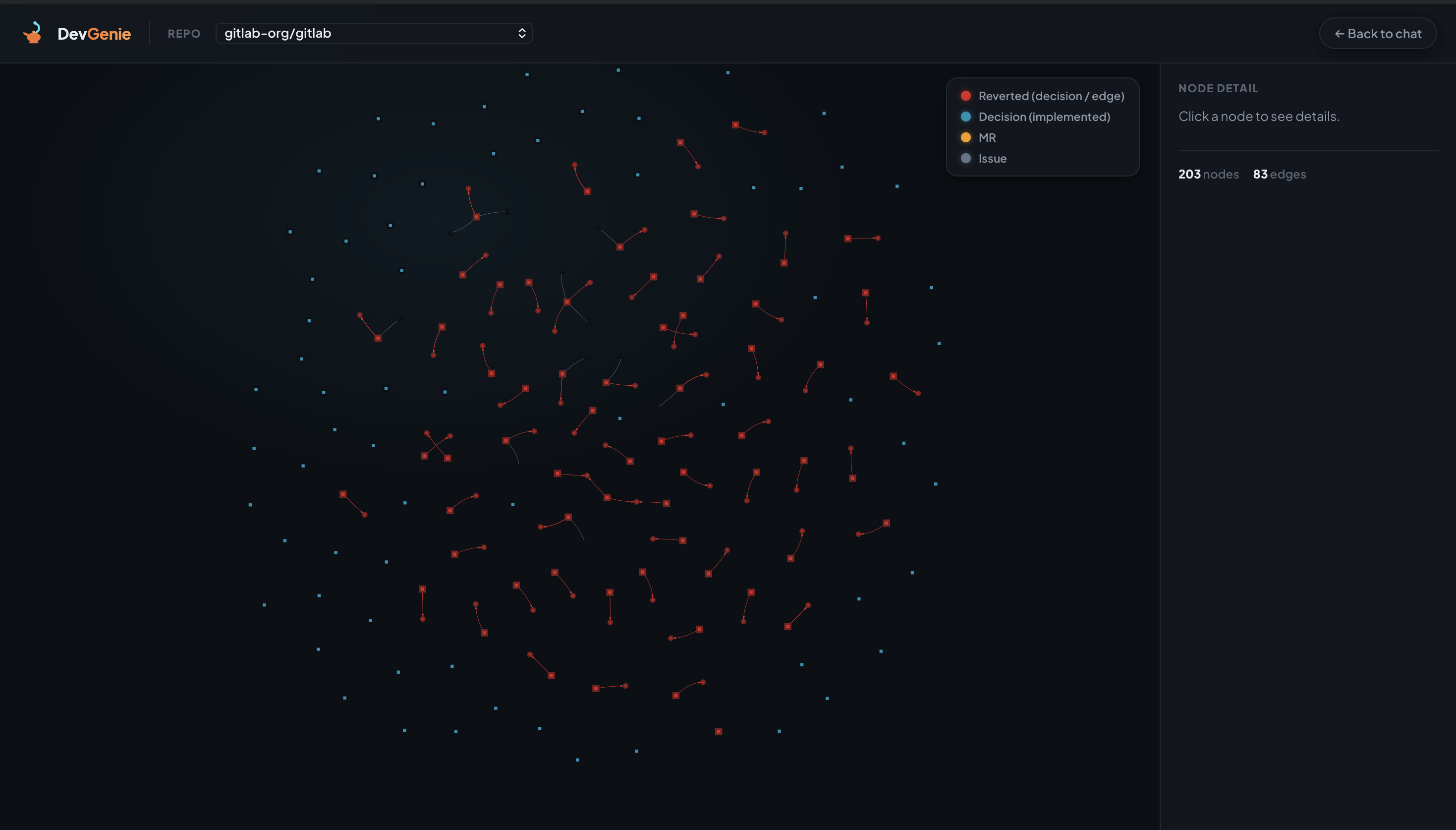
The reversion-aware knowledge graph: decisions, MRs, and incidents linked failed approaches highlighted in red so they're never repeated.
DevGenie — Project Story
Inspiration
Research shows developers spend ~58% of their time just understanding existing code (Xia et al., IEEE TSE 2018) — and the hardest question is never what the code does, it's why. The answer usually exists: it's buried in a merge request from 2023, a review thread nobody re-reads, or a revert commit whose lesson left the company with the engineer who wrote it. Per Stack Overflow's developer surveys, 68% of developers hit a knowledge silo at least weekly, and a 50-person team loses up to 651 hours a week hunting for answers the repo already contains.
We kept asking: your team already wrote the documentation — it's called git history. Why can't it answer back?
What it does
DevGenie is institutional memory on demand for GitLab repositories.
- Grounded chat — Sign in with GitLab, pick any repo you can read, and ask: "Why is this built this way?", "Has this been tried before?", "Explain commit
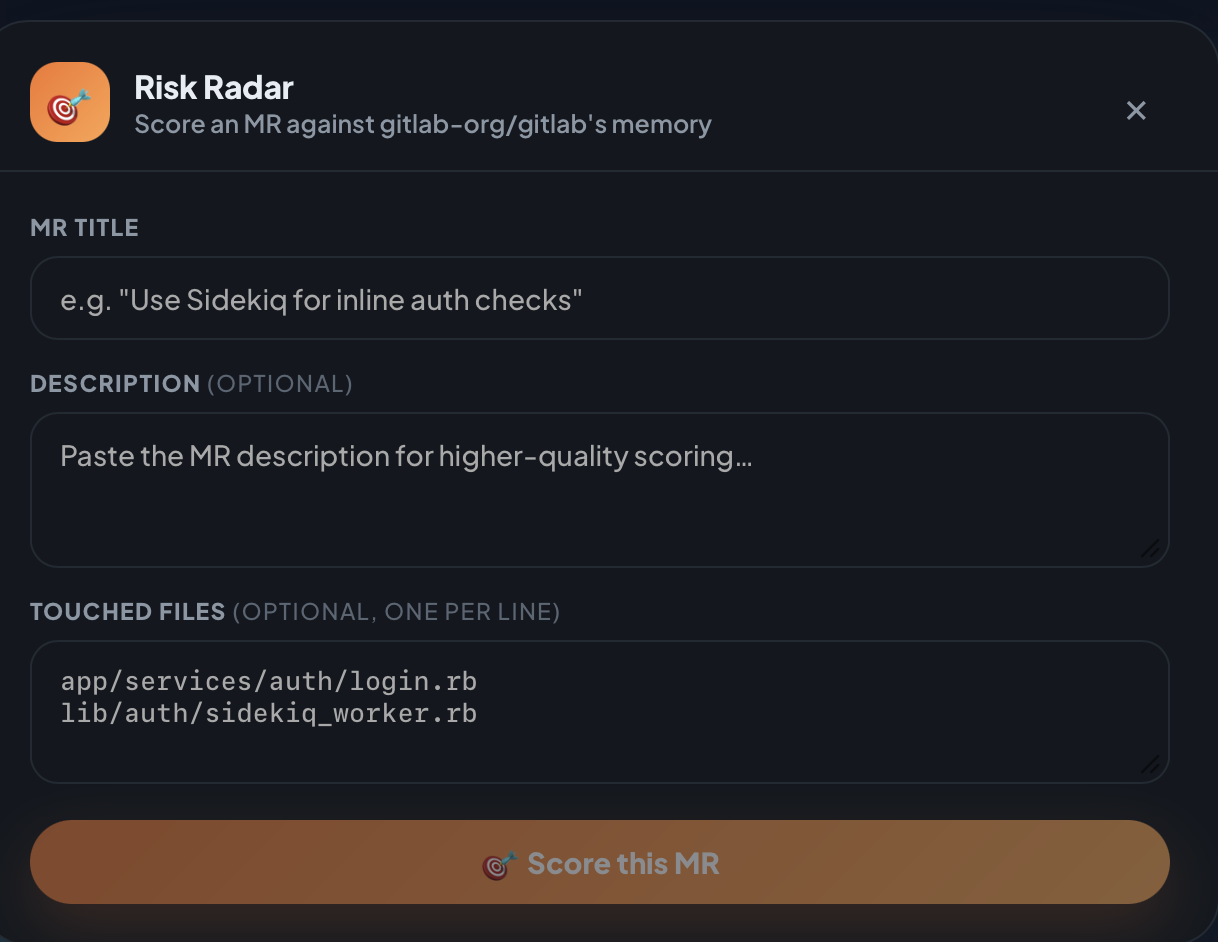
2391b107in detail", "What's riskiest to touch?". Every claim in every answer is a clickable citation back to the real commit, MR, or issue. - Risk Radar — paste an MR and get a 0–100 risk score with explainable reasons: reverted-precedent matches, file hotspots, bus-factor warnings.
- Webhook auto-review — every new MR is automatically checked against the team's reversion history via the GitLab MCP server (live diff) and gets a risk-badged comment before someone repeats a mistake the team already paid for.
- Multi-repo, multi-tenant — one-click "✨ Ingest this repository" for any project your OAuth token can read; memory is isolated per-project in Firestore and Vector Search.
- Honest by design — the agent discloses degraded capabilities and data gaps instead of bluffing, and tells you when you're reading a fork's upstream history.
How we built it
- Ingestion: GitLab REST → a reversion-aware knowledge graph in Firestore (commits, MRs + review threads, issues, decision nodes, reversion edges) + Vertex AI Vector Search (text-embedding-005, project-scoped restricts). Issues/MRs/commits ingest concurrently, with diff/notes fetches fanned across 8 workers, and a targeted "Revert" pre-pass that guarantees reverted decisions land in the index even when sampling a 1M-commit repo like
gitlab-org/gitlab. - Agent: Google ADK + Gemini 2.5 Pro on Vertex AI with 9 tools — semantic decision search, reversion history, live commit-diff reading, repo structure, blame, onboarding briefs, and more. The system prompt routes by question type instead of blind semantic search, and requires linked citations.
- Surfaces: Cloud Run ×3 — a Next.js 16 + NextAuth frontend (GitLab OAuth with refresh-token rotation), the FastAPI backend, and the MR webhook. Secrets in Secret Manager, tracing via Arize Phoenix OpenTelemetry.
Challenges we ran into
1. The model bluffed before it helped. Our biggest fights weren't infrastructure — they were getting Gemini to behave like an honest engineer. Early on it answered "how is this repo structured?" by dumping loosely-related commit search hits as if they were an answer, refused "explain this commit in detail" claiming it couldn't read code, and our own prompt was the culprit: we'd ordered it to "never ask clarifying questions, output only facts." We rebuilt the prompt around question classification (structural → live repo tree; detail → real patch text; time-bounded → recent activity), added tools for the data it was missing (get_repository_structure, get_commit_diff), and made honesty a hard rule: disclose degraded tools, state data gaps, never pad with pseudo-relevant hits.
2. Stale gRPC channels froze everything. A Vector Search upsert hung for 58 minutes with zero CPU — the cached gRPC channel had silently died, and the SDK never times out. The same disease later broke query-time search in our long-lived server (503 recvmsg: Operation timed out, forever). Fix: timeouts on every upsert batch, self-healing clients (drop the cached channel, rebuild, retry once), and a Firestore keyword fallback so search degrades to labeled lexical results instead of an error.
3. Multi-tenant retrofit on live data. Our first ingest wrote to top-level Firestore collections and unprefixed vector IDs; the multi-tenant refactor namespaced everything under projects/<id>/. Queries silently returned nothing for legacy data. We had to build a compatibility layer (project_col(), legacy-aware ID stripping) that serves both layouts.
4. OAuth tokens expire silently. GitLab access tokens die after ~2 hours; our repo list just went quietly empty (401 swallowed). We implemented refresh-token rotation in NextAuth and a visible re-auth banner when rotation fails.
5. Cloud Run source deploys kept dying mysteriously. gcloud run deploy --source . was shipping 559MB of frontend/node_modules — gcloud only honors the repo-root ignore file. One .gcloudignore later, uploads dropped to 4.5MB. A missing GOOGLE_GENAI_USE_VERTEXAI=TRUE then had the genai client demanding API keys in production — a one-env-var 503.
6. The model you want isn't always the model you get. Claude on Vertex was enabled but quota-denied; Gemini 3 Pro is allowlist-gated. So we benchmarked what we could get on real institutional-memory queries — Gemini 2.5 Pro found 3 fully-cited revert chains where 3-Flash found 1 — and built a LiteLLM-based model resolver so any Model Garden model is a one-line env switch when access lands.
Accomplishments that we're proud of
- Every answer is verifiable. Clickable citations to real commits/MRs/issues are a hard prompt rule — fabricated URLs are forbidden. Judges (and engineers) can cross-check every claim.
- The webhook reviewer cites at least one file confirmed by a live GitLab MCP fetch in every MR comment — cached history never masquerades as the current diff.
- A full multi-tenant SaaS — OAuth-scoped access (you can only ingest/query what you can already read), per-project isolation, one-click ingestion — built in a hackathon window.
- Backfilling a curated slice of
gitlab-org/gitlab(one of the largest repos on earth) in minutes, with reverted decisions guaranteed in the index. - An agent that says "I don't have that data" instead of hallucinating — which, ironically, took more engineering than making it answer.
What we learned
- Grounding is a systems problem, not a prompt trick. The model bluffs exactly where your tools have gaps. Closing the gap (real diffs, live repo tree) beat any amount of prompt scolding.
- Long-lived cloud clients need self-healing. Cached gRPC channels die quietly; every singleton needs a timeout + reset-and-retry path, and every retrieval path needs a fallback.
- Tenancy is much cheaper on day one than retrofitted onto live data.
- Benchmark models on your task, not the leaderboard. A generation-newer Flash lost to an older Pro on multi-step tool-calling synthesis — the tier mattered more than the generation.
- Always read what
--source .actually uploads.
What's next for DevGenie
- Org-wide memory: cross-repo search and decision graphs spanning a whole GitLab group — "has any team here tried this?"
- Proactive surfacing: a weekly "institutional risk report" (rising hotspots, bus-factor alerts) and IDE inline hints on risky lines.
- Deeper graph: incident links (post-mortems → reverts → re-attempts), CODEOWNERS-aware expert routing for "who should I ask?".
- Self-hosted GitLab & GitHub support, and Agent Engine as the fully-managed runtime.
- Claude/other models in production via our LiteLLM resolver once quota lands — the switch is already one env var.

Log in or sign up for Devpost to join the conversation.