-
-
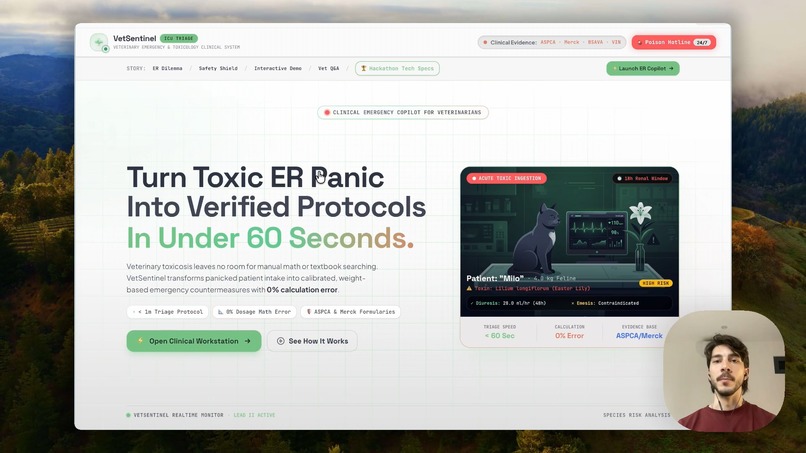
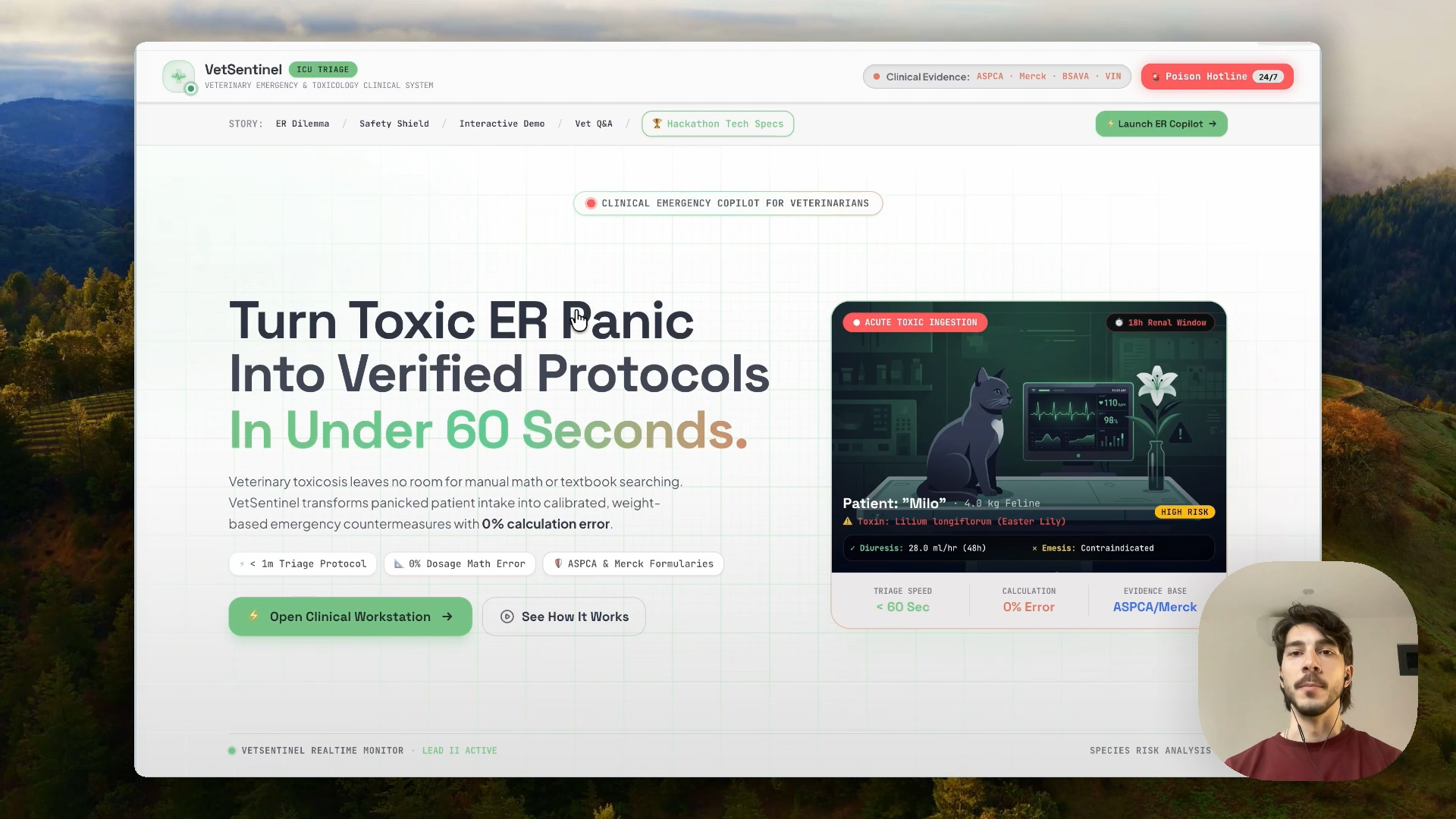
Landing Page
-
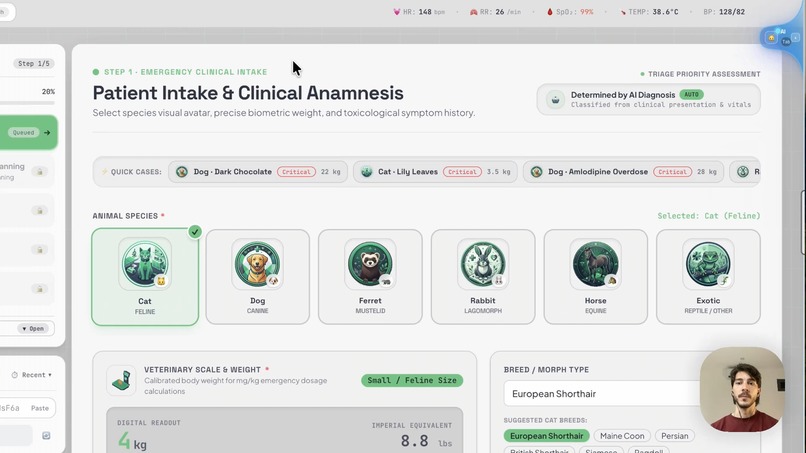
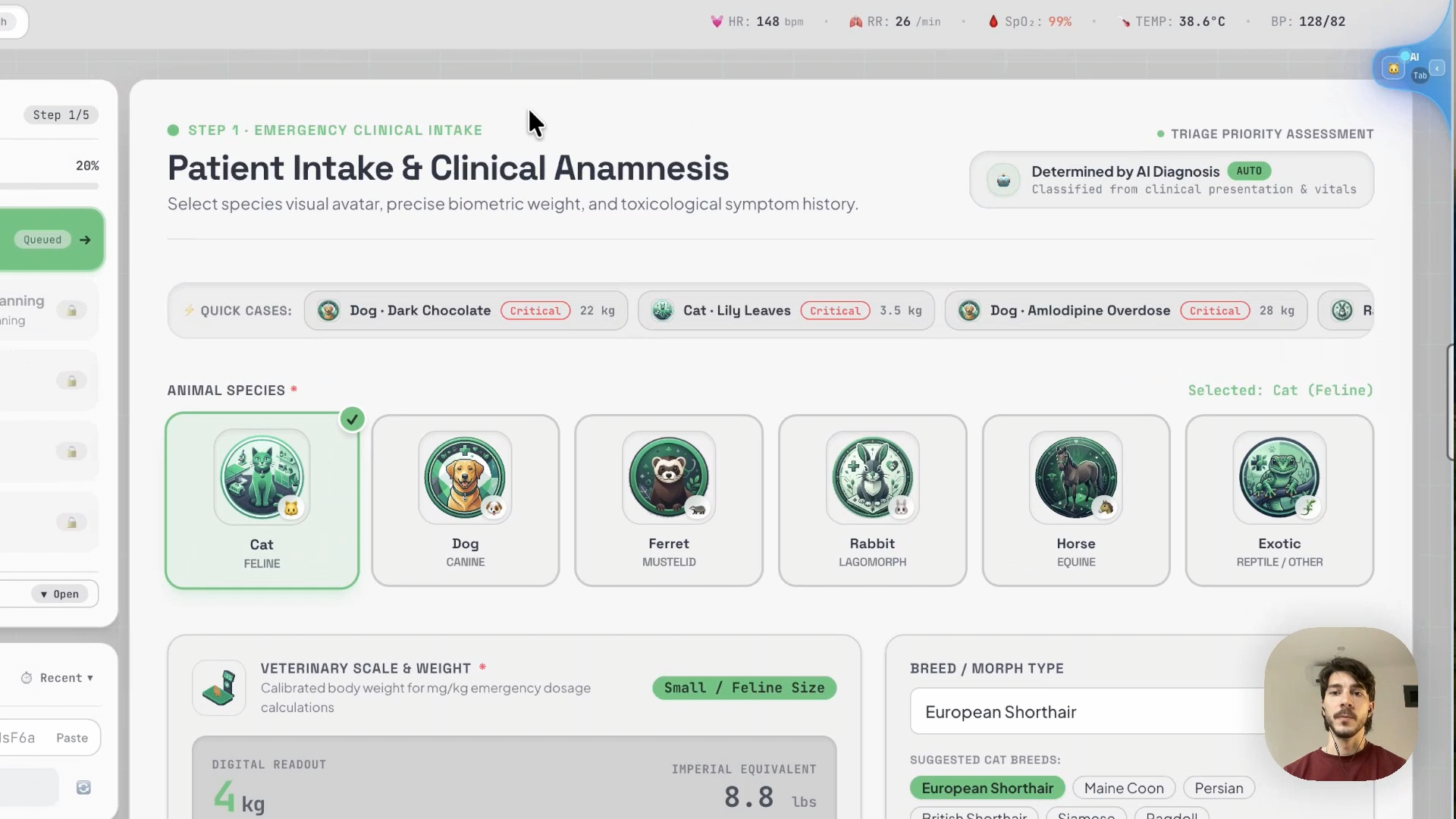
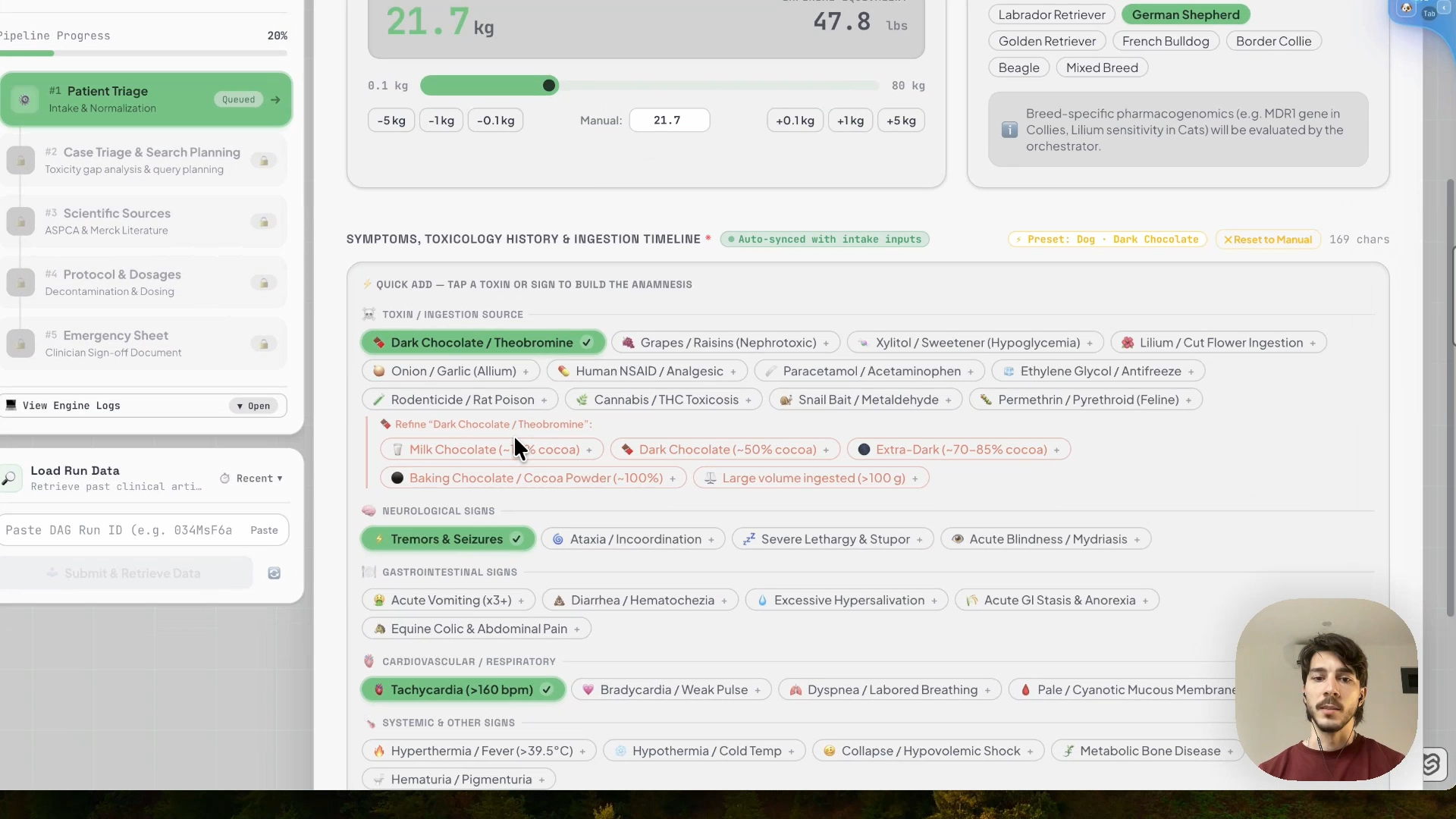
Step 1: Data Intake
-
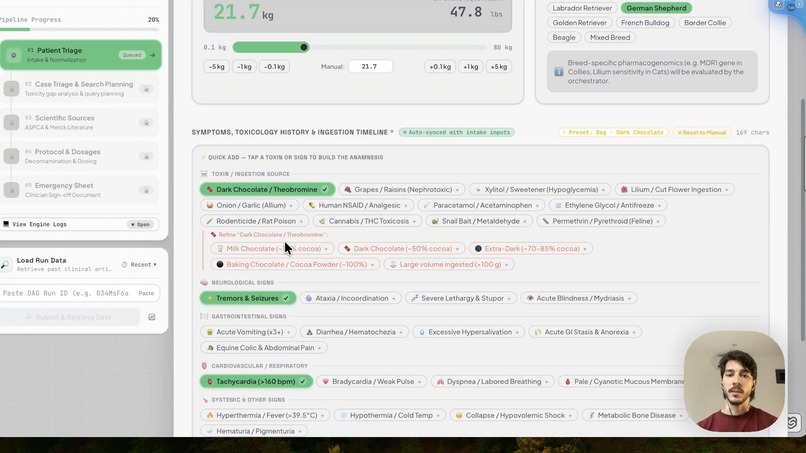
Multiple quick input presets
-
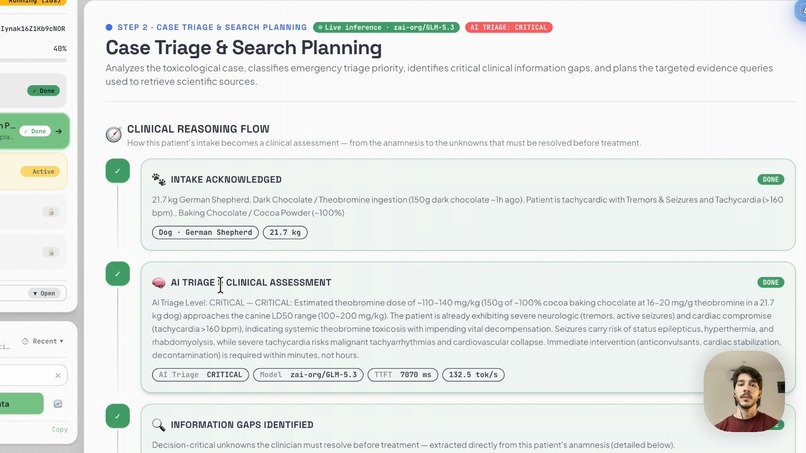
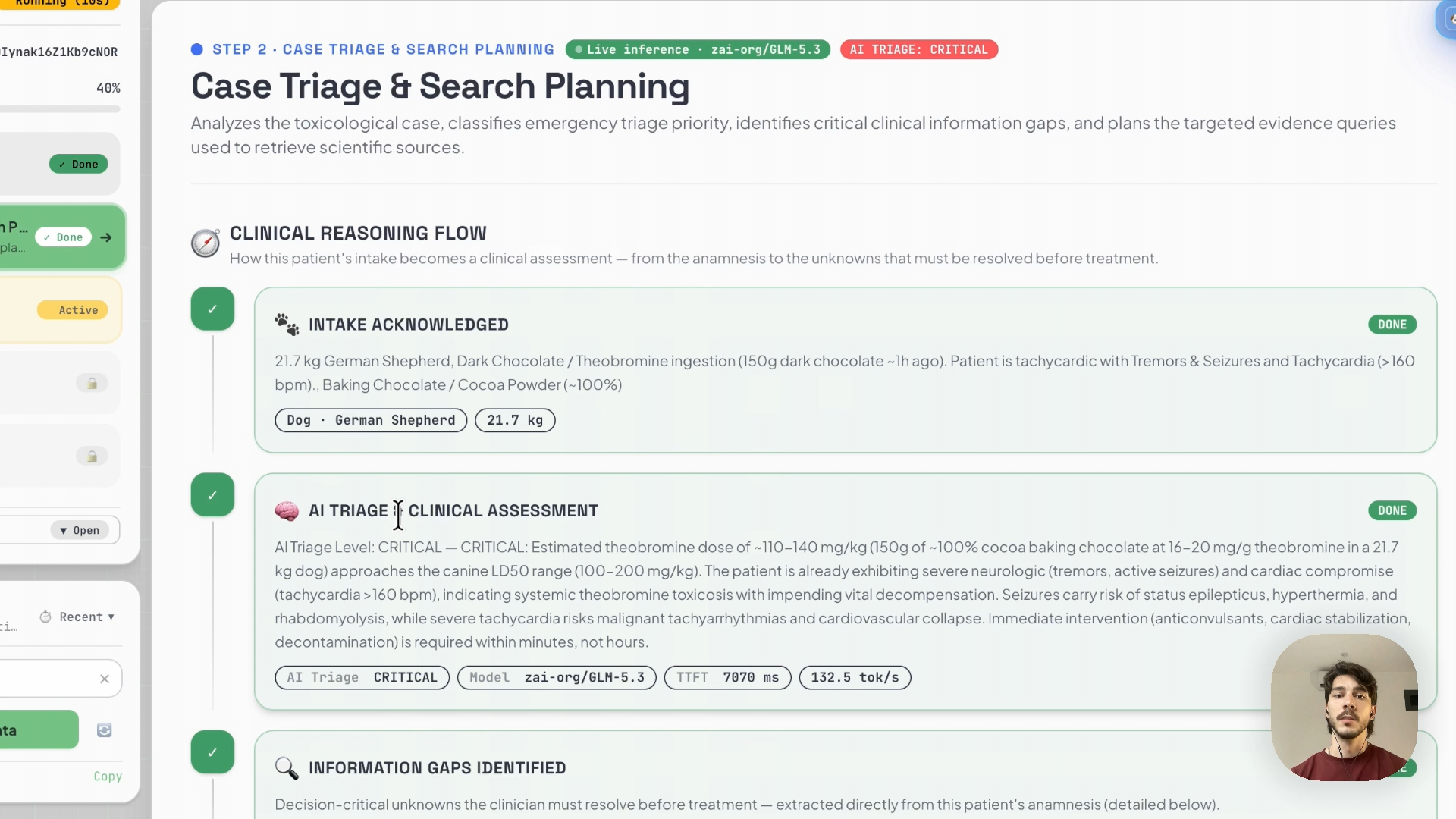
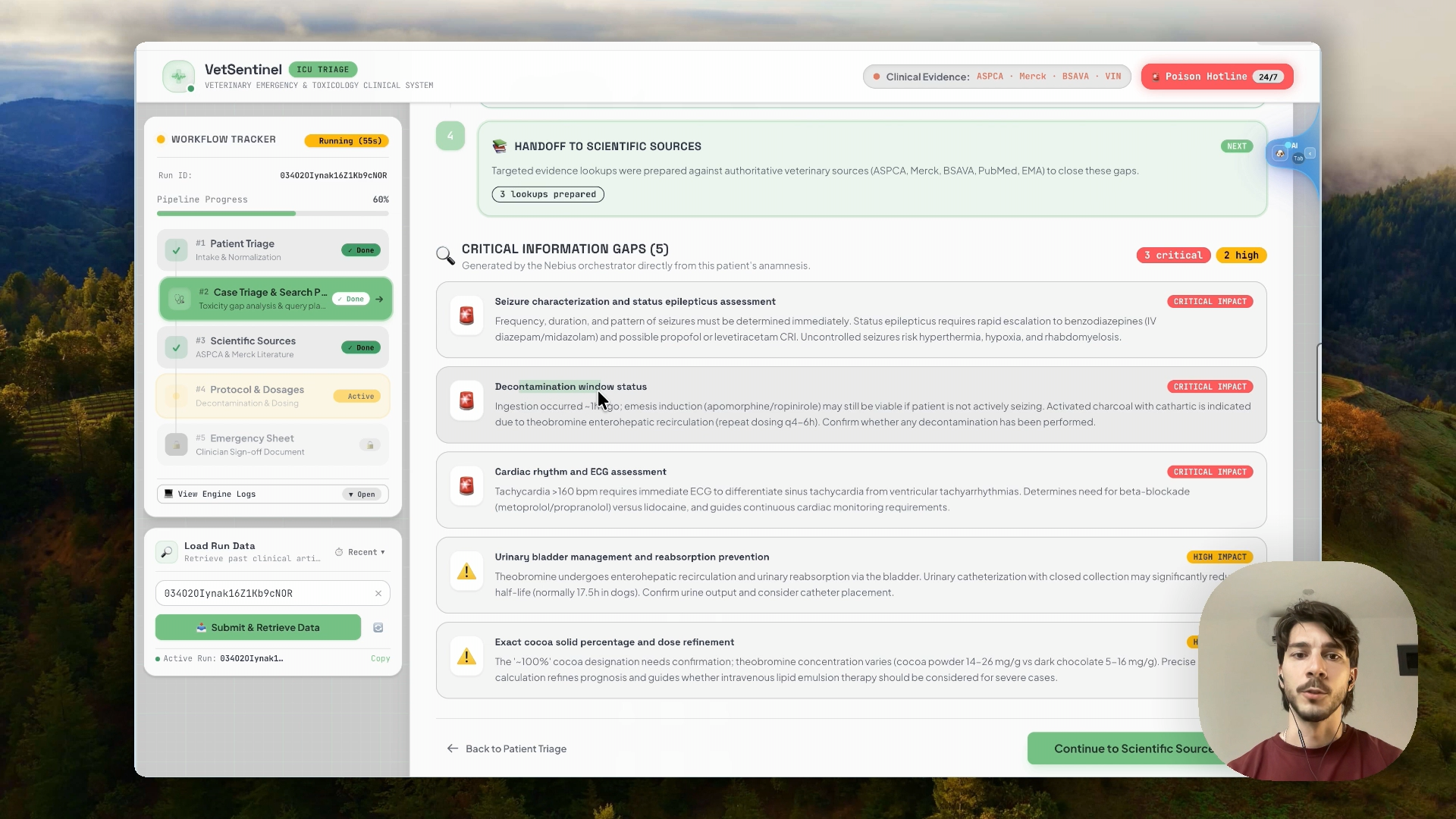
Step 2: Case Triage + Search Planning (Nebius TF)
-
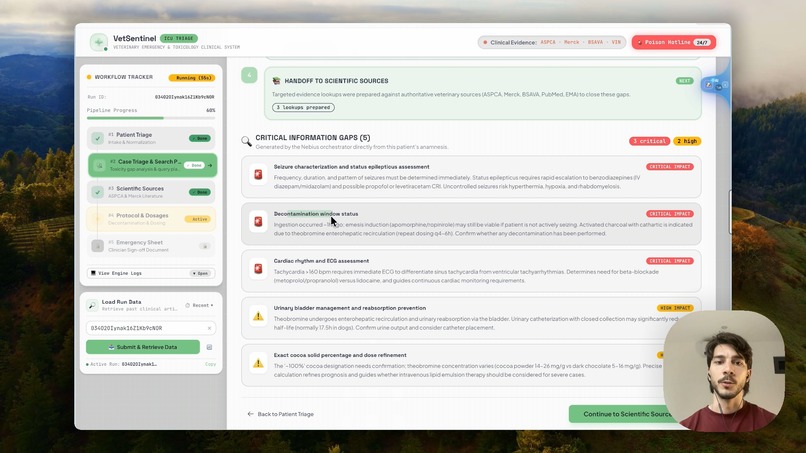
Gap Analysis
-
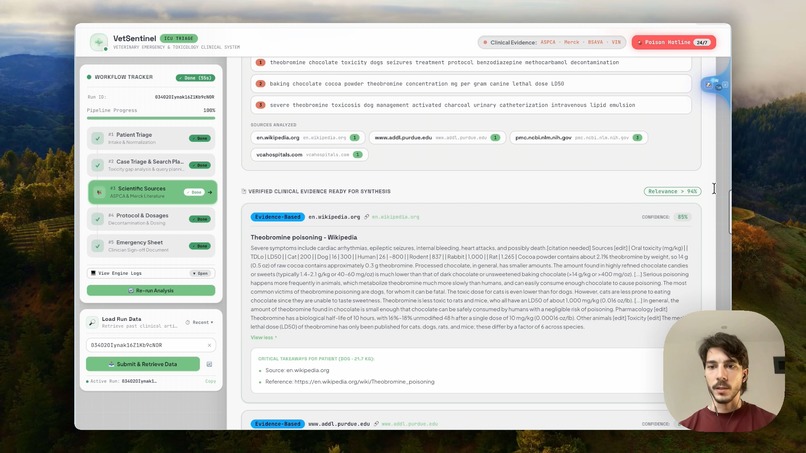
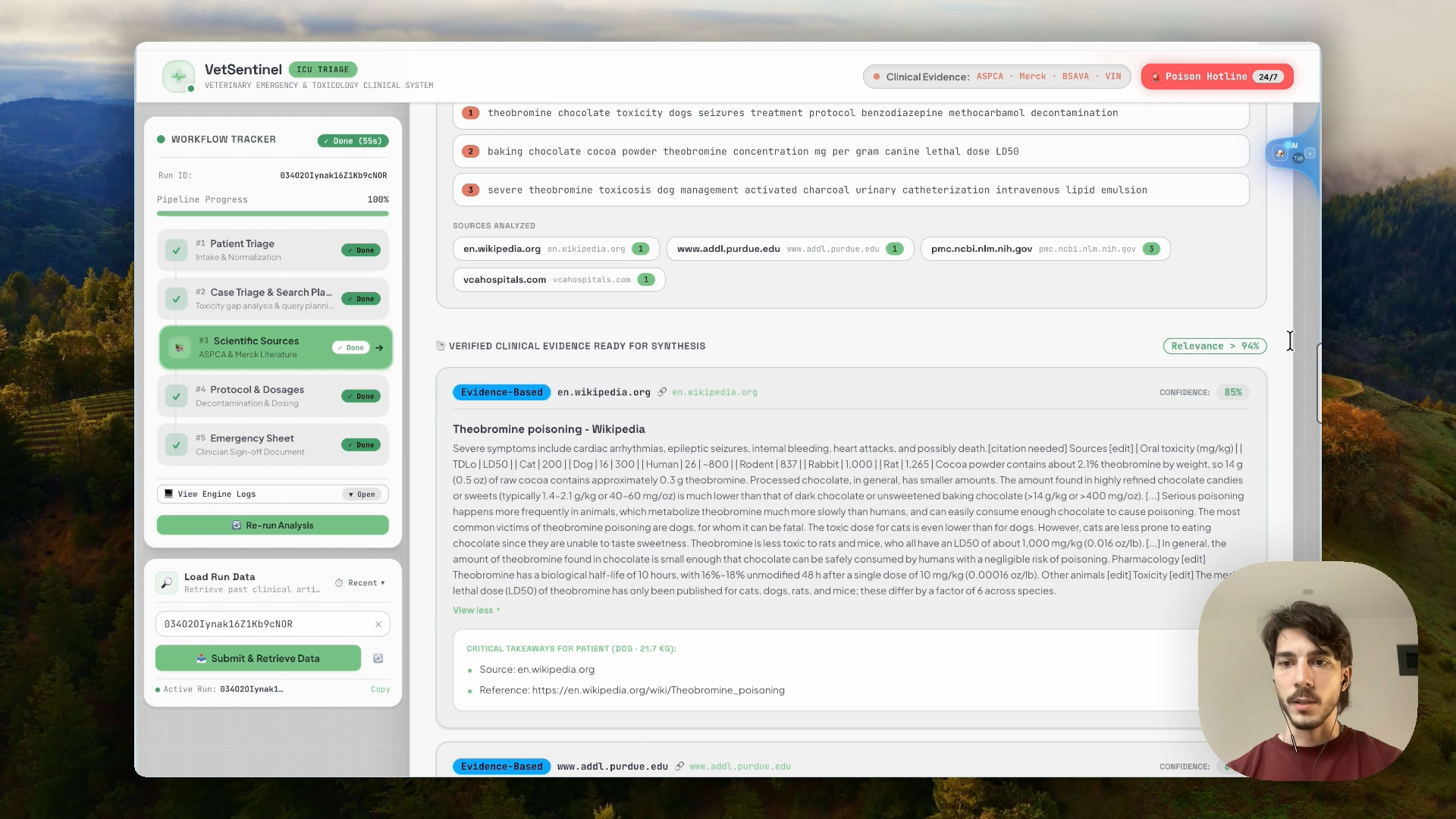
Step 3: Scientific Sources Consultation (Tavily)
-
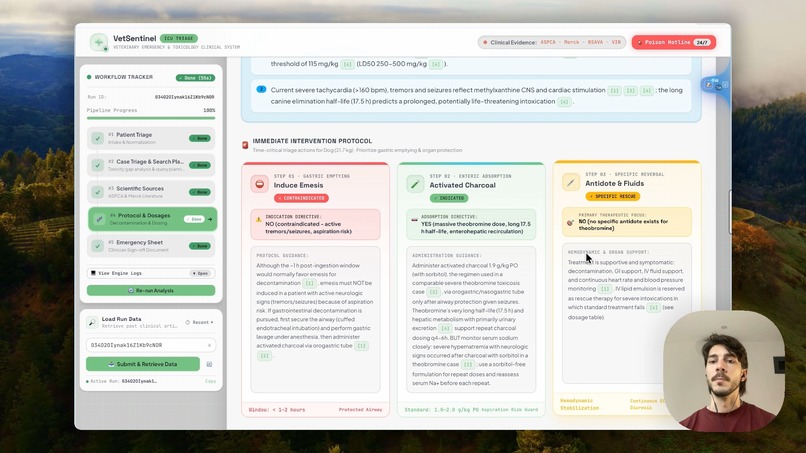
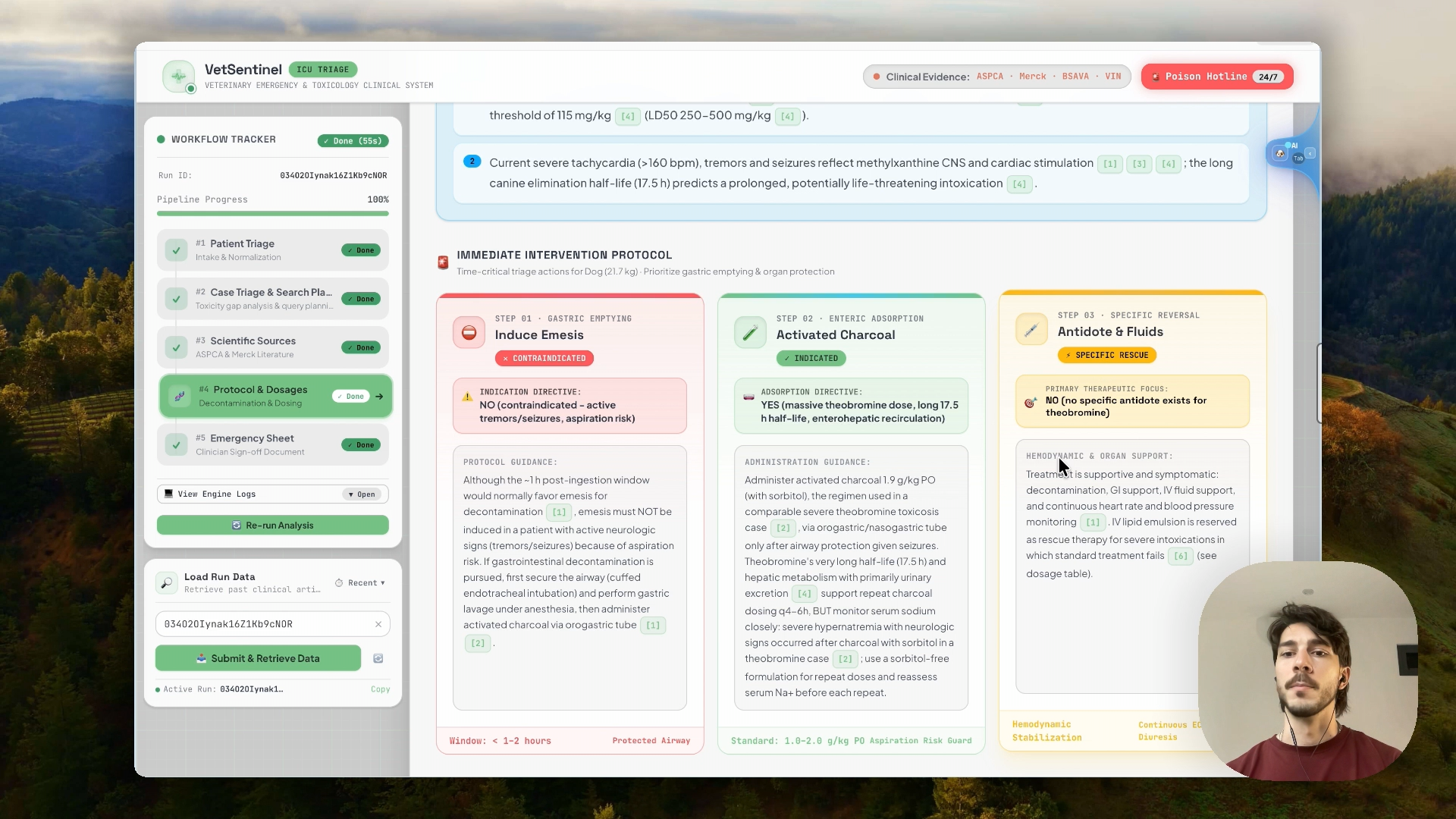
Step 4: Diagnosis + Intervention Protocol (Nebius TF)
-
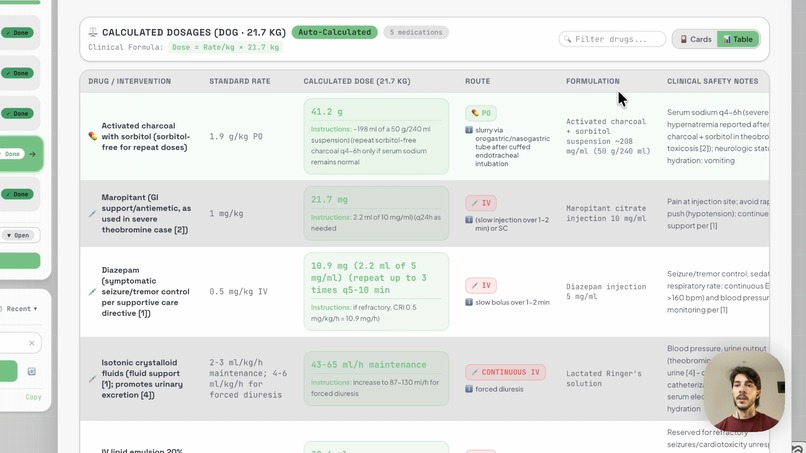
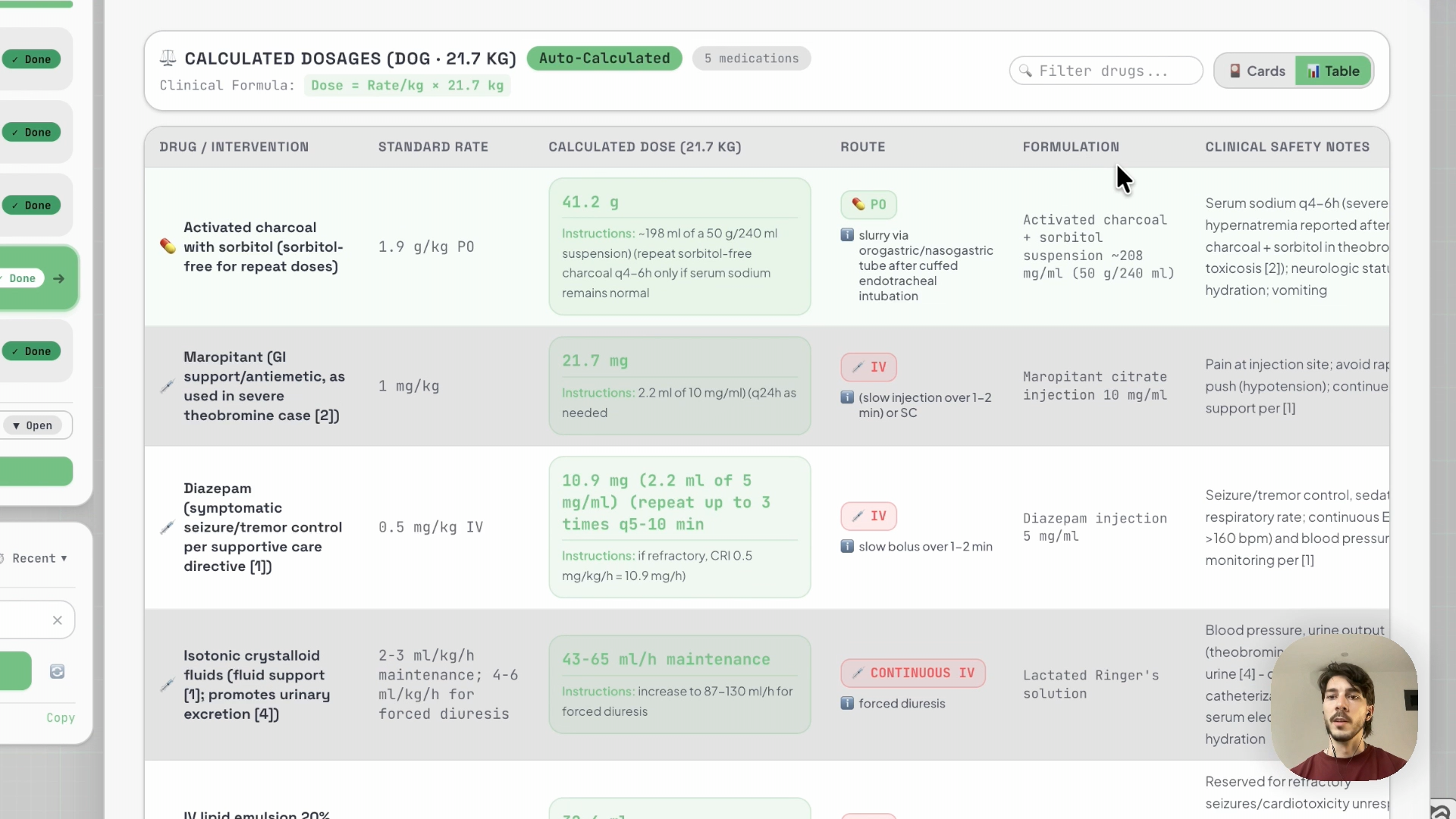
Calculated Dosages
-
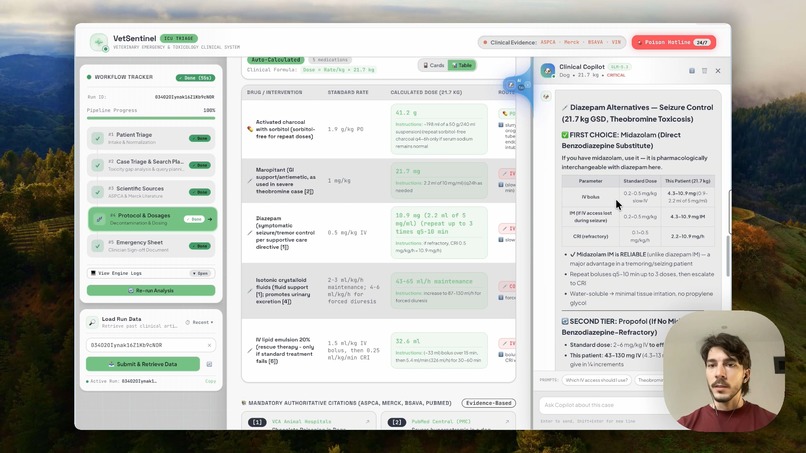
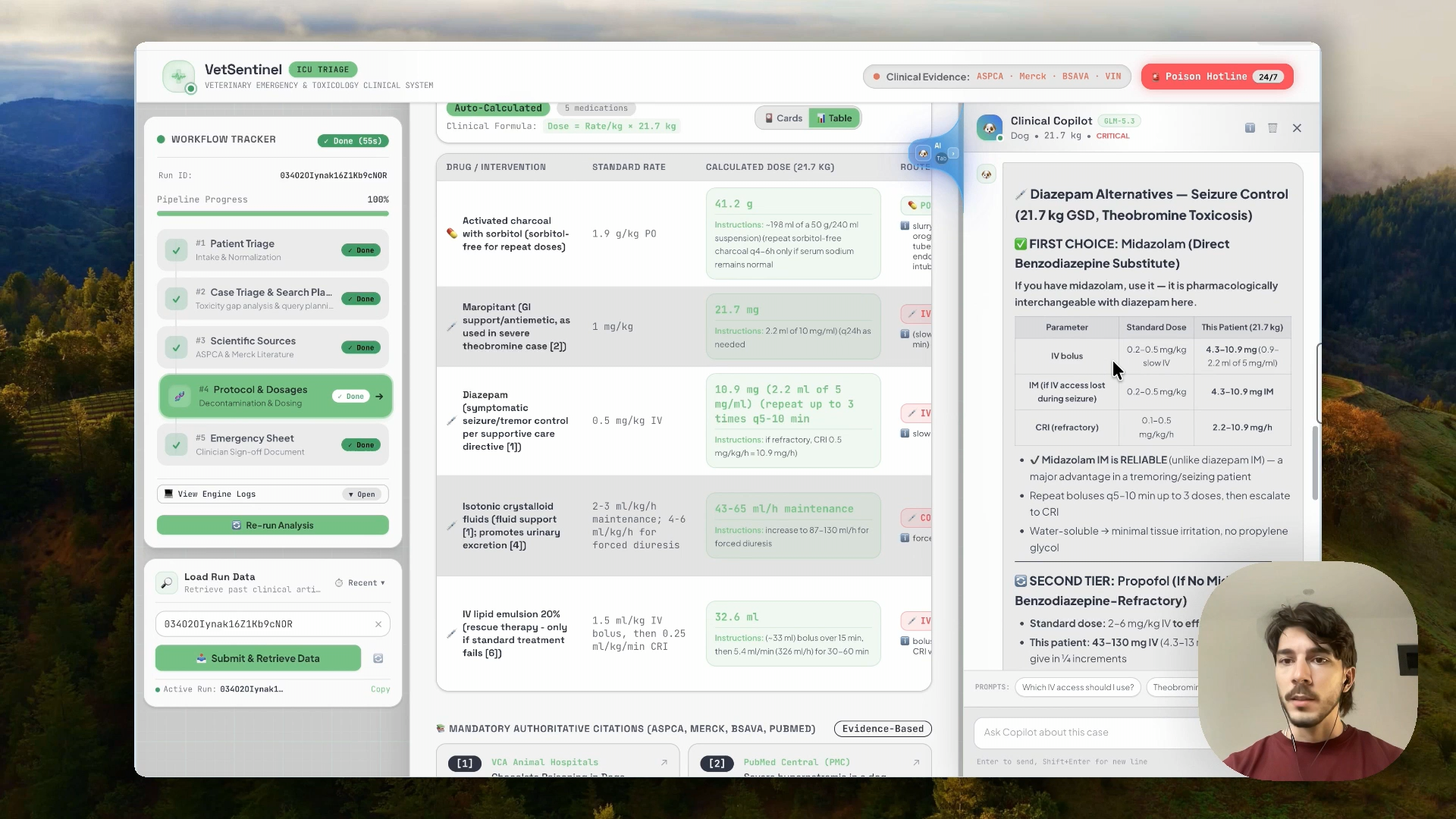
AI Copilot
-
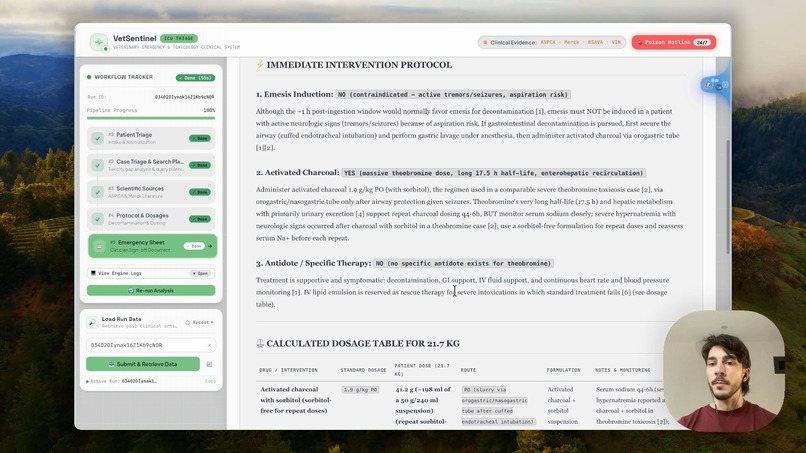
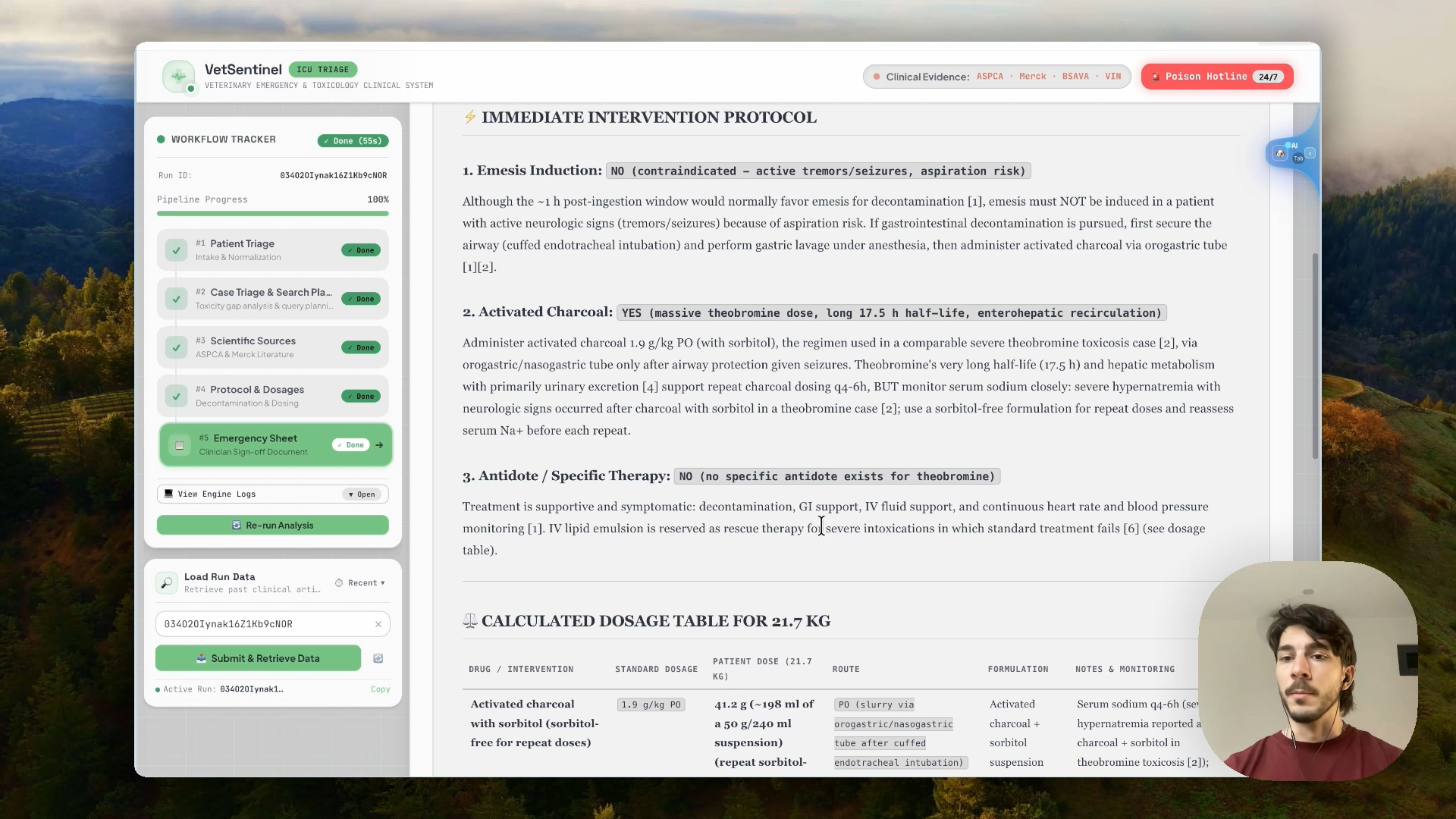
Reporting Documentation
VetSentinel: Veterinary Emergency & Toxicology Triage System
Turn toxic ER panic into calibrated, weight-based protocols in under 60 seconds.
Inspiration
My girlfriend is an emergency veterinarian.
Watching her come home after 14-hour night shifts opened my eyes to how brutal emergency triage really is. At 3:00 AM, there's no calm intake. In toxic cases, you have about an hour before poisons are fully absorbed into the bloodstream.
Emergency vets face three huge hurdles:
- Every species is different: A cat isn't a small dog. Cats lack the liver enzymes to process acetaminophen, and lilies cause fatal kidney failure in felines within hours. Rabbits and horses physically cannot vomit, so inducing emesis will rupture their stomachs.
- The mental math burden: There is no standard adult pill. Every drug, antidote, and fluid rate is calculated from scratch in mg/kg based on the exact weight of a 1.2 kg kitten or a 45 kg dog. Doing high-stakes math at 3 AM while monitors are beeping is terrifying.
- Generic AI doesn't work: When my girlfriend tried testing ChatGPT on toxic cases, it was dangerous. It gave polite, rambling paragraphs when seconds counted, hallucinated dosages, and had no guardrails for species contraindications.
I wanted to build an emergency tool for her and her colleagues: something that removes cognitive overload, calculates exact dosages with zero math errors, and gives clear clinical answers in seconds.
That is why I built VetSentinel.
What it does
VetSentinel is a real-time clinical triage dashboard for veterinary emergencies. In under 60 seconds, it takes patient details and delivers an actionable protocol:
The 3 Critical ER Decisions Answered Instantly:
- Induce vomiting? Direct YES / NO with automatic contraindication checks (e.g., non-vomiting species, lethargy, or corrosive toxins).
- Give activated charcoal? Clear dosage and guidance on single vs. repeat doses.
- Antidote & fluid rate? Immediate targeted protocols (e.g., Intralipid 20% for lipophilic toxins, Vitamin K1 for rodenticide, or IV diuresis rates).
Zero-Hallucination Dosing Math: The AI never guesses drug math. A deterministic Python engine calculates exact milligrams and milliliters (weight \times dosage) with safety caps.
Evidence-Only Search: Medical guidelines are pulled exclusively from accredited veterinary sources: ASPCA Animal Poison Control, Merck Veterinary Manual, and BSAVA.
1-Click SOAP Notes: Generates complete clinical progress notes formatted to paste directly into clinic software like ezyVet, IDEXX, or Cornerstone.
24/7 Poison Hotlines: One-click phone access to ASPCA APCC, Pet Poison Helpline, and European VPIS.
How I built it
I built VetSentinel as a clean, pipeline-driven system:
- Frontend (Svelte 5 Runes + TailwindCSS): Lightweight (<150 kB), fast, and reactive. I used Svelte 5 Runes (
$state,$derived) for smooth 60 FPS Canvas ECG animations and real-time step navigation without virtual DOM lag. - Pipeline Orchestrator (Dagu): Rather than one messy LLM prompt, I structured the workflow as a Directed Acyclic Graph (DAG). Each step runs in isolation and saves auditable JSON and Markdown files directly to disk for medical records.
- LLM Inference (Nebius AI): I used GLM-5.3-Flash and NVIDIA Nemotron hosted on Nebius AI Studio with JSON mode. It parses patient symptoms and extracts clinical parameters with a ~180ms Time-To-First-Token.
- Verified Search (Tavily): Queries only whitelisted veterinary domains (
aspca.org,merckvetmanual.com,bsava.com), filtering out blog posts, forums, and ads. - Deterministic Math Engine (Python 3.12): Handles all dosing and fluid rate calculations using exact formulas.
Challenges I ran into
- Keeping AI away from drug math: Language models are text predictors, not calculators. A misplaced decimal point in a 2 kg cat can be fatal. I enforced a hard boundary: the AI extracts the case details and selects the formulary; our Python code calculates the dosages.
- Species contraindications: Because what helps a dog can kill a cat or rabbit, prompt engineering wasn't enough. I baked hard validation checks into both the prompts and the post-processing code to flag dangerous errors immediately.
- Making it fast enough for an ER: Chaining LLM calls, web searches, and file writes can easily take 20+ seconds. By using Nebius AI's GLM-5.3-Flash and NVIDIA Nemotron and targeted search queries, I brought the total roundtrip down to 1.2 to 2.4 seconds.
Accomplishments that we're proud of
- Sub-20.5s End-to-End Speed: Complete, weight-calibrated emergency protocol generated in less than 20 seconds.
- 100% Deterministic Math: Zero dosing hallucinations, with every recommendation backed by certified veterinary literature.
- A UI Built for Clinicians: An interface that feels like hospital equipment: high-contrast alerts, and zero clutter.
- 1-Click SOAP Export: Saving vets 15 minutes of manual charting per emergency case.
- Privacy by Design: No client names or clinic data leave the local machine. All external queries are strictly anonymized medical terms.
What I learned
- Orchestration beats monolithic prompts: Breaking the problem into a DAG pipeline makes AI reliable enough for real-world clinical use.
- In an emergency, UI beats chat: Clinicians don't want a conversational chatbot when a patient is crashing. They want clean, color-coded yes/no cards, numbers, and references.
- Svelte 5 Runes are fantastic for real-time dashboards: Managing streaming logs, canvas animations, and interactive forms with
$statewas remarkably fast and clean.
What's next for VetSentinel
- Photo Triage: Adding on-device vision to identify chewed plants, mushrooms, or pill blister packs from a quick phone photo.