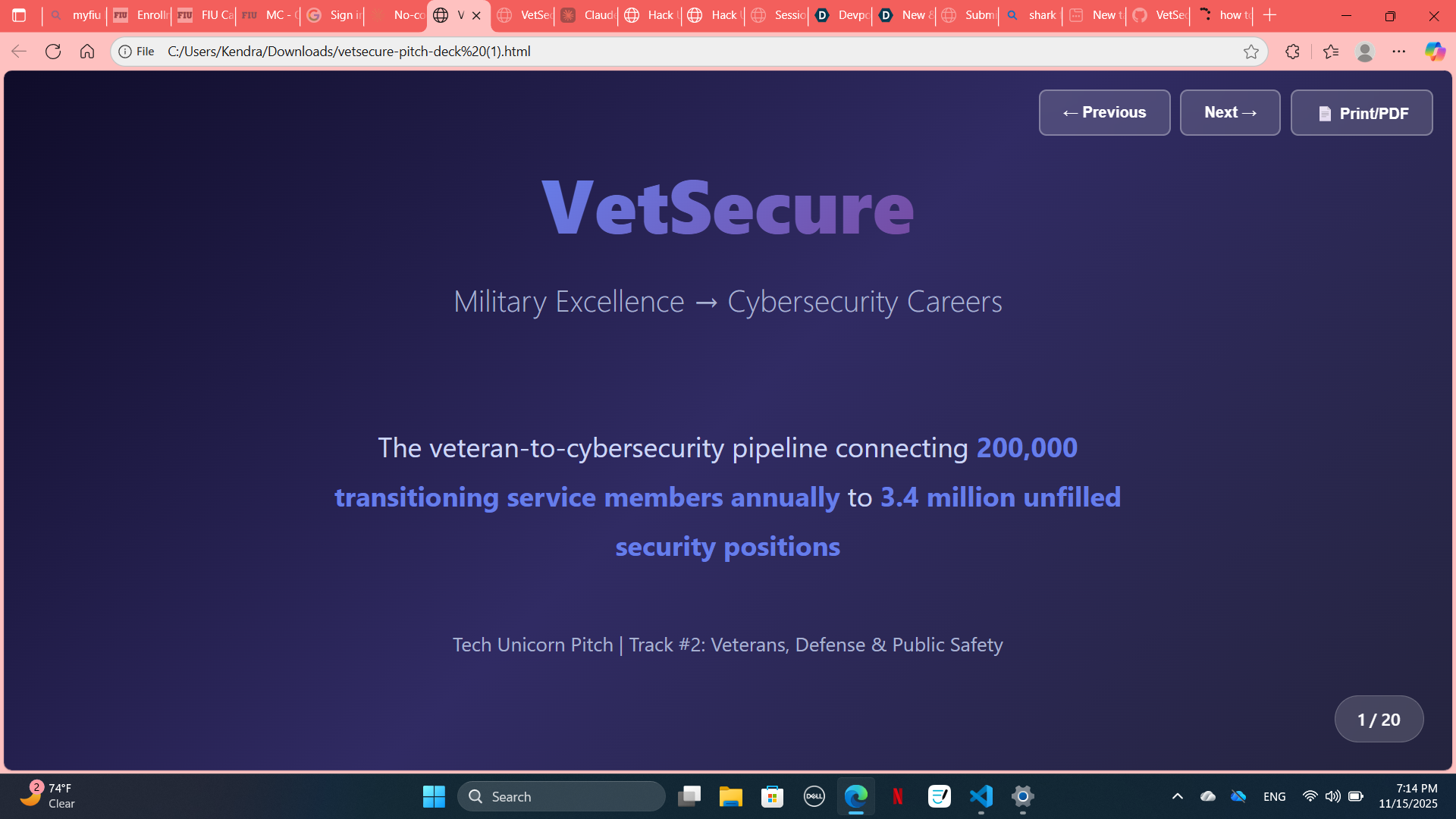
Inspiration: While researching for the Tech Unicorn pitch, I discovered a major disconnect: 200,000 veterans transition annually, yet 44% struggle to find meaningful work, while 3.4 million cybersecurity jobs go unfilled. The issue wasn’t just economic; it was a translation gap. Military roles like “35T Military Intelligence Systems Maintainer” don’t translate clearly to civilian job titles, despite being highly relevant. With AI capable of translating languages and driving cars, bridging this gap felt solvable. That insight led to the creation of VetSecure.
What it does: VetSecure helps veterans transition into cybersecurity careers by translating their military experience into civilian job roles. It bridges the gap between military job codes and industry needs, assists with resume building, guides veterans through certification pathways that leverage their existing security clearances, and connects them with high-demand cybersecurity opportunities.
How we built it: We built VetSecure by starting with deep research into the veteran employment gap and cybersecurity workforce shortage. From there, we developed a comprehensive business plan and financial model to validate the opportunity. Using no-code tools, we built a minimum viable product to demonstrate the platform’s core functionality. We also created a professional pitch deck, secured early feedback from veterans and industry experts, and refined our go-to-market strategy to focus on certifications, resume translation, and leveraging existing security clearances.
Challenges we ran into: One of the biggest challenges we faced was understanding military terminology. Being unfamiliar with job codes like MOS, Rating, and AFSC made it difficult to navigate the space effectively. Building a detailed financial model was also a hurdle, especially without prior experience and no historical data to project revenue. As a non-engineer, proving that the platform was technically feasible without writing code posed another significant obstacle. Lastly, addressing the “Why you?” question was tough; as a student with no military or startup background, establishing credibility with potential investors was a real challenge.
Accomplishments that we're proud of: We’re proud to have accomplished several key milestones: developing a comprehensive business plan, building a working financial model, creating a professional pitch deck, and designing a viable go-to-market strategy.
What we learned: We learned how to build a solid business foundation: crafting a business plan, developing a financial model, creating a pitch deck, and designing a go-to-market strategy.
What's next for VetSecure: Next for VetSecure is to validate our model, build a minimum viable product, prove unit economics, secure key partnerships, and begin fundraising to support growth.
Built With
- claudeai
