-
-
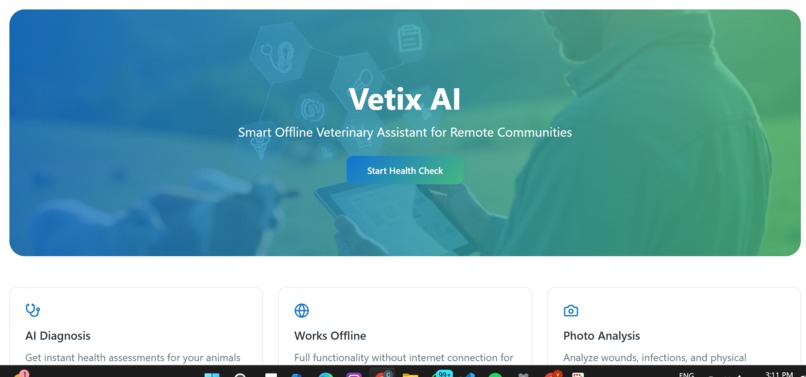
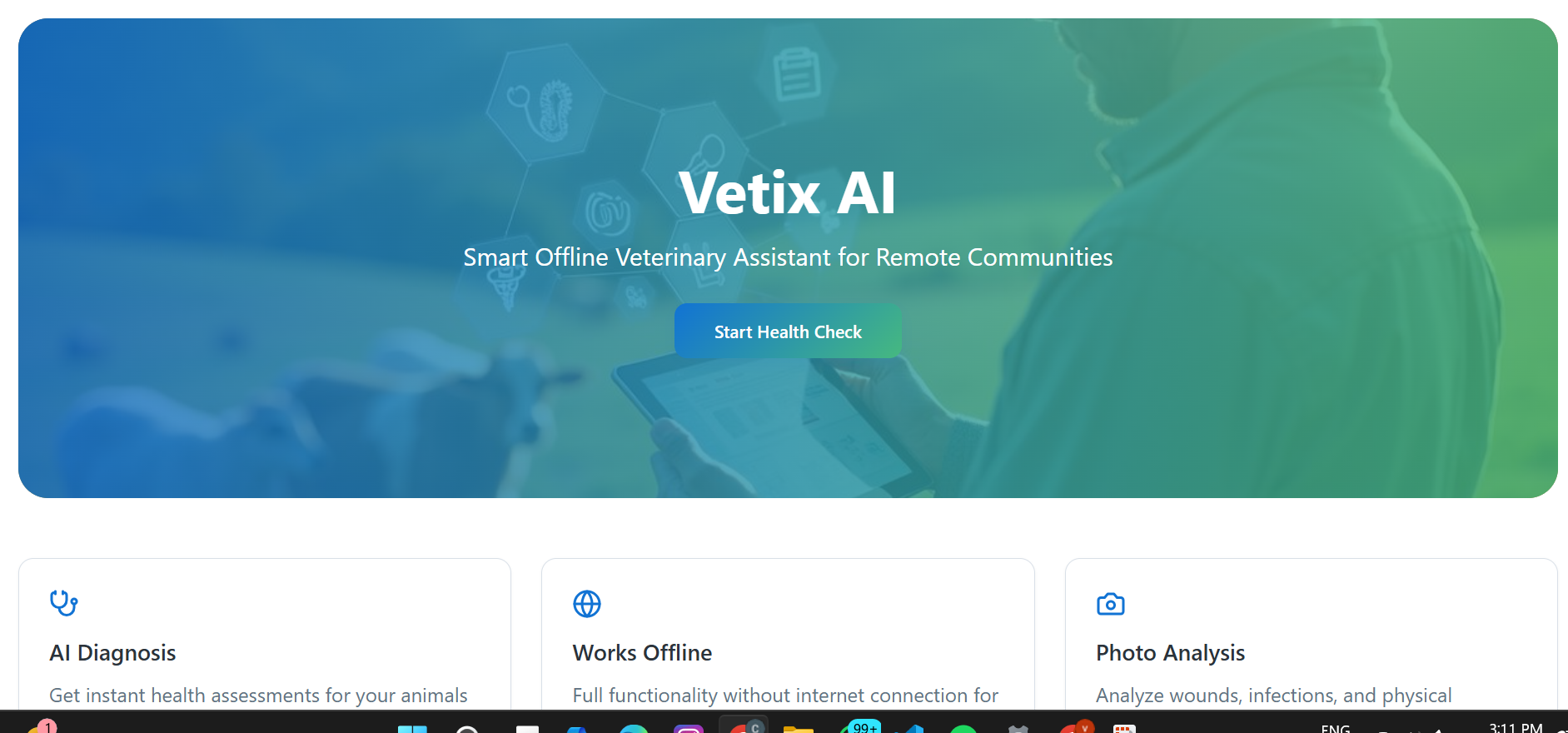
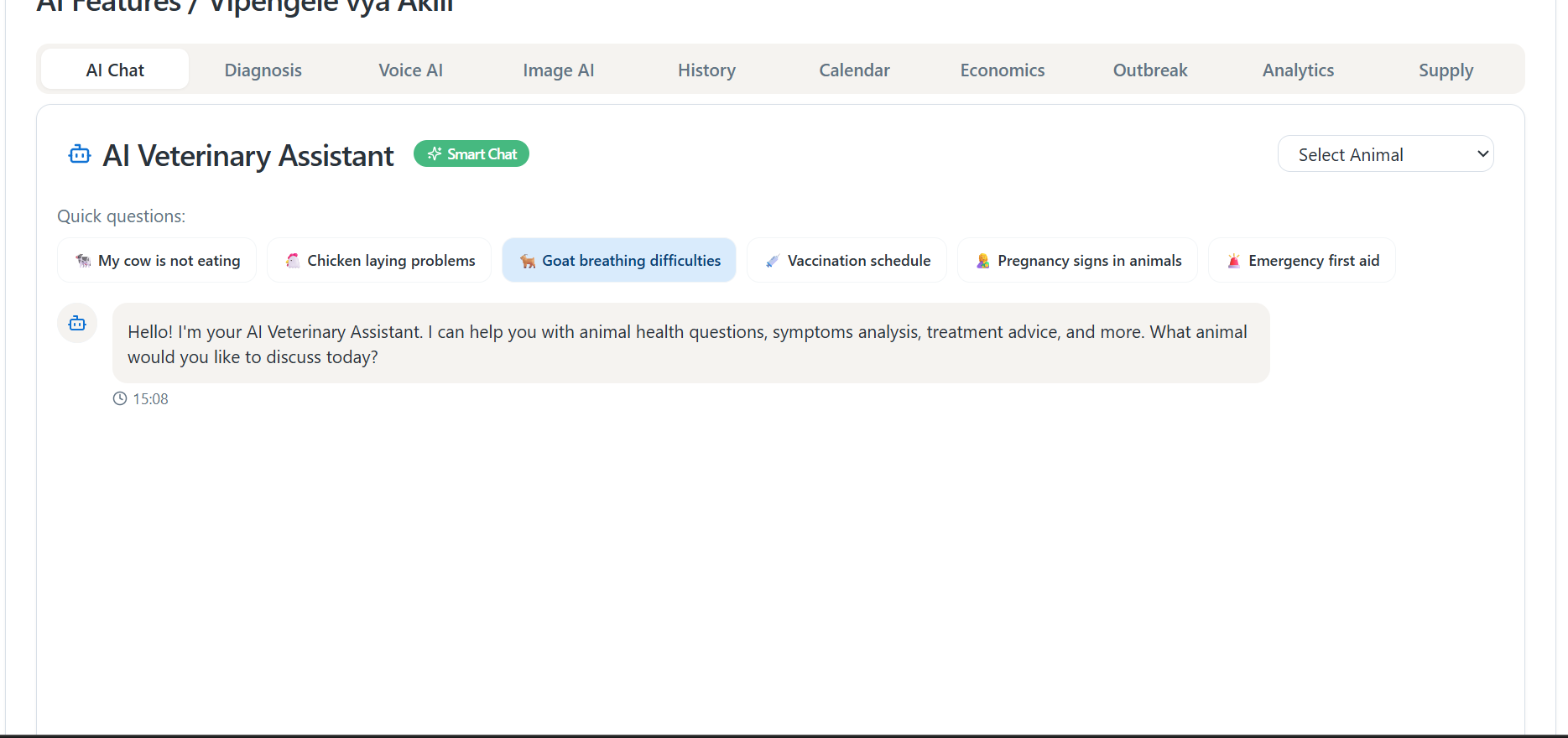
home page of Vetix ai whre you see all app features
-
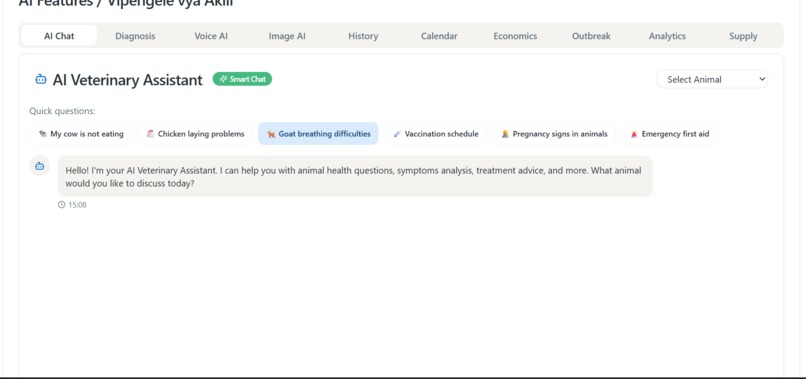
the AI veternary where it helps with animal health
-
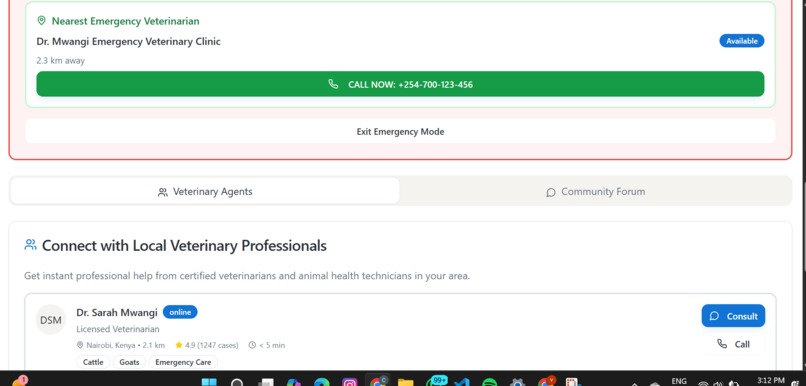
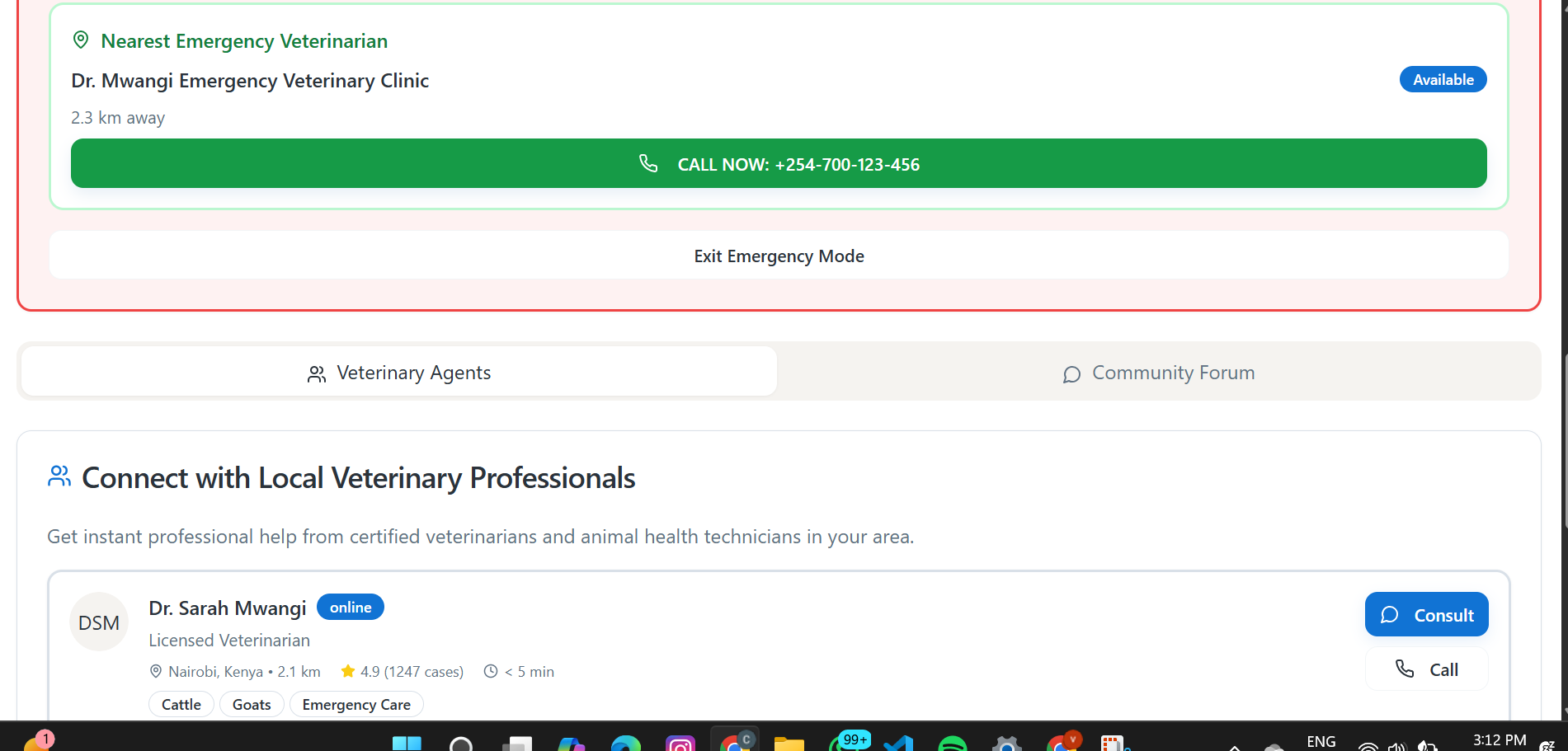
this is where you can contact verts and community livestock helpers in your rgion
-
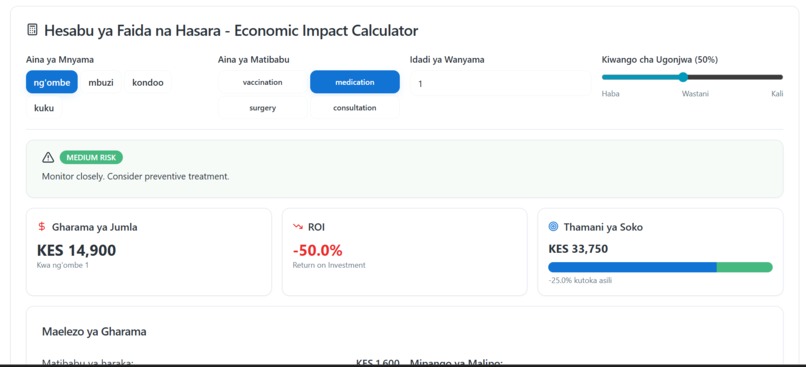
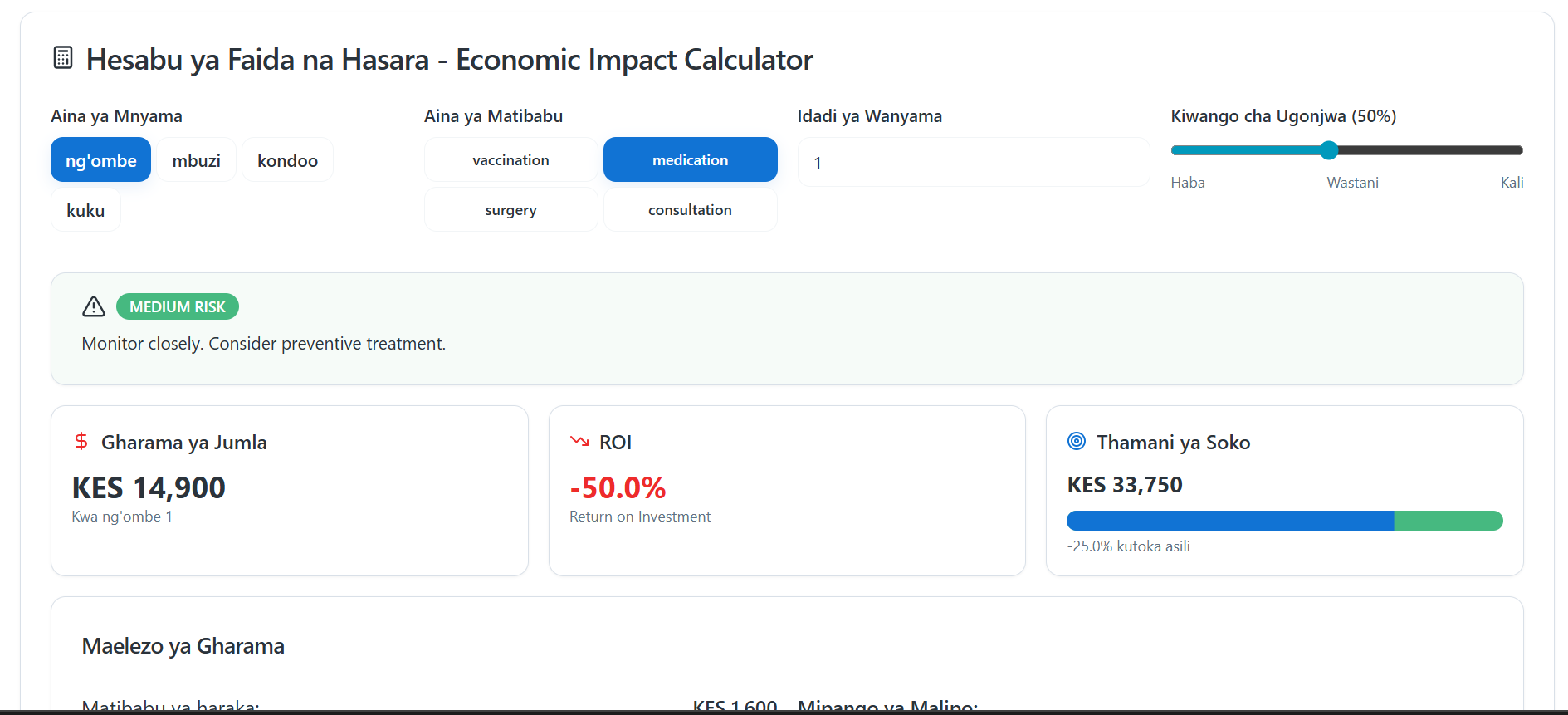
we have an economic profit calculator
-
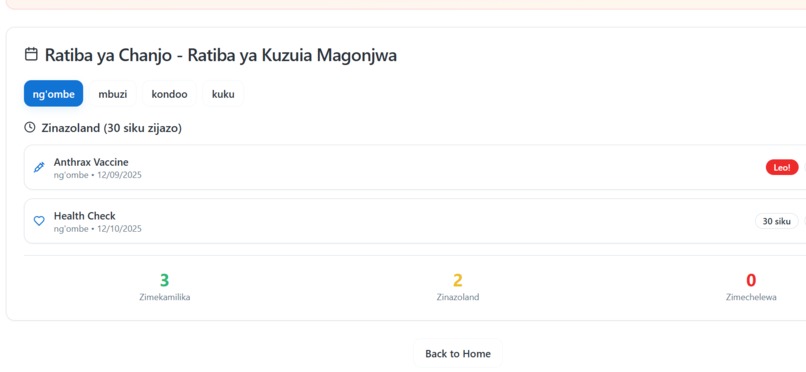
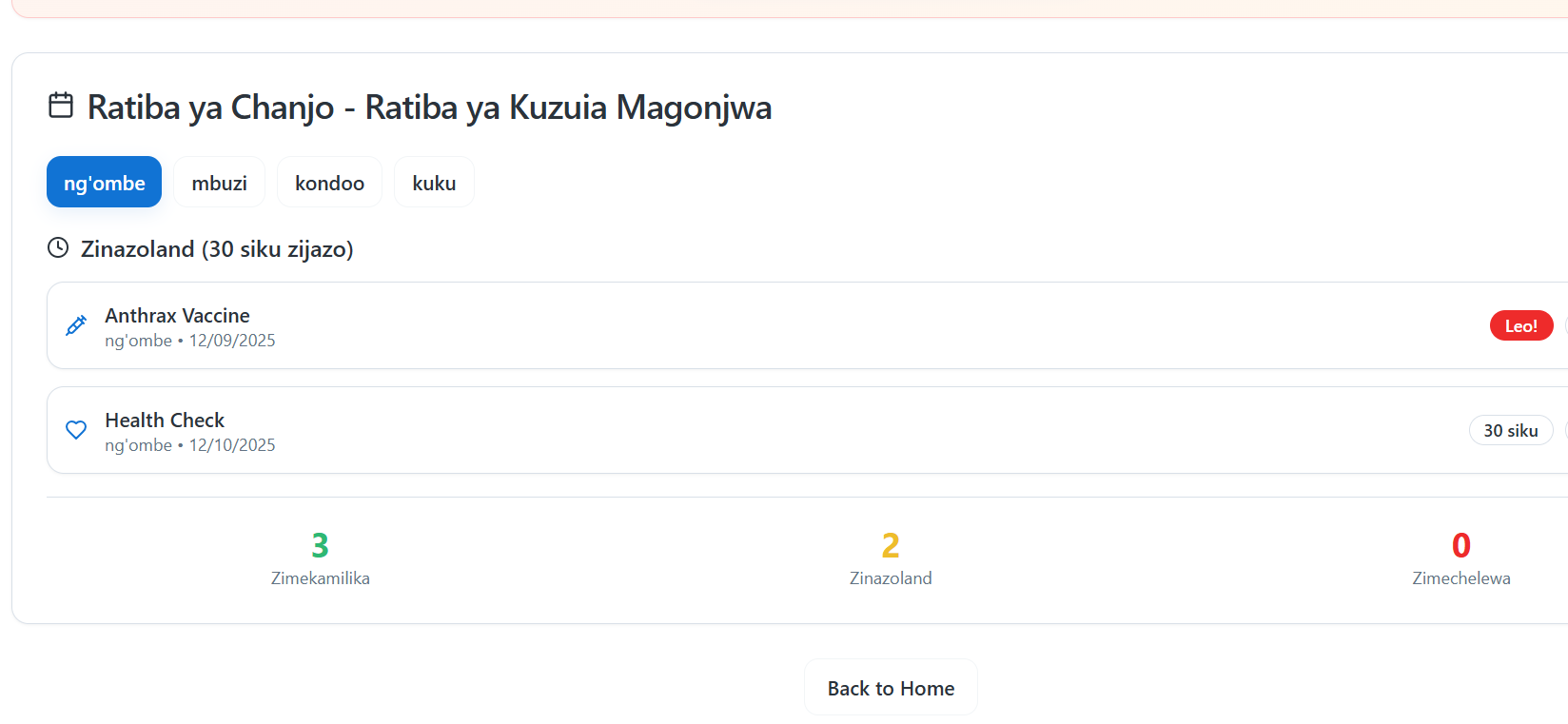
we have a schedule deworming and verts appoitment
-
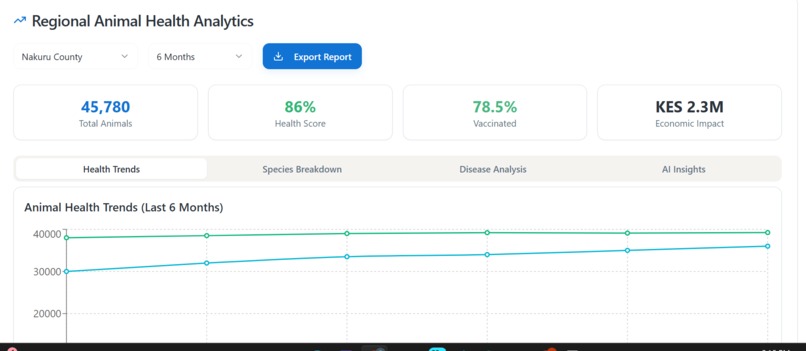
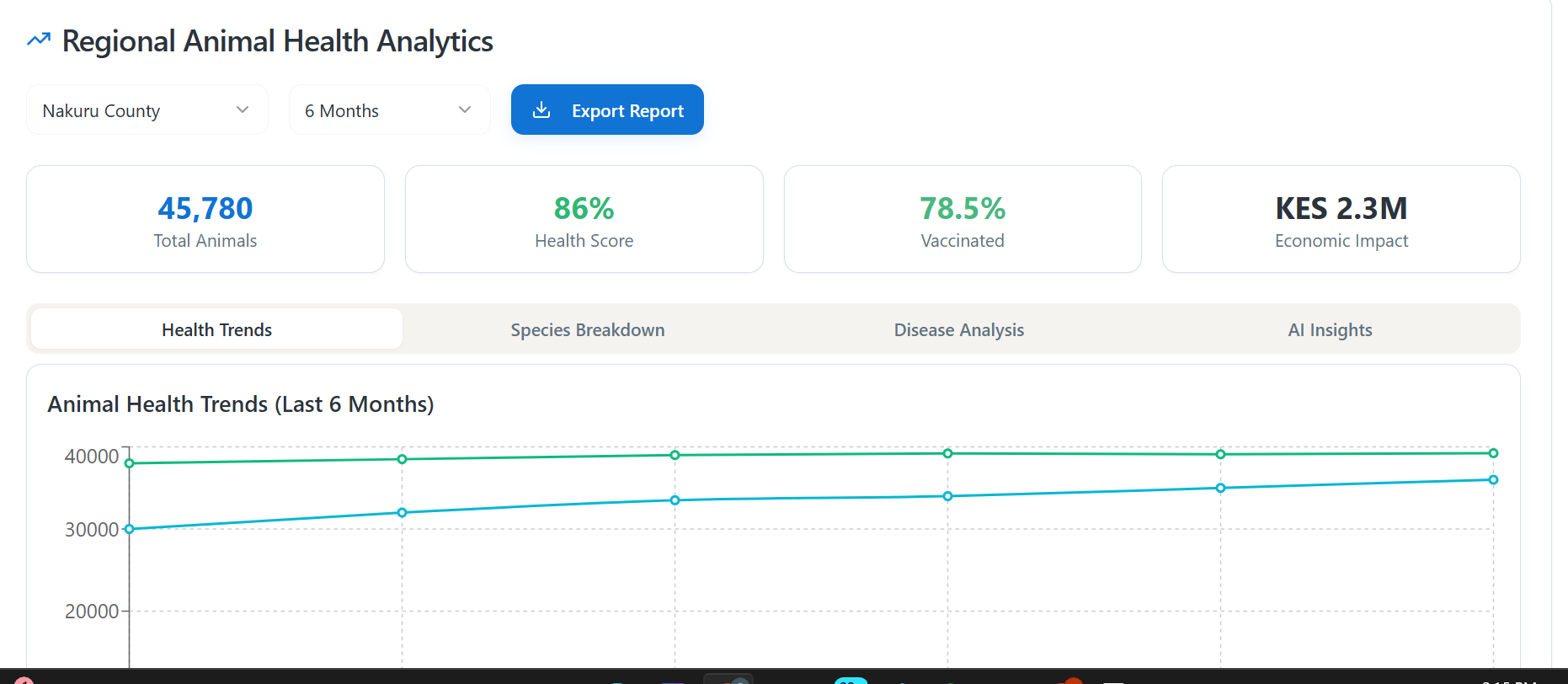
we have a regional health analytics and can keep track on spreading diseases and take caution
-
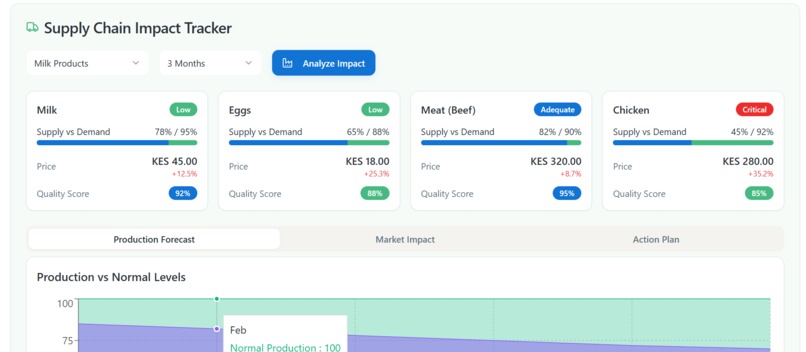
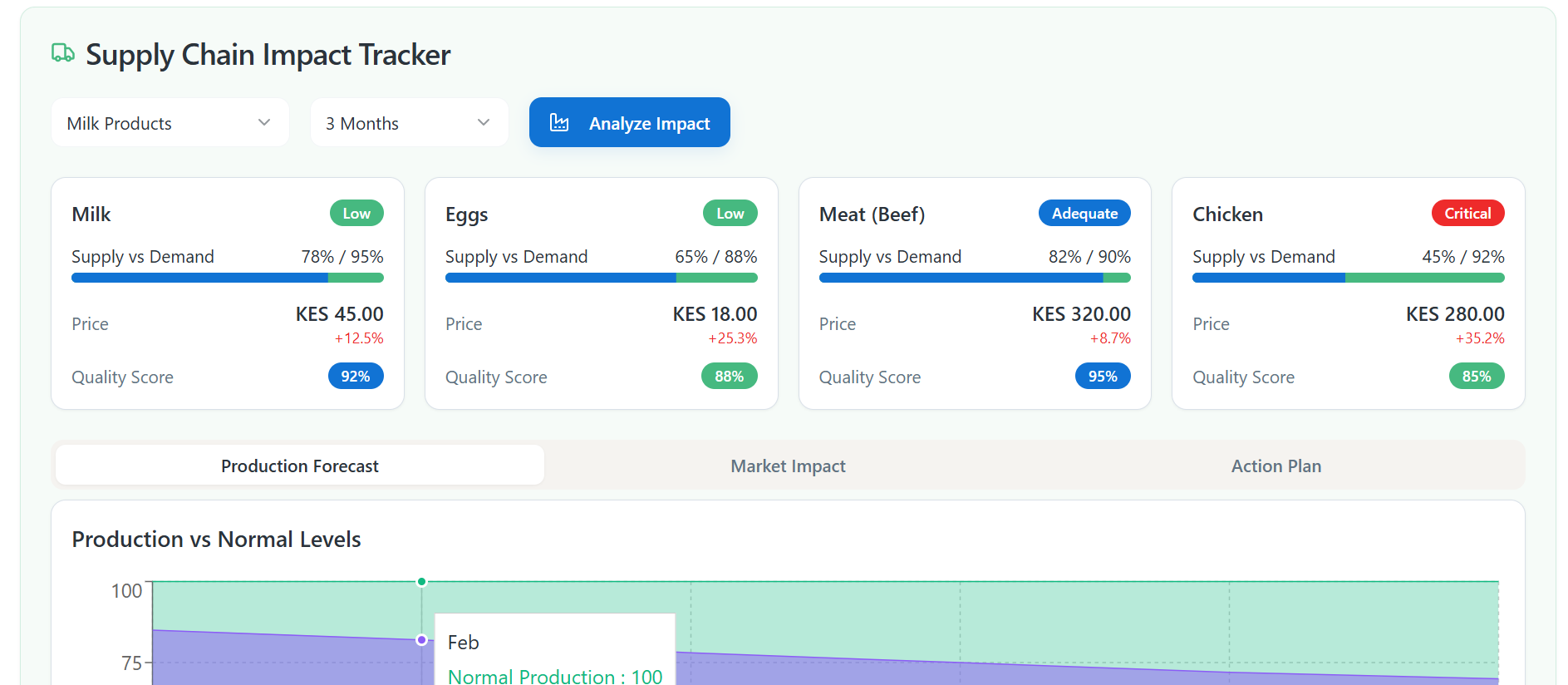
we have a supply chain impact tracker to help our farmes alll over the world
-
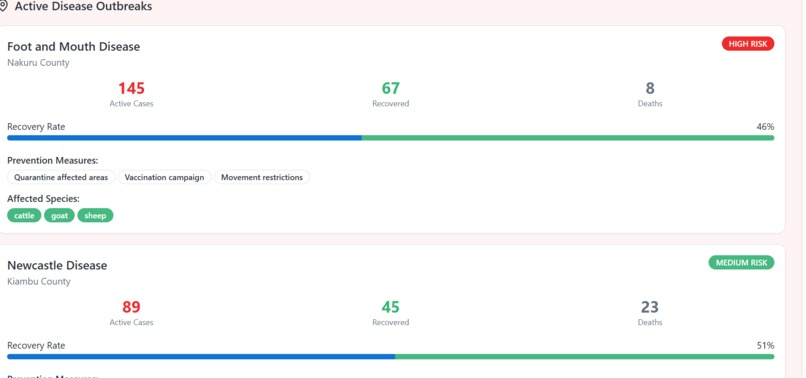
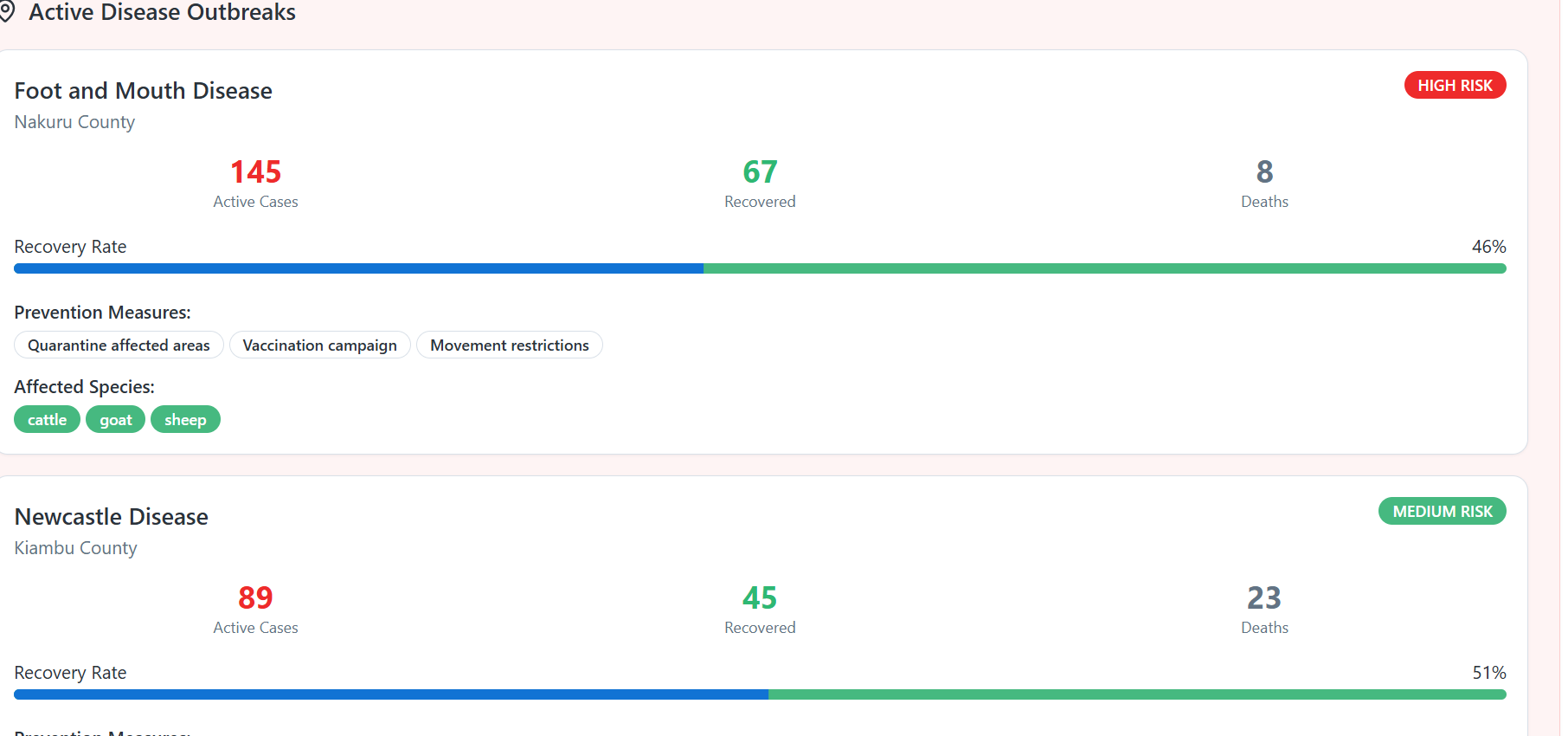
we have a outbreak disease tracker for animals
-
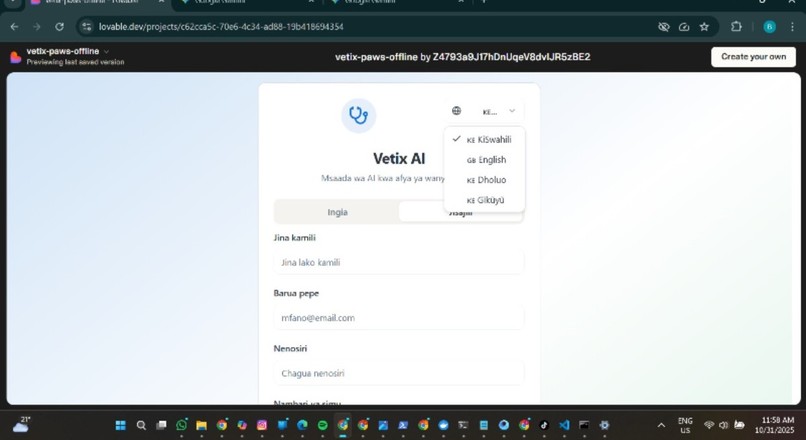
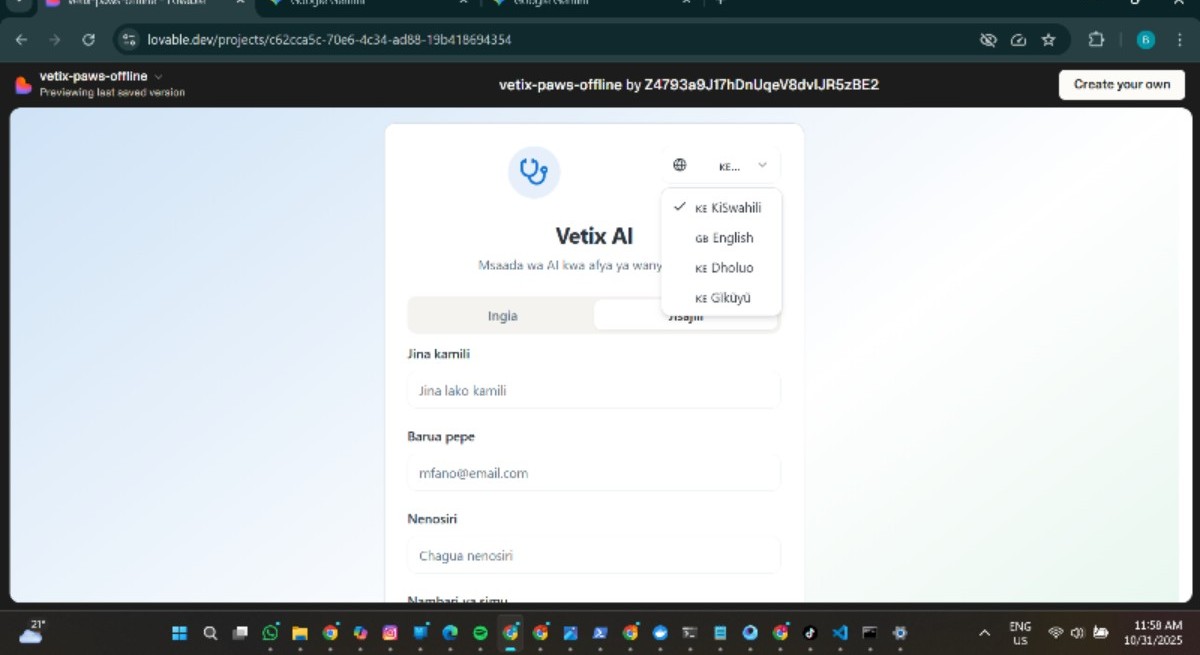
Before one to sign up, one can option languange of choice or one can chnge it later on
INSPIRATION?
The idea for Vetix AI was inspired by the real struggles faced by smallholder farmers in rural Kenya — including my own community — where livestock are a key source of income but veterinary help is often hours or days away. Many farmers lose animals simply because they can’t access quick, affordable, or reliable veterinary advice. I’ve seen farmers rely on guesswork, outdated remedies, or unverified online advice, leading to preventable losses. This motivated me and my team to build a smart, offline-first veterinary assistant that farmers can access anytime, anywhere — one that understands their local conditions, speaks their language, and provides trusted guidance. We wanted to merge technology, AI, and local context to empower farmers with the kind of veterinary intelligence that used to be out of reach.
WHAT IT DOES?
Vetix AI is an intelligent veterinary assistant that helps farmers monitor, diagnose, and manage the health of their livestock using AI-powered analysis. Farmers can describe symptoms, upload photos, or use voice input in their local language, and Vetix AI instantly provides possible diagnoses, treatment recommendations, and prevention tips. The system also offers vaccination reminders, feeding guides, and early disease alerts based on regional data. Even in areas with poor internet, Vetix AI works offline and syncs automatically when a connection is available. Through its dashboard, farmers can track animal health records, connect with verified veterinarians, and receive real-time updates on outbreaks. In short, Vetix AI brings expert-level animal healthcare directly to farmers’ phones — fast, accurate, and accessible.
✅ How It Works
Vetix AI operates through a powerful combination of machine learning, image recognition, natural language processing, and real-time data intelligence:
- Symptom & Voice Understanding Farmers describe the symptoms in any language (including local dialects). Voice inputs are converted to text using a multilingual speech-to-text engine. Vetix AI uses NLP trained on veterinary datasets to interpret the symptoms.
- Image-Based Diagnosis Farmers upload photos of the animal. A computer vision model analyzes the image for signs of: wounds infections external parasites swelling lameness The AI compares the photo with thousands of labelled livestock conditions.
- Intelligent Diagnosis Engine Once Vetix AI has the symptoms + images: It identifies the most likely diseases or conditions. It calculates confidence levels based on patterns it recognizes. It provides: possible causes treatment steps recommended drugs (if safe) when to call a vet urgently prevention tips to avoid repeat cases
- Offline-First Architecture All basic models run on-device, so farmers can use it without internet. When online, the app syncs: animal records treatment history alerts photos The cloud then updates the farmer’s AI model with new insights automatically.
- Real-Time Alerts & Tracking Vetix AI continuously checks: regional disease outbreaks vaccination deadlines feeding and nutrition gaps breeding cycle dates It then sends smart alerts like: “Two cows are due for vaccination this week.”
- Vet Support If a case is too complex: Farmers can request a real vet from the app. The vet receives: symptoms photos AI-generated preliminary diagnosis Making expert help faster and more affordable.
✅ Multilanguage Support for Remote Kenyan Communities
One of the strongest pillars of Vetix AI is its ability to understand and communicate in the languages spoken in Kenya’s remote farming communities. Many farmers are more comfortable expressing symptoms, challenges, and observations in their native languages, and Vetix AI is built specifically with that reality in mind. Vetix AI supports multiple Kenyan languages—including Kikuyu, Dhulou and Swahili, amay more Remote languanges will becoming soon such as Maaasai, Kamba na etc—so farmers can describe animal symptoms naturally, in their own words. This makes a huge difference in places where English is less common or where technical veterinary terms are difficult to express. Farmers can talk or type in whichever language they prefer, and Vetix AI automatically interprets it through a localized language model trained on Kenyan dialects, accents, and real agricultural phrases. Even with heavy accents or rural variations, the system understands voice notes clearly, making it extremely friendly for older farmers or those with limited literacy. Because many remote areas struggle with poor internet, Vetix AI runs offline-first. Speech recognition, translations, and even basic diagnosis happen right on the device, without needing a network connection. When the phone eventually connects to the internet—maybe at the market, trading center, or near a school—the app syncs new data, updates the AI models, and downloads fresh language improvements. This multilanguage system ensures that no farmer is left behind. Whether someone is deep in Turkana, in the hills of Murang’a, or in the plains of Kajiado, they can communicate with Vetix AI in the language they grew up with. It removes barriers, builds trust, and empowers communities that have traditionally been underserved by modern veterinary services. By speaking the farmer’s language—literally—Vetix AI becomes not just a tool, but a companion that understands their world, their animals, and their daily challenges.
CHALLENGES WE RUN INTO?
Building Vetix AI hasn’t been an easy journey. One of the biggest challenges we faced was finding accurate and reliable veterinary data to train our AI. Most local records were incomplete or inconsistent, so we had to spend time reaching out to vets, reading through research papers, and piecing together clean datasets from multiple sources. Another tough part was making sure the app could work offline — many farmers we’re building for live in areas with poor network coverage. Getting the AI to process information locally and still sync smoothly once connected took a lot of trial and error. We also had to think about language and simplicity. Farmers use different dialects, and not everyone is tech-savvy, so we had to design an experience that feels natural and easy to use. It took patience, but every challenge made Vetix AI more human and more helpful We also faced difficulties integrating multiple systems — from Supabase for real-time data to OpenAI-powered diagnostics and edge functions for speech and image processing. Ensuring everything worked smoothly together, while keeping the platform lightweight enough for mobile use, pushed us to fine-tune every part of the stack.
ACCOMPLISHMENTS WE ARE PROUD OF?
We’re incredibly proud of how far we’ve come with Vetix AI. From an idea born out of frustration to a functional, intelligent system that can analyze livestock symptoms and offer instant veterinary guidance — it’s been an amazing journey. One of our biggest accomplishments is successfully building an AI model trained on real livestock data collected from veterinarians and agricultural reports across Kenya. This wasn’t easy — but it made Vetix AI smarter, more localized, and better at understanding real farm conditions. We also achieved full offline capability, allowing farmers to access Vetix even without internet — a huge breakthrough for rural areas. Our prototype can diagnose, store health records, and automatically sync when a connection is restored. Another proud moment was integrating voice recognition in local languages, so even farmers who can’t read English can use the app naturally. Watching farmers interact with Vetix in their own language during testing was powerful — it proved we’re solving a real problem in a real way. Lastly, we’re proud that Vetix AI stands as a youth-built, community-driven innovation — entirely developed by university students passionate about agriculture, AI, and social impact. We’ve shown that with creativity, teamwork, and purpose, technology can truly transform lives.
WHAT WE LEARNED ?
Throughout this journey, we’ve learned that building real impact goes far beyond just writing code — it’s about understanding people. Talking to farmers, hearing their daily struggles, and watching how they interact with technology completely changed how we design solutions. We realized that empathy is just as important as innovation. We also learned how powerful collaboration can be. Each team member brought different skills — from AI modeling to UI design and field research — and blending those strengths helped us grow both as developers and as problem solvers. On the technical side, we learned how to train AI models responsibly using limited datasets, how to make apps work offline, and how to handle real-time data syncing between devices. It taught us that every challenge has a solution — you just have to keep experimenting until you find it. Most importantly, we learned that technology can change lives when built with purpose. Seeing farmers smile when Vetix AI helped them save their animals reminded us why we started in the first place — and why we’ll keep going.
WHAT IS NEXT FOR VETIX AI?
Next, I plan to keep refining Vetix AI so it becomes an even more powerful ally for farmers and animal health workers. I’ll focus on improving the accuracy of photo-based diagnosis, enhancing voice recognition for more regional accents, and adding support for additional local languages. I also want to expand the emergency and outbreak tracking features, making them smarter and faster at predicting and containing livestock diseases. Another goal is to deepen the analytics side — giving farmers, veterinary agents, and policy makers richer insights into animal health, food security, and economic impact. For deployment, I plan to roll out Vetix AI as a mobile-first application that can be accessed both online and offline, ensuring it works seamlessly in rural areas. It will be deployed through Android (Play Store) for farmers and community agents, with a web dashboard for organizations and policy makers to track trends and manage data. Long term, I aim to build partnerships with veterinary organizations, farming cooperatives, and local governments to scale Vetix AI across Africa and remote areas. By combining technology with community engagement and wide deployment, I hope to make reliable animal healthcare accessible everywhere it’s needed.
11) TECHNOLOGY STACKS (concise)
Frontend: React PWA (or Flutter Web), IndexedDB for offline Backend: Supabase (Postgres + Auth + Storage + Edge Functions) AI & APIs: OpenAI (GPT-4o with vision), Whisper (voice-to-text), DALL·E for images DevOps/Hosting: Vercel / lovable (frontend), Supabase Edge for serverless Payments/Local integrations: M-Pesa (via API), local market price feeds (scrapers / APIs) Analytics: health_reports table + Supabase functions Languages: JavaScript/TypeScript, SQL Security: RLS, HTTPS, encrypted local storage
HOSTING AND WEB APP HOSTING LINKS
Due to difficulties in uploading to github pages, we decided to host or import the project to lovable platform
https://lovable.dev/projects/c62cca5c-70e6-4c34-ad88-19b418694354
click the link and you will be taken to the website and sign using and email and then explore the app, use a valid email to sign up
We faced a challenge in also uploading folder with the below
VETIX AI PITCHDECK https://docs.google.com/presentation/d/1Wk7vk_dLeg5U5RGl56lOmq3tTwmIdntN/edit?usp=sharing&ouid=104927743099449957134&rtpof=true&sd=true
Built With
- api
- css
- sql
- supabase
- tylorwind
- typescript

Log in or sign up for Devpost to join the conversation.