-
-
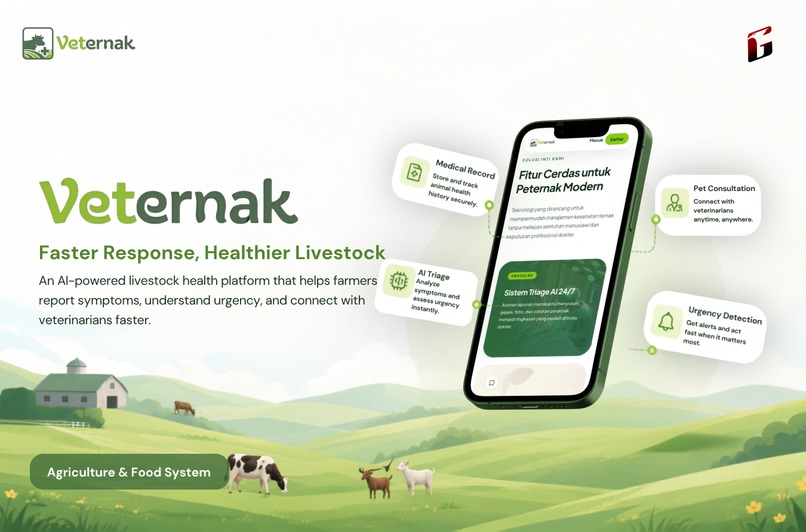
Banner
-
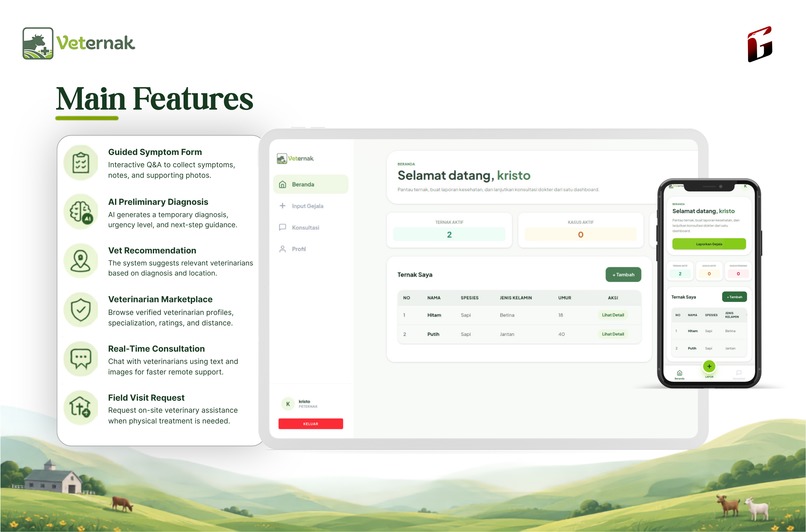
Features
-
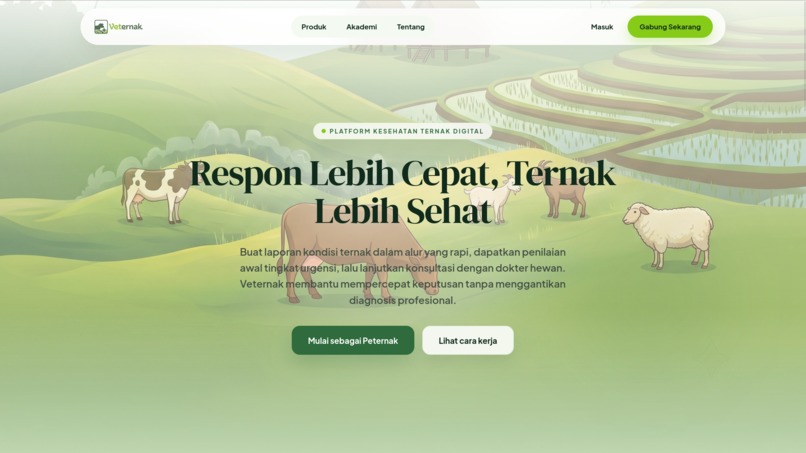
Landing Page- Hero
-
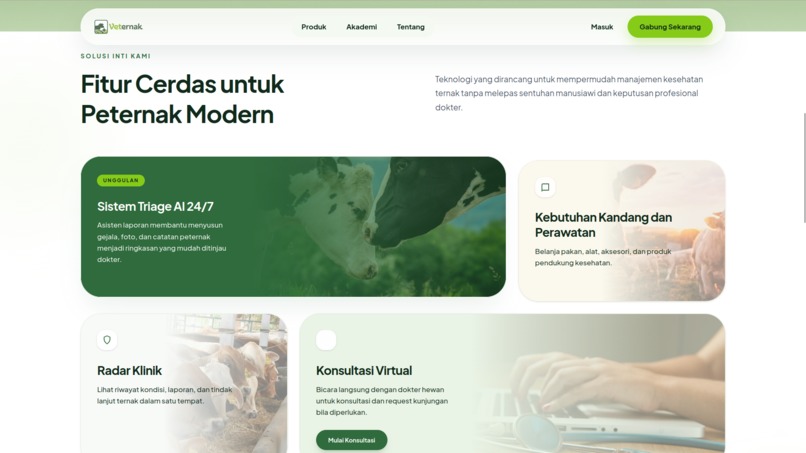
Landing Page - Features
-
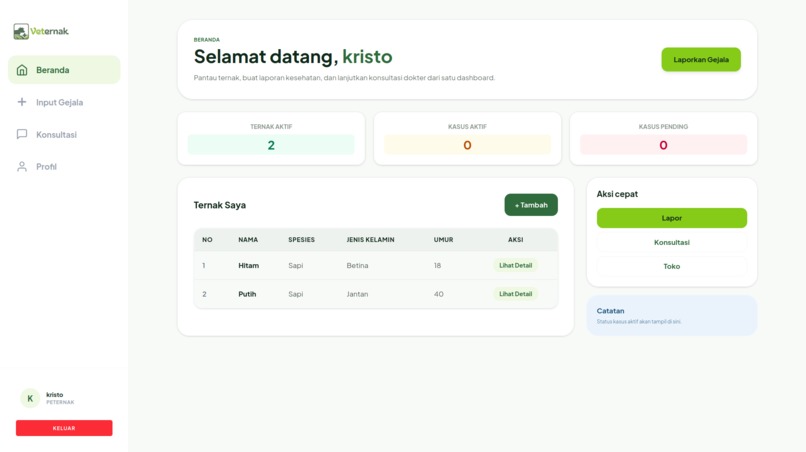
Dashboard User
-
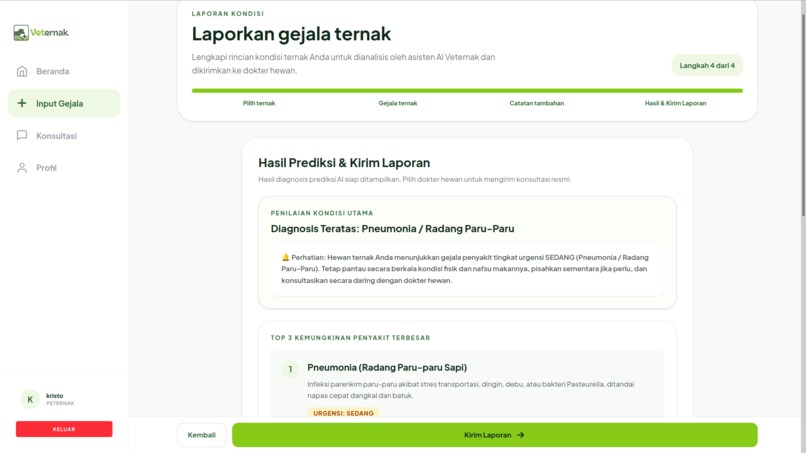
AI Diagnosis
-
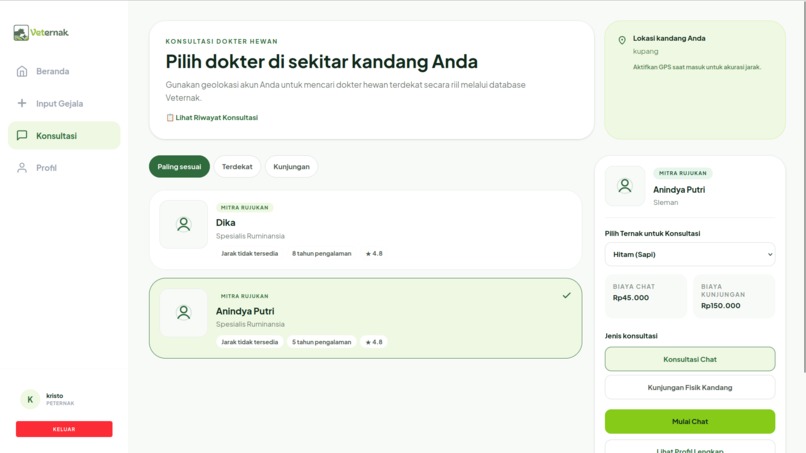
Doctor Nearby
-
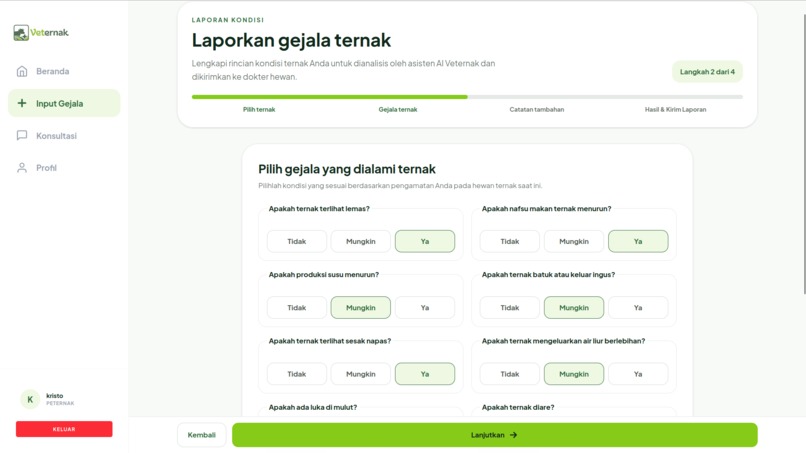
AI Diagnosis Form
-
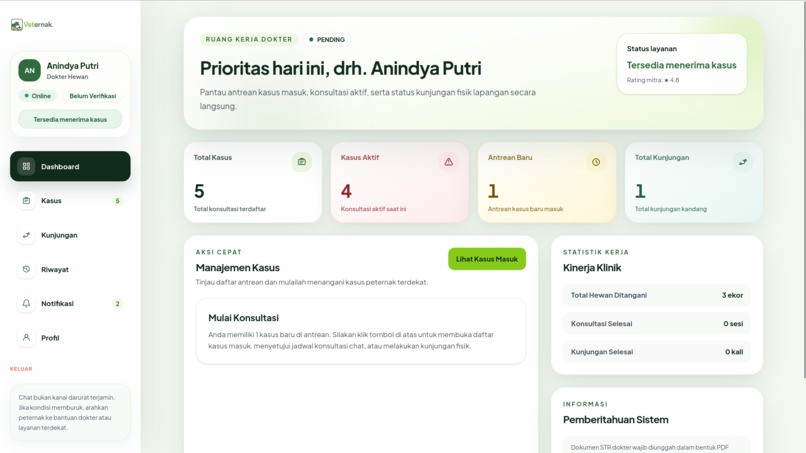
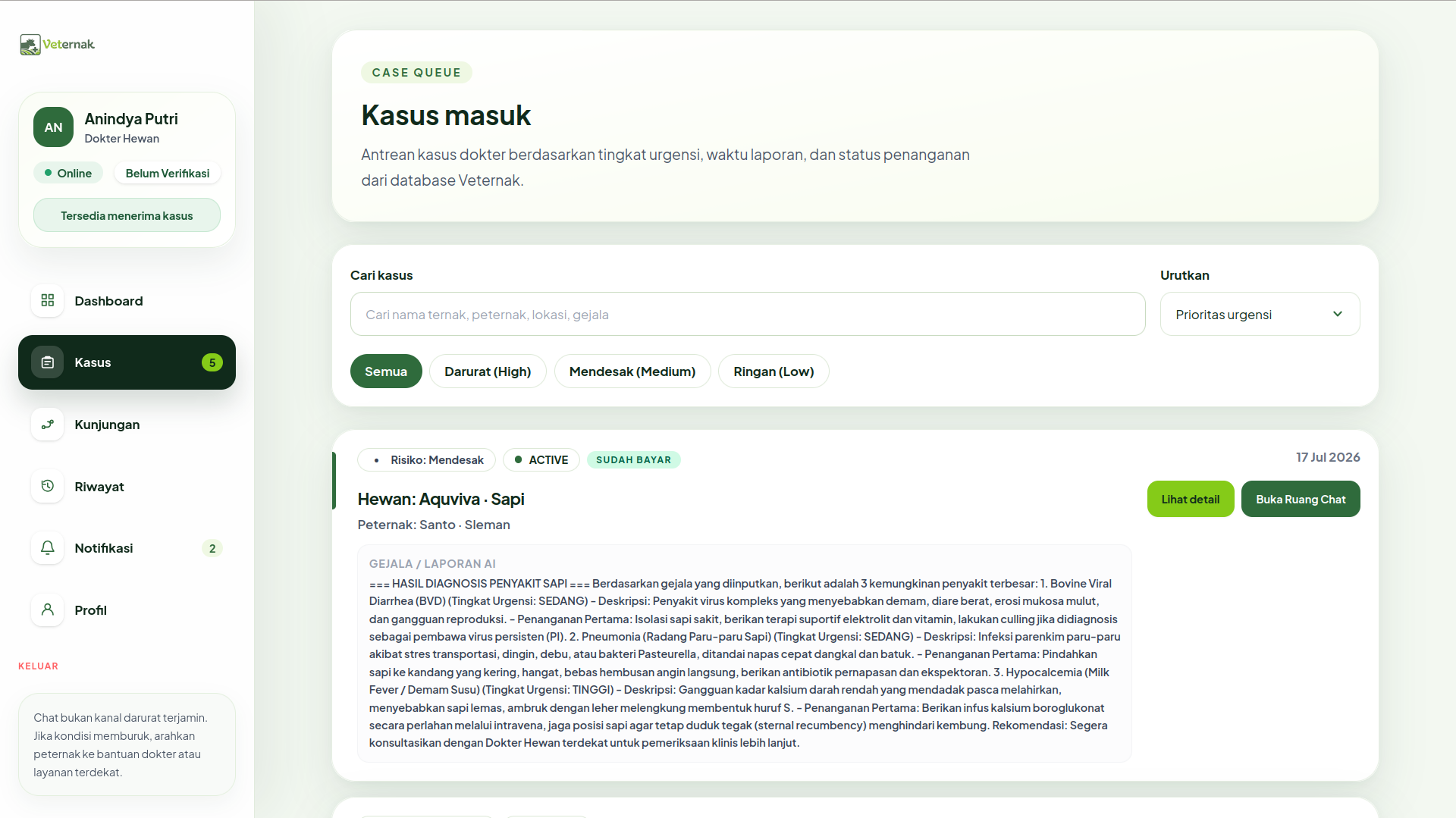
Doctor Dashboard
-
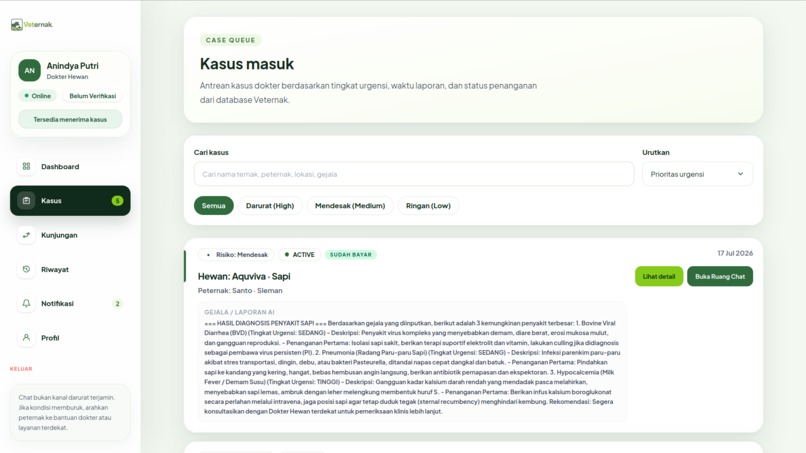
Doctor Dashboard - Case
-
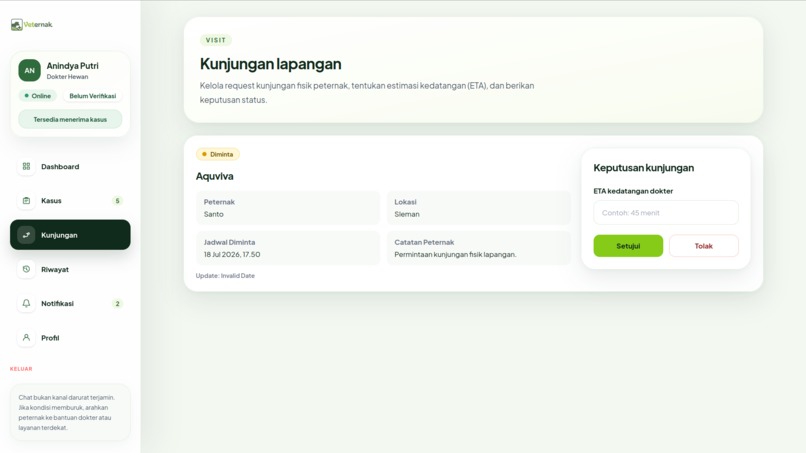
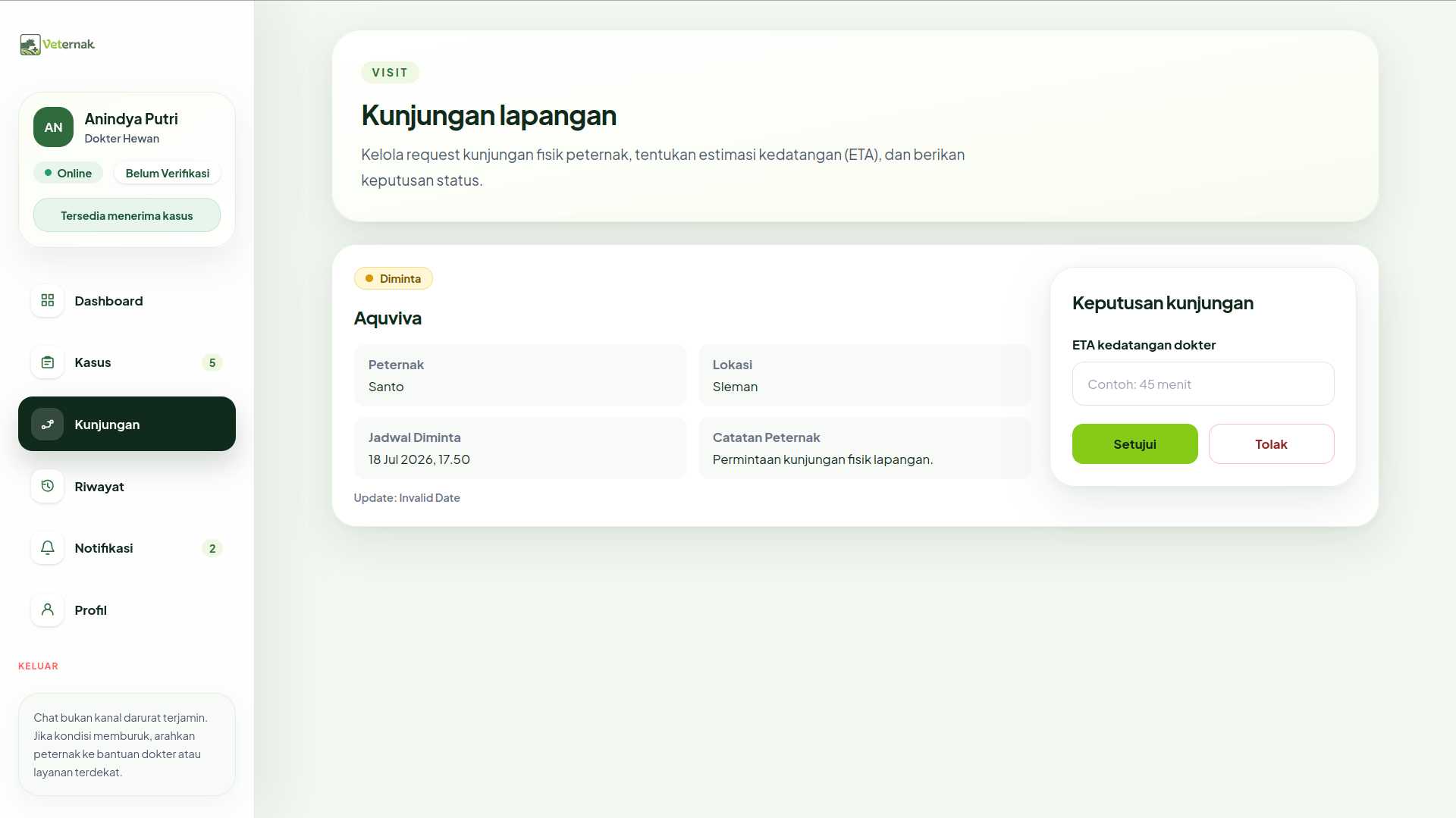
Doctor Dashboard- On Site
Inspiration
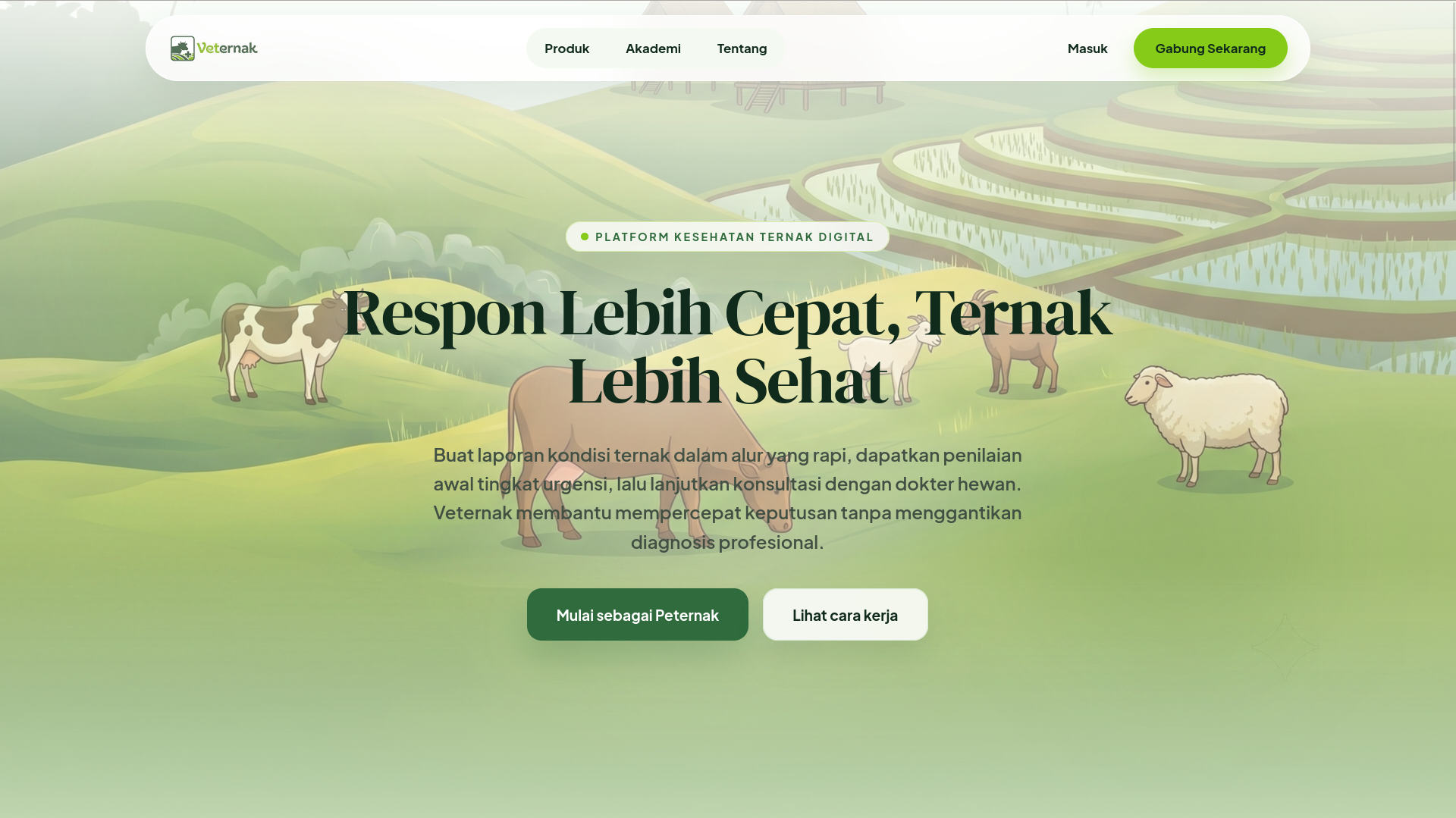
Indonesia's small-scale livestock farmers are the backbone of our food system, yet when an animal gets sick, many still struggle to access timely veterinary care. Symptoms are often reported through incomplete messages, while veterinarians may be located far away or responsible for multiple regions. This delay can reduce livestock productivity, increase disease transmission, and threaten farmers' livelihoods. We built Veternak to help farmers anticipate health risks earlier, respond faster, and protect one of their most valuable assets: their livestock.
What it does
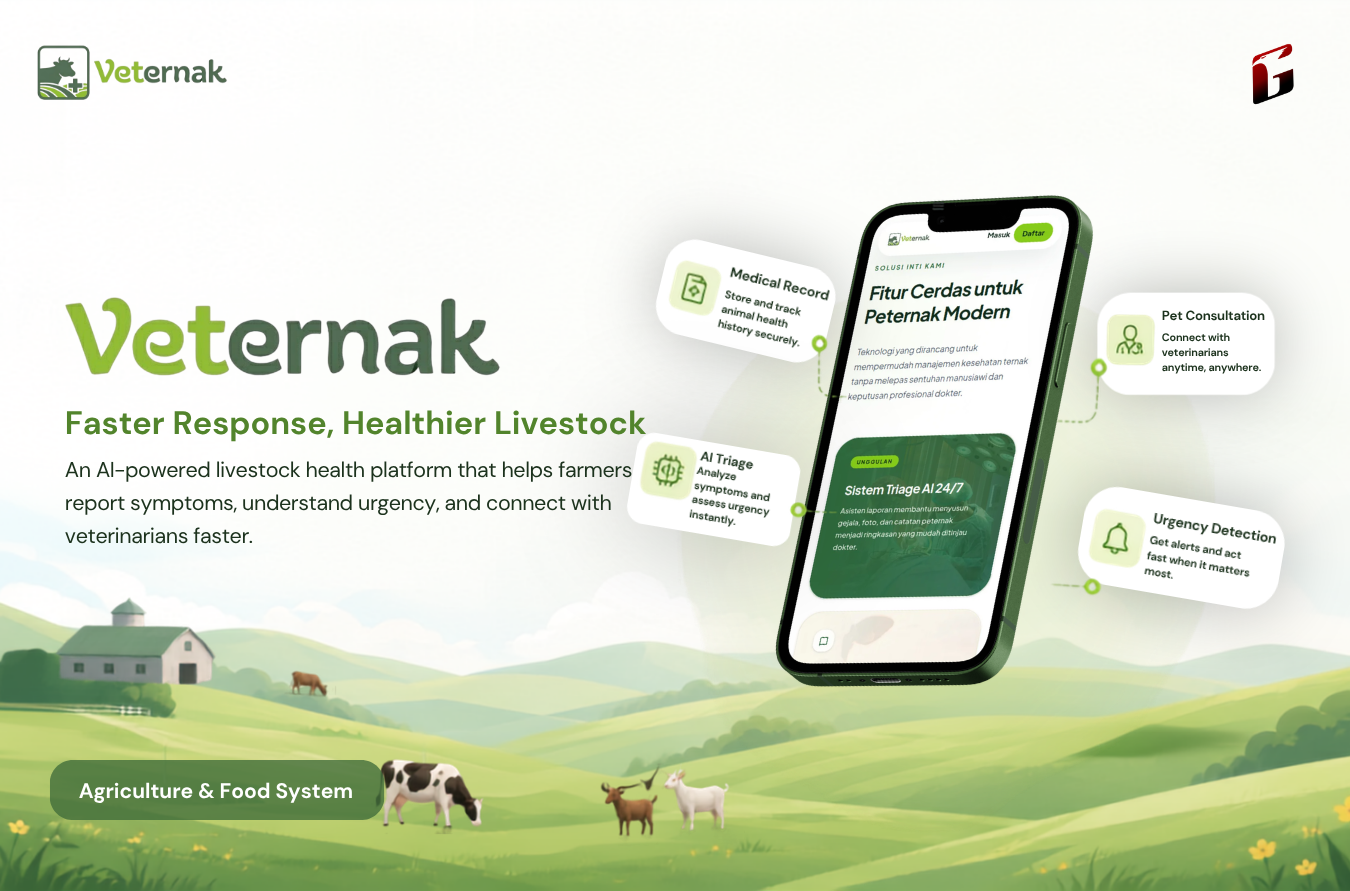
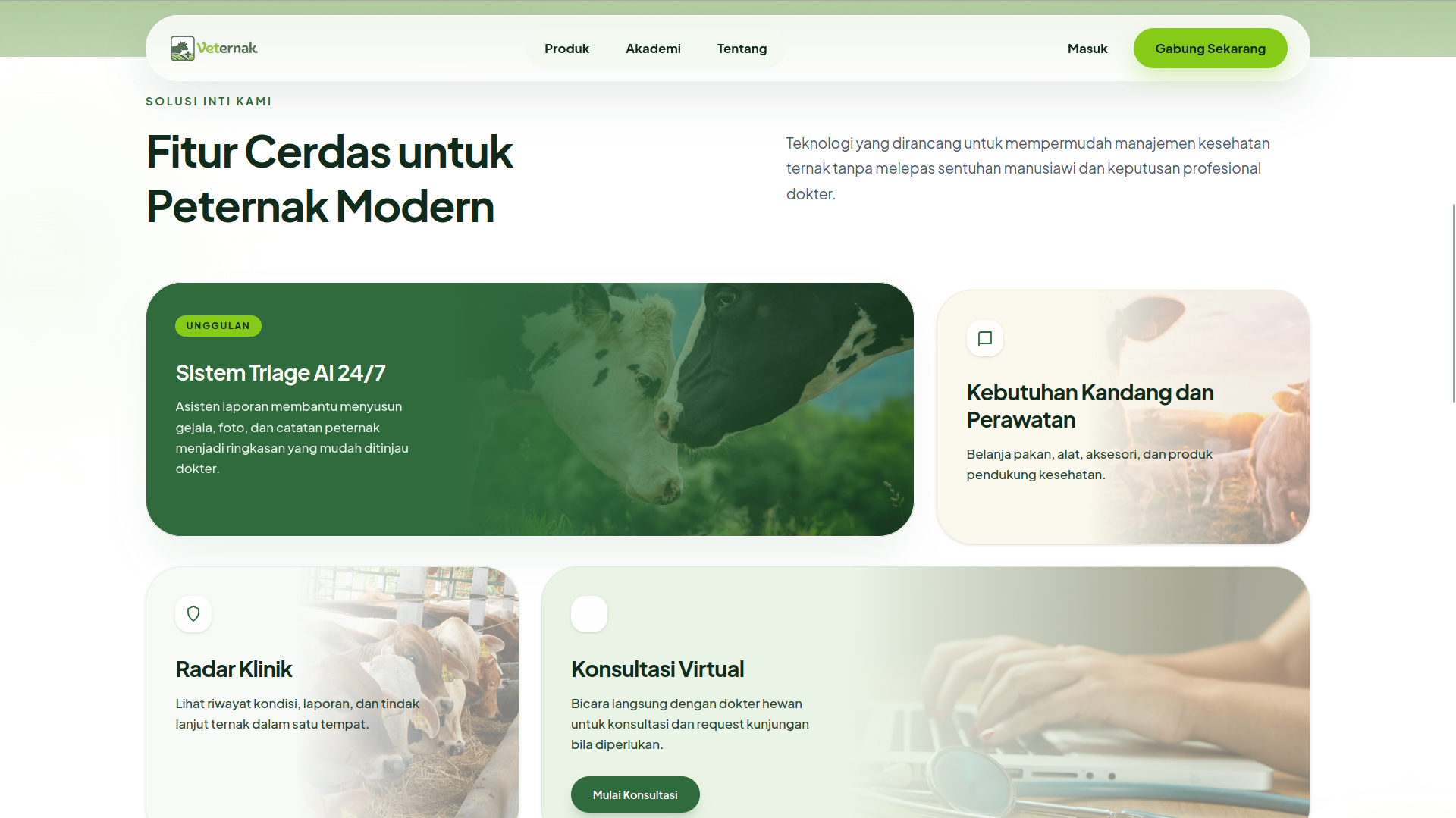
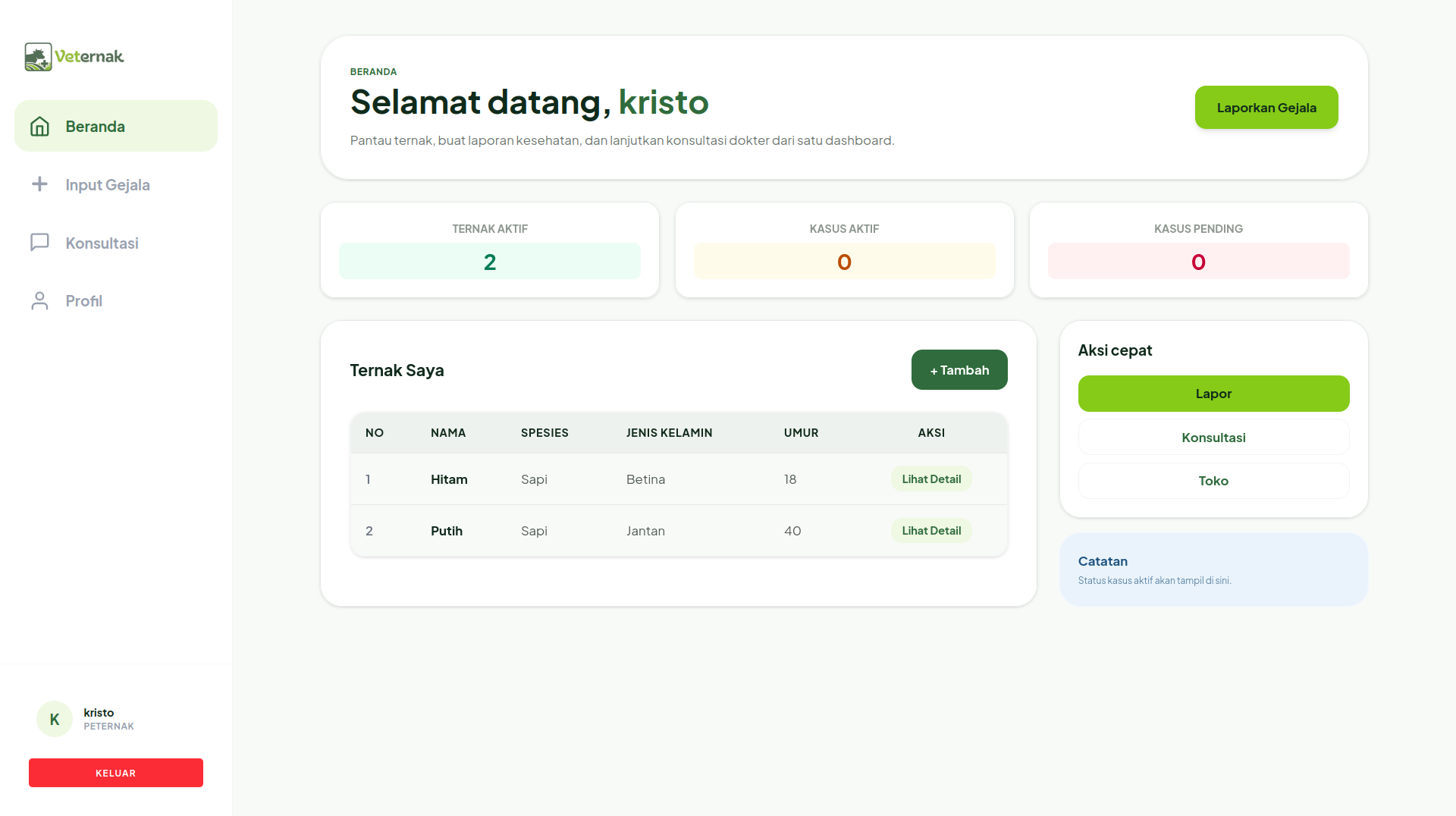
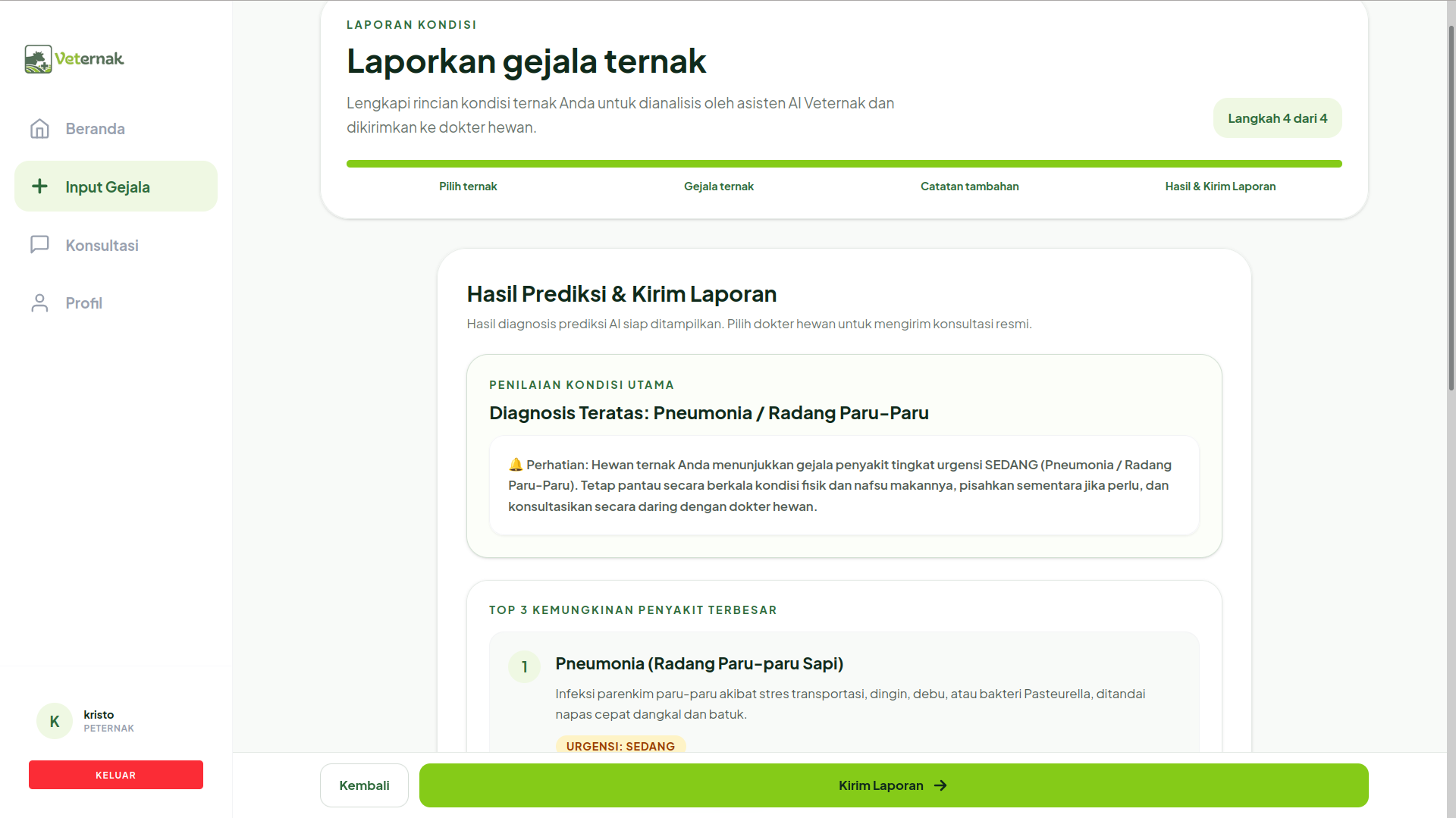
Veternak is an AI-powered livestock health platform that simplifies the journey from symptom reporting to professional veterinary care.
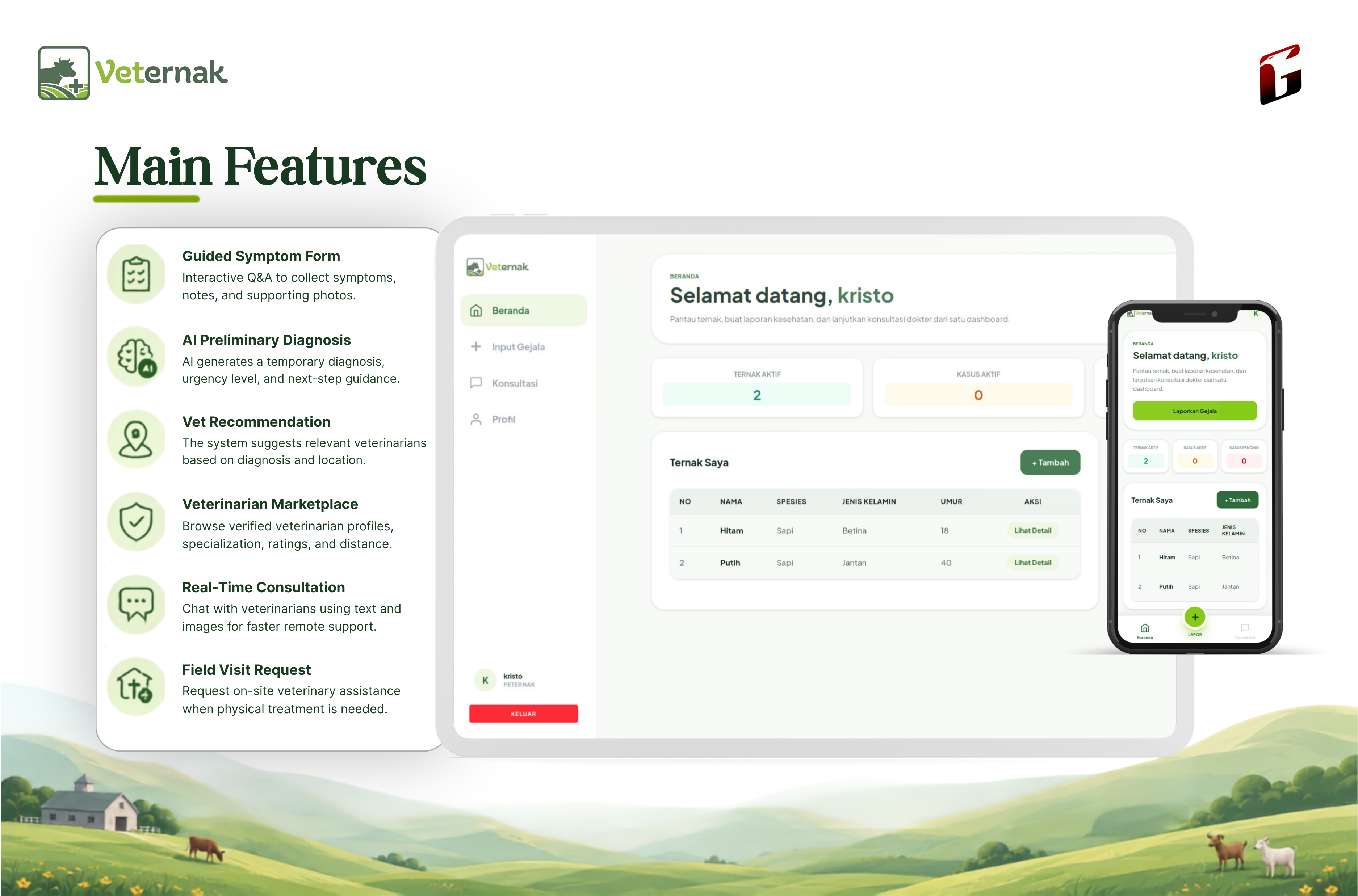
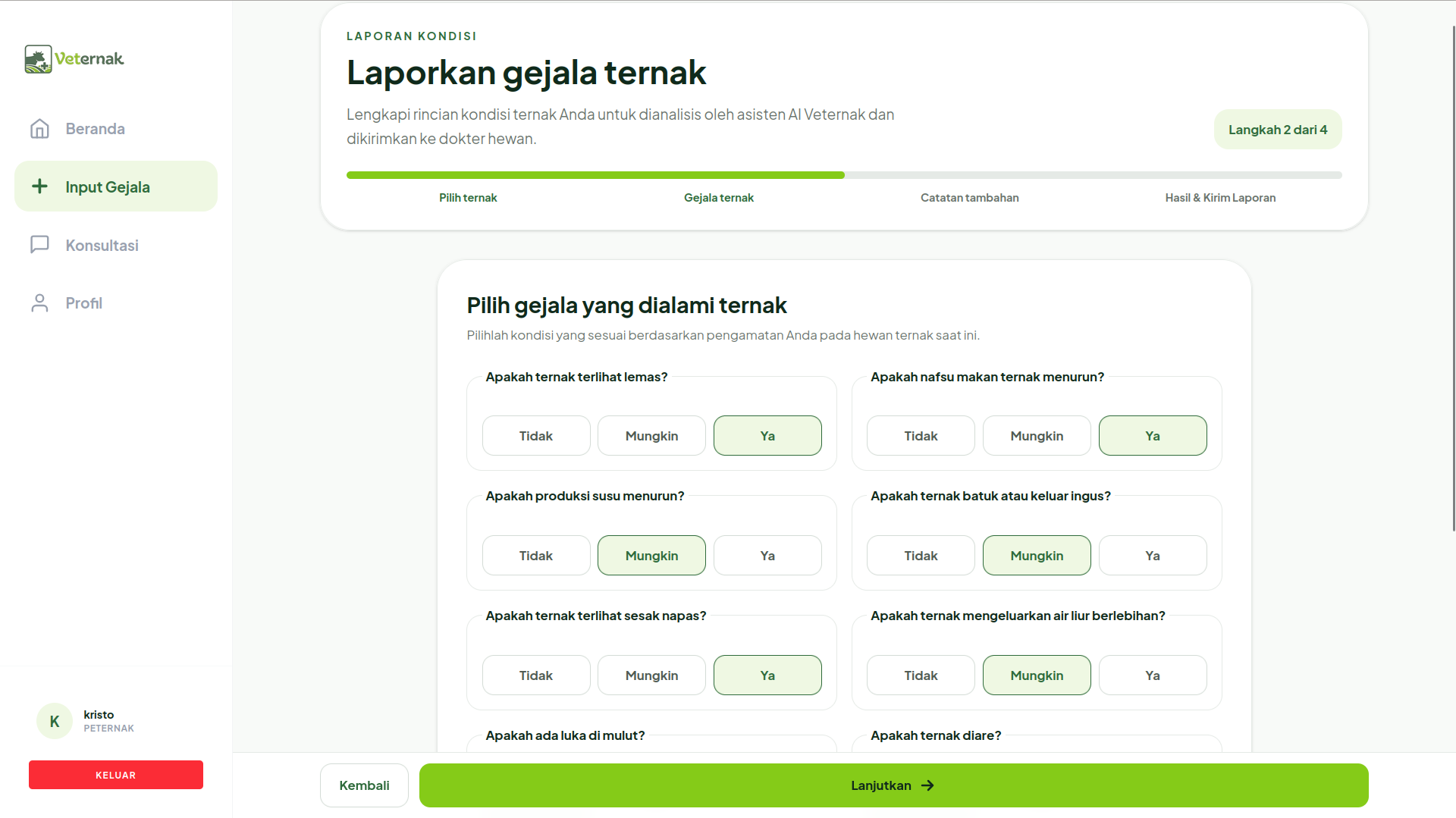
- Guided Symptom Form — Farmers answer simple questions and upload photos of the animal.
- AI Preliminary Assessment — Our AI analyzes the symptoms and estimates the urgency with -recommended next steps.
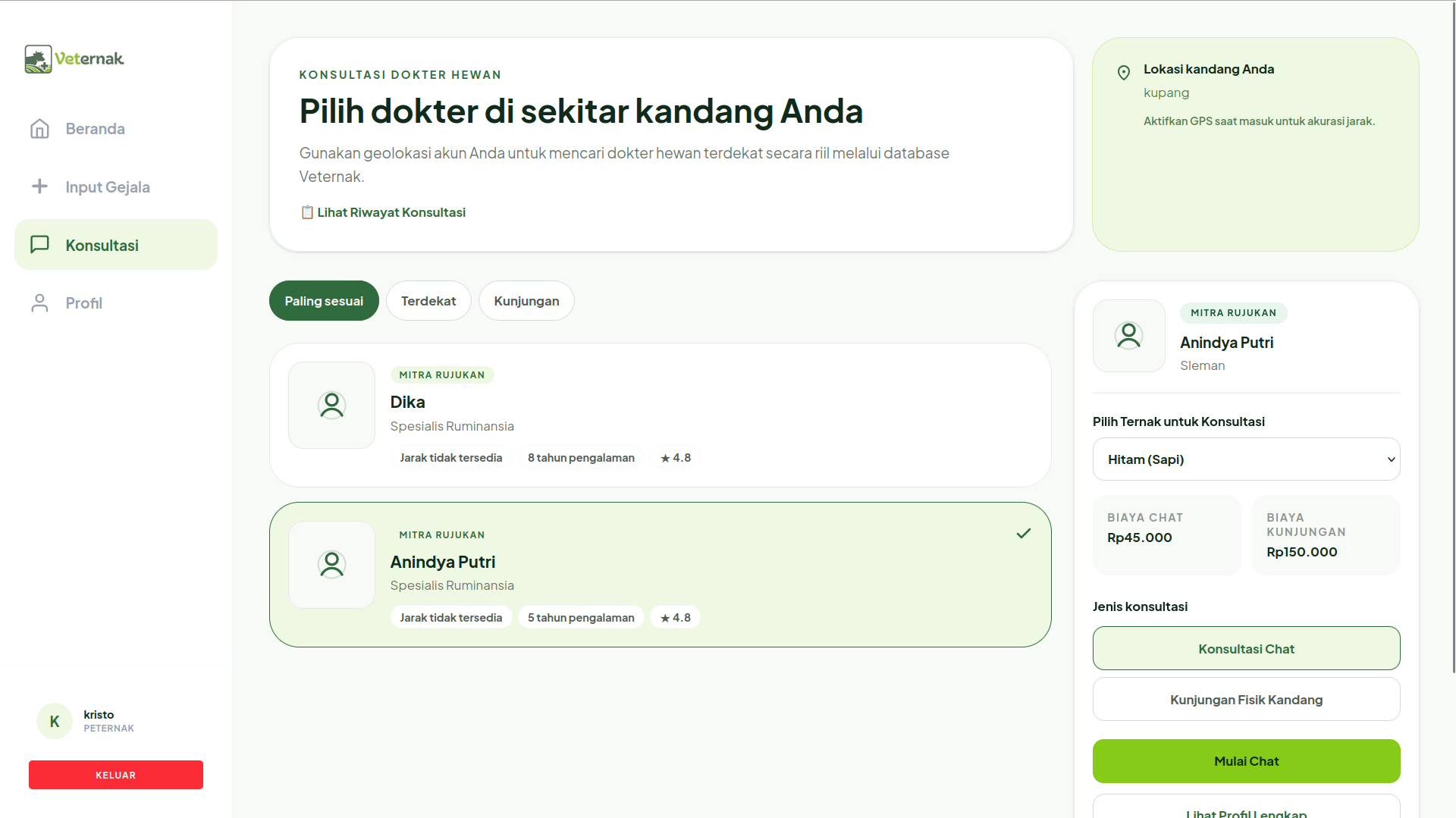
- Smart Vet Recommendation — Farmers are matched with relevant veterinarians based on specialization and location.
- Veterinarian Marketplace — Browse verified veterinarian profiles before starting a consultation.
- Real-Time Consultation — Chat directly with veterinarians using text and images.
- Field Visit Request — Request an on-site visit when physical examination is required. Together, these features help farmers respond earlier, reduce avoidable production losses, and keep livestock healthier.
How we built it
Veternak was built using React.js and Tailwind CSS for the frontend, Node.js and Express.js for the backend, and PostgreSQL + Supabase for authentication, storage, and database management. Rather than relying entirely on an LLM, we built our own AI prediction model using a public livestock disease dataset and the Random Forest algorithm to perform preliminary disease classification. The prediction results are then combined with Gemini AI, which transforms the output into farmer-friendly explanations, urgency assessments, and structured veterinary reports. Throughout development, we also leveraged AI-assisted engineering using Codex, Claude, and Gemini, each contributing based on its strengths from coding and debugging to UI refinement, architecture planning, and technical writing.
Challenges we ran into
- Validating the problem We spent considerable time refining the idea to ensure we were solving a real problem rather than simply building another telemedicine platform. This involved studying government reports, news articles, and existing veterinary workflows.
- Prioritizing the right features With only 30 hours to build the project, we focused on the minimum set of features that could deliver meaningful impact instead of trying to build everything.
- Building an AI workflow Creating a reliable prediction pipeline required finding suitable public datasets, cleaning the data, training a Random Forest model, and integrating its output with Gemini AI to produce understandable recommendations.
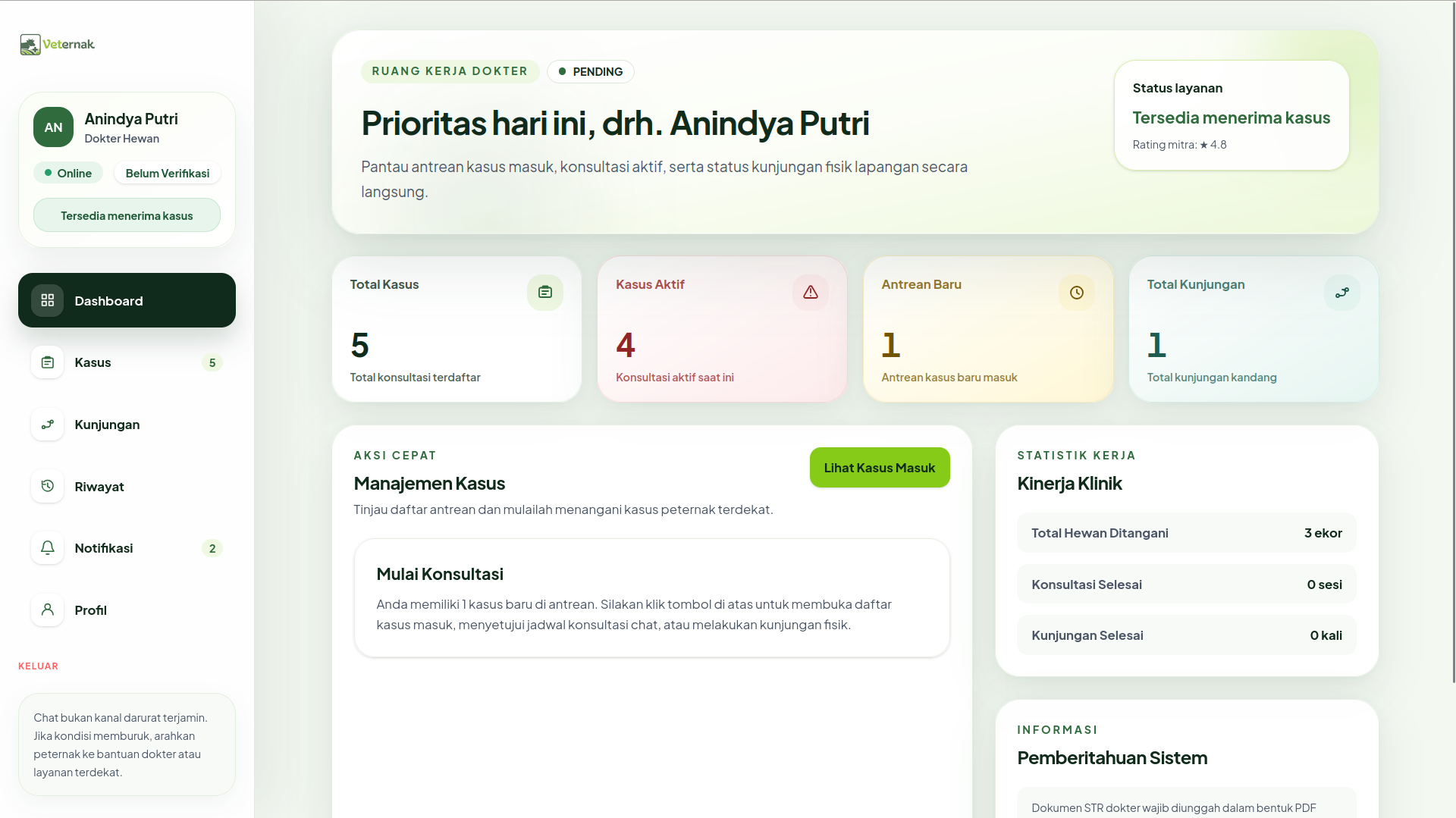
- Designing for different users Farmers need a simple, mobile-friendly interface, while veterinarians require structured reports and efficient case management. Balancing both experiences was an important challenge.
Accomplishments that we're proud of
- Built an end-to-end livestock health platform in just 30 hours.
- Developed our own Random Forest disease prediction model instead of relying solely on generative AI.
- Connected AI-assisted diagnosis with veterinarian recommendations and consultation.
- Designed separate user experiences for both farmers and veterinarians.
- Created a solution that supports Indonesia's Agriculture & Food Systems by helping small-scale farmers manage livestock-health disruptions earlier.
What we learned
This hackathon taught us that meaningful AI is not about replacing experts, but helping them work more efficiently. We learned how to build and integrate machine learning models, prepare real-world datasets, combine predictive AI with generative AI, and design technology that is practical for small-scale farmers. We also experienced how AI tools such as Codex, Claude, and Gemini can significantly accelerate software development when each is used according to its strengths.
What's next for Veternak
Our next step is to validate Veternak with real farmers and licensed veterinarians while expanding partnerships with local veterinarians, Puskeswan, universities, livestock communities, and government agencies. We also plan to improve our machine learning model using larger datasets, expand disease coverage, introduce early-warning and preventive health features, and explore future integration with Indonesia's national animal health ecosystem, including iSIKHNAS.
Built With
- express.js
- gemini
- javascript
- node.js
- postgresql
- react.js
- restapi
- supabase
- tailwind


Log in or sign up for Devpost to join the conversation.