-
-
-
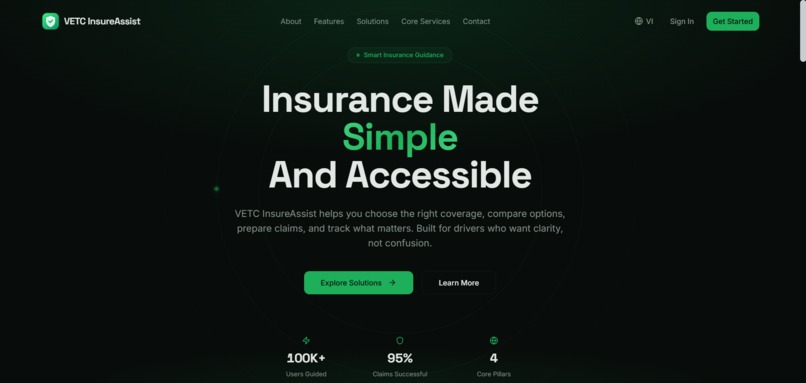
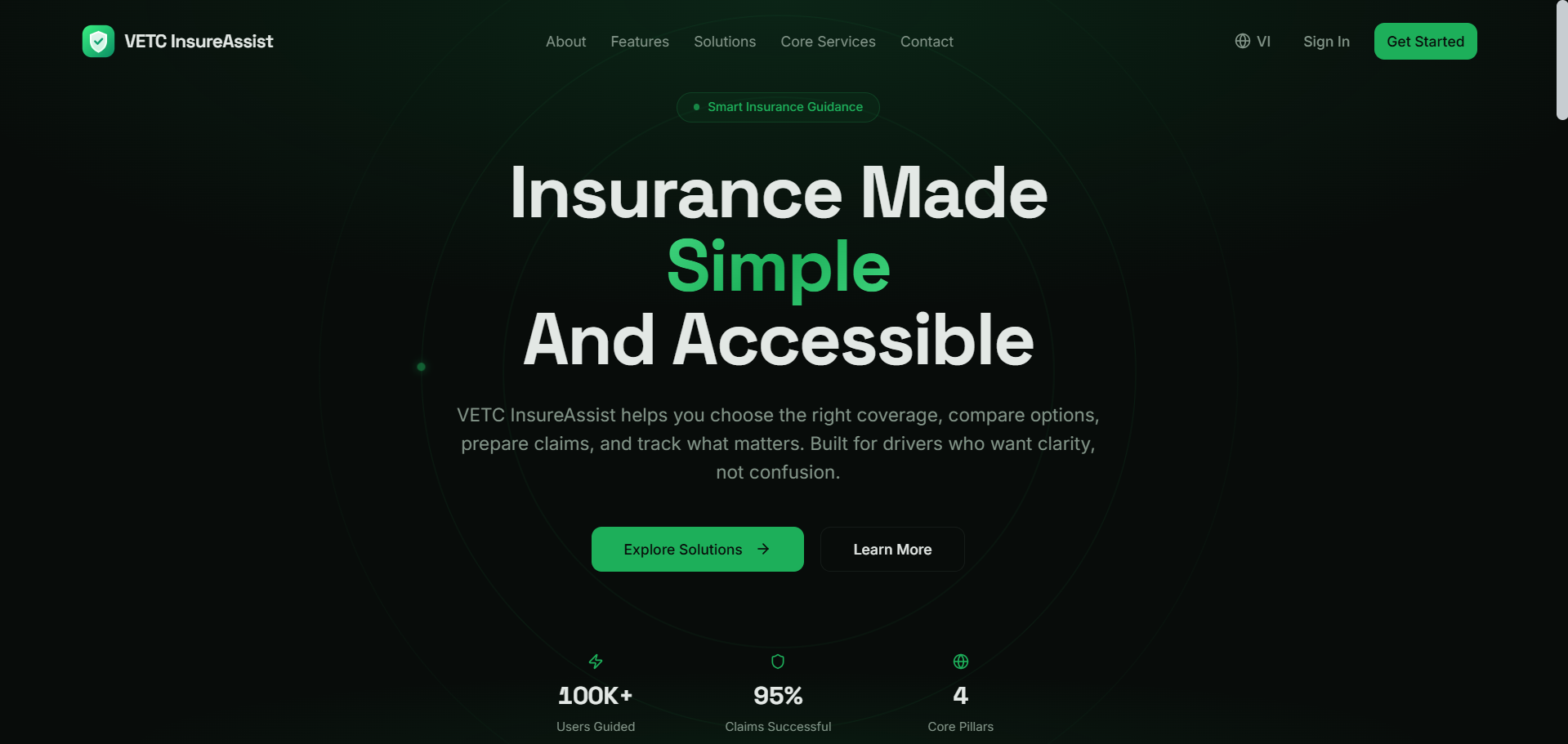
This is the landing page of our solution
-
-
-
-
VETC InsureAssist
Inspiration
Insurance claim processes in Vietnam are characterized by high complexity, inconsistency across insurers, and significant user burden, particularly in post-accident situations. Each insurance provider enforces distinct requirements regarding documentation, procedures, and verification, which often results in incomplete submissions and delayed processing.
At the same time, VETC has established itself as a widely adopted platform within the transportation ecosystem, providing daily services to drivers and maintaining a high level of user trust. This context motivated the exploration of extending VETC’s functionality beyond payment services into post-accident assistance, where users experience the greatest uncertainty and need for guidance.
The project is therefore inspired by the need to simplify and standardize the insurance claim process through the integration of artificial intelligence into a traditionally rigid and fragmented system.
What it does
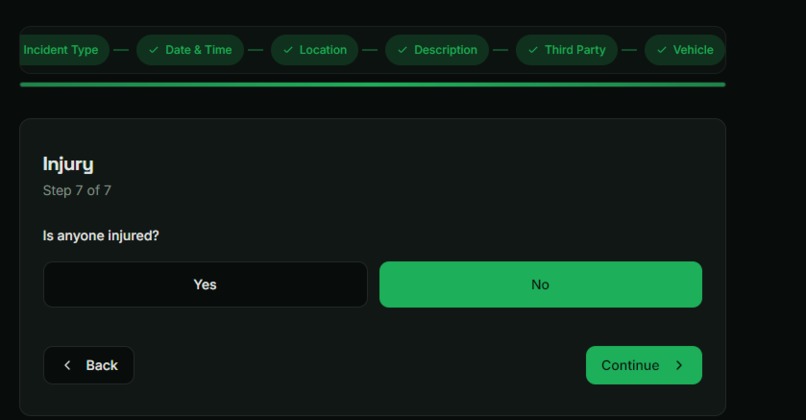
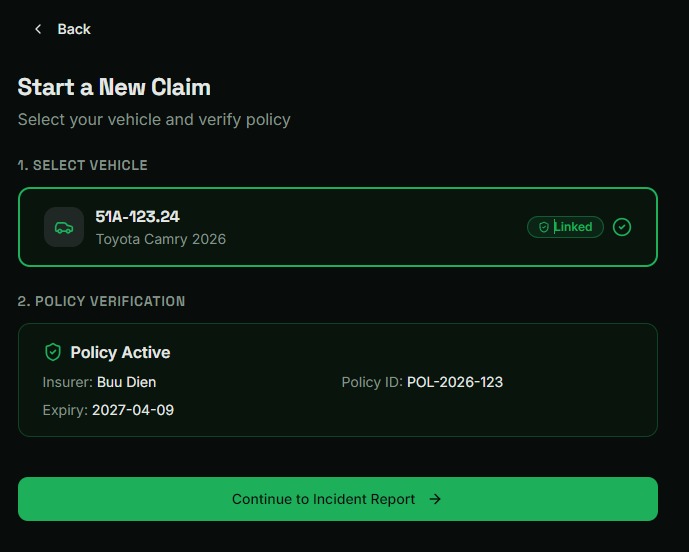
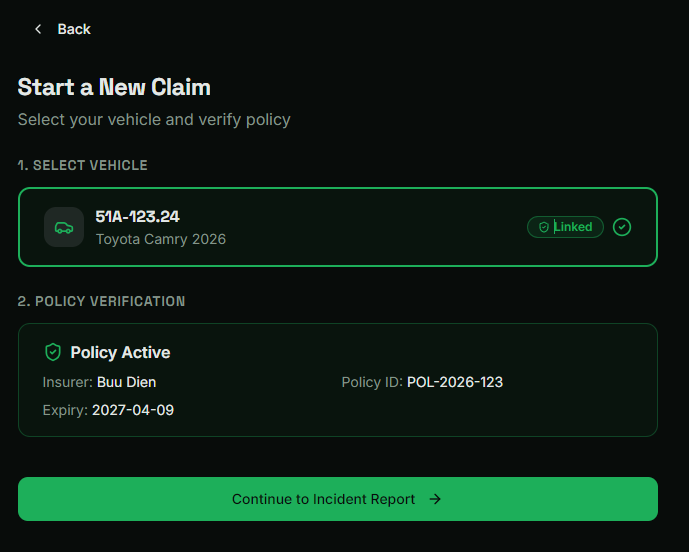
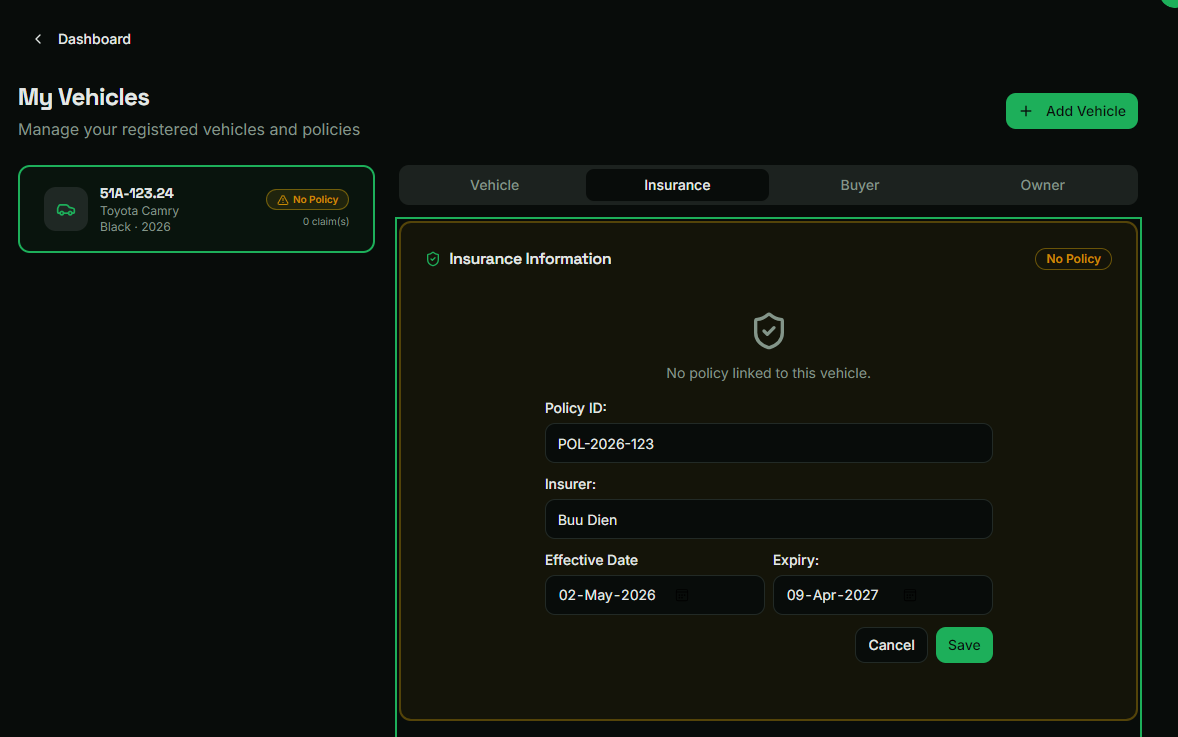
VETC InsureAssist is an AI-based claim assistance system designed to guide users through the entire insurance claim lifecycle, from incident reporting to submission and tracking.
The system performs the following functions:
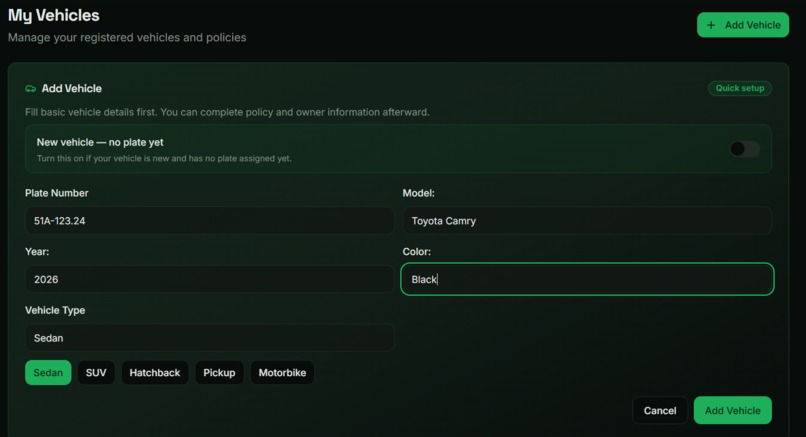
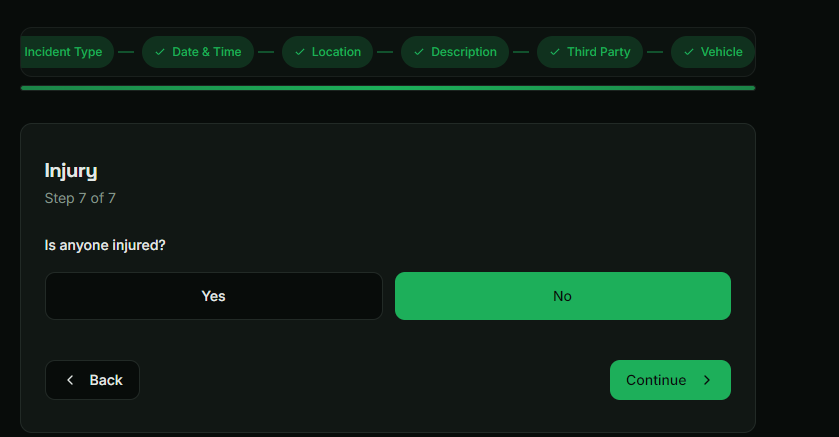
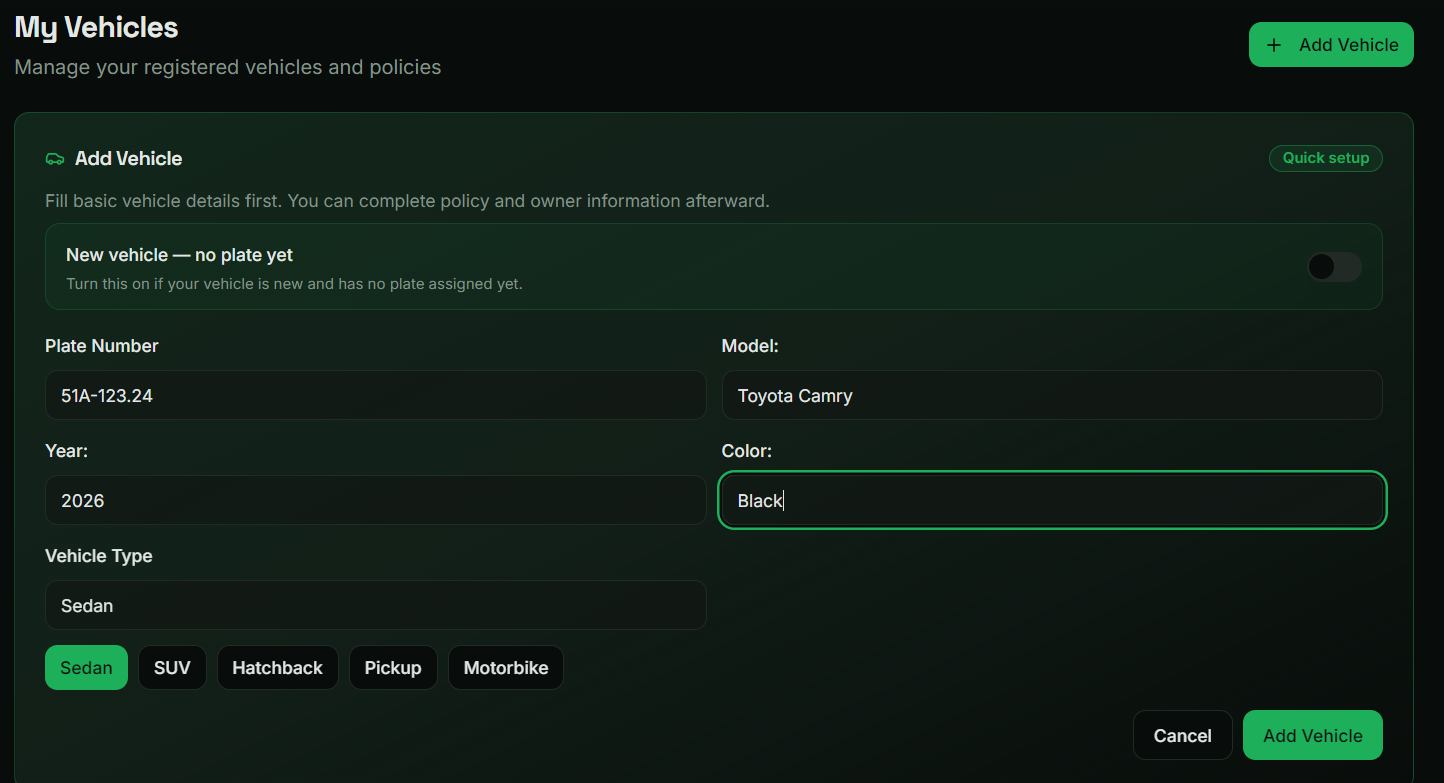
- Collects incident-related information through a structured, dynamic interaction process
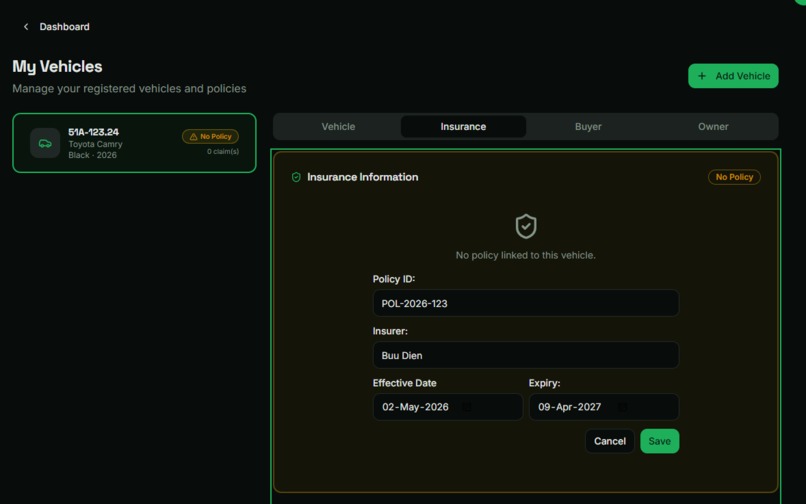
- Evaluates preliminary eligibility based on policy conditions and contextual factors
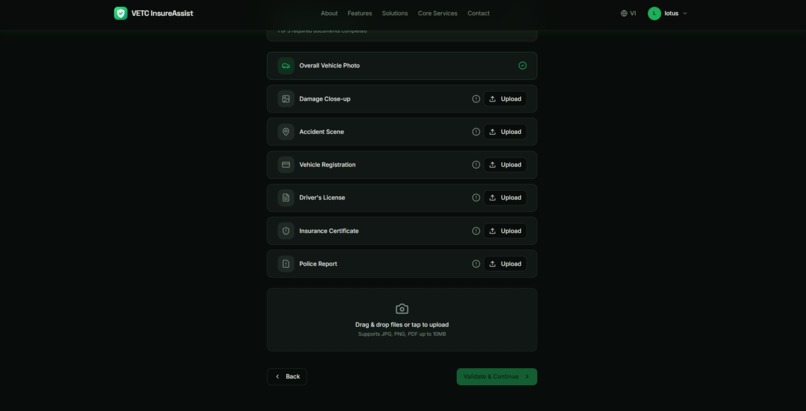
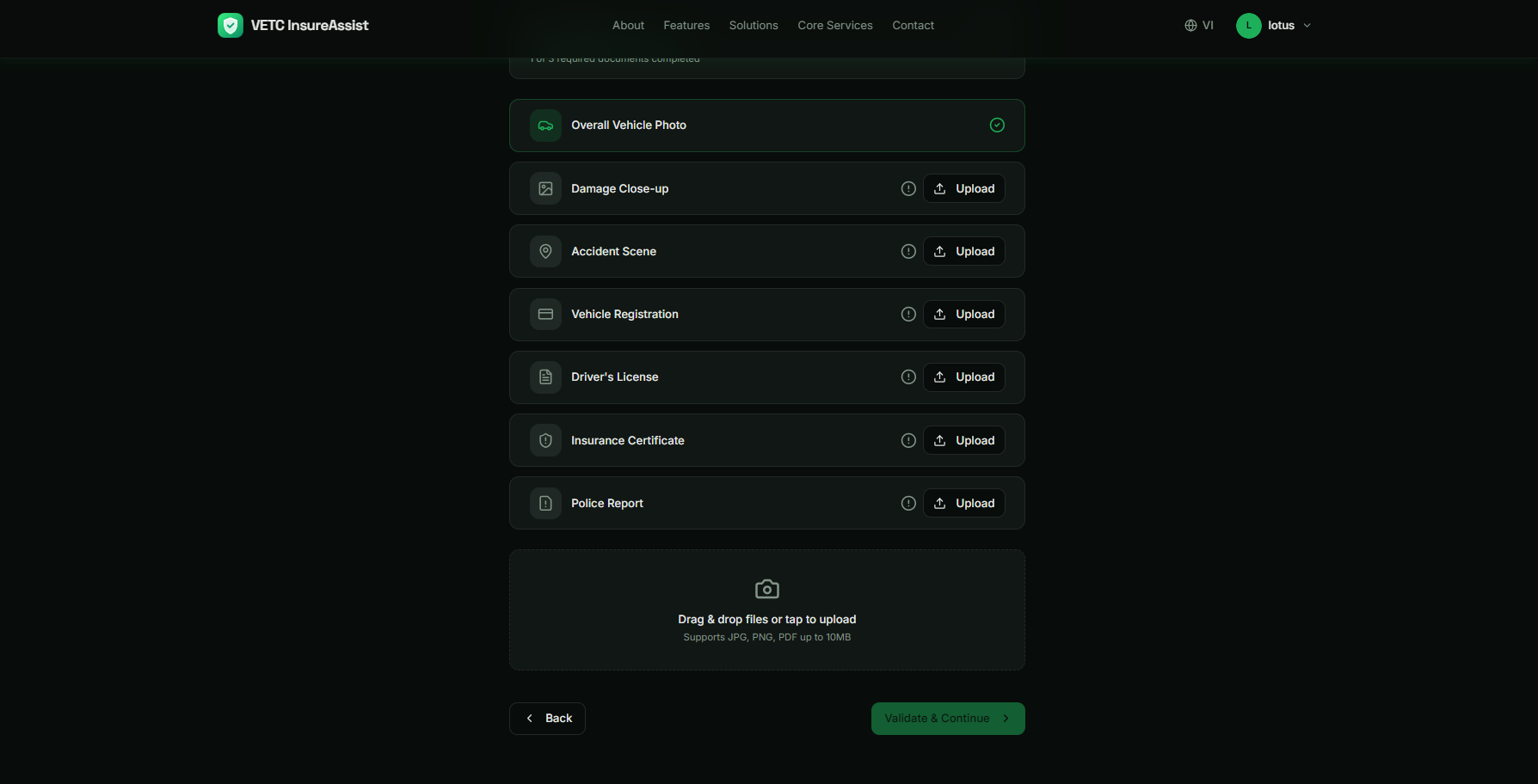
- Generates a personalized checklist of required documents tailored to the insurer and claim scenario
- Validates uploaded documents using a multimodal large language model (LLM)
- Provides iterative feedback to ensure completeness and correctness of submissions
- Automatically compiles a structured claim dossier
- Facilitates submission and enables claim status tracking
This approach transforms a traditionally manual and error-prone workflow into a guided and semi-automated process.
How we built it
The system is implemented as an AI agent-oriented backend architecture, combining conventional software engineering practices with modern AI techniques.
AI Agent Architecture
The core of the system is an agent controller that manages workflow execution. It maintains the application state and determines the next action based on user input and system context. The agent invokes specialized modules (tools) for checklist generation, document validation, and policy retrieval.
Checklist Generation via Retrieval-Augmented Generation
A Retrieval-Augmented Generation (RAG) framework is employed to generate insurer-specific document requirements. Policy documents are embedded and stored in a vector database, enabling efficient similarity-based retrieval.
The retrieval process can be formalized as:
$$ d^* = \arg\max_{d \in D} \; \text{sim}(q, d) $$
where $q$ represents the query derived from incident context and $d$ denotes a policy document segment.
The retrieved content is combined with rule-based logic (e.g., damage thresholds) and processed by an LLM to produce a structured checklist.
Multimodal Document Validation
The system utilizes a multimodal LLM to perform document validation. Unlike traditional pipelines that separate image classification and OCR, the model directly interprets visual and textual content to:
- Identify document types
- Extract relevant information
- Assess quality and completeness
Validation is conducted through semantic reasoning, comparing extracted information against checklist requirements.
Iterative Feedback Mechanism
A feedback loop is implemented to ensure submission quality. Users are prompted to re-upload or correct documents until all requirements are satisfied, thereby reducing the likelihood of rejection.
System Stack
- Backend framework: FastAPI
- Vector database: FAISS
- Data storage: PostgreSQL / Firebase
- AI components: LLM and multimodal LLM
Challenges we ran into
Several challenges were encountered during development:
- Heterogeneity of insurance policies, requiring flexible yet accurate representation of rules
- Integration of rule-based logic with probabilistic LLM outputs
- Ensuring reliability in multimodal validation without traditional pipelines
- Designing a robust state management mechanism for multi-step workflows
These challenges required careful system design to balance flexibility and correctness.
Accomplishments that we're proud of
- Development of an end-to-end claim assistance workflow
- Implementation of a dynamic, insurer-aware checklist generation system
- Successful application of multimodal LLMs for document validation
- Design of an AI agent-based architecture for workflow orchestration
- Transformation of a complex process into a structured and user-friendly experience
What we learned
This project provided several key insights:
- Effective AI systems require integration with structured logic and domain knowledge
- Combining RAG, rule-based reasoning, and LLMs improves reliability and reduces hallucination
- Multimodal LLMs can simplify system design by replacing multiple specialized components
- Building AI agents involves not only model usage but also state management and orchestration
- User-centered design is critical when addressing high-stress real-world scenarios
What's next for VETC InsureAssist
Future work focuses on expanding the system into a comprehensive post-accident digital assistant within the VETC ecosystem.
Key directions include:
- Development of a real-time conversational assistant to provide continuous guidance and support
- Enhancement of the verification engine to improve detection of missing information, inconsistencies, and claim risks
- Integration with insurer systems to enable end-to-end claim processing, tracking, and communication
Ultimately, the system aims to evolve into a fully integrated, intelligent platform that supports users throughout the entire insurance claim journey.
Built With
- codex
- fastapi
- multimodal
- openai
- python
- rag
- react
- tailwind
- typescript
- vetc


Log in or sign up for Devpost to join the conversation.