-
-
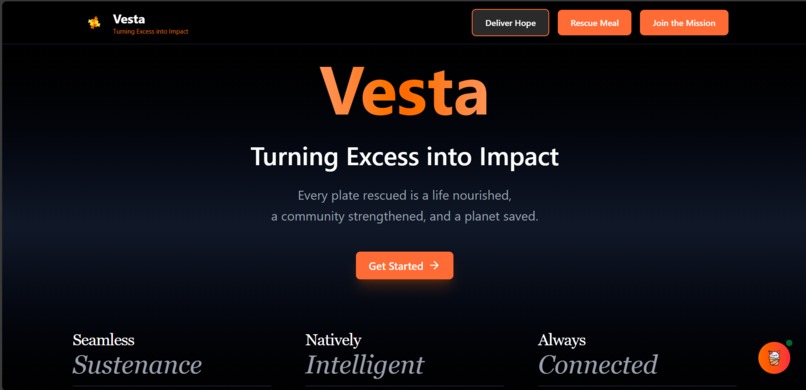
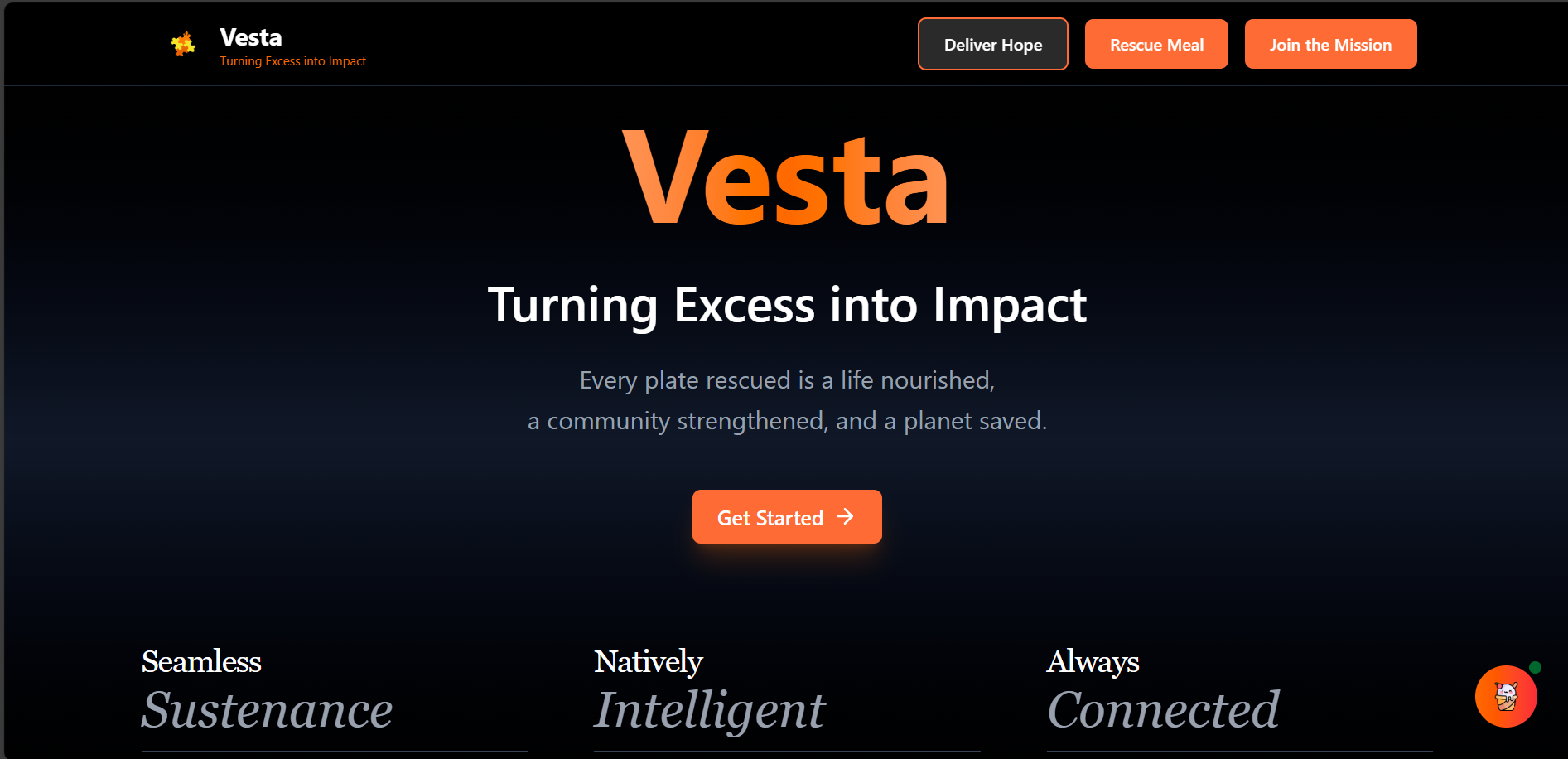
Vesta turns surplus food into real-time impact, ensuring meals reach those in need before they go to waste.
-
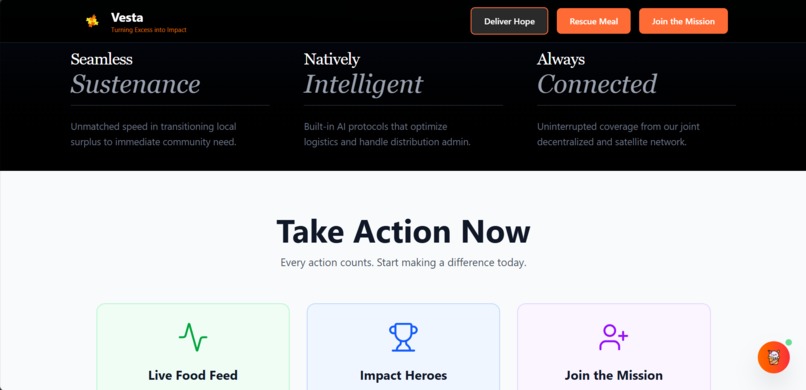
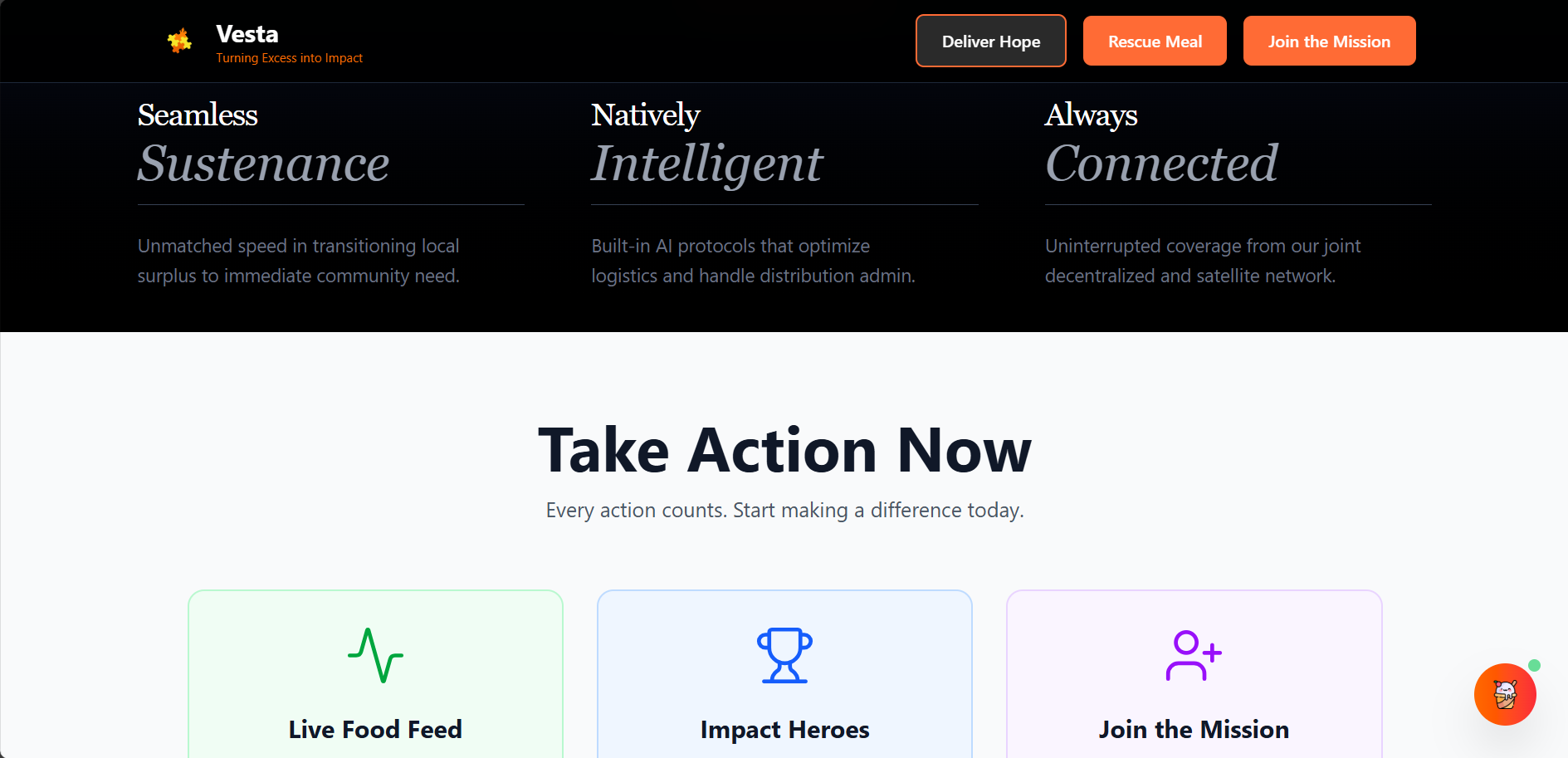
Built on seamless logistics, AI-driven intelligence, and always-connected systems for fast, reliable food rescue.
-
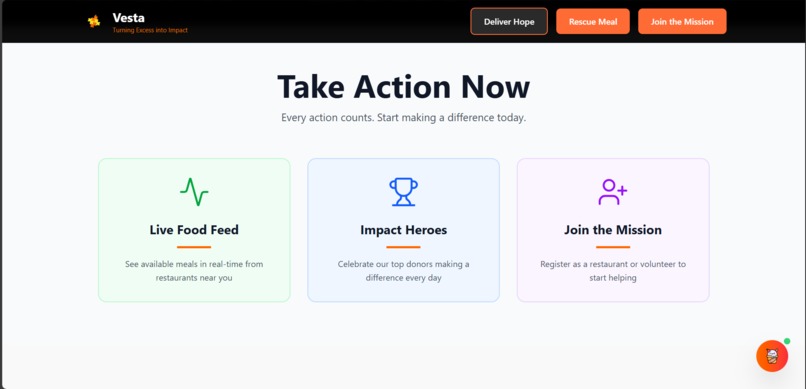
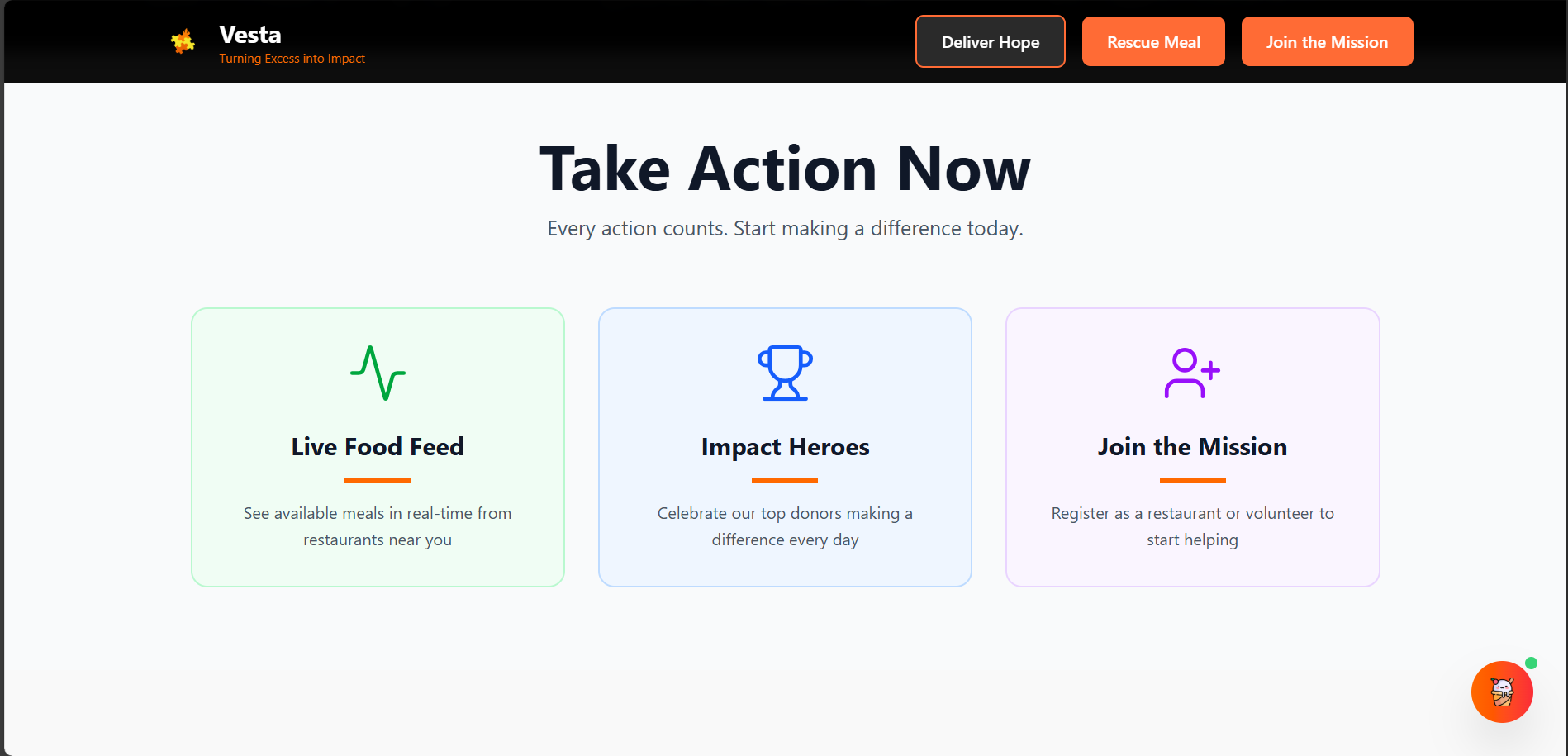
Discover live food availability, celebrate impact heroes, and join the mission to fight hunger instantly
-
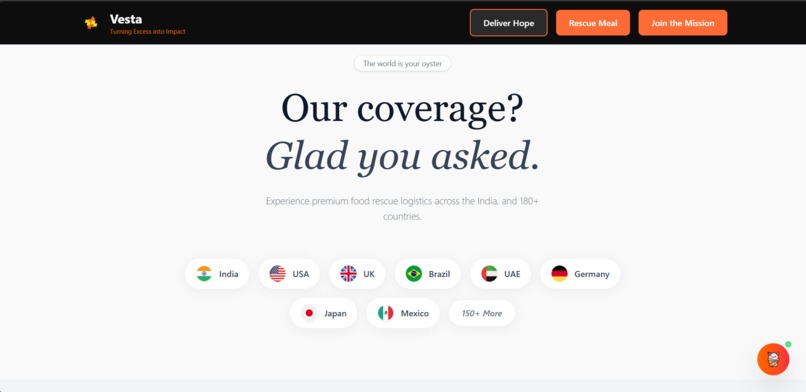
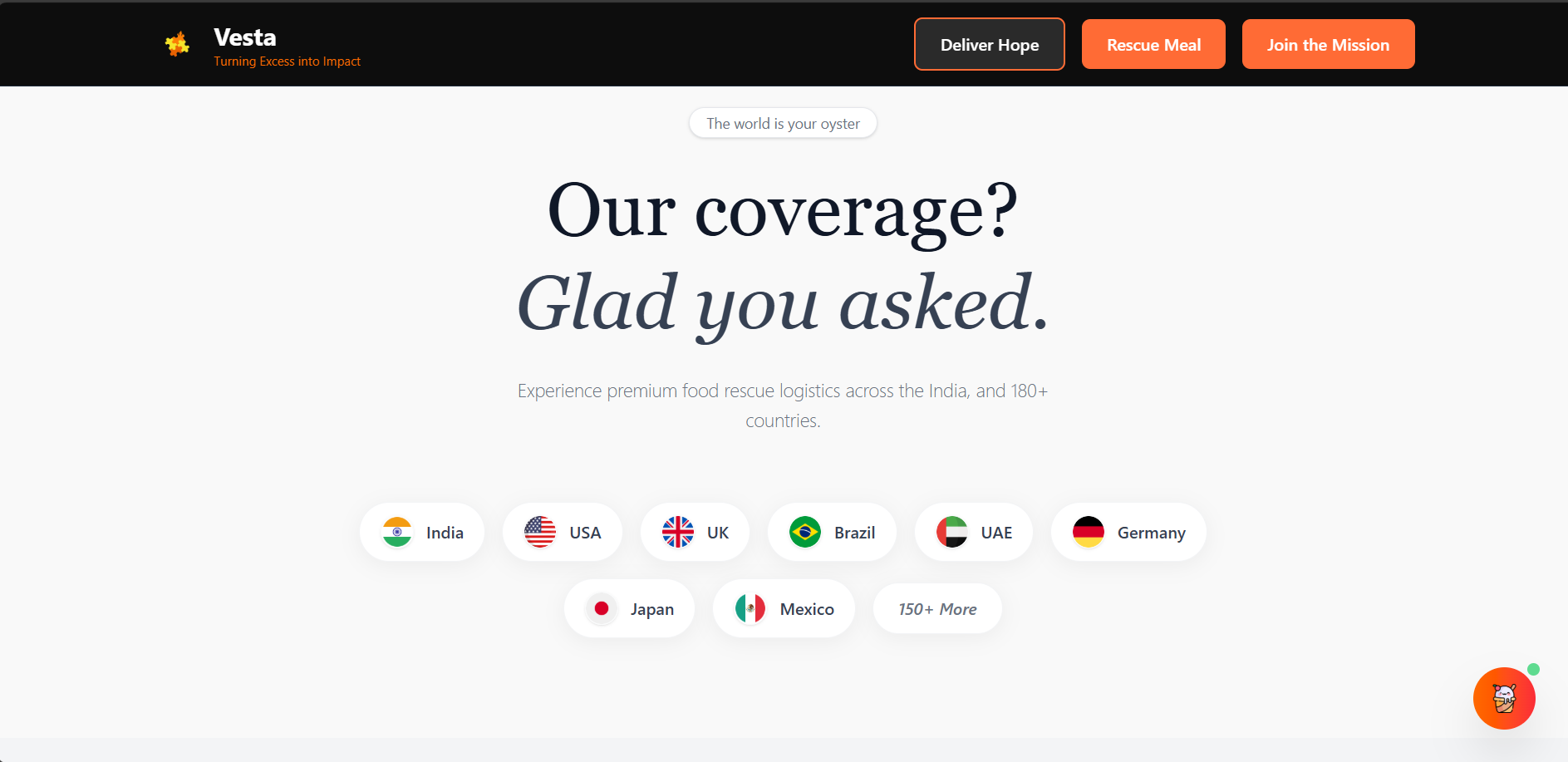
Designed in India, built for the world—Vesta scales food rescue across cities and countries.
-
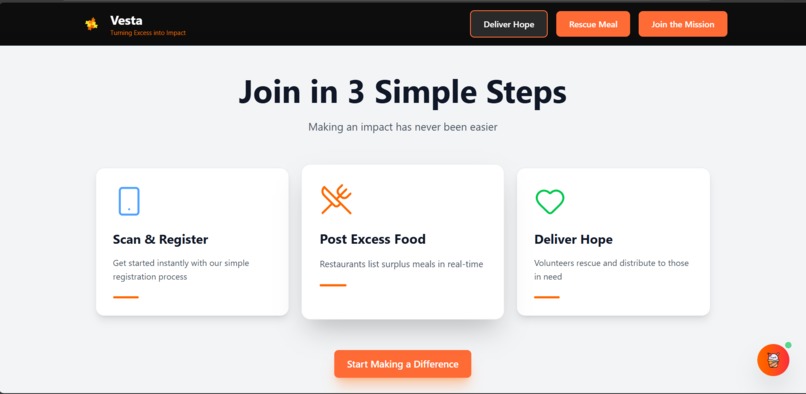
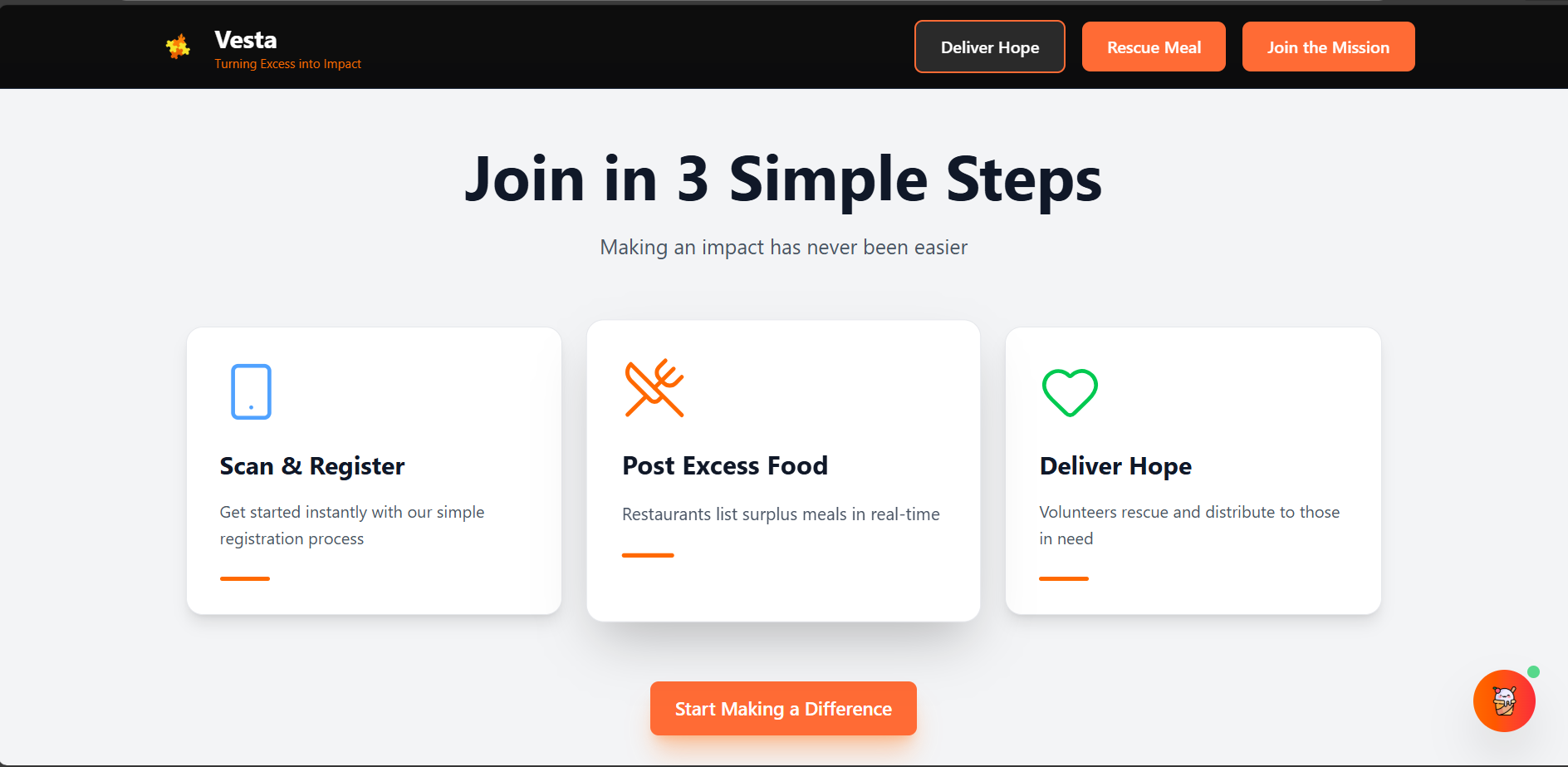
Scan, post surplus food, and deliver hope—three simple steps to create real impact.
-
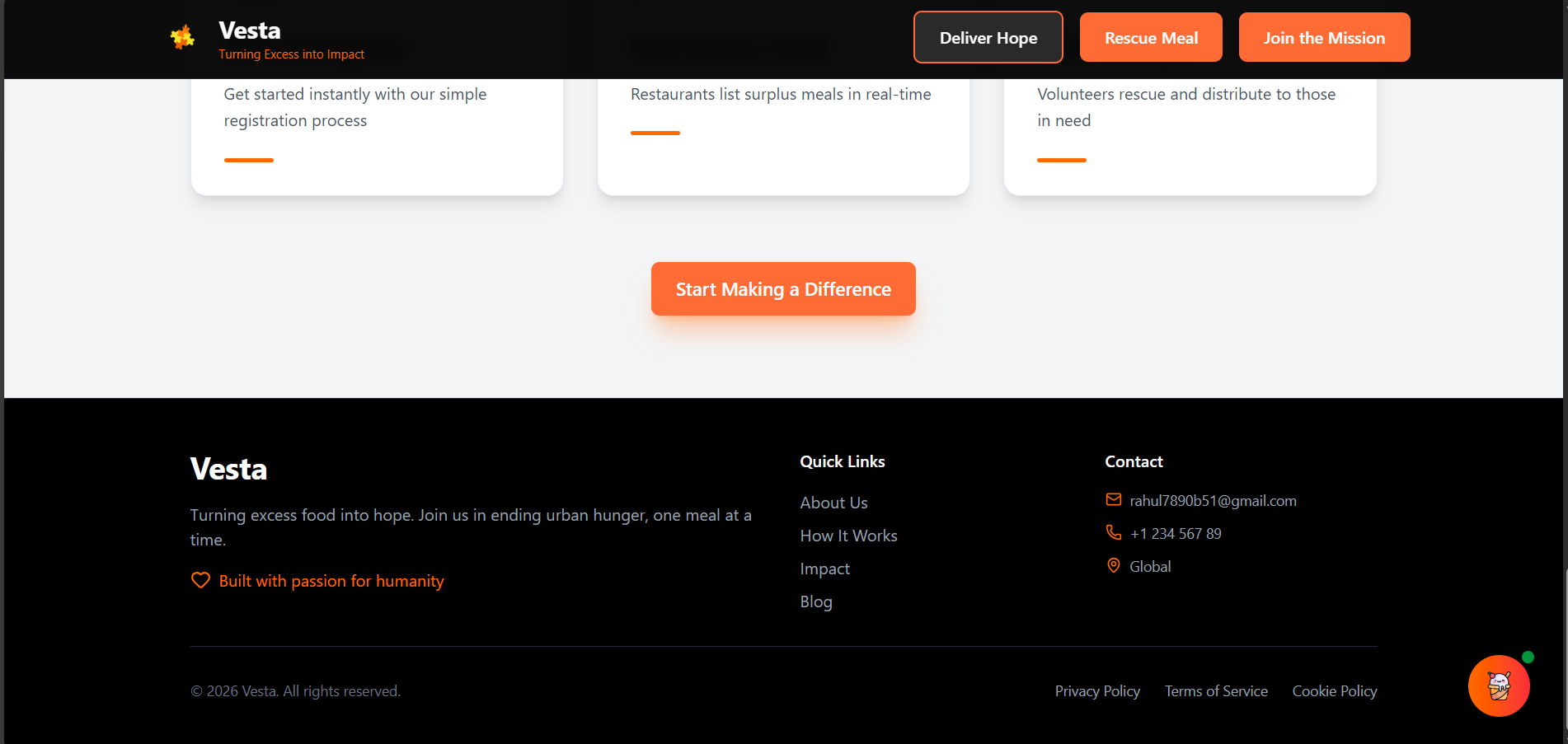
Vesta is built with passion for humanity—uniting technology, communities, and purpose to end urban hunger one rescued meal at a time.
-
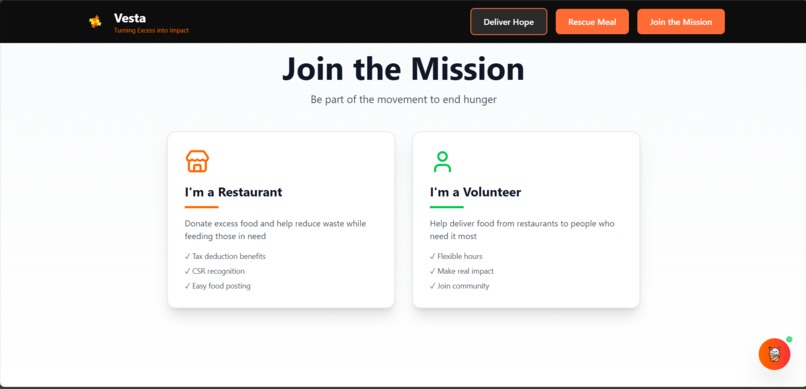
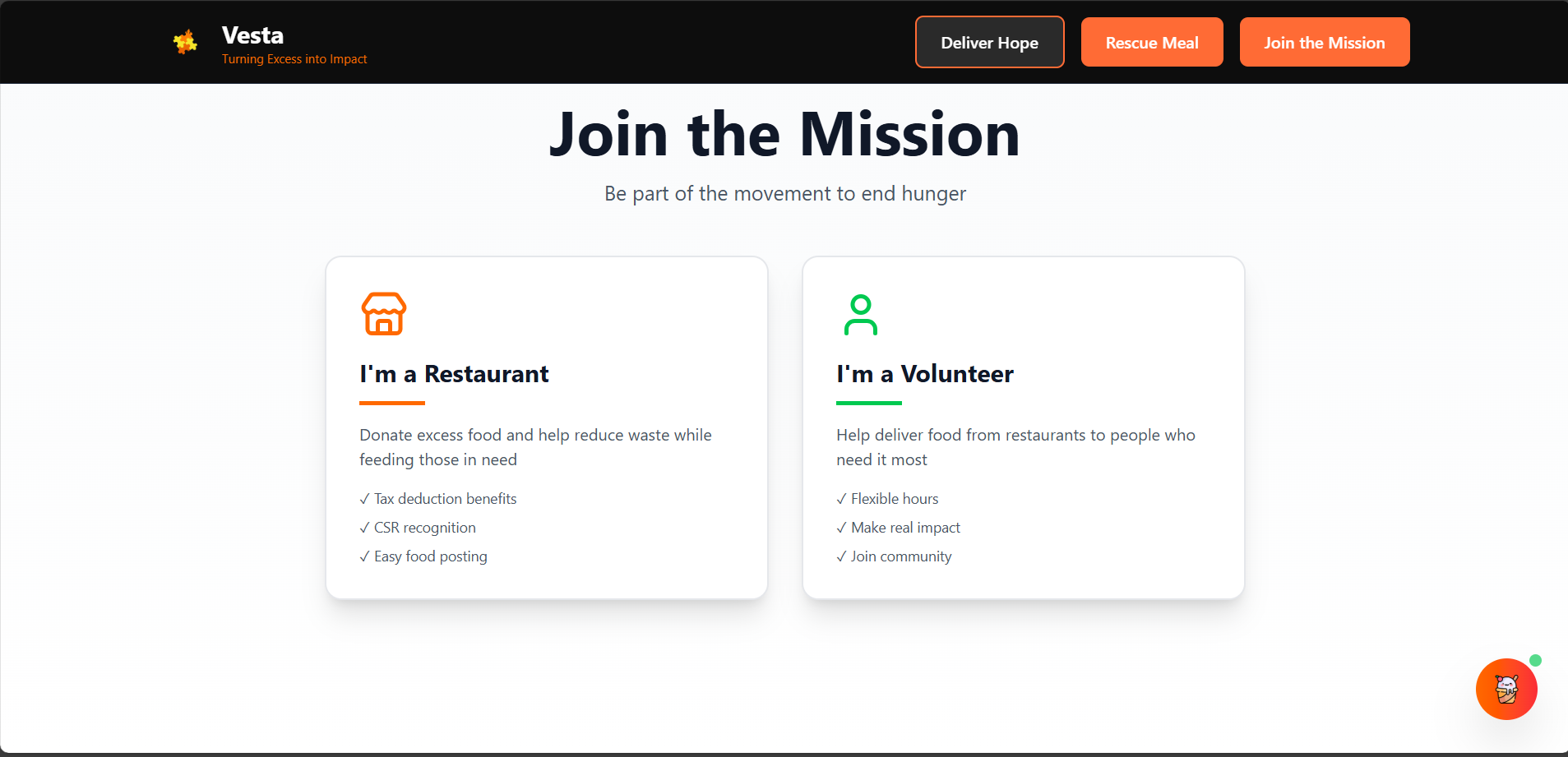
Vesta enables restaurants and volunteers to collaborate seamlessly, reducing food waste while delivering meals to those who need them most.
-
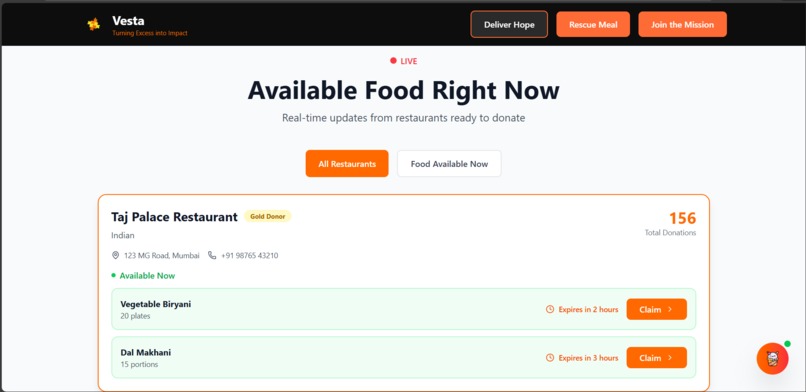
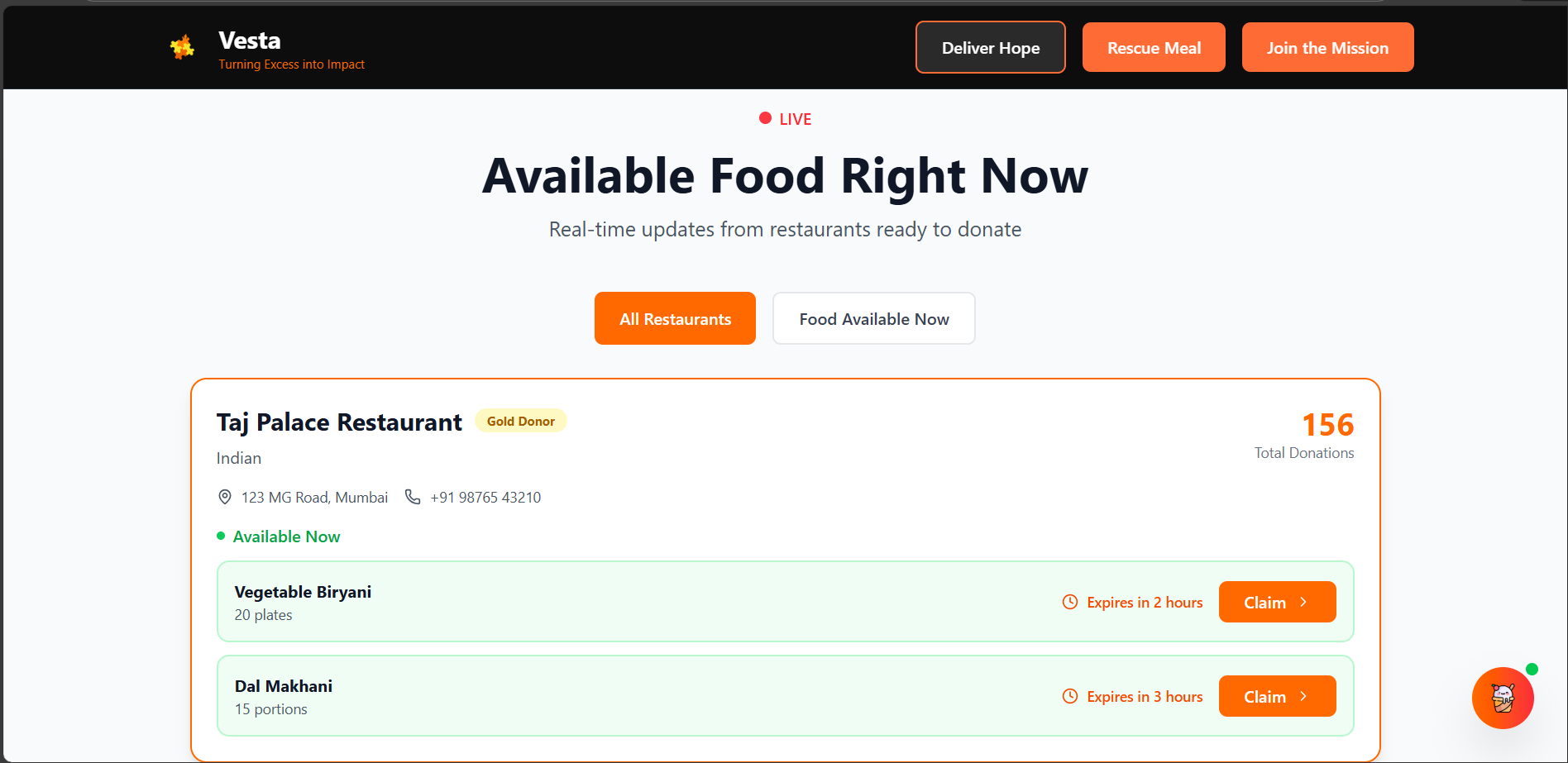
A real-time food availability dashboard that connects surplus meals with immediate demand before expiration.
-
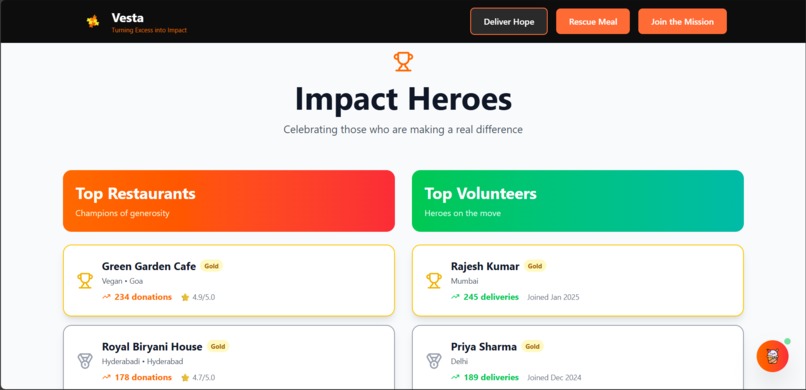
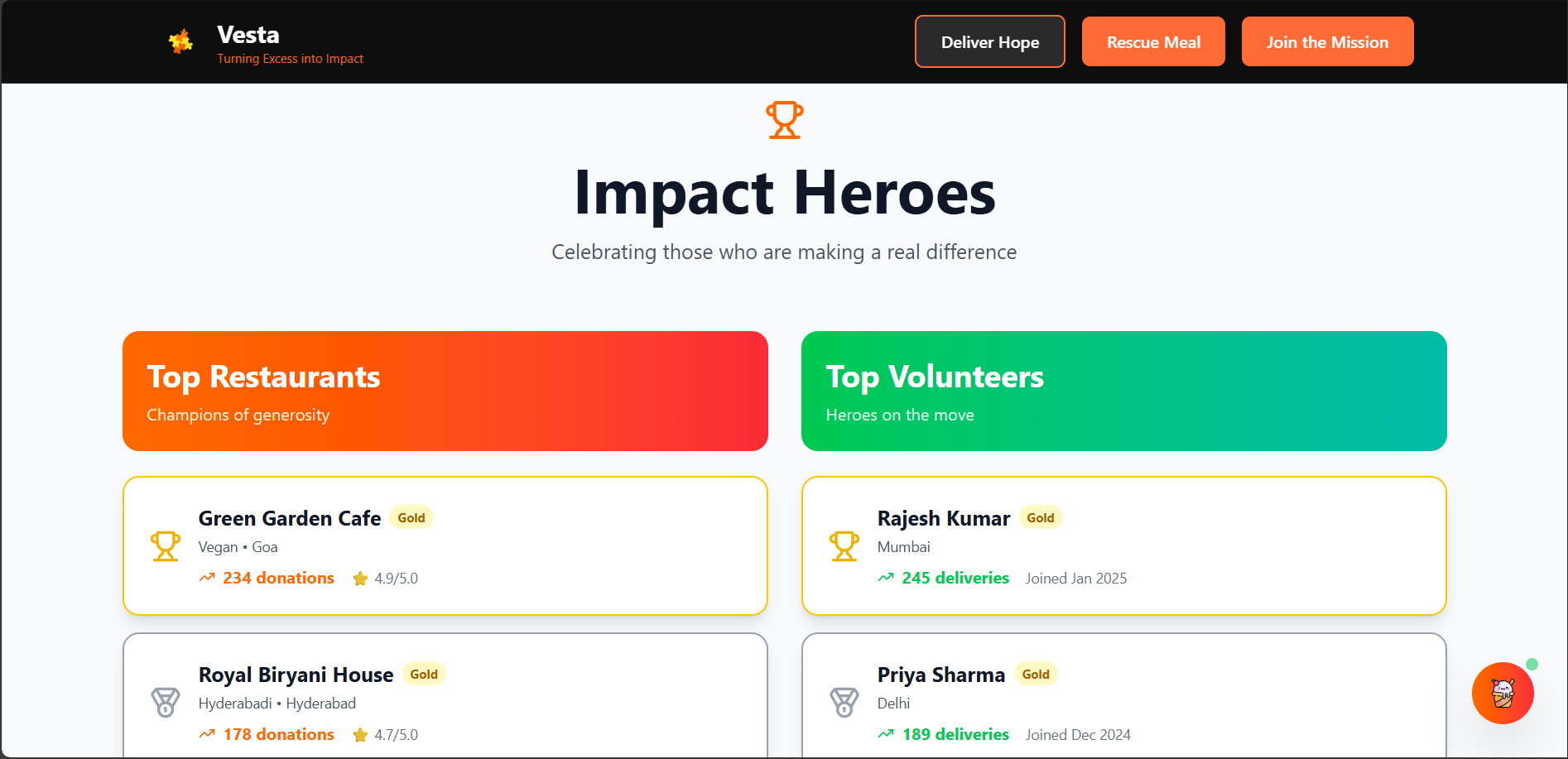
Recognizing the restaurants and volunteers driving real, measurable impact
-
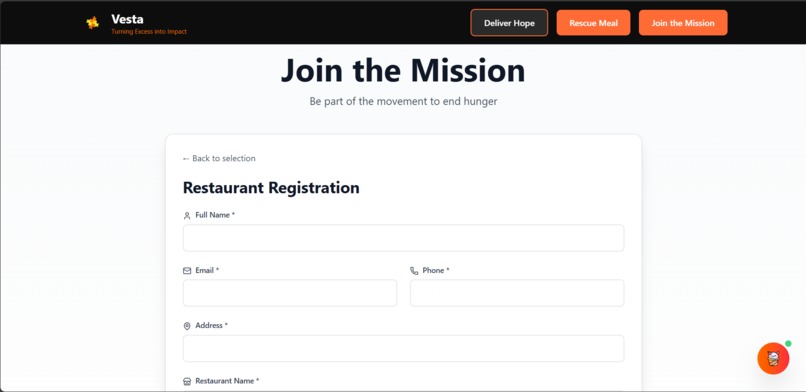
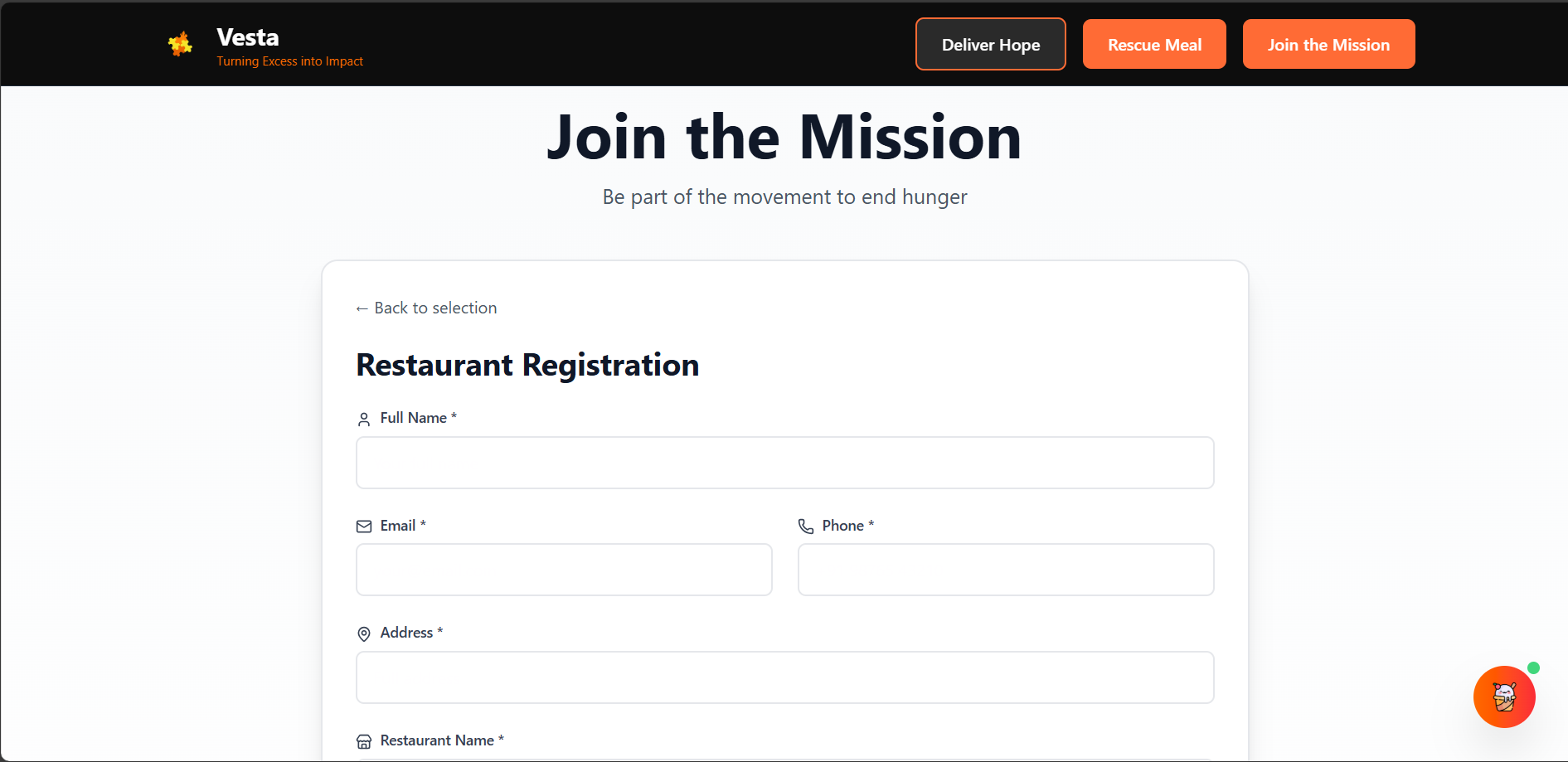
A frictionless onboarding flow designed to turn surplus into service in minutes
-
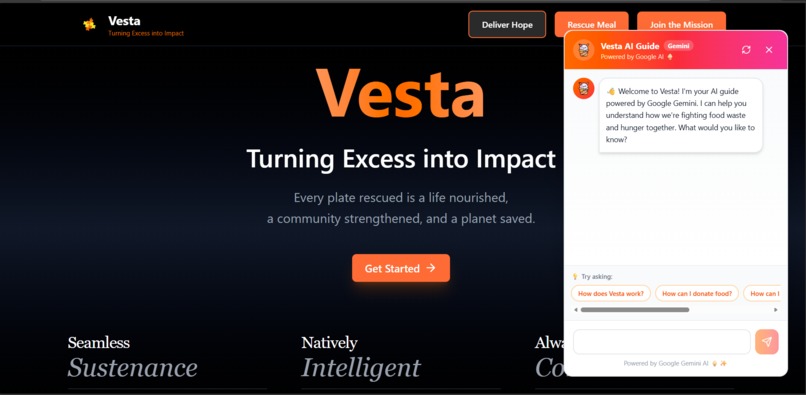
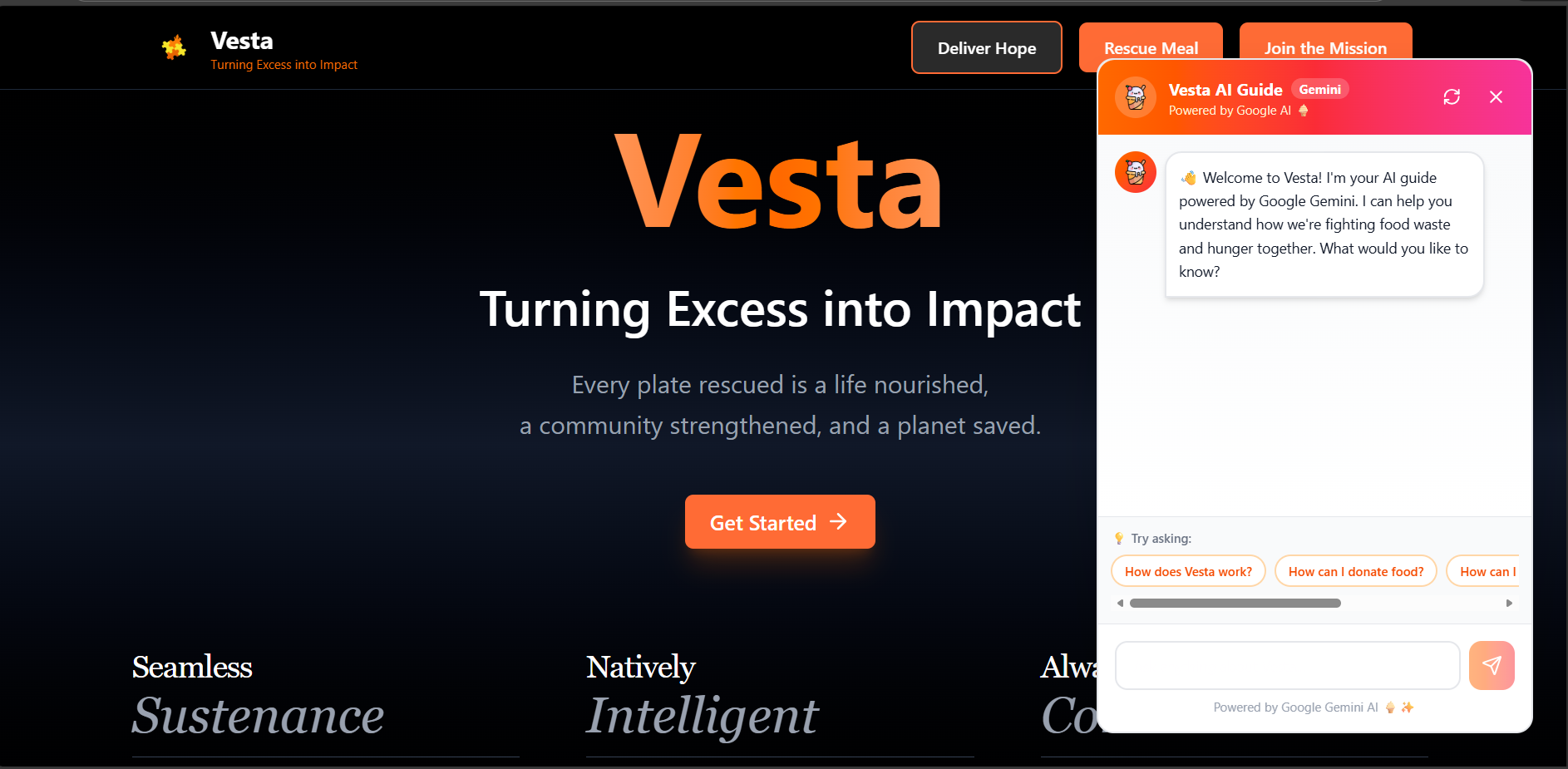
Vesta AI — an always-on guide that explains, assists, and accelerates food rescue.
-
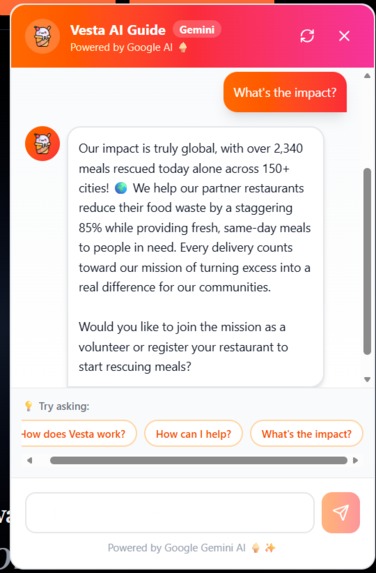
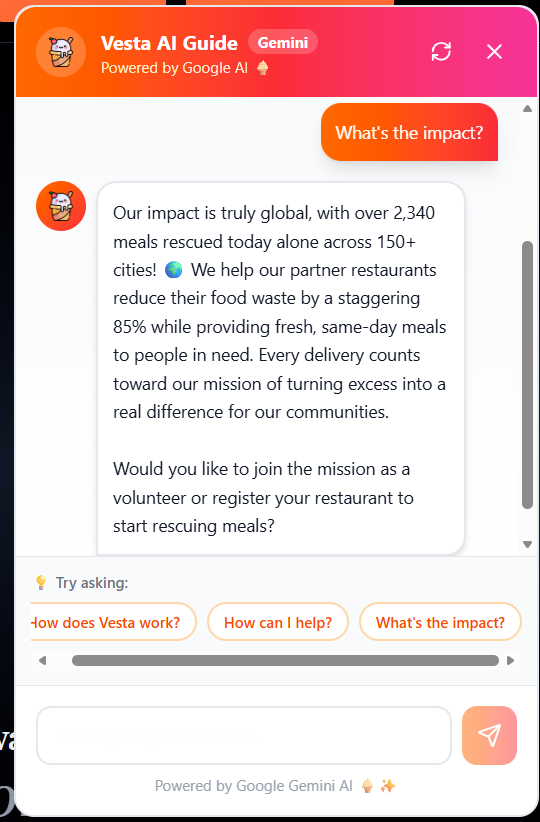
An AI assistant that translates real-time data into transparent social impact.
Inspiration
The genesis of Vesta came from a staggering realization: hunger in the modern world is not a scarcity problem, but a logistics and connection failure. While billions of tons of perfectly edible food are discarded annually, our neighbors continue to suffer from food insecurity. I chose the name Vesta, after the Roman goddess of the hearth and home, because I wanted to build a digital fire that provides warmth and sustenance to the community. I viewed this problem as a giant, fragmented puzzle where the pieces—the restaurants with surplus, the volunteers with time, and the individuals with need—were all present but lacked a central system to click them into place. My goal was to create the final piece of that puzzle.
What it does
Vesta acts as a real-time "Rescue Engine" that synchronizes the movement of surplus food across an urban landscape. AI-Powered Verification: To ensure safety and quality, the app uses an AI vision module that validates the condition of food through a photo-handshake before it ever leaves the kitchen.
-Geospatial Logistics: We utilize a "Hunger Point" mapping system that anchors real-time needs on a decentralized map, allowing volunteers to see exactly where their impact is needed most.
-The Karma Protocol: To keep the ecosystem alive, Vesta gamifies the experience by rewarding volunteers with "Karma Credits," which represent verified social impact and CO2 reduction.
-Transparent Impact: Through a sleek Bento Grid dashboard, users see their contribution not just as a number, but as a completed piece of a larger community puzzle.
How we built it
I engineered Vesta with a focus on speed, scalability, and a premium "editorial" aesthetic that separates it from standard charity apps.
1.Frontend Architecture: Built using React and Tailwind CSS, I implemented a high-contrast "Dark Mode" theme to make the "Ember Orange" brand colors pop like a literal flame against the charcoal background.
2.Design Language: I moved away from cluttered interfaces to a minimalist, typography-heavy design inspired by modern SaaS giants. By using Serif fonts like Playfair Display, I gave the platform a sense of established authority and trust.
3.Logic Layer: The core of the app is a matching algorithm that calculates the most efficient route between a food source and a destination, ensuring that perishables are delivered within a critical 30-minute window.
4.Visual Consistency: I utilized Lucide-React for sharp, functional iconography and custom-designed puzzle metaphors to reinforce the brand identity throughout the user journey.
Challenges we ran into
The most significant challenge was solving the "Trust Gap" between donors and recipients. I had to figure out how to ensure food safety in a decentralized environment without adding friction for the busy restaurant owners. I overcame this by designing an Action-to-Impact" logic where the UI guides the user through a seamless verification process. Another hurdle was managing real-time geospatial data with low latency; I had to optimize how the map renders "active pulses" so that the user feels like they are looking at a living, breathing city in real-time rather than a static database.
Accomplishments that we're proud of
I am incredibly proud of elevating the branding of a social-good project to the level of a high-end tech startup. Many hackathon projects in this space feel like "projects," but Vesta feels like a movement. I successfully integrated the puzzle-piece metaphor into every corner of the app, from the loading animations to the impact stats. The "Click Moment"—when a volunteer claims a meal and the puzzle piece locks into place—is a piece of micro-interaction design that I believe defines the entire user experience.
What we learned
Building Vesta taught me that technology is only as good as the empathy behind it. I learned that good design can actually incentivize kindness. If you make the act of helping others feel premium, fast, and rewarding, people will show up. On the technical side, I deepened my knowledge of state management for real-time applications and learned how to balance high-fidelity visuals with performance optimization to ensure the app stays "Globally Fast" even on slower networks.
What's next for Vesta
-The Vesta Protocol: My next step is to move the "Handshake" verification onto a blockchain-based ledger to create a 100% immutable record of every meal saved.
-Predictive Rescue: I want to implement machine learning models that predict when a restaurant will have surplus based on historical sales data, allowing volunteers to be staged before the waste even happens.
-Global Expansion: I plan to scale our "Coverage" pills to transform Vesta from a local rescue tool into a worldwide nutrition infrastructure. Vesta is just getting started, and the fire is only growing brighter.


Log in or sign up for Devpost to join the conversation.