
Inspiration
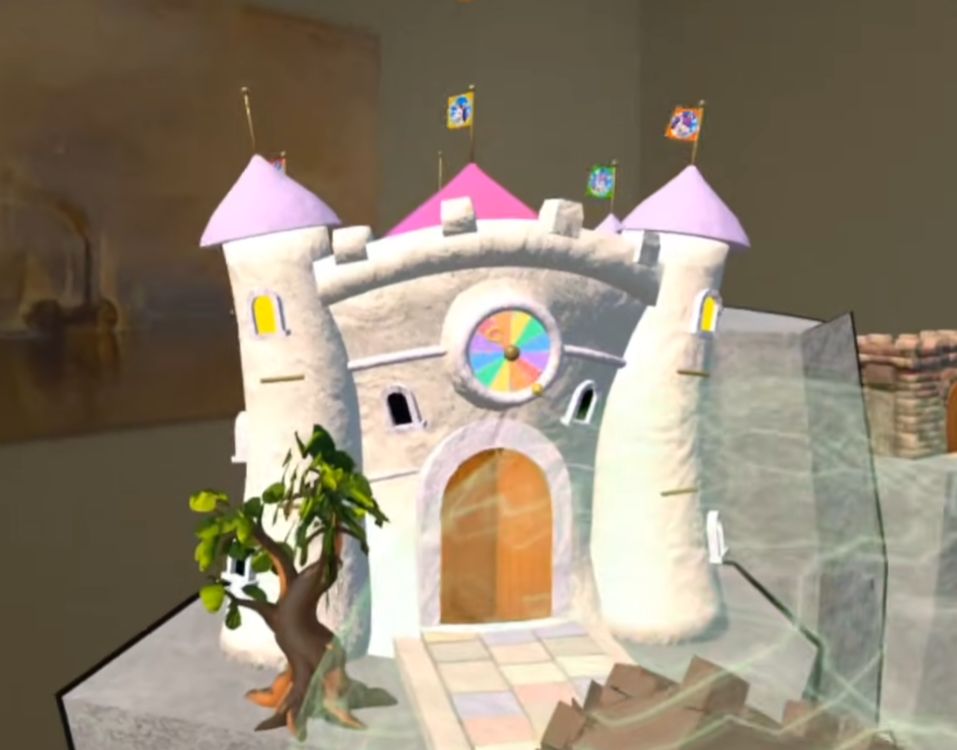
I wanted to make a game with two design goals. The player's own room has to be part of the game, not just a backdrop. And the core gameplay should work without virtual or actual buttons: no controller, nothing to press — only hands, gestures and a spark of magic.
Very Stupid Unicorns (V.S.U.) is the result: a mixed reality puzzle game for Meta Quest 3, played entirely with bare hands.
What it does
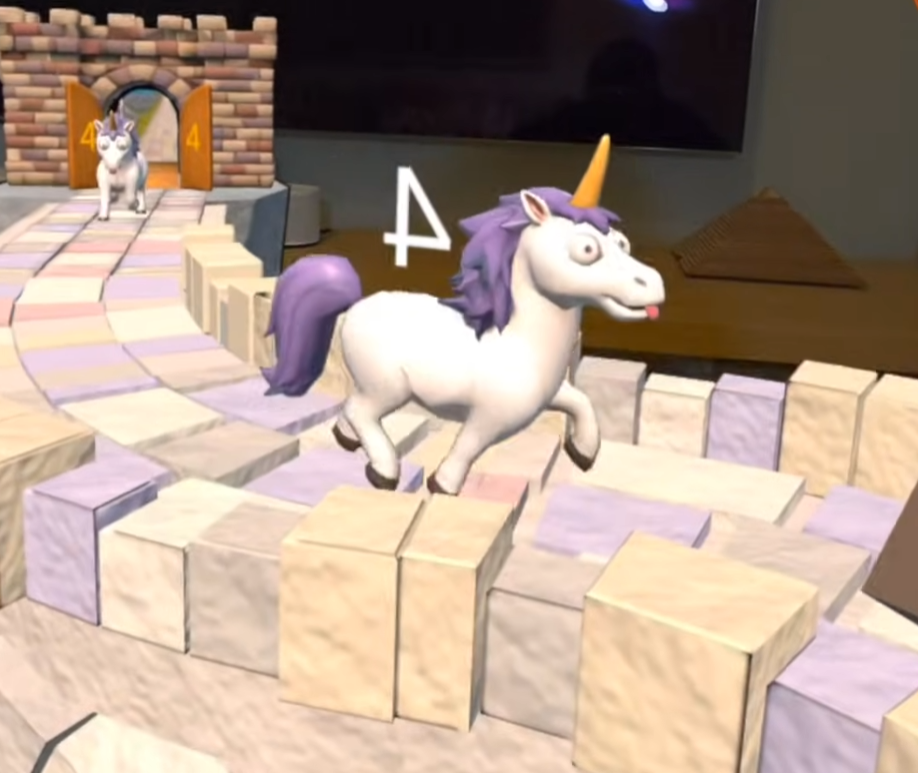
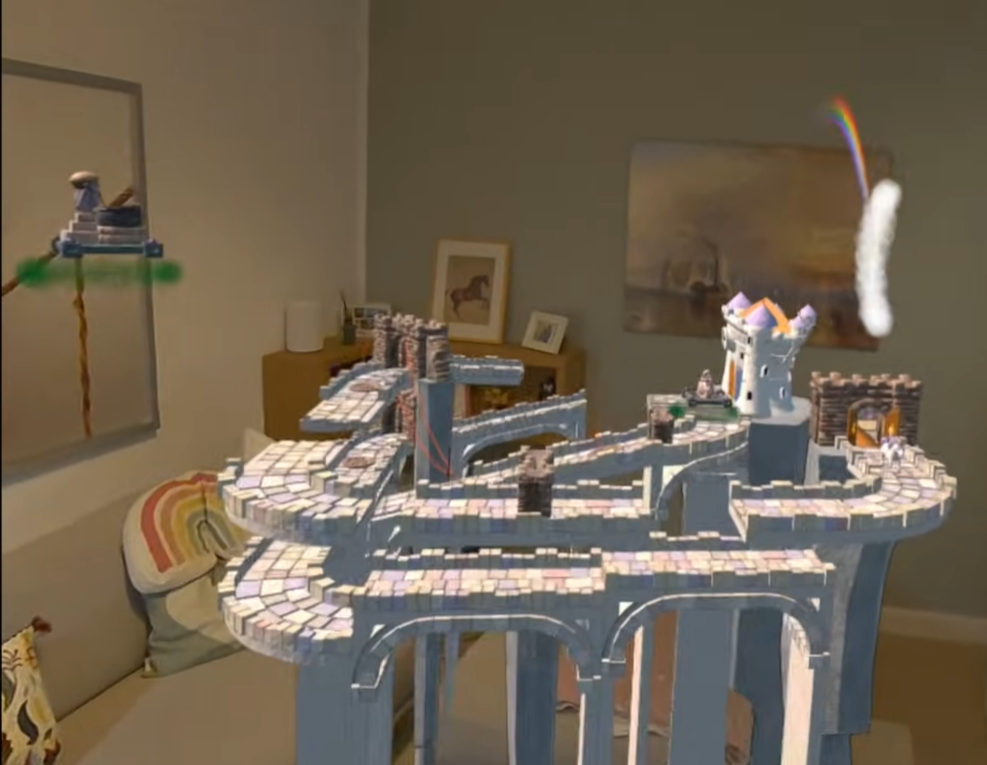
A landscape appears in your room. And a group of unicorns stumbles into this diorama. There are only a few left in the world, and all they want is to reach the safety of the next castle on the journey to their ancient breeding grounds. But they are not very good at it, and need your help. They slip, tumble and march straight into trouble, all while strange enemies are trying to stop them.
You can't steer the unicorns. Your only tools are the Magical Spheres that you conjure from Rainbow Energy.
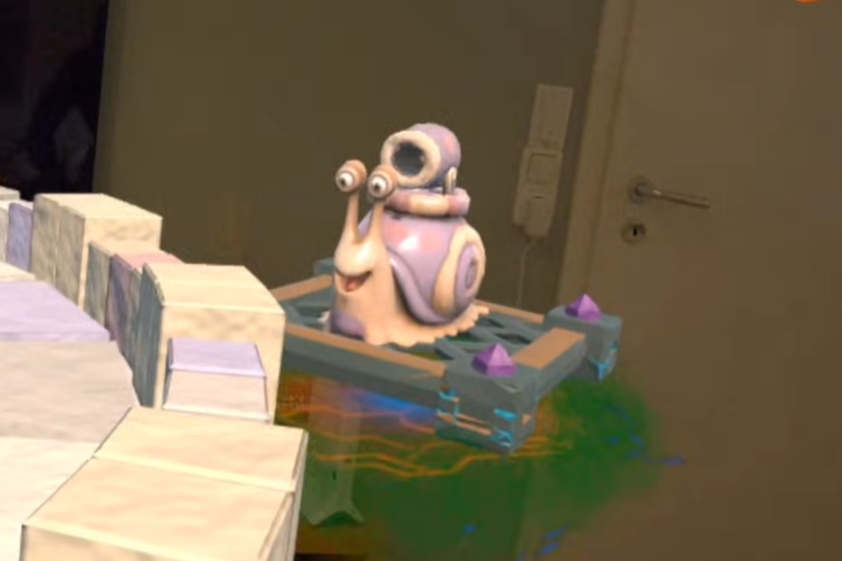
You collect Rainbow Energy by touching floating rifts that appear in your room (although they sometimes hide behind furniture), then shape it into Spheres with your hands. Each Sphere casts its own kind of magic on whatever it surrounds: shrink a unicorn, speed it up, let it float, shield it from danger, catch it in a bubble and more. The puzzle is placing the right Sphere, or even a few overlapping ones, in the right spot at the right moment.
Collect, form, place, help: that is the core loop of the game.
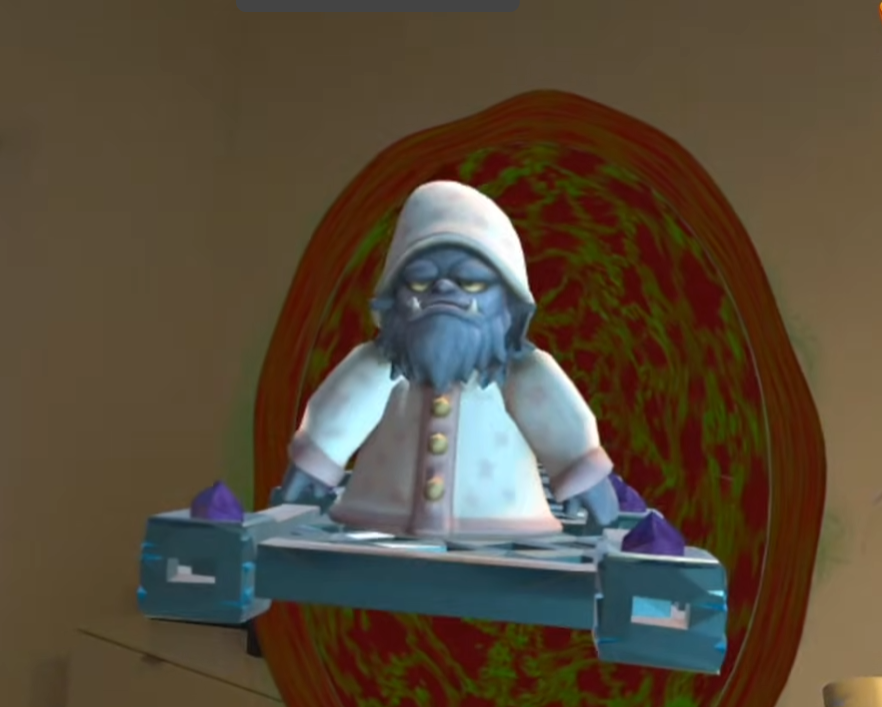
Your room matters. The level finds its own free spot, clear of your walls and furniture, and the game knows where your floor, walls and ceiling are. It uses this information to stage its drama: evil rifts tear open in your real ceiling and walls, enemies are lowered from above, burst through tears in your wall, monsters fly in from behind you carrying rocks. And the villain watches it all from your ceiling. Real objects hide virtual ones, from rifts to unicorns, through environment depth (more on that below). All of this works in roomscale and in seated mode, where the level scales down and sits right in front of you.
This competition build is not the final game. It has ten levels, a tutorial and three save slots, and more is planned.
How I built it
I started building V.S.U. on February 13, 2026. The first month was tools and research: how environment depth and mixed reality really behave, and how a level can live in a room. A greybox level was playable at the end of May. Meanwhile I designed and built the first models, animations, concept art and a design document. In August I had a test level worth looking at, and the game's physics were mostly finished.
Since September I have developed a new hand control system based on finger proximity to virtual objects, the heart of this competition build. I also designed nine complete levels that showcase most of the planned game systems. For the competition I brought forward the seated mode, which was already planned.
Built with Blender, Unity, C#, Meta XR SDK, Interaction SDK, MRUK and OpenXR.
Challenges I ran into
- Enemies that come out of real walls and ceilings. The Quest's depth sensing is far less accurate on ceilings than on walls (I measured about 30 cm versus about 3 cm, depending on lighting), so the surface itself would hide the monster. My solution: distance-aware environment depth shaders that switch modes based on how close an enemy is to the surface and how far you are from it. Near the surface they ignore the wall or ceiling but still let your hand hide the monster. Once it has left the surface, normal environment depth takes over again.
- Hand controls that are reliable and precise enough for a puzzle game, without any physical feedback. My solution: a hysteresis and time-lock system that filters out tracking jitter.
- Keeping the room-aware parts and the drama they provide alive in seated mode, when the level shrinks and sits right in front of you. My solution: the level still reads your floor, walls and ceiling and only falls back to defaults where the room scan can't help. Physics scales with the miniature, so it behaves like the same world, and rifts move within reach of a seated player.
Accomplishments that I'm proud of
- A precise hands-only control scheme without buttons in the core gameplay.
- A miniature world with scale-true physics.
- More than 20 custom environment depth shaders, so unicorns, enemies, Spheres, rifts and even the glove can be hidden by your furniture or your hand.
- A complete game loop with ten levels and a tutorial, playable standing or seated, built solo in under ten months and getting everything I planned done a day early :)
What I learned
Mixed reality works best when the room is a design input from day one, not an add-on to a VR game. And a control scheme that fits the game's world is worth more than a familiar one.
For judges: how to play
- Quest 3 family. Put the controllers down, everything works with hands.
- Complete Space Setup on your headset beforehand and allow spatial data when asked.
- Please keep the headset on during your first session. Taking it off can pause environment depth updates.
- Choose Seated or Roomscale. New Game starts the tutorial.
Known limitations
- Player height is sometimes not remembered correctly. Workaround: reposition the level with the placement Sphere, that is present at level start (except the Tutorial) or can be toggled in the pause menu
- After taking the headset off and putting it back on, environment depth may stop updating, so virtual objects are no longer hidden behind real ones.
- Tested on Quest 3.
What's next for Very Stupid Unicorns
All levels, one more Sphere effect, the story, unicorn models, more animations, music and polish, then a release on the Meta Horizon Store (target: Q2 2027).


