-
-

-
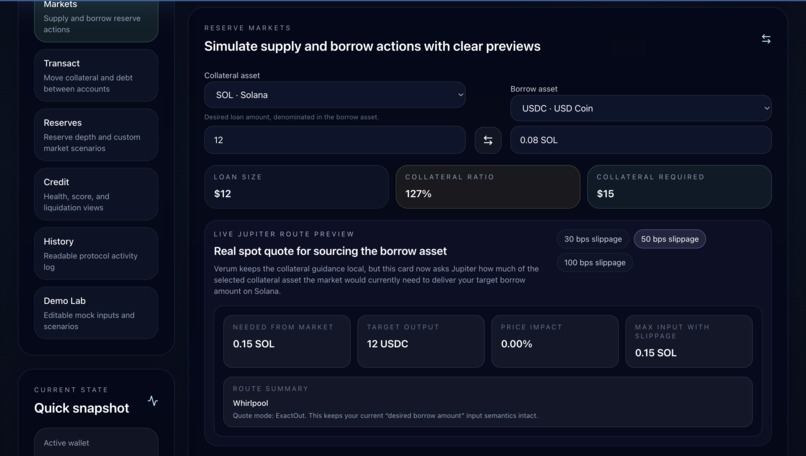
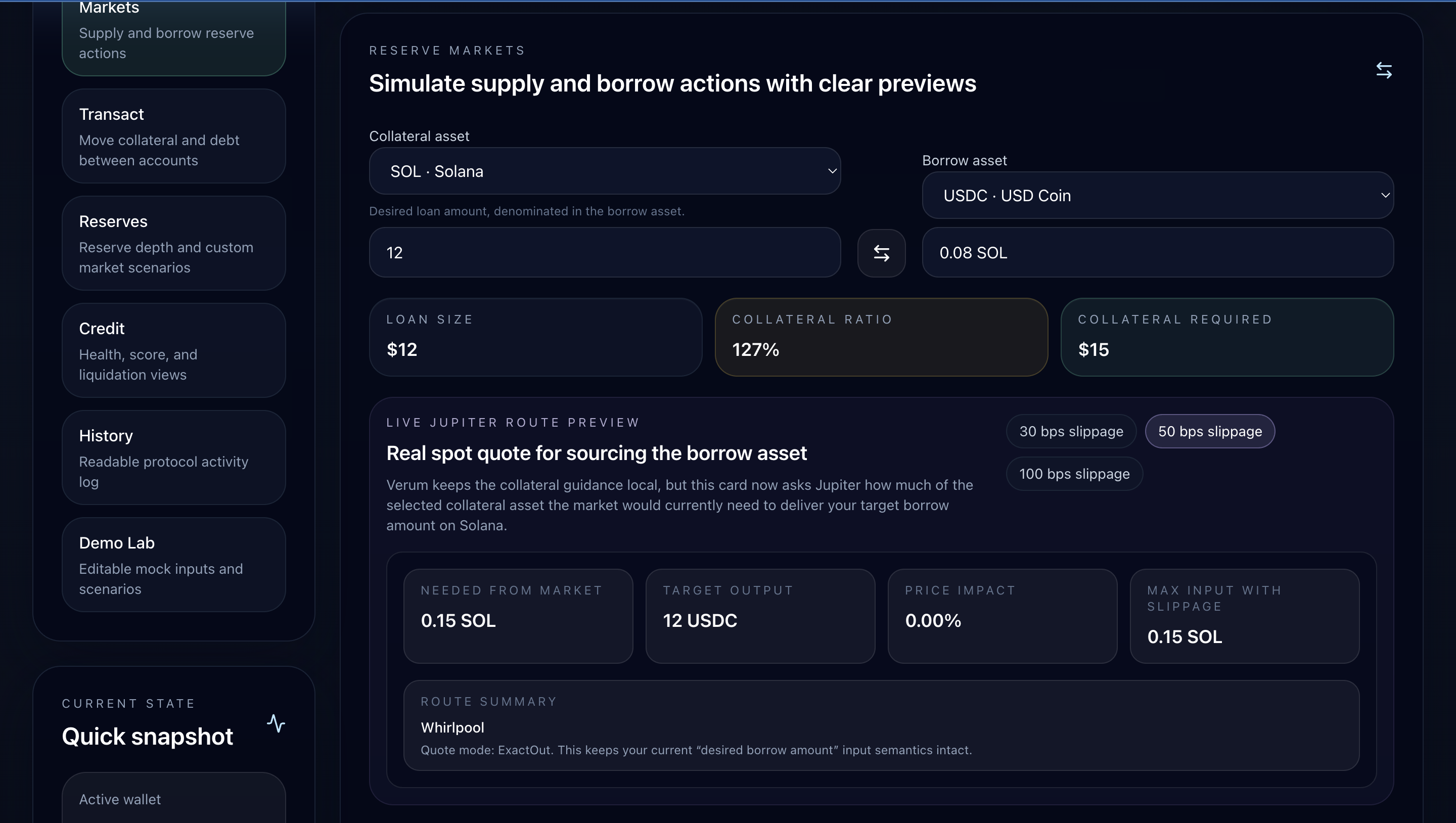
Buy on real Solana Markets
-
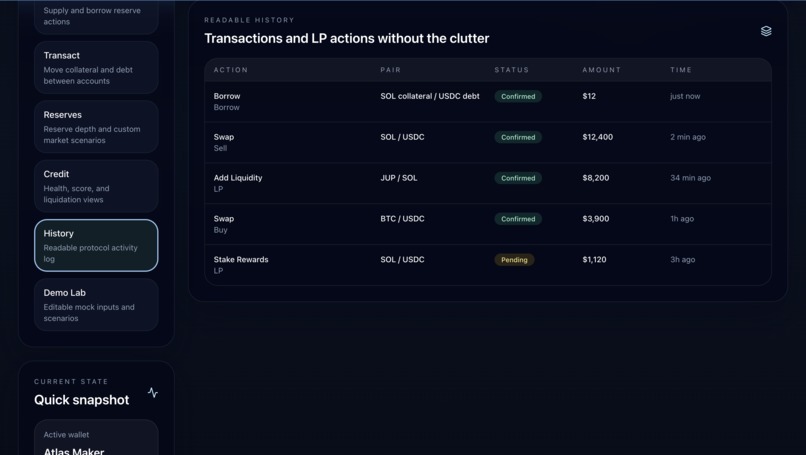
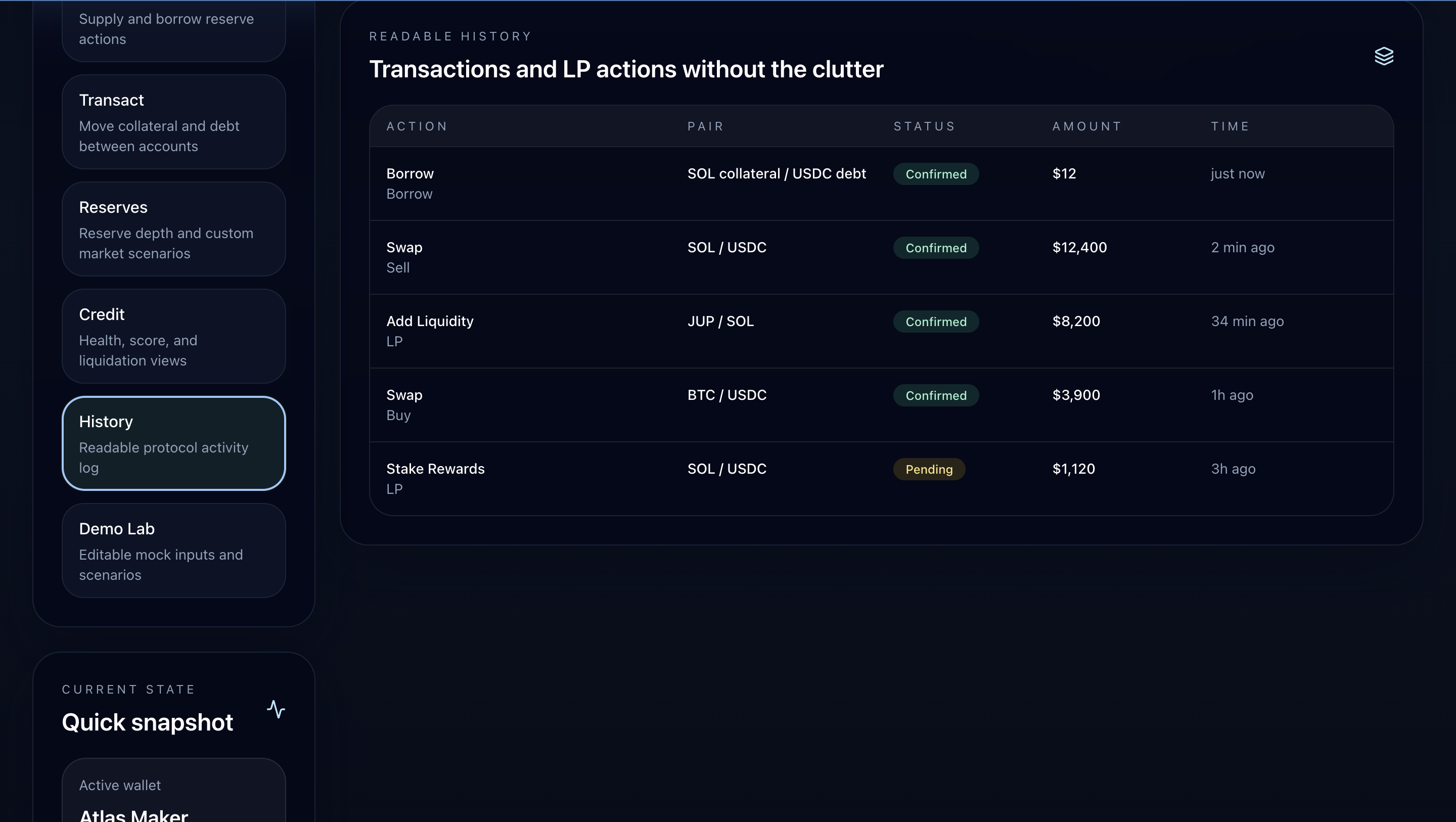
Transaction History
-
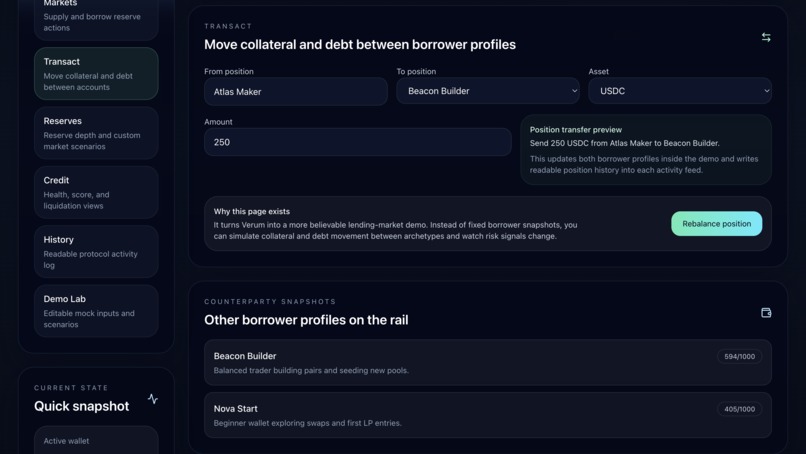
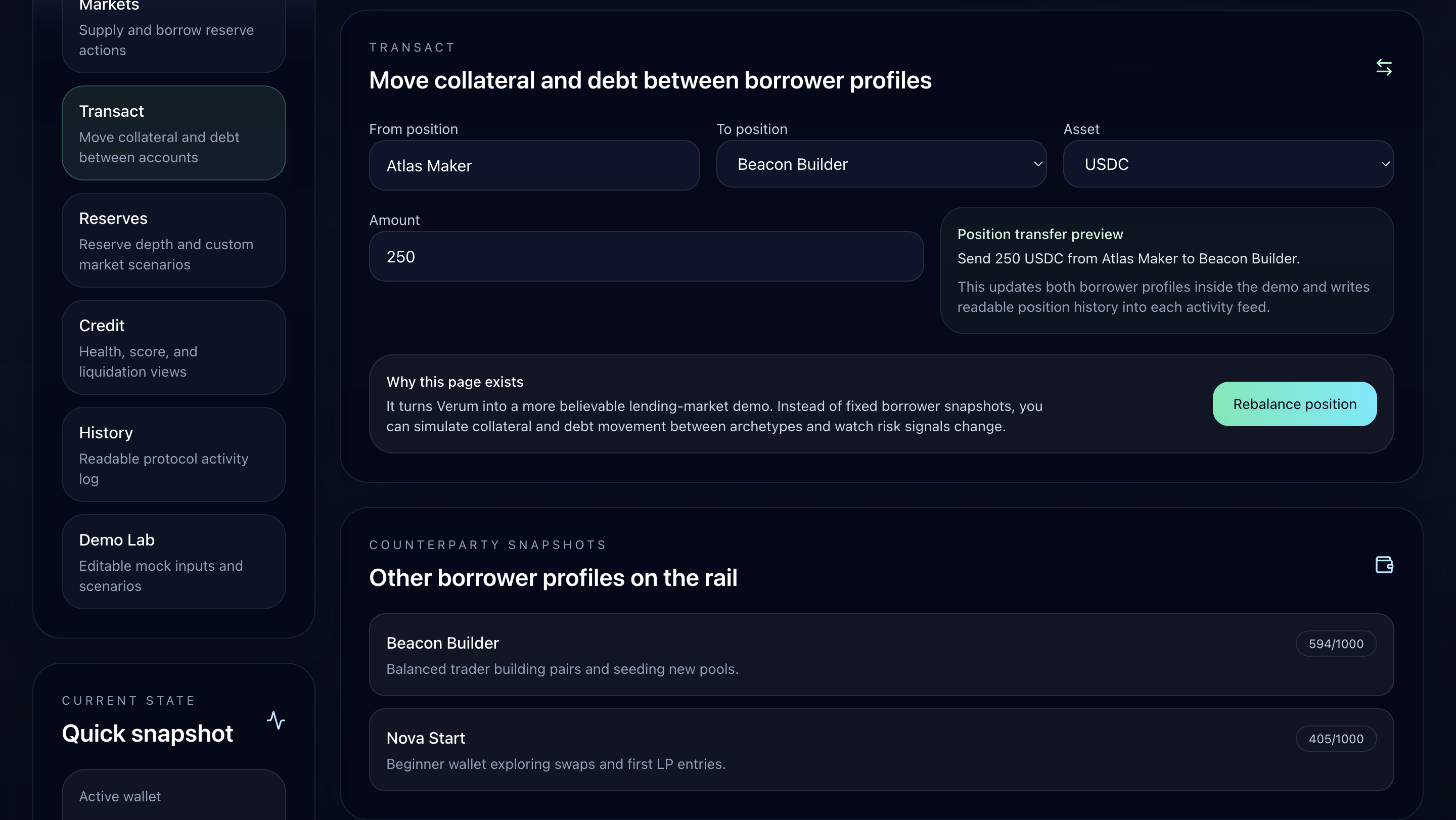
Transaction between wallets
-
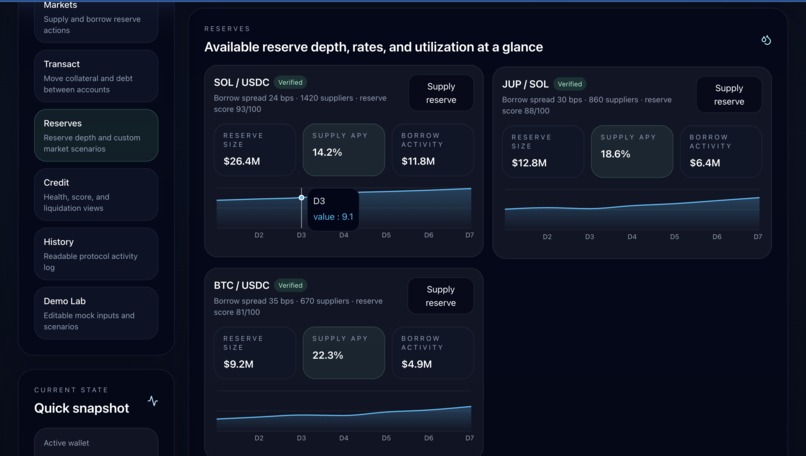
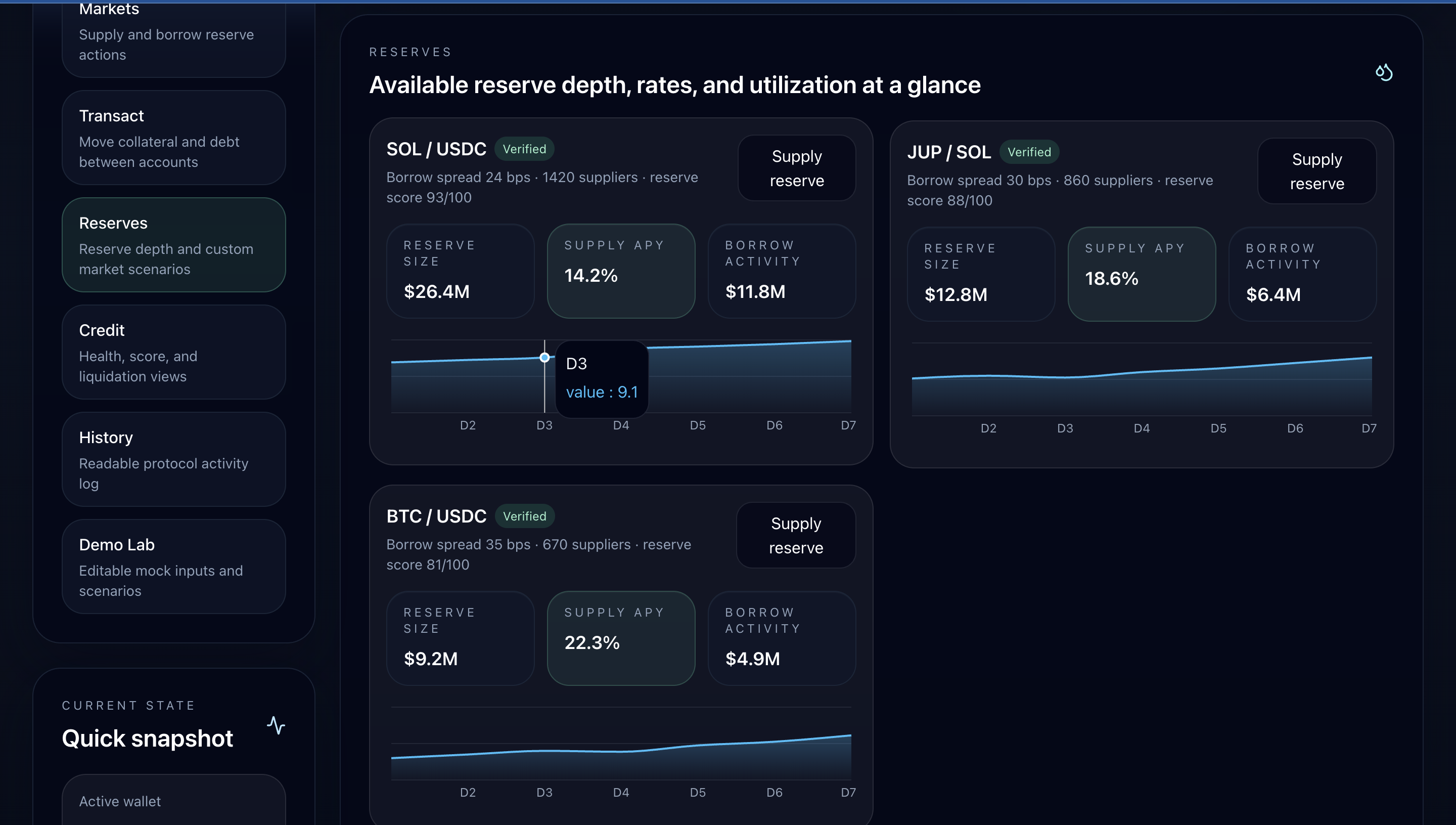
Asset Pool
-
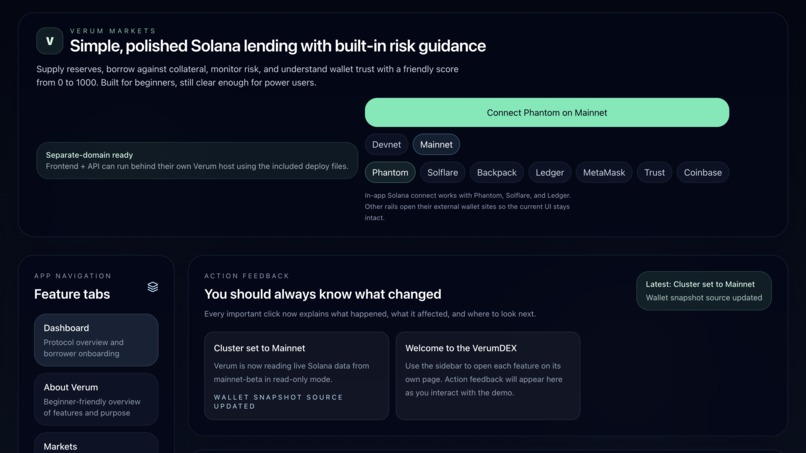
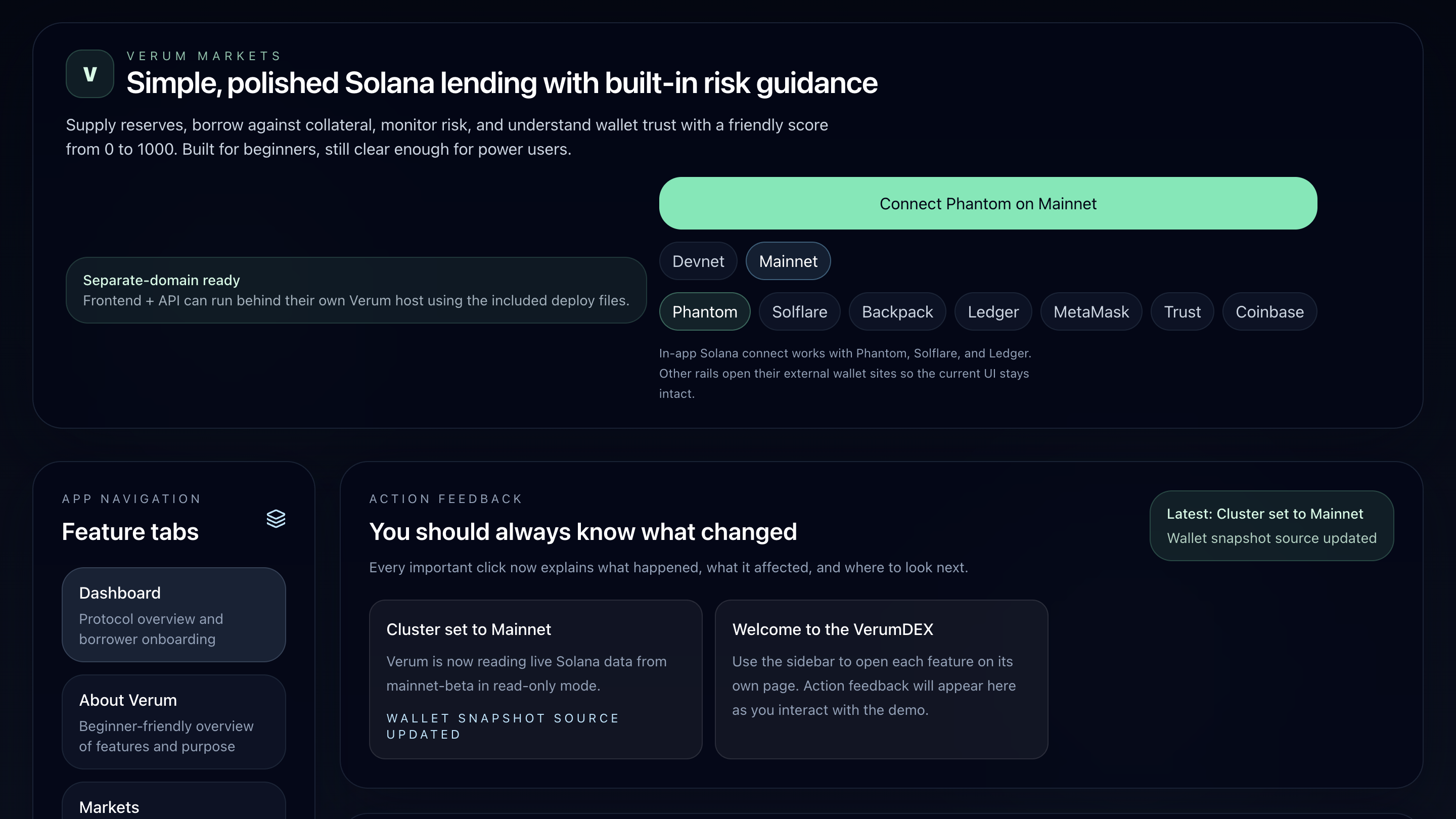
Home Page
-
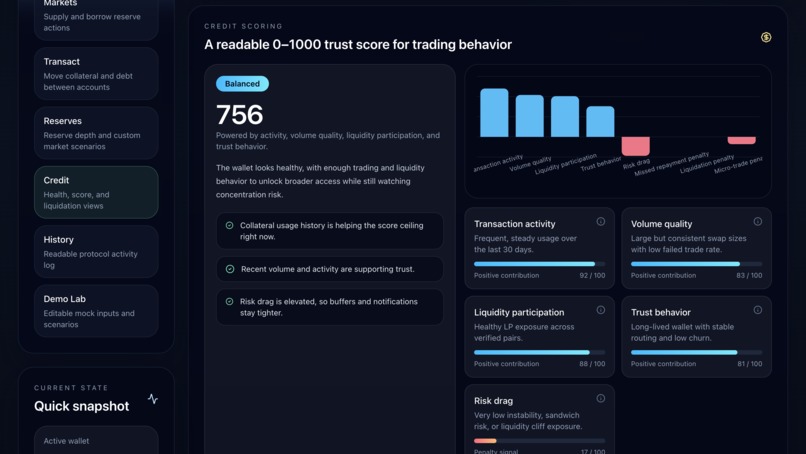
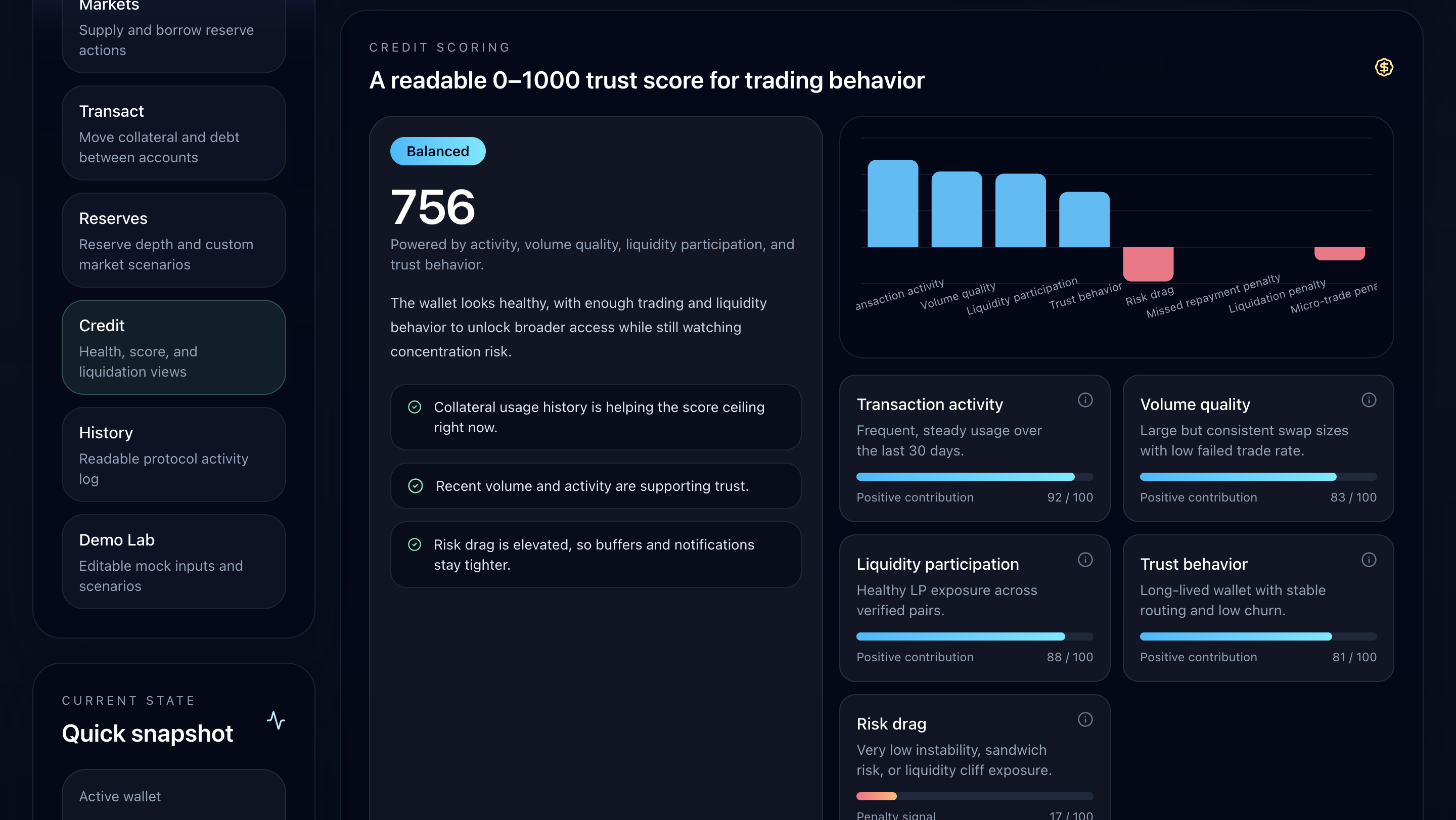
Risk Tab

Inspiration
Most DeFi lending protocols treat every wallet the same. Whether you've been an active, responsible participant for two years or just connected ten minutes ago, you post the same collateral, get the same terms, and get zero feedback on why. That's the overcollateralization problem; it's a blunt workaround for a trust problem the protocol isn't actually trying to solve. We wanted to build something that actually thought about the borrower.
What it does
Verum Markets is a Solana lending interface with built-in risk guidance and a wallet trust score from 0 to 1000. You supply reserves, borrow against collateral, and watch your terms shift based on your actual on-chain behavior, trade volume, liquidity participation, repayment history, and more. Higher score, lower collateral ratio. It's designed to be readable by a beginner and still useful to someone who knows what a health factor is.
How we built it
We built the frontend in React with a Jeton-inspired command center layout, and each core action (supply, borrow, transact, monitor) lives on its own page accessible from the sidebar. The credit scoring model pulls from several behavioral signals: transaction cadence, average trade size, LP activity, wallet age, and penalty inputs like liquidations or missed repayments. The market simulation calculates required collateral in real time from the user's score. Wallet (MetaMask, Phantom, Solflare, Trust, Ledger) integration handles connection state and provides a devnet balance preview for live-connected wallets.
Challenges we ran into
Getting the collateral math to feel intuitive was harder than expected. The ratio shifts as a continuous function of score, not a step table, so we had to design the UI to communicate that relationship without overwhelming someone who just wants to borrow 12 USDC. We also had to balance demo flexibility, letting users switch between borrower archetypes and tweak trust signals, without making the app feel like a spreadsheet.
Accomplishments that we're proud of
The credit score breakdown actually explains itself. Every contributing factor shows a readable label, a score out of 100, and a plain-English interpretation of what it means for your current terms. That took a lot of iteration to get right. We're also happy with the action feedback system; every meaningful interaction surfaces a short explanation of what changed and where to look next, which keeps the experience from feeling like a black box.
What we learned
DeFi tooling fails most users, not because it's technically wrong, but because it never explains itself. The mental model for lending, collateral, and health scores exists; Aave proved that, but the interface layer usually assumes you already get it. Building Verum taught us how much UX work goes into making protocol logic feel like a product.
What's next for Verum
Live protocol integration on Solana devnet, then mainnet. We want to replace the simulated scoring with actual on-chain data and connect it to real reserve markets. The longer-term goal is a credit layer that other protocols can read, so a borrower's Verum score follows them across the ecosystem rather than resetting at every new app.


Log in or sign up for Devpost to join the conversation.