Inspiration
We chose this hackathon challenge because we were inspired by the ideas in Atomic Habits — particularly how small, consistent actions compound into meaningful change. The book highlights how environment and cues shape behaviour, and it made us think about how reminder systems could better support habit-building rather than simply interrupting users.
VERSO was born from that reflection and a common frustration: most reminder systems interrupt instead of adapt. Traditional task and notification apps tend to be rigid, forcing users to work around the system instead of supporting how people naturally work. We wanted to rethink reminders as something responsive, intelligent, and frictionless — a tool that reinforces positive routines while staying out of the way.
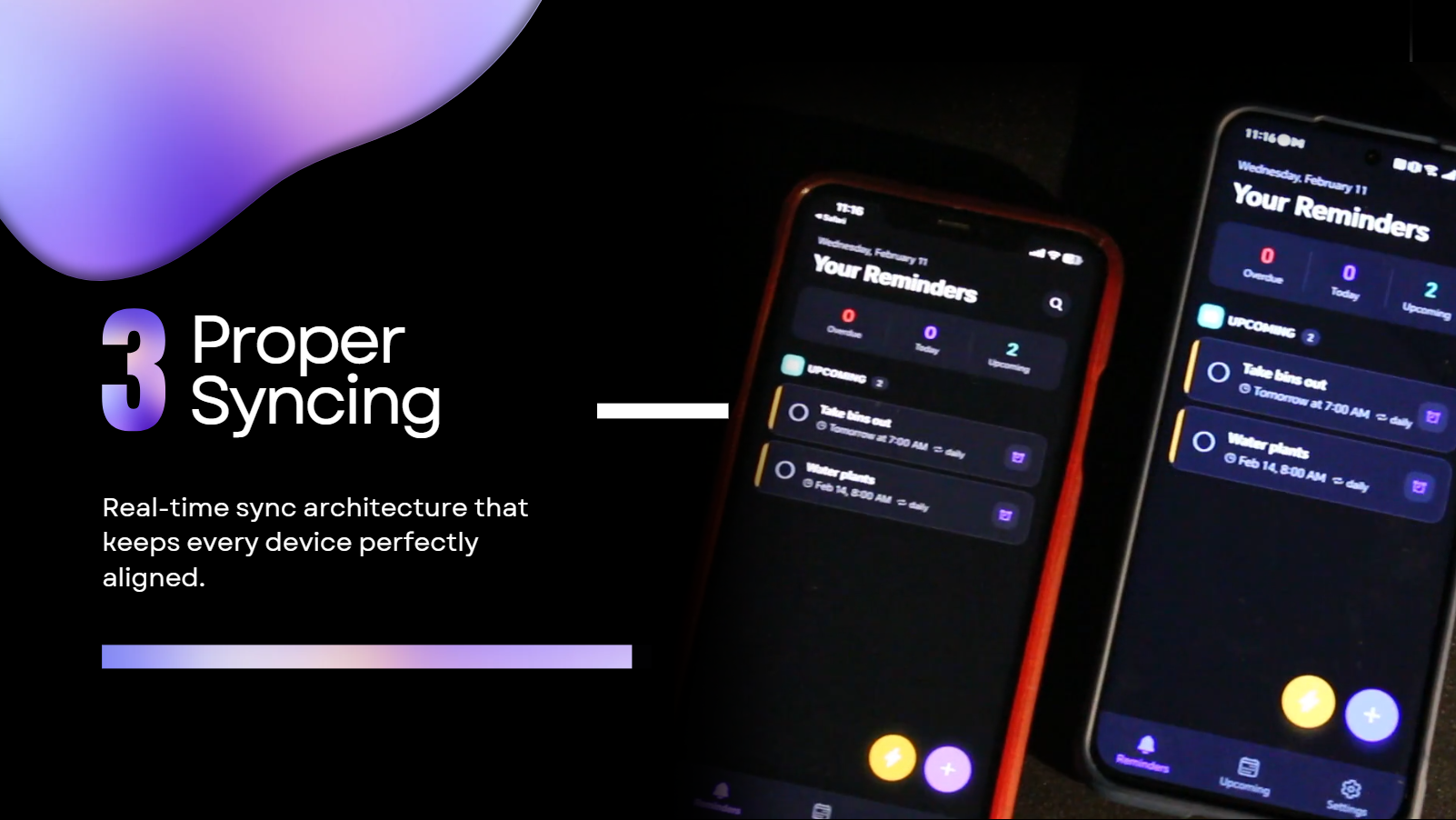
Another key motivation was seamless cross-platform use. Modern productivity doesn’t live on a single device, so we set out to build reminders that stay perfectly in sync, allowing users to move between systems without losing context or momentum.
What it does
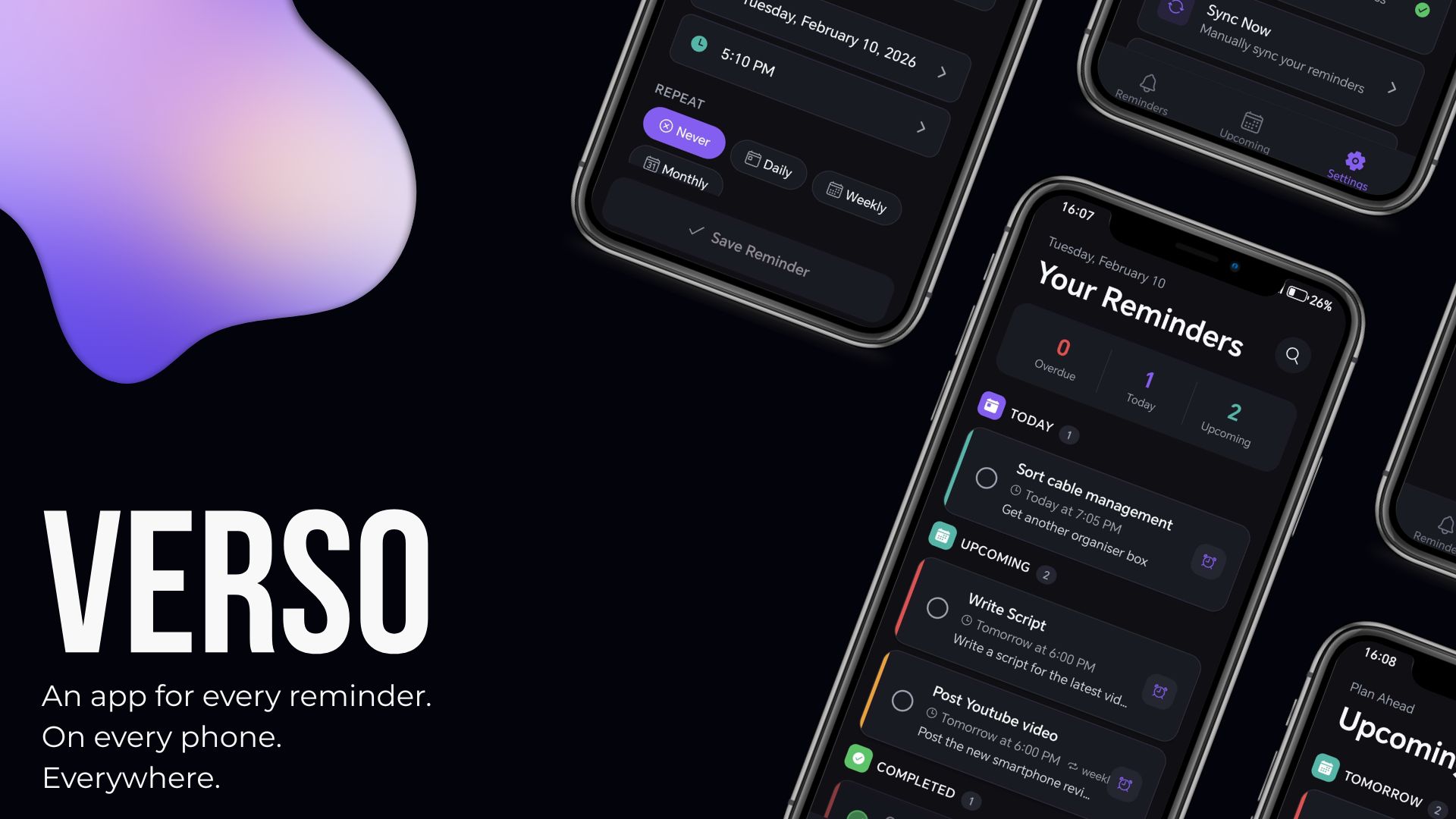
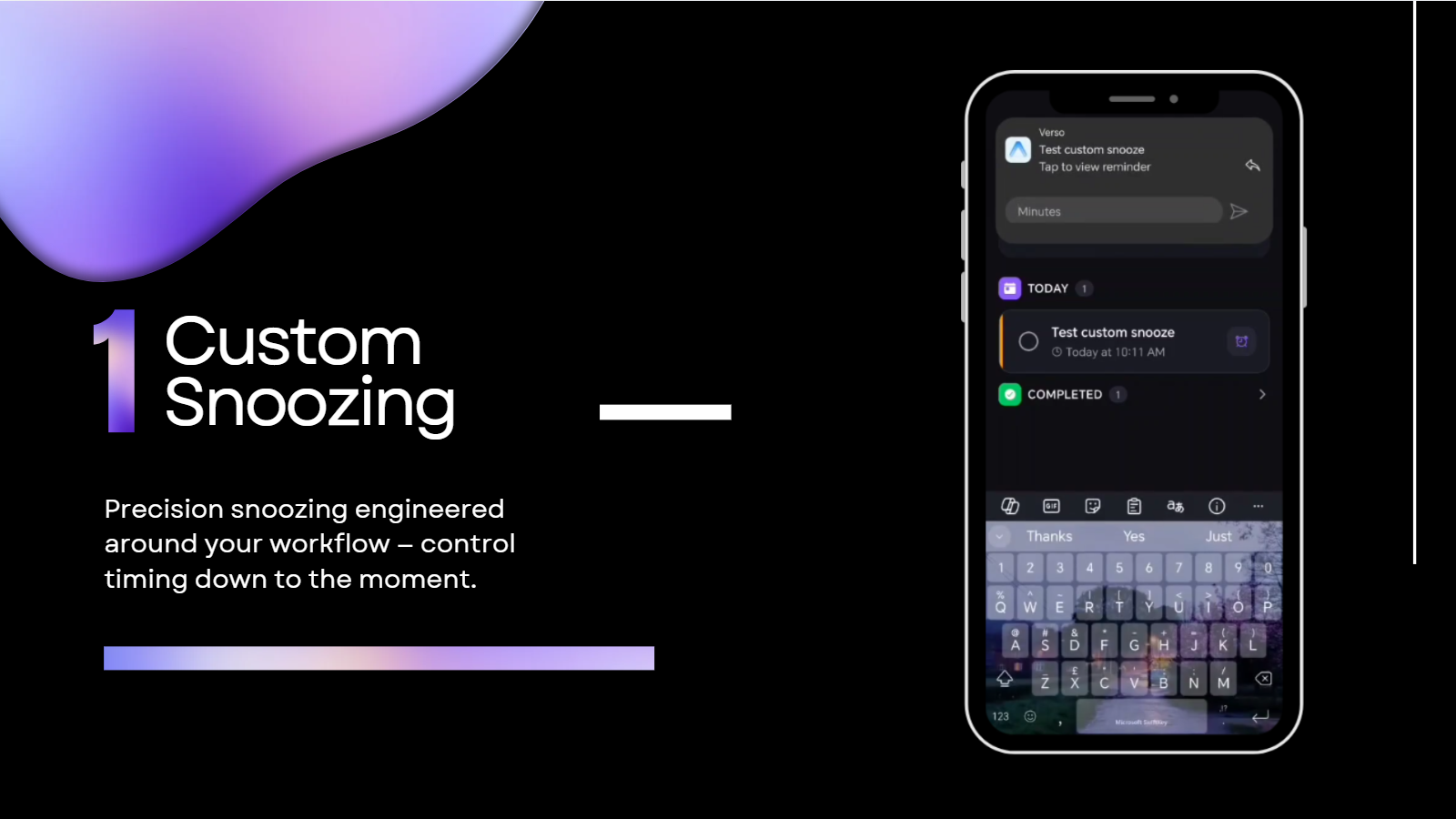
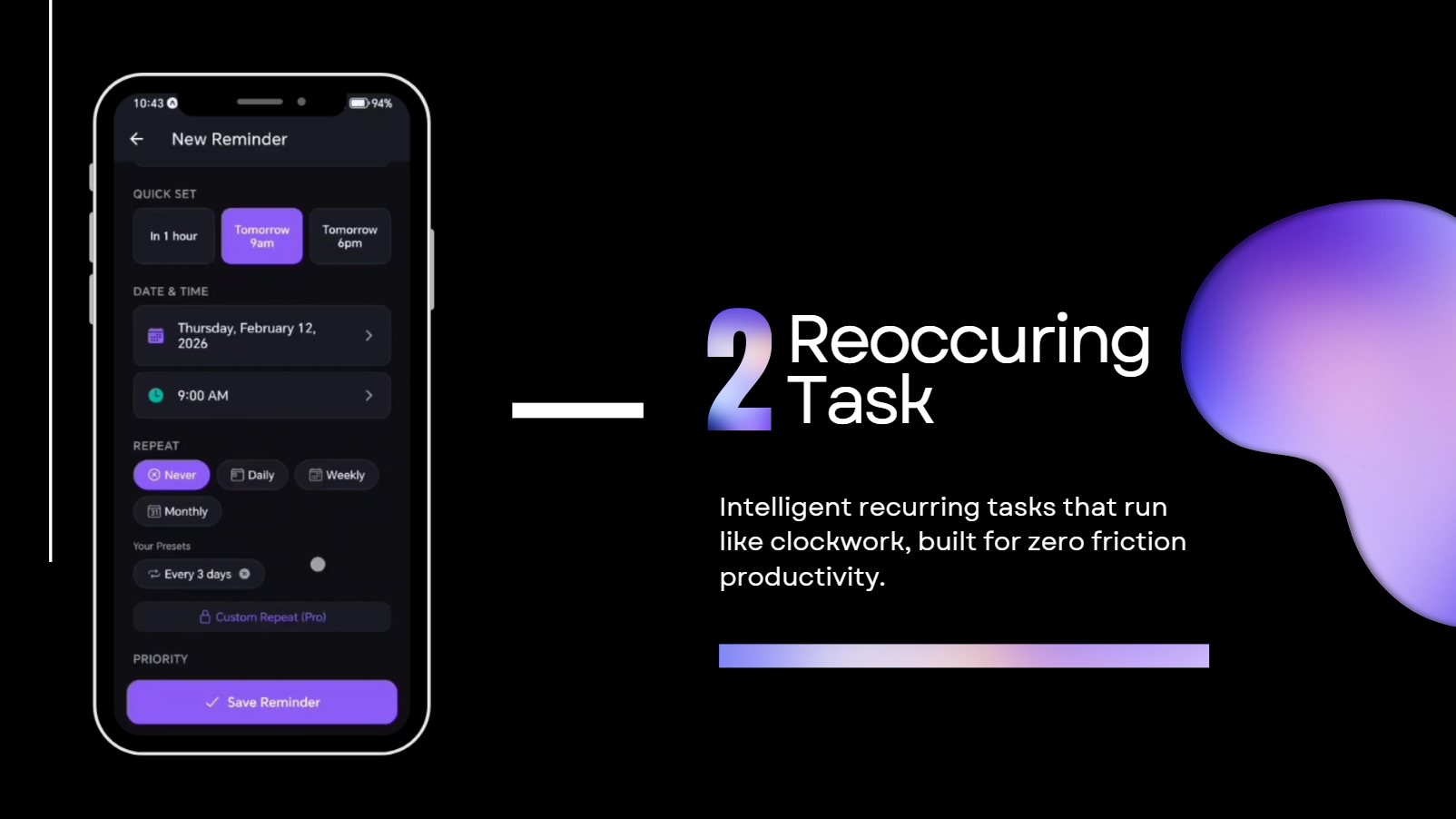
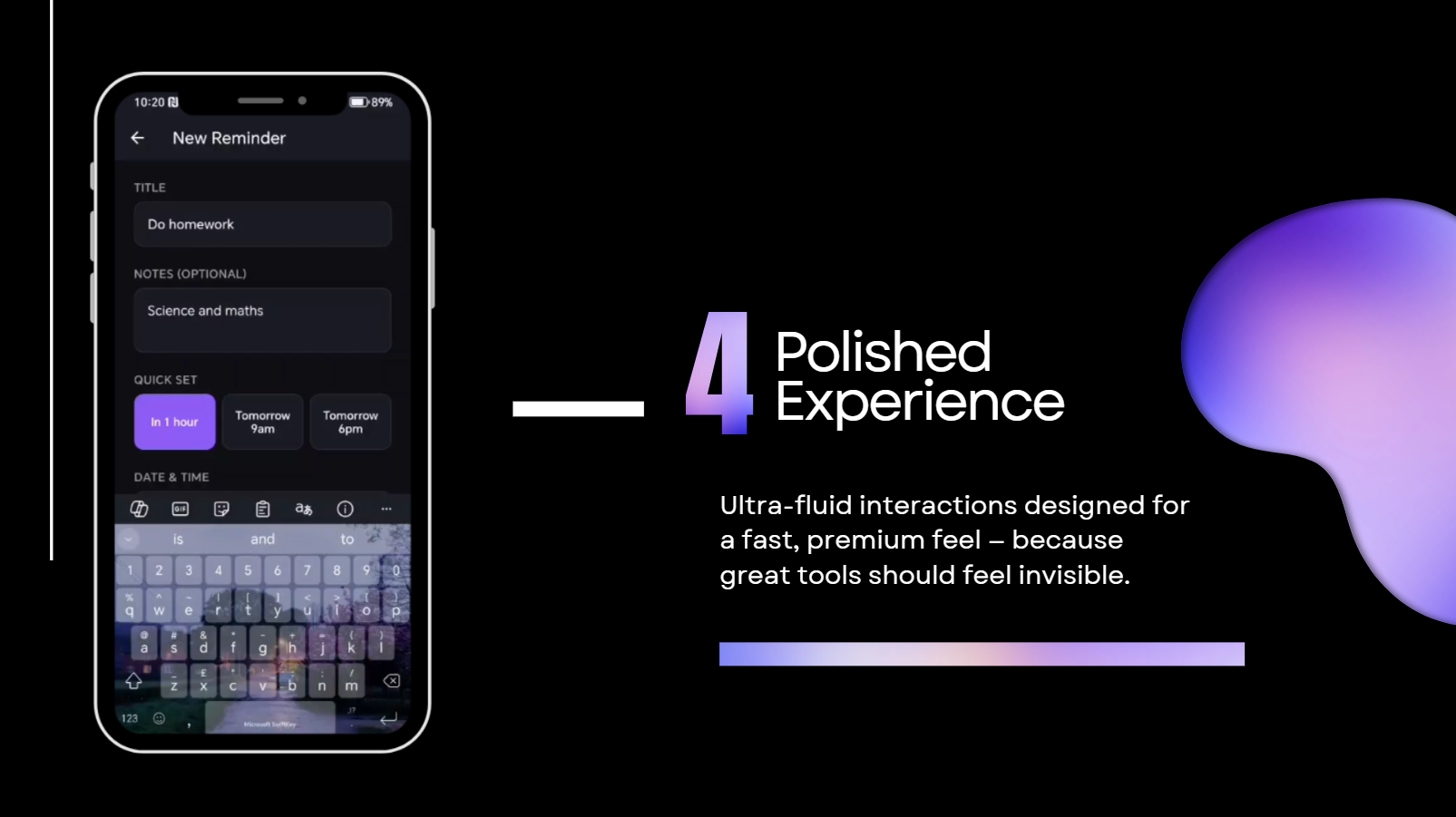
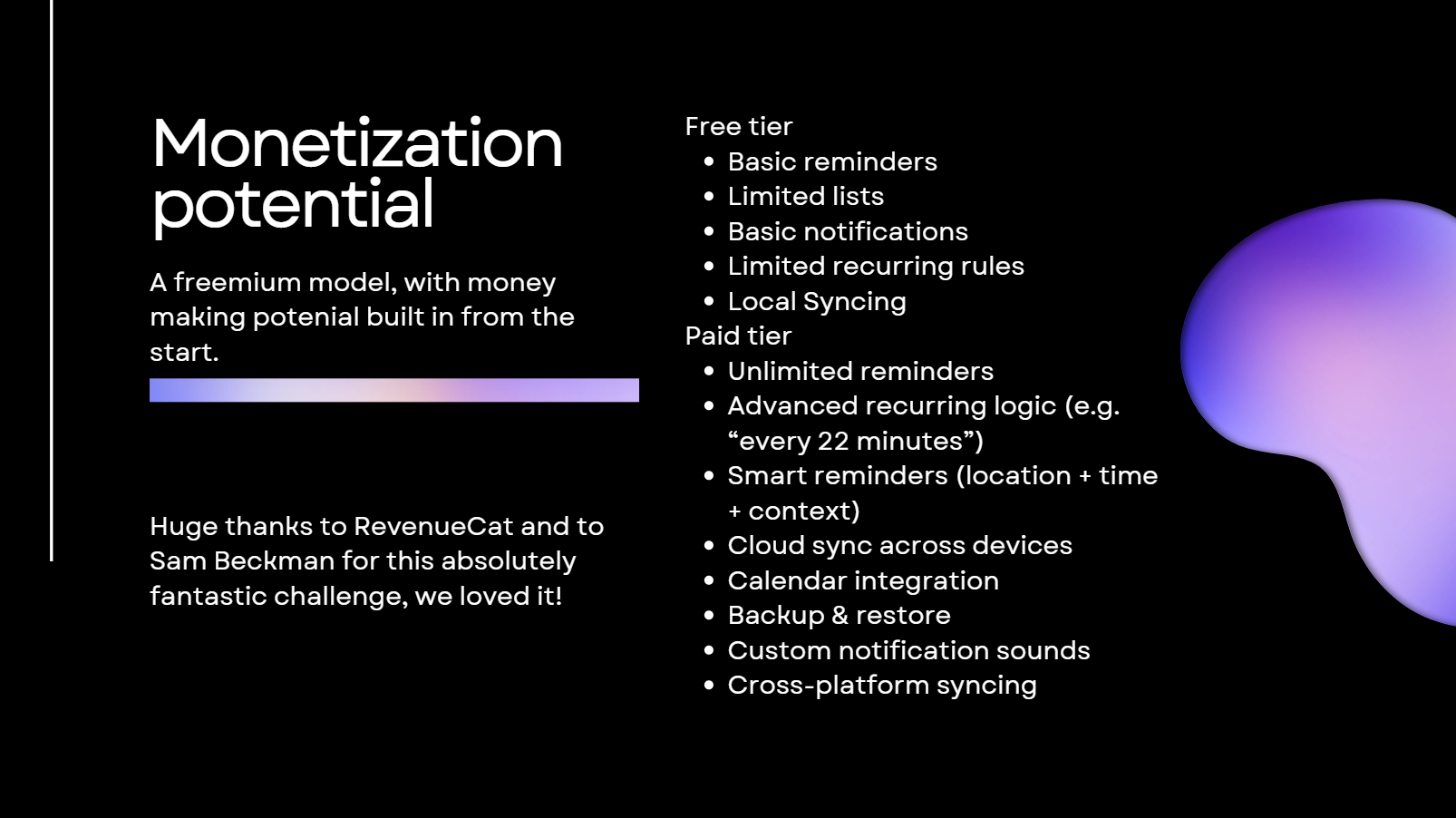
VERSO is a precision-focused reminders app built around flexibility, reliability, and flow. Users can custom snooze reminders with fine-grained timing control, schedule recurring tasks that remain consistent, and rely on real-time syncing across devices.
Rather than acting as simple alerts, VERSO’s reminders are designed to reduce friction. The system adapts to how users work, helping them stay organized without breaking focus. The result is a reminder experience that feels integrated into daily workflow — predictable, responsive, and effortless.
How we built it
VERSO was developed using React Native to deliver a responsive, cross-platform mobile experience, with testing performed through Expo Go to enable rapid iteration during development.
For persistence and synchronization, we implemented a Supabase-backed database architecture that enables reliable cross-device syncing. This structure allowed us to build time-sensitive scheduling logic while maintaining consistency and performance across platforms.
Challenges we ran into
Time-driven features — particularly recurring scheduling and real-time syncing — introduced early complexity. Handling edge cases where reminders repeat, update, or sync simultaneously required careful logic design and extensive testing.
Custom snoozing presented another significant challenge. Because operating systems do not natively support the level of control we envisioned, we engineered our own logic layer to simulate precision timing while preserving reliability. Balancing these advanced features with hackathon timelines and university work demanded disciplined problem-solving and tight coordination.
Accomplishments that we’re proud of
We’re proud of delivering an app that feels both powerful and approachable. VERSO adapts to individual workflows while maintaining a clean, intuitive interface — a balance that required deliberate engineering and design choices.
The custom snoozing system, recurring logic, and cross-device syncing all function reliably under rapid iteration, demonstrating that ambitious features can be implemented without sacrificing usability. Maintaining cohesive structure and clarity throughout development allowed us to ship something that feels intentional rather than rushed.
What we learned
This was our first app-focused hackathon, and working in a mobile environment introduced new considerations compared to web development — particularly around state management, synchronization, and platform behaviour. Exploring React Native in this context gave us valuable insight into cross-platform application design.
Equally important was our experience working as a dedicated two-person frontend–backend team. Clear ownership, communication, and architectural planning allowed us to move quickly while preserving quality. The process strengthened our collaborative workflow and gave us a deeper sense of product ownership.
But beyond the technical lessons, the best part of this project was simply building something together. Turning ideas into a working app, solving problems side by side, and watching the product evolve in real time made the entire experience genuinely fun — a reminder that great software comes from teams that enjoy the process as much as the result.
What’s next for VERSO
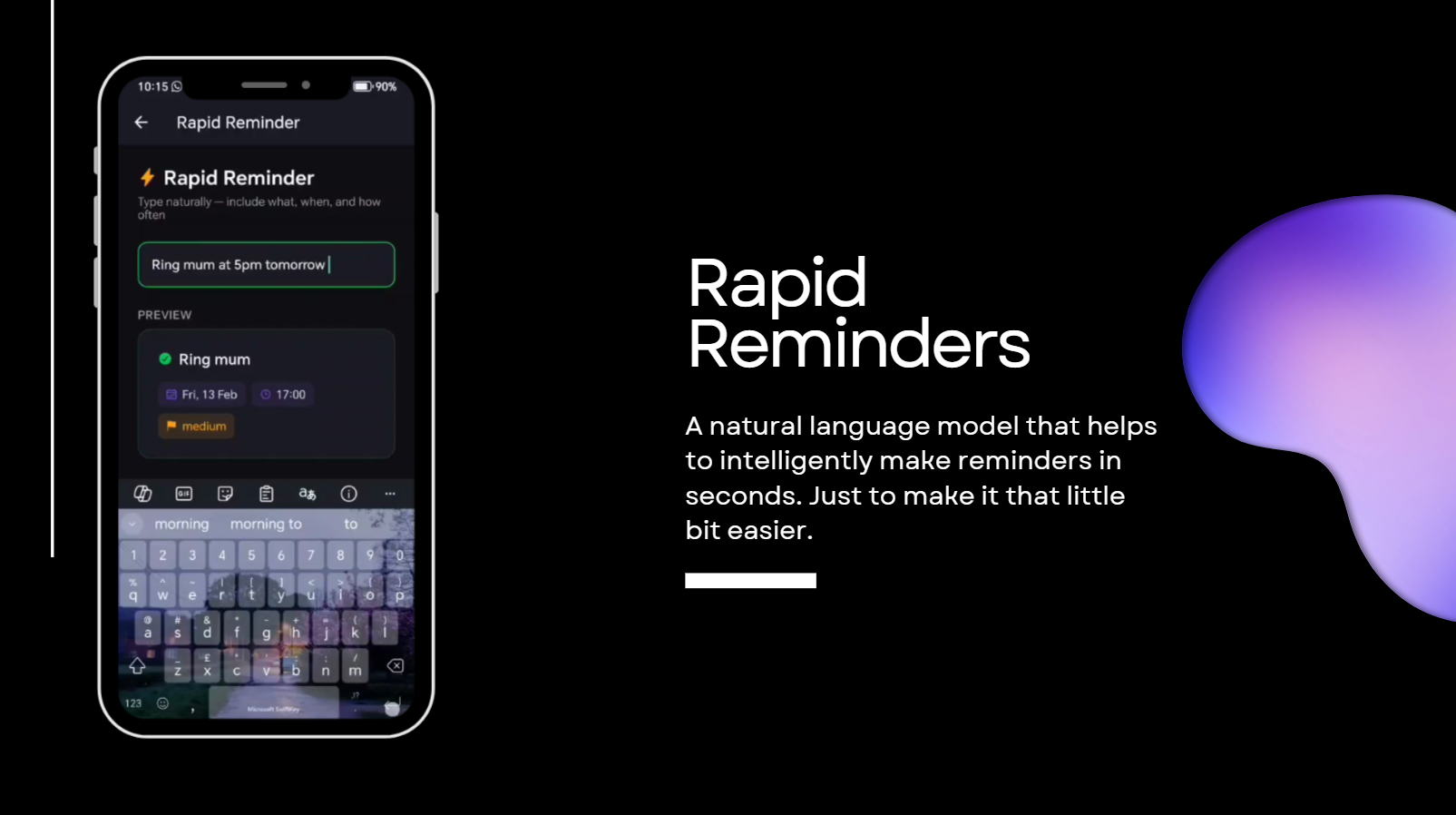
VERSO has strong foundations, and we see clear opportunities for expansion. Future development would focus on smarter reminder intelligence — including geolocation-aware triggers and natural-language task creation to reduce input friction.
We also plan to refine performance, expand customization, and explore workflow integrations. Our long-term vision is to evolve VERSO into a flexible productivity system that adapts intelligently to user behaviour, making task management feel seamless rather than mechanical.


Log in or sign up for Devpost to join the conversation.