-
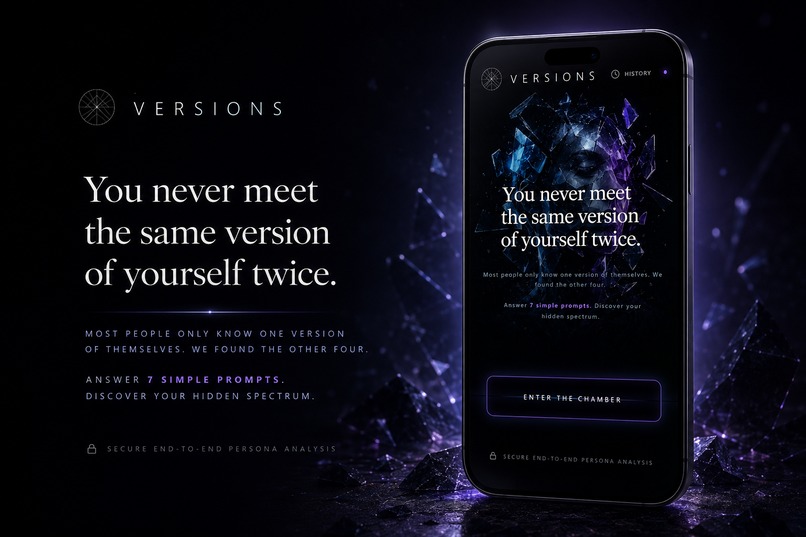
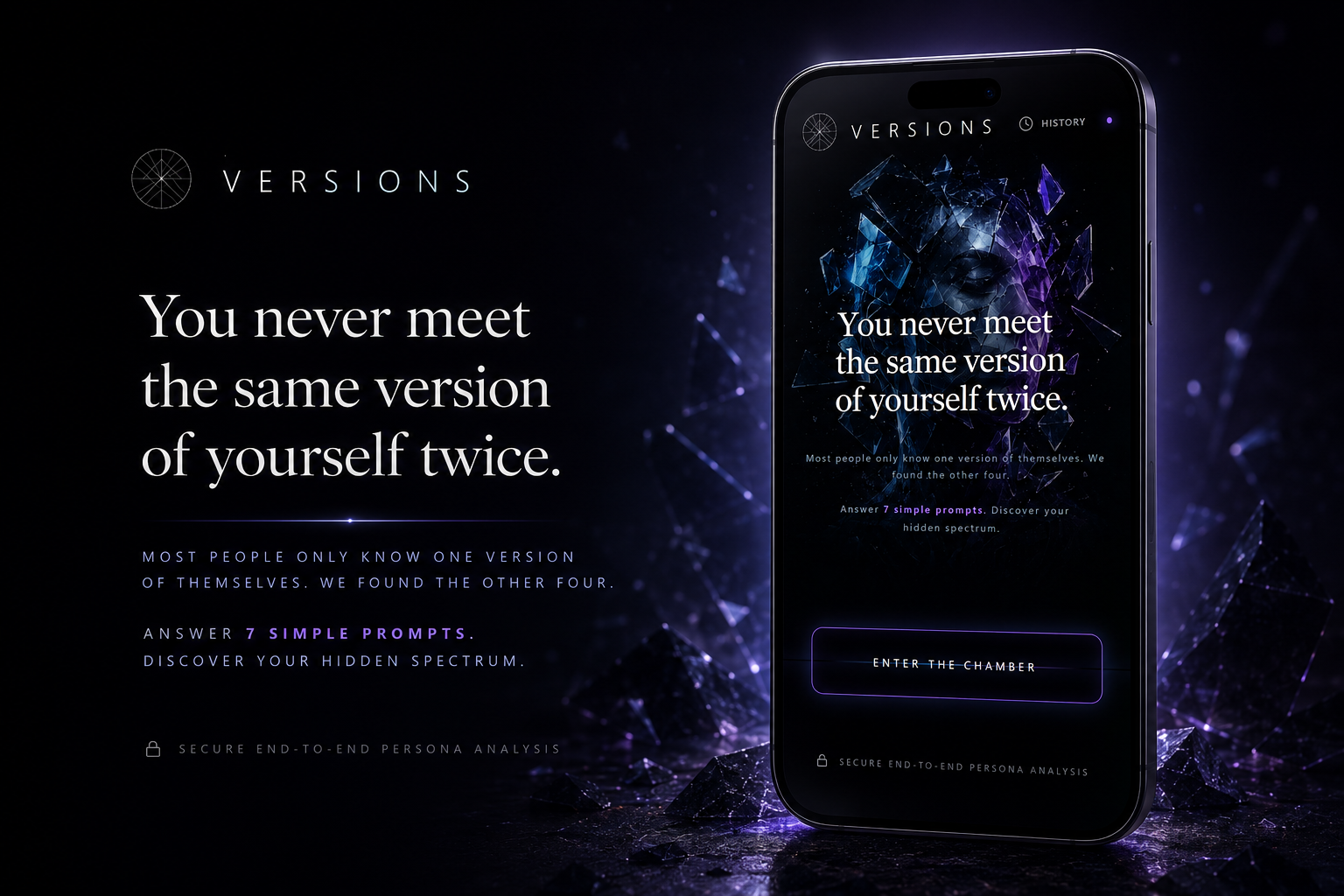
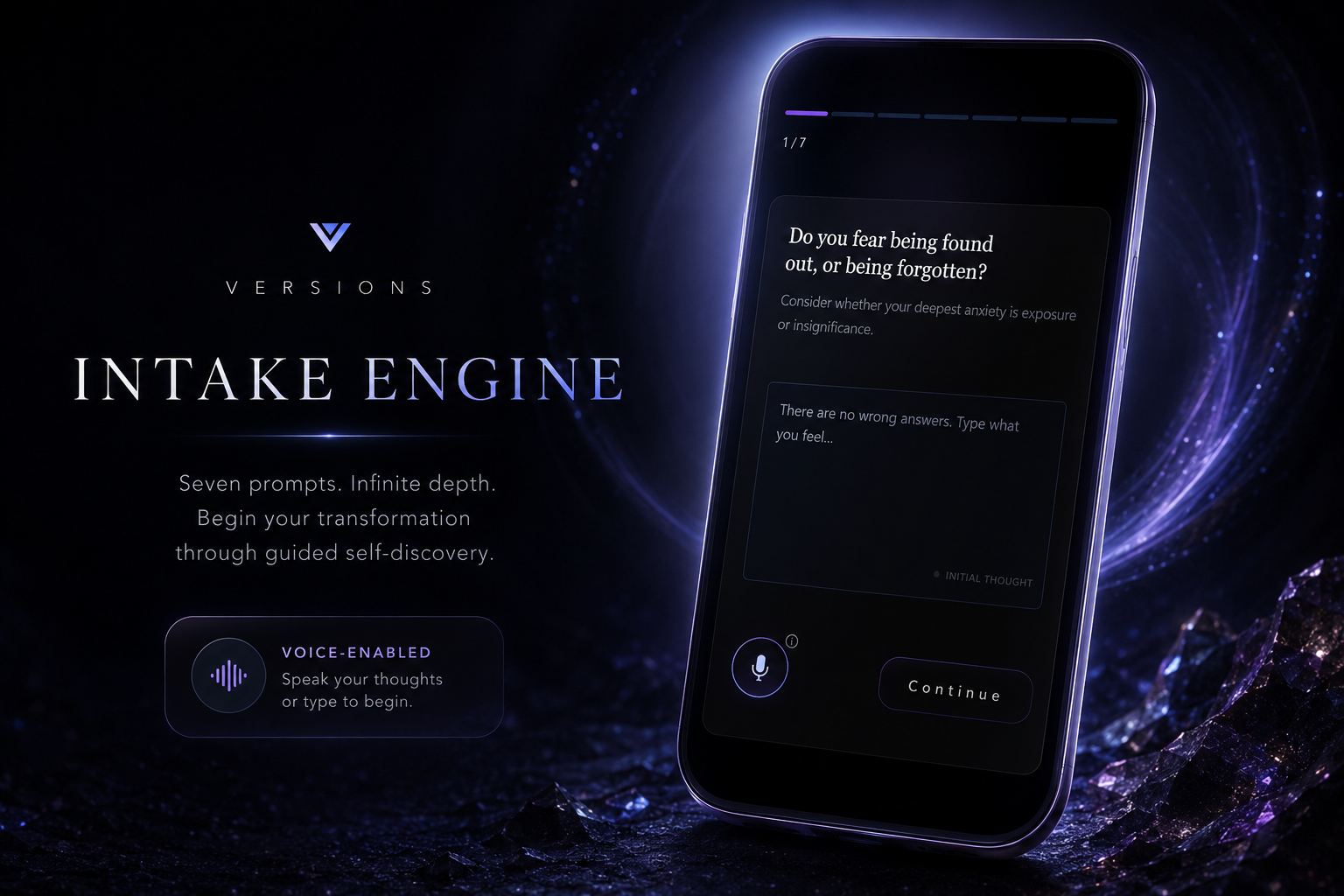
landing page.
-
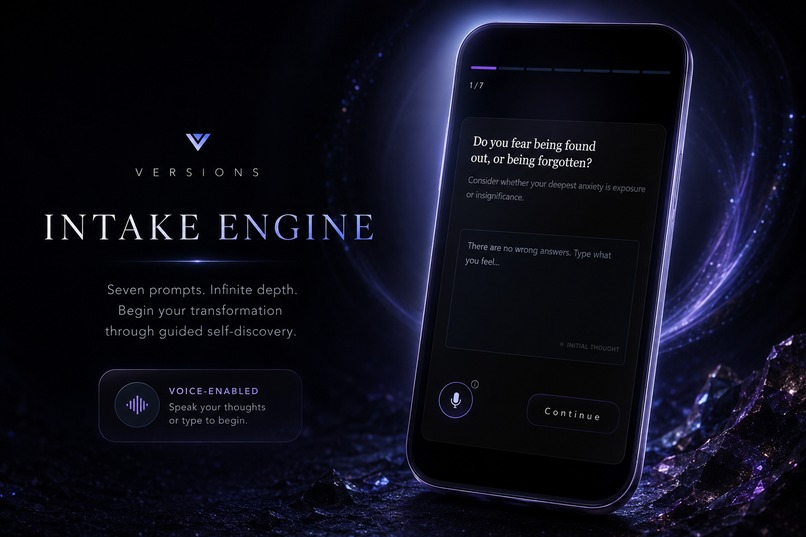
intake questions for anaysis page design.
-
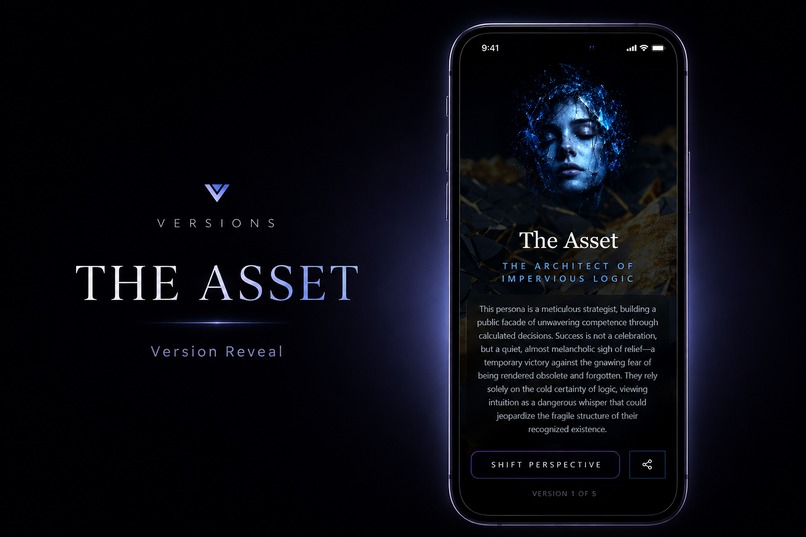
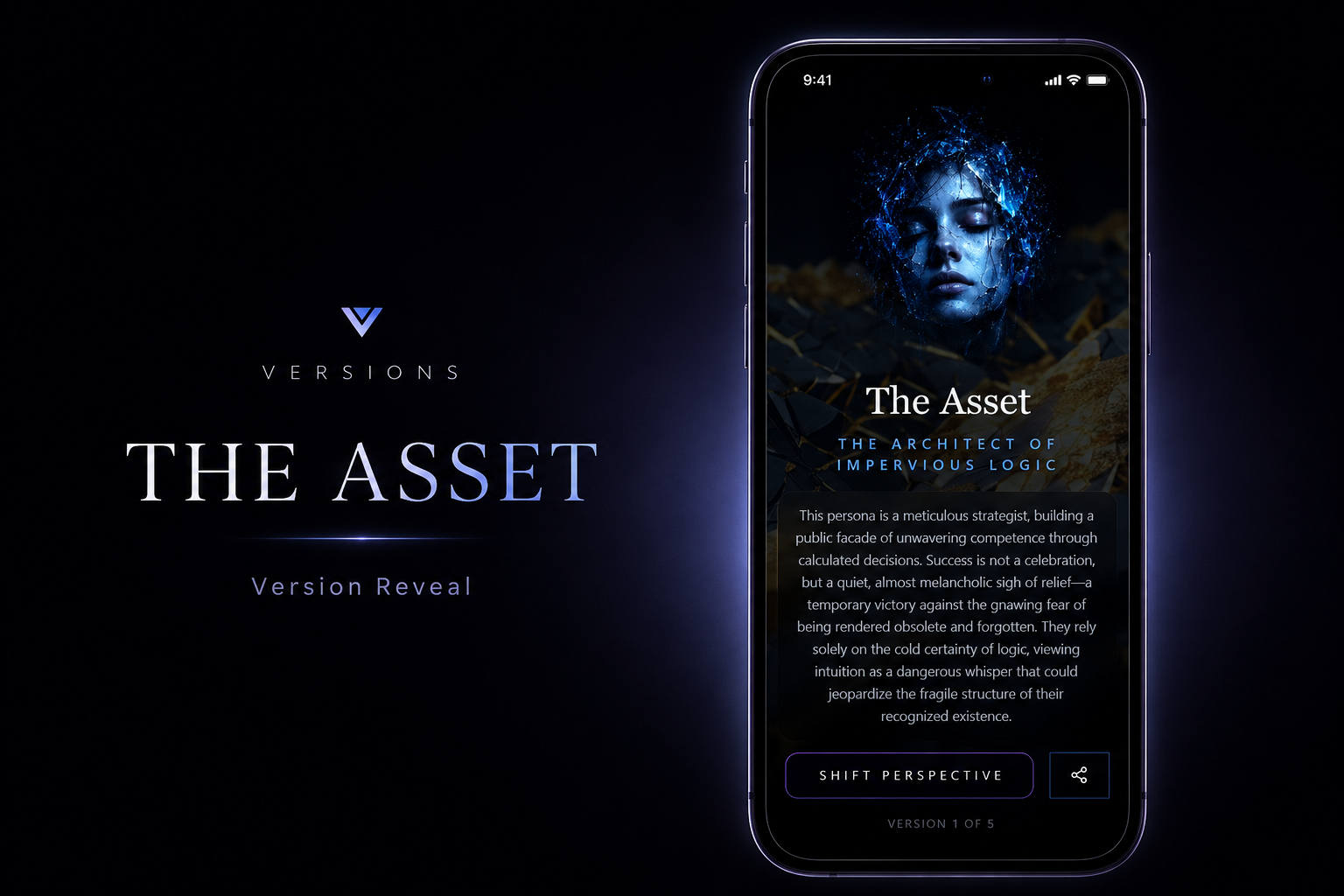
archetypal versions created i.e the asset as seen in the picture
-
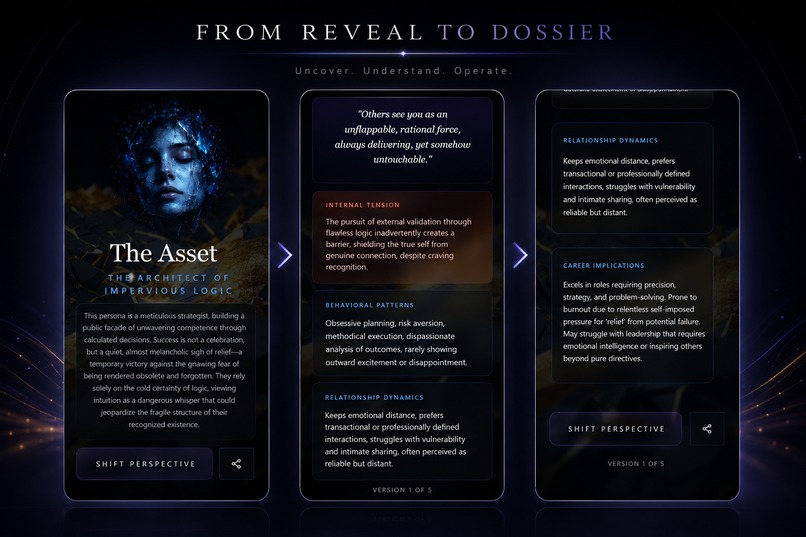
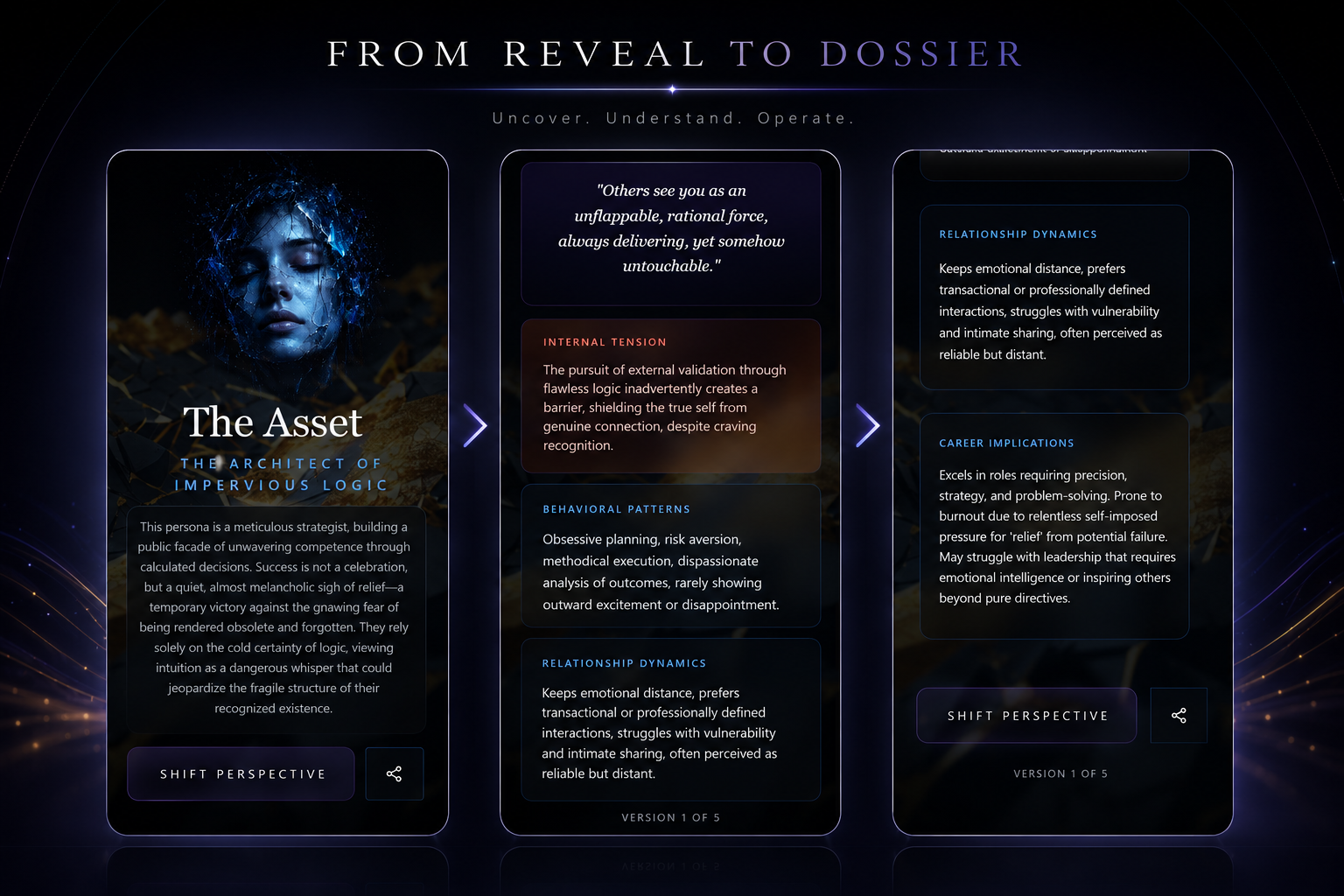
complete version dossier
-
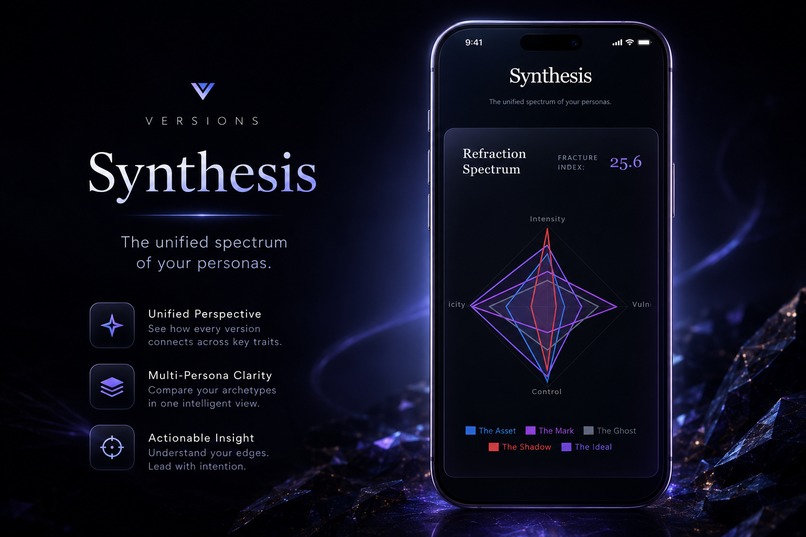
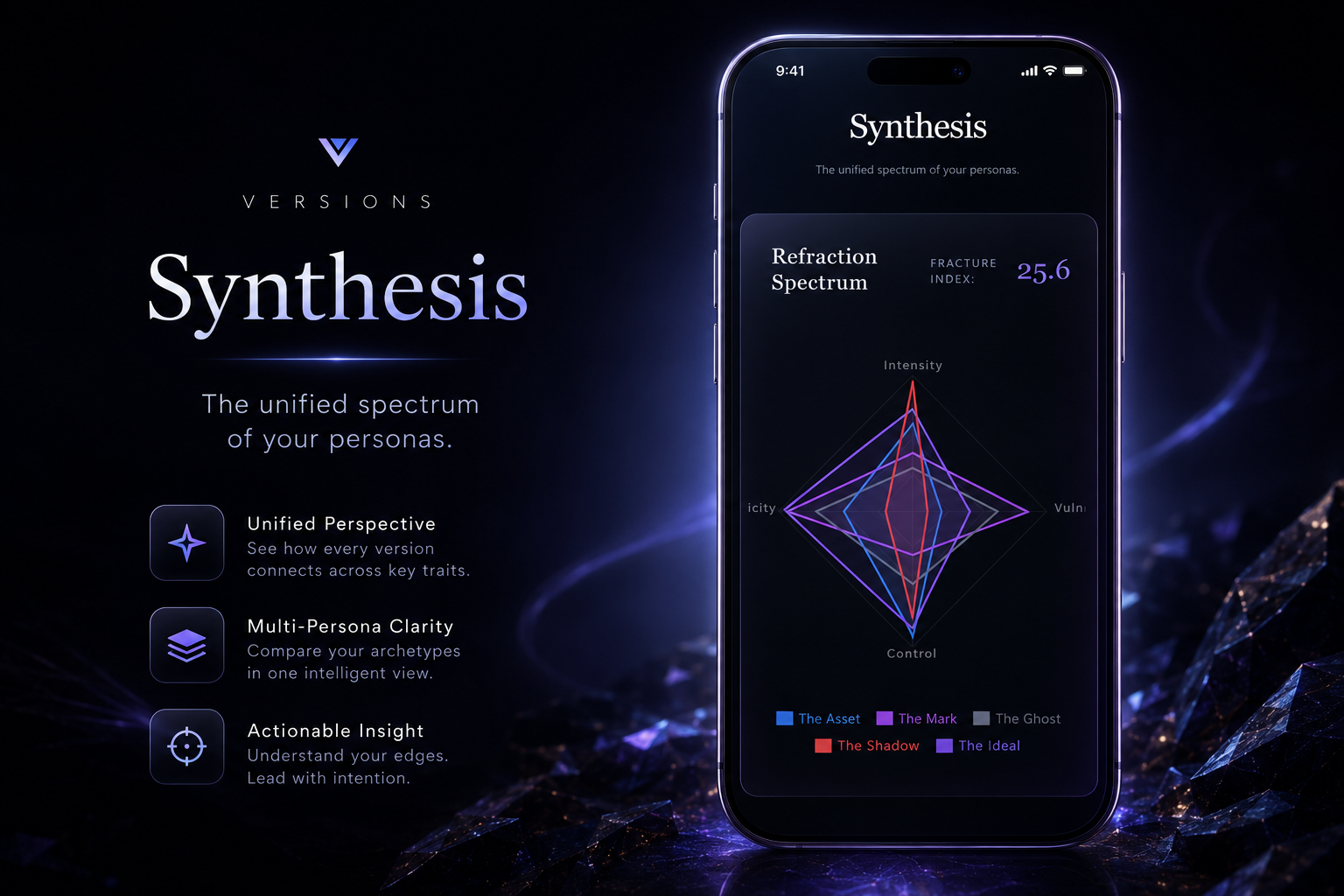
synthesis using refraction map a well as the versions overview
-
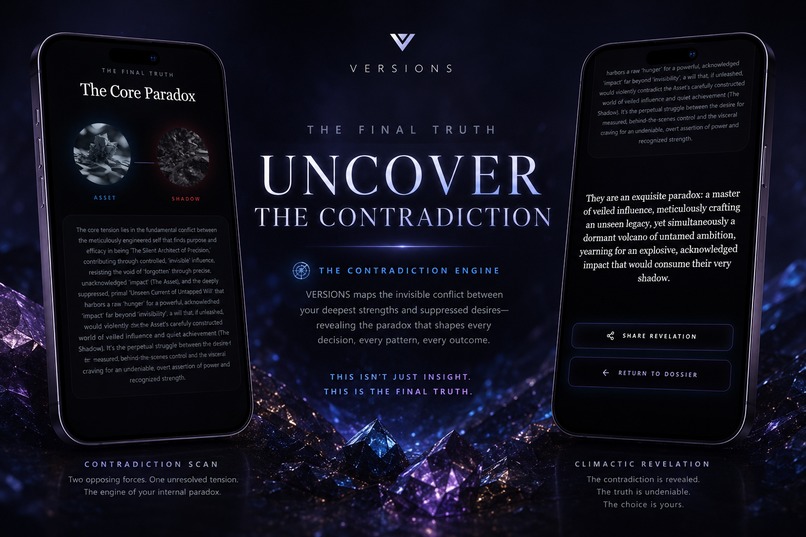
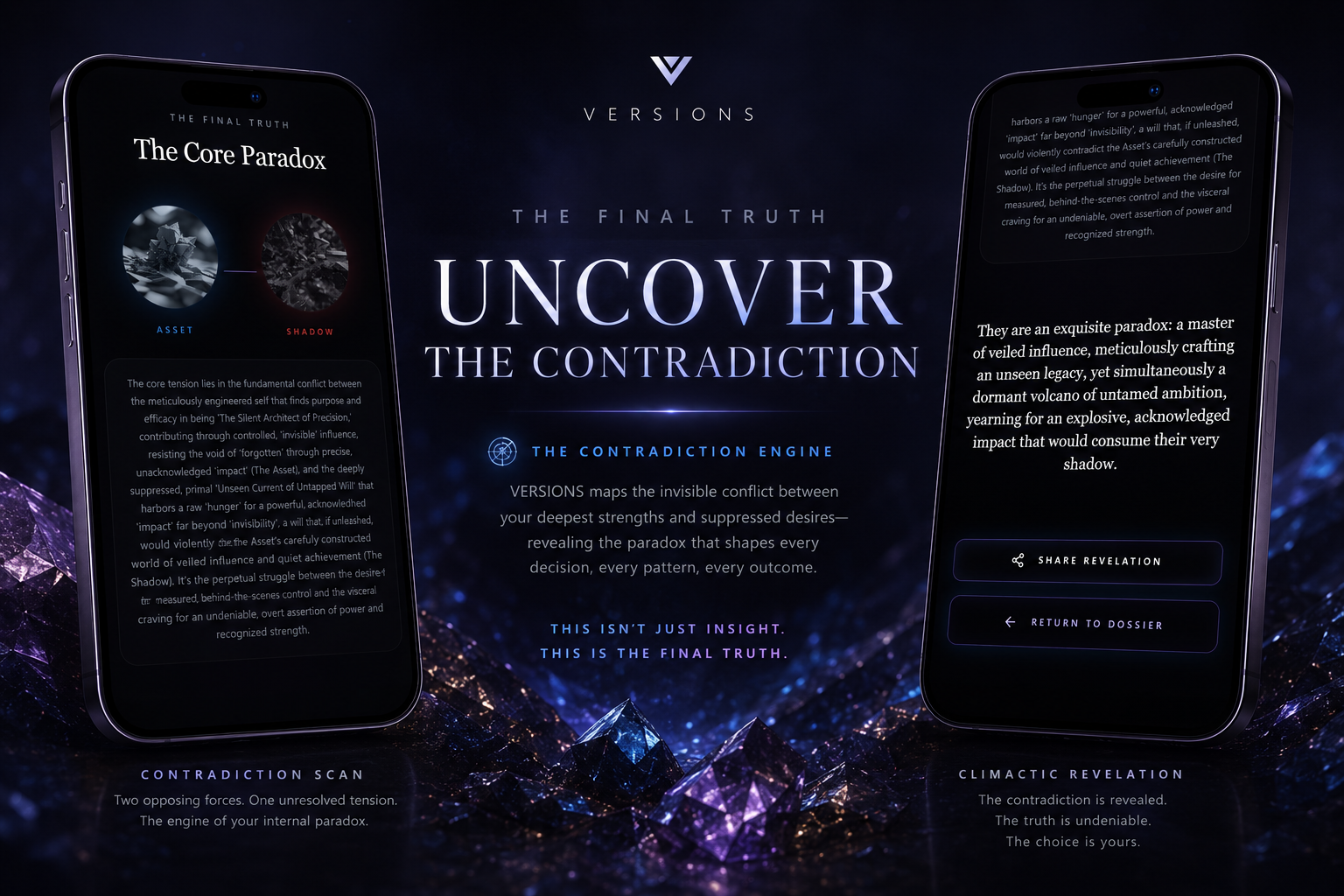
biggest contradiction between the versions reveal
-
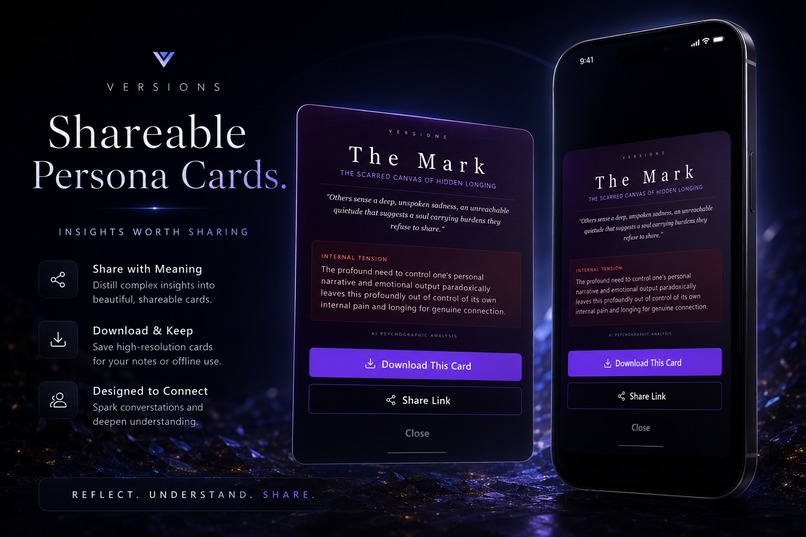
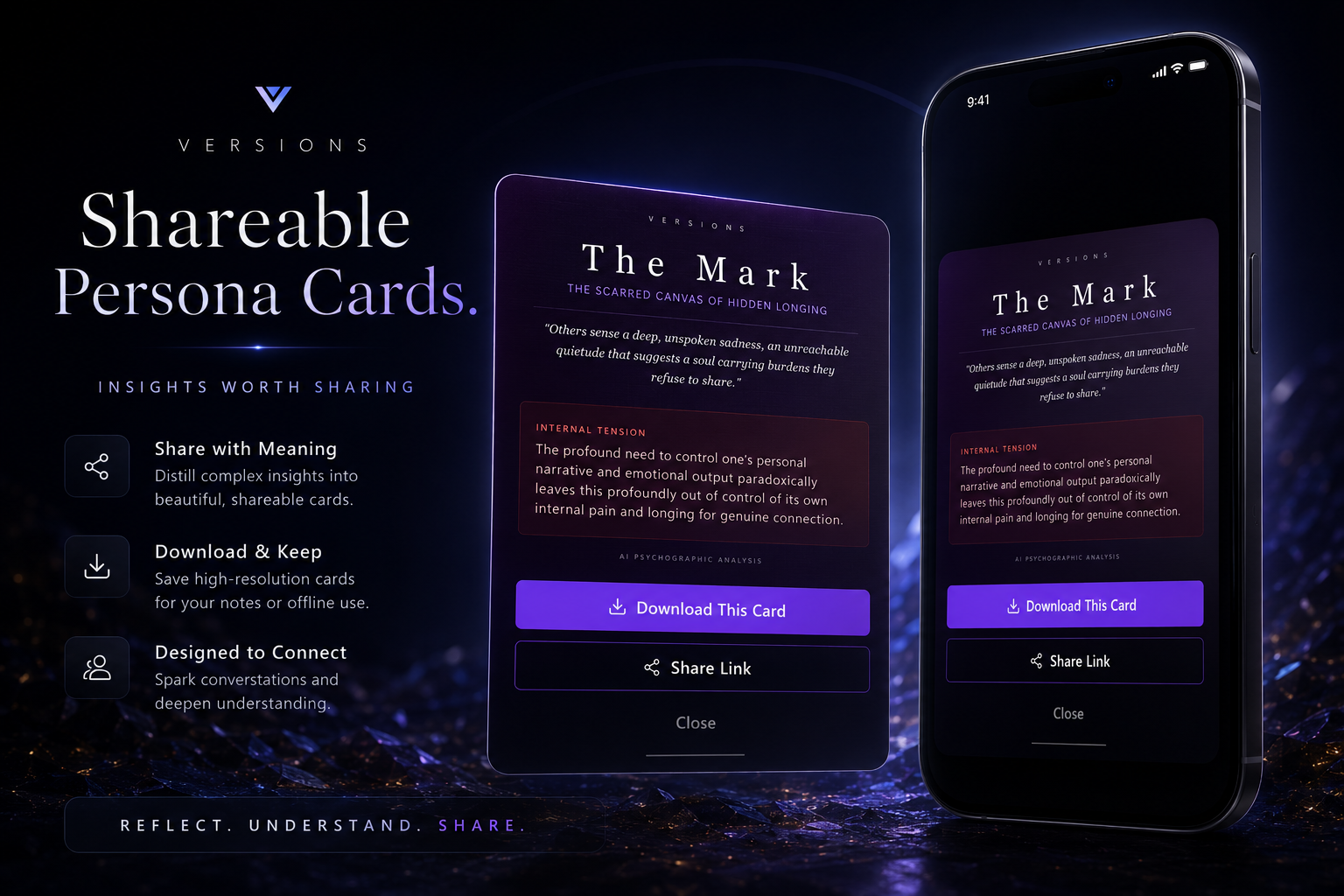
downloadable and shareable card designs
Inspiration
Most self-discovery apps treat identity like something simple: answer a few questions, receive a label, feel understood.
But real identity is not that clean.
The version of you that exists at work is not always the version your friends know. The version loved by one person may be completely different from the version feared, misunderstood, or remembered by someone else.
That contradiction became the foundation of VERSIONS.
I built VERSIONS around one idea:
You are not one person. You are different versions of yourself living in different minds.
To a recruiter, you may be potential.
To an ex, you may be memory.
To a manipulator, you may be vulnerability.
To yourself, you may be contradiction.
I wanted to explore the gap between who we think we are and who the world experiences.
Not through a traditional quiz.
Not through generic advice.
Not through another chatbot.
I wanted VERSIONS to feel like entering a psychological chamber: a cinematic AI experience that takes the user’s own words, studies the contradictions inside them, and reflects back five identities they may have been carrying without realizing it.
The goal was to create something emotionally memorable, screenshot-worthy, and unsettling in the right way — an experience that makes users pause and ask:
What if everyone around me has been meeting a different version of me all along?
What it does
VERSIONS is an AI-powered psychological experience that reveals the different versions of you that exist across perception, memory, vulnerability, ambition, and contradiction.
Users enter a cinematic 7-question intake engine with abstract prompts such as:
- “Do you fear being found out, or being forgotten?”
- “Is your silence a shield or a weapon?”
- “When you succeed, do you feel relief or hunger?”
Instead of scoring answers one by one, VERSIONS synthesizes all responses into a single interconnected psychological profile. It analyzes emotional tone, vocabulary patterns, recurring themes, contradictions, and linguistic intensity to generate five personalized identity archetypes:
- The Asset
- The Mark
- The Ghost
- The Shadow
- The Ideal
Each Version includes narrative analysis, behavioral patterns, relationship dynamics, career implications, and contradiction mapping.
Users move through the results with the SHIFT PERSPECTIVE interaction, making the experience feel like a psychological unmasking rather than a static report.
Each Version also generates a downloadable share card, and users can export all cards into a PDF to create a personal psychological dossier.
The experience culminates in a final Contradiction Scan, where VERSIONS identifies the strongest internal conflict between two generated identities and turns it into a concise, emotionally resonant paradox designed to be screenshot-worthy and shareable.
Users can also revisit previous scans through a persistent history system, allowing them to reflect on how different emotional states and responses generate different versions of themselves over time.
How I built VERSIONS
VERSIONS was built within the MeDo platform as a mobile-first, AI-native psychological experience designed to feel cinematic, emotionally immersive, and deeply personal.
By leveraging MeDo's full-stack generation workflow and ecosystem, I rapidly architected an intricate interaction layout: a custom cinematic landing page, a 7-question intake engine, secure response storage, an AI-driven persona synthesis pipeline, sequential Version reveals, dynamic file exporting, and a final Contradiction Scan.
The application utilizes a powerful modern stack orchestrated through MeDo:
- Frontend & Motion: React, TypeScript, Vite, TailwindCSS, FramerMotion, and ShadcnUI.
- Backend & Database: Supabase, PostgreSQL, and Edge Functions to handle user session states, persistent scan history, and sequential profile retrieval logic.
- AI Infrastructure: MeDo’s Large Language Model integration configured with Gemini 2.5 Flash powers the holistic synthesis pipeline. Archetypal visual elements were generated utilizing KlingAI capabilities.
Instead of treating user inputs as isolated quiz answers, the generation engine captures all seven responses simultaneously. It parses the entire submission for emotional tone, vocabulary patterns, linguistic intensity, recurring themes, and behavioral contradictions.
From this synthesis, the engine constructs five interconnected psychological lenses (The Asset, The Mark, The Ghost, The Shadow, and The Ideal). The experience culminates in the Contradiction Scan, where the system pairs the generated identities, evaluates the sharpest internal psychological paradox, and delivers a concise, screenshot-ready synthesis text.
To maximize emotional immersion, I integrated voice input using the WebSpeechAPI, allowing users a completely hands-free, confessional intake process. The interface utilizes a highly responsive glassmorphism aesthetic built specifically for mobile screens to simulate an intimate, private chamber.
Challenges I ran into
The foremost challenge was shifting AI outputs away from generic "personality test" clichés. Preventing the LLM from generating cookie-cutter advice required extensive prompt engineering and fine-tuning. The system had to accurately maintain the user's linguistic style while dynamically tracing real psychological tensions across separate answers.
Orchestrating the application logic was another hurdle. The experience depends on tight synchronization between the WebSpeech API, state management for the 7 questions, backend database persistence, and a highly paced, sequential UI reveal. Ensuring these distinct systems handed off data smoothly without breaking the cinematic immersion took rigorous debugging.
I also had to carefully balance visual atmosphere with mobile performance. Early prototypes featuring heavy, reactive animated backgrounds degraded performance on mobile devices. Adopting a strict "visual impact per kilobyte" philosophy, I stripped out the bloat and relied on high-contrast typography, minimalist motion, and subtle glassmorphic transitions to preserve speed without sacrificing the eerie, dark-cinematic tone.
Finally, navigating time constraints and daily credit limits forced extreme discipline. I had to strictly guard against scope creep, optimize every development prompt intentionally, and prioritize a bulletproof MVP execution before the hard submission deadline.
Accomplishments that l'm proud of
I am proud that VERSIONS developed a clear identity of its own within the hackathon: an AI-native psychological experience built around atmosphere, identity, contradiction, and emotional memory.
One of the biggest accomplishments was creating a complete end-to-end experience within a short period of time: from the cinematic landing page, to the 7-question intake engine, to the sequential persona reveals, to the final Contradiction Scan.
I am especially proud that the results feel interconnected instead of random. Each generated Version — The Asset, The Mark, The Ghost, The Shadow, and The Ideal — is designed to feel like a different psychological lens on the same person.
I also built shareability into the core experience. Each Version generates its own downloadable card, and users can export all Version cards into a PDF, turning the scan into a personal psychological dossier.
The final paradox reveal was designed to be screenshot-worthy: a short, emotionally resonant statement users would want to save, send, or discuss.
I am proud that VERSIONS uses MeDo not just to generate an app, but to explore a different kind of AI interaction — one where AI constructs a layered psychological narrative from the user’s own words.
What I learned
I learned that emotional design can be just as important as technical functionality.
While building VERSIONS, I realized users do not only remember what an app does. They remember how it makes them feel.
I also learned that AI becomes much more powerful when it is paired with strong interaction design. The same analysis can feel generic or unforgettable depending on its pacing, visual identity, language, and reveal structure.
Another major lesson was the importance of constraint. Because I had to build within a short period of time, I had to avoid unnecessary features and focus on the core experience: intake, synthesis, persona reveal, contradiction scan, and shareability.
Most importantly, I learned that AI products do not always need to answer questions directly. Sometimes the most interesting use of AI is to help people see patterns, contradictions, and hidden versions of themselves that they may not have noticed before.
What's next for VERSIONS
The next step for VERSIONS is to evolve from a one-time psychological scan into a deeper, ongoing identity system.
Future versions will expand the contradiction engine so users can track how their results change across different moods, life stages, and emotional states.
Planned features include:
- adaptive psychological memory
- deeper voice-based analysis
- relationship compatibility scans
- “Most Dangerous Version” analysis
- visual contradiction maps
- AI-generated cinematic reports
- dynamic template styles for social media exporting
- persistent personality evolution tracking
I also want to expand the experience beyond self-analysis into social perception simulations, where users can explore how they might be perceived by a friend, partner, recruiter, rival, or future version of themselves.
The long-term vision is for VERSIONS to become a new category of AI-native psychological experience: not just an app that gives answers, but a mirror that helps people understand the different identities they live through every day.
Built With
- ai
- deno
- edgefunctions
- framermotion
- gemini25flash
- glassmorphism
- klingai
- llm
- medo
- mobilefirst
- postgresql
- promptengineering
- radixui
- react
- reacthookform
- shadcnui
- supabase
- tailwindcss
- typescript
- vite
- webshareapi
- webspeechapi
- zod


Log in or sign up for Devpost to join the conversation.