-
-
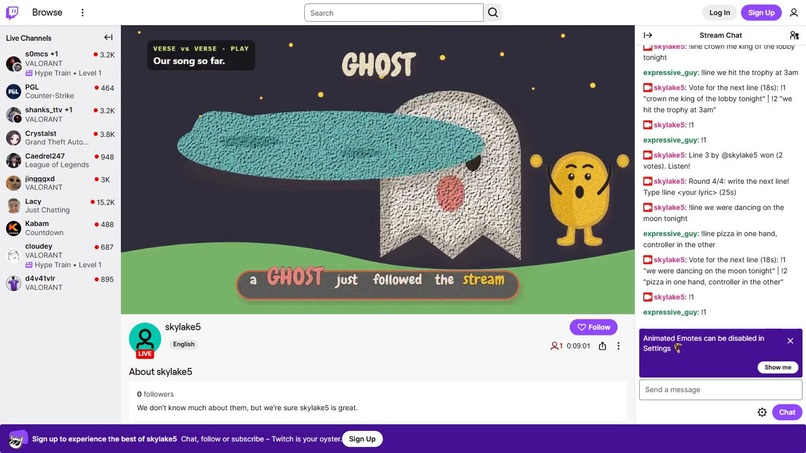
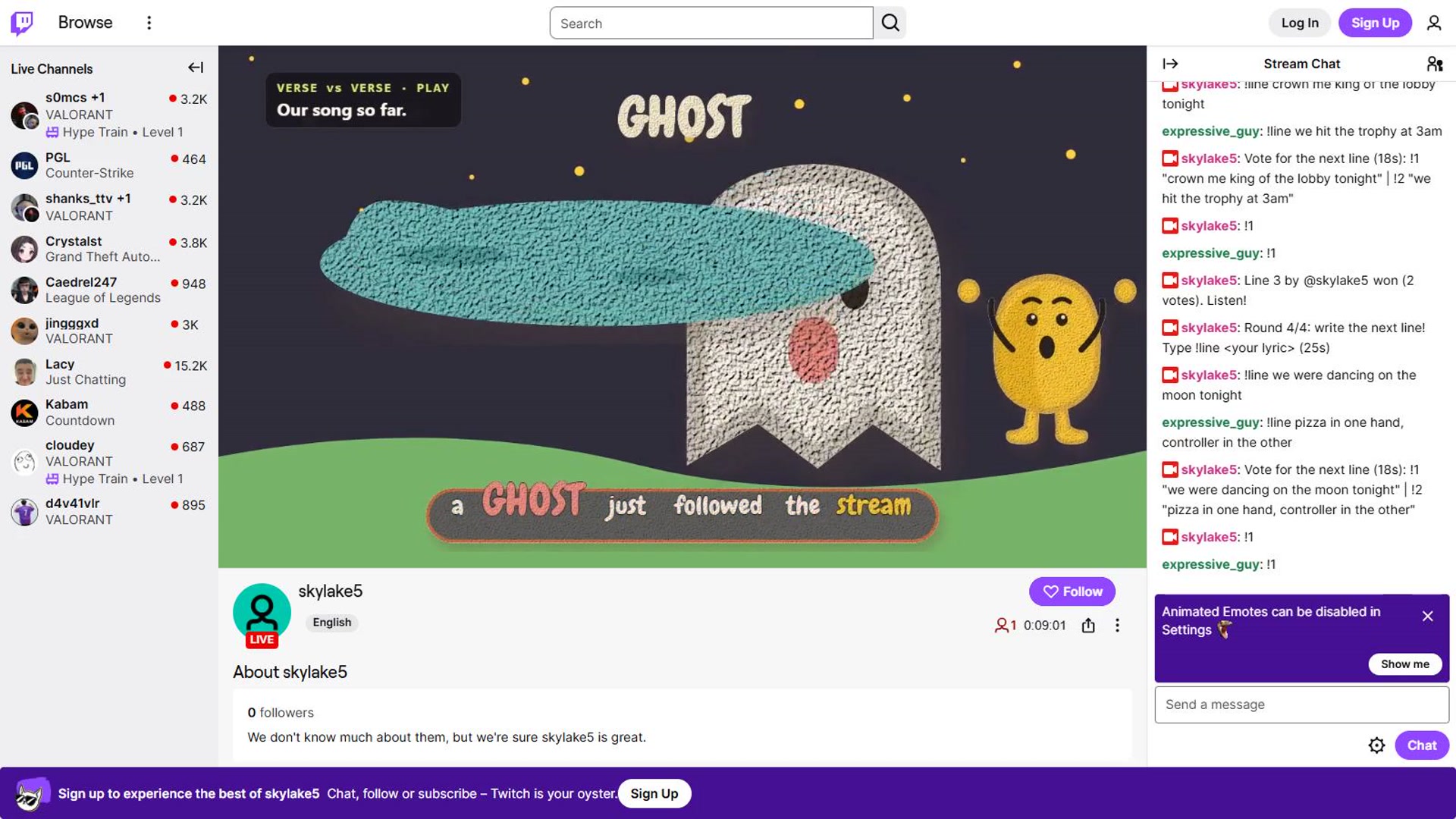
Twitch live
-
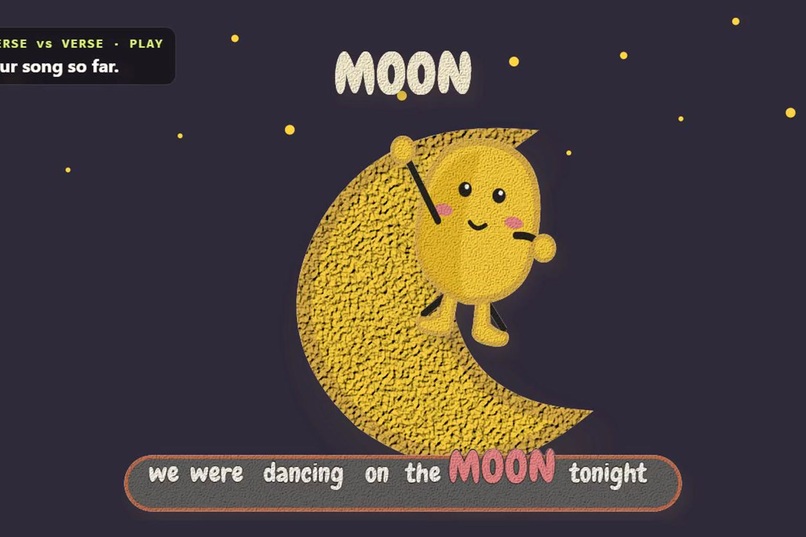
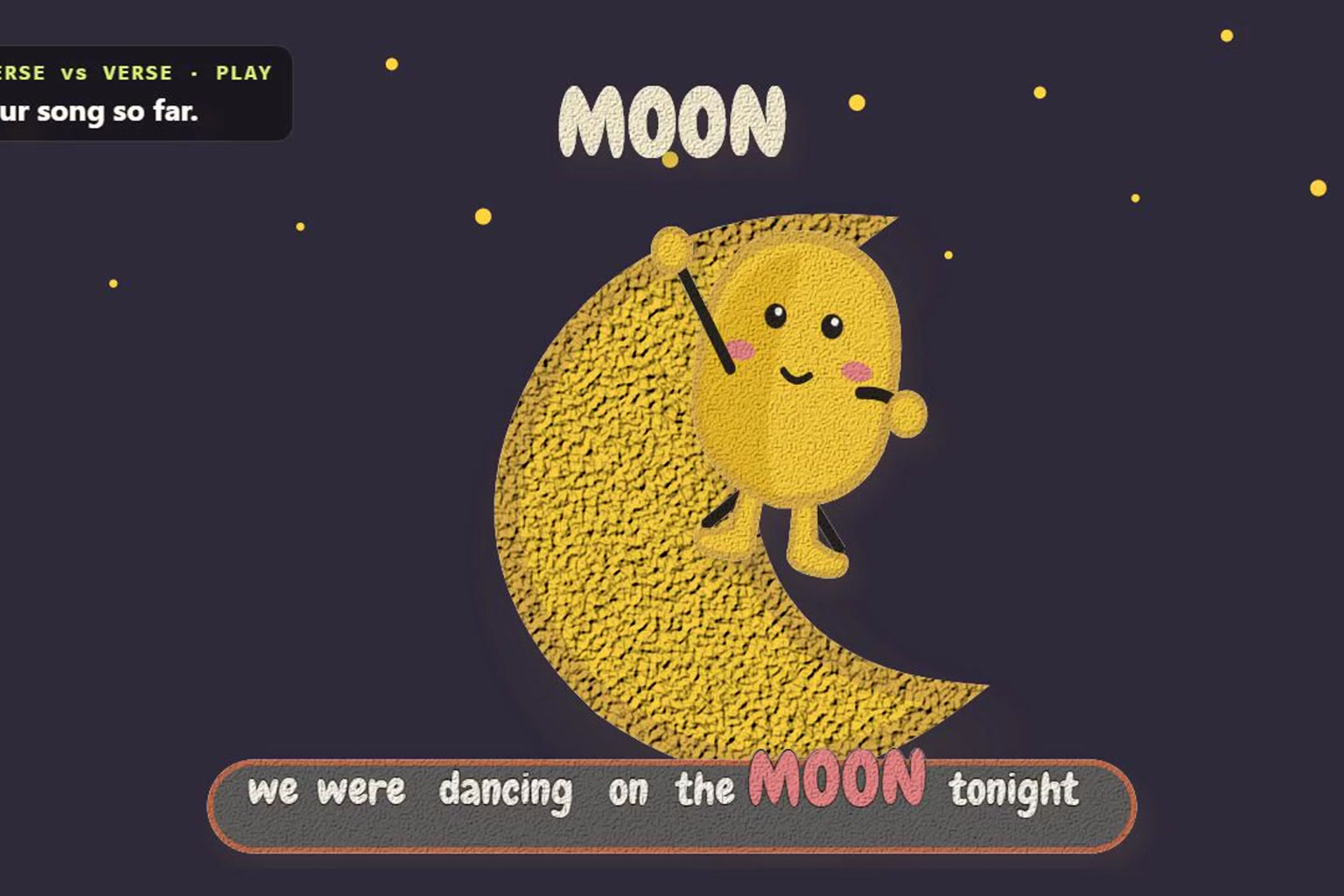
Song generated
-
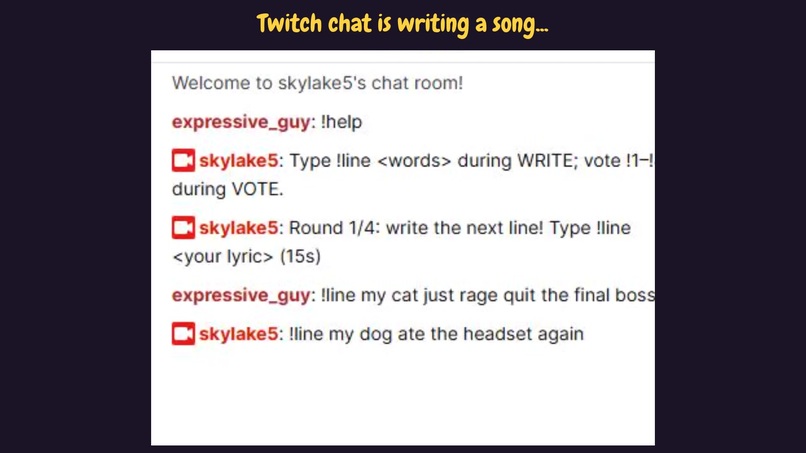
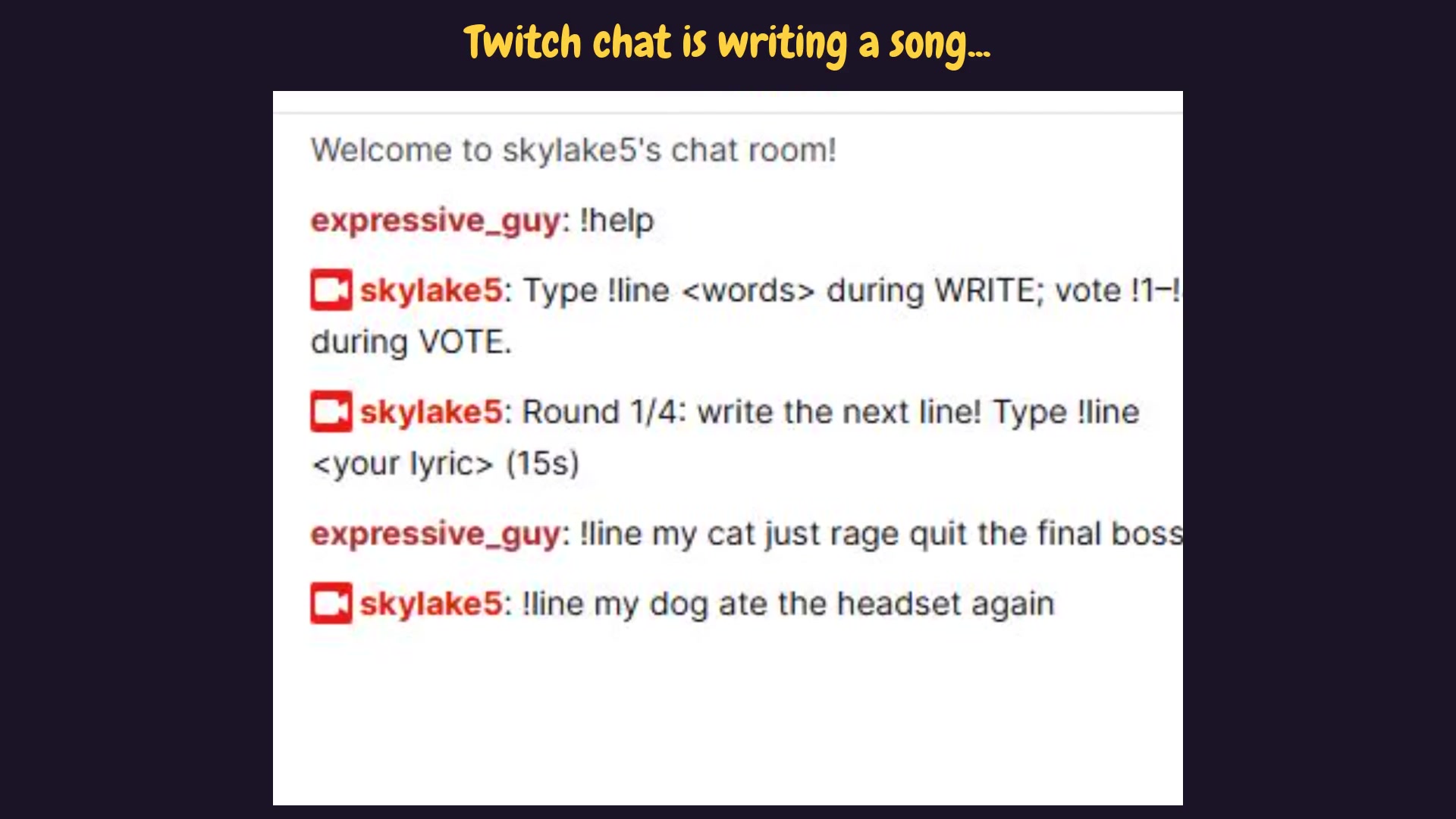
Chat writing song
-
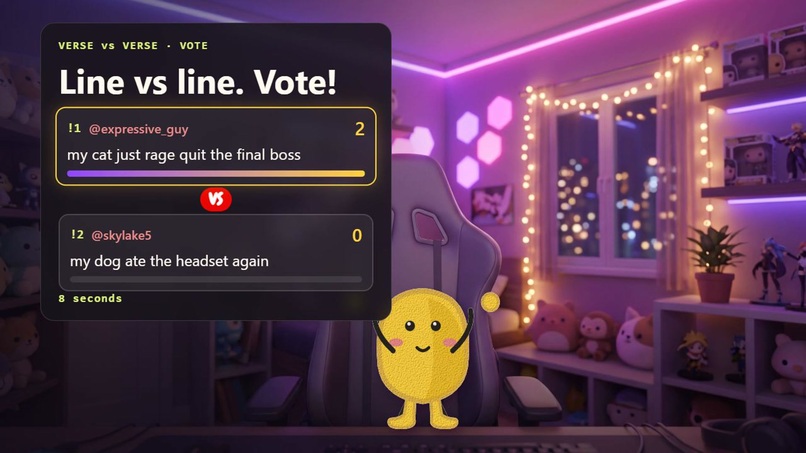
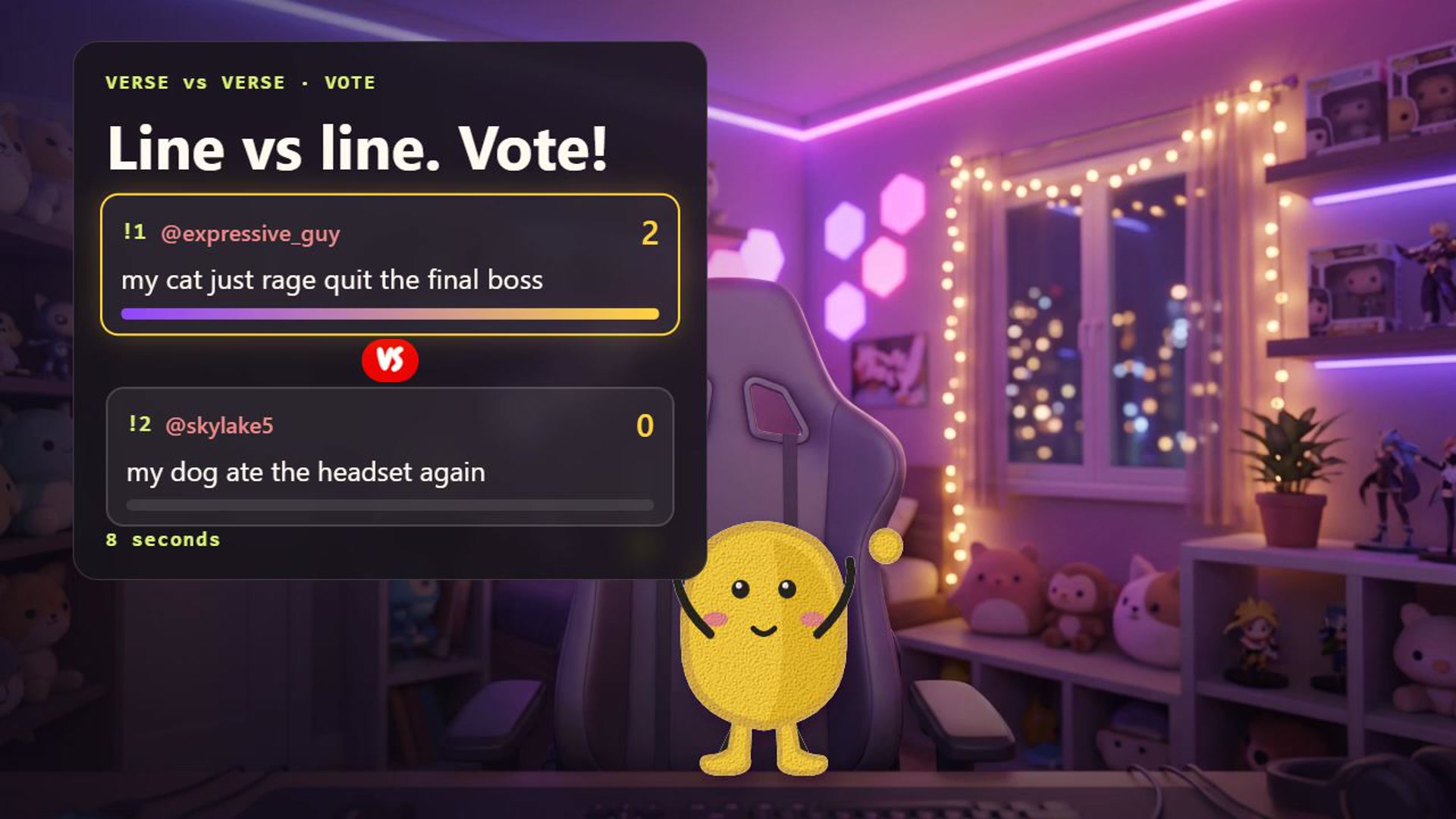
Voting
About the project (Markdown)
Inspiration
Every stream has that moment: chat is on fire, someone types the perfect line, and it scrolls away forever. I wanted chat to make something that lasts. Not a poll or a meme, but a real song, written together, live, with every writer's name on it.
What it does
Verse vs Verse turns Twitch chat into a songwriting room.
- Write. Viewers type
!line <lyric>. Every line shows up on stream with its writer. - Battle. An AI judge shortlists the best lines and they go head to head. Chat votes
!1!2, with live counts on stream and the options posted in chat. - Sing. About 12 seconds later, an AI band sings the winning line word for word.
- Watch. Every line becomes its own animated scene, and the scenes follow the words: "crown me king" puts a crown on the character's head, "dancing on the moon" has it dancing on the moon. Lyrics play karaoke-style, and the character's mouth moves only on sung words.
- Release. Each round the song grows and plays again. At the end chat gets a finished song with a title, writer credits, a share page and a music video.
It runs on real Twitch: EventSub reads chat, a bot replies through Helix, the overlay drops into OBS as a browser source, and a built-in broadcaster can even go live without OBS.
How I built it
OpenAI Codex built Verse vs Verse end to end, stage by stage, in one long thread:
- Foundation: Twitch OAuth, EventSub over WebSocket, the round engine (write, vote, produce, play, release), the OBS overlay and the streamer dashboard.
- Models: an OpenAI-compatible judge that ranks lines and names songs, moderation, and the music and speech adapter.
- The scene engine: an LLM plans each line as a scene (keyword, mood, character pose, props) and a pure-SVG renderer draws every frame, with MP4 export through headless Chrome and ffmpeg.
- Live operation: retries, release recovery, lyric fidelity scoring, loop mode, live timers, and the chat commands
!help,!queue,!songand!skip. - The look: a hand-built library of 40 props with anchors and motions, a character that dances on the beat, and props and camera moving with the music.
Music, speech-to-text and voice run through Pascal, a voice AI platform I built that provides music generation, speech-to-text and text-to-speech through one API. The music model is a single setting, so a better model plugs straight in.
Challenges I ran into
- The AI wanted to write its own song. With song-section tags, the music model rewrote 40–80% of the lyrics. A strict prompt with plain lines brought that to zero invented lines in 10 test renders, and every clip now gets a fidelity score, so chat hears exactly what chat wrote.
- Keeping the picture on the beat. Long renders only time some lines, so I built a word-level aligner that finds every repeat of each line and keeps scenes and karaoke in sync.
- Live pacing. The first version waited 13 minutes for the final song. Using the last round's clip as the release made the end instant. ## Accomplishments that I'm proud of
- A full song written live on twitch.tv by chat, sung word for word.
- Scenes that follow the lyrics instead of just decorating them.
- An animation engine where the art style lives in its own folder, so new styles drop in.
What I learned
Viewers care far more about hearing their own words sung than about audio polish, so faithful lyrics beat everything else. And for live shows, the fastest path wins: every second of waiting on stream is a second chat gets bored.
What's next for Verse vs Verse
- Channel vs channel: two communities write against each other, and the best lines win the song.
- More styles: anime, painted and pixel styles, plugged into the same engine.
- Clips: every finished song as a ready-to-post short.
Built With
- codex
- express.js
- ffmpeg
- helix
- node.js
- openai
- sqlite
- twitch
- typescript
- websocket

Log in or sign up for Devpost to join the conversation.