Introduction
Verra VM0038 presents an approach to reduce GHG emissions by deploying electric charging stations. This methodology is a crucial step in reaching net-zero goals. The transportation sector is responsible for 25% of GHG emissions worldwide. The policy's aim is to reduce GHG emissions from conventional ICE vehicles in regions where the market penetration of PEVs is under 5%. Despite the increasing popularity of electric vehicles, mainstream adoption is hindered by concerns over limited range and inadequate charging infrastructure.
Key Objectives and Scope
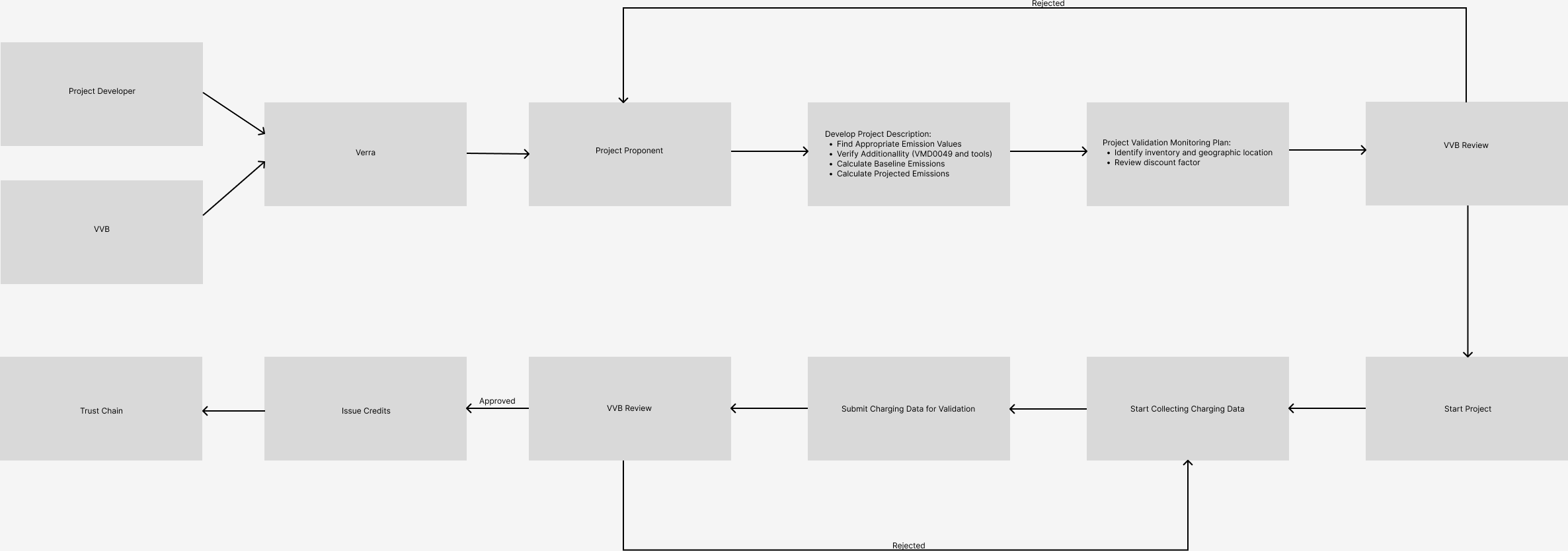
The primary objective of VM0038 revolves around mitigating GHG emissions by replacing ICE vehicles with low-emission BEV equivalents. This methodology encompasses the deployment of public charging systems, including Level 1, Level 2, and DC Fast Chargers. Associated infrastructure, such as solar panels and battery packs, plays a crucial role in achieving even lower CO2 emissions. The methodology also includes the VMD0049 module, specifying regions where this methodology is applicable, particularly countries and sub-regions with EV market penetration below 5%.
Need and Use for the Verra VM0038 Policy
The transportation sector accounts for 25% of current global emissions, emphasizing the urgency for action. Electrifying the transportation system for both light-duty and heavy-duty vehicles is a critical solution. However, the lack of charging infrastructure poses a significant obstacle.
Moreover, this policy provides a clear framework for measuring and evaluating CO2 reductions. By tracking the energy source for each charge and vehicle consumption, baseline emissions for ICE vehicles can be accurately calculated.
Additionally, this policy marks a milestone as the first in the Guardian focusing on the transportation sector. Finally, the original methodology is an evolution of CDM’s AMS-III.C, which focused on emission reductions by electric and hybrid vehicles.

Log in or sign up for Devpost to join the conversation.