-
-
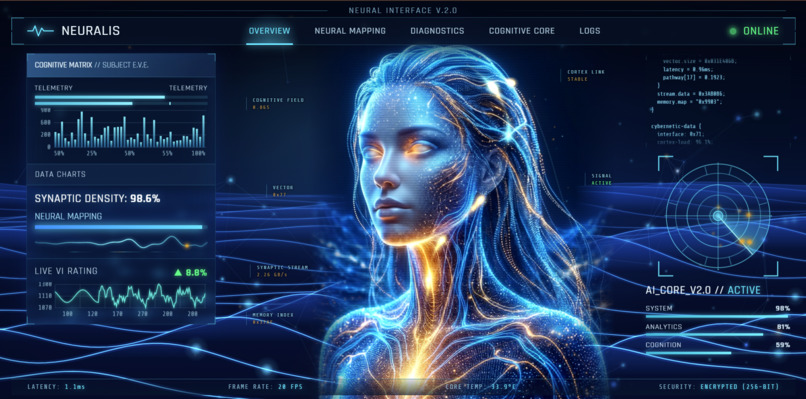
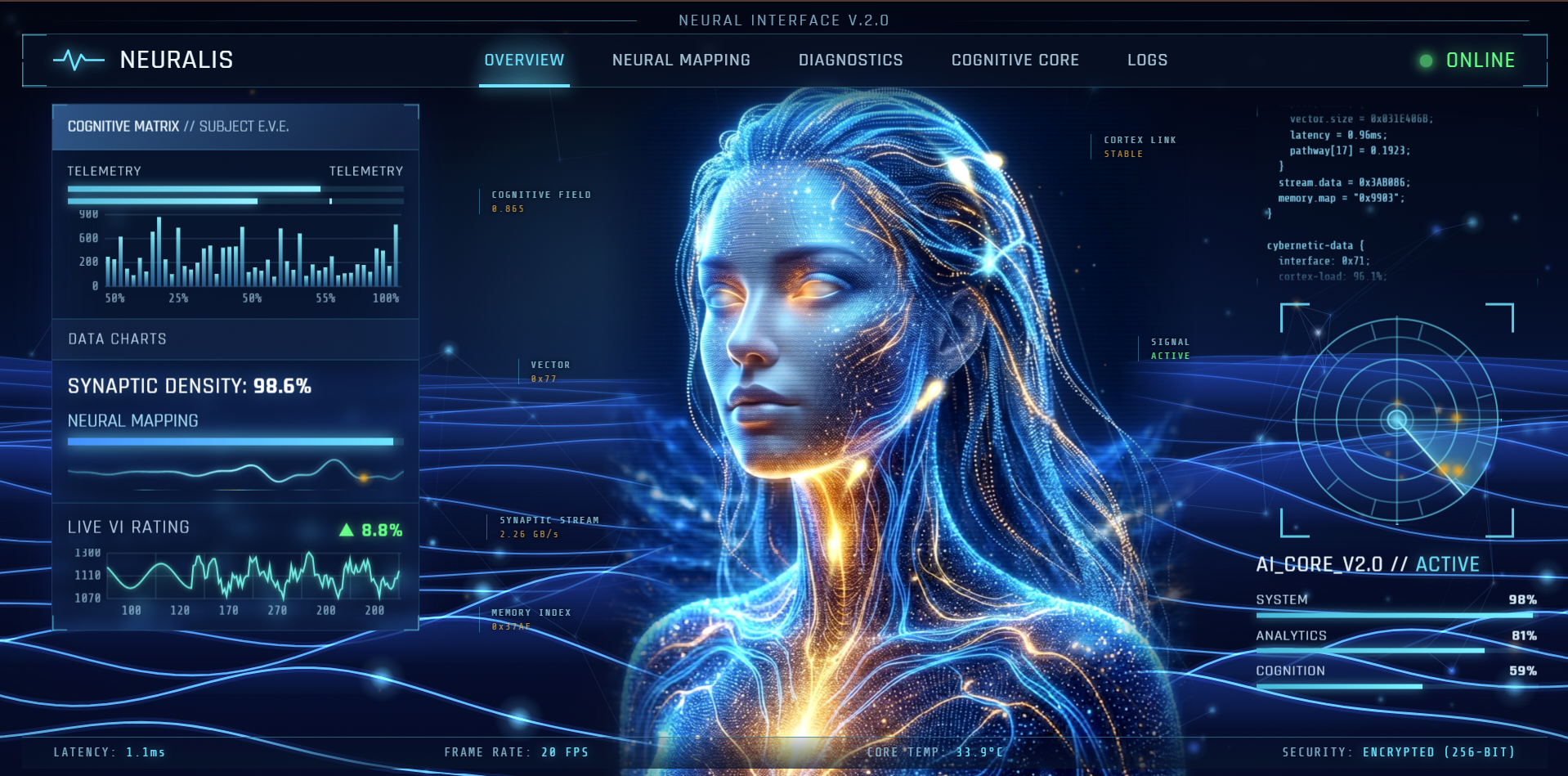
human form
-
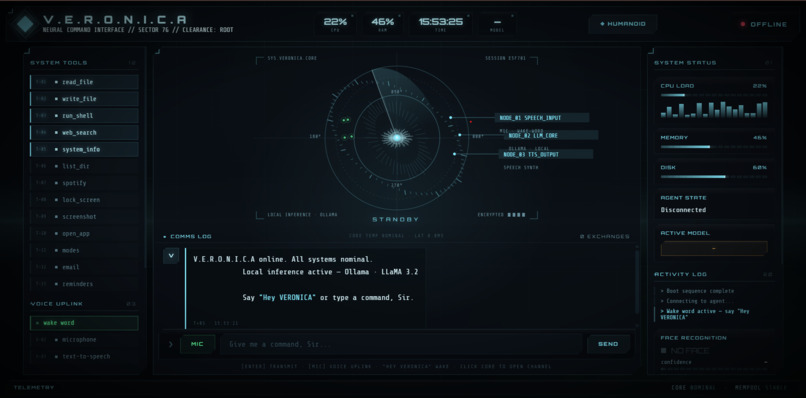
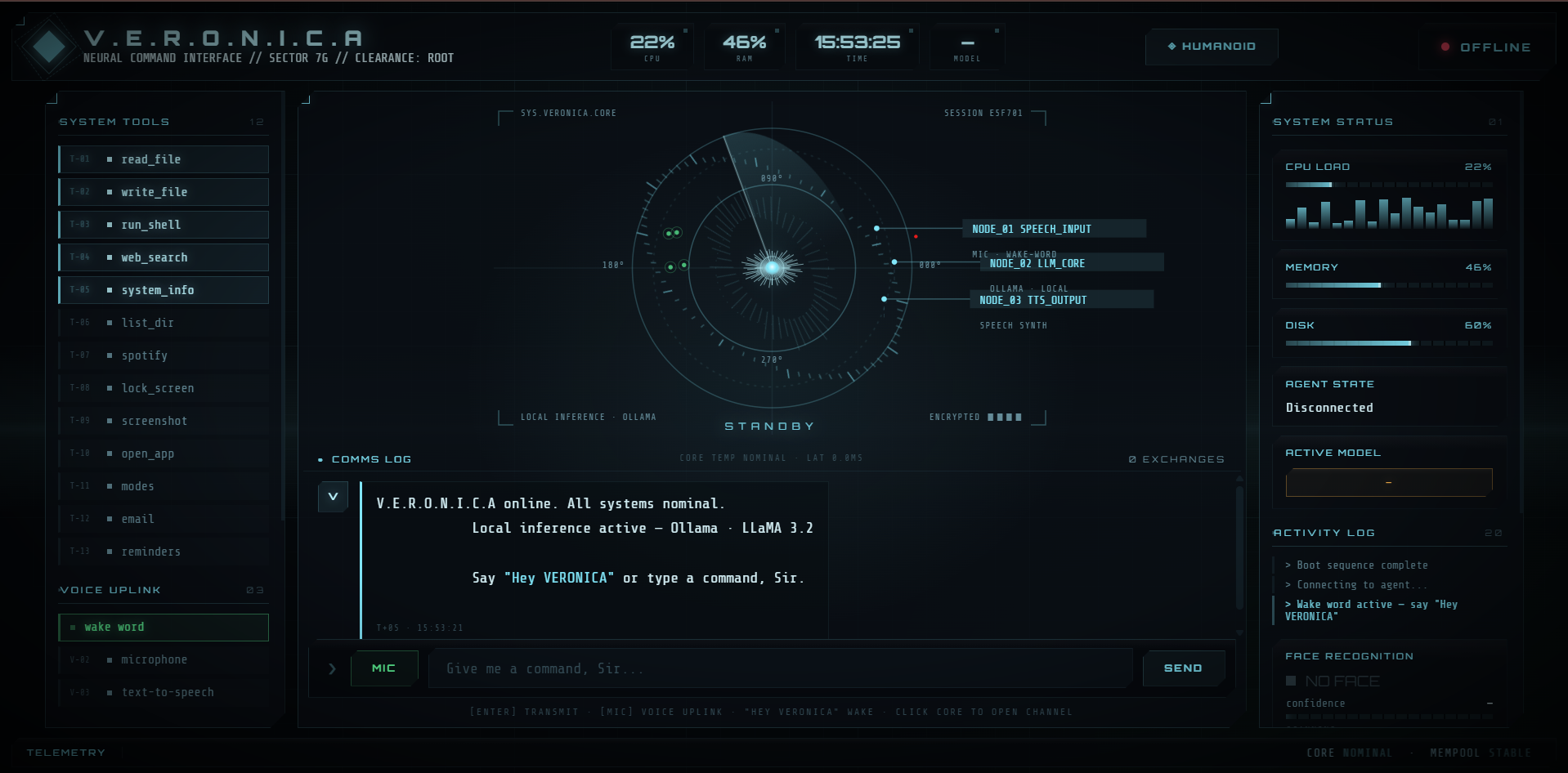
index page or chate page
VERONICA AI: Building a Smarter Personal Assistant
Inspiration
VERONICA AI was inspired by the idea of creating a personal assistant like JARVIS—an intelligent system that can understand natural language, communicate through voice, automate everyday tasks, and help users interact with their computers more efficiently. I wanted to go beyond a simple chatbot and build an AI assistant that could take meaningful actions instead of only generating responses.
What It Does
VERONICA AI is a personal AI assistant designed to combine conversational intelligence with practical automation. The project explores voice interaction, local AI models, Python-based tools, and integrations such as Archify for generating software architecture diagrams. My long-term vision is to make VERONICA a reliable assistant for productivity, programming, research, and computer automation.
How I Built It
I developed VERONICA using Python and explored technologies including Ollama for local language models, faster-whisper for speech recognition, and desktop application frameworks for the user interface. I built a tool registry that allows the assistant to connect user requests with specific functions and integrations.
One important milestone was integrating Archify into VERONICA, enabling it to generate architecture diagrams from natural-language descriptions. I also worked on improving diagram layouts and testing how the assistant handles complex tool requests.
My approach has been to build the system incrementally, testing individual components and integrating them into a unified assistant while preserving existing functionality.
Challenges I Faced
One of the biggest challenges was working within my laptop's hardware limitations. With 8 GB of RAM, running larger local language models was difficult, so I explored smaller models and lightweight components.
I also encountered problems with model-generated JSON, tool selection, integration errors, and architecture diagram generation. These issues taught me the importance of validating model outputs, handling exceptions, testing tools independently, and designing reliable execution workflows.
Another challenge was balancing ambitious features with practical implementation. Instead of trying to build everything at once, I focused on making individual components work correctly before expanding the system.
What I Learned
Building VERONICA strengthened my understanding of AI agents, local language models, speech recognition, Python automation, tool orchestration, and software integration. I learned that a useful AI assistant requires more than a powerful model: it also needs reliable tools, structured outputs, error recovery, and careful testing.
The project also taught me to approach engineering challenges through experimentation, debugging, and continuous improvement.
What's Next
My next goals are to improve VERONICA's reasoning capabilities, make voice interactions more natural, strengthen memory and reminder functionality, and expand its ability to interact safely with desktop applications. I also want to explore a hybrid architecture that combines local AI for privacy and routine tasks with cloud AI for more demanding reasoning when needed.
Final Thoughts
VERONICA AI is an ongoing journey toward building a practical, personalized AI assistant. What began as an idea inspired by intelligent fictional assistants has become a hands-on learning experience in AI engineering and automation. My ultimate goal is to create an assistant that doesn't just answer questions but helps people turn their ideas into actions.
Built With
- agentic-ai
- ai-agents
- api
- archify
- artificial-intelligence
- automation
- css
- electron
- flask
- generative-ai
- html
- javascript
- json
- large-language-models
- local-ai
- machine-learning
- natural-language-processing
- ollama
- python
- rest-api
- speech-recognition
- tool-calling
- whisper

Log in or sign up for Devpost to join the conversation.