Inspiration
We were inspired to create Vernacular after realizing how many widely spoken languages around the world are underrepresented in digital learning tools. While platforms like Duolingo and Airlearn make it easy to learn popular languages like French or Spanish, they often leave out languages spoken by hundreds of millions, like Bengali, Urdu, or Punjabi. For many of us, these languages connect to our own families and cultures, yet we noticed there were few interactive, AI-powered tools to help people learn or preserve them. The current algorithms powered by AI lack the structure and consistency that our web platform offers. This inspired us to eliminate the consistent headache of re-prompting and re-directing the conversation by creating a language learning platform with clear boundaries and capabilities that uplift underrepresented languages, preserve linguistic heritage, and create authentic connections between people and cultures.
What it Does
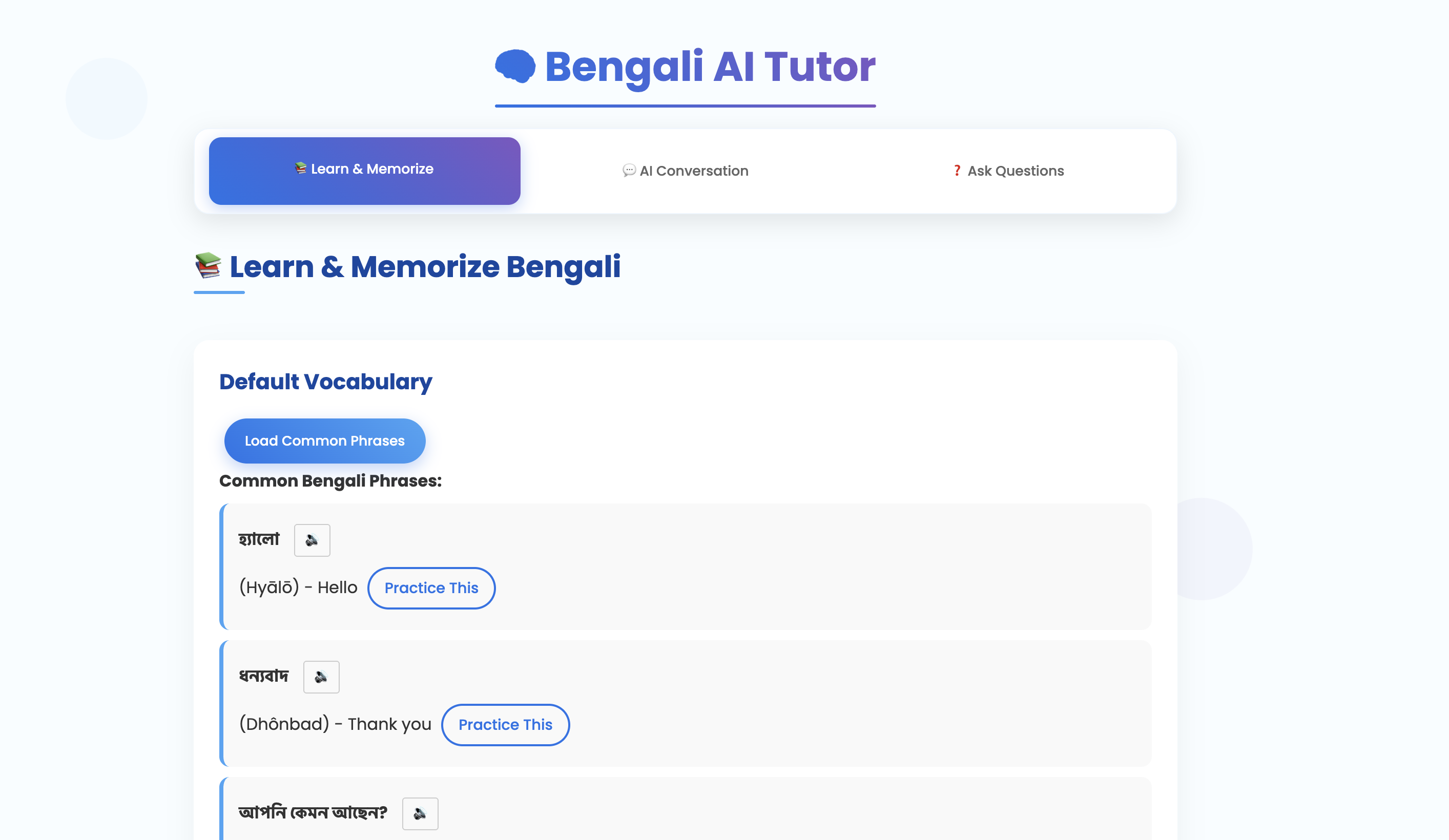
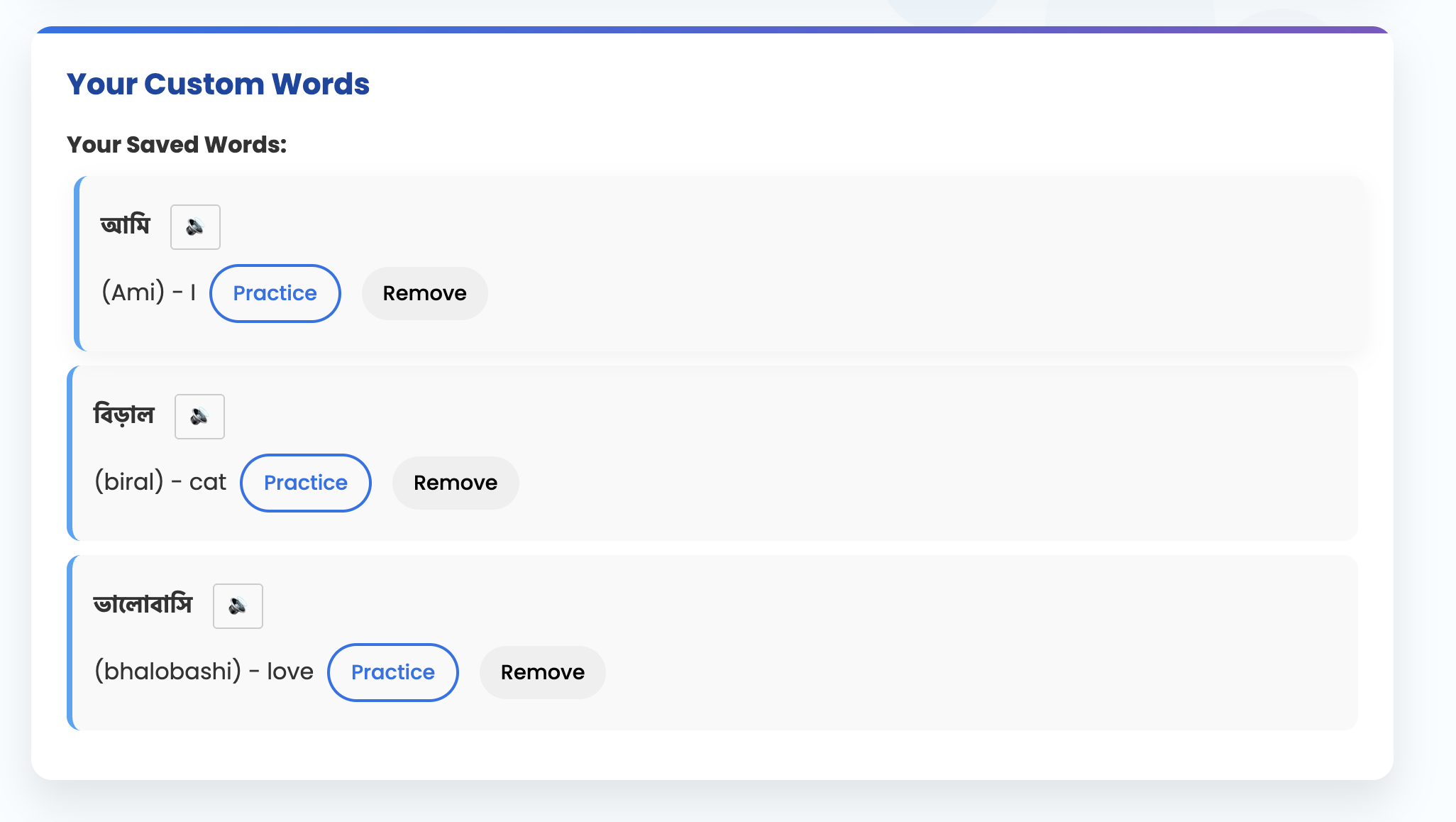
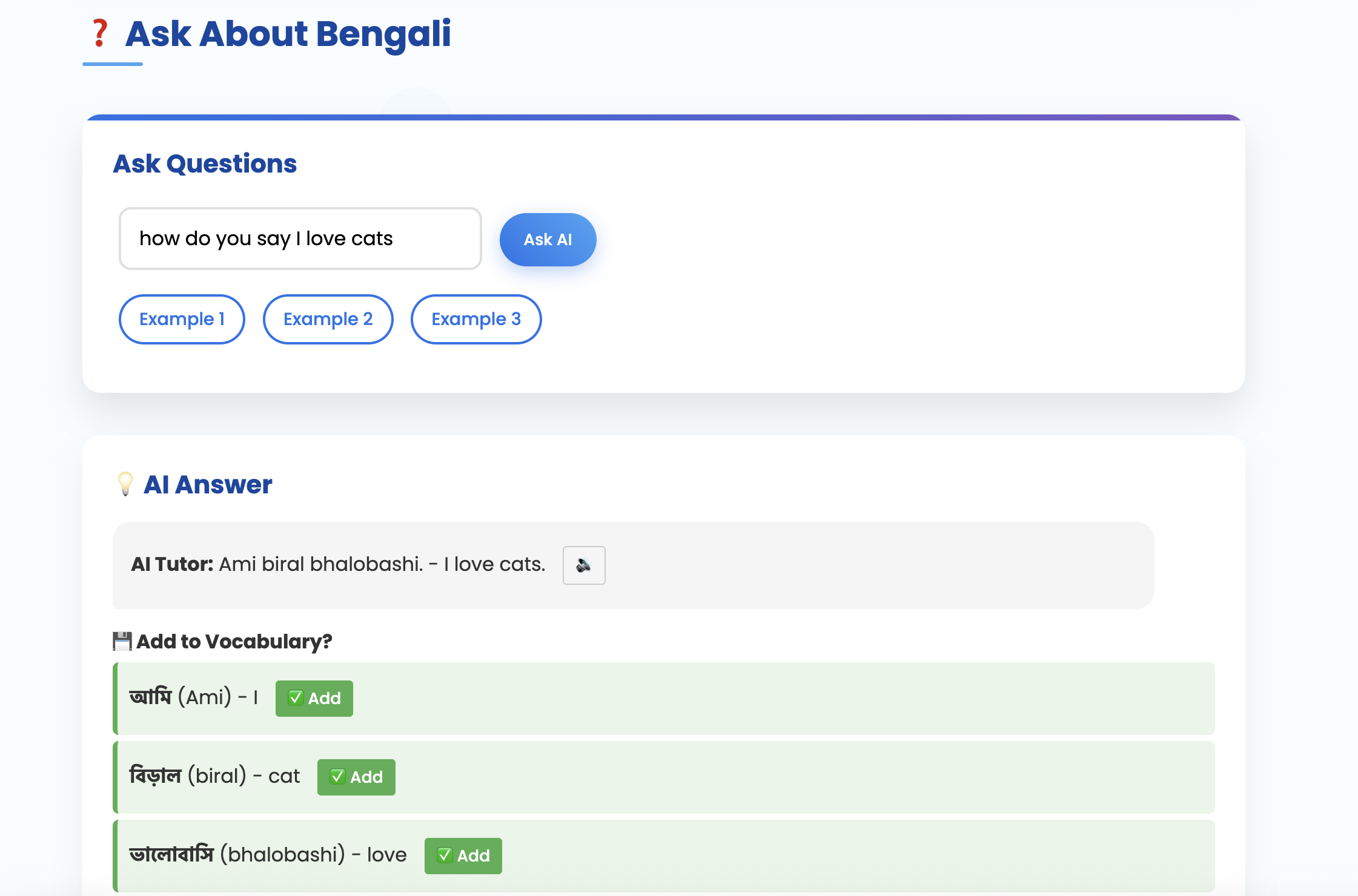
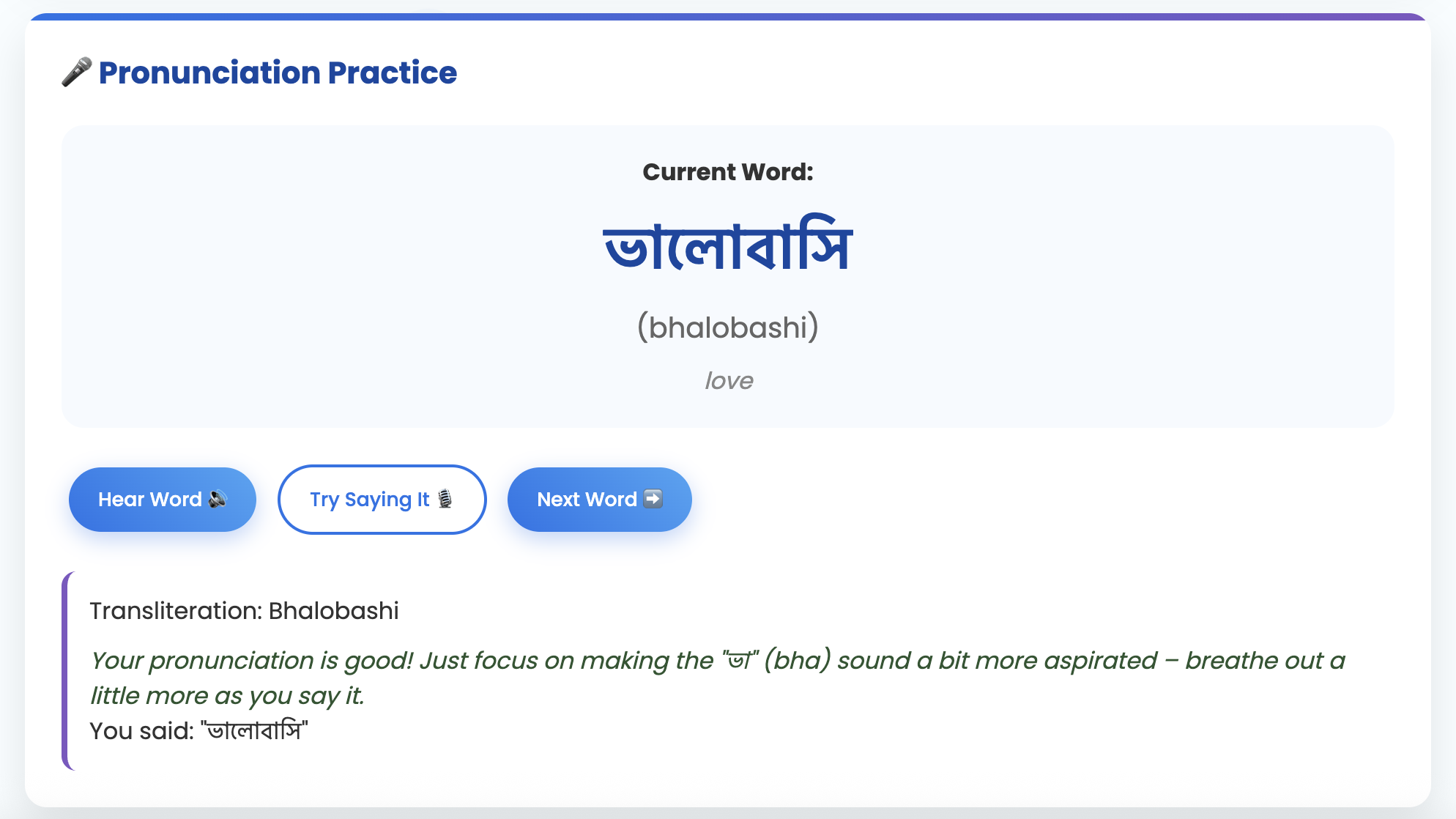
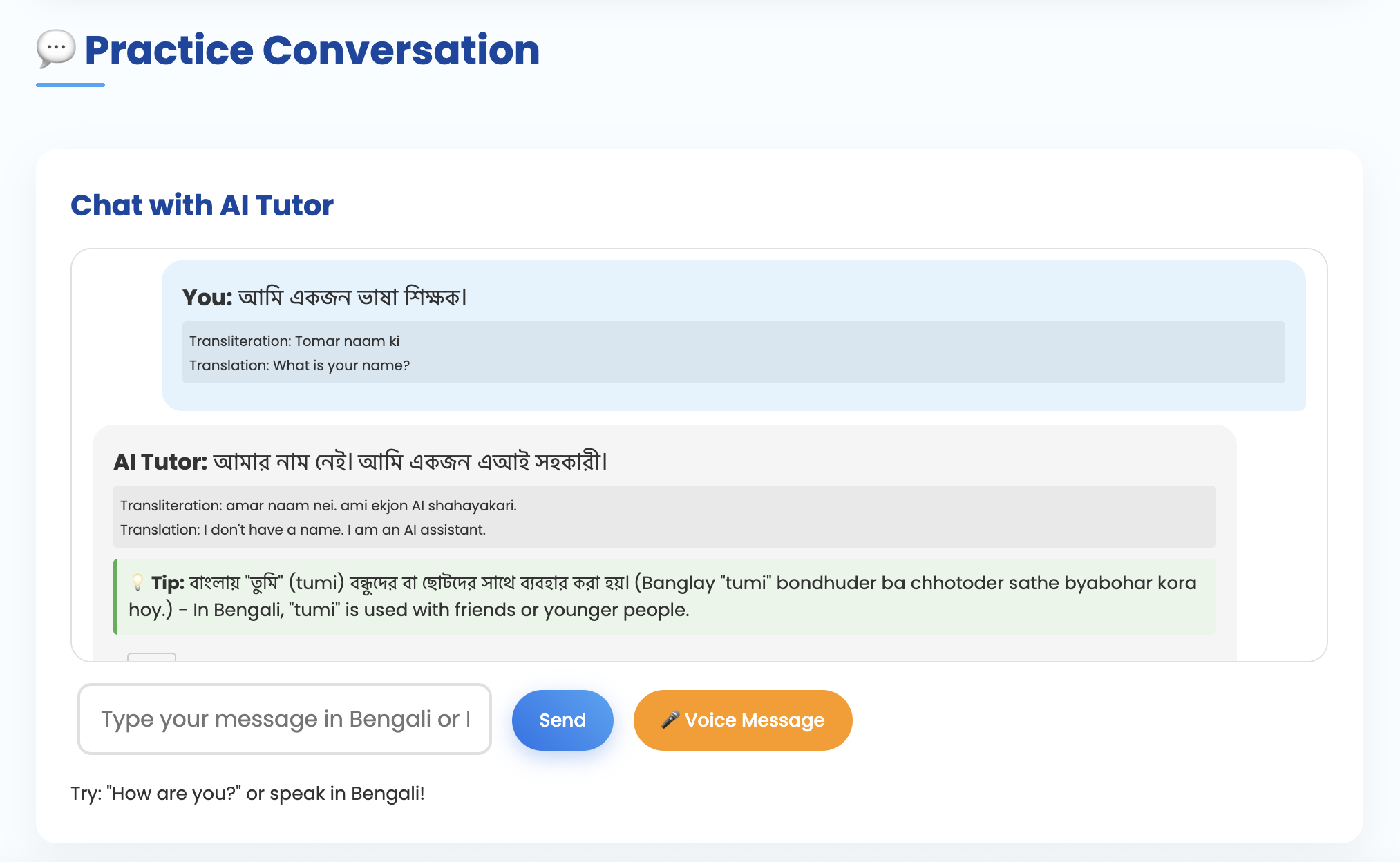
Vernacular is an AI-powered web platform designed to teach underrepresented languages conversationally. In our current version, users can learn Bengali/Bangla through customized lessons powered by BanglaBot, the first Vernacular AI chatbot. The platform includes three core features to encompass the process of learning a language. First, “Learn & Memorize,” where users explore vocabulary lists, hear correct pronunciations, and save custom words for future review. Secondly, “AI Conversation,” in which users engage in natural chat with BanglaBot, which provides real-time transliteration, translation, and pronunciation feedback. Lastly, an “Ask Questions” feature, where users ask the AI cultural or language-based questions in English and receive responses in Bengali, complete with relevant vocabulary words that can be saved for later practice. By combining personalized learning using AI and authentic linguistic data, Vernacular makes learning languages accessible and culturally meaningful.
How it was Built
We built Vernacular using Flask (Python) for the backend and HTML, CSS, and JavaScript for the frontend. Flask-CORS handles secure communication between the backend and frontend. We integrated the Google Gemini 2.0 Flash API to power our AI features, allowing users to practice pronunciation, receive feedback, and engage in realistic native-level language conversations. The backend handles routes for lessons, conversations, transliteration, and open-ended questions, each connecting to Gemini for processing and returning a structured JSON response to the frontend. The frontend presents an intuitive, user-friendly, responsive interface where users can easily navigate between learning modes and interact with the AI in real time.
Challenges
One of the biggest challenges we faced was working with limited digital resources for underrepresented languages, which is usually why the more mainstream platforms like Duolingo tend not to include them for their users. For Bengali, we had to carefully handle transliteration and pronunciation since standardized datasets are less common. Integrating real-time AI responses while maintaining accuracy and natural tone was also a challenge, especially when connecting Gemini’s outputs to our custom-designed interface. Integrating some of the animated effects on the front-end side was also tricky, as the positioning and features of certain tab movements were more complicated than we expected.
Accomplishments
We’re most proud of successfully creating a functional and viable AI-driven web platform in just 36 hours. We built a working Bengali language learning tool that goes beyond simple translation to actually allow users to converse, learn vocabulary, and receive pronunciation feedback. We also developed a design that’s both visually engaging and built with the user’s perspective in mind. On a deeper level, we’re proud that Vernacular offers us all a personal solution to learning low-access languages, helping us all connect with our unique cultures. Our hope as we scale this platform is for it to provide the same cultural connections and learning opportunities to our users, too!
What we Learned
Through Vernacular, we learned how to connect multiple technologies into a cohesive full-stack AI system. We deepened our understanding of API integration, RESTful design, and cross-language text processing. Beyond the technical lessons, we also learned about the numerous components that go into creating effective virtual learning platforms and how to effectively work with the individual backgrounds each team member brings to a software development cycle, and simply from a personal background as well.
Next Steps
Next, we plan to scale Vernacular by adding more underrepresented languages, such as Akan and its different dialects, and allowing the interface itself to adapt to different base languages (for example, Bengali speakers learning English). We also aim to introduce features like reading and writing practice, competitive challenges, and leaderboards. Long term, we hope to partner with educators and cultural organizations to preserve linguistic heritage through AI. Vernacular’s mission will continue to make learning underrepresented languages accessible and authentic.


Log in or sign up for Devpost to join the conversation.