-
-
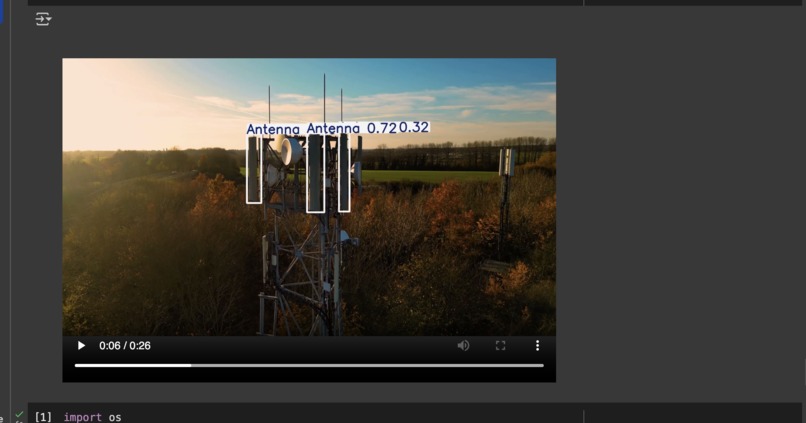
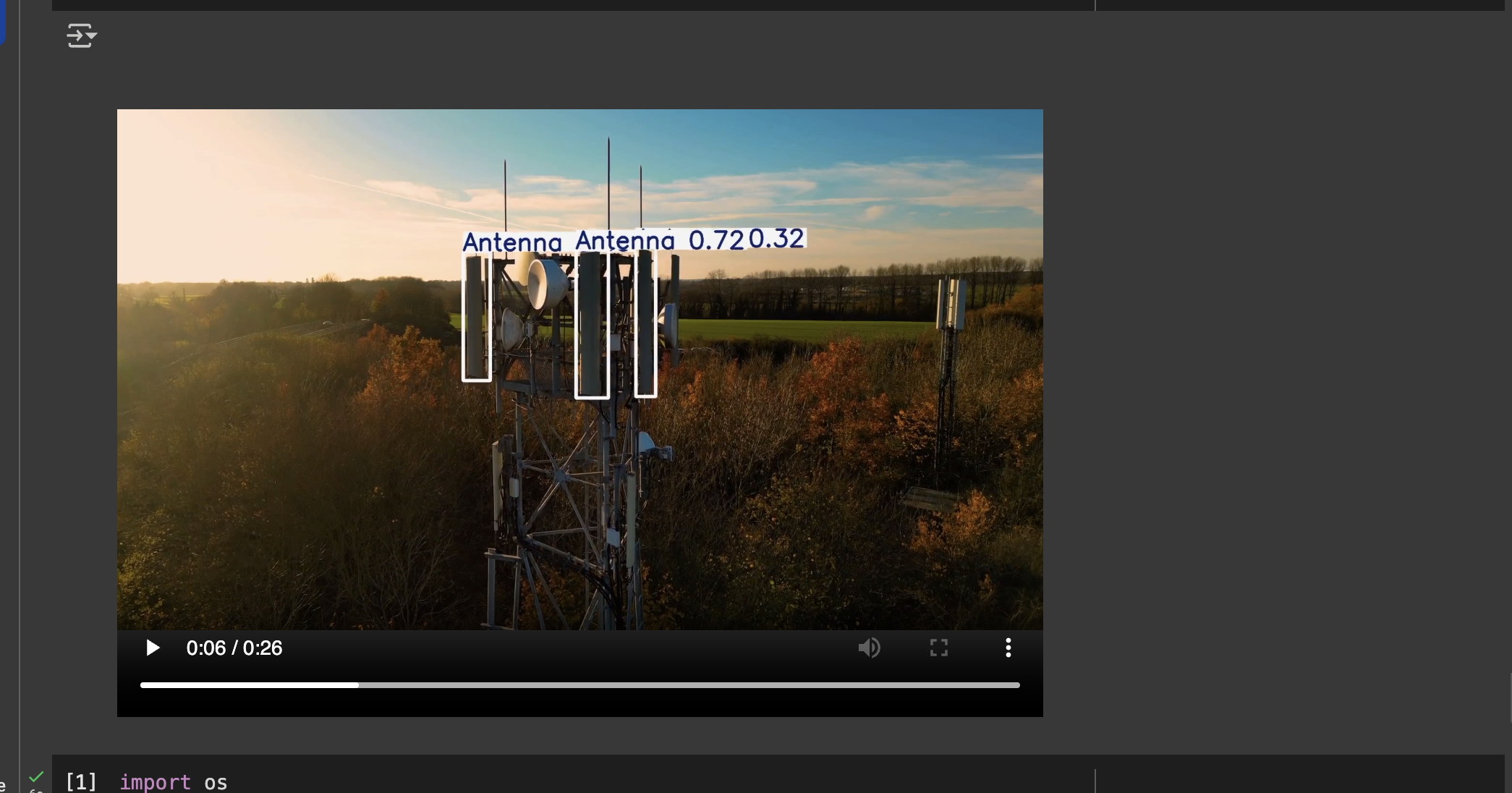
demo_png
Inspiration
the project was inspired by the Verizon challenges workshops.Traditional methods are time-consuming, expensive, and potentially hazardous. Observing the intricate details involved in tower maintenance, I saw an opportunity to leverage machine learning—specifically, object detection techniques—to automate and improve the process. The potential to reduce operational costs and increase safety drove us to explore this area further.
What it does
This project automates the inspection of Verizon cell towers by: Detecting key elements such as birds, bird nests, human, rust, snow, fire, breakage and structural components. Providing real-time analysis and feedback through an interactive interface. Enabling proactive maintenance decisions that enhance safety and reduce costs.
How we built it
1.Data Collection & Preparation: We used a dataset provided by Verizon that includes images, labels, and data.yaml. The data was organized into separate folders for images and labels, and preprocessed to handle nested directories. Besides, we created our own customized data by adding bird nest, fire, snow, rust, breakage pics and labels generated through CVAT. And we did a bit of work on processing our data by split into train, validation sets. and then we combined all train and validation sets. And generated our yaml file
2.Model Selection & Training: We started with a pretrained YOLOv12 model (yolov12n.pt):the nano variant – the smallest and fastest, with lower accuracyand fine-tuned it on our custom dataset. This allowed us to adapt a state-of-the-art object detection model to the specific characteristics of cell towers. Until I found out the yolov12n.pt is not released on ultralytics. So I used yolo11s.pt
Deployment & Integration: The entire pipeline—from data preprocessing and model training to deployment—was integrated to ensure a smooth and robust workflow for real-world applications.
Challenges we ran into
Data Quality & Annotation: Managing and refining the dataset was challenging due to variations in image quality and the complexity of the annotations. And it was lots of work. FREE GPU running limit on google colab.
Accomplishments that we're proud of
1.Automated Inspection: Successfully automating a traditionally manual and hazardous inspection process. 2.Real-Time Feedback: Implementing a system that provides immediate detection results, improving decision-making on the ground. 3.Effective Model Fine-Tuning: Achieving a high level of accuracy by fine-tuning a state-of-the-art model (YOLO11s.pt) on a specialized dataset. 4.Operational Efficiency: Demonstrating significant potential to reduce both maintenance costs and downtime through proactive tower health monitoring.
What we learned
1.Critical Role of Data: The quality and structure of the data are fundamental to training effective machine learning models. 2.Power of Pretrained Models: Leveraging and adapting state-of-the-art pretrained models like YOLOv12 can accelerate development and achieve excellent results with proper customization. 3.Interdisciplinary Innovation: Combining domain expertise in tower maintenance with cutting-edge AI techniques can lead to practical and impactful solutions. 4.Iterative Process: Continuous testing, feedback, and iteration are key to refining both the model and the user interface.
What's next for Verizon cell towers detection
1.Enhanced Feature Detection: Expanding the system to identify additional tower components and potential hazards.
2.3D Analysis: Incorporating 3D modeling and camera calibration for more accurate measurements and spatial analysis.
3.Predictive Maintenance: Integrating predictive analytics to anticipate maintenance needs and prevent failures.
4.Scalability Improvements: Adapting the solution for large-scale deployment across multiple regions and integrating real-time alerts for maintenance crews.
5.User Interface Refinement: Continuously improving the interface based on user feedback to further streamline the inspection process.
Built With
- colab
- python
- ultralytics
- yolo11s


Log in or sign up for Devpost to join the conversation.