-
-
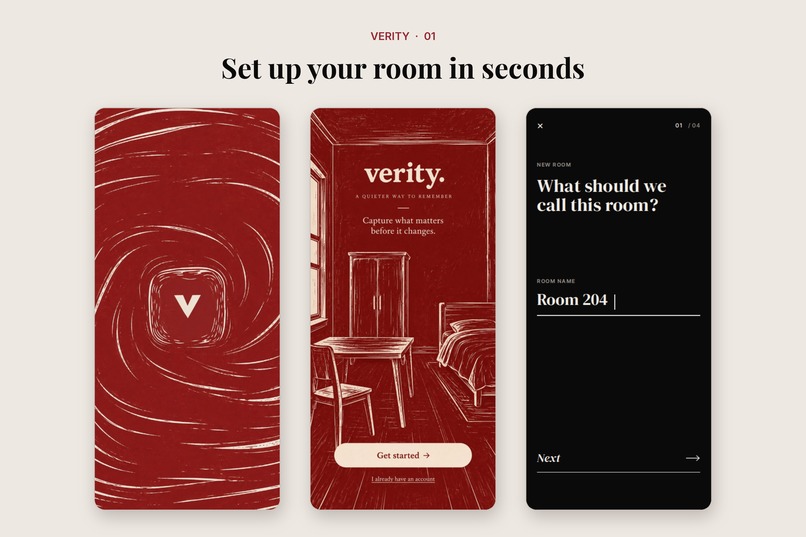
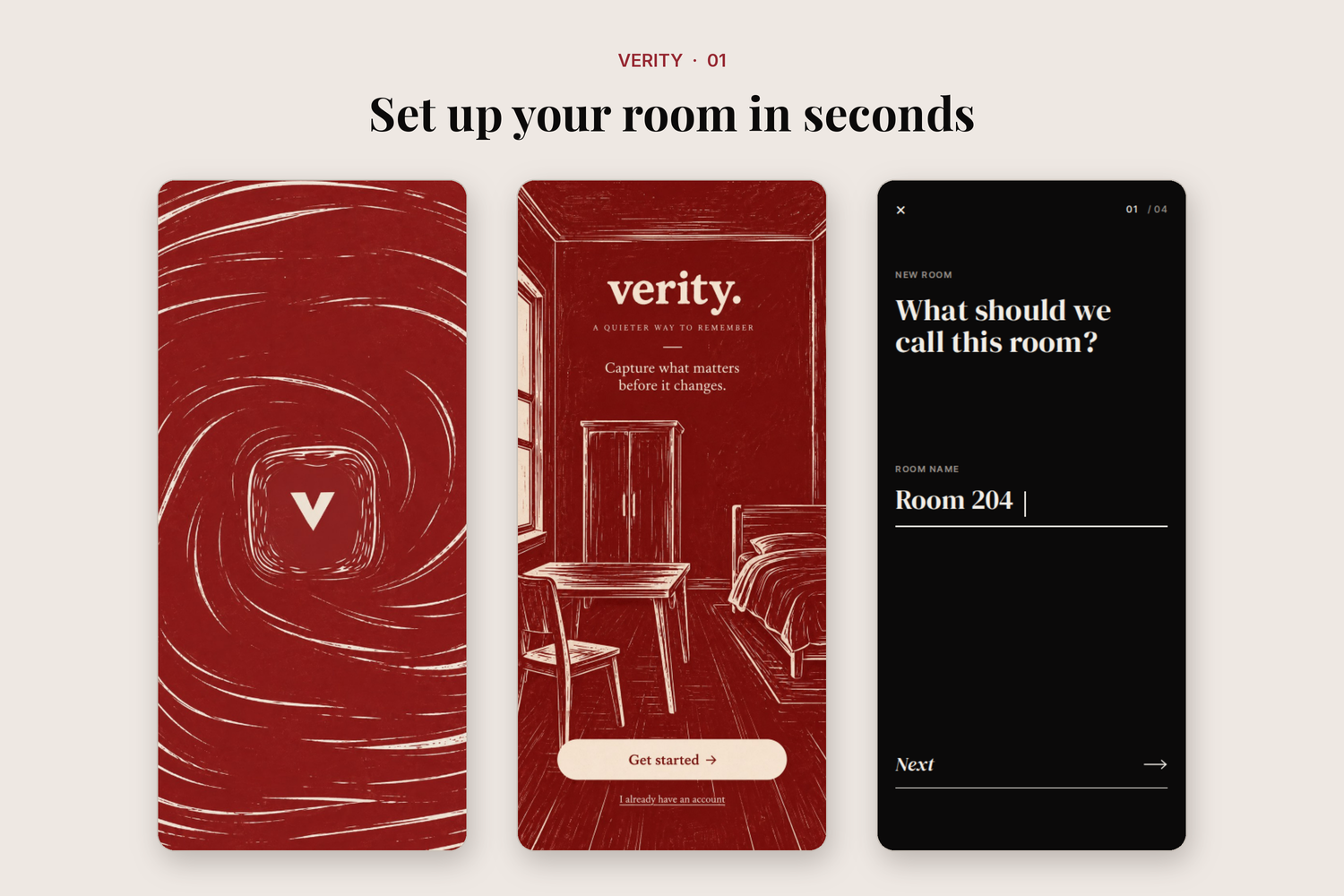
Splash, welcome, and naming your room: setup starts in seconds, no forms.
-
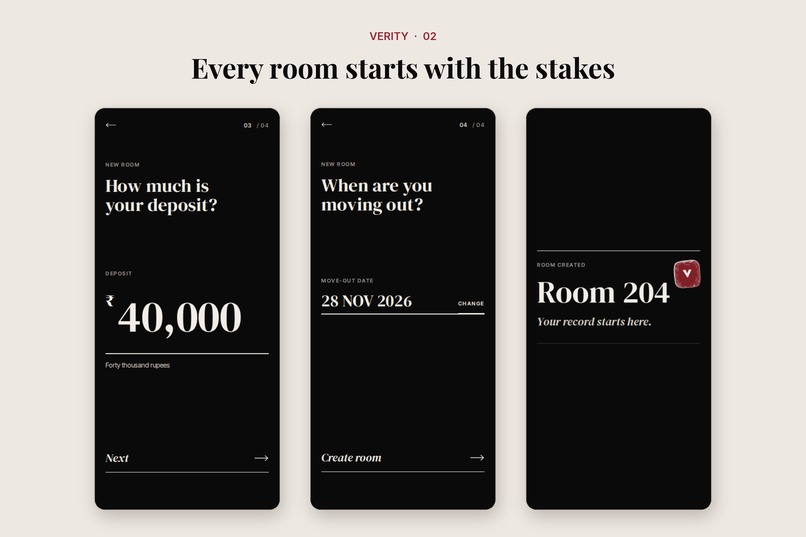
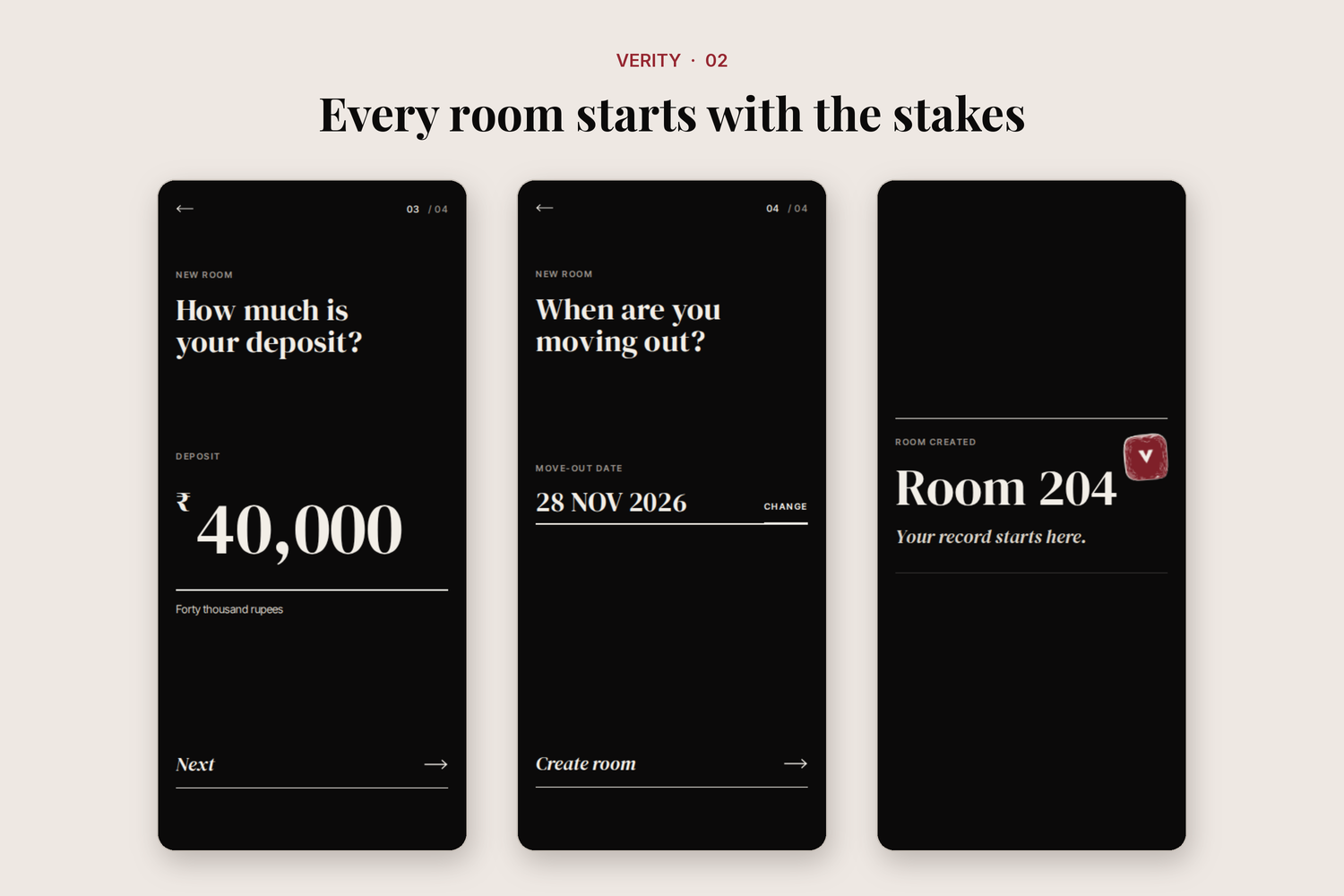
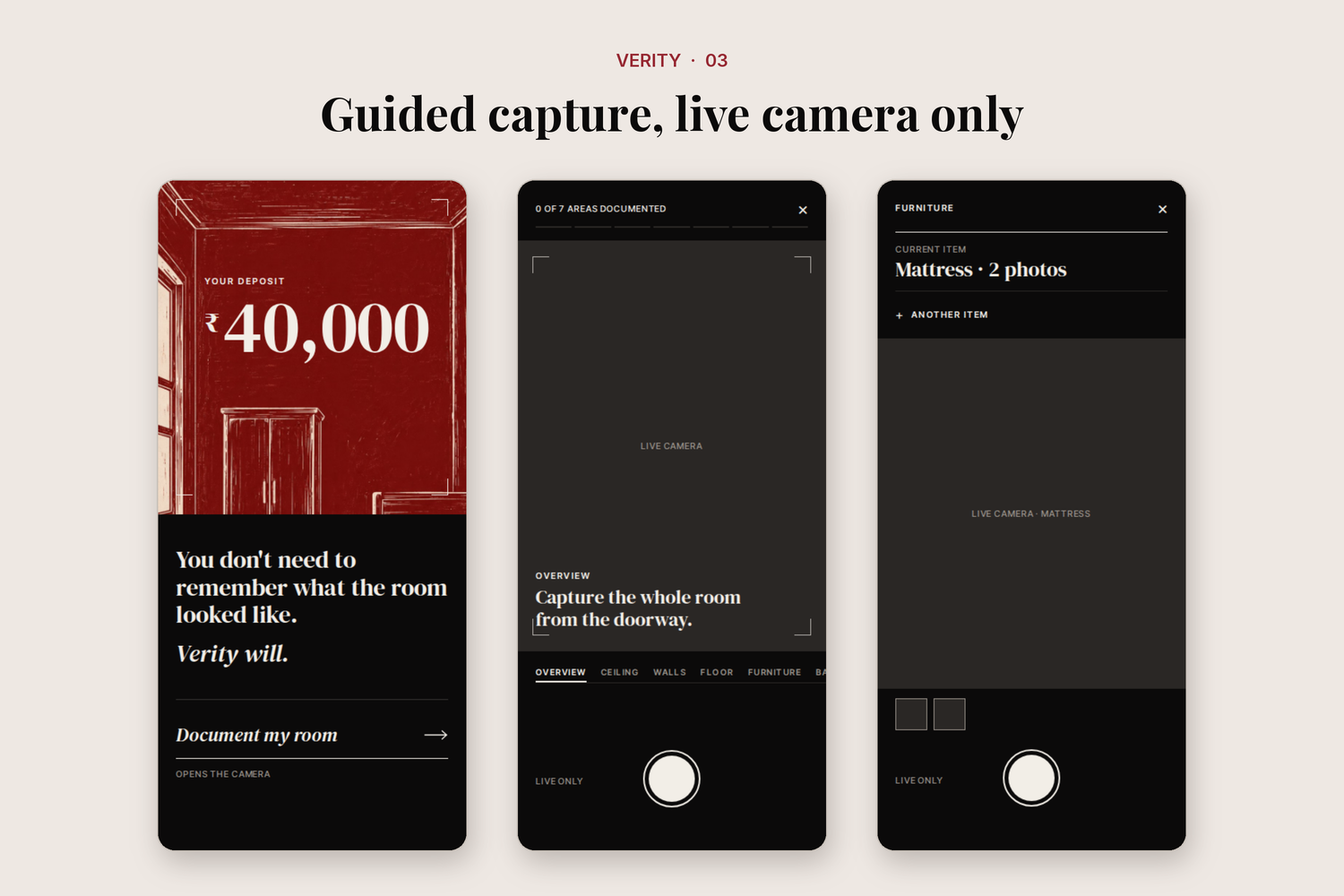
Enter your deposit and move-out date. Verity shows exactly what's at stake before you capture anything.
-
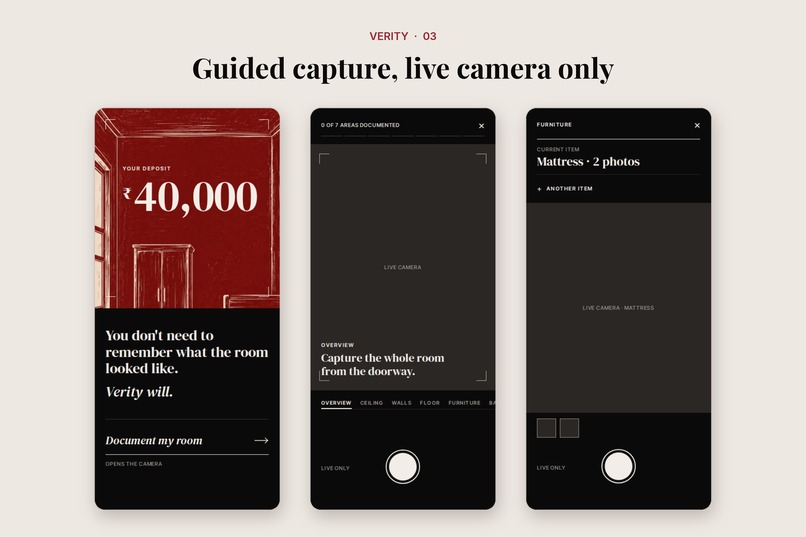
Guided capture walks you through every area of the room. Live camera only, no gallery imports.
-
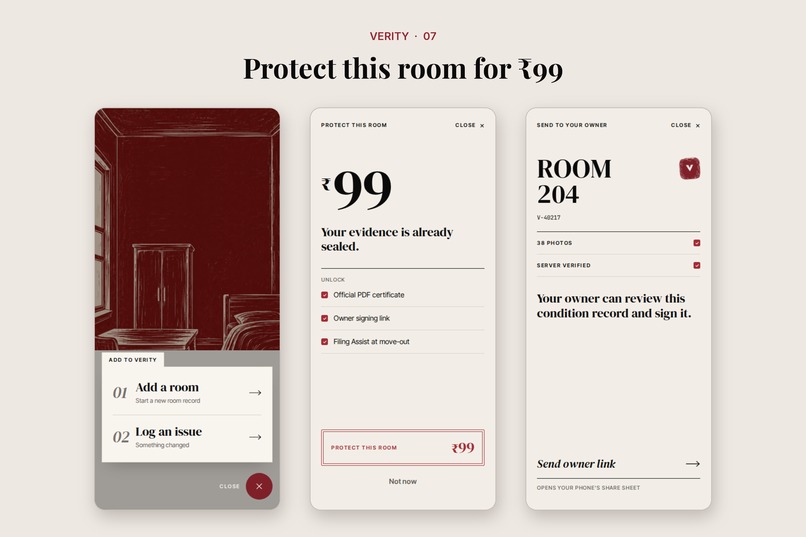
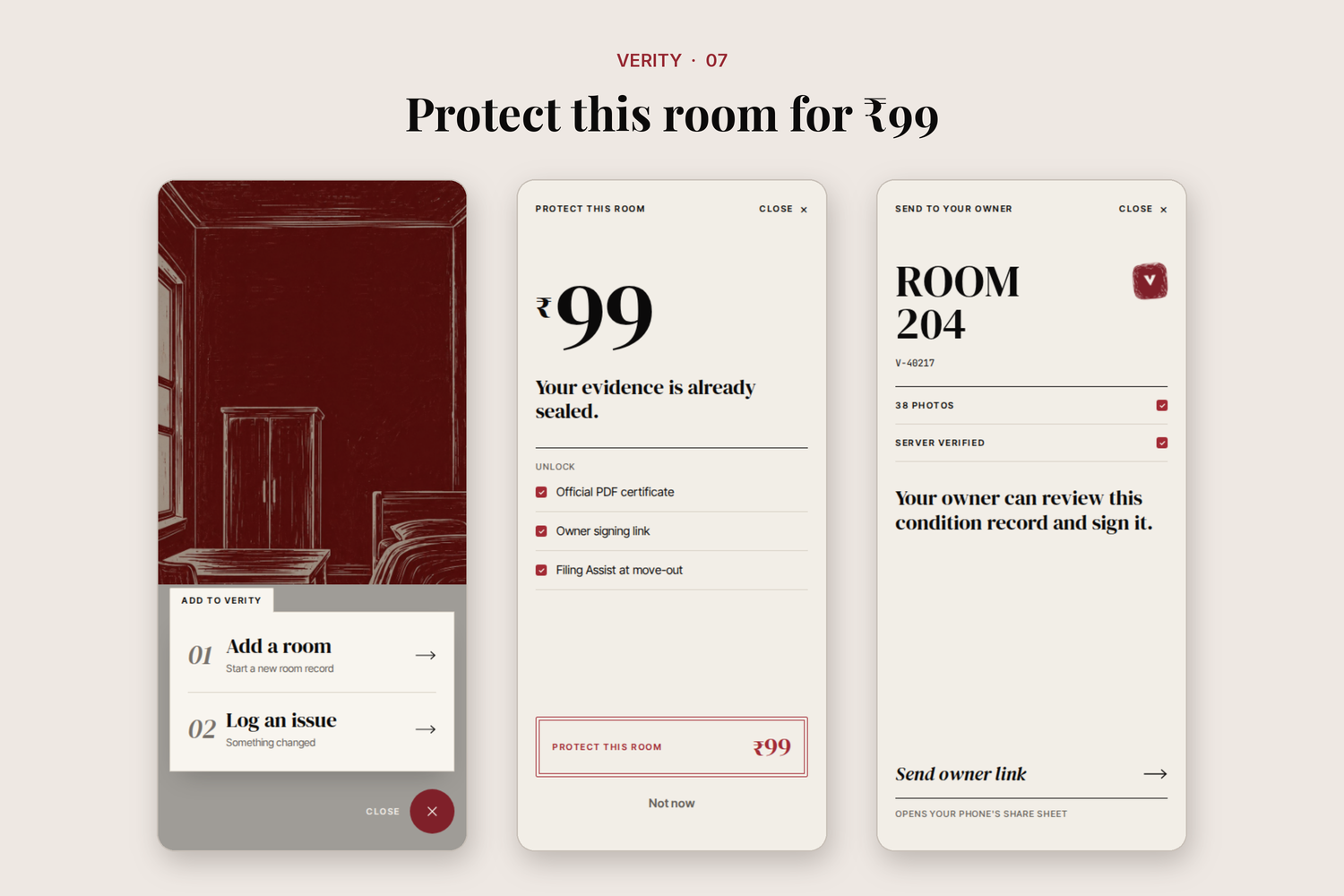
Protect this room for ₹99: Evidence Certificate, owner signing link, and Filing Assist if you ever need it.
-
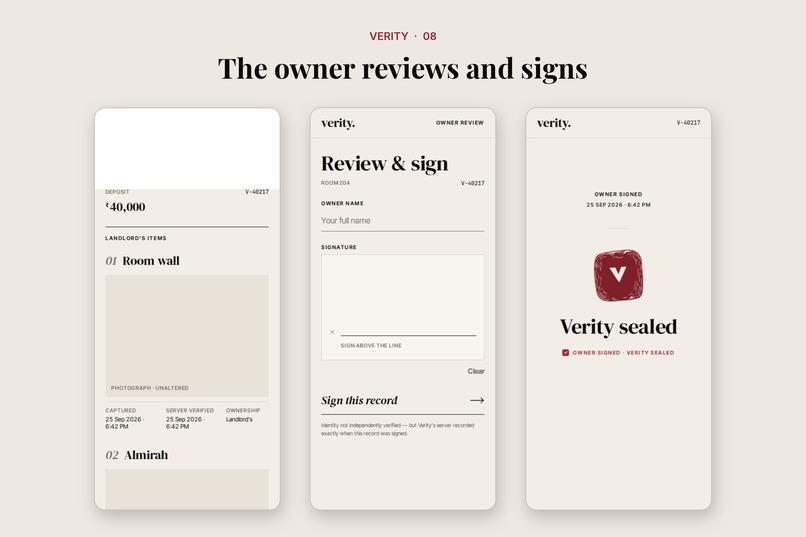
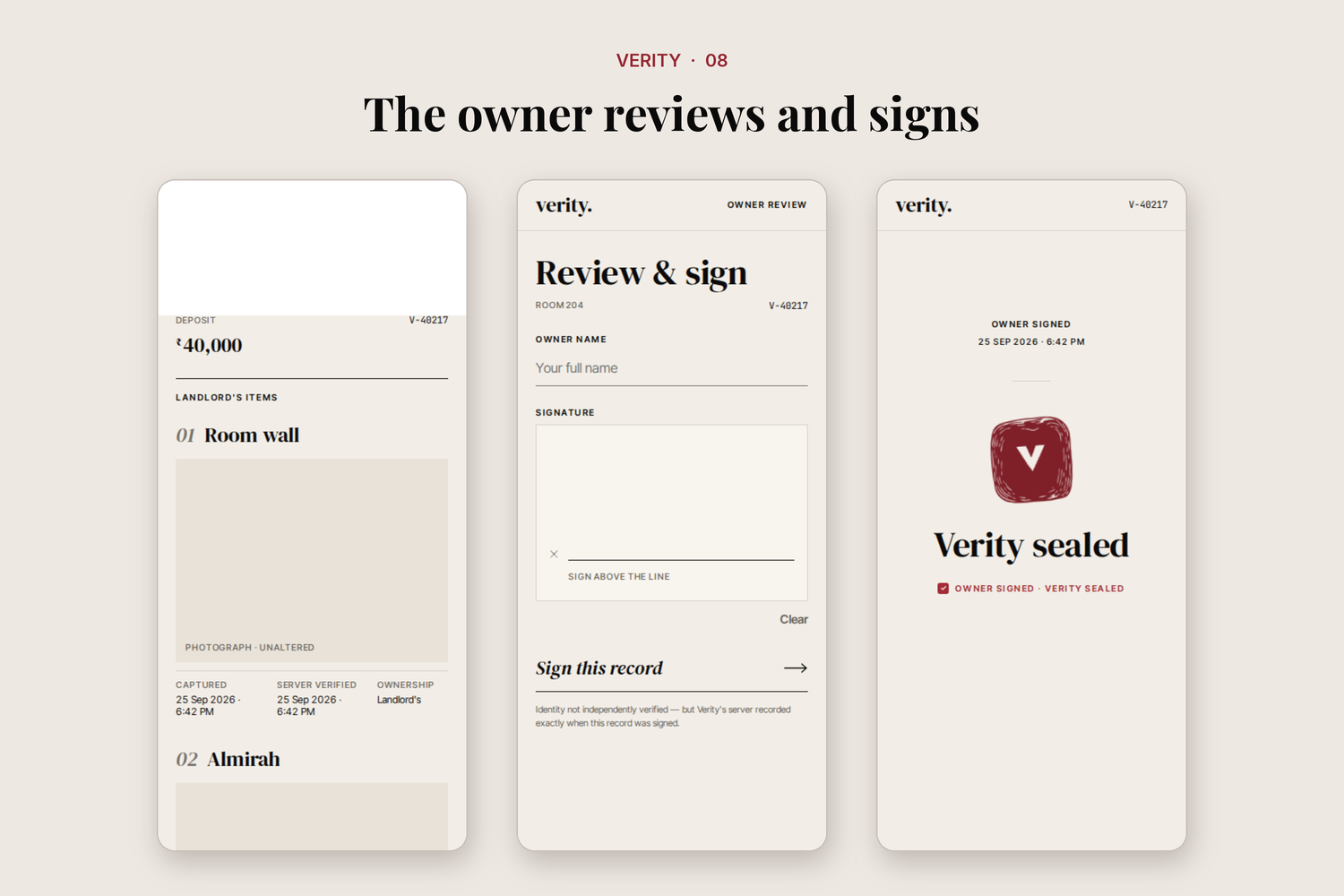
The owner reviews the sealed record on the web and signs with a finger. No app, no account needed.
-
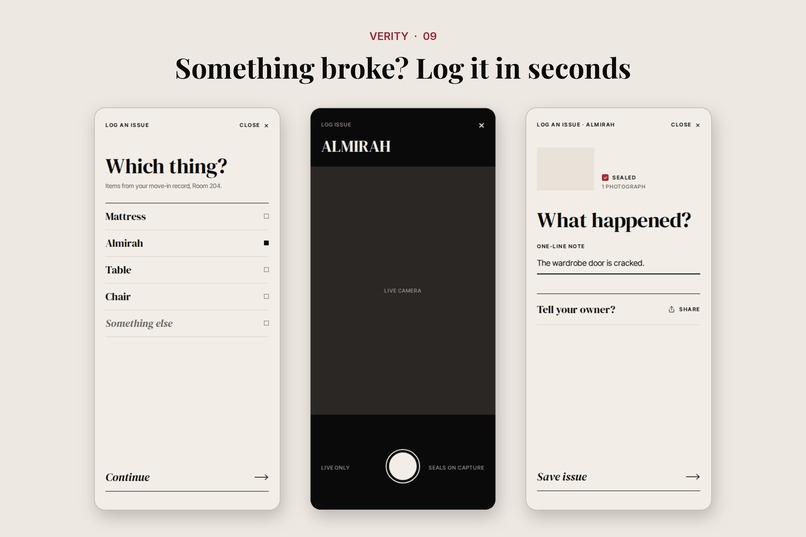
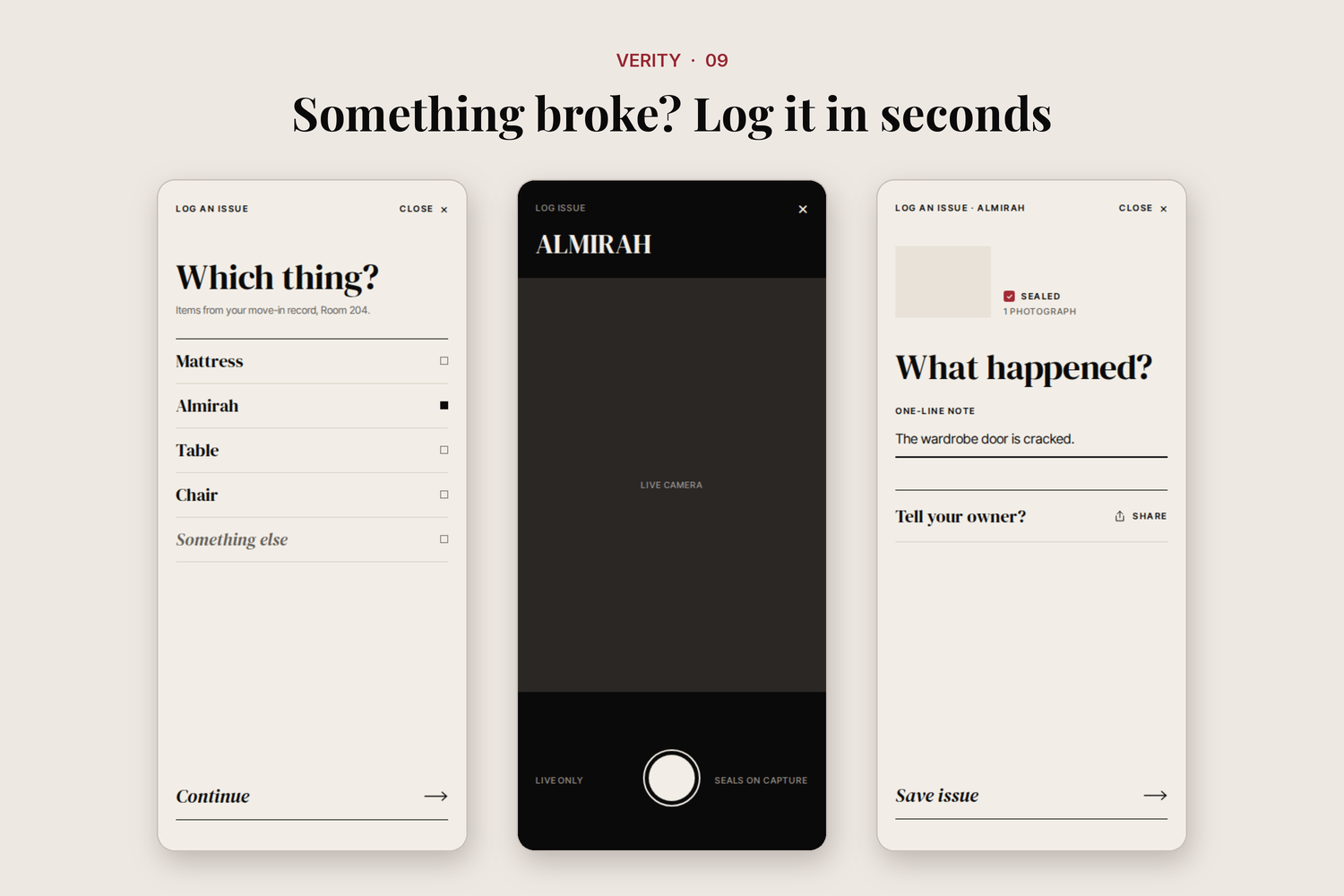
Something broke mid-tenancy? Pick the item, snap a live photo, add a one-line note. Done.
-
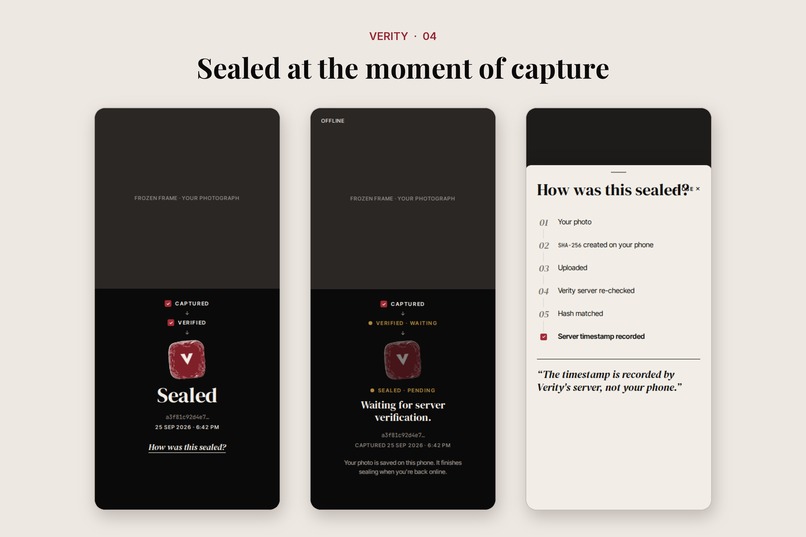
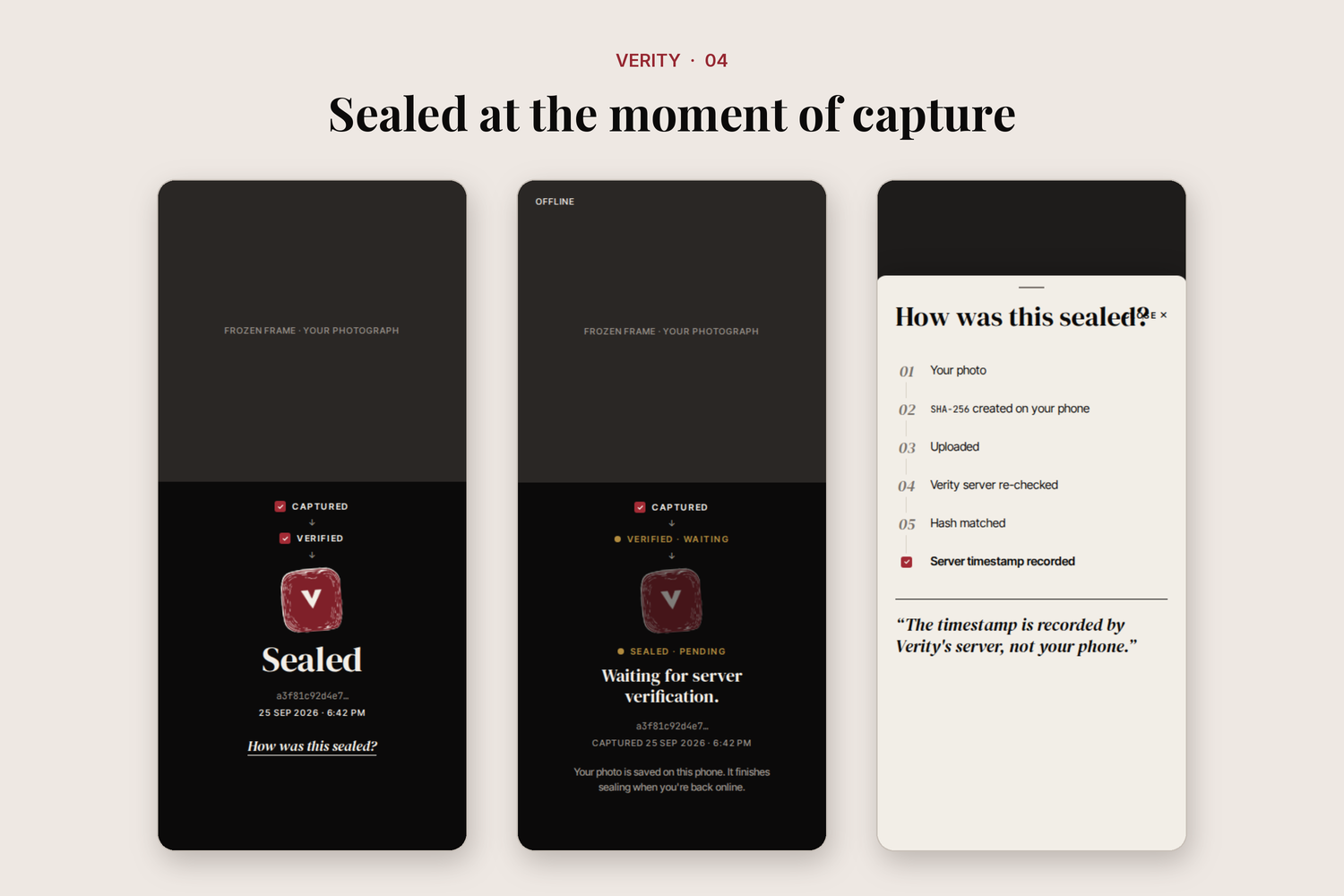
Each photo is SHA-256 hashed at capture and server-timestamped. Offline? It waits as pending seal.
-
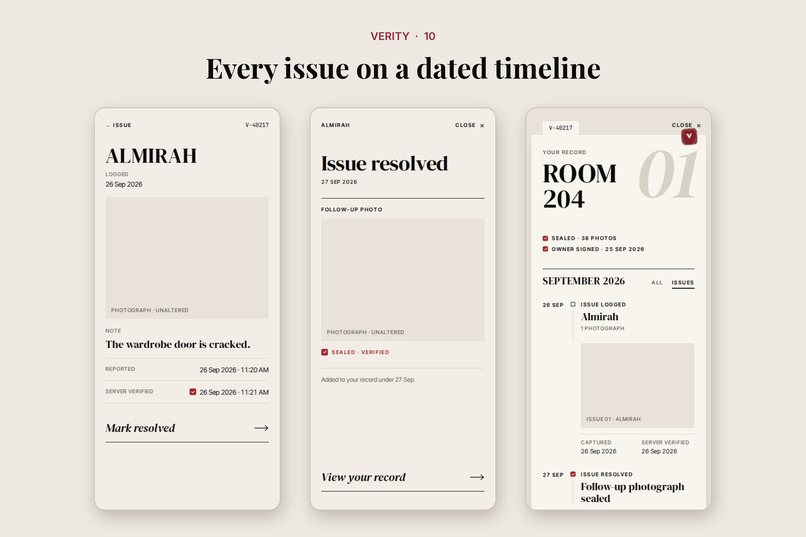
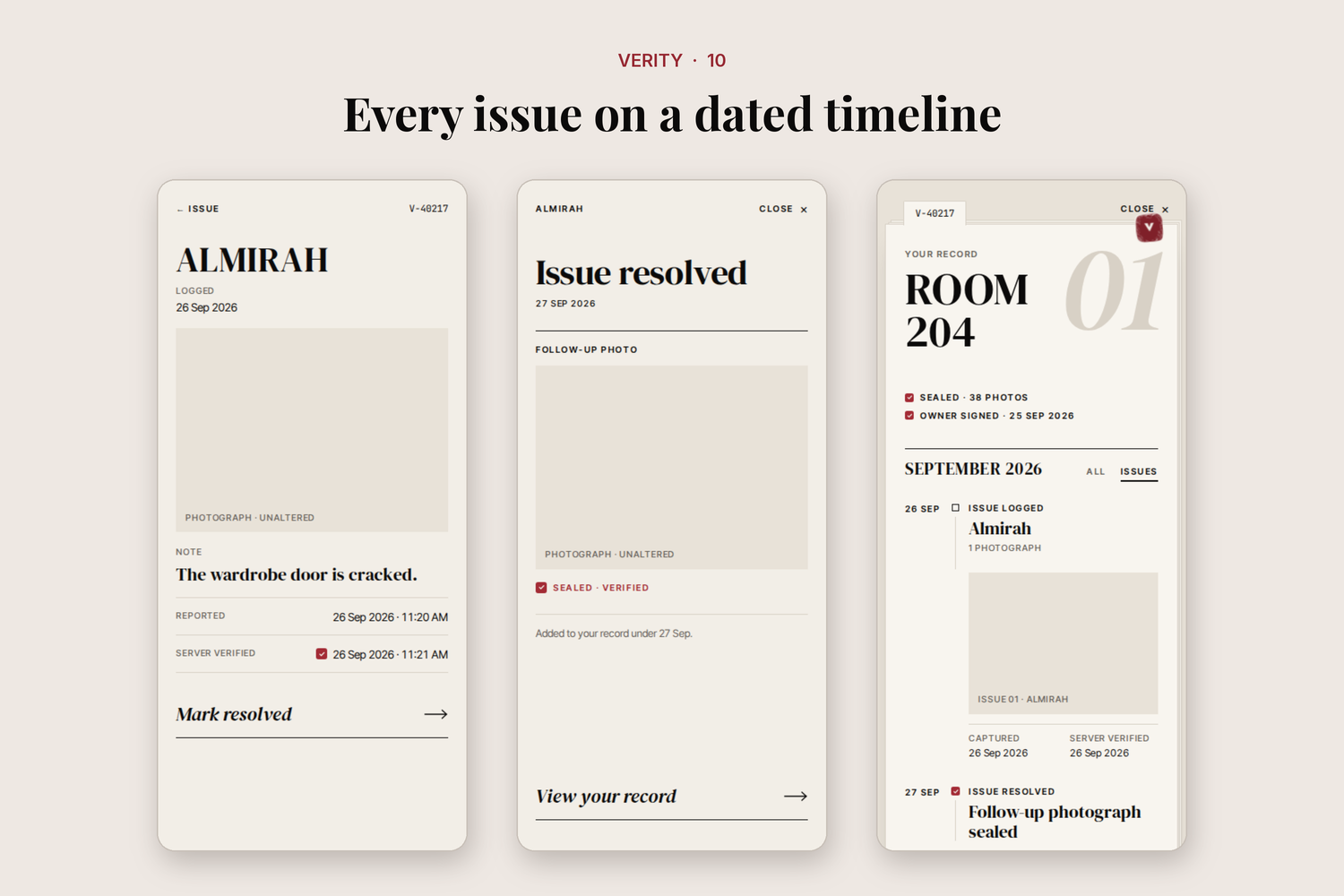
Every issue lands on a dated timeline, from logged to resolved, filterable anytime.
-
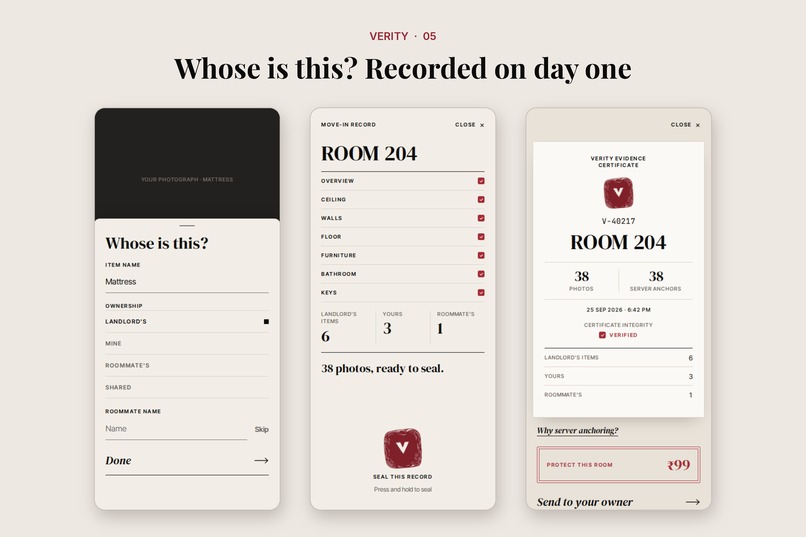
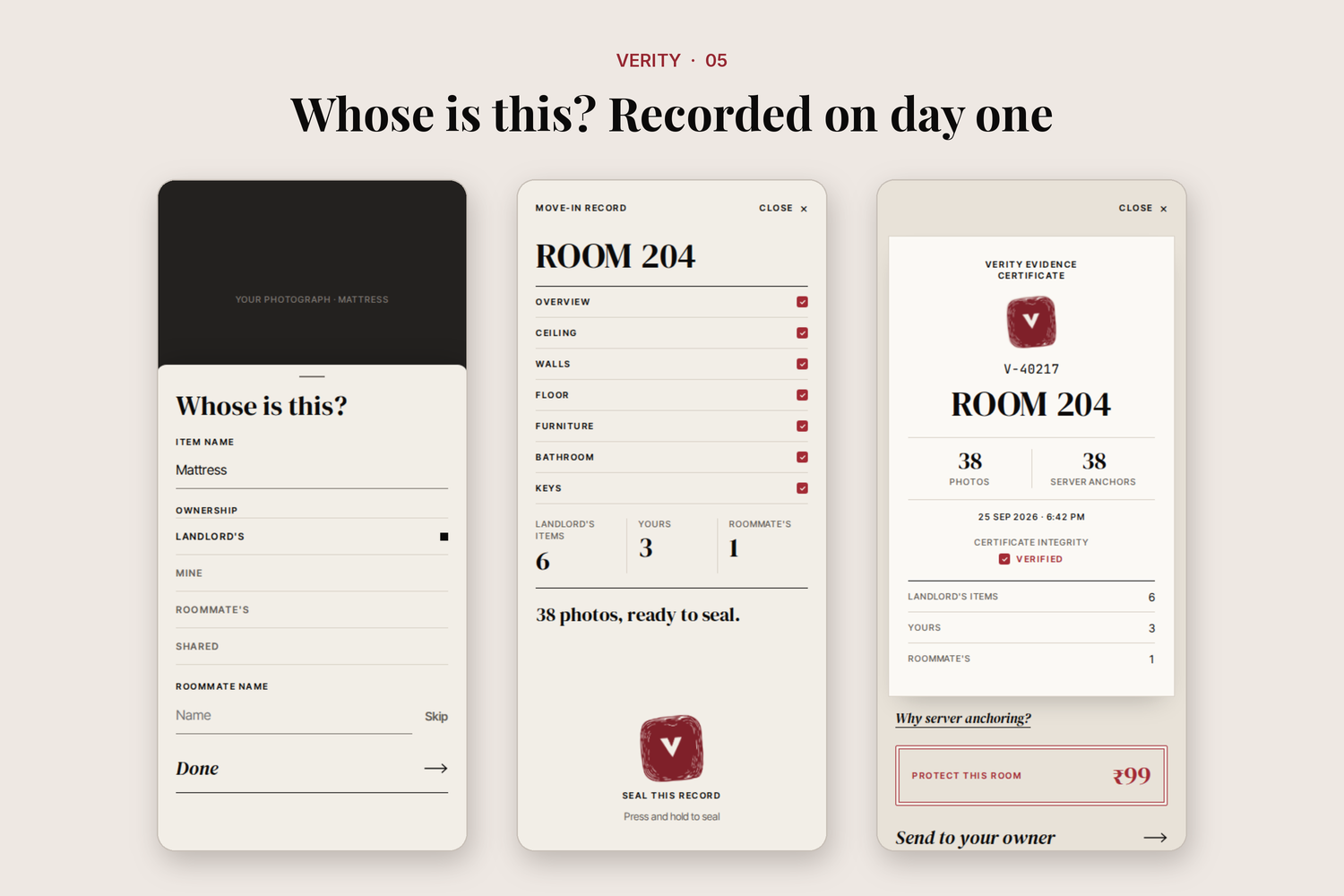
"Whose is this?" Tag each item as Landlord's, Mine, Roommate's or Shared, then get your sealed certificate.
-
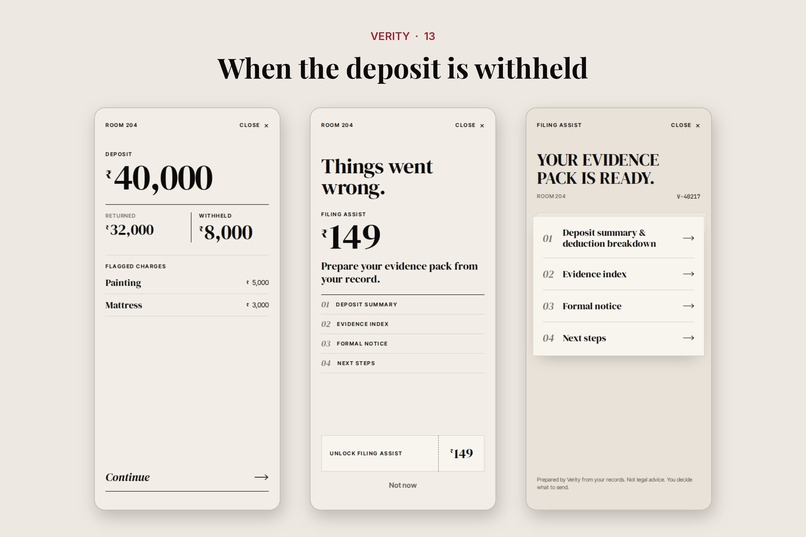
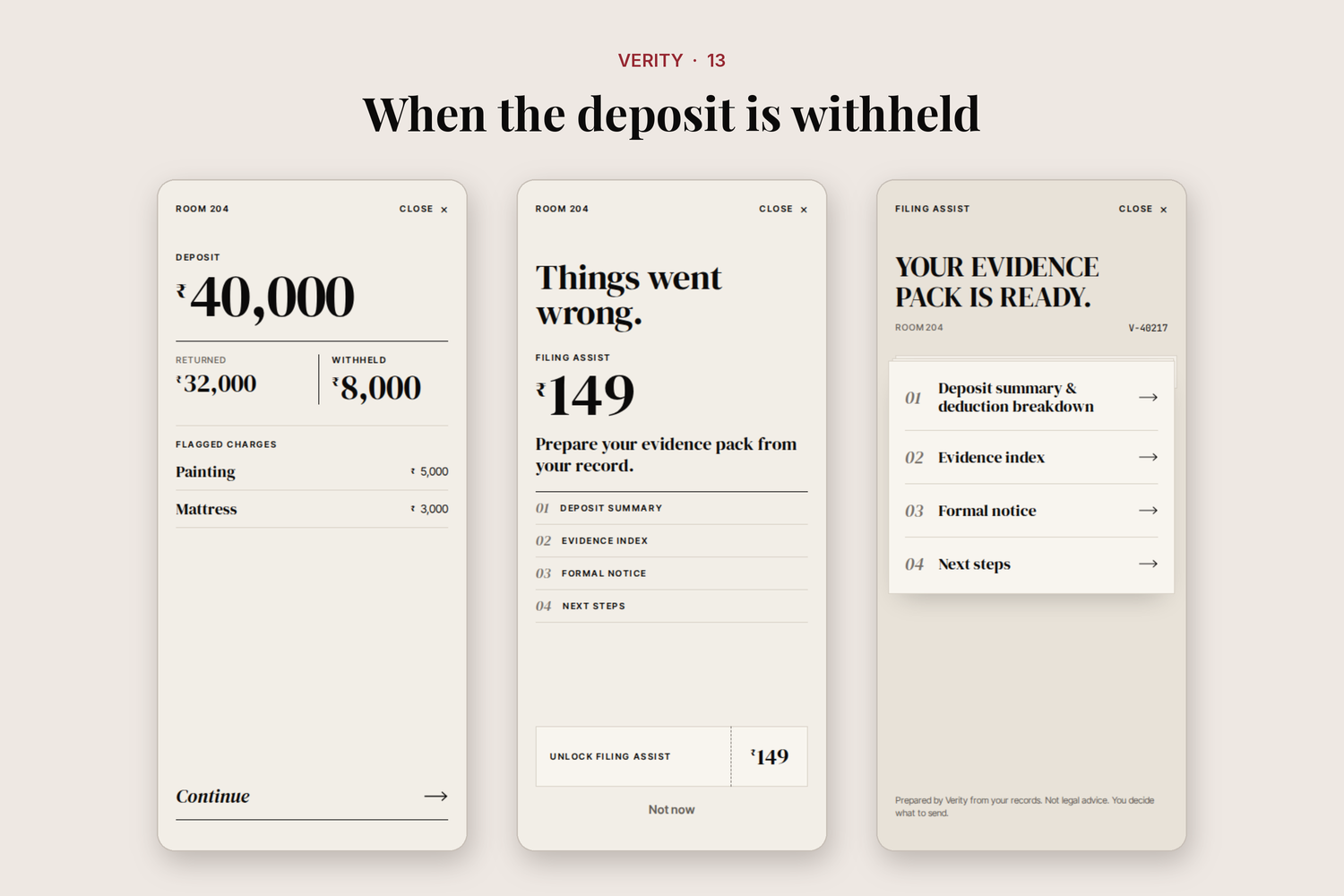
Deposit withheld? Filing Assist unlocks at move-out for ₹149 if you didn't protect the room earlier.
-
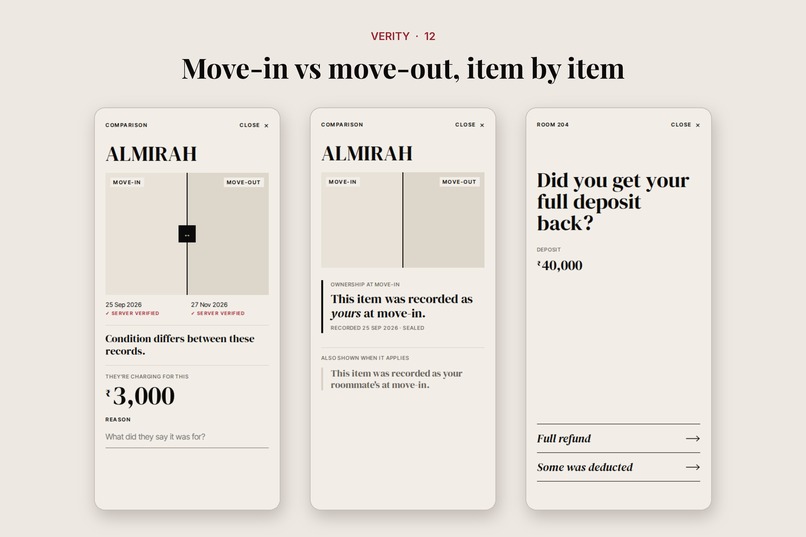
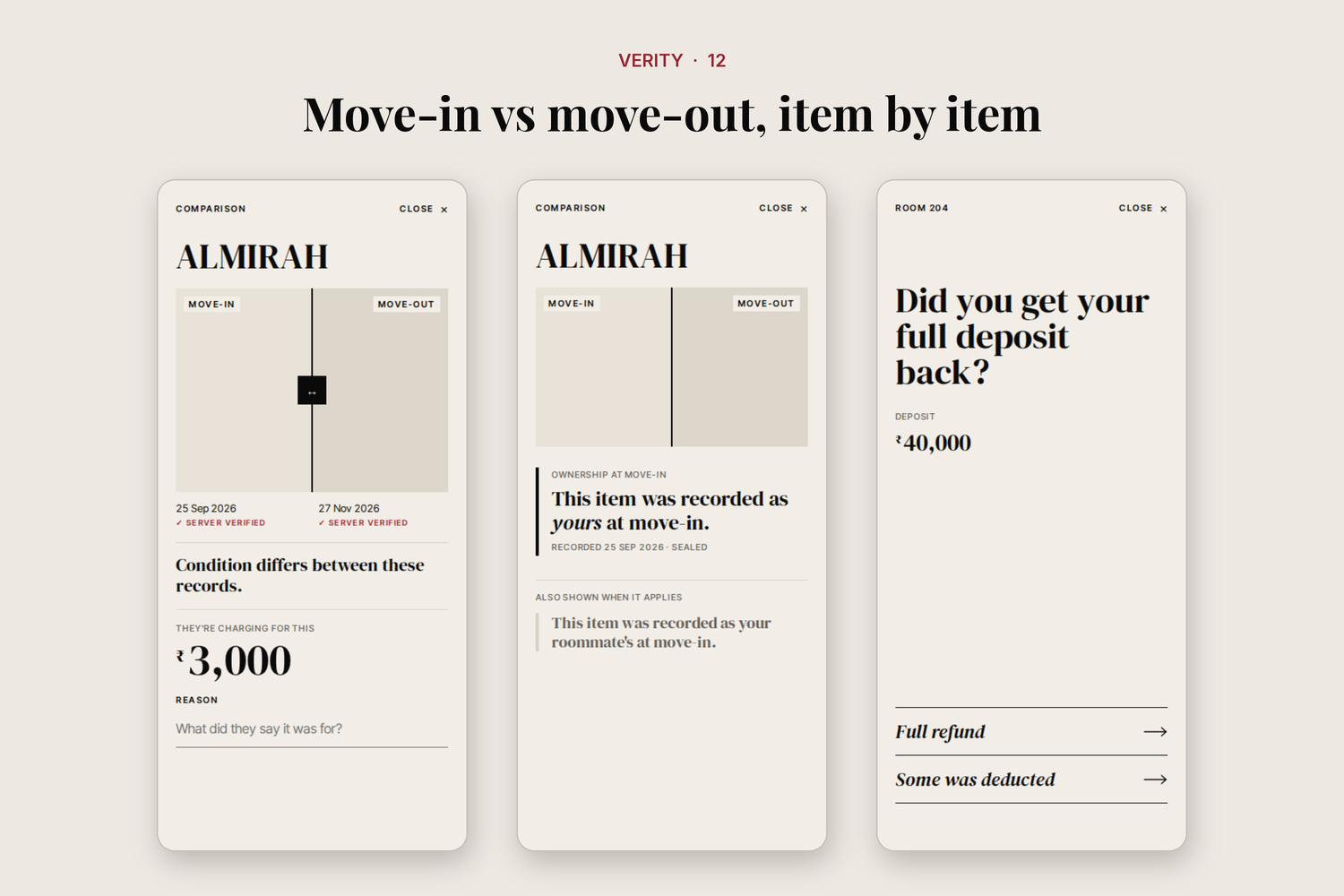
Move-in vs move-out, side by side, item by item, with ownership attached. Then record your deposit outcome.
-
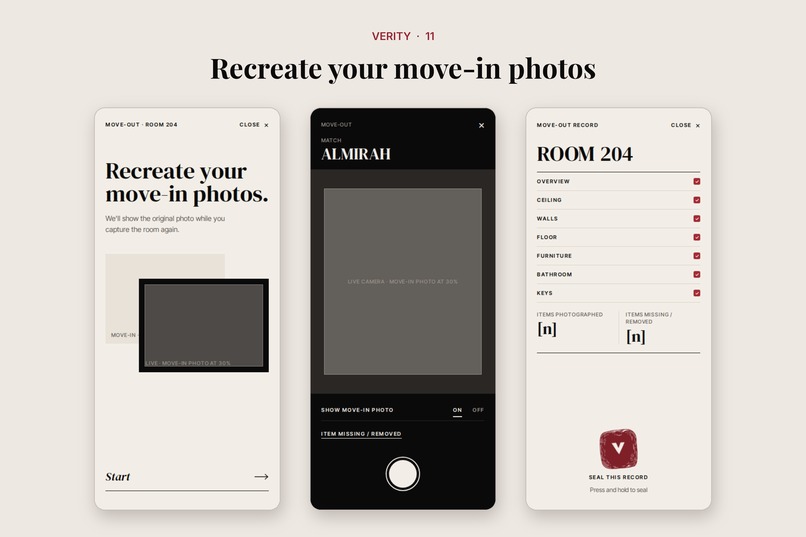
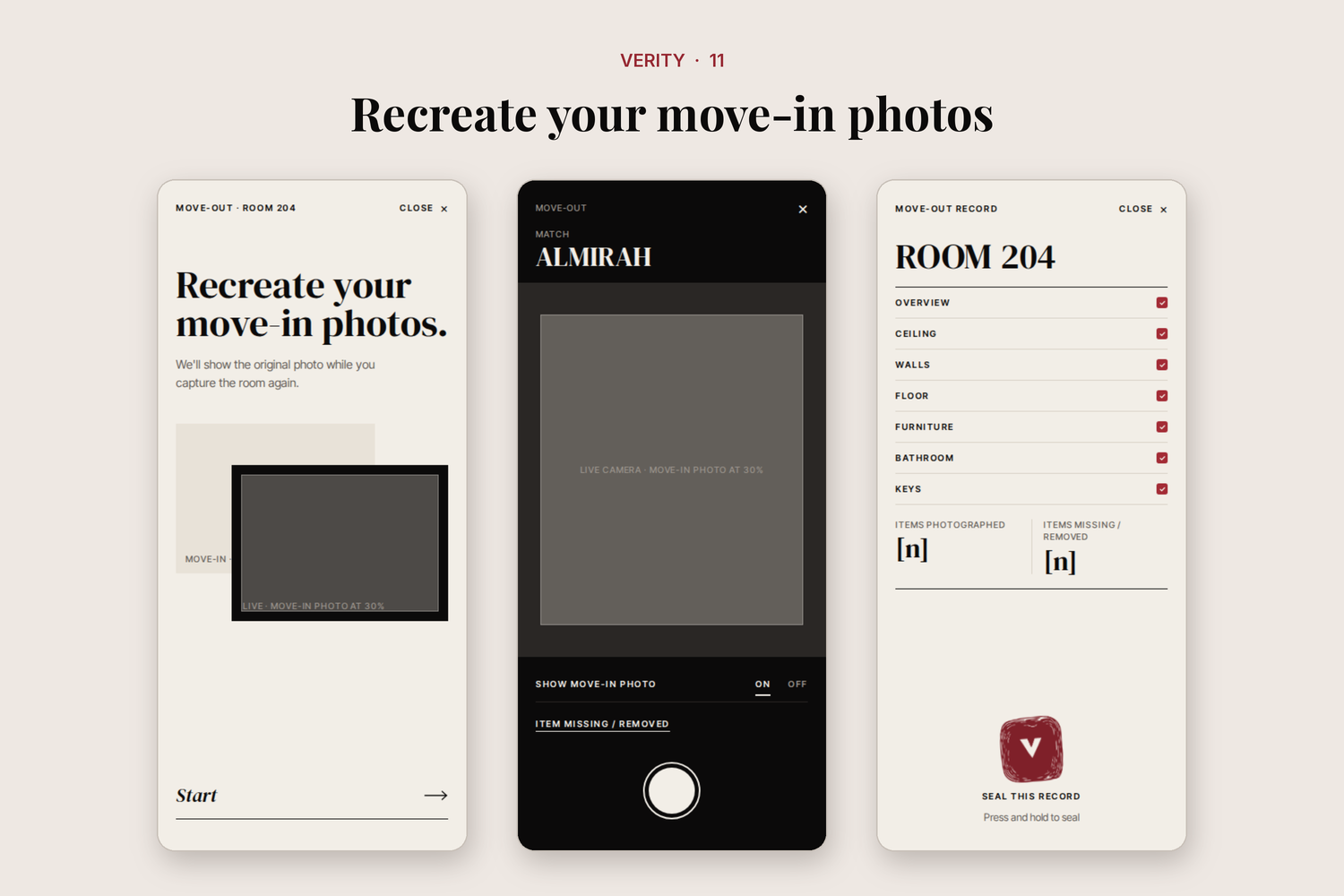
At move-out, a ghost overlay of your move-in photo helps you recreate the exact same angle.
-
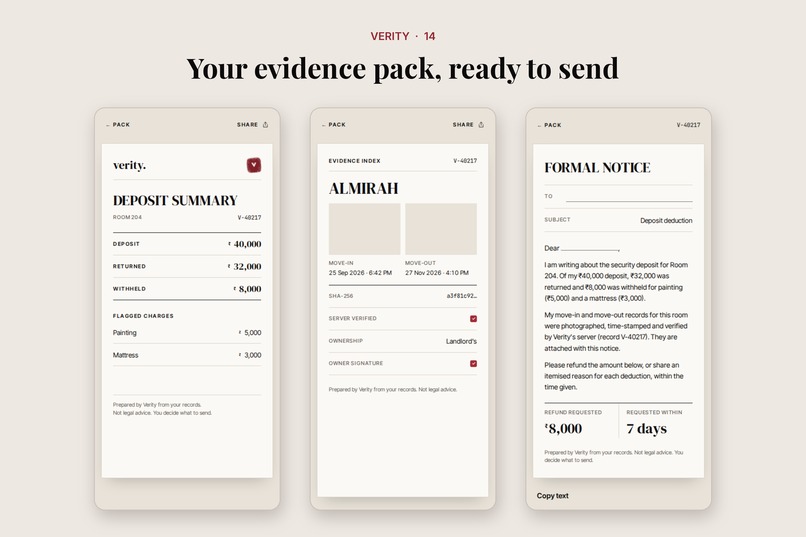
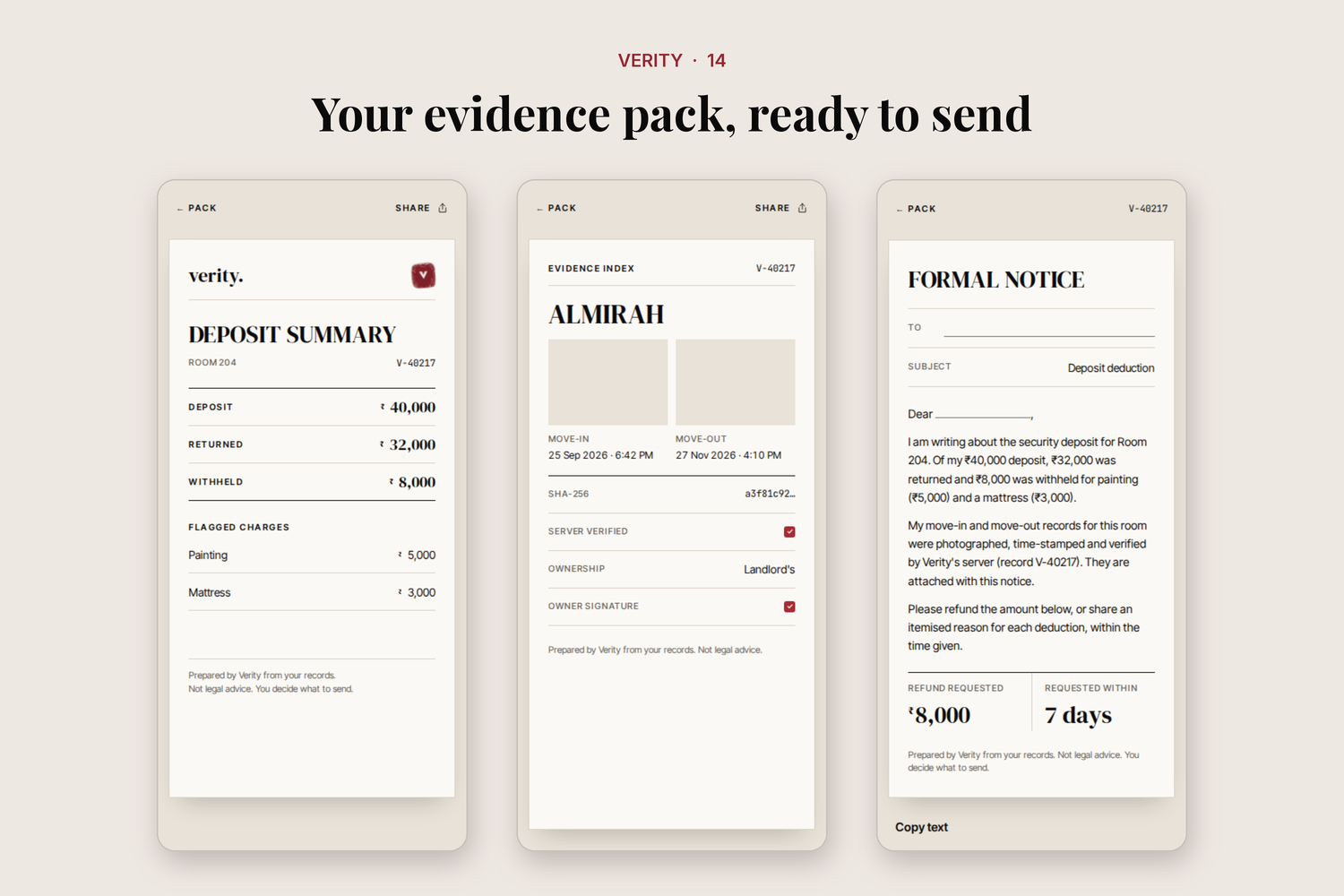
Deposit summary, evidence index, and a formal notice, all prepared and ready to send.
-

The Verity app icon: a stamped maroon "V" that works as an authentication seal.
-
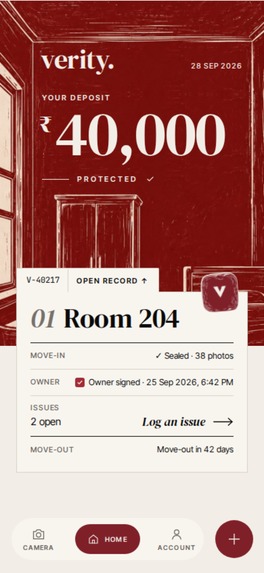
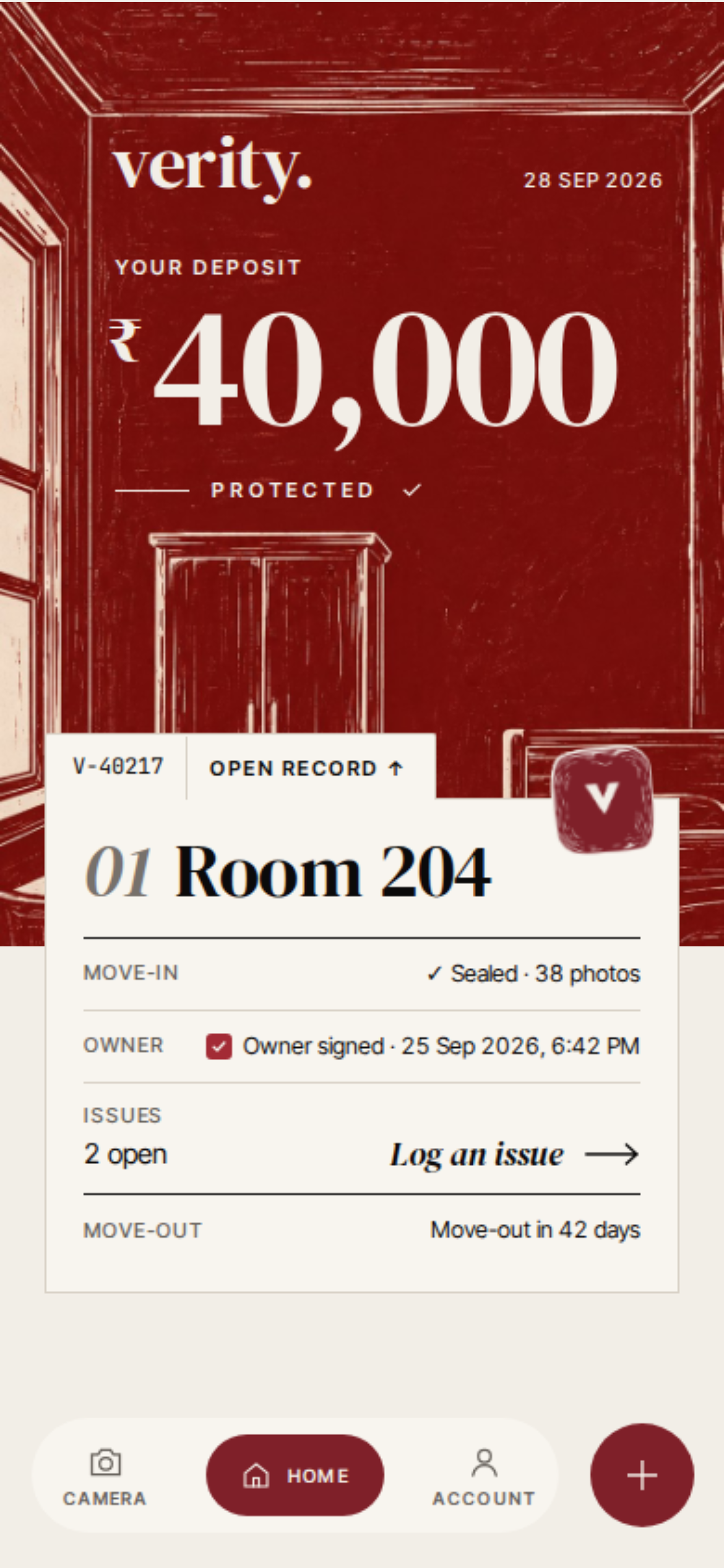
Home screen: every room you've sealed, its deposit, and its record status at a glance.

Inspiration
I lost part of my own hostel deposit in a dispute I couldn't win.
The warden said a cupboard door was damaged. I knew it had been like that when I moved in. But I had no photos, no dates, no signature — just my memory against his. Memory loses that argument every time.
This happens to students and young renters across India every move-out season. "It was already like that" is the most common defence a tenant has, and the weakest. The landlord holds the money. The tenant holds nothing.
I didn't want to build another photo app. Anyone can take photos — and anyone can claim photos were taken later, edited, or picked selectively. I wanted to build evidence: a verifiable record of a room that is harder to alter or dispute later, and acknowledged by the other side before any conflict starts.
That's Verity. Things happen. Keep the proof.
What it does
Verity follows a tenancy from move-in to move-out and turns a room into a sealed, verifiable record.
1. Guided move-in capture Verity walks you through your room area by area — ceiling, walls, floor, furniture, bathroom, keys — so nothing gets missed. The camera is live-only: no gallery imports, no screenshots, no edited photos.
2. The seal Every photo is SHA-256 hashed at the moment of capture and locked at save. The timestamp comes from Verity's server rather than relying only on the phone's clock, so the recorded time is independently anchored. If you're offline, the record waits as pending seal and is verified when you reconnect. A "How was this sealed?" screen explains the full chain in plain language.
3. "Whose is this?" Every item gets an owner: Landlord's, Mine, Roommate's, or Shared. Ownership can become part of a deposit dispute — Verity records whose item it is on day one.
4. Owner signature You send your landlord a link. They review the sealed move-in record on the web and sign it with their finger — no app, no account. The record now reads Owner signed · Verity sealed: the owner has acknowledged the room's condition before there's anything to argue about.
5. Issue timeline Something breaks mid-tenancy? Log it in seconds from a home-screen widget or app shortcut — photo, one-line note, date — and optionally notify the owner. Every issue lives on a dated timeline, through to resolved.
6. Move-out comparison At move-out, a ghost overlay of your move-in photo helps you recreate the same angle. Verity then shows each item side by side — move-in vs. move-out — with ownership and owner-signature status attached.
7. Filing Assist If your deposit is withheld unfairly, Verity prepares a deposit summary, deduction breakdown, evidence index, and a formal notice to send your landlord. If that doesn't resolve it, Verity walks you through what the government's e-Jagriti consumer complaint portal asks for and hands you a ready evidence pack, so you can file yourself.
Verity is not a lawyer and never pretends to be. It keeps your records and prepares your documents — you decide whether to file and what to submit.
Pricing: built so nobody is locked out of proof
- Capturing and sealing are always free
- ₹99 — Protect this room (at move-in): Evidence Certificate, owner signing flow, and Filing Assist if you ever need it
- ₹149 — Filing Assist (at move-out): for anyone who didn't protect their room at move-in, unlocked only when something has gone wrong
- One purchase per room via RevenueCat. No subscription. Protecting early costs less.
How I built it
Verity is a solo build — design, frontend, backend, everything.
- React Native + Expo with TypeScript (strict)
- expo-camera in live-only mode for capture
- expo-crypto for SHA-256 hashing at the moment of capture
- expo-sqlite for an offline-first local record, so capture and hashing work without signal
- Supabase for server-side timestamps, seal verification, and the owner-signing web flow
- RevenueCat for per-room entitlements (₹99 / ₹149)
- OneSignal for owner and issue notifications
- Sentry for crash and error monitoring
- Claude Code as my pair programmer across the build
Design came first. Before writing backend code I designed all 51 screens around one idea: Verity should feel like a document, not a gallery app. Warm ivory paper, near-black ink, and a maroon stamped "V" that works as an authentication seal. The splash is a linocut-textured animation where hand-drawn lines converge into the seal. Every screen is meant to feel like something you could print and hand to someone — because eventually, you might.
Challenges I ran into
Making "proof" mean something. A photo with a date on it proves very little — phone clocks can be changed and galleries can be edited. The hard part was designing a chain that holds up: live-only capture, hash at capture, lock at save, server timestamp, and an owner signature on top. Each layer closes a gap the previous one left open.
Offline sealing. Students move into rooms with bad signal. Verity had to capture and hash offline, hold the record as pending seal, and verify it later without letting anything change in between.
Getting the other side to participate. A record only the tenant signs is still one-sided. The owner flow had to be frictionless — no install, no account, just a link, a review, and a signature.
Scoping honestly around the law. It would have been easy to promise "we'll get your deposit back." That isn't true and isn't responsible. Filing Assist prepares and guides, and makes clear at every step that the user decides.
Time. I built this solo and lost several days in the middle to university exams. I dropped tools that weren't working, refocused on the Next Gen category, and spent the final week making it genuinely good rather than just finished.
Accomplishments that I'm proud of
- A complete tenancy journey across 51 designed screens — move-in, seal, owner signature, issues, move-out, comparison, and filing
- An evidence chain where every layer has a reason to exist
- An owner-signature flow that turns the landlord from an opponent into a co-signer
- A visual identity that feels like a trusted document, not a utility app
- Pricing where the core protection — capture and seal — is free for everyone
What I learned
- Trust is a product feature. The live-only camera, server timestamps, and "How was this sealed?" screen all exist to make a stranger believe the record.
- The best time to prevent a dispute is before it exists. An owner signature at move-in is worth more than any evidence at move-out.
- Restraint matters. I dropped features I liked — group complaints, deduction groups, lending — so the core flow could be excellent.
- How to ship a full product alone under a hard deadline, and how to use an AI coding partner well, not just fast.
What's next for Verity
- Public launch on Google Play for students and renters across India
- Hindi and regional languages, so more of the people losing deposits can use it
- Hostel and PG partnerships, making Verity the standard move-in check
- Item lending records — the data model is already in place
- Beyond rooms — rented bikes, cameras, equipment: anything you hand back and might be blamed for
Deposits are lost to memory every year. Verity makes sure the next person has proof.
Things happen. Keep the proof.
Built With
- android
- claude
- expo-camera
- expo-crypto
- expo.io
- native
- onesignal
- react
- revenuecat
- sentry
- sha-256
- sqlite
- supabase
- typescript

Log in or sign up for Devpost to join the conversation.