-
-
Hook Page
-
Dashboard
-
Overall Design
-
Expanded Navigation Menu
-
Tasks Page
-
Agents Page
Inspiration
We kept noticing the same pattern everywhere, companies rushing to deploy AI agents for customer support, sales outreach, scheduling, you name it, but almost nobody had a real answer to the obvious follow-up question: is it actually worth it? Teams would show off a slick demo, roll the agent into production, and then just... stop checking. Six months later the agent could be quietly costing more than it saves, and nobody would know until someone happened to look at a bill.
What it does
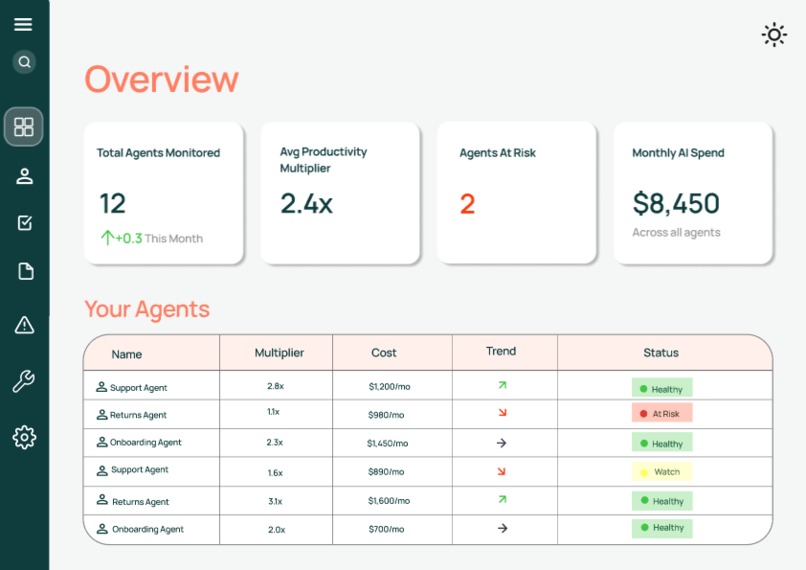
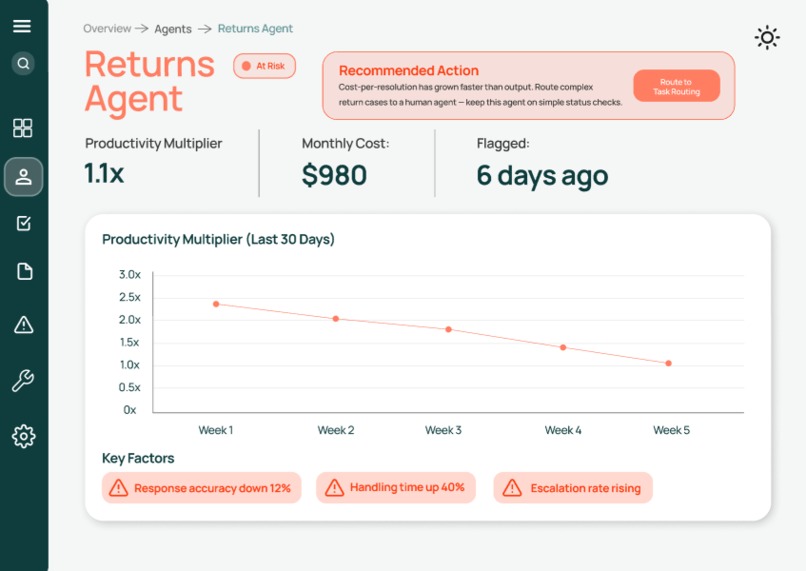
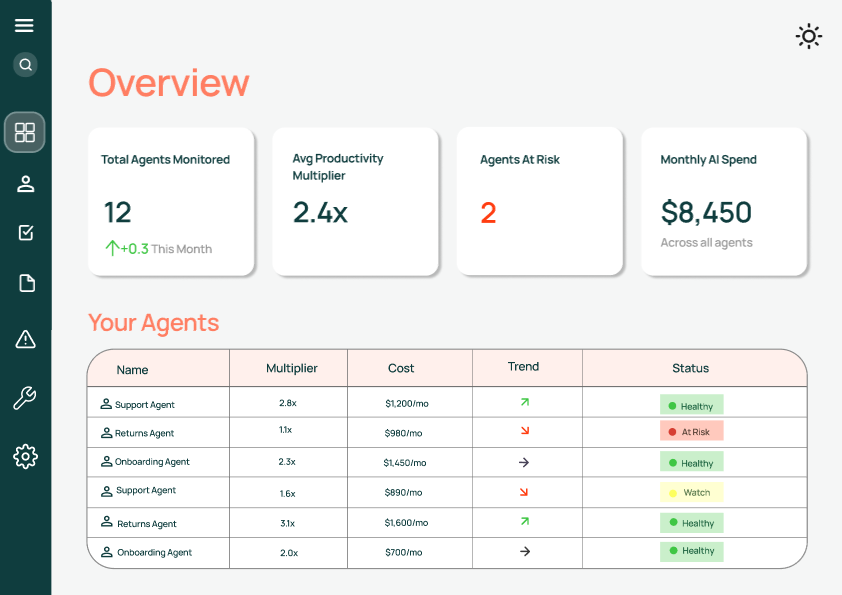
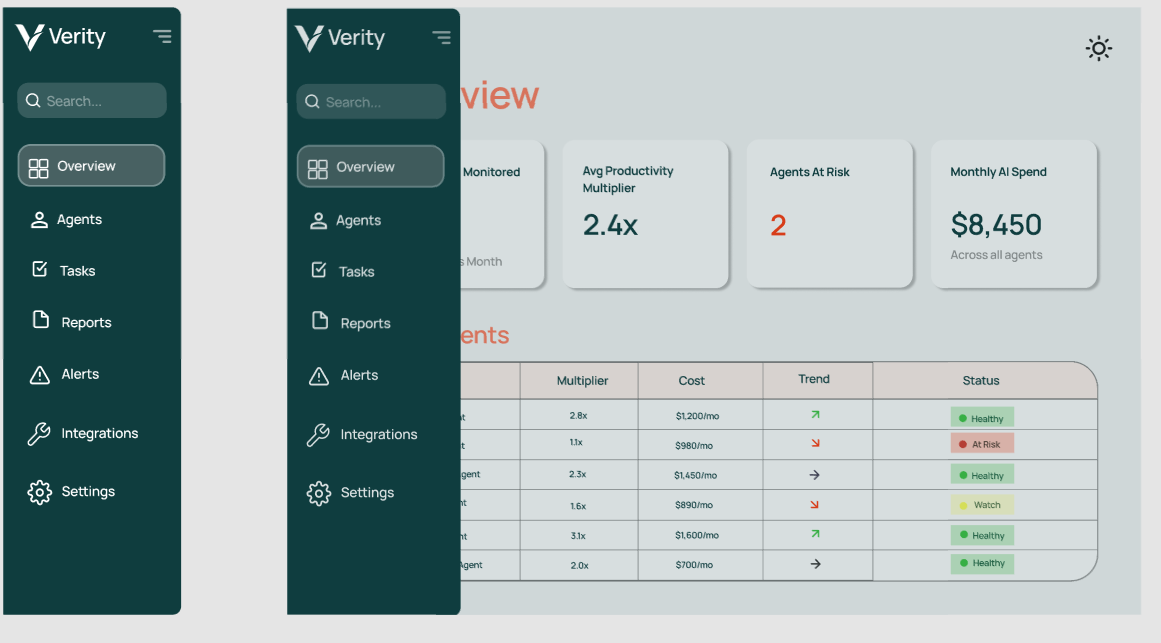
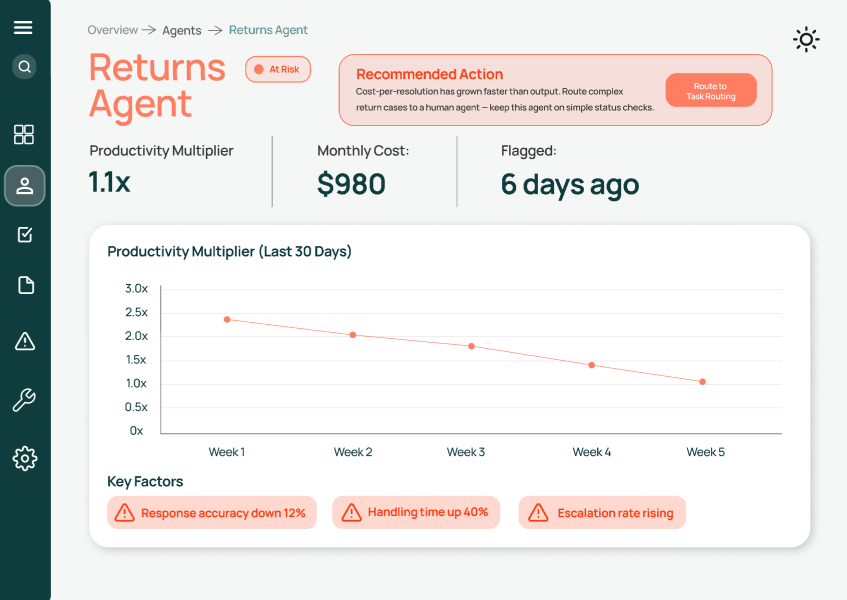
Verity is a monitoring layer for AI agents already running in a company. It tracks a productivity multiplier, cost, and status (Healthy / Watch / At Risk) for every agent, and when one starts drifting, it doesn't just flag it — it tells you why (accuracy dropping, handling time up, escalations rising) and recommends what to actually do about it, like rerouting complex cases back to a human.
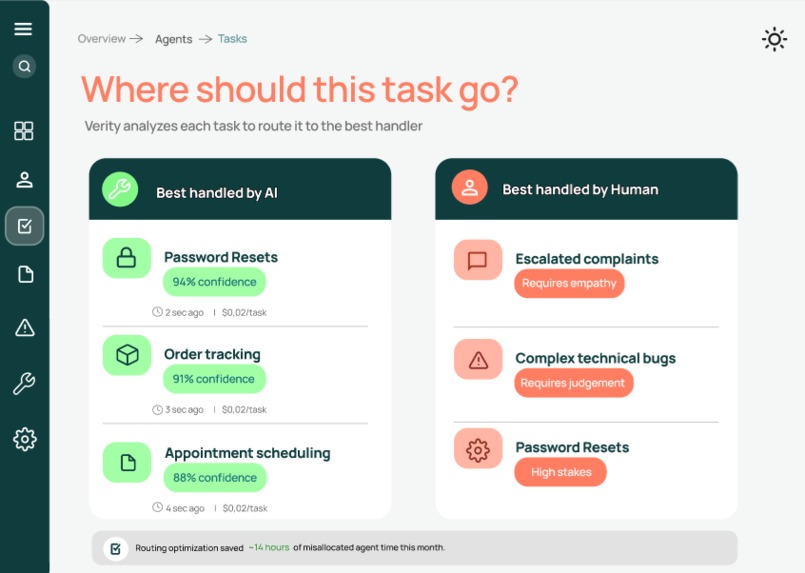
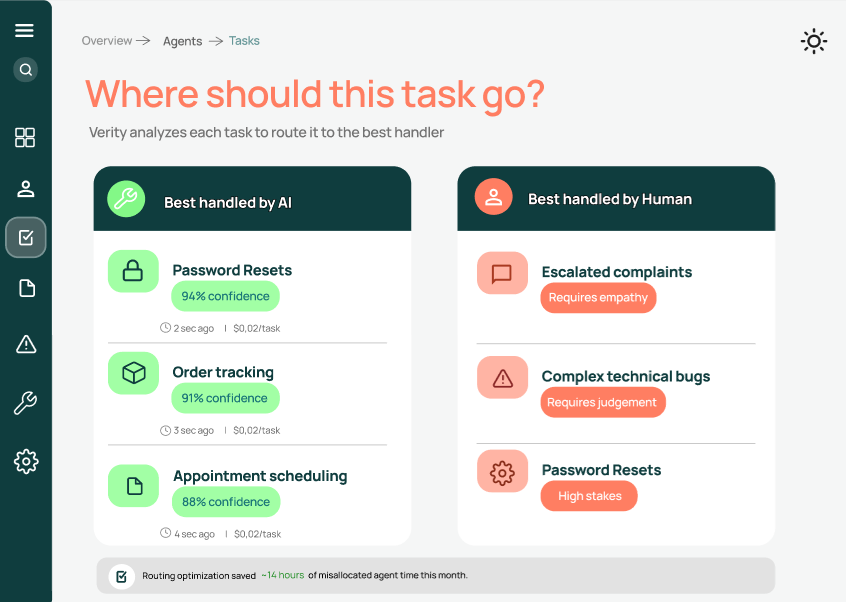
We designed it around three modes we kept seeing in real deployments: agents that fully replace a task, agents that collaborate with a human (drafting, human approves), and systems that route tasks between AI and humans based on value or sensitivity. For this build, we focused entirely on the collaboration mode, since it's the setup most teams are actually using right now.
How we built it
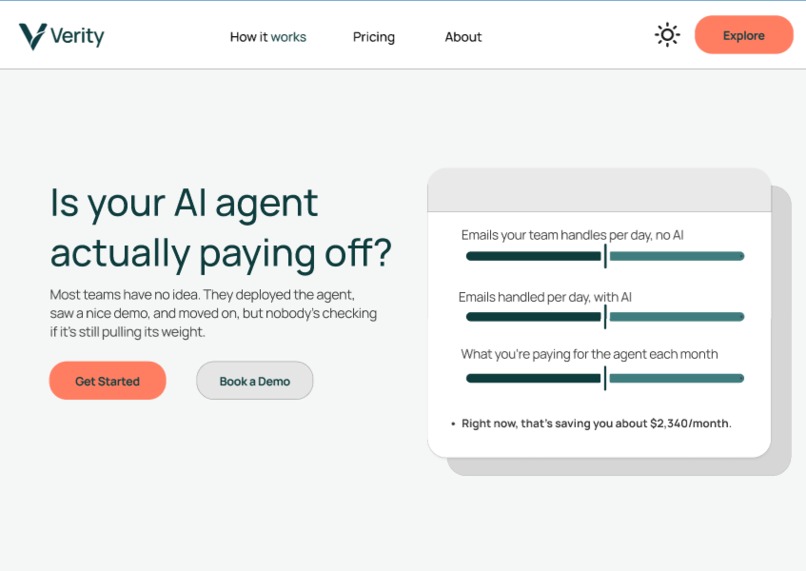
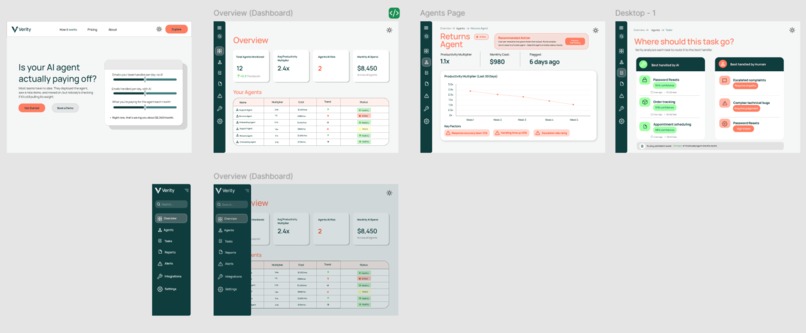
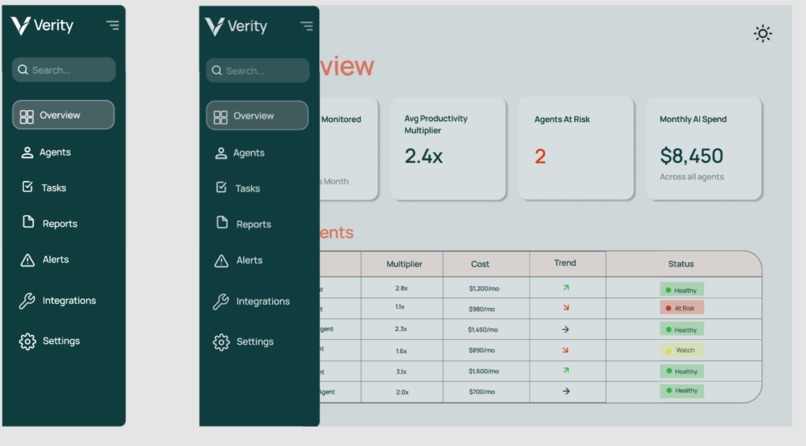
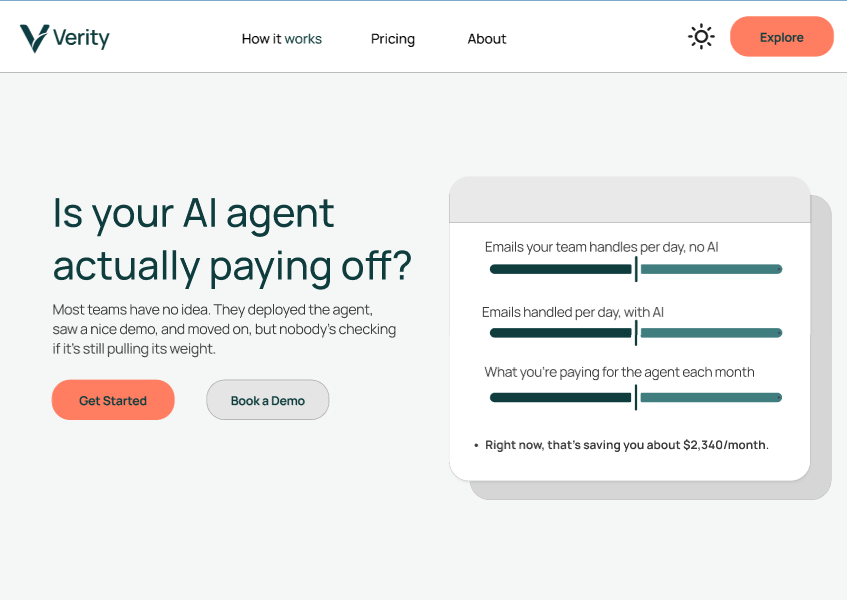
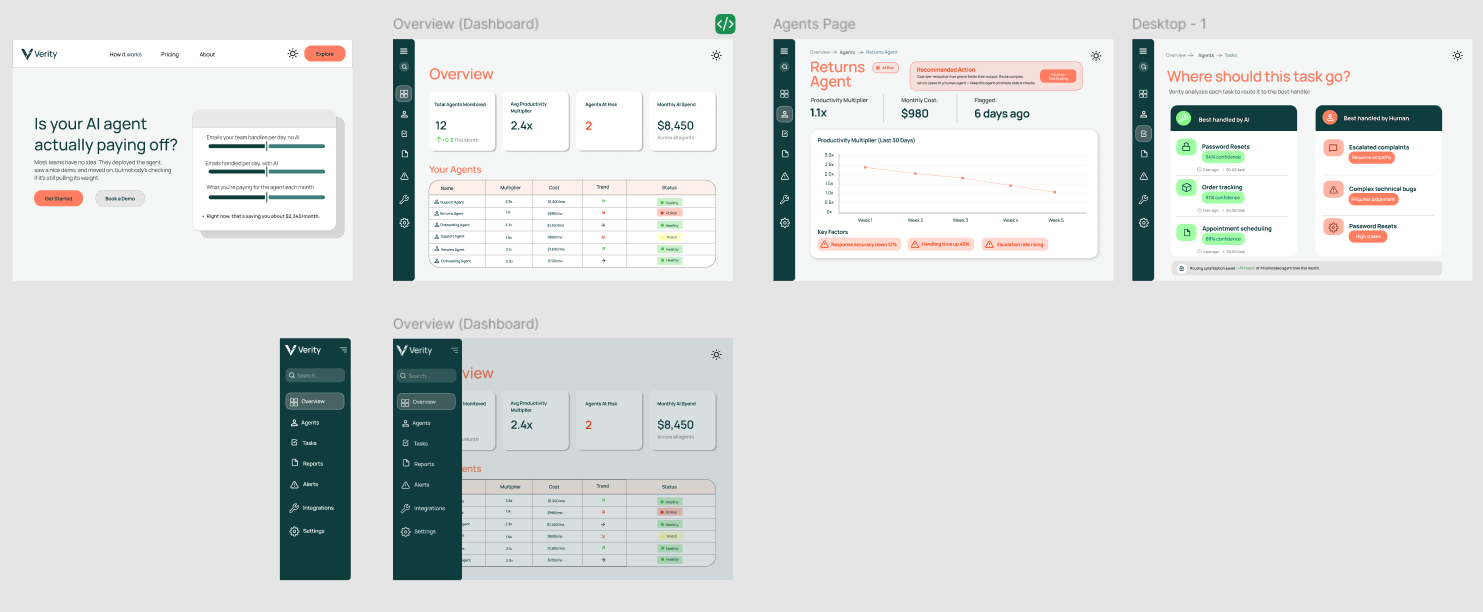
We designed the full flow in Figma, a landing calculator that gives a quick "is this worth it" gut-check, an overview dashboard showing every agent at a glance, and a drill-down page for any agent that gets flagged, ending in a specific recommended action. We went back and forth a lot on the visual direction before landing on a warm coral + dark teal palette that felt closer to product analytics tools like Linear or Intercom than a typical "AI dashboard."
Challenges we ran into
Time was the biggest one, we were designing right up against the deadline, which meant making fast calls on scope: which pages actually carry the story, and which are nice-to-haves we could describe instead of fully build. We chose to go deep on three pages (landing, overview, drill-down) rather than spread ourselves thin across all five, since a flagged agent getting a clear, specific recommendation is the moment that actually sells the idea.
What we learned
Mostly that "AI ROI" is a much messier problem than it sounds — there's no single number that captures whether an agent is worth it, which is exactly why we built Verity around trends and context instead of a single score.
What's next for Verity
Building out the task routing and alert history views, and eventually connecting Verity to real agent logs and cost data instead of the illustrative numbers in this prototype.
Built With
- figma

Log in or sign up for Devpost to join the conversation.