-
-

Web Page Header
-
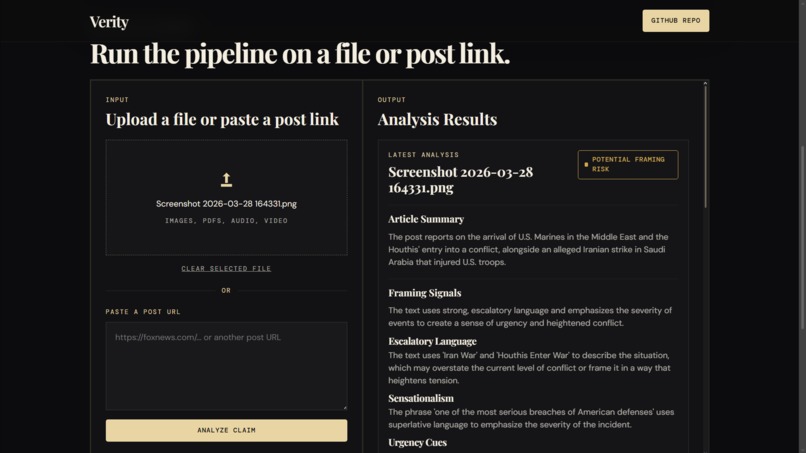
Example Output
Inspiration
We were inspired by the mass influx of fake news and outrageous claims made on social media. Social media rewards engagement above all else, including the truth. We wanted to reliably and easily check the veracity of some of the claims online.
What it does
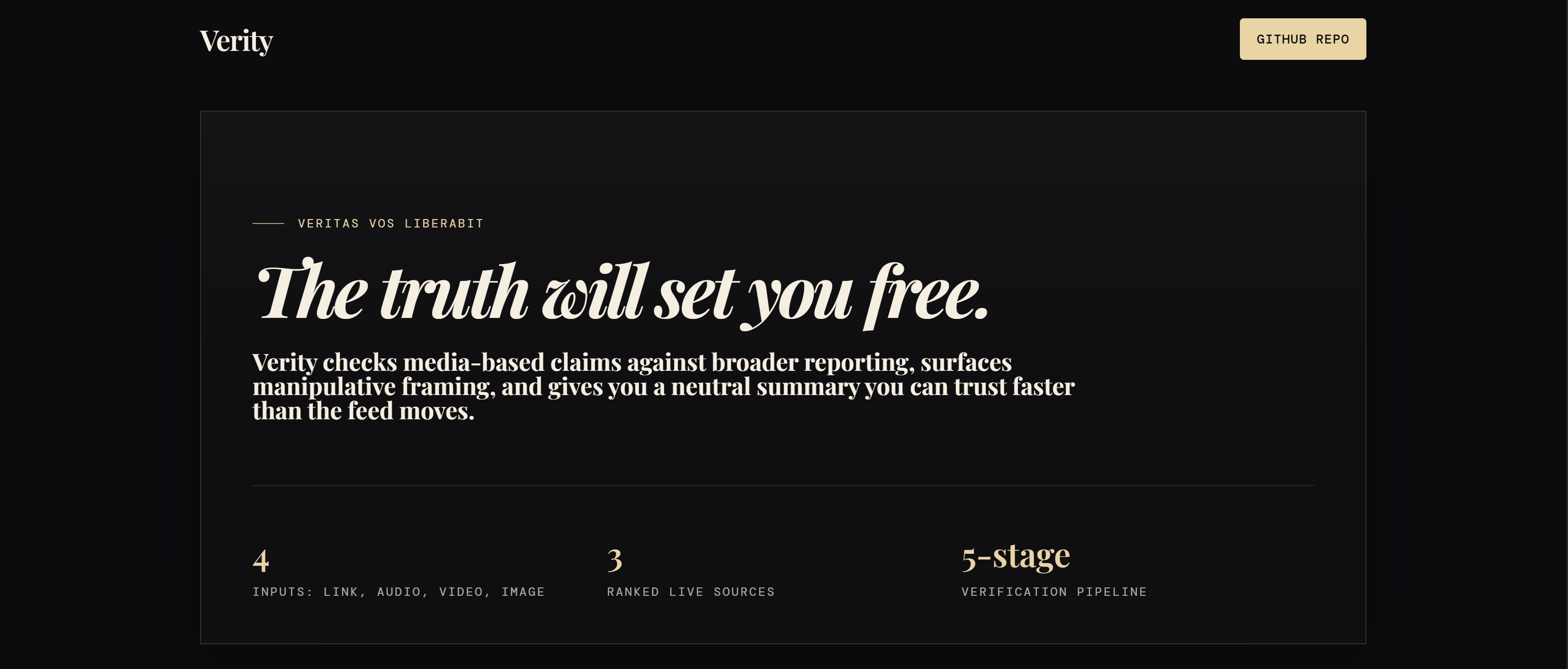
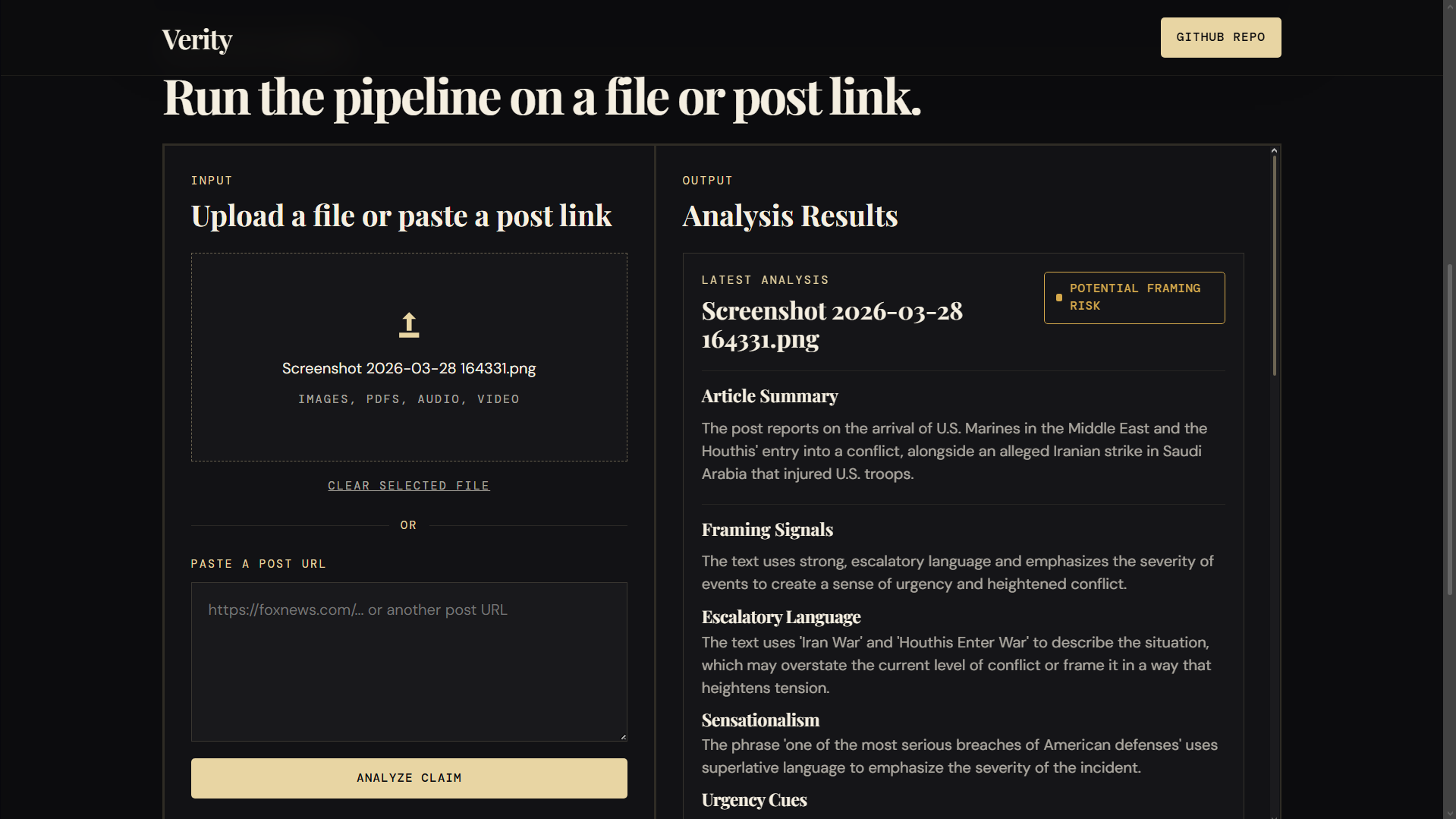
Our web app takes in multiple modes of input and will extract the text and analyze it for bias and unfair framing. Then, we output a neutral summary of the media along with other sources to better inform and provide the context.
How we built it
We built the backend using FastAPI and Python with a React frontend. We used calls to GeminiAPI and TavilyAPI to handle the context checking and text extraction from a link, respectively.
Challenges we ran into
We struggled with designing the app's UI as none of us are really familiar with that sort of frontend development. We also struggled with getting rate-limited on our API keys, so we had to make new ones on different Google accounts periodically.
Accomplishments that we're proud of
We worked on improving the UI from its initial barebones state. Many of us had no experience with some of these tools, too, so learning about them and applying them in a short time is also something we're proud of.
What we learned
Some members of our team learned more about how to work on the frontend. React was new to some of us along with doing API calls.
What's next for Verity
We planned to add the ability to check for AI-generated content, including deepfakes and output from an LLM. We implemented the deepfake capabilities, but couldn't integrate it in time. Other plans did include mental health impacts of social media posts and sensationalism, but this wasn't aligned with our app in its current state.
Built With
- css
- fastapi
- geminiapi
- html
- javascript
- python
- react
- tavilyapi

Log in or sign up for Devpost to join the conversation.