Inspiration
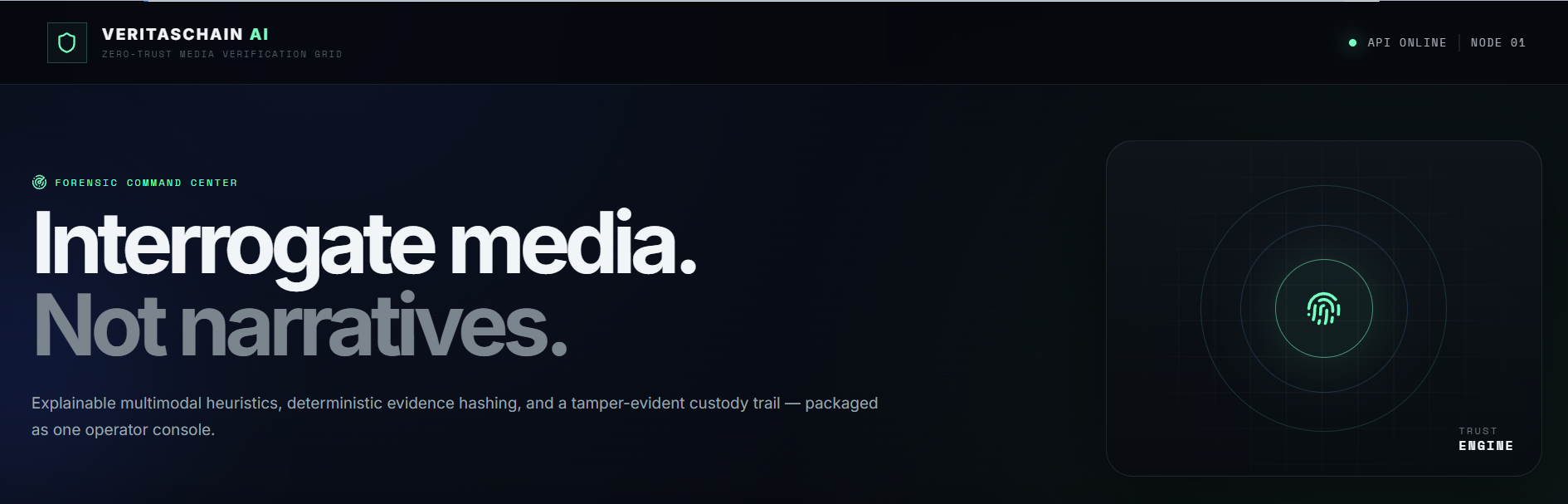
The rapid proliferation of hyper-realistic deepfakes and manipulated digital media has created a profound crisis of trust online. As a solo developer navigating an increasingly synthetic digital landscape, I realized that existing verification tools are either too sluggish, overly academic, or lack transparent provenance tracking. I wanted to build something that feels like an elite, cybersecurity-grade command center—a tool where authenticity isn't just guessed, but cryptographically proven. Thus, VeritasChain AI was born.
What it does
VeritasChain AI is an autonomous, zero-trust media verification engine designed to intercept deepfakes and disinformation. It features:
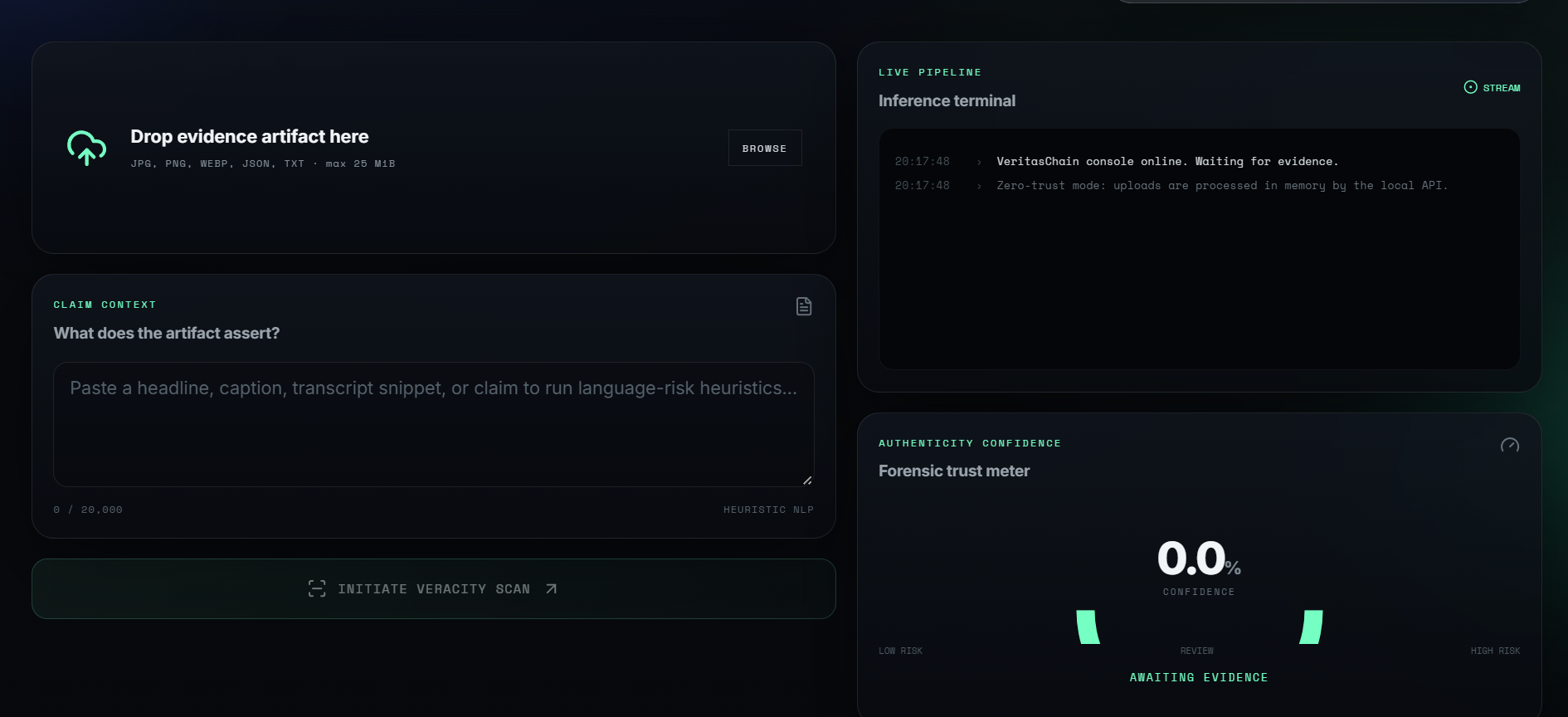
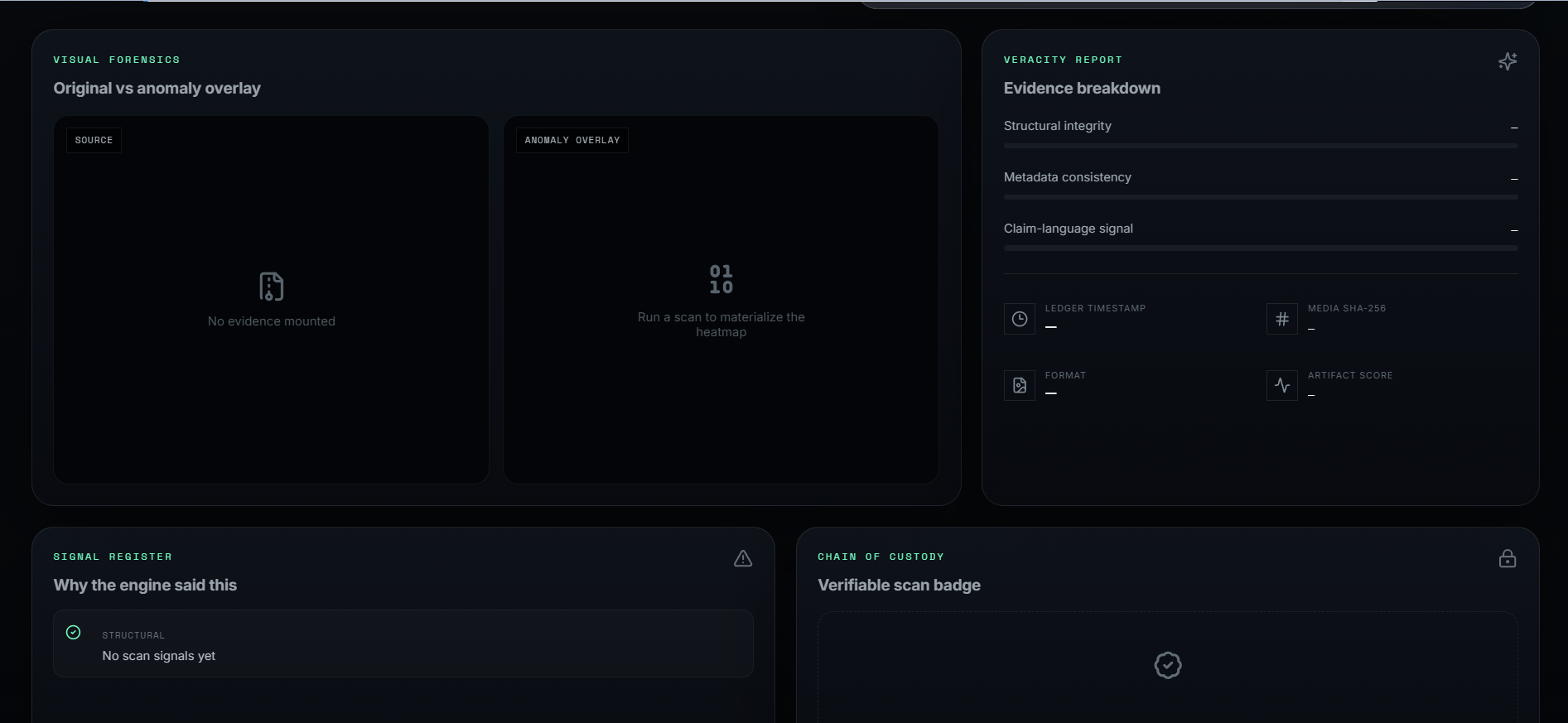
- Multi-Modal Forensics: Simultaneously inspects structural integrity, metadata consistency, and language signals.
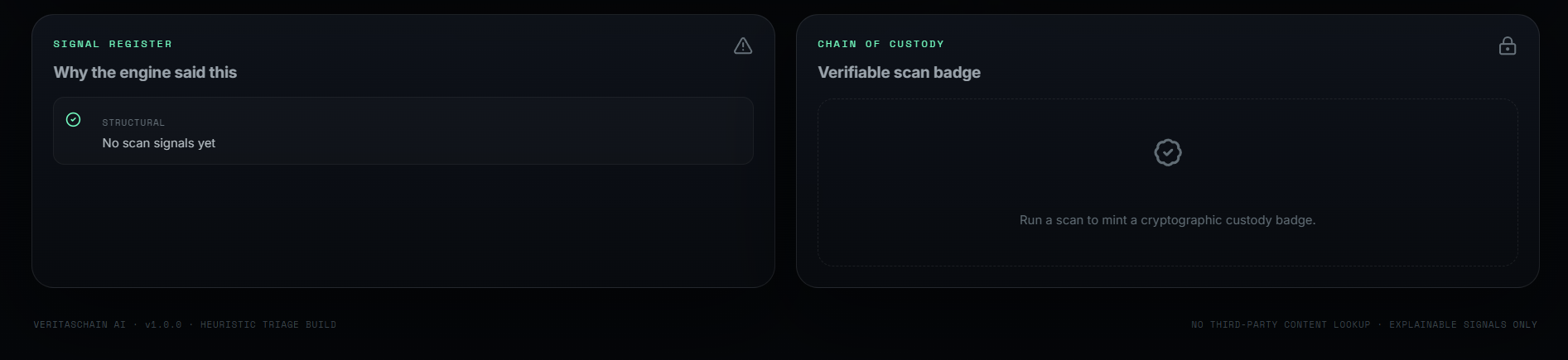
- Cryptographic Custody Trails: Generates verifiable SHA-256 media fingerprints and immutable ledger timestamps for every checked artifact.
- Cybersecurity Command Center: A high-contrast, dark-mode operator console equipped with real-time inference logging and visual anomaly overlays.
How I built it
I engineered the application using a robust full-stack architecture:
- Backend: Built with Python (FastAPI/Flask) to handle asynchronous forensic pipelines, image analysis heuristics, and cryptographic hashing computations.
- Frontend: Developed using a custom, high-performance HTML/CSS/JavaScript dashboard featuring a sleek cyber-terminal aesthetic, dynamic file upload drag-and-drop zones, and side-by-side anomaly mapping grids.
- AI Integration: Leveraged modular AI-assisted code generation pipelines to rapidly prototype, test, and stitch together complex backend detection routines and responsive frontend UI components.
Challenges I ran into
Building a startup-caliber security platform solo came with serious hurdles:
- Token Limits & Model Constraints: Hitting strict free-tier output ceilings mid-generation forced me to pivot to a disciplined, file-by-file modular building strategy instead of trying to spin up the entire application in a single prompt.
- Pipeline Integration: Ensuring seamless asynchronous communication and data-flow synchronization between the local backend forensic scripts and the frontend dashboard canvas required fine-tuning CORS policies and real-time event logging.
Accomplishments that I'm proud of
- Successfully architecting and shipping a fully functional, production-grade cybersecurity dashboard complete with live terminal logging and visual anomaly detection overlays.
- Overcoming strict AI output and token ceilings by mastering a disciplined, modular file-by-file development approach.
- Designing a zero-trust media verification flow that bridges deepfake forensics with cryptographic chain-of-custody tracking.
What I learned
This project pushed my engineering limits far beyond standard student code. I mastered real-world asynchronous API design, cryptographic hashing workflows for media tracking, and how to structure a production-grade UI that communicates high-stakes data cleanly and instantly. Most importantly, I learned how to architect and ship a full-stack product efficiently as a solo creator under strict constraints.
What's next for VeritasChain AI
- Advanced Neural Heuristics: Integrating deeper machine learning models to detect subtle frequency-domain anomalies and generative video artifacts in real time.
- Decentralized Ledger Export: Expanding the custody trail feature to anchor verification hashes onto public blockchain networks for absolute immutability.
- Browser Extension Integration: Building a lightweight companion extension so users can instantly interrogate media directly as they browse the web.
Built With
- css3
- fastapi
- html5
- javascript
- python
- rest-api
- sha-256


Log in or sign up for Devpost to join the conversation.