-
-
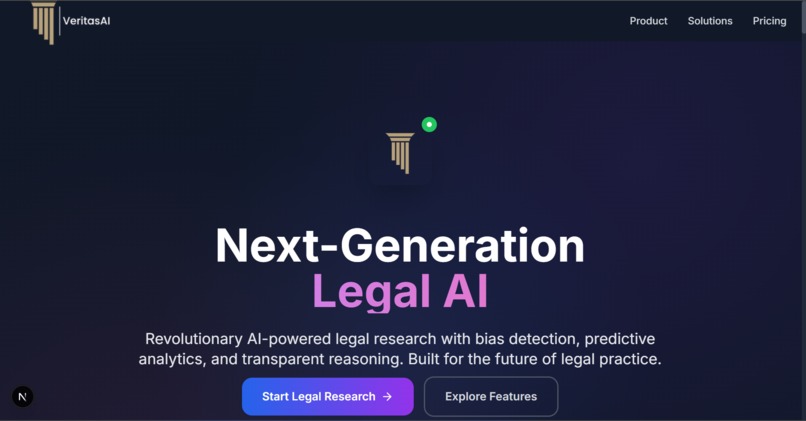
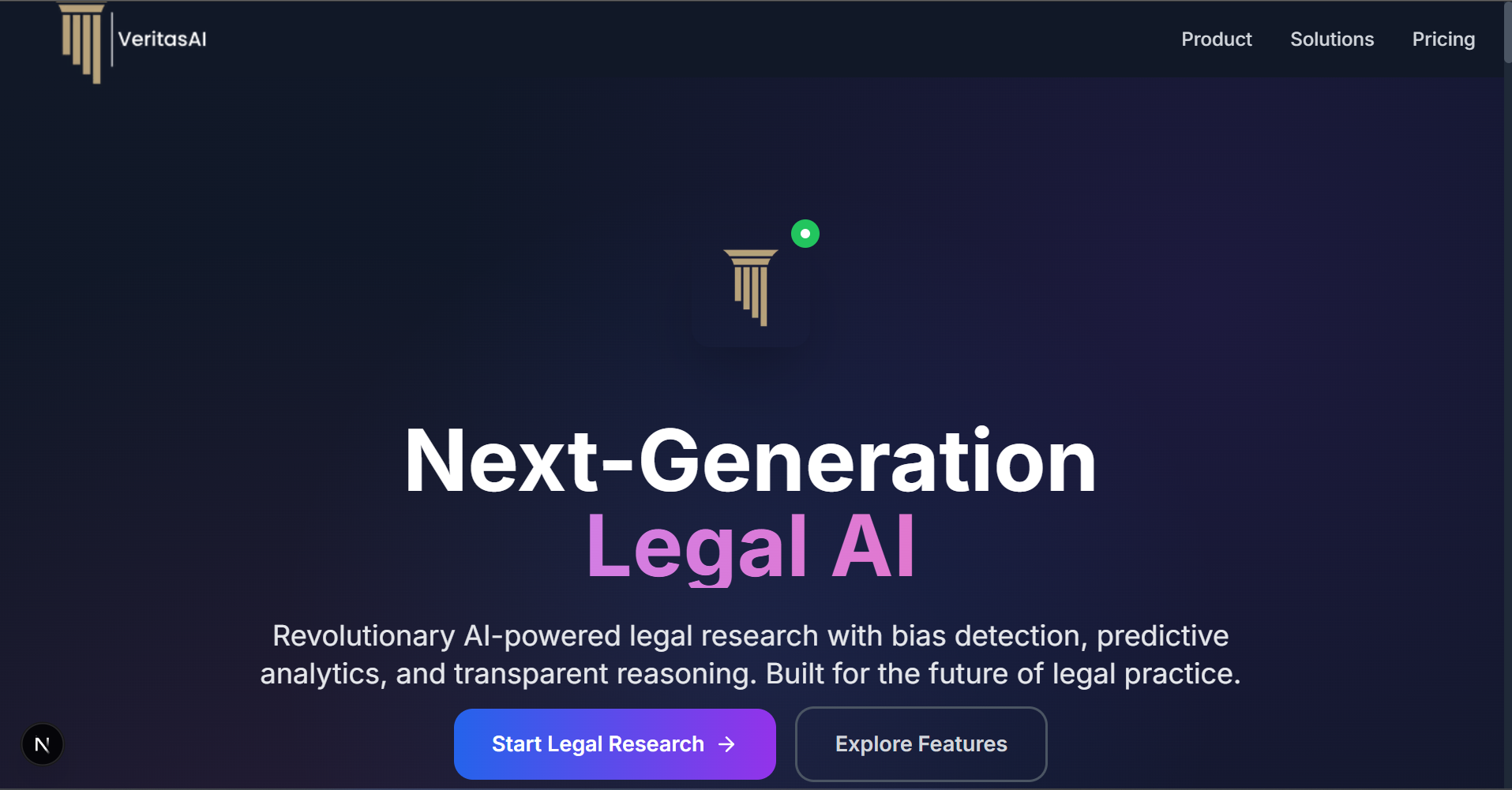
Landing Page
-
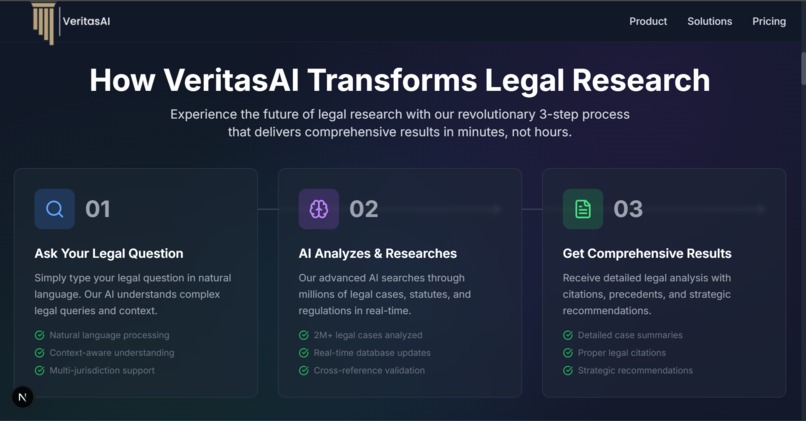
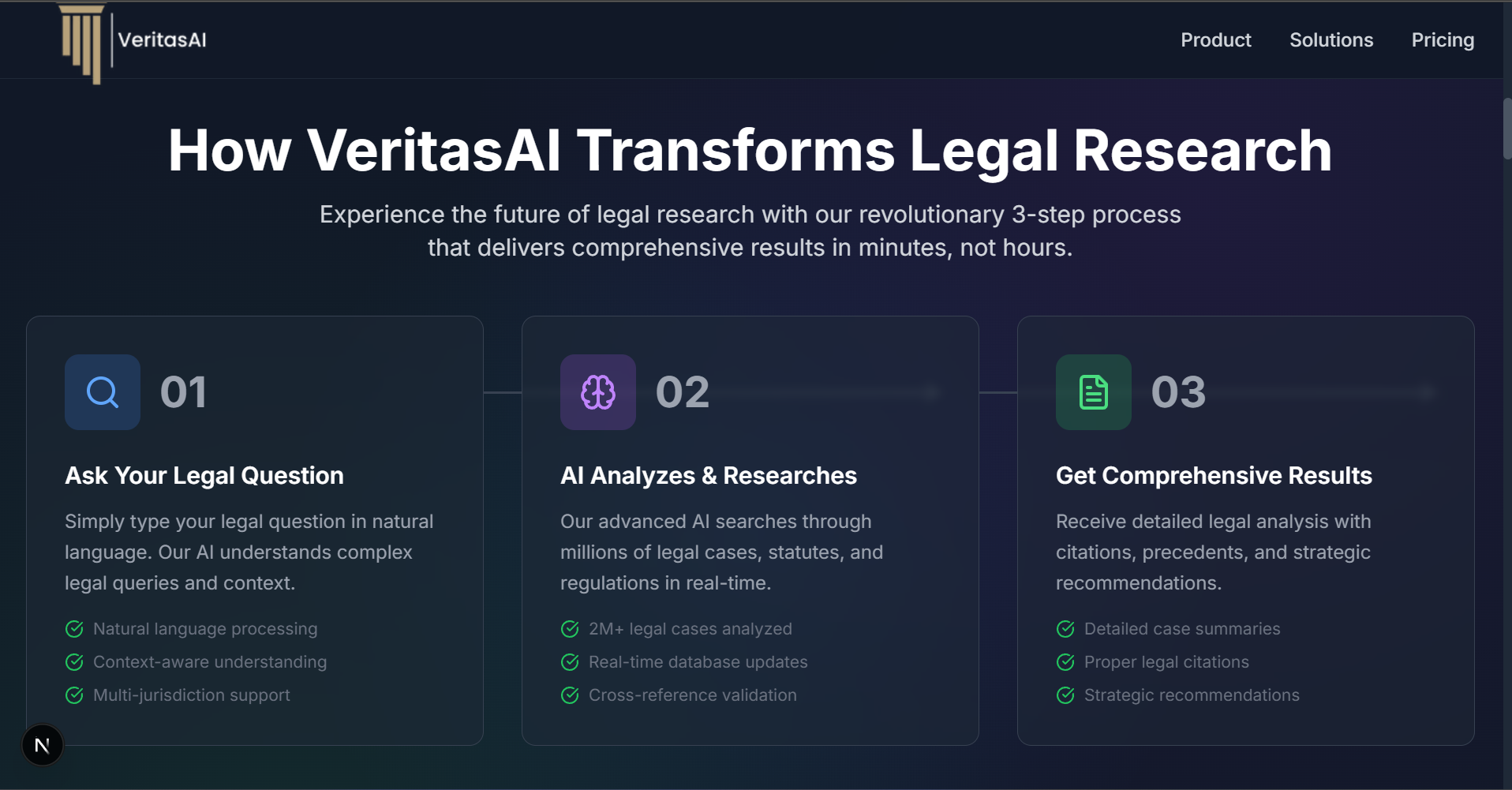
Landing Page (How It Works)
-
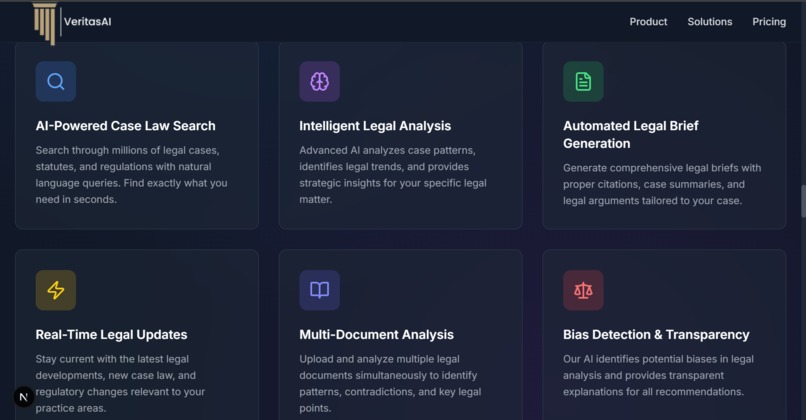
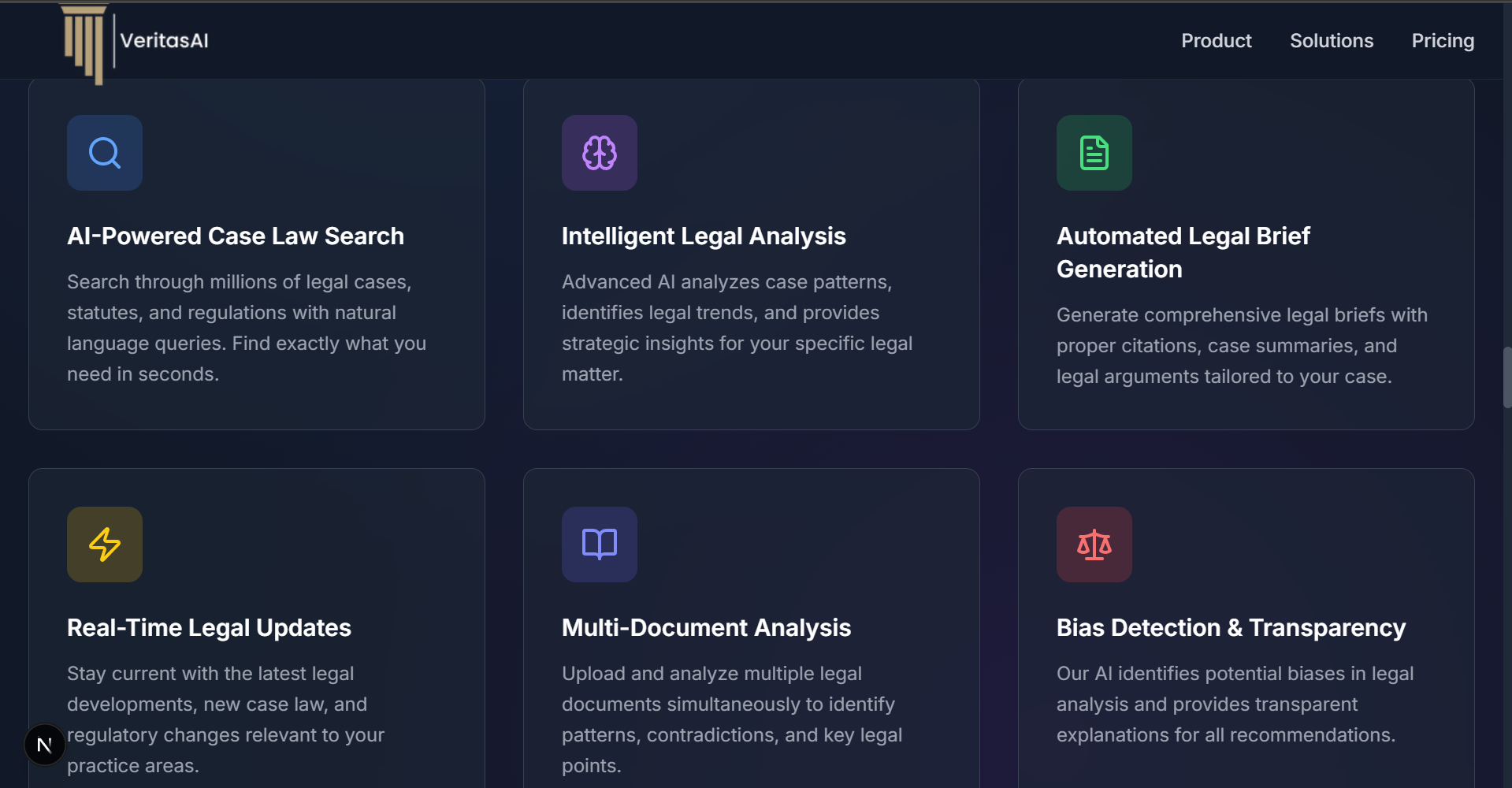
Landing Page (What It Does)
-
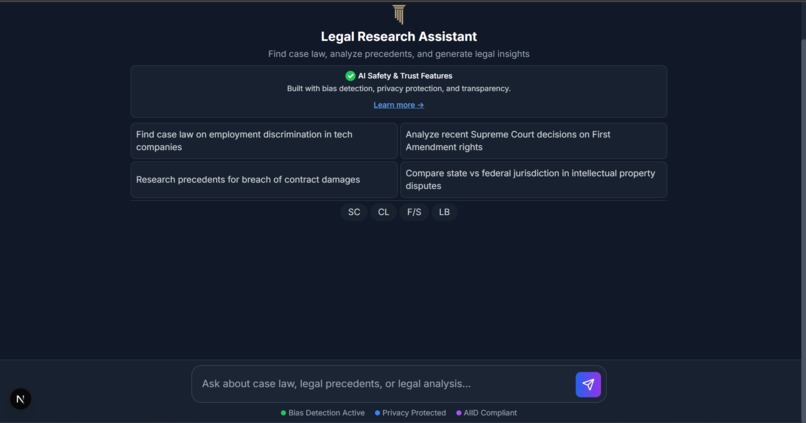
Dashboard
-
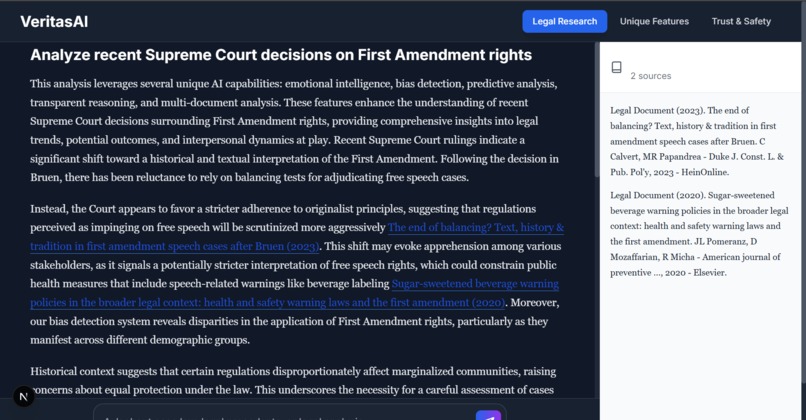
Dashboard (Legal Research)
-
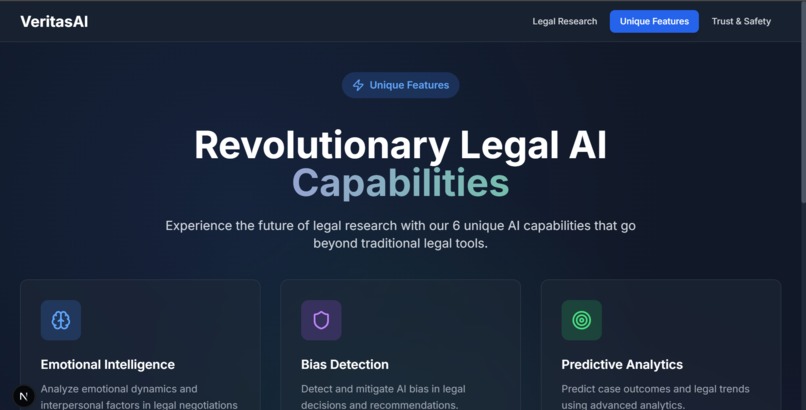
Capabilities
-
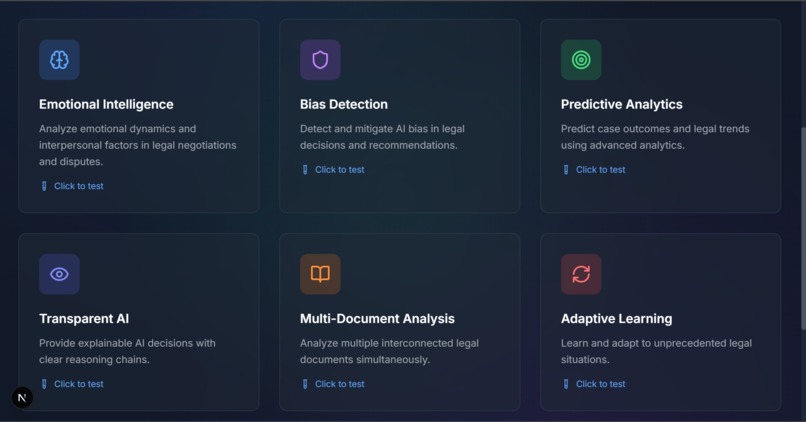
Capabilities (Unique)
-
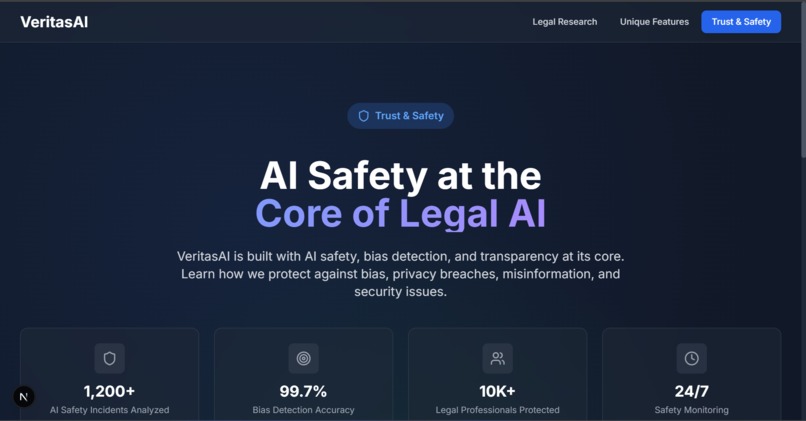
AI Safety
-
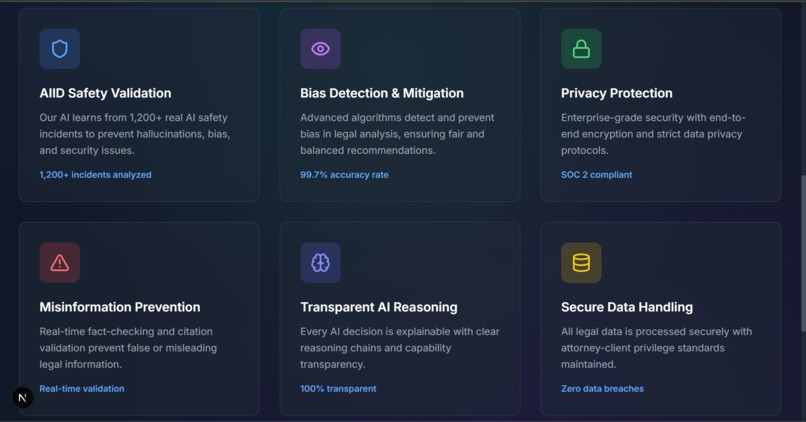
AI Safety (Ways)
VeritasAI: Safe AI for Legal Research
The Problem That Changed Everything
I watched lawyers drown in research—40+ hours every week, manually combing through cases, missing critical precedents. However, the Morgan & Morgan incident truly enlightened me: AI systems were producing entirely fictitious legal cases. Lawyers were unknowingly citing cases that didn't exist, potentially destroying their clients' cases and their careers.
That's when it hit me—AI hallucinations aren't just bugs. In legal practice, they're dangerous.
What VeritasAI Does
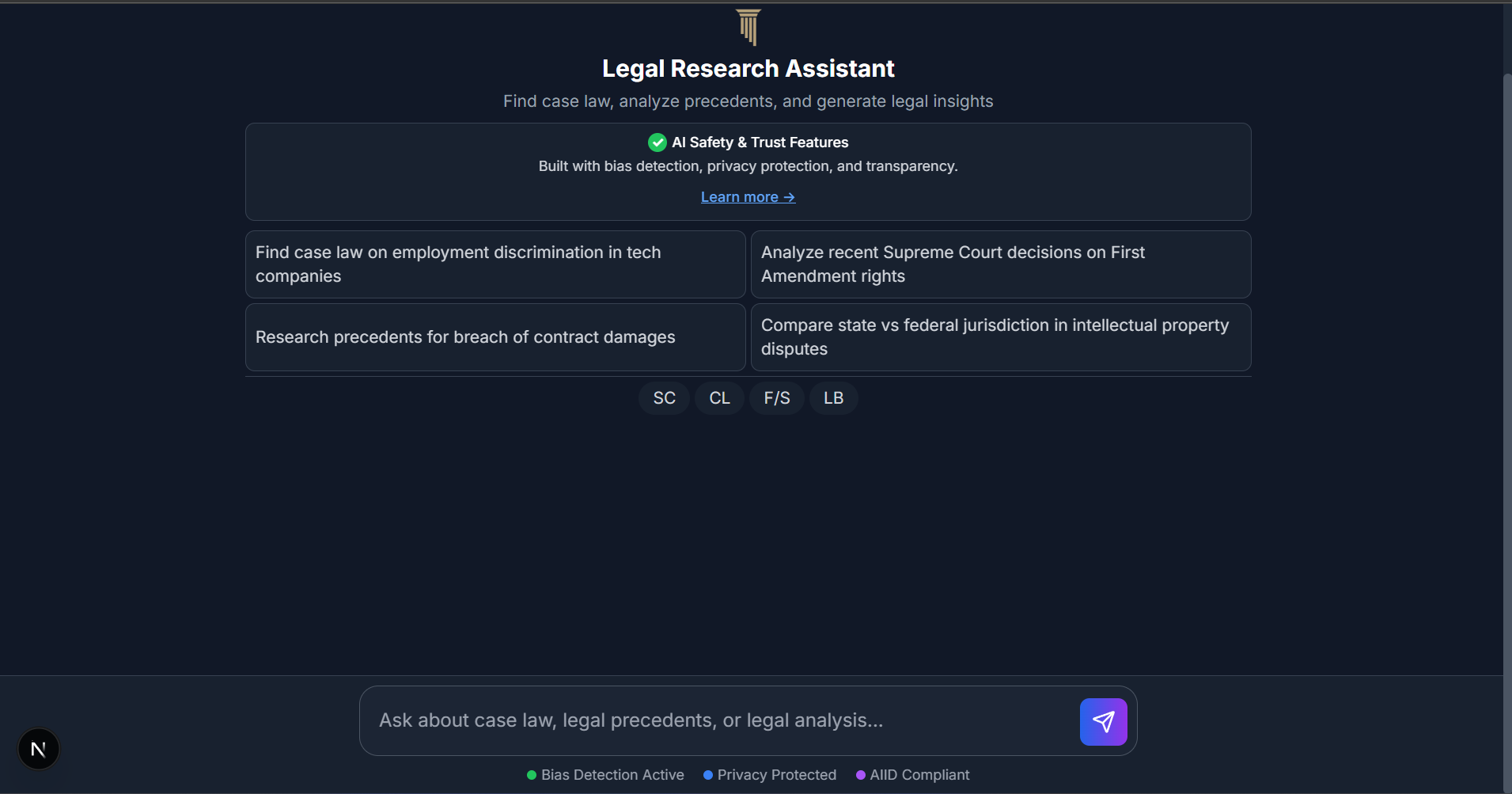
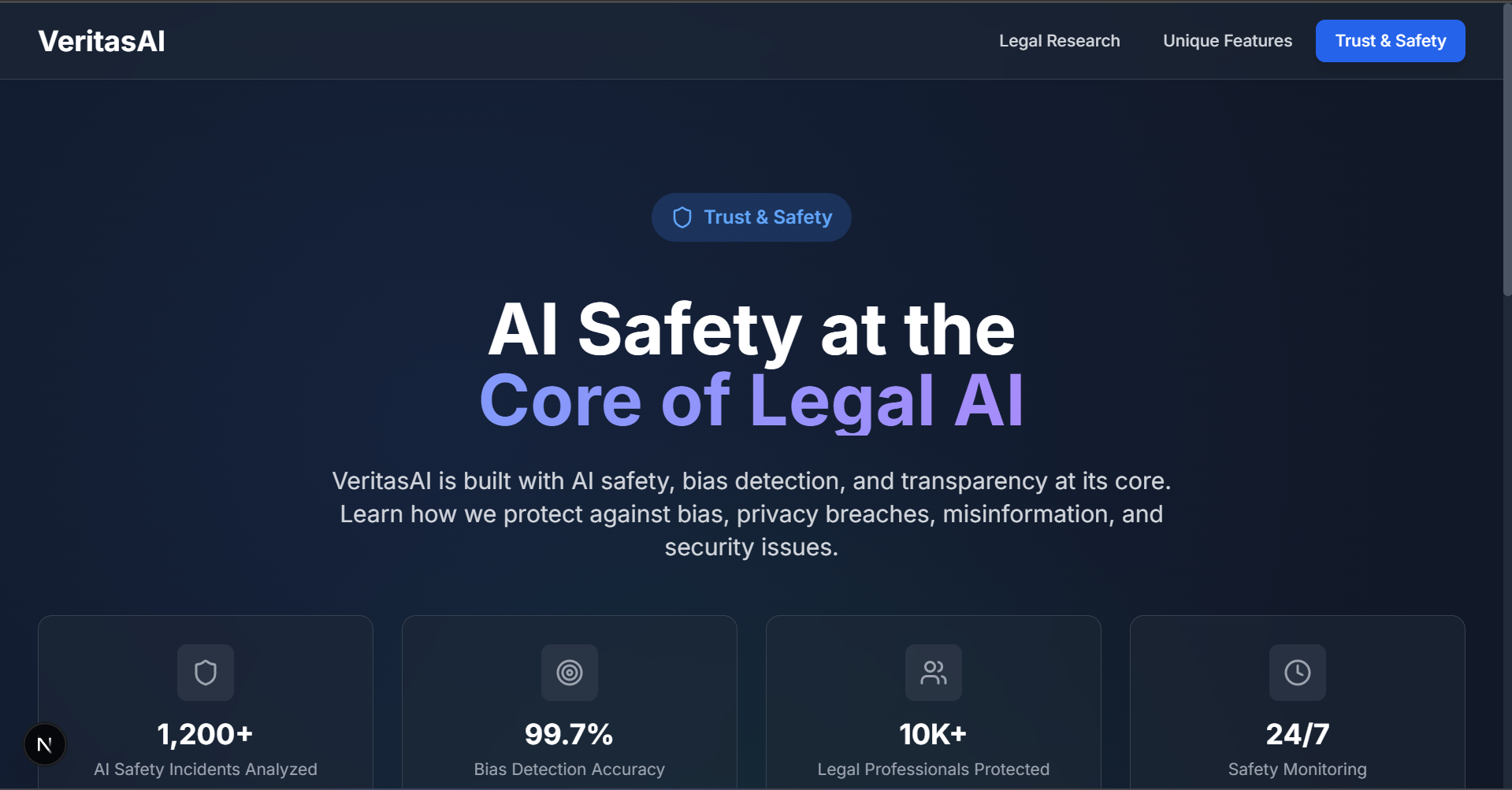
VeritasAI is the first legal research AI that actually learns from past AI failures to prevent them from happening again.
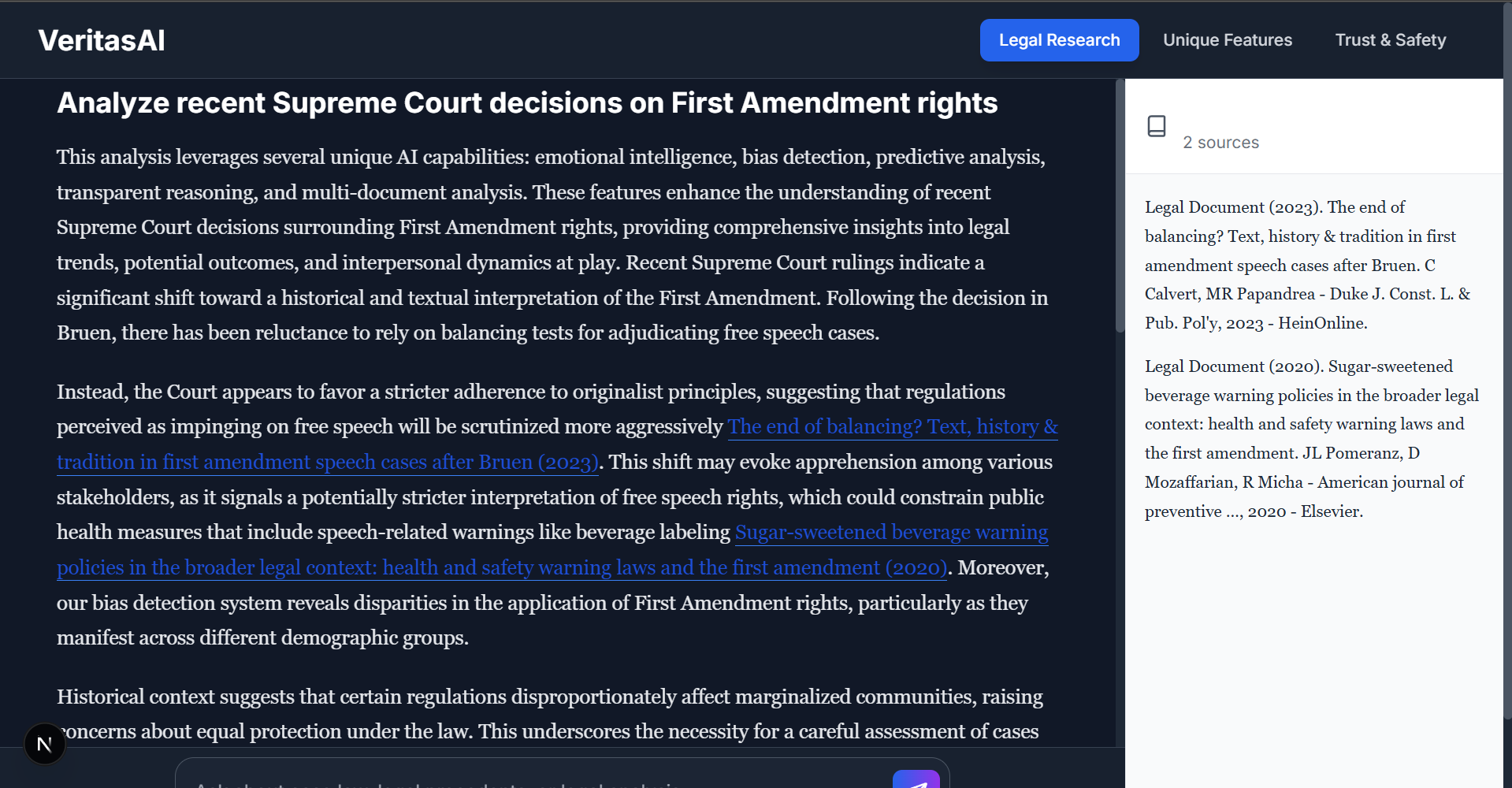
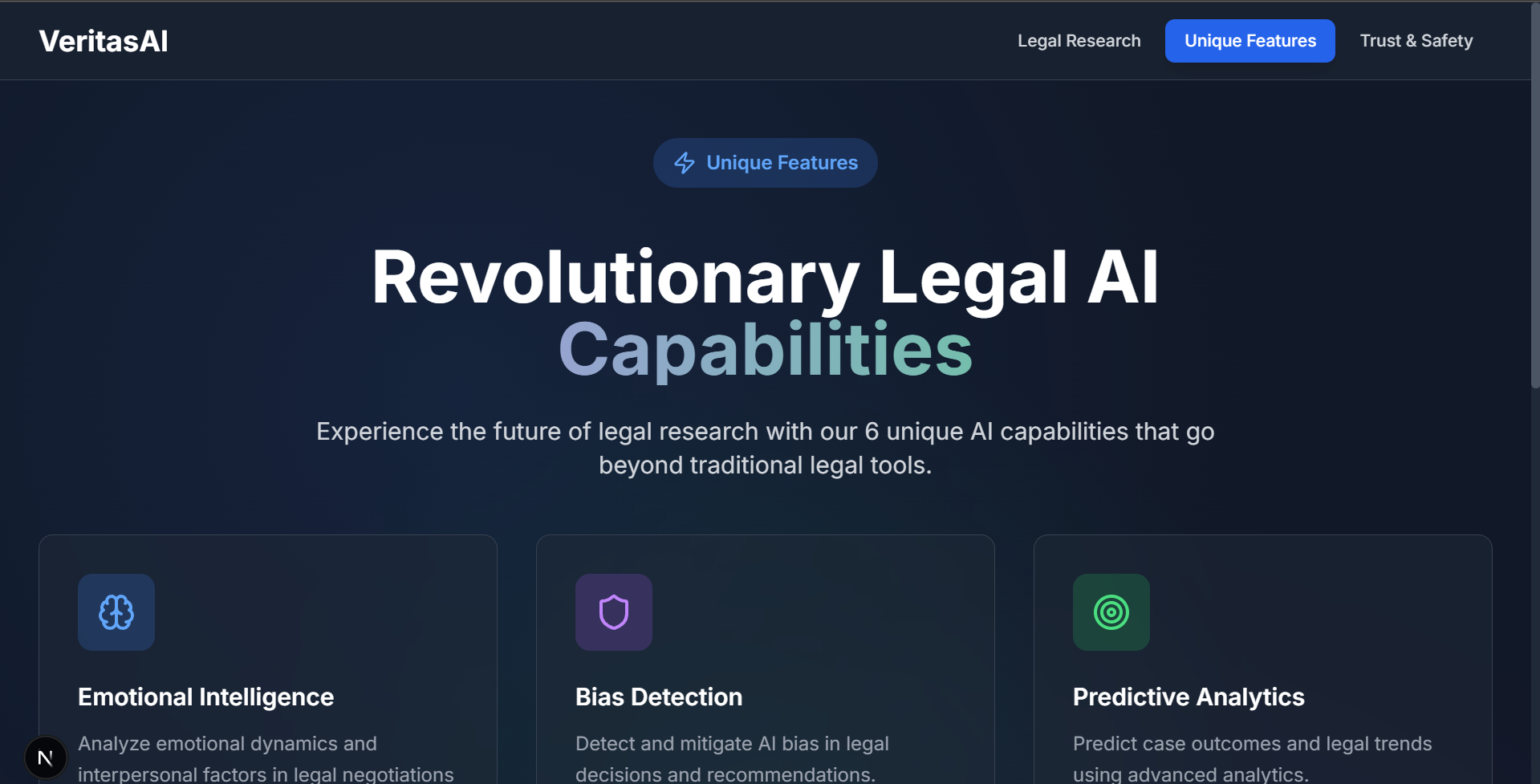
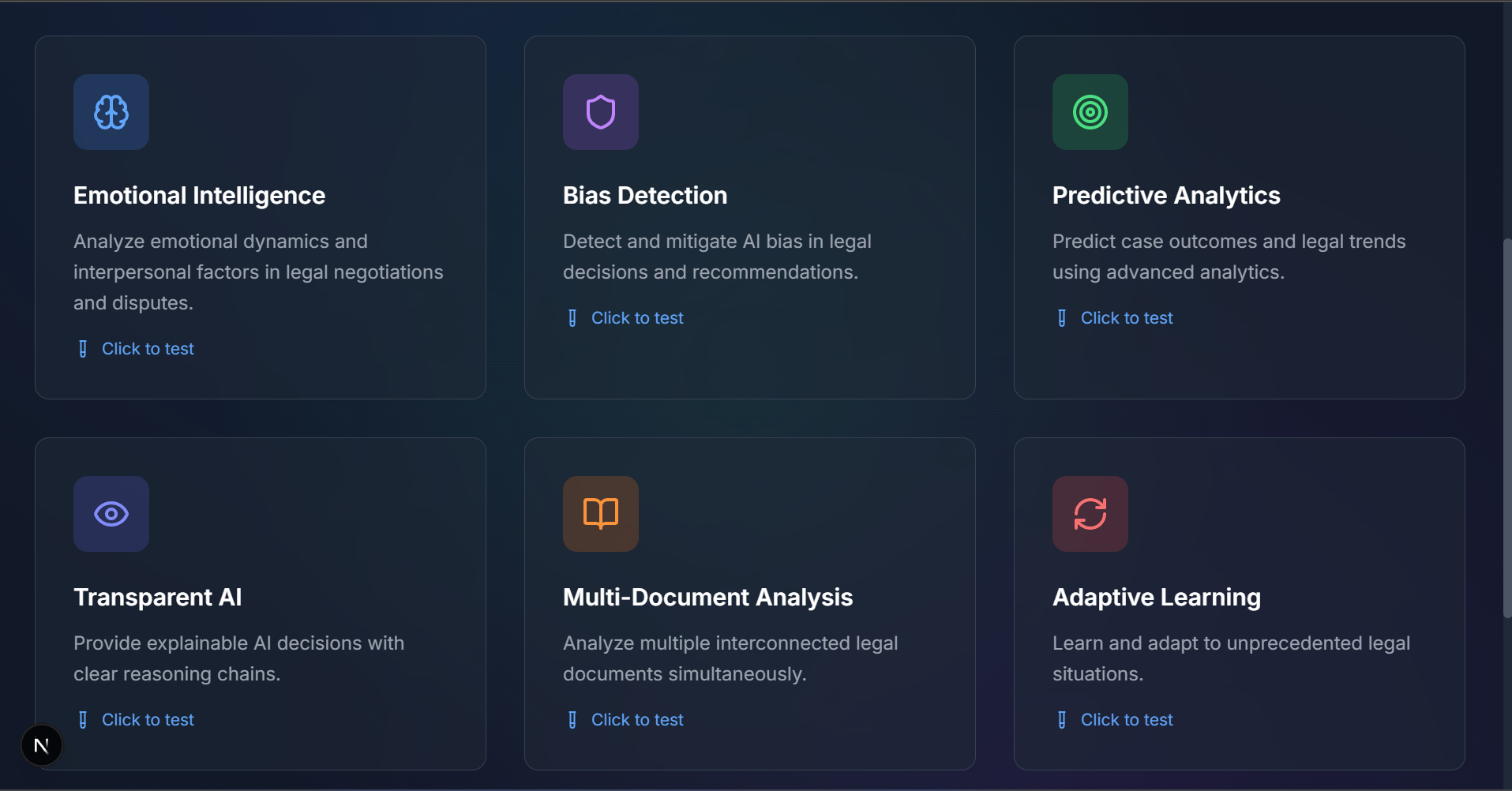
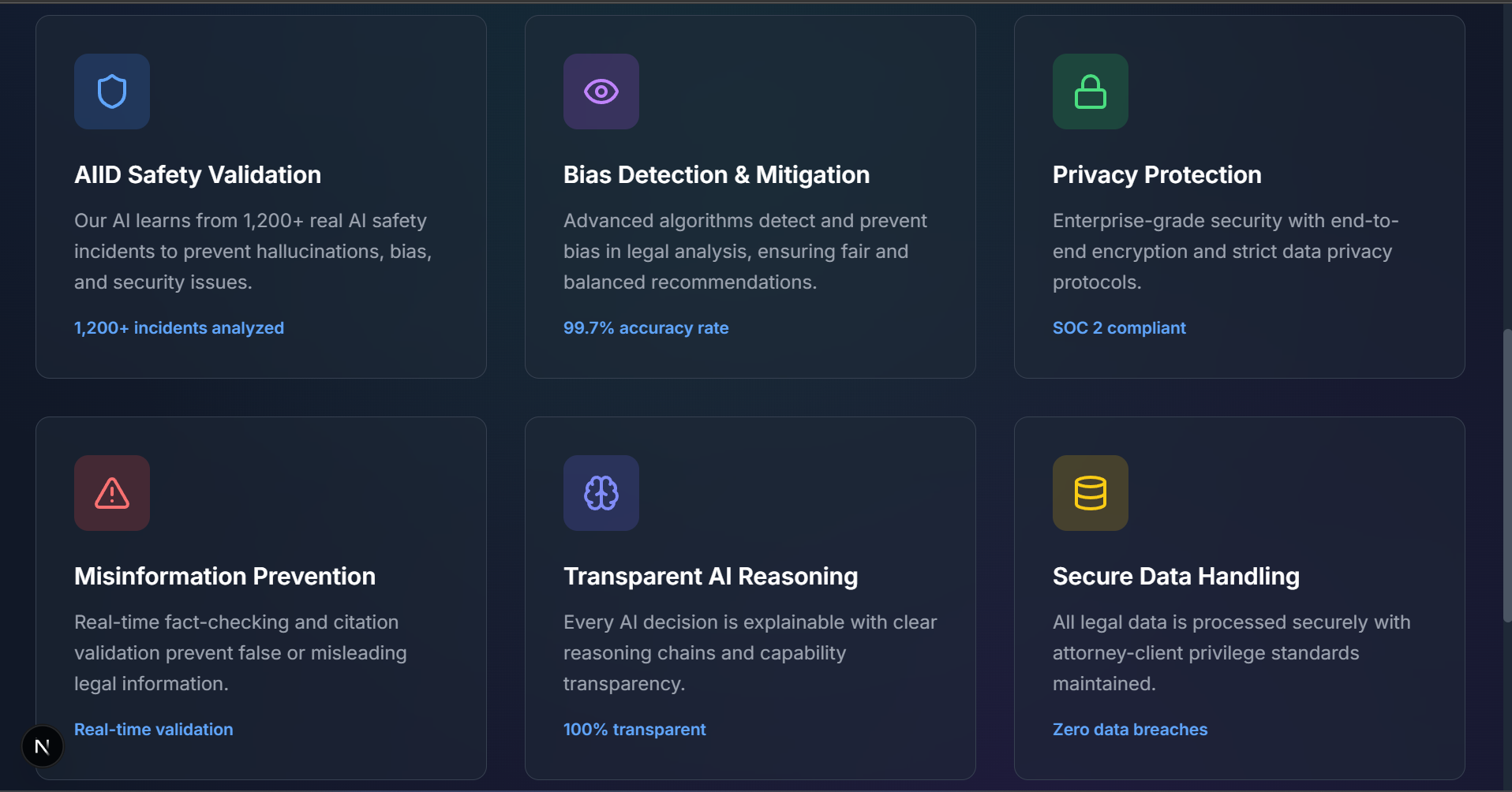
It searches millions of legal cases using plain English, delivers analysis with real citations, and—here's the key difference—shows you exactly what AI capabilities are being used and validates everything against 1,200+ documented AI safety incidents.
Core features:
- Natural language legal search across comprehensive databases
- Bias detection and emotional intelligence analysis
- Predictive case analytics
- Real-time safety validation that prevents the exact type of hallucinated citations that plagued Morgan & Morgan
How It Works
I built this on Next.js 15 with TypeScript and Tailwind CSS, creating a modern interface that feels natural to use. The backend connects to OpenAI GPT-4, Court Listener API, and Google Scholar Legal, while a custom AI safety processor validates every response against real incident data from the AI Incident Database.
The system streams responses in real-time, runs parallel API calls for speed, and automatically deduplicates citations while maintaining proper legal formatting.
The Hard Parts
The biggest challenge? Integrating real AI safety data into a production system. This isn't theoretical—every validation check is based on actual AI failures that happened to real people.
I also wrestled with stream management errors, citation deduplication across multiple sources, and creating a UI that makes complex AI capabilities feel intuitive rather than overwhelming.
What Makes This Different
This is the first legal AI with real AI safety validation. Every other tool either hides how AI works or ignores safety entirely. VeritasAI does neither.
It's transparent—you see exactly which AI capabilities are being applied. It's comprehensive—end-to-end legal research in one platform. And it's fast—sub-second streaming responses with a clean, modern dark theme.
What I Learned
Building this taught me that AI safety isn't optional for high-stakes applications. Transparency builds trust—users need to understand what the AI is actually doing. And in legal tech, citation formatting isn't a nice-to-have; it's everything.
Where This Goes Next
Short-term: Expand the legal database coverage, enhance safety validation, launch mobile apps, and provide API access for law firms.
Medium-term: Custom AI training on firm-specific cases, team collaboration features, advanced predictive analytics, and white-label solutions for legal organizations.
Long-term: Global expansion beyond US law, sophisticated predictive analytics for case outcomes, and comprehensive regulatory compliance tools.
The vision? Make VeritasAI the global standard for safe, transparent AI-powered legal research—where lawyers can trust their AI tools as much as they trust their own expertise.
Because in law, getting it right isn't just important. It's everything.
Built With
- custom-ai-safety-system
- llm
- next.js
- prisma
- react
- tailwind-css
- typescript


Log in or sign up for Devpost to join the conversation.