-
-
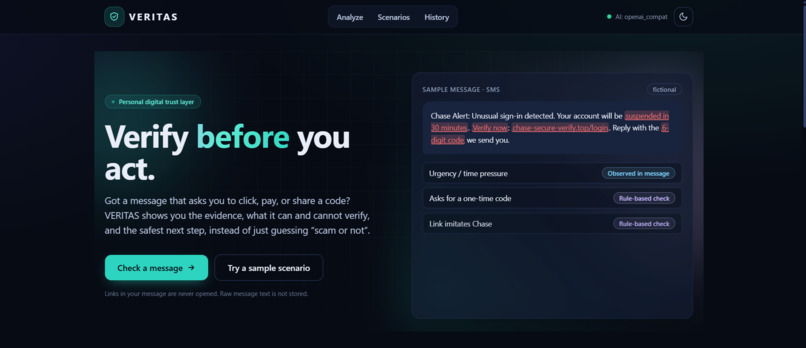
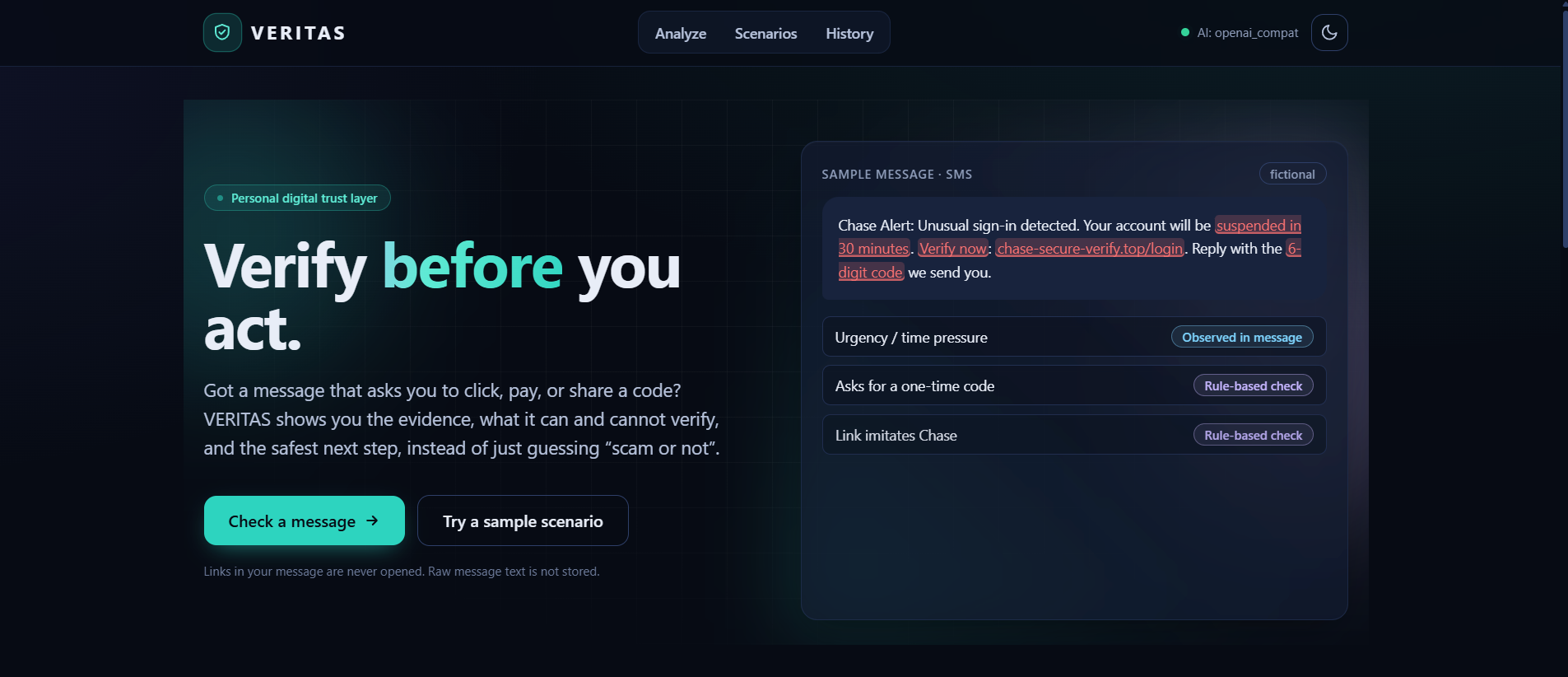
Home Page
-
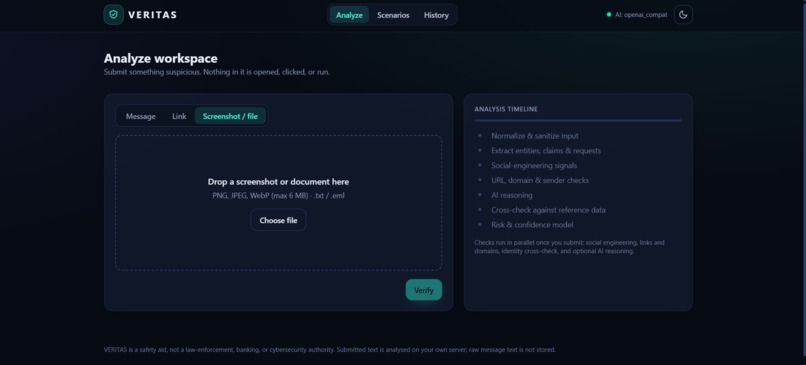
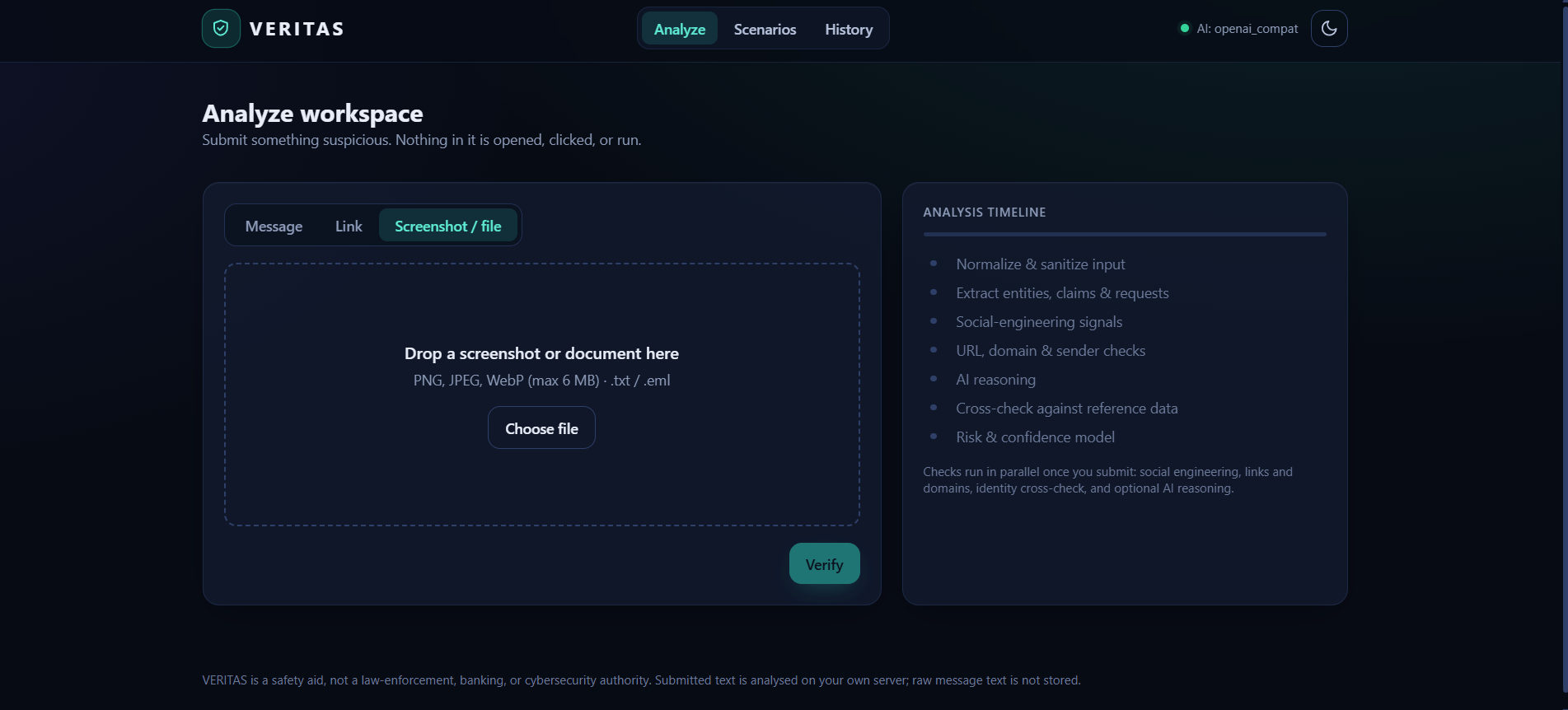
Analyze workspace page
-
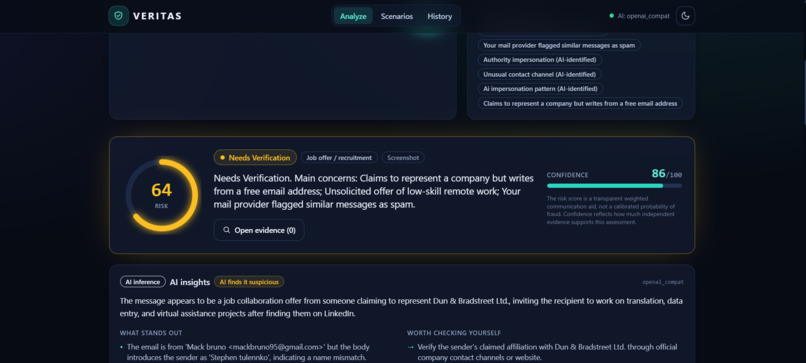
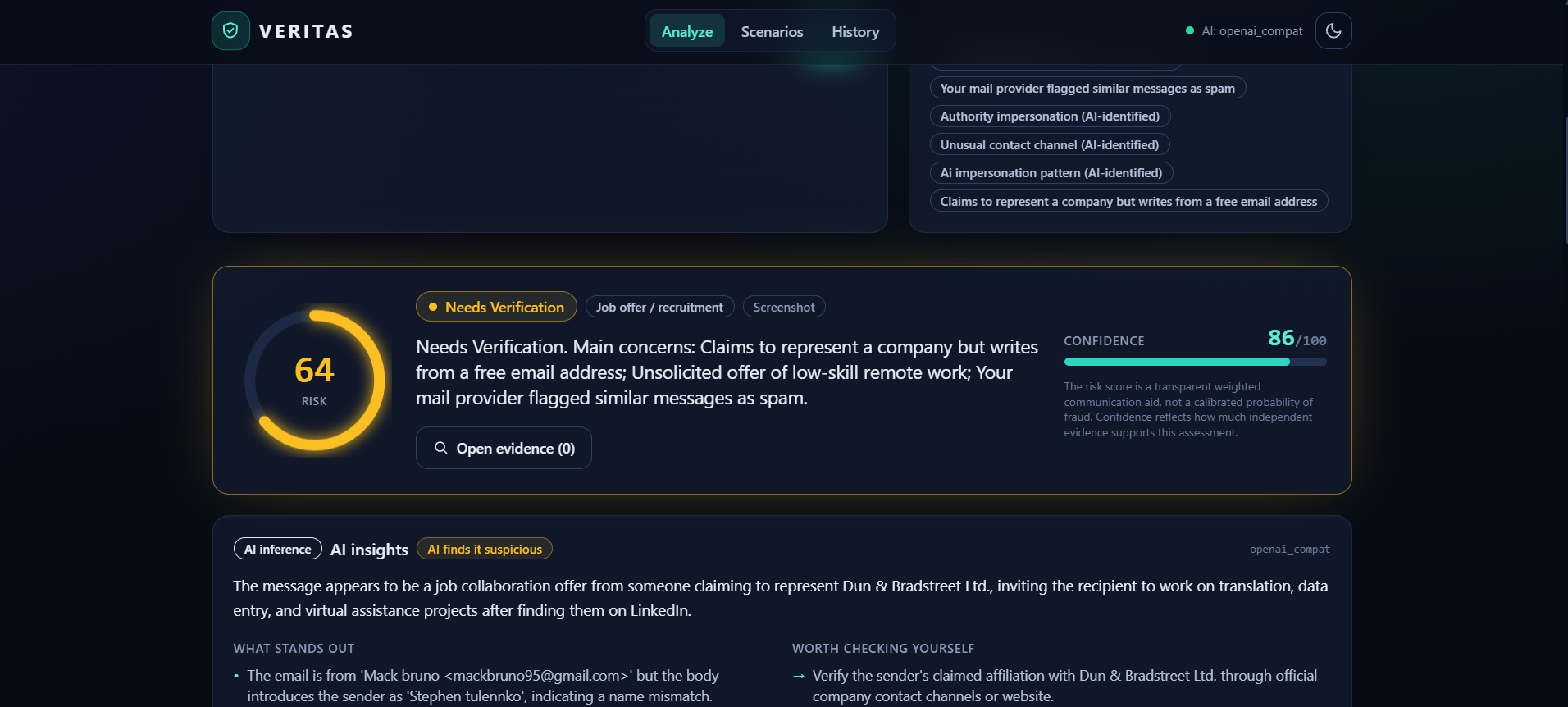
Analysis report off a doubtful screenshot
-
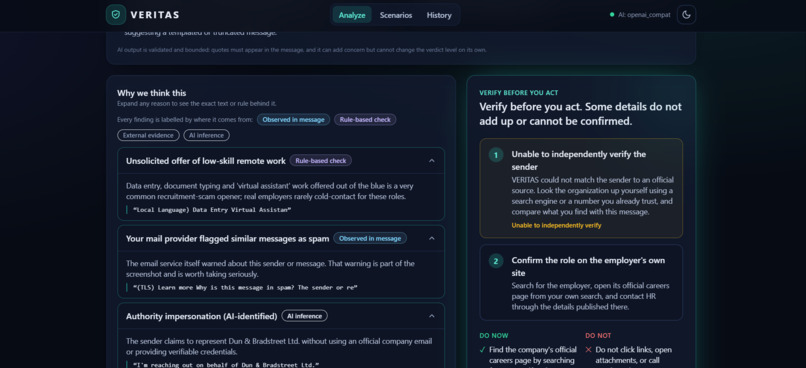
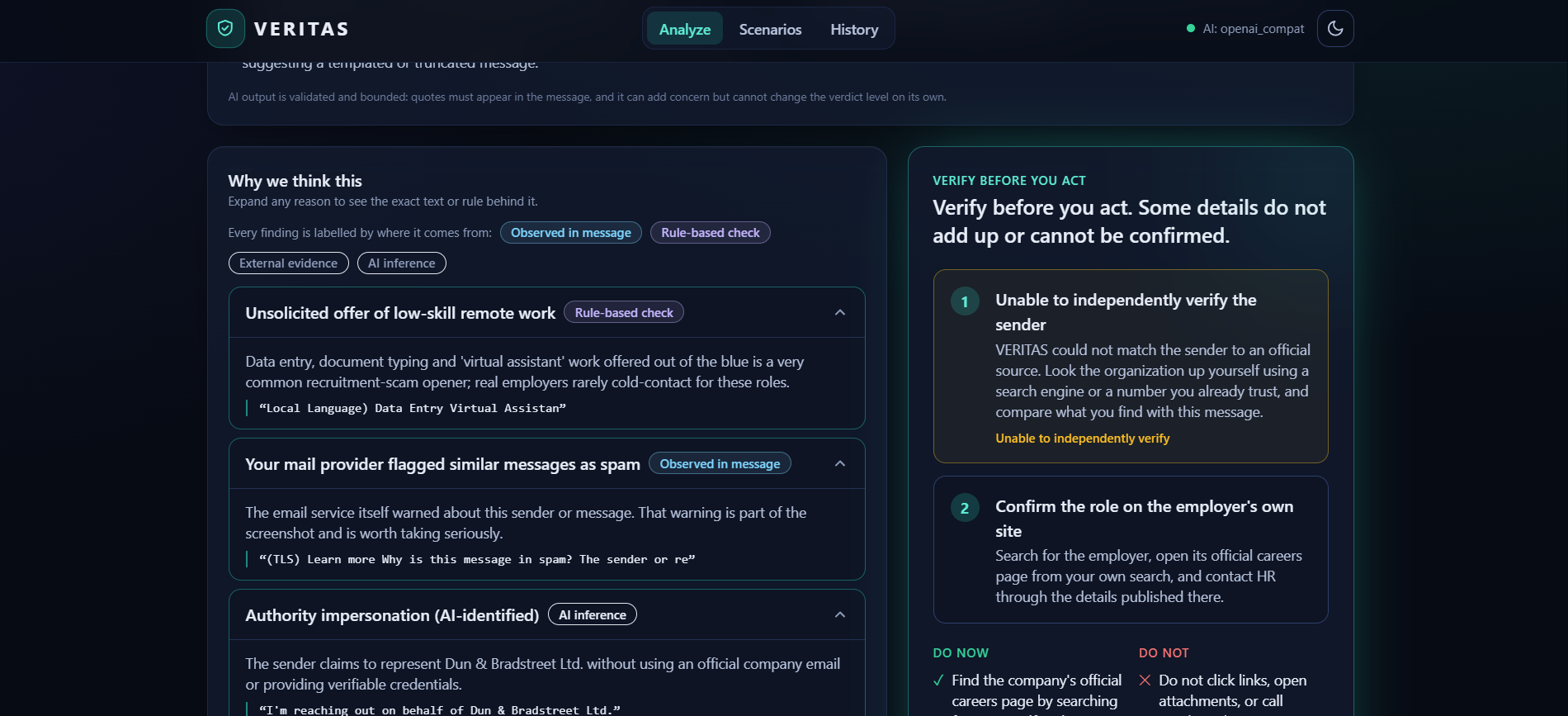
steps needs to be followed for specific doubtful screenshot uploaded in the report
-
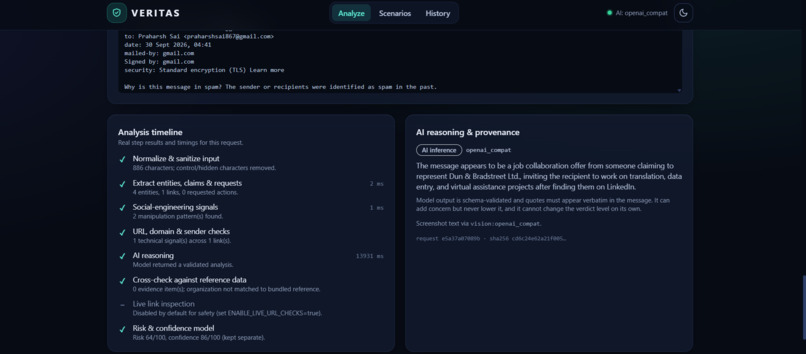
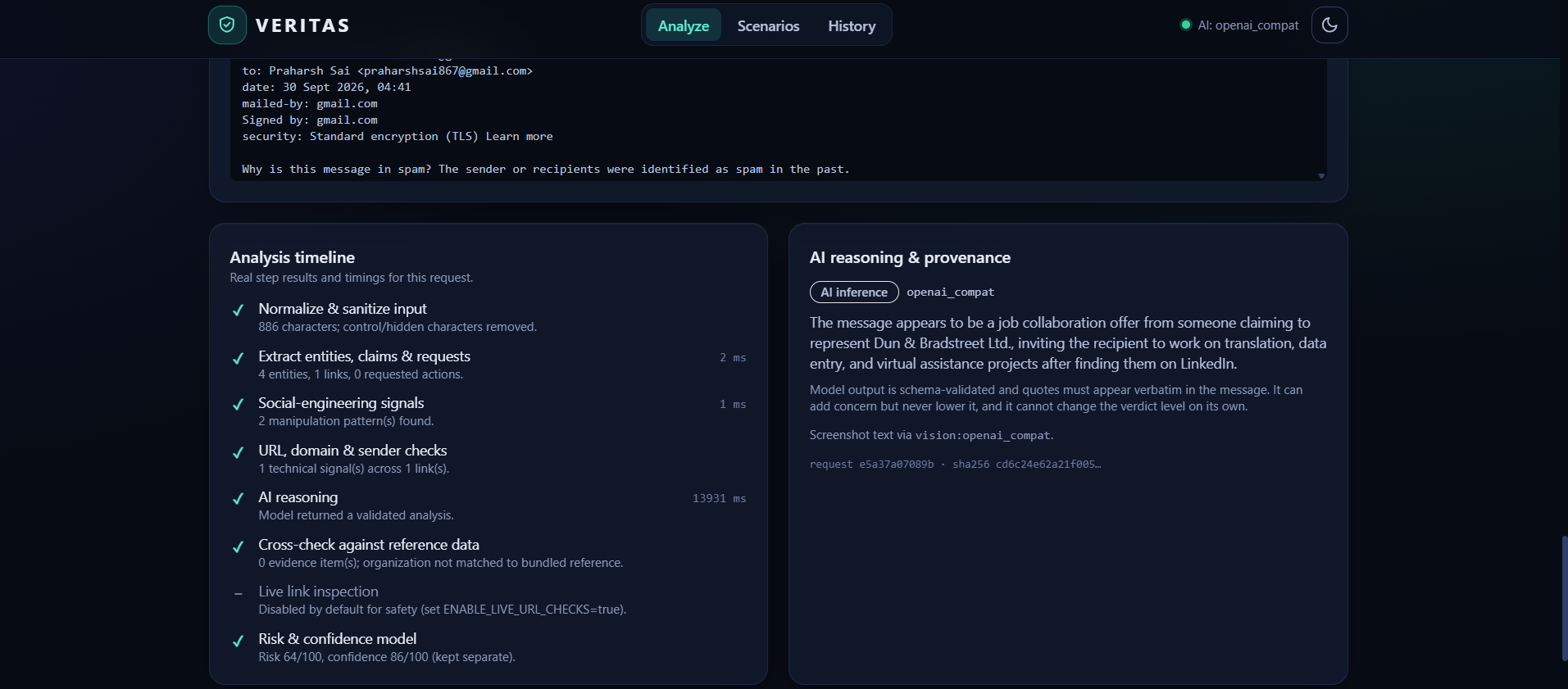
Analysis timeline and final conclusion of report
-
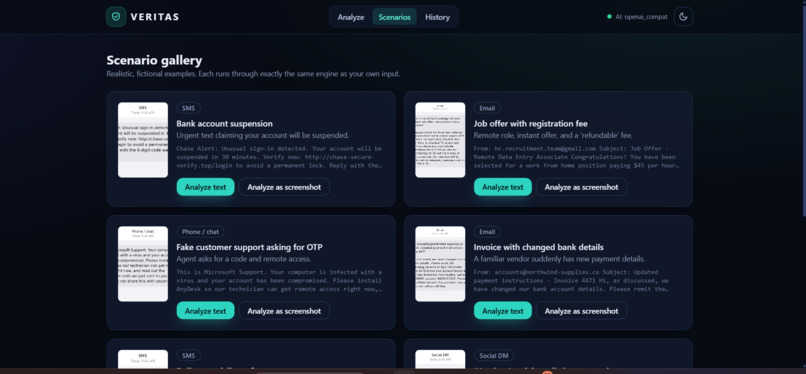
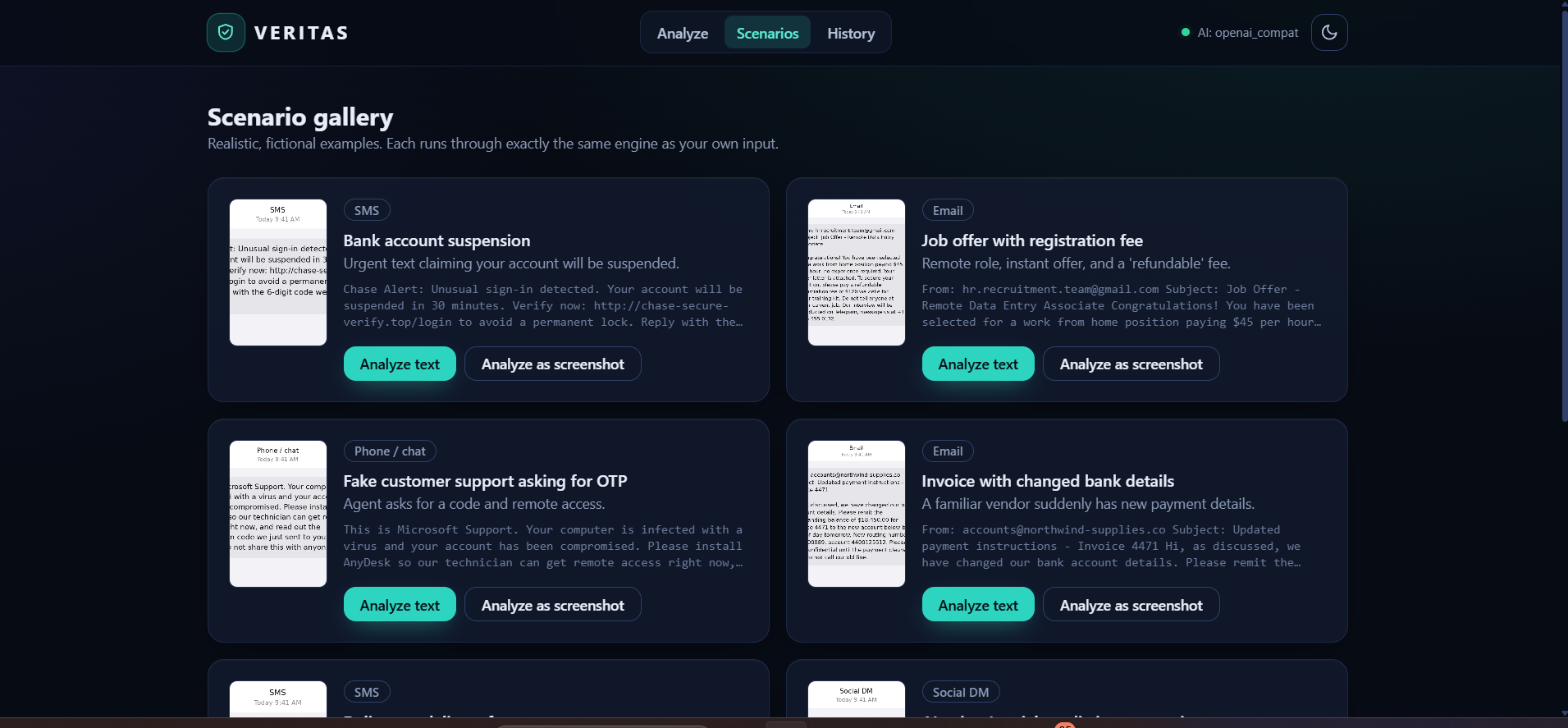
Scenario gallery
-
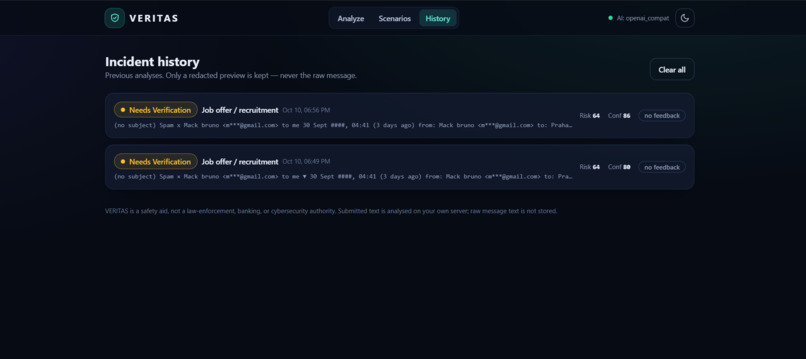
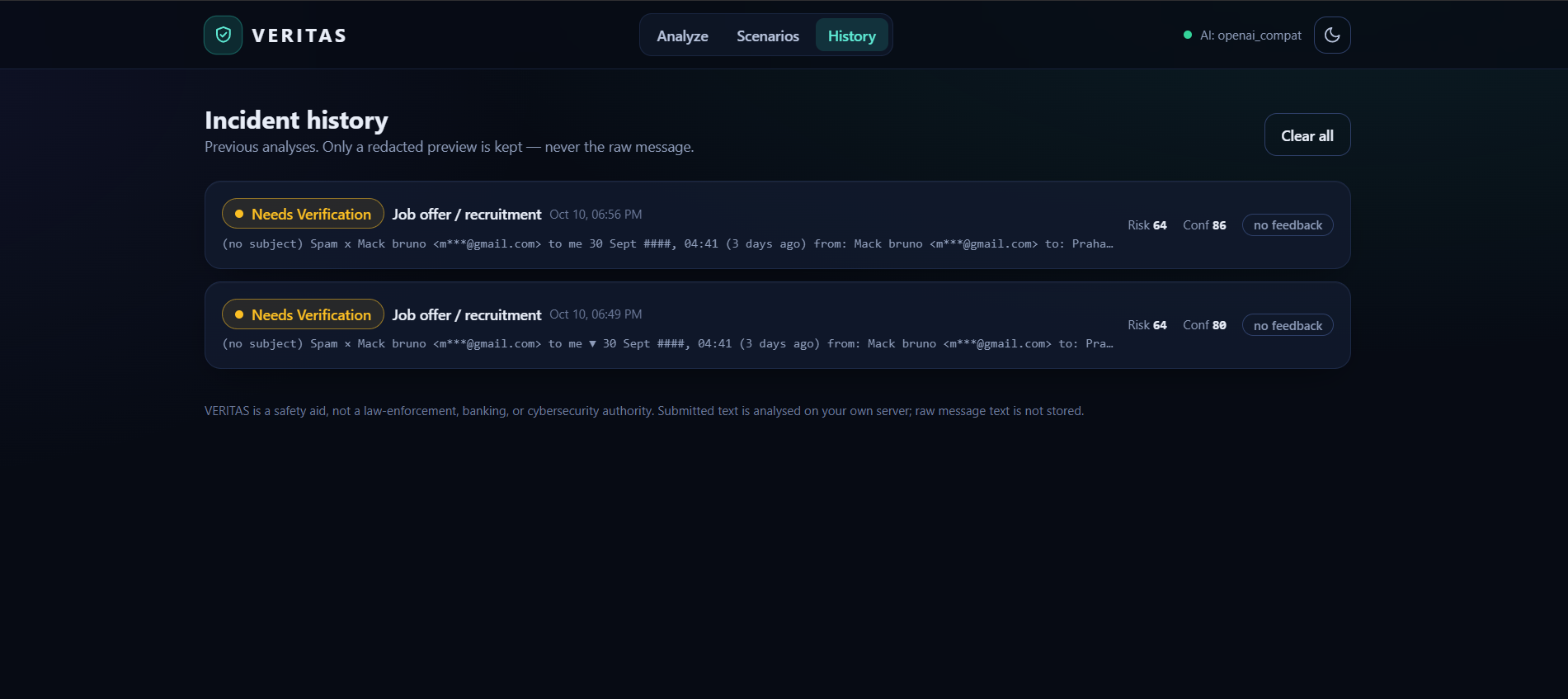
Incident history
Inspiration
We kept seeing how realistic scams, phishing messages, fake job offers, and impersonation attempts have become. With AI making it easier to create convincing content, it can be difficult for normal users to know what they can actually trust.
We wanted to build something that doesn't just say "this is a scam", but actually helps people understand why it's suspicious and what they should do next.
What it does
VERITAS is an AI-powered digital trust layer that analyzes suspicious messages, screenshots, URLs, and other digital content.
It looks for things like impersonation, urgency, suspicious links, payment or credential requests, and other scam patterns. It then provides a risk assessment, explains the reasons behind it, and gives the user safer ways to verify the information before taking action.
Our main feature is "Verify Before You Act" - helping users verify a suspicious claim through safer, independent sources instead of blindly trusting the message or the AI.
How we built it
We built VERITAS with a modern web stack using Next.js, TypeScript, Python/FastAPI, and PostgreSQL.
AI is used for understanding messages, extracting claims and entities, detecting social-engineering patterns, and generating explanations. We combine this with deterministic security checks and evidence verification so the system doesn't depend entirely on an LLM.
We also designed the system to treat user-submitted content as untrusted and added protections against things like prompt injection and unsafe URLs.
Challenges we ran into
The biggest challenge was making the AI useful without letting it confidently make things up. For a security-focused application, a wrong answer can be worse than no answer.
We also had to think about prompt injection, malicious URLs, privacy, and how to clearly show where each finding came from.
Accomplishments that we're proud of
We're proud that VERITAS goes beyond a simple "scam/not scam" classifier.
It connects AI analysis, security signals, evidence, and actionable recommendations into one workflow. The Verify Before You Act feature is especially important to us because it focuses on helping users make safer decisions, not just giving them a prediction.
What we learned
We learned that building a useful AI product is not just about getting good responses from an LLM. You also need reliable data, validation, security, clear explanations, and good handling of uncertainty.
We also learned how important it is to design AI systems around the actual problem users face rather than simply adding AI to an existing workflow.
What's next for VERITAS - Personal Digital Trust Layer
We want VERITAS to eventually work beyond a standalone web app.
The next steps could include a browser extension, email and messaging integrations, real-time scam detection, stronger identity verification, and support for more types of AI-generated content.
The long-term goal is simple: help people pause, verify, and stay safe before they act.
Built With
- api
- claude
- css
- cybersecurity
- fastapi
- generative
- llm
- next.js
- ocr
- postgresql
- python
- react
- rest
- supabase
- tailwind
- typescript


Log in or sign up for Devpost to join the conversation.