Inspiration
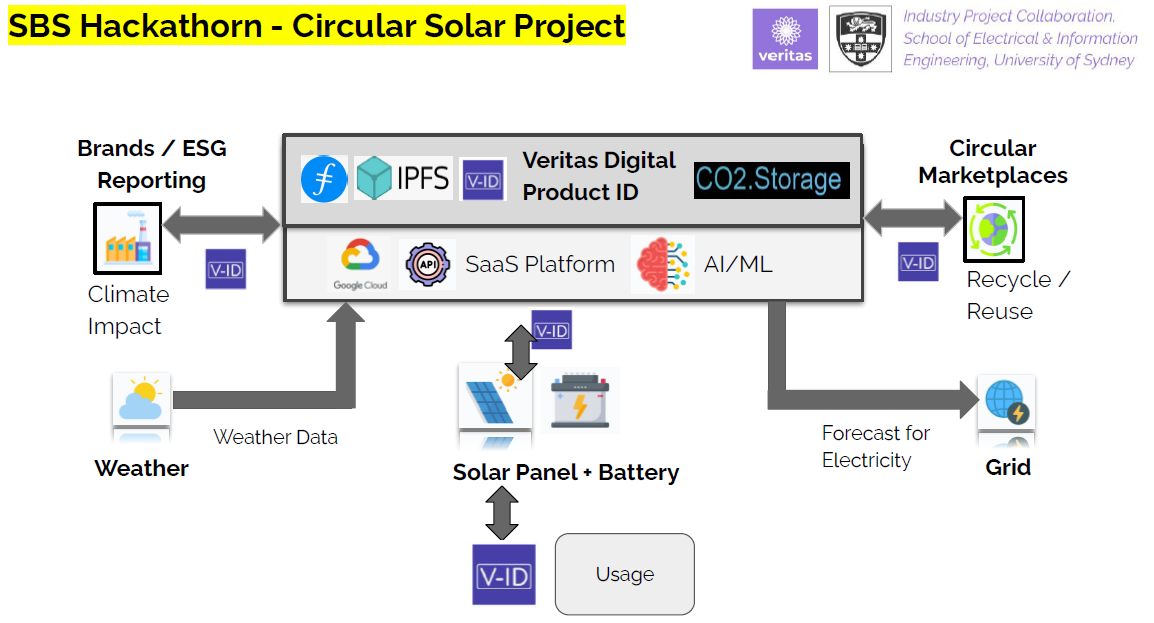
Climate change is one of the most pressing challenges facing humanity today. To achieve Net Zero emission by 2050, the world has been focusing on reducing energy emissions, which account for 55% of the total global emissions. Solar energy has proven to be a clean and sustainable solution, compared with fossil fuel alternatives. Unlike energy emissions, the other 45% of the total global emissions from products have been largely overlooked (Ellen MacArthur Foundation, 2023). In the case of Solar PPS, the reuse and recycling of battery and panel systems can be an environmental challenge, and also a commercial opportunity - with circular economy practices, which incentivize circulation products and materials. Digital Product IDs (or passports) can be promising solutions to close-the-loop between supply and demand (University of Cambridge 2022).
What it does
Veritas-ID.org, a purpose-driven open-source digital product ID platform, can be used to record full-lifecycle product data onto trusted and transparent blockchain / DLT (Distributed Ledger Technologies) systems. With digital product IDs, there are new business model opportunities, like “reverse auction” (e.g., bidding for future prices based on current materials) to improve resource efficiency. In addition, AI models can benefit from processing trusted and transparent data, as a training dataset, with higher levels of accuracy and assurance.
How we built it
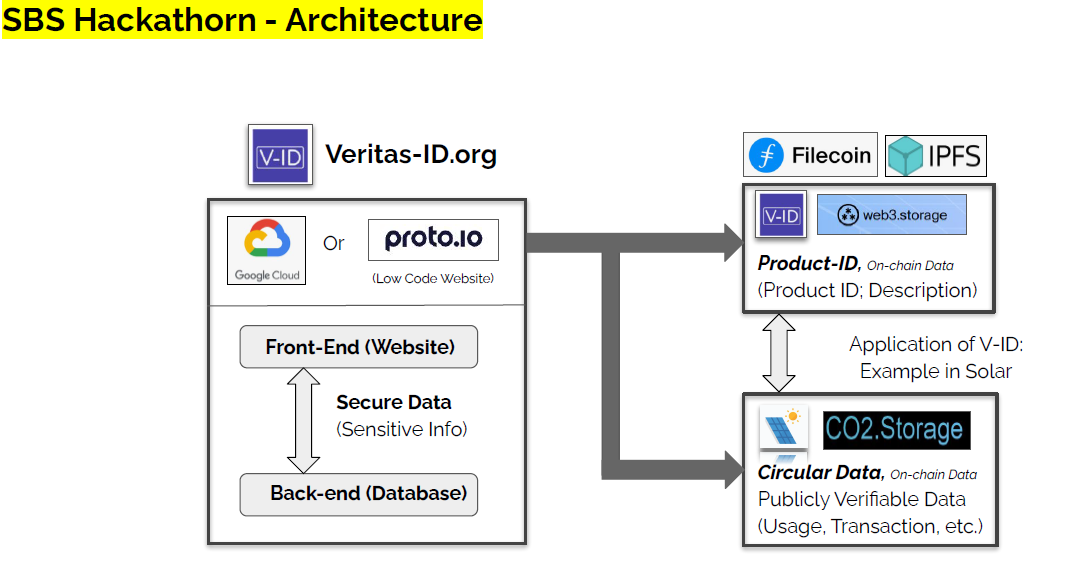
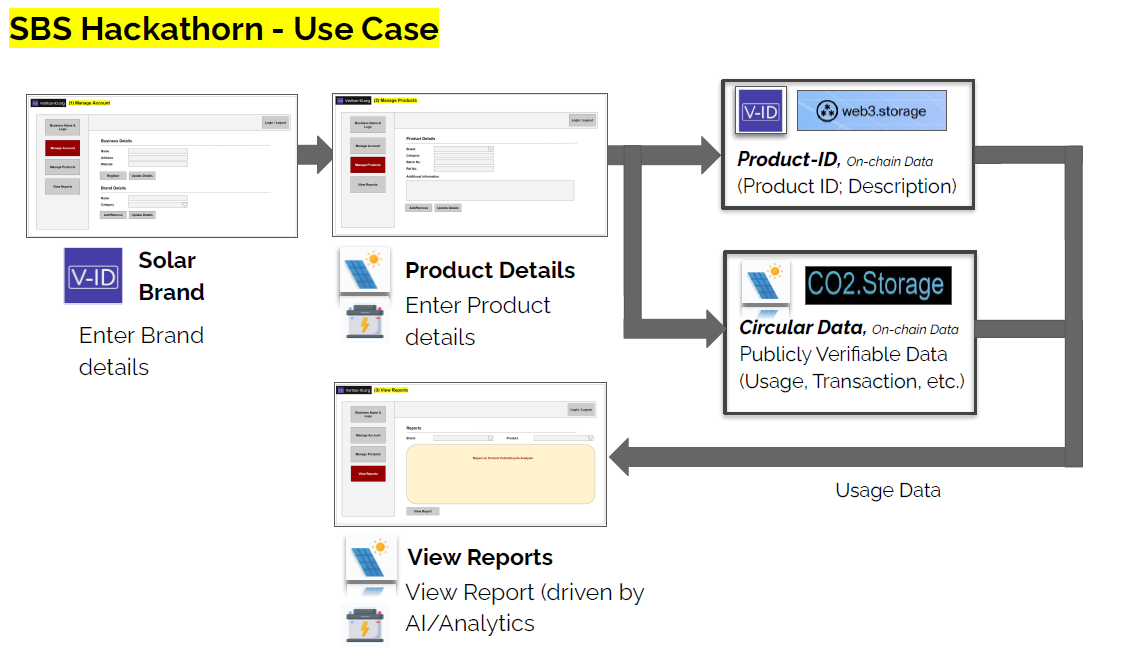
Our system architecture and use cases are shown in the Image Gallery section. In the SBS Boston Virtual Hackathon, we had explored options to integrate Co2.storage and Hedera technologies, to make our climate data auditable and verifiable.
Challenges we ran into
Our progress was impacted by integration issues with our front-end (Google Cloud) and back-end (Co2.storage & Hedera technologies). In addition, our key technical engineer had to move to other work, due to personal reasons. This has slowed down our work. In addition, we realised that our scope of work might be too big for a hackathon, which often involves trials-and-errors. However, we will continue the development and integration of Veritas-Id.org with Co2.storage & Hedera technologies, after the Hackathon.
Accomplishments that we're proud of
Our team was able to develop the overall architecture and use case in a very short time. We have developed proof-of-concept project and demo, while also actively talking to users and other key stakeholders during the Hackathon. We have also learned interesting work from other participants, the Filecoin Green team, and Climate Collective, Hyphen, and The HBAR Foundation. Thank you for sharing your knowledge and expertise with us ! : )
What we learned
We have learnt many interesting topics from the SBS Boston Virtual Hackathon, particularly co2.storage and Hedera technologies, which are perfectly aligned with our missions and goals to make climate data more trusted, transparent, and verifiable, to address critical issues in circular economy.
What's next for veritas-id.org
We are building the open-source Veritas-Id.org project, to accelerate the transition to circular economy. Solar is one of the areas we are looking at. We are also exploring other areas, including fashion, medical-devices, etc. In addition, we are also developing technologies to integrate DLT/blockchain with AI/AIGC (e.g. ChatGPT) to make climate data more trusted, transparent, and verifiable. We are exploring the opportunities to integrate Hedera technologies into our Veritas-Id.org solutions. Please contact us, if you are interested in any collaboration work : )
References
Ellen MacArthur Foundation (2023), Completing the Picture: How the Circular Economy Tackles Climate Change. https://ellenmacarthurfoundation.org/completing-the-picture (accessed Feb 2023) University of Cambridge (2022), Report: Digital Product Passport: the ticket to achieving a climate neutral and circular European economy, https://www.corporateleadersgroup.com/digital-product-passport-ticket-achieving-climate-neutral-and-circular-european-economy (accessed Feb 2023)
Built With
- cloud
- co2.storage
- ipfs
- web3.storage


Log in or sign up for Devpost to join the conversation.