Inspiration
Hotels depend on inventory every day, but many independent hotels still manage important parts of their inventory and purchasing processes manually or through disconnected tools. We saw an opportunity to build something more practical: reliable inventory infrastructure designed specifically for independent hotels, without the complexity and cost of traditional enterprise systems. That became Veristock. The core idea is simple: give hotels a centralized system they can rely on for their inventory operations, then build intelligence on top of that foundation. AI is not the foundation of Veristock, and we don't believe it should be. Hotel operations involve real money and real-world consequences, so the underlying system needs to remain predictable, auditable, and dependable. Instead, AI is used where it provides genuine value, such as helping users understand their data, identify patterns, generate insights, and automate non-critical business processes.
What it does
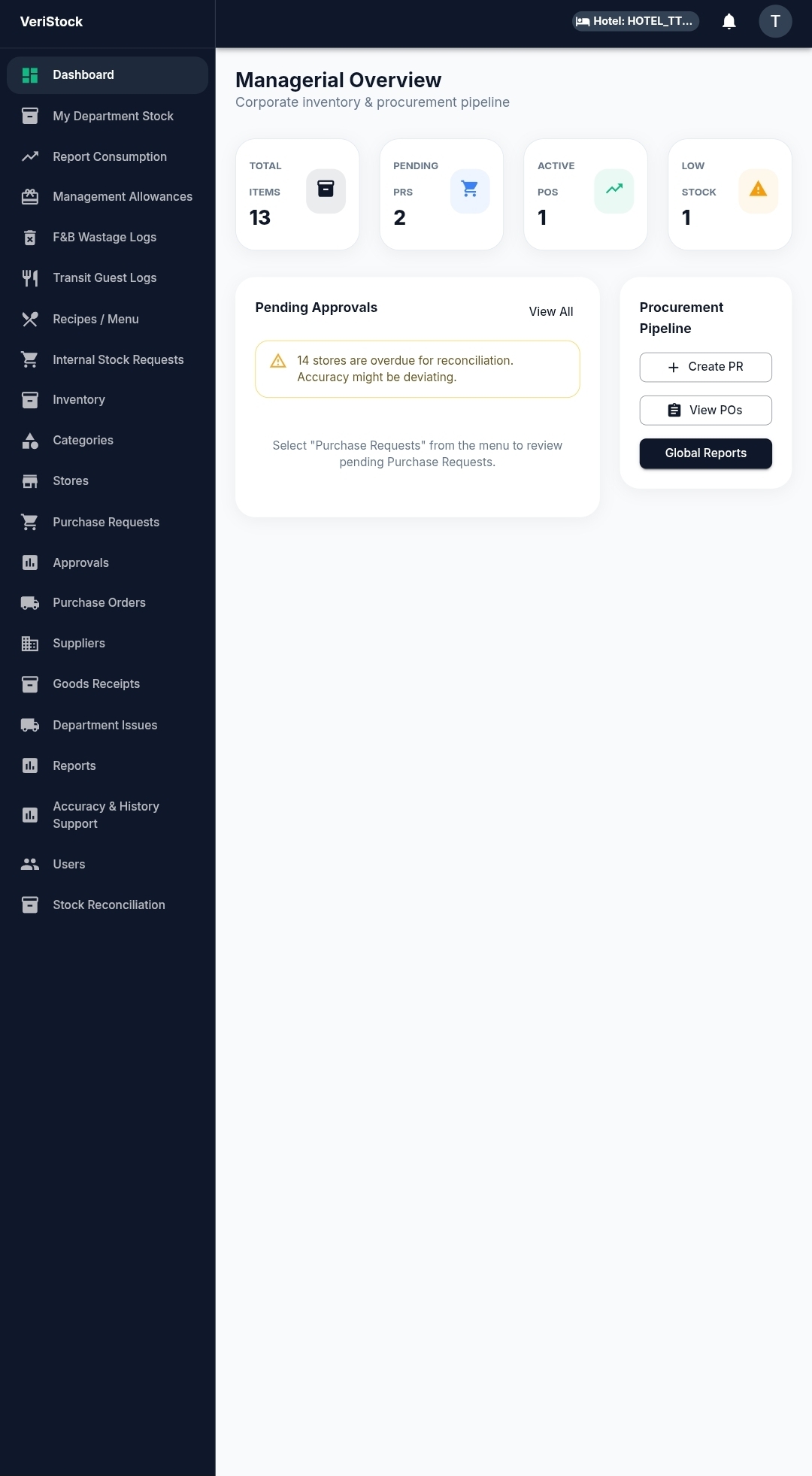
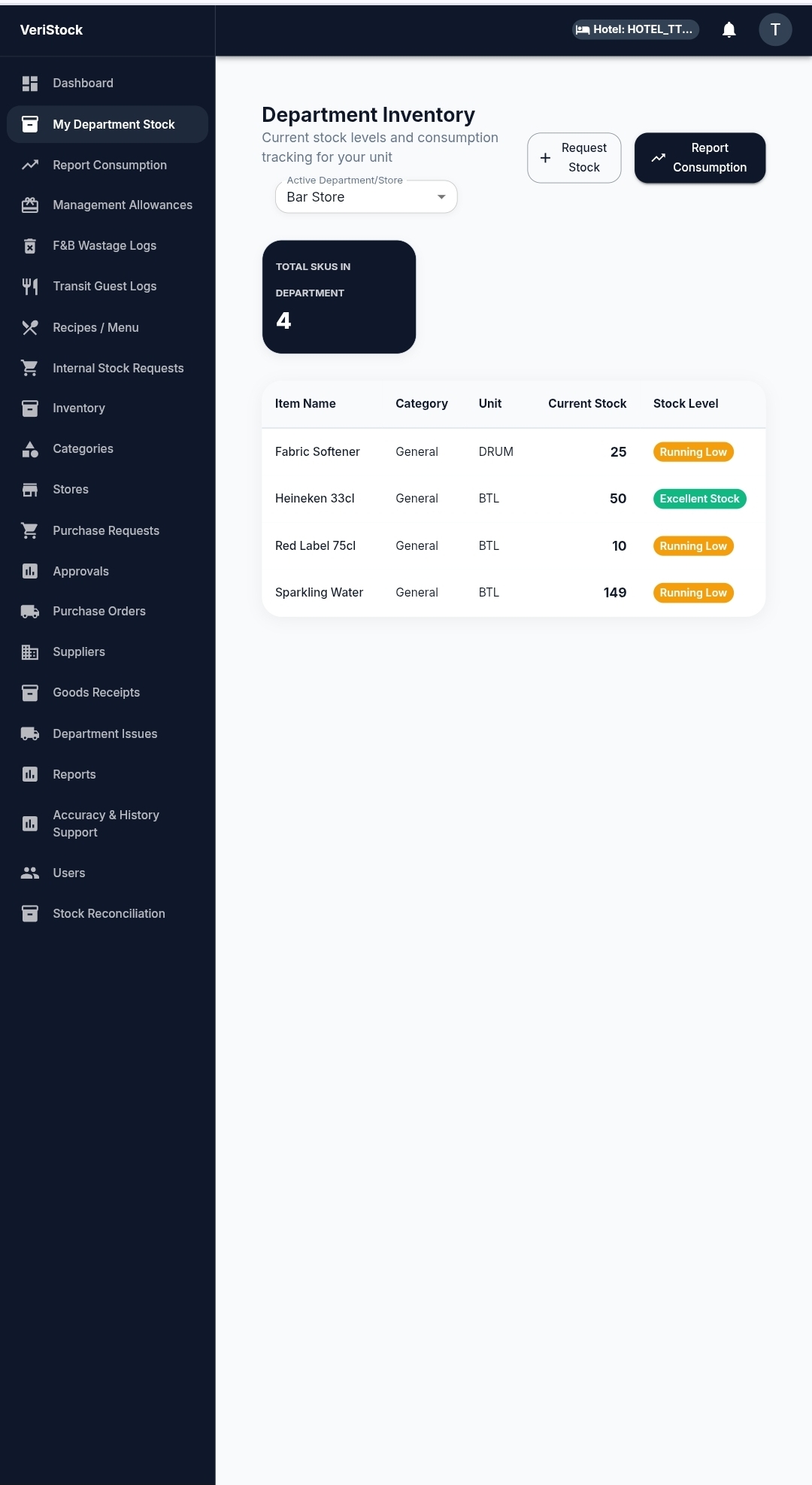
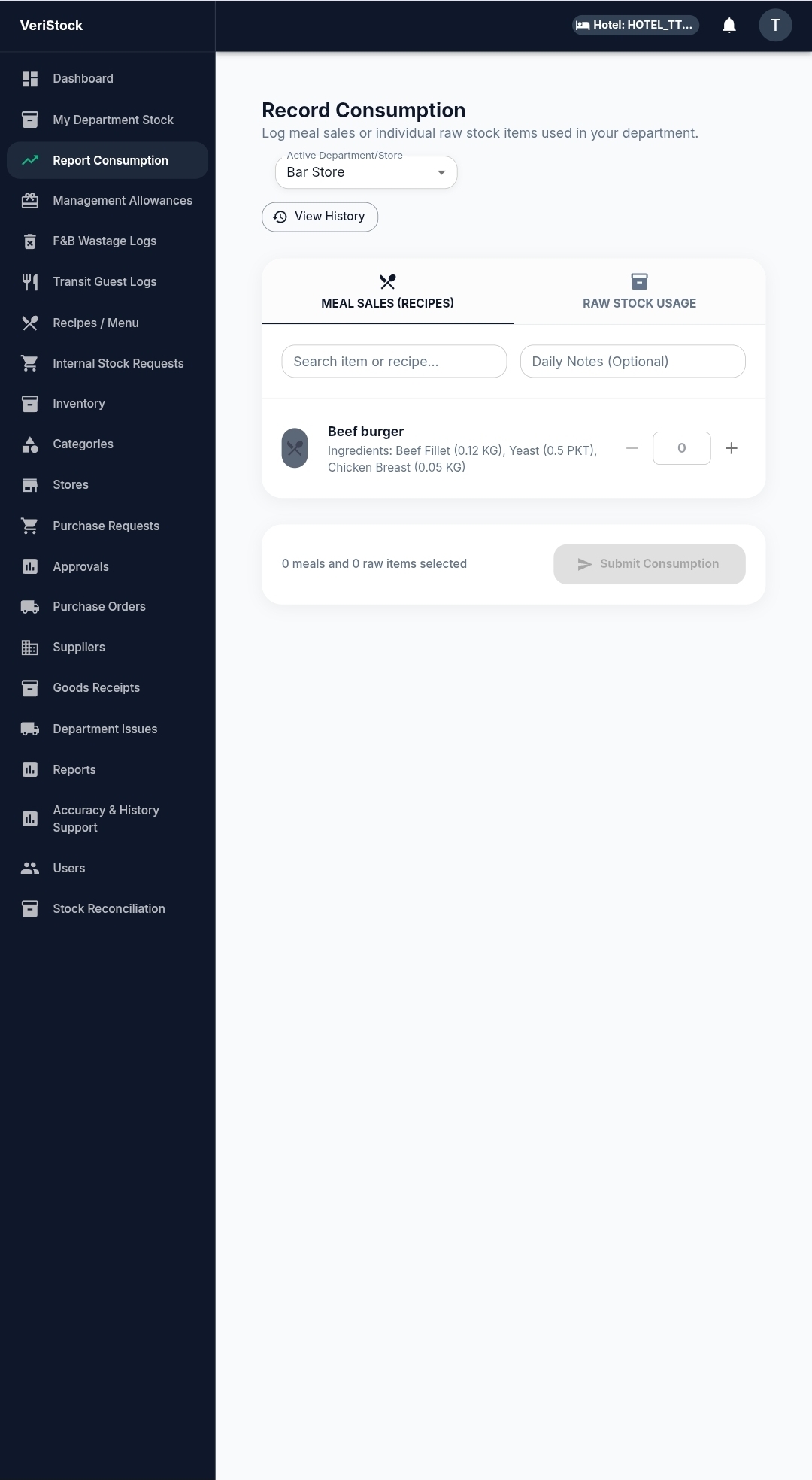
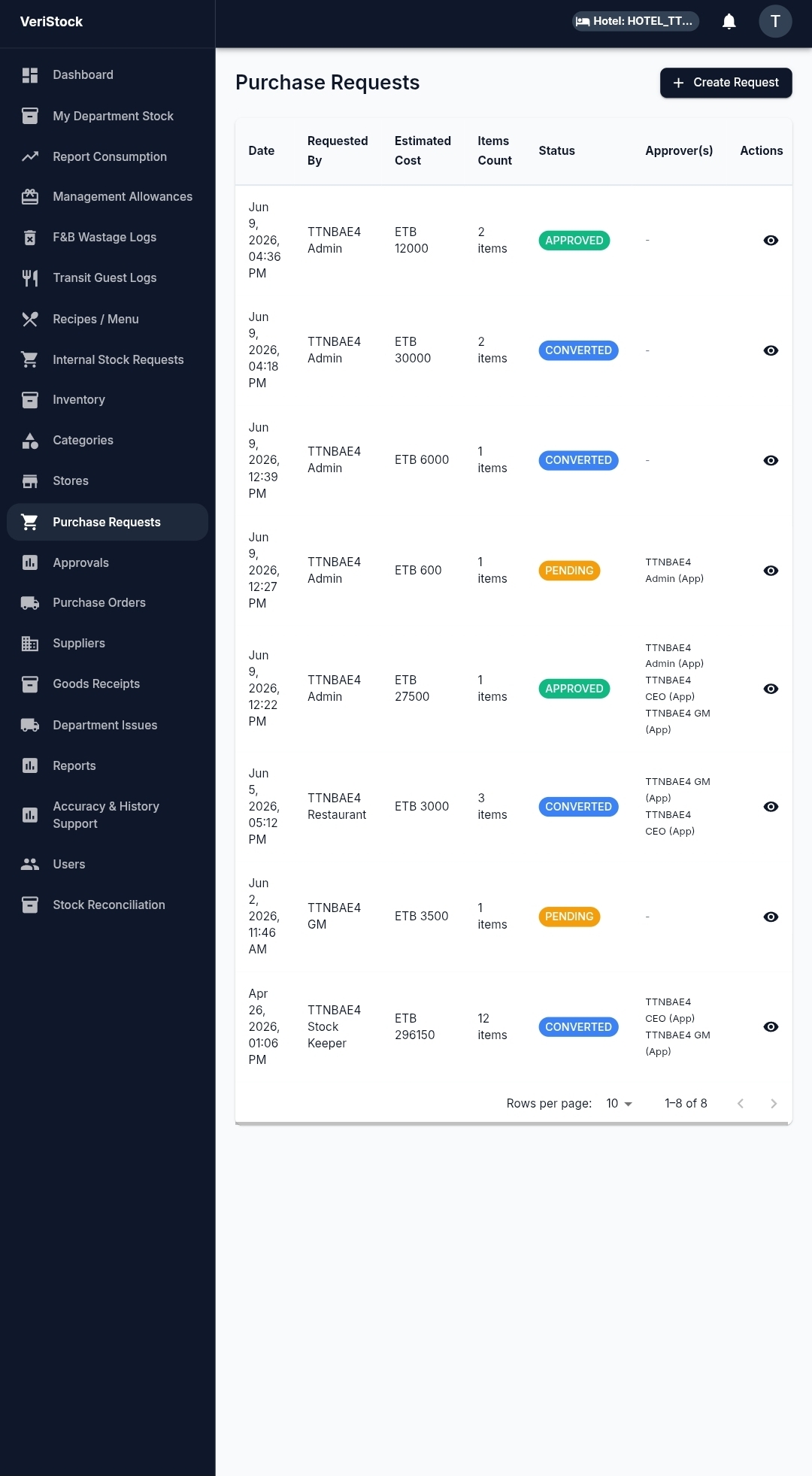
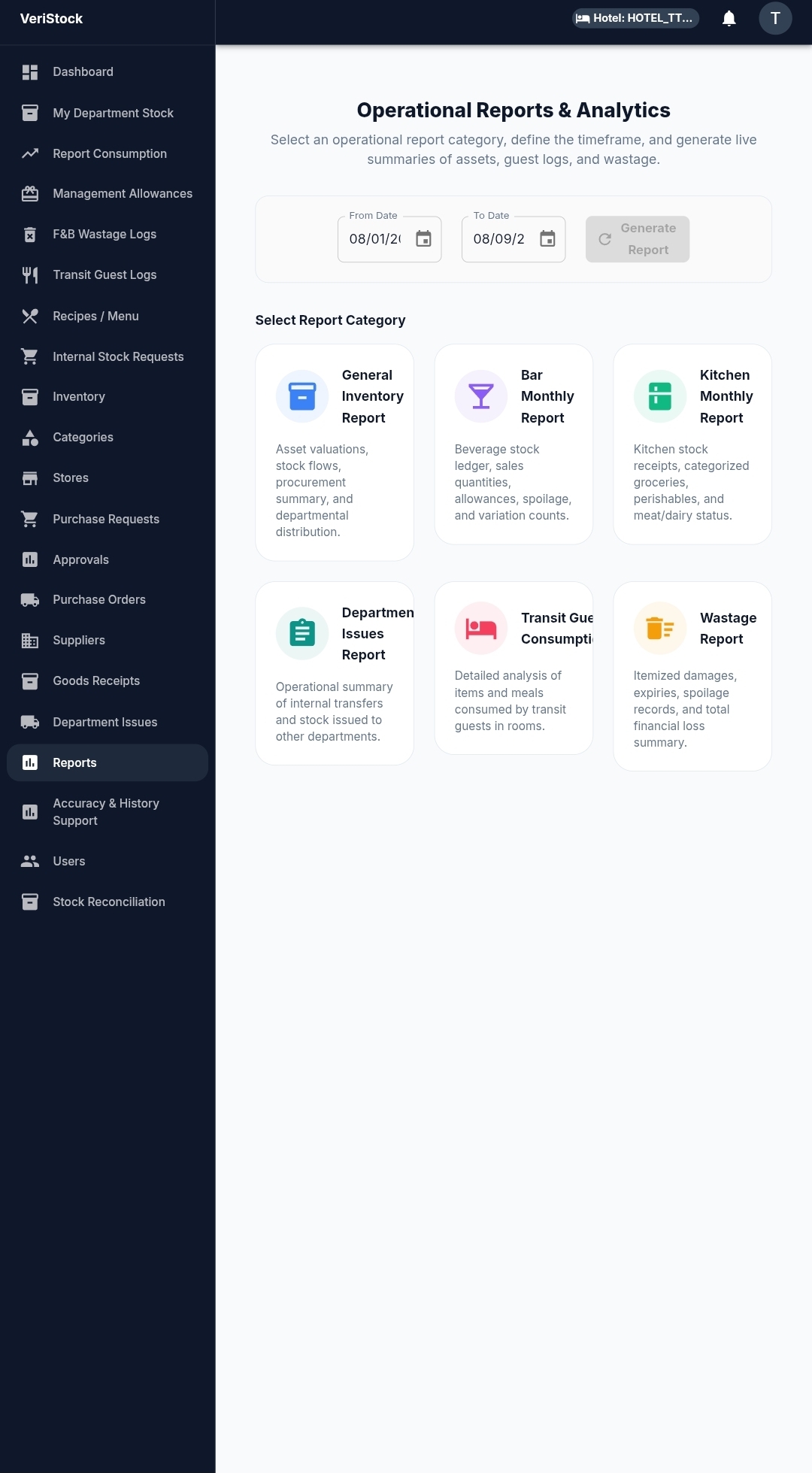
Veristock is an inventory management and operations platform for independent hotels. Hotels can use it to manage their products, monitor stock, track inventory movement, organize suppliers, and get a clearer view of their operational data. The goal is to replace fragmented and manual inventory processes with a centralized system that hotel staff can actually depend on. On top of this core infrastructure, we are introducing AI-powered capabilities that can help analyze inventory data, identify unusual patterns, provide operational insights, and eventually assist with forecasting and purchasing decisions. The AI supports the system. It does not replace the system.
How we built it
We built Veristock as a cloud-based software platform with the core architecture centered around structured data, deterministic business logic, and reliable inventory operations. The system is designed so that essential operations do not depend on an AI model. Inventory records, calculations, transactions, and other critical business logic are handled by conventional software. AI is integrated as an additional intelligence layer where it can improve the experience without becoming a single point of failure. We are also using Google Cloud as part of the infrastructure supporting the platform and its AI capabilities. For the competition, we are extending this approach beyond the product itself. AI agents can assist with parts of the business operation such as prospect research, customer communication, onboarding, support, reporting, and marketing. This allows us to use AI aggressively where the risk is low while keeping the core hotel operations reliable.
Challenges we ran into
One of the biggest challenges was deciding where AI actually belongs. There is a temptation to make everything AI-powered simply because AI is the focus of the competition. We deliberately chose not to do that. If an AI model makes a mistake in a marketing email, it can be corrected. If an AI system incorrectly changes a hotel's inventory records or makes an incorrect operational decision, the consequences can be much more serious. This led us to a principle that shapes Veristock: Use deterministic software for what must be reliable, and use AI where intelligence and flexibility provide a meaningful advantage. Another challenge was designing the product around the realities of smaller hotels. The system needs to provide useful operational capabilities without requiring the resources, technical expertise, or complexity associated with large enterprise platforms.
Accomplishments that we're proud of
We are proud that Veristock is being developed as a real business rather than simply as a technical demonstration. The business model is straightforward: hotels pay for the implementation and then continue paying a recurring fee to use the platform. We are also proud of the architecture behind the product. We have resisted the idea that every modern application needs AI at its core. Instead, we are building a reliable operational foundation first and adding intelligence where it creates measurable value. For this challenge, we are taking the same philosophy into the business itself. AI can handle repetitive and scalable parts of customer acquisition, onboarding, support, and analysis while humans remain responsible for important decisions and exceptions.
What we learned
We learned that building a useful business requires more than building technically impressive software. The product has to solve a real problem, customers have to understand its value, and the economics have to work. We also learned that being AI-native does not necessarily mean making the entire product dependent on AI. AI is most valuable when it is applied deliberately. For Veristock, that means keeping the core system deterministic and dependable while using AI to make the platform more intelligent and the company more efficient.
What's next for Veristock
Our immediate goal is to get Veristock into more independent hotels, validate the business model, and build a repeatable process for acquiring and onboarding customers. On the product side, we plan to expand into areas such as inventory forecasting, anomaly detection, purchasing recommendations, supplier management, cost analysis, and automated reporting. On the business side, we want AI agents to progressively handle more repetitive operational work across sales, marketing, customer support, onboarding, and internal analysis. The long-term vision is not to replace hotel operators with AI. It is to give independent hotels reliable operational infrastructure and intelligent tools that help them run better, while building a company that can scale efficiently through a combination of software, AI, and human judgment.

Log in or sign up for Devpost to join the conversation.