-
VeriSphere
Inspiration
The rise of AI-driven misinformation and deepfake scams has created a global trust crisis. From fake investment pitches using deepfake Elon Musk videos to political manipulation through AI-generated robocalls, the threats are both financial and social. With projected global fraud losses surpassing $10 trillion, and existing regulations proving fragmented and slow, we were inspired to build a solution that goes beyond detection but one that restores trust, empowers citizens, and ensures ethical AI use worldwide.
What it does
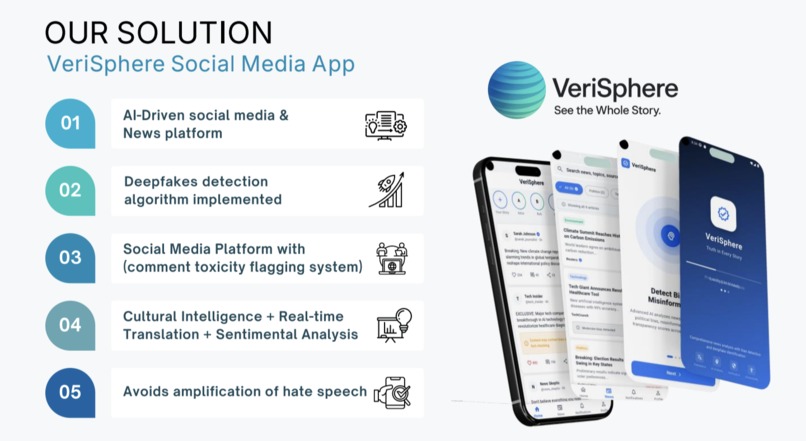
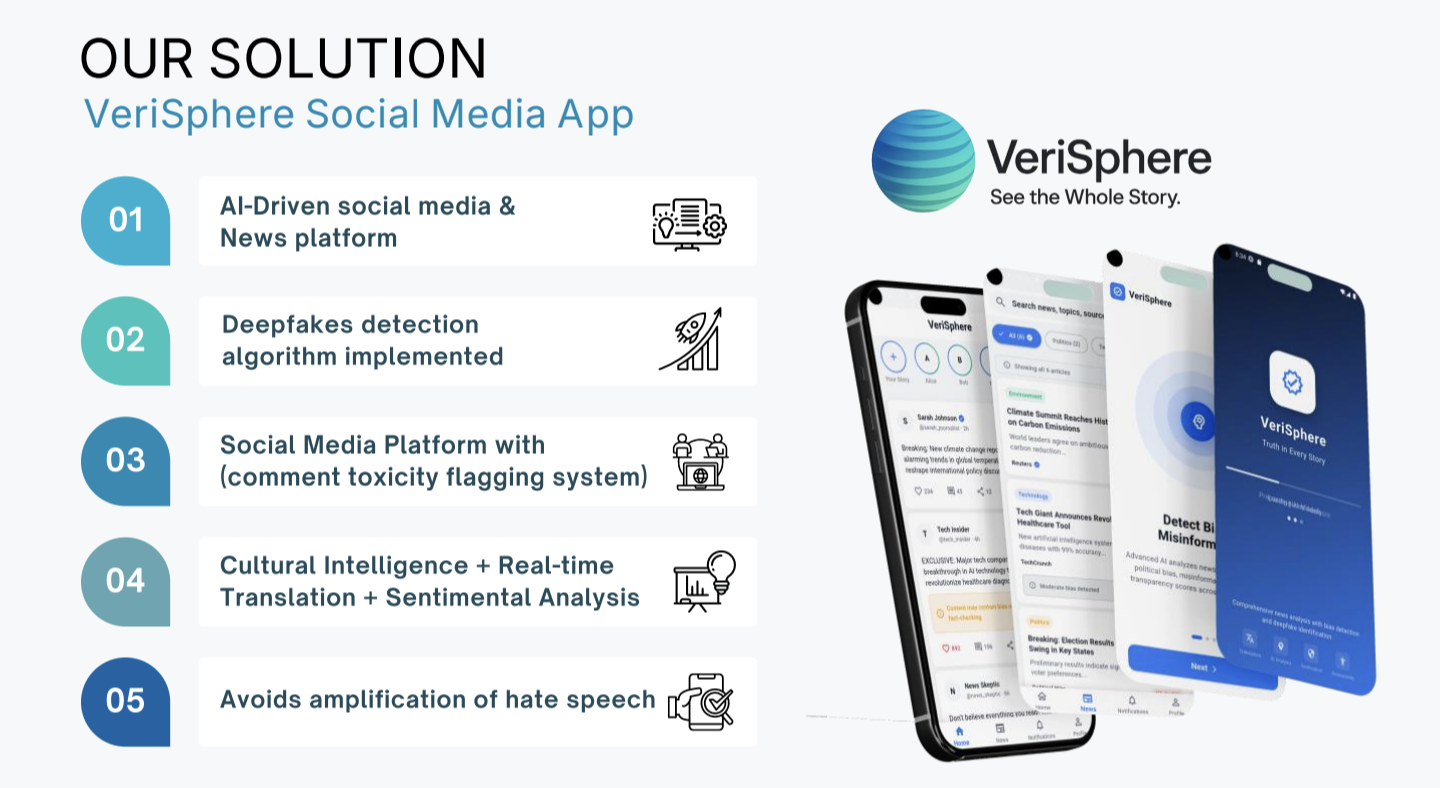
VeriSphere is a social media and verification platform that detects and flags AI-generated misinformation in real time. It integrates:
- Deepfake and synthetic identity detection
- Metadata extraction for fraud analysis
- Comment toxicity and sentiment analysis
- Cultural intelligence to avoid bias in detection
- Real-time translation for inclusivity
- No amplification of hate speech by design
It acts as a bridge between governments, companies, and citizens, creating a shared responsibility model for digital peace and AI governance.
How we built it
We combined AI-driven detection models with policy frameworks and citizen-centered design. Our development approach included:
- Training on datasets of deepfakes, phishing scams, and fraudulent audio/video.
- Building a multi-layered detection engine using metadata, linguistic cues, and sentiment analysis.
- Designing a cultural intelligence layer to ensure sensitivity across different contexts.
- Developing reporting features that allow governments, companies, and citizens to act collaboratively.
- Integrating educational modules to empower users with media literacy. ## Challenges we ran into Fragmented regulations: Different countries (EU, US, China, South Korea) have conflicting AI governance rules. Aligning these into a unified framework was difficult.
- Detection accuracy: Deepfakes evolve rapidly, requiring adaptive models to stay effective.
- Balancing privacy with detection: Collecting metadata for fraud detection while ensuring user privacy required careful architecture.
- Low public awareness: Many users don’t know their rights or the tools available to them, making adoption a challenge. ## Accomplishments that we're proud of
- Designing a globally inclusive framework that brings together governments, companies, and citizens.
- Building a detection system that is not just reactive but proactive, focusing on trust, safety, and inclusivity.
- Creating features (like cultural intelligence and no-hate-speech amplification) that are missing in existing platforms.
- Promoting citizen empowerment through media literacy campaigns and feedback loops. ## What we learned
- Technology alone is not enough. Combating AI-driven misinformation requires policy, education, and cultural awareness.
- Trust is fragile: Once people doubt what they see or hear, rebuilding confidence takes more than fact-checking. It needs systemic transparency.
- Global cooperation is essential: Without harmonized AI governance, deepfake fraudsters will exploit legal loopholes.
- Empowerment matters: Citizens must be active participants, not passive consumers, in shaping ethical AI ecosystems.

Log in or sign up for Devpost to join the conversation.