-
-
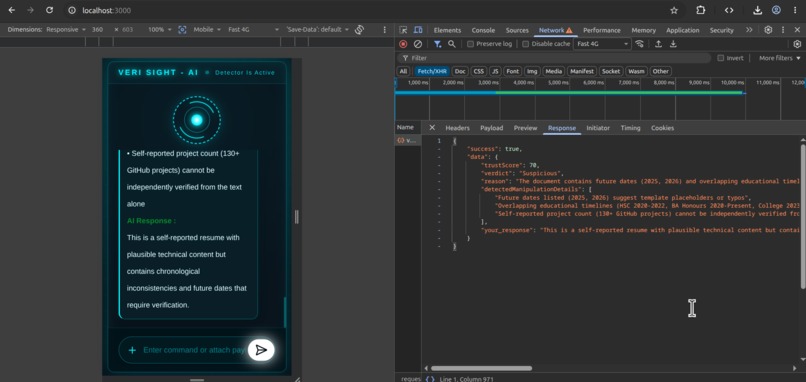
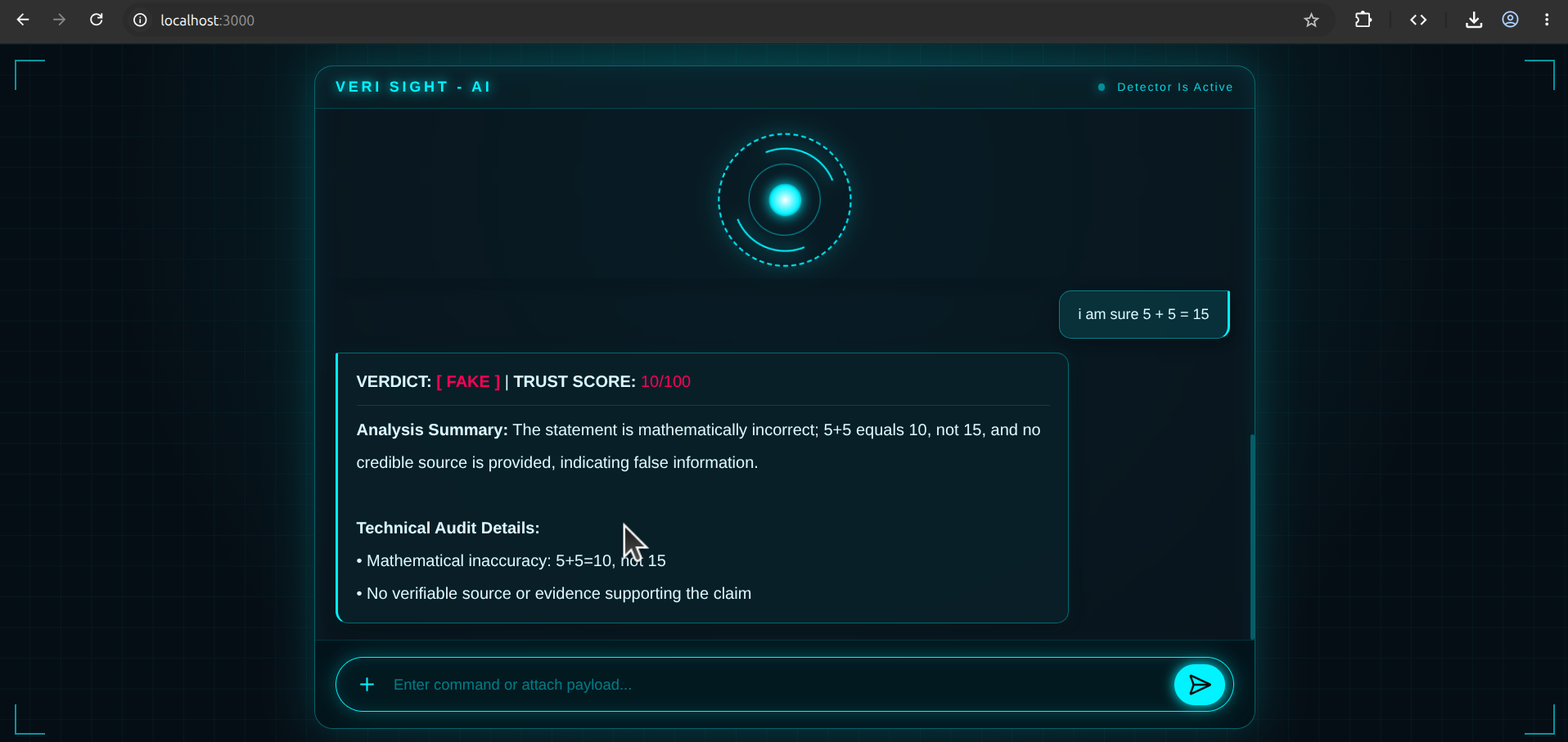
Debugger Mode
-
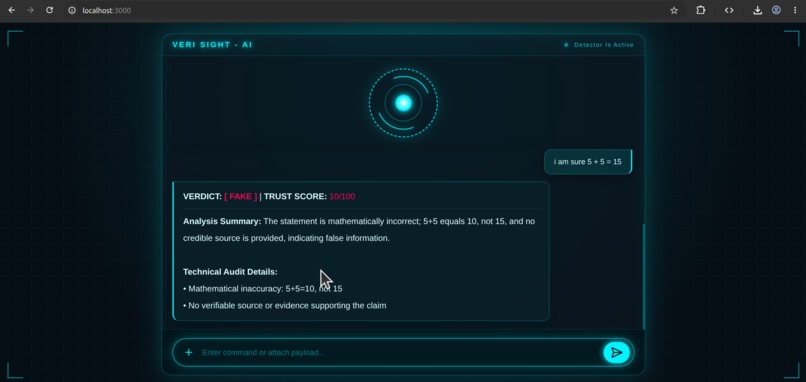
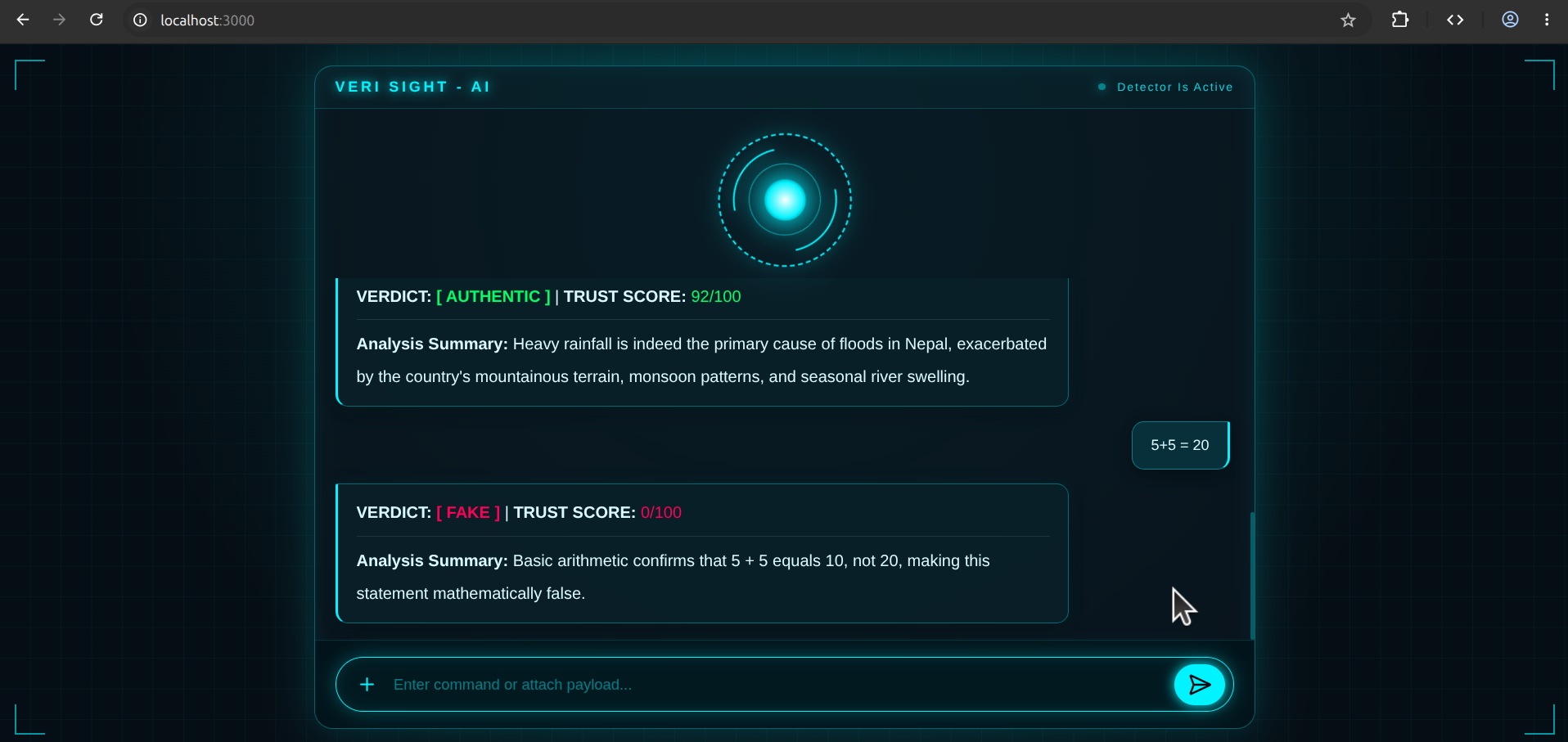
VeriSight AI Dashboard UI
-
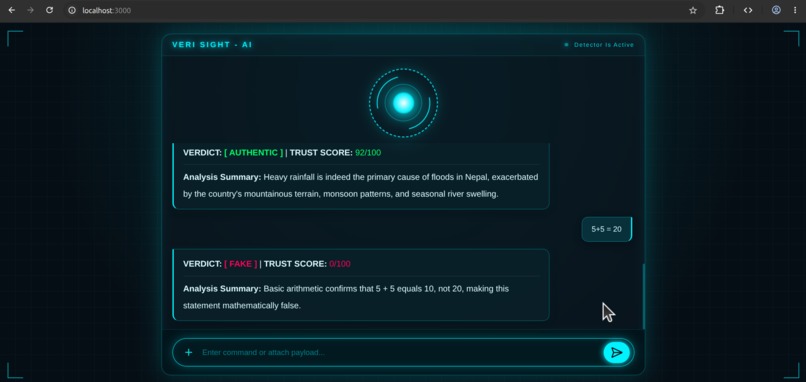
After Successfully Respond
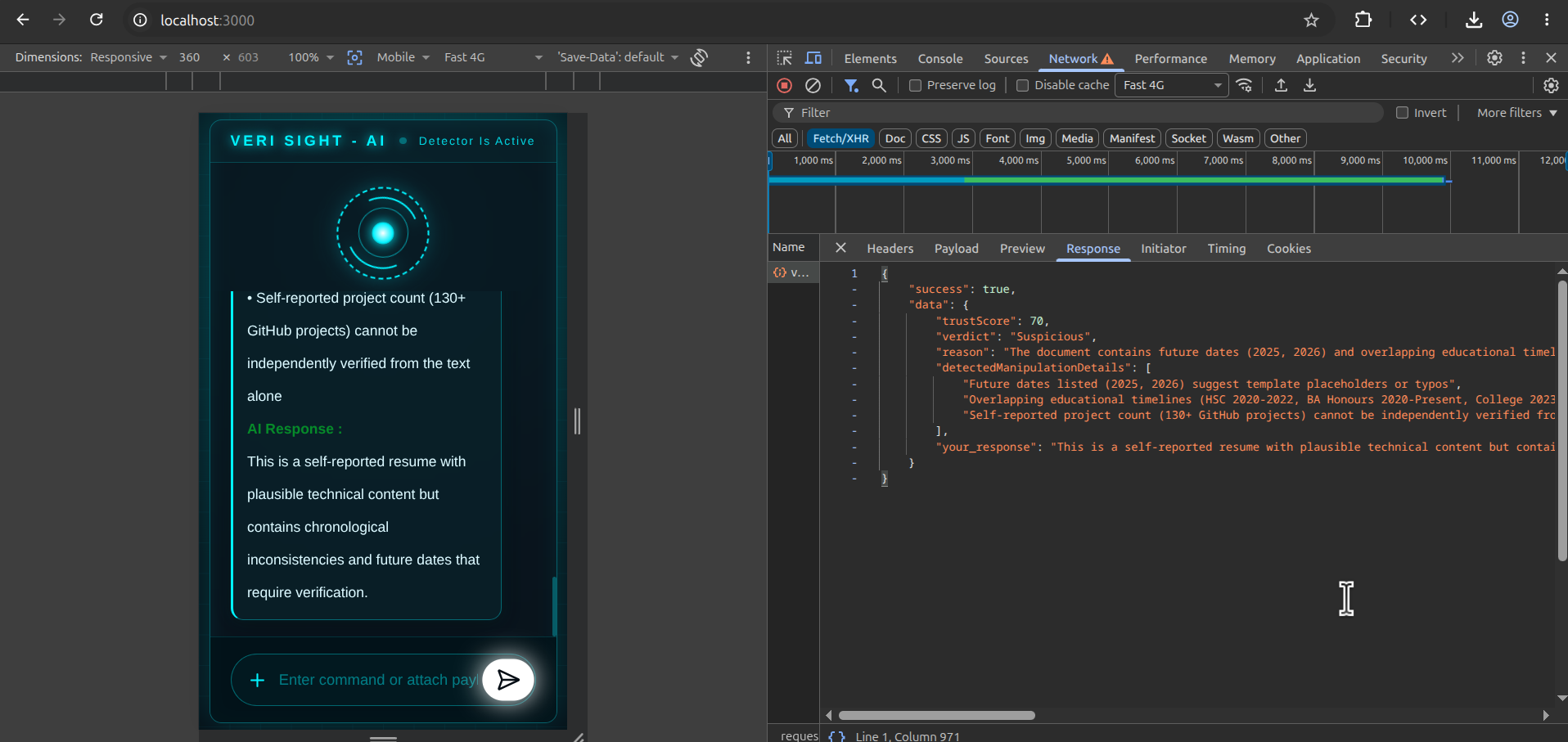
Inspiration
In an era dominated by synthetic media, viral clickbait, and cheap-fake manipulations, distinguishing truth from fabrication has become increasingly difficult. Unverified claims, fabricated credentials on resumes, and AI-generated deepfakes spread rapidly across social platforms and hiring channels. We were inspired to build VeriSight AI—a unified, high-precision scanning engine that gives users and developers instant, transparent truth verification for any text, image, or document.
What it does
VeriSight AI is a multimodal verification platform that evaluates the authenticity and factual integrity of incoming content in real time:
- Visual & Deepfake Analysis: Detects visual artifacts, unnatural lighting, and synthetic generation signals in uploaded images.
- Text & Claim Verification: Audits news posts, website text, viral claims, and uploaded PDF resumes for logical contradictions, timeline mismatches, and known misinformation patterns.
- Structured Intelligence: Delivers actionable results featuring a clear verdict (
Authentic,Suspicious, orFake), a 0–100 confidencetrustScore, and a granular list of detected manipulation details.
How we built it
- Backend Framework: Built with Node.js, Express, and TypeScript for strict type safety and scalable routing.
- AI Engine & Models: Integrated the Groq SDK utilizing high-speed vision-language models (
qwen/qwen3.6-27b) for forensic visual evaluation and text analysis. - Media Pipelines: Configured Multer for memory-buffered file uploads combined with Cloudinary for instant CDN hosting, enabling seamless global image access during AI inspection.
- Robust JSON Extraction: Implemented custom balanced-brace parsing algorithms to isolate structured JSON payloads directly from model execution streams.
Challenges we ran into
- Handling Model Reasoning Overhead: Vision-language models often append internal thinking blocks (
<think>), which exceeded token limits and broke traditionalJSON.parse()methods. We resolved this by building a custom character-balancing parser that isolates valid JSON objects regardless of trailing reasoning text. - Local to Cloud Image Passing: External AI APIs cannot access local
localhoststatic files. Shifting from local disk storage to streaming file buffers directly to Cloudinary solved network reachability and eliminated disk I/O overhead.
Accomplishments that we're proud of
- Zero-Latency Payload Transfer: Passing Cloudinary CDN URLs to Groq instead of heavy Base64 strings significantly reduced API payload sizes and response times.
- Universal Input Handling: Designed a flexible single-endpoint API capable of parsing plain text, raw news snippets, image uploads, and multi-page documents seamlessly.
- Fail-Safe Reliability: Engineered strict fallback mechanisms and schema validators that guarantee structured responses even when inputs are ambiguous or messy.
What we learned
- Prompt Engineering Constraints: Forcing strict JSON output from reasoning models requires explicit prompt boundary rules alongside client-side string extraction logic.
- Stream-Based Buffer Uploads: Handling file processing entirely in memory with streams creates cleaner, faster server architectures compared to temporary disk writes.
What's next for VeriSight AI
- Browser Extension: Developing a real-time Chrome extension to highlight and fact-check text or images directly on social media feeds.
- Web Search Grounding: Integrating live web search capabilities to cross-reference news claims against real-time global news databases.
- Video Deepfake Detection: Expanding the vision pipeline to sample and analyze frame sequences from short-form video content.
Built With
- api
- cloudinary
- css3
- express.js
- git
- github
- groq
- html5
- http
- javascript
- linux
- multer
- node.js
- render
- typescript
- vercel


Log in or sign up for Devpost to join the conversation.