-
-
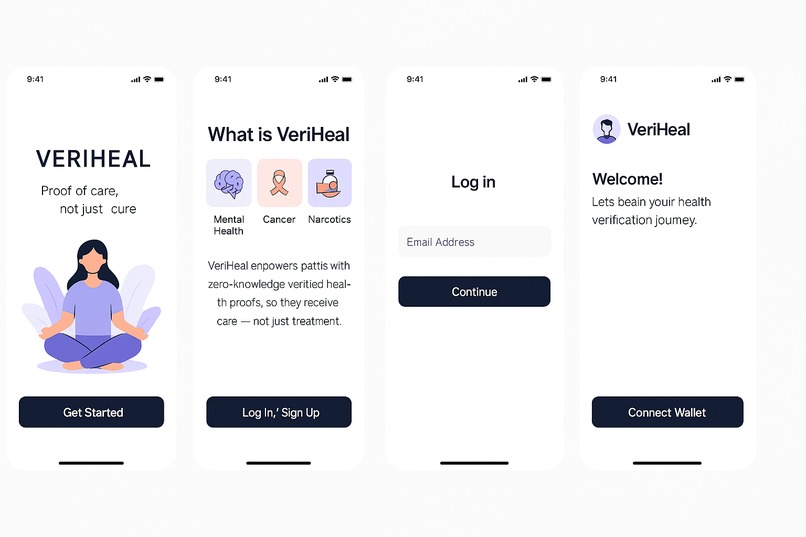
UI
-
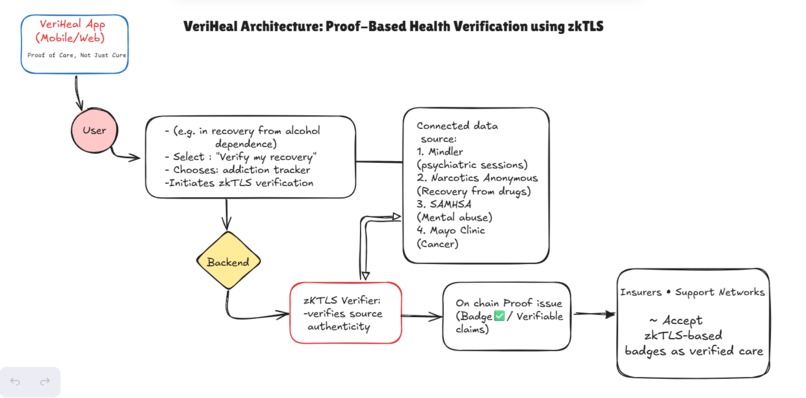
Architecture
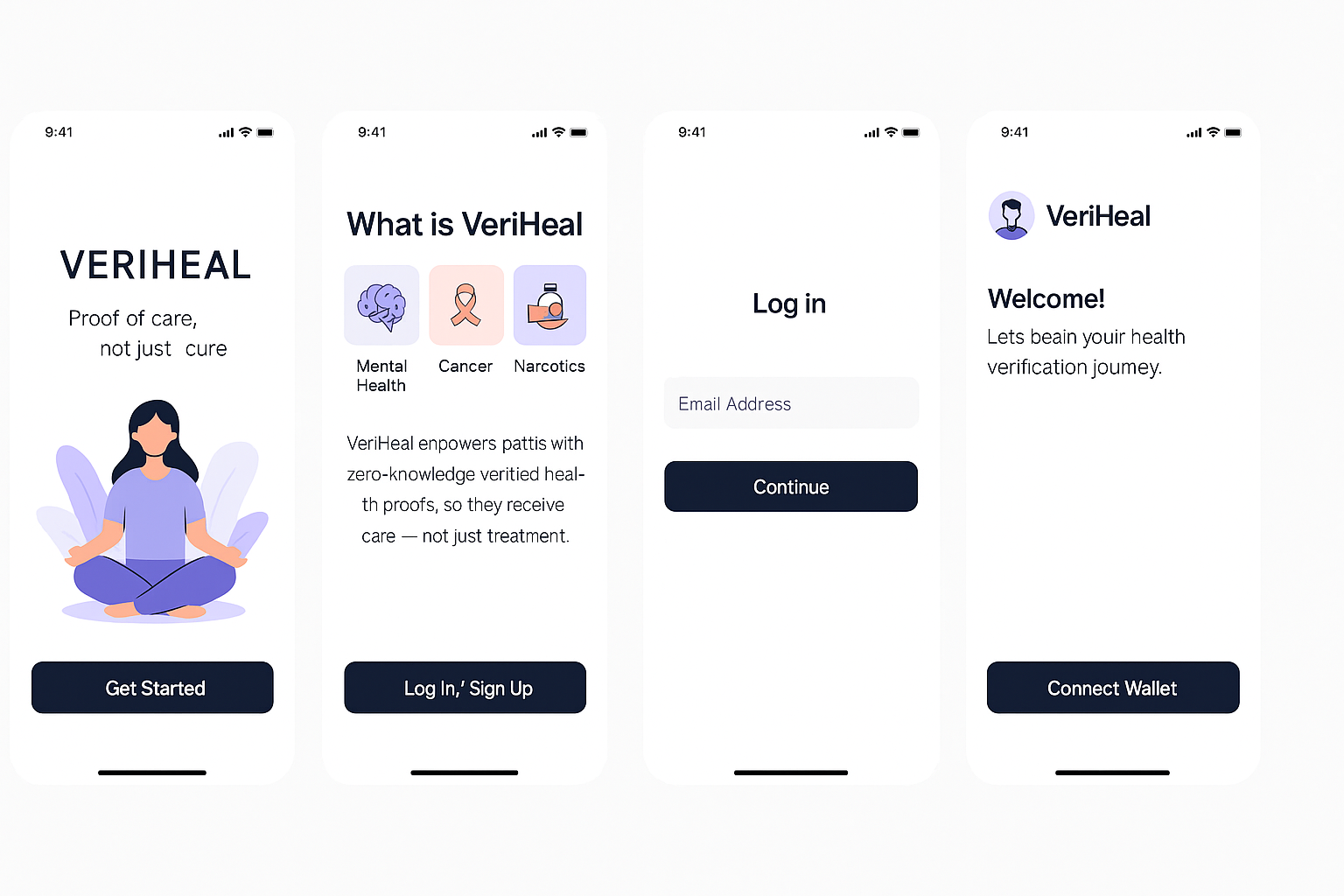
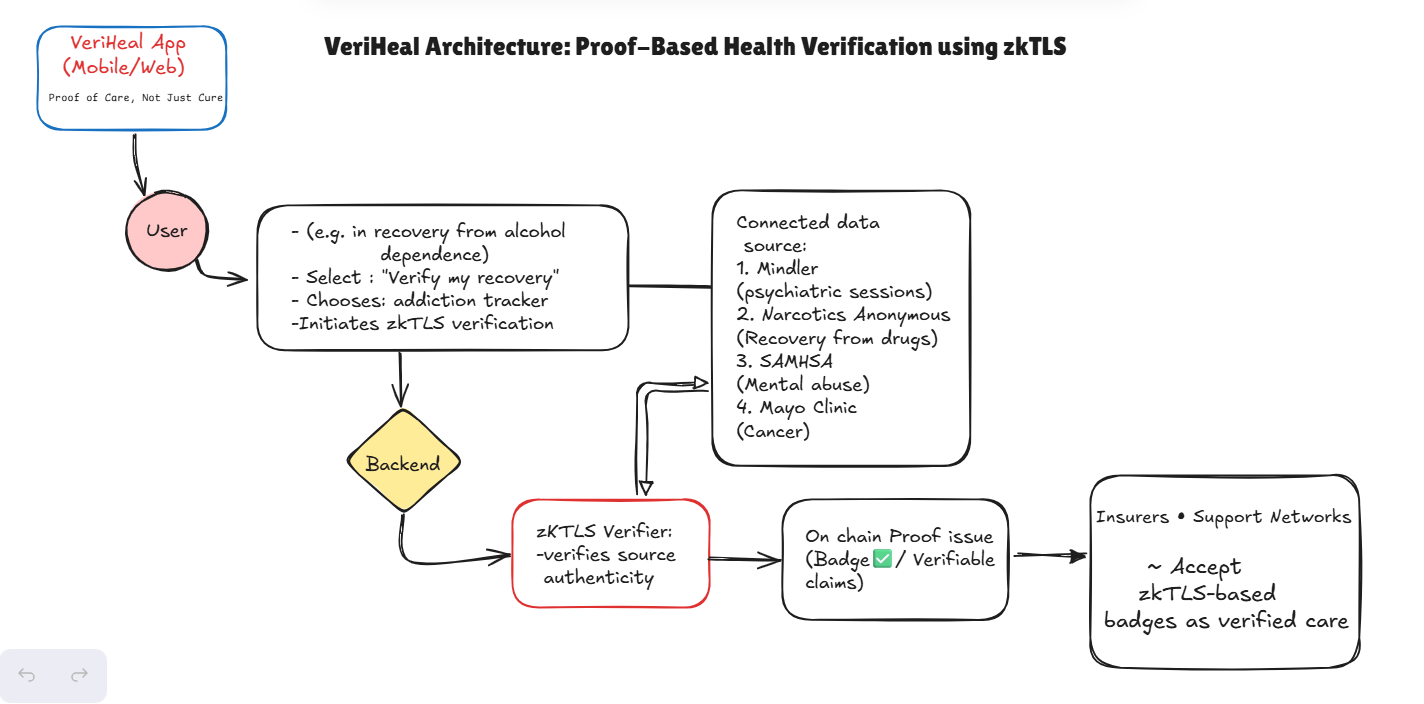
Inspiration
Access to healthcare and insurance often depends on sharing sensitive medical data, leading to privacy risks, bias, and exclusion. Existing systems require full disclosure, which discourages individuals from seeking help and creates inefficiencies in verification workflows. VeriHeal addresses this by introducing a privacy-preserving eligibility verification system that minimizes data exposure while maintaining trust.
What it does
VeriHeal implements a rule-based and extensible verification engine that evaluates eligibility using minimal disclosed attributes. Core capabilities: Attribute-based validation (instead of full record sharing) Rule engine for eligibility scoring Badge generation based on verified states Scalable verification flow design
Algorithmic Design & Efficiency
VeriHeal focuses on efficient verification using minimal data exposure. Instead of processing full medical records, the system uses: Attribute-based filtering → reduces data complexity Rule-based scoring system → O(n) evaluation of eligibility criteria Modular verification pipeline → ensures scalability This approach reduces: computational overhead data transfer size privacy risks The system is designed to scale across multiple verification requests with minimal latency.
How we built it
The system was implemented using a modular architecture: React Native (frontend) XION Wallet integration for identity abstraction Verification pipeline (rule-based logic) Badge generation system The prototype demonstrates the end-to-end verification flow, including identity connection, eligibility evaluation, and proof generation.
Challenges we ran into
Key challenges included: Ensuring consistent wallet integration across environments Designing a verification flow that balances privacy with usability Handling cross-device UI consistency in React Native These were addressed through iterative debugging, modular design, and fallback handling mechanisms.
Accomplishments that we're proud of
Designed a privacy-first verification architecture Built a working prototype demonstrating selective disclosure Implemented a scalable eligibility evaluation flow Validated the concept in a real-world innovation challenge
What we learned
1.Persistence Pays Off: Debugging build and integration issues taught us patience and problem-solving. 2.User Experience Matters: Designing for privacy and clarity is crucial in health apps. 3/Learning by Doing: Hands-on work with React Native, wallet integration, and zkTLS verification highlighted both challenges and opportunities for improvement.
What's next for VeriHeal
Optimize verification engine with dynamic rule evaluation Integrate real zk-proof systems for production-grade privacy Scale architecture for multi-organization verification Deploy as a reusable verification API
Built With
- css
- expo.io
- html
- javascript
- reactnative
- xiontoolkit
- zktls

Log in or sign up for Devpost to join the conversation.