-
-
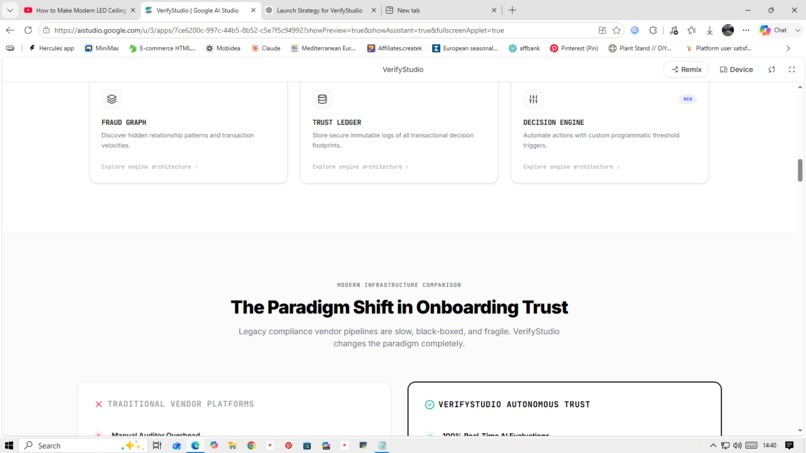
App Features
-
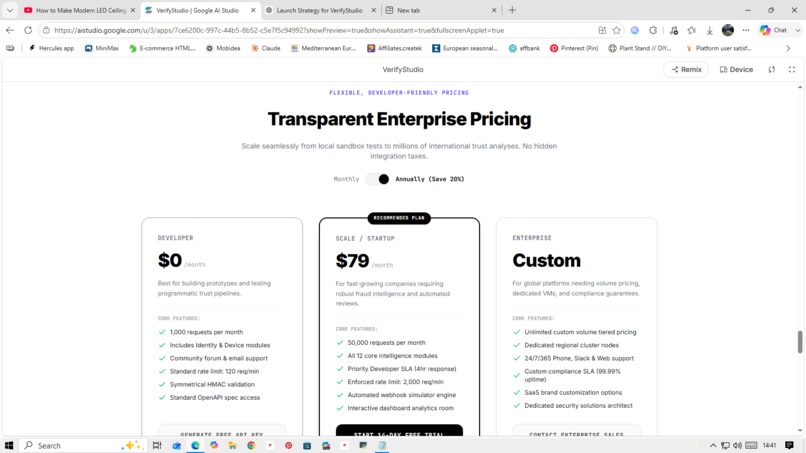
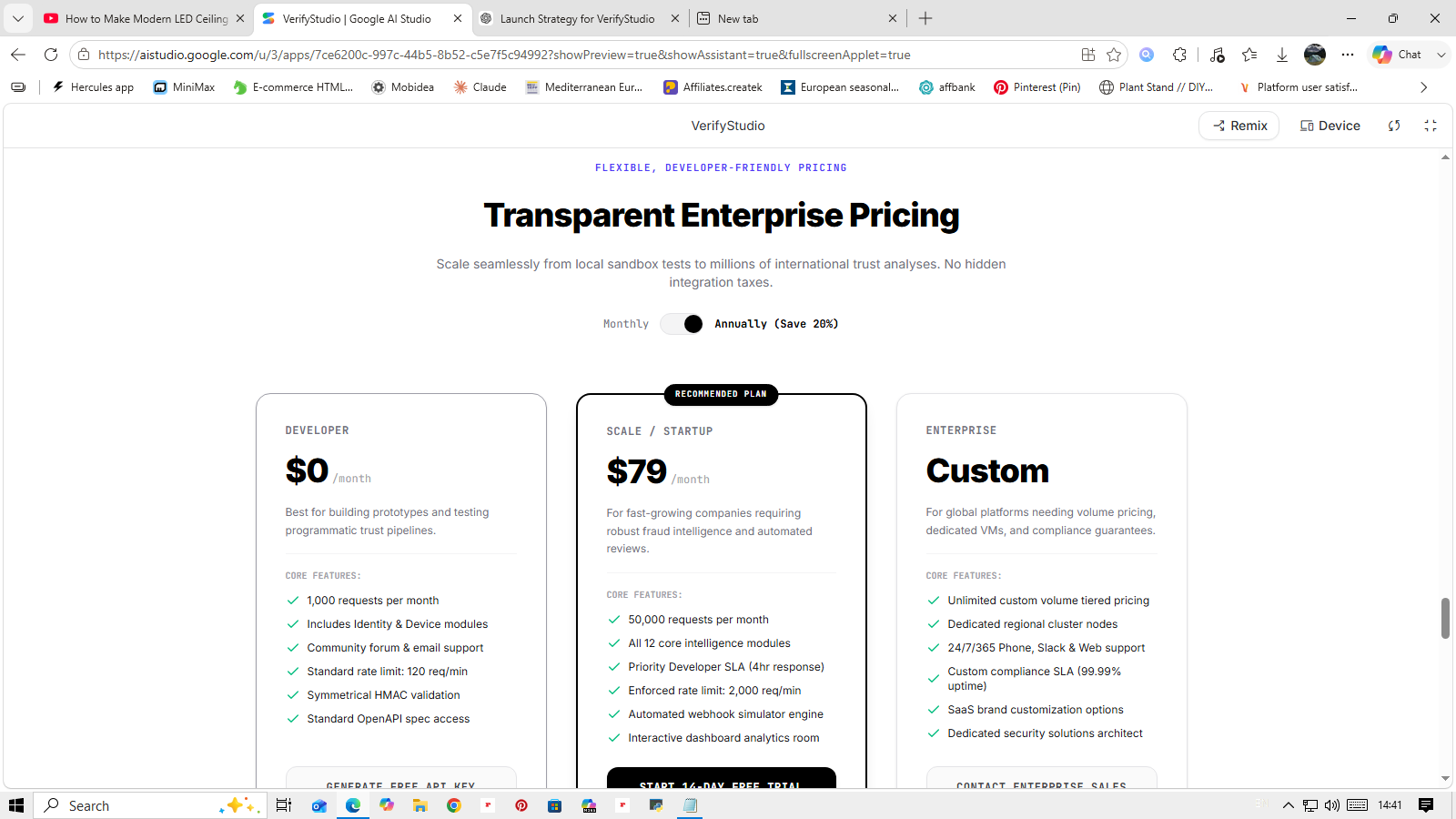
pricing
-

Hero image
-
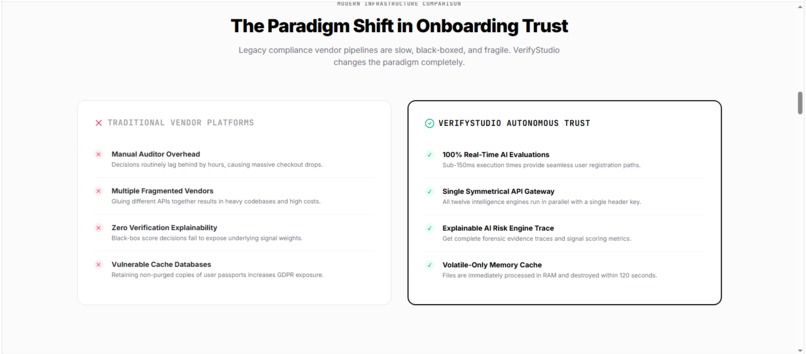
App features
-
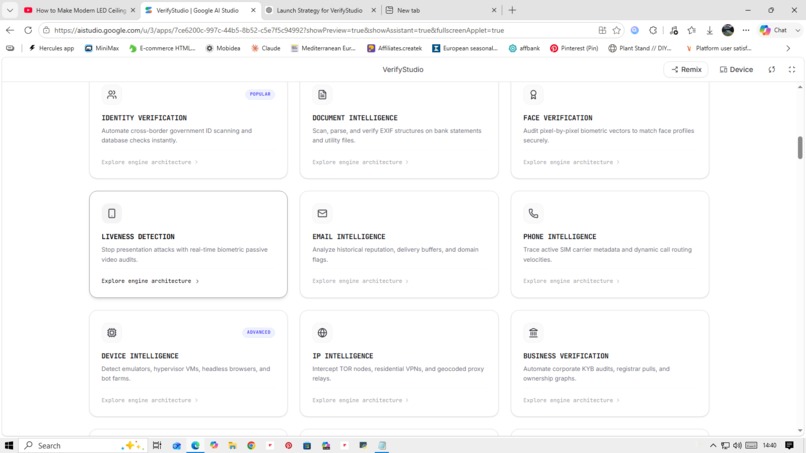
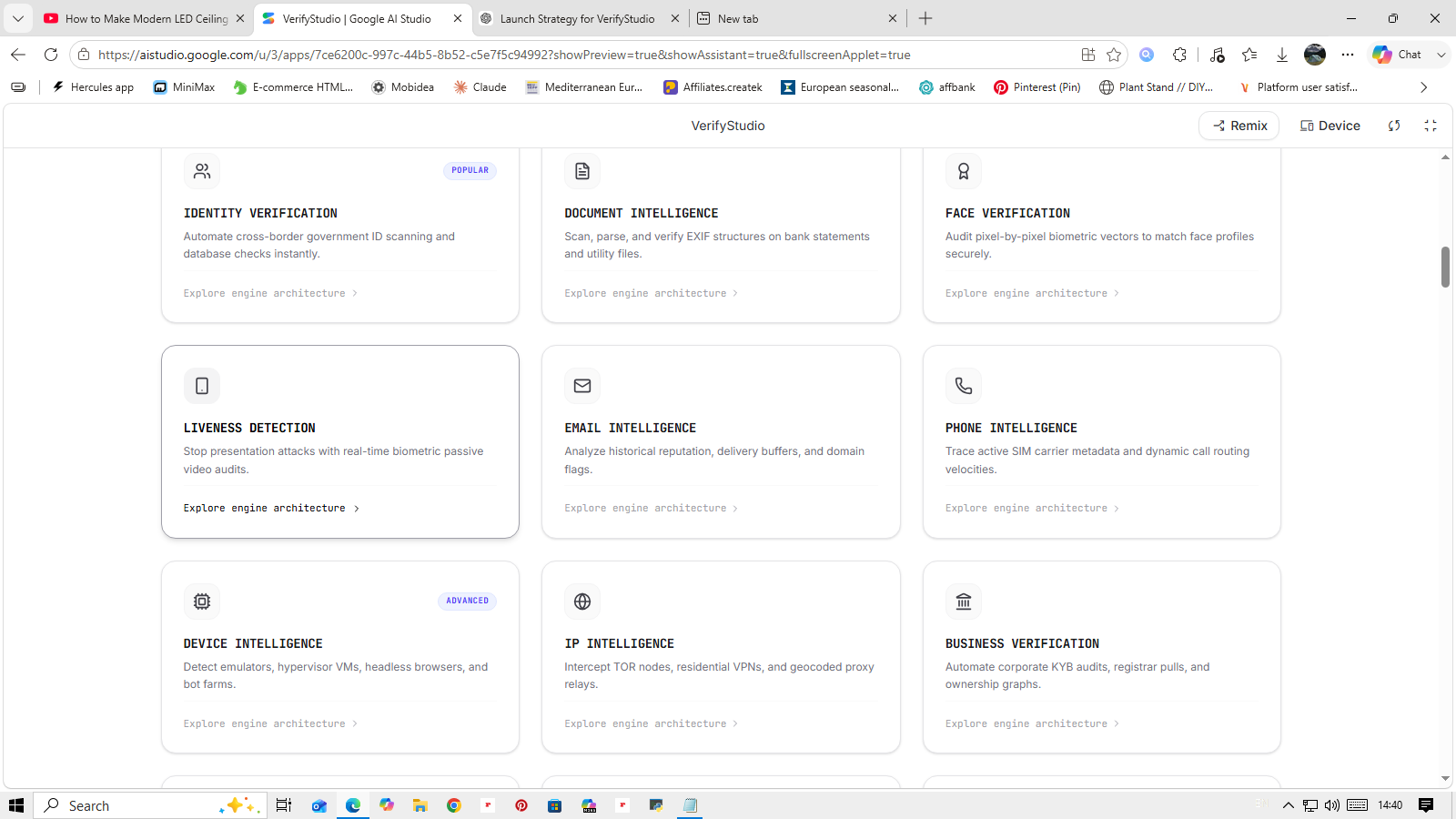
intelligence engines/modules
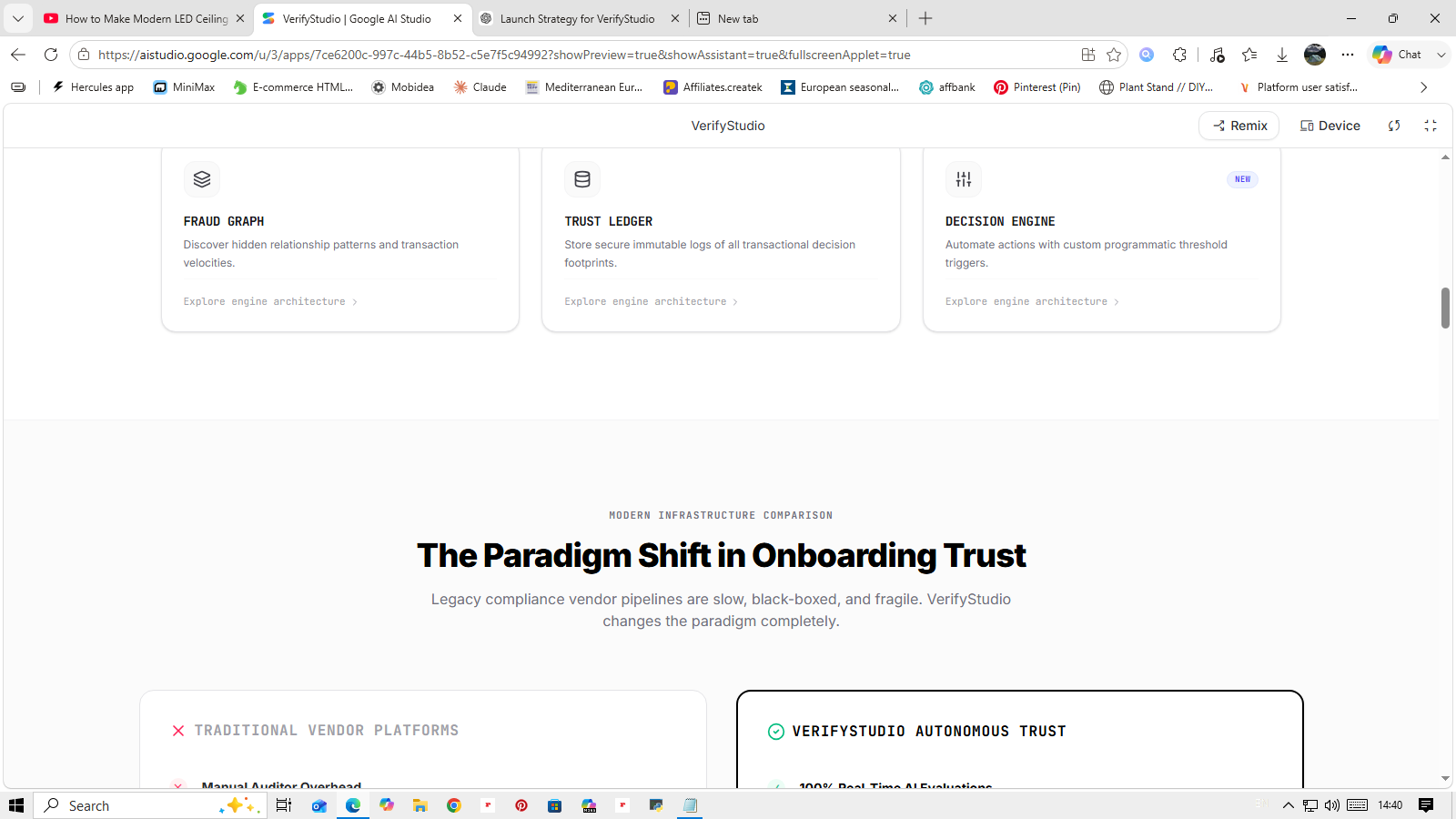


Inspiration
What it does
VerifyLabs – AI Trust Infrastructure
Inspiration
Modern organizations rely on multiple vendors to verify identities, documents, email addresses, phone numbers, sanctions, and fraud signals. Every provider exposes different APIs, data formats, and confidence scores, making customer onboarding expensive, fragmented, and difficult to maintain.
I wanted to build an AI-native trust layer that sits above these providers and transforms fragmented verification data into a single explainable trust decision.
Rather than replacing existing verification services, VerifyLabs orchestrates them.
The Problem
Banks, fintech companies, governments, healthcare providers, HR platforms, and marketplaces all face the same challenge:
- Multiple verification vendors
- Complex integrations
- Inconsistent risk decisions
- Manual review processes
- Difficult maintenance when providers change
Most organizations spend significant engineering effort integrating verification APIs instead of building their own products.
The Solution
VerifyLabs is an AI-powered trust orchestration platform.
Using Gemini, the platform analyzes identity evidence from multiple verification sources and combines it into a structured, explainable trust assessment.
Instead of receiving isolated verification results, customers receive:
- AI-generated reasoning
- Trust score
- Fraud indicators
- Structured JSON output
- Automated decision recommendations
The platform acts as an intelligent orchestration layer between applications and verification providers.
How Gemini is Used
Gemini plays a central role throughout the verification workflow.
It is used to:
- Extract structured information from identity documents
- Analyze inconsistencies across multiple trust signals
- Detect suspicious patterns
- Generate explainable risk assessments
- Produce standardized machine-readable JSON
- Support automated onboarding decisions
Rather than simply calling an LLM for text generation, VerifyLabs integrates Gemini directly into enterprise verification workflows where AI improves decision quality.
Technical Architecture
The platform is built using modern cloud-native technologies.
Workflow:
- User uploads identity information.
- Verification providers validate documents and contact details.
- Gemini analyzes the collected evidence.
- AI generates explanations and trust scores.
- VerifyLabs returns standardized JSON through a single API.
This architecture allows organizations to change verification providers without redesigning their internal systems.
Challenges
The largest challenge was designing a platform that remains provider-agnostic while producing consistent trust decisions.
Different verification vendors return different confidence scores and data structures. VerifyLabs normalizes these results before Gemini reasons across the combined evidence to produce explainable outputs.
Another challenge was designing workflows that are understandable for both developers and compliance teams.
Impact
VerifyLabs reduces integration complexity while improving fraud detection and customer onboarding.
Potential users include:
- Banks
- FinTech companies
- Government agencies
- Insurance companies
- Healthcare providers
- HR platforms
- Online marketplaces
By combining orchestration, AI reasoning, and standardized APIs, VerifyLabs enables organizations to build trusted digital services more quickly and with less engineering effort.
Future Work
Future development includes:
- Additional verification providers
- eIDAS and digital identity support
- Real-time fraud intelligence
- Continuous trust monitoring
- AI agents for compliance workflows
- Visual workflow builder powered by Gemini ## How we built it
Challenges we ran into
Accomplishments that we're proud of
What we learned
What's next for Verifystudio
Built With
- ai
- docker
- express.js
- firebase
- firestore
- gemini-api
- github
- google-ai-studio
- google-cloud-run
- identity-verification
- javascript
- json
- llm
- next.js
- node.js
- oauth
- react
- rest-api
- tailwind
- typescript
- vertex-ai
- workflow-automation

Log in or sign up for Devpost to join the conversation.