-
-
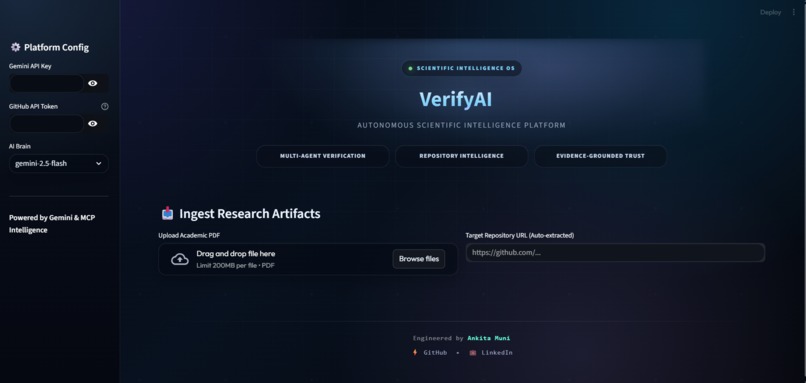
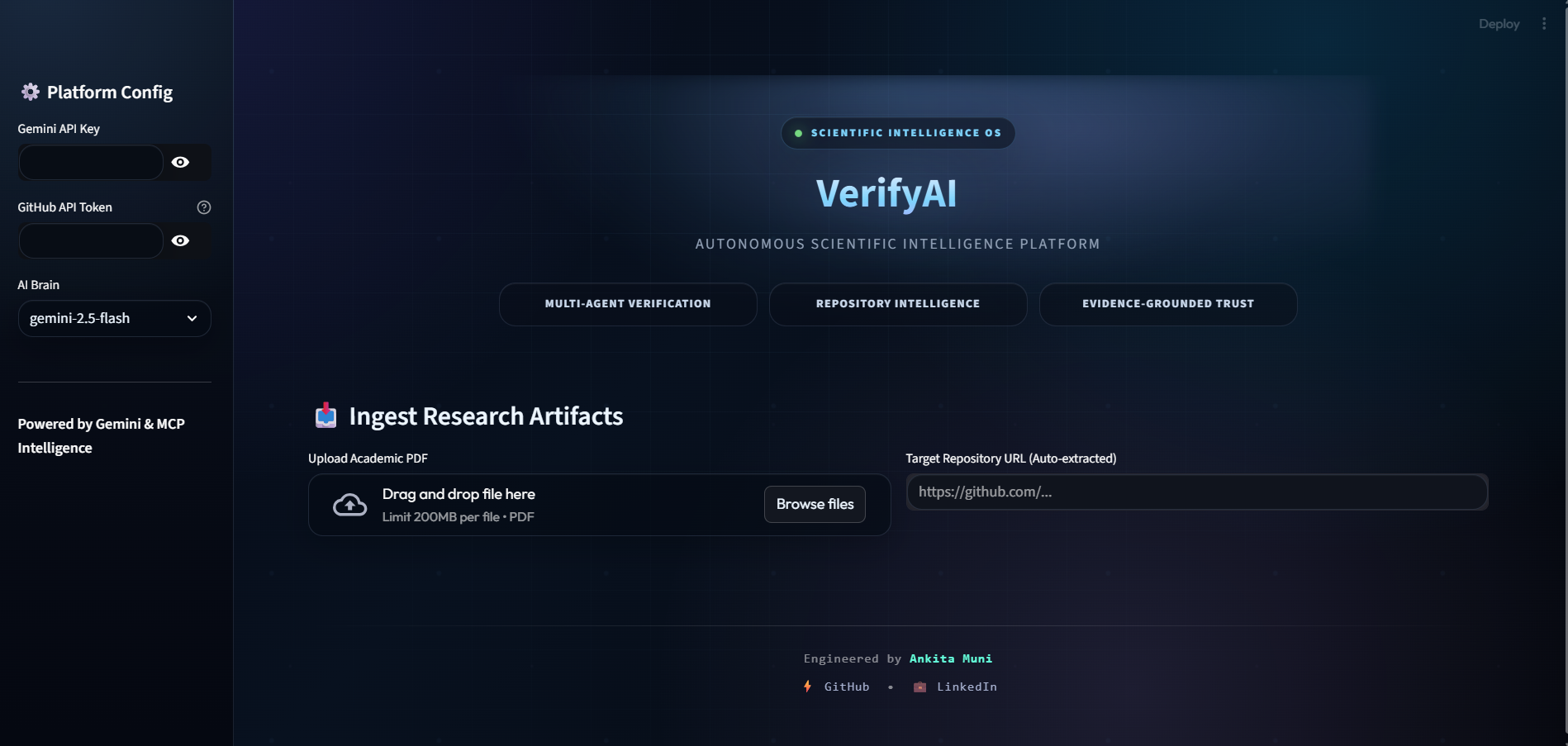
Before Uploading Research Paper
-
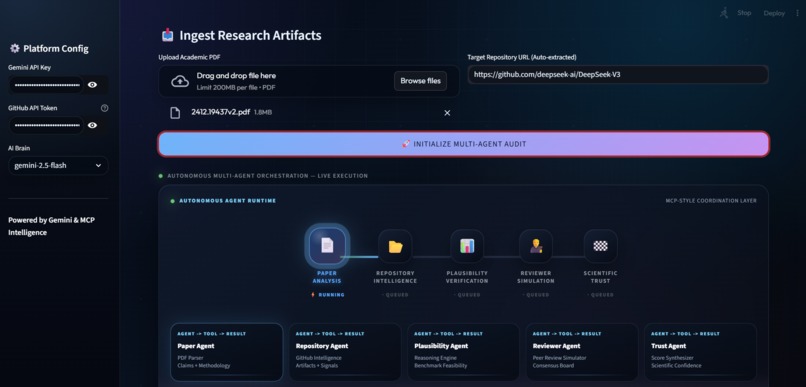
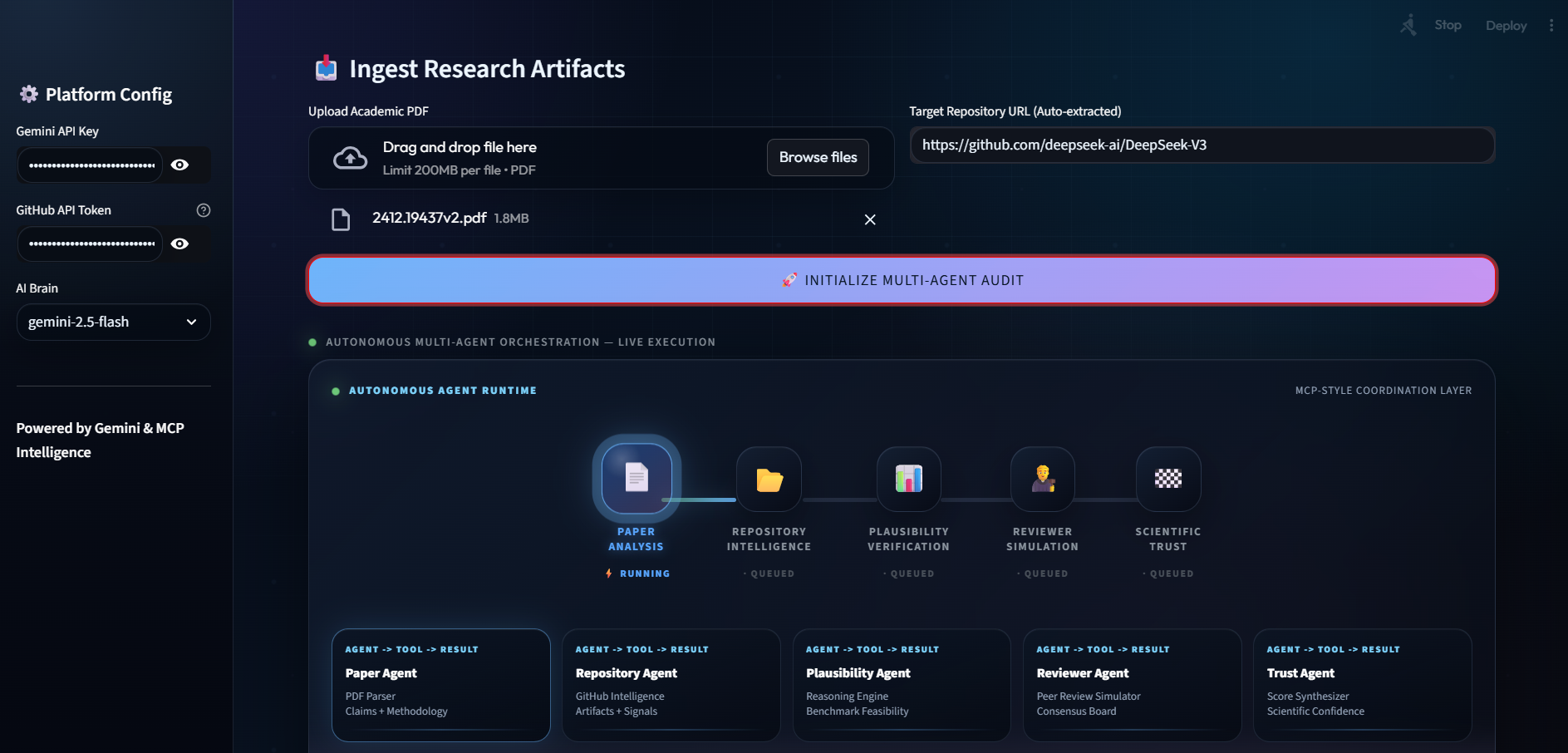
Agent-Tool Coordination Flow
-
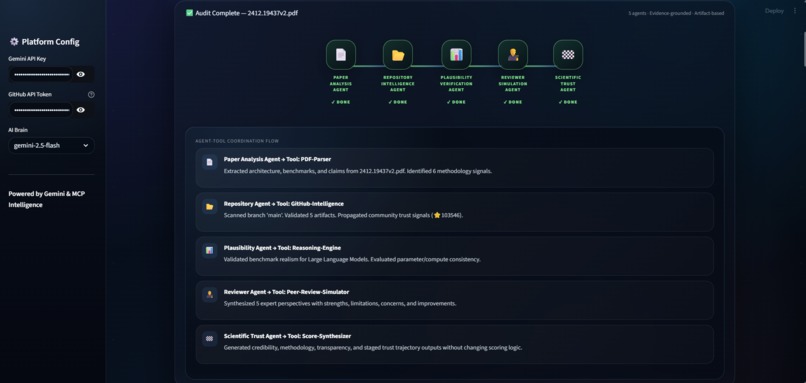
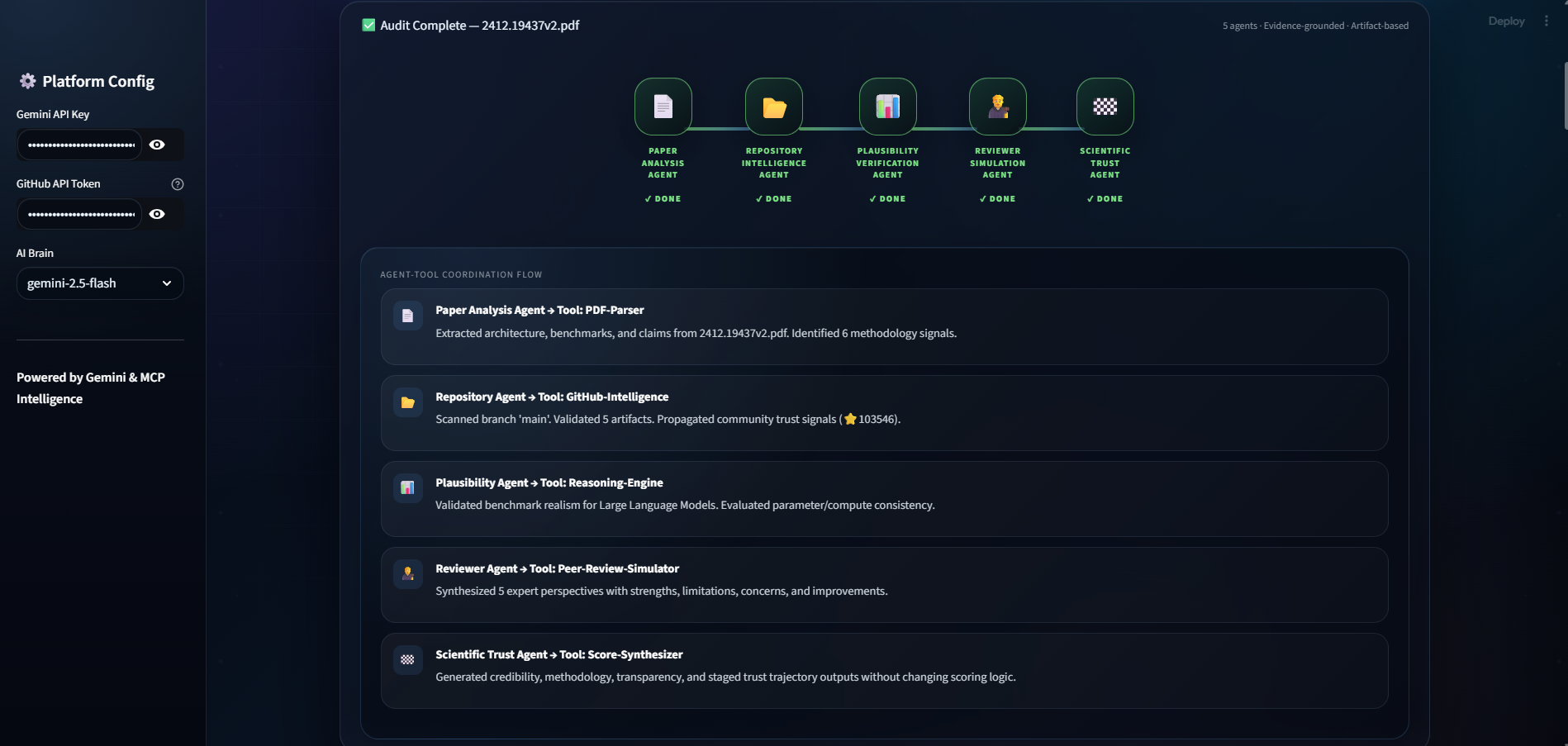
Agent-Tool Coordination Flow 2
-
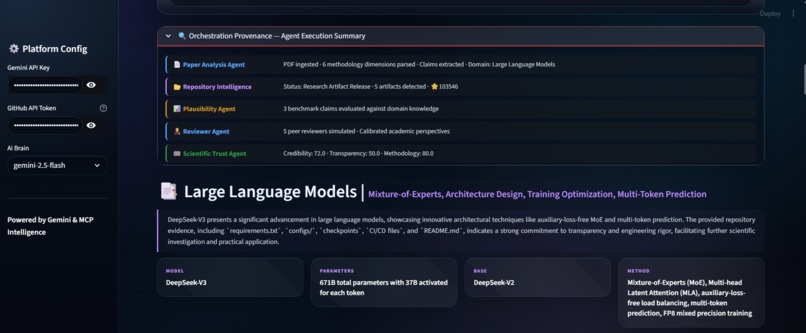
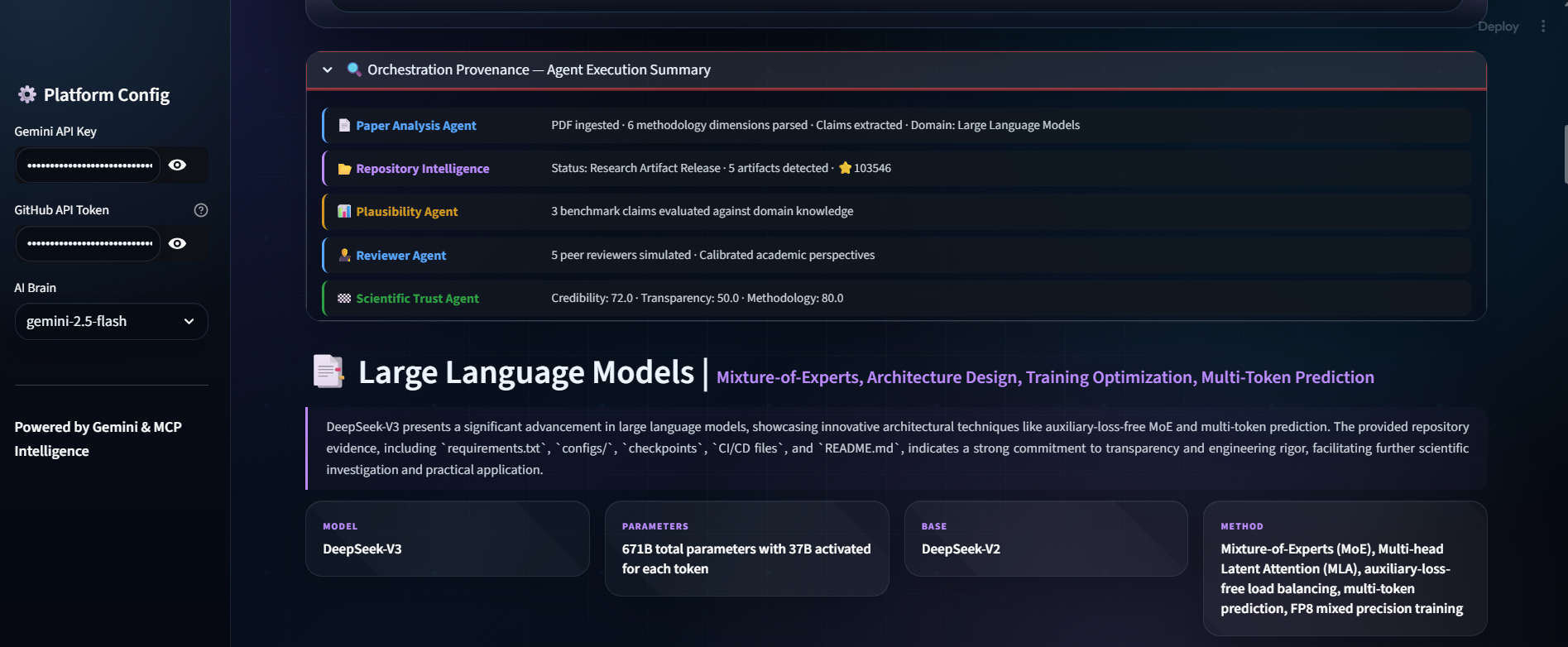
Agent Execution and Research Paper Summary
-
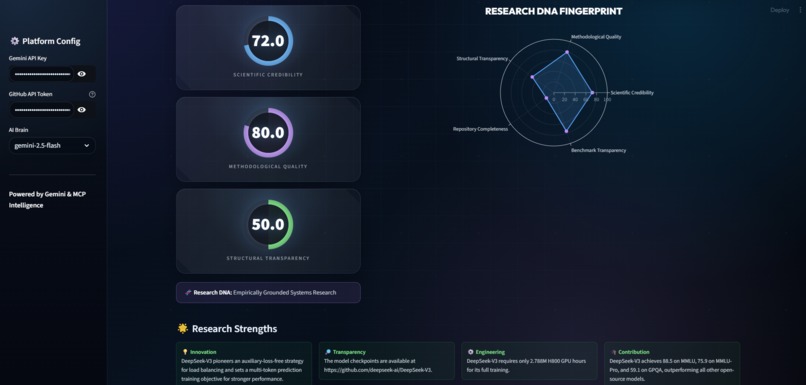
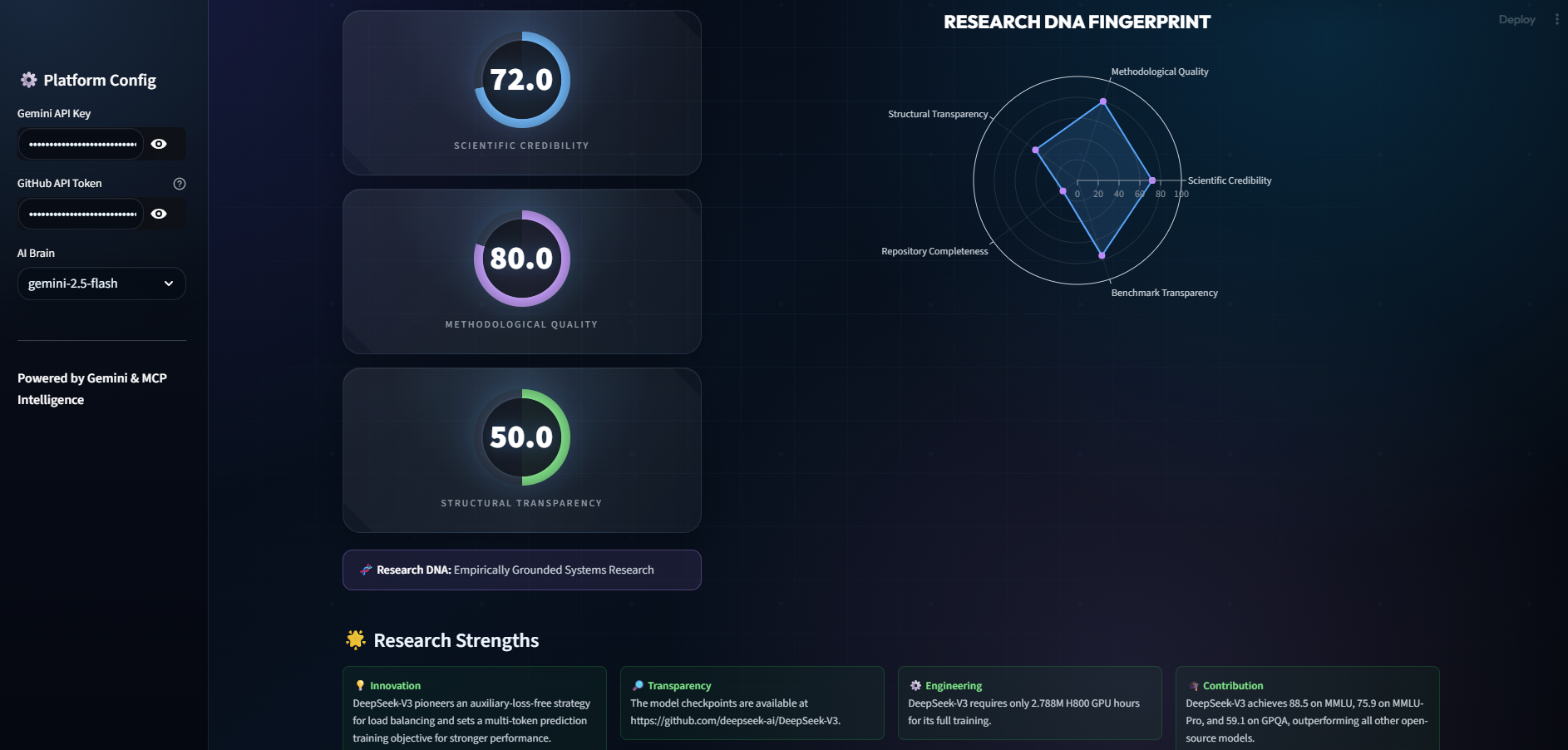
Research DNA Fingerprint and Repository Strengths
-
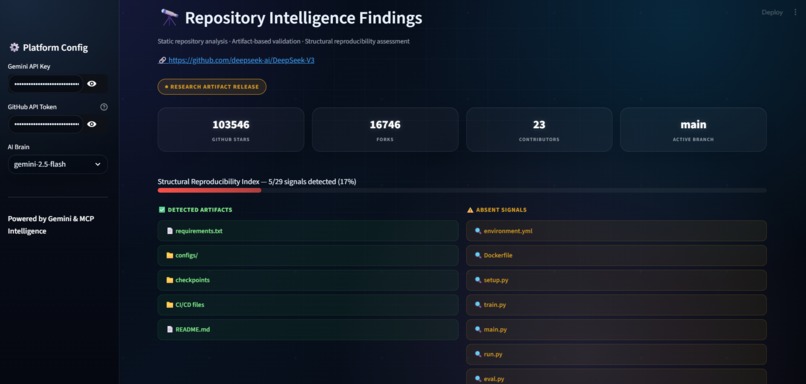
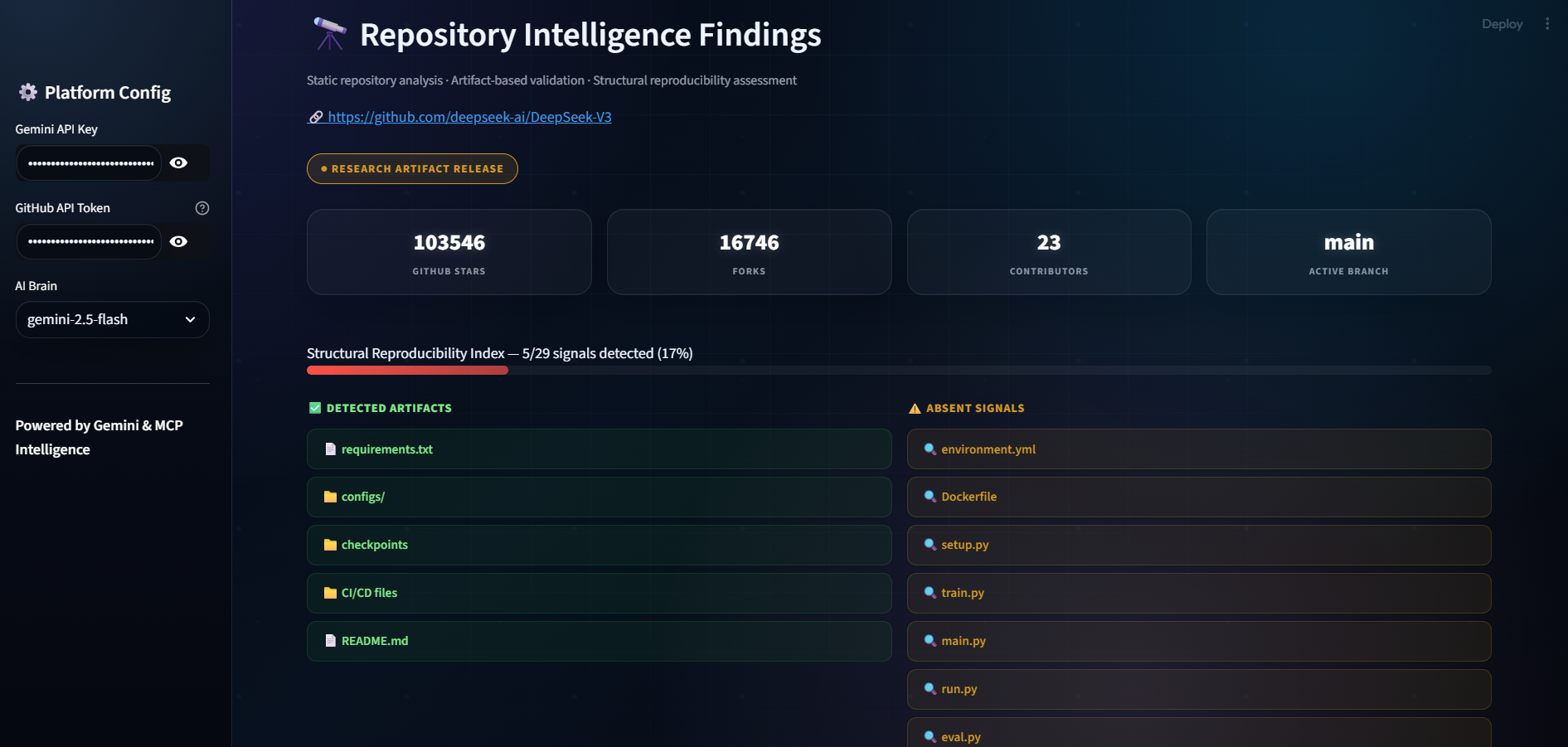
Repository Intelligence Findings- Detected Artifacts and Absent Signals
-
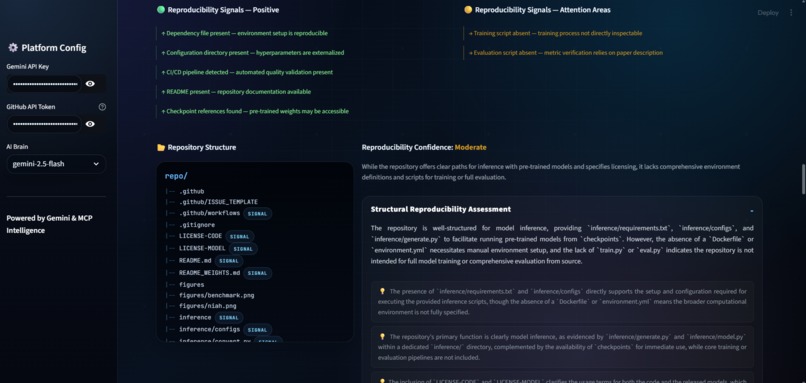
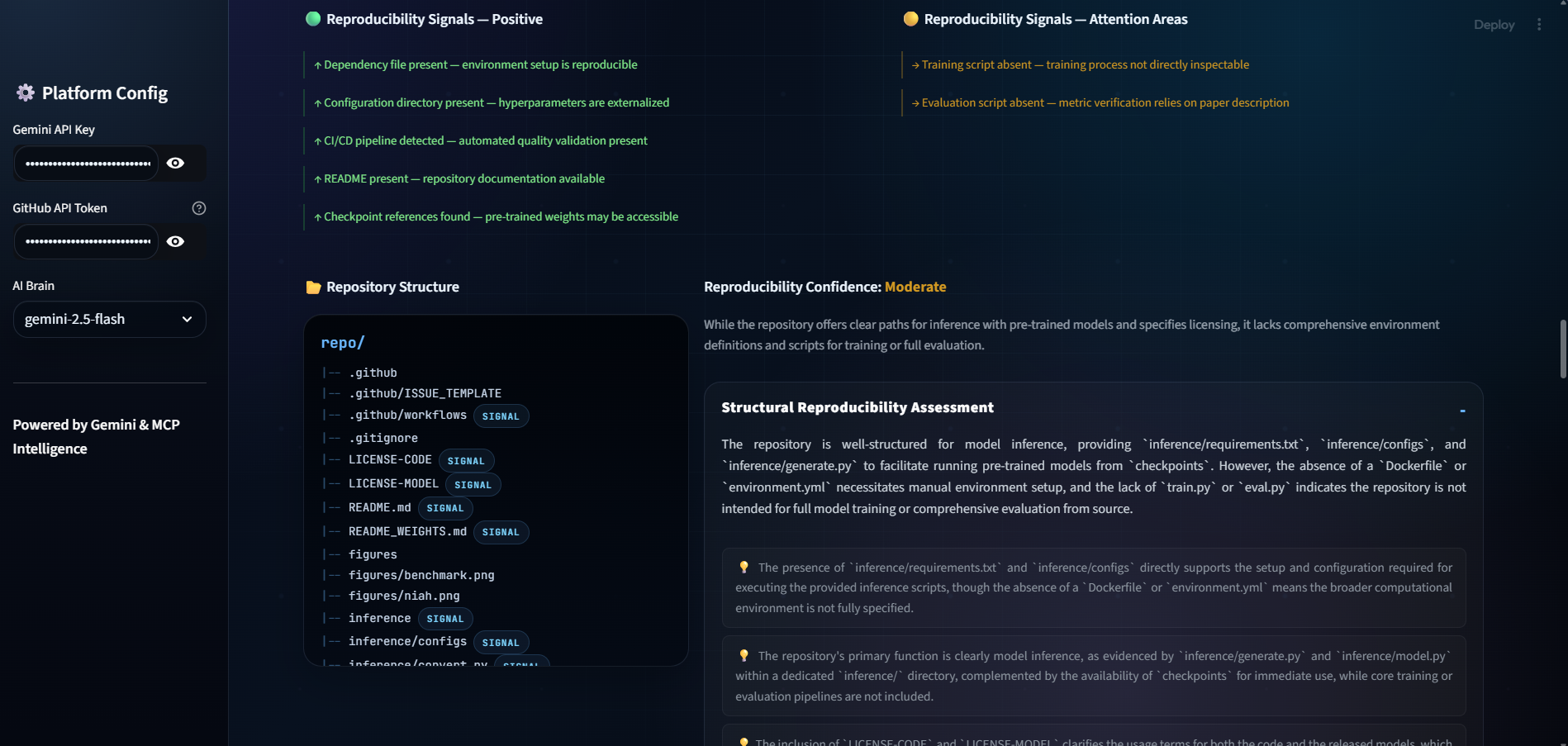
Reproducibility Signals — Positive and Attention Areas, Repository Structure and Structural Reproducibility Assessment
-
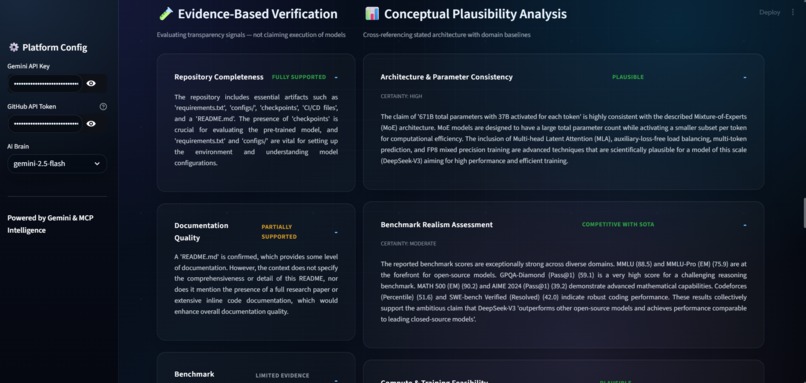
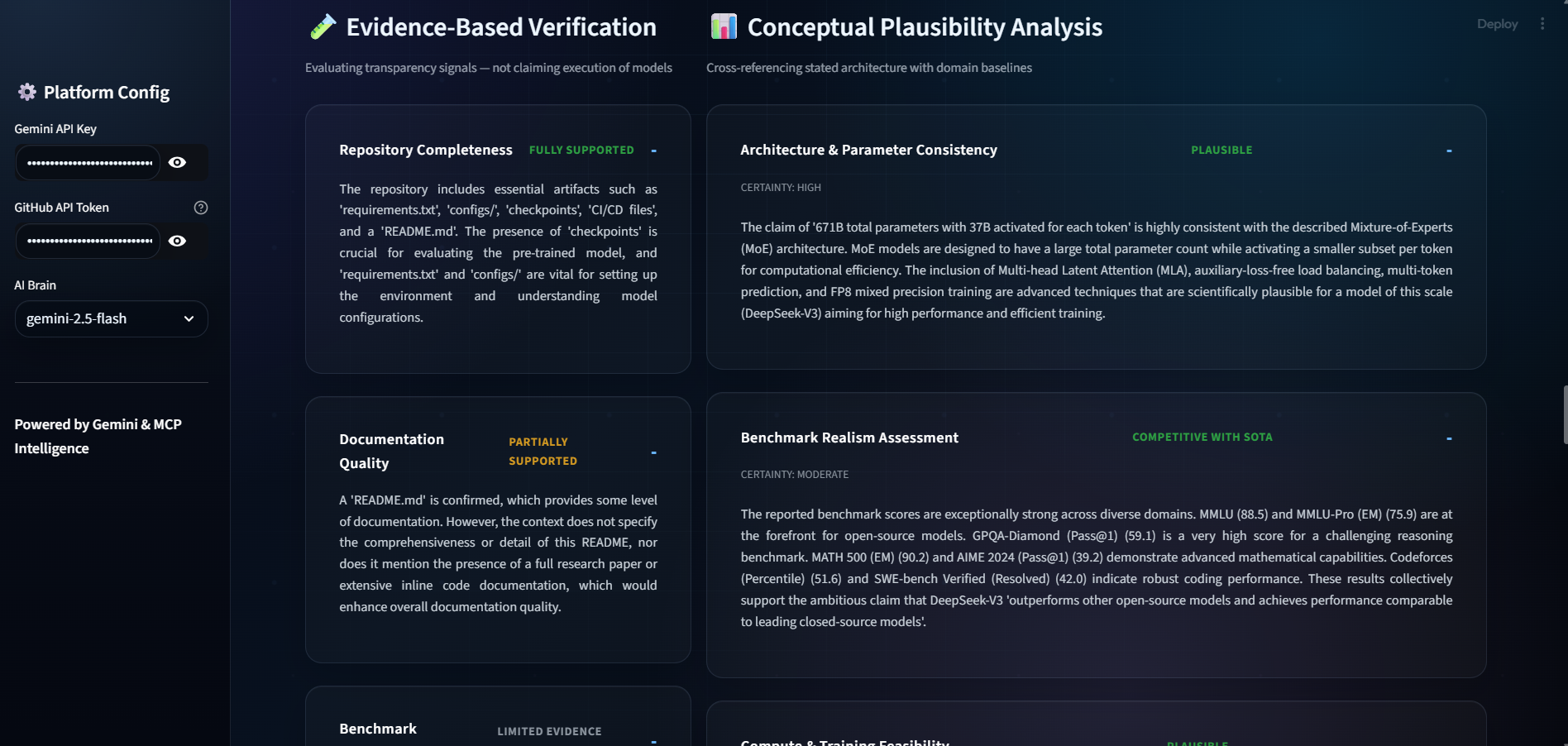
Evidence-Based Verification and Conceptual Plausibility Analysis
-
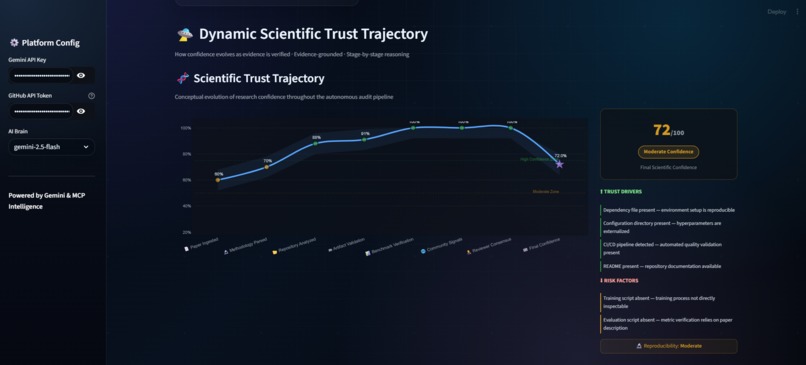
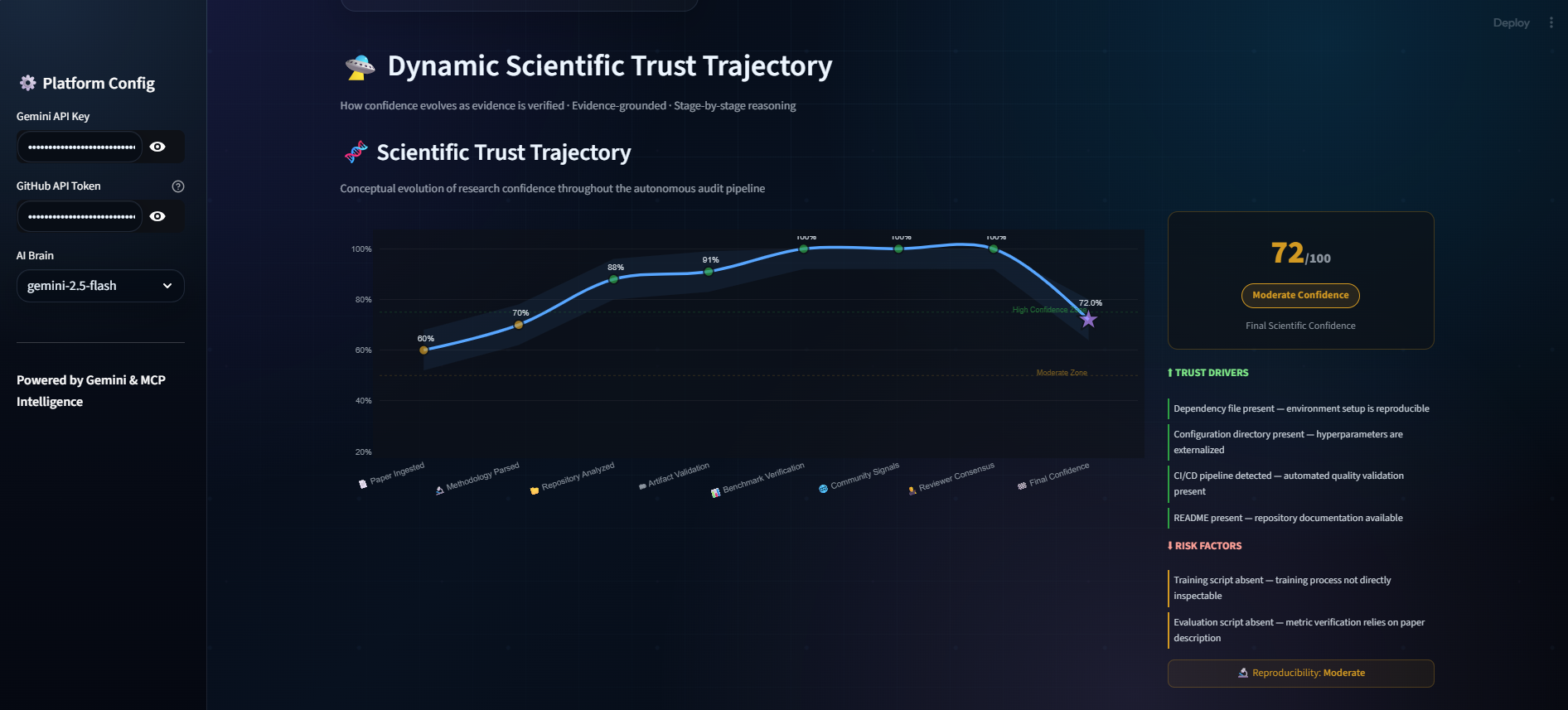
Dynamic Scientific Trust Trajectory
-
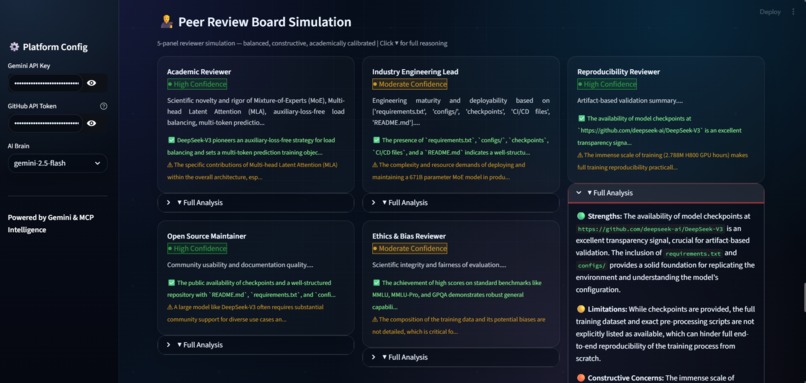
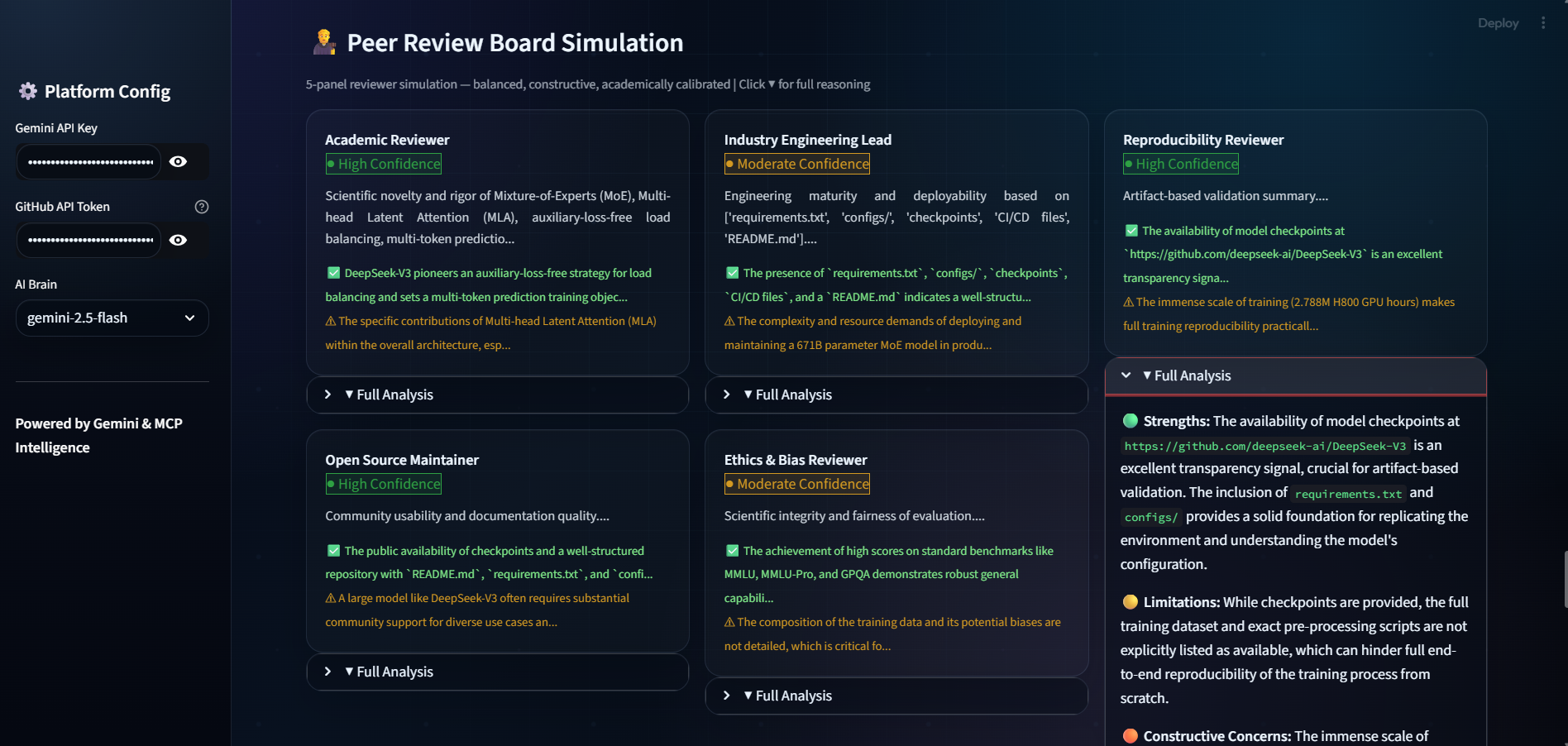
Peer Review Board Simulation
-
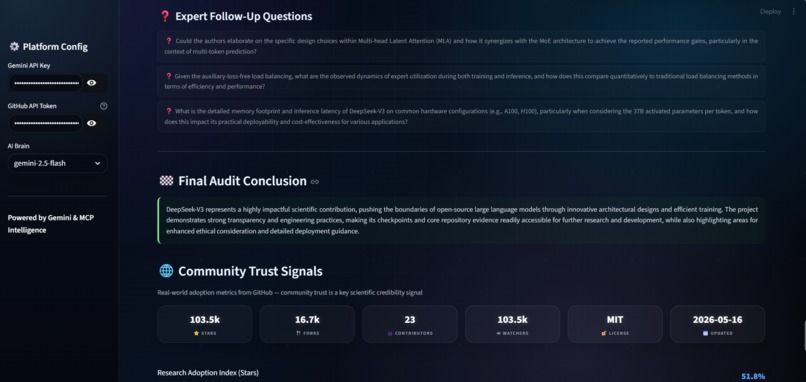
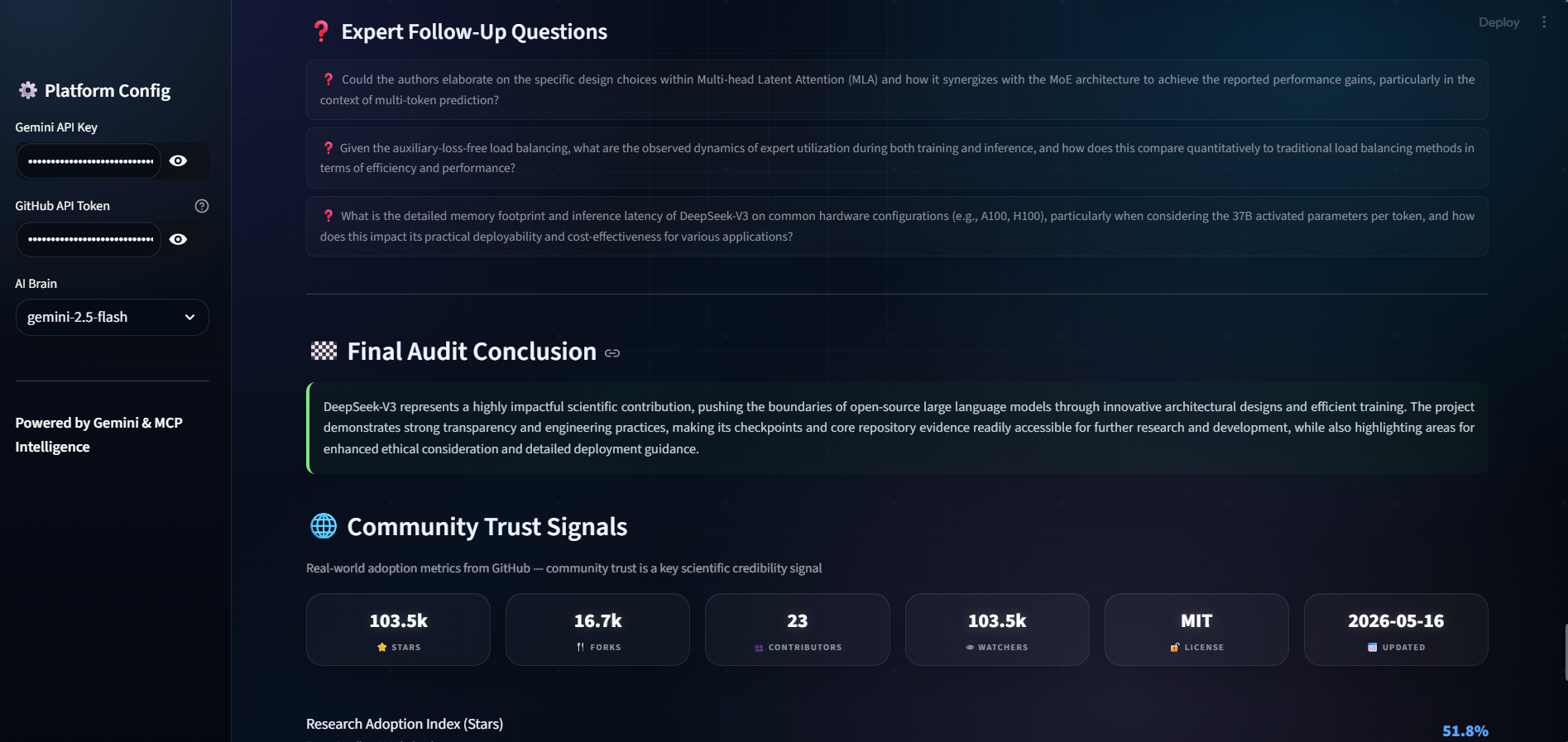
Expert Follow-Up Questions and Final Audit Conclusion
-
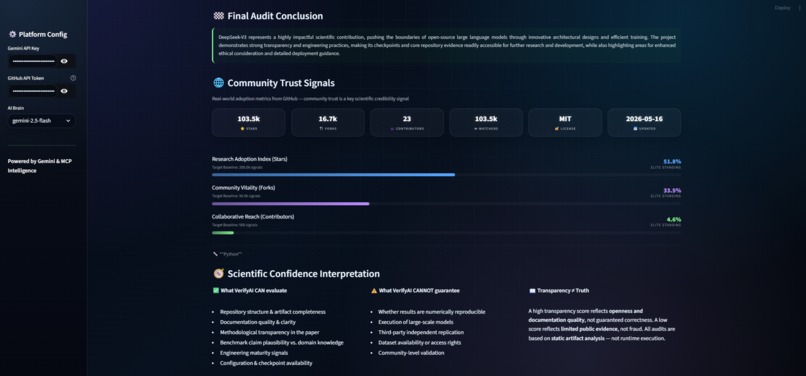
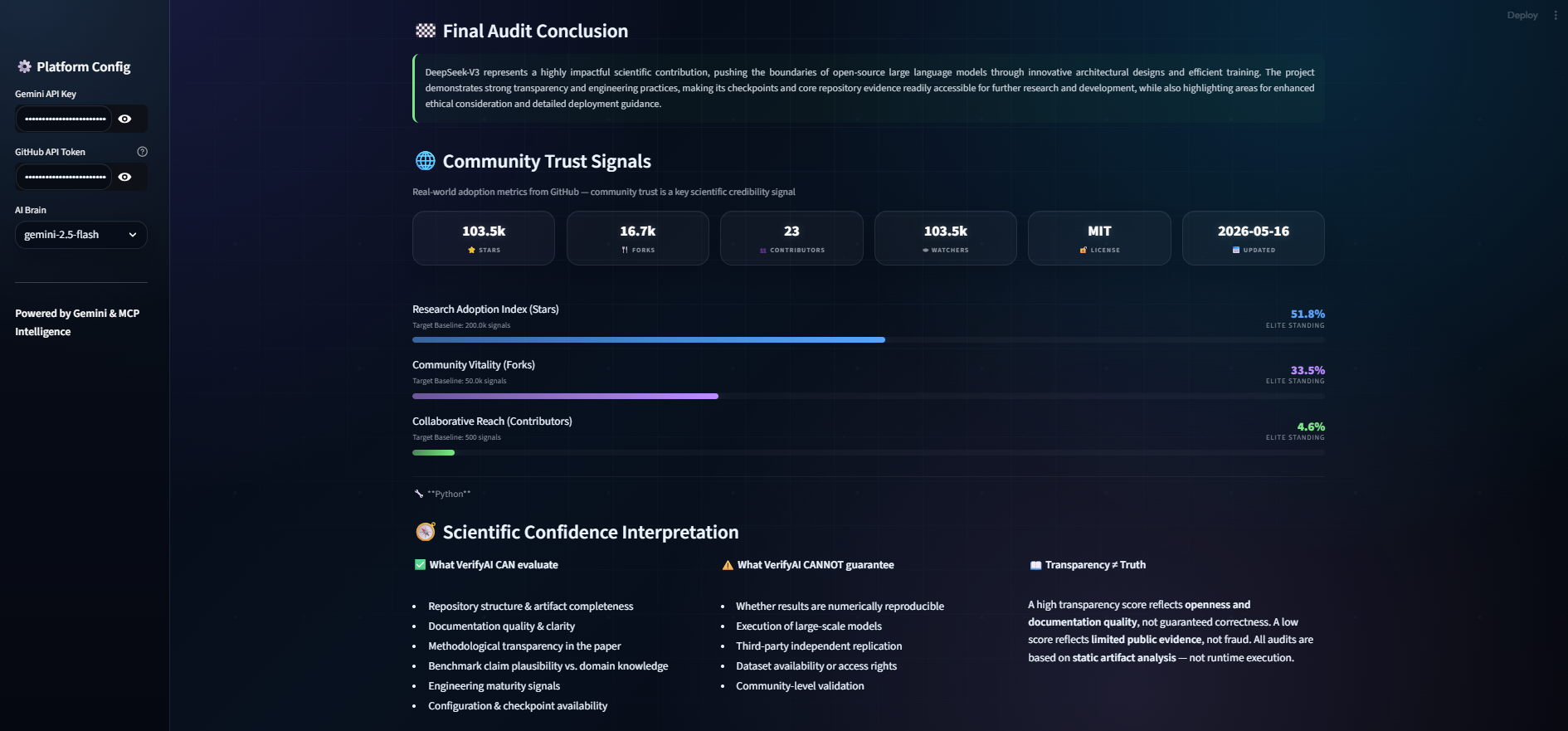
Community Trust Signals and Scientific Confidence Interpretation
VerifyAI: Autonomous Scientific Intelligence Platform
Inspiration
With the rapid growth of AI research papers and open-source repositories, it has become increasingly difficult to verify whether published claims are truly reproducible, transparent, and scientifically trustworthy. Many papers report impressive benchmark scores, but evaluating the credibility of the methodology, repository quality, and reproducibility support still requires a huge amount of manual effort.
We wanted to build a system that acts like an autonomous scientific review board — combining AI agents, repository intelligence, and reproducibility analysis into a single futuristic platform. Our goal was to make scientific auditing faster, more transparent, and more accessible for researchers, students, developers, and hackathon judges.
What it does
VerifyAI is an autonomous AI-powered scientific auditing platform that analyzes:
- Research papers (PDFs)
- GitHub repositories
- Reproducibility signals
- Benchmark plausibility
- Engineering transparency
The platform uses multiple specialized AI agents including:
- Paper Analysis Agent
- Repository Intelligence Agent
- Plausibility Verification Agent
- Reviewer Simulation Agent
- Scientific Trust Agent
These agents collaboratively evaluate:
- methodological quality
- structural transparency
- reproducibility support
- benchmark realism
- repository completeness
- engineering maturity
VerifyAI also simulates an expert peer review board with multiple reviewer perspectives such as:
- Academic Reviewer
- Industry Engineering Reviewer
- Ethics & Bias Reviewer
- Reproducibility Reviewer
- Open Source Maintainer
The system then generates a scientific trust score and evidence-grounded audit report.
How we built it
We built VerifyAI using:
- Python
- Streamlit
- Gemini API
- GitHub repository analysis
- Agent-style orchestration pipelines
- Markdown rendering
- Custom futuristic UI components
The platform performs:
- PDF ingestion and paper parsing
- Repository structure analysis
- Artifact detection (
requirements.txt, configs, checkpoints, CI/CD files, etc.) - Benchmark plausibility reasoning
- Reviewer simulation
- Scientific trust scoring
We also designed a futuristic AI operating-system-style interface with:
- animated orchestration flows
- collapsible intelligence panels
- agent execution visualization
- scientific dashboard aesthetics
- MCP-inspired tool coordination
Challenges we ran into
One of the biggest challenges was making the platform feel truly “agentic” instead of simply generating static AI text. We had to carefully design multiple autonomous agents with distinct responsibilities and orchestration flows.
Another major challenge was repository intelligence. Detecting reproducibility signals, training scripts, evaluation files, configuration artifacts, and repository completeness required building real repository parsing and structured analysis logic.
We also spent significant effort improving the UI to make the system feel like a futuristic scientific intelligence platform instead of a traditional dashboard application.
Balancing detailed scientific analysis with clean visual presentation was another difficult challenge.
Accomplishments that we're proud of
We are proud that VerifyAI:
- combines multiple autonomous AI agents into one coordinated platform
- performs evidence-grounded scientific auditing
- analyzes both papers and repositories together
- generates structured reproducibility assessments
- simulates expert peer review perspectives
- creates a futuristic AI-native user experience
We are especially proud of the orchestration system and the repository intelligence engine.
What we learned
During this project we learned:
- multi-agent AI orchestration
- scientific auditing workflows
- repository intelligence analysis
- reproducibility evaluation
- advanced UI/UX design
- AI-driven reasoning systems
- structured benchmark validation
We also learned how important transparency and reproducibility are for trustworthy AI research.
What's next for VerifyAI
In the future, we plan to add:
- deeper GitHub/GitLab integration
- live benchmark verification
- citation validation
- dataset traceability analysis
- model card generation
- research fraud detection signals
- collaborative reviewer workflows
- real-time scientific monitoring dashboards
Our long-term vision is to build an autonomous AI system that helps improve trust, transparency, and reproducibility across the global scientific ecosystem.
Built With
- ai-agents
- css
- gemini-api
- github-api
- github-intelligence
- html
- javascript
- json
- llms
- machine-learning
- markdown
- mcp
- multi-agent-systems
- natural-language-processing
- pdf-parsing
- prompt-engineering
- python
- repository-analysis
- reproducibility-analysis
- scientific-auditing
- streamlit
- ui/ux-design
- vscode
- workflowvisualization

Log in or sign up for Devpost to join the conversation.