-
-
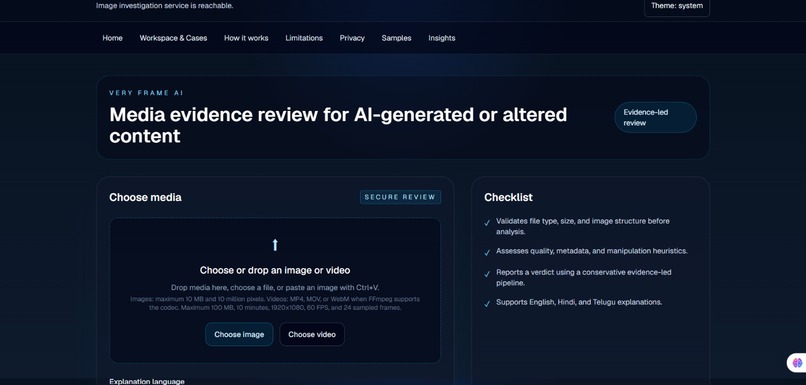
Home Screen
-
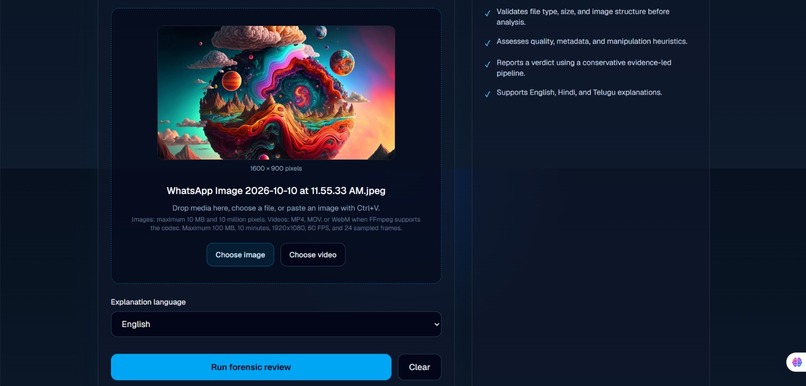
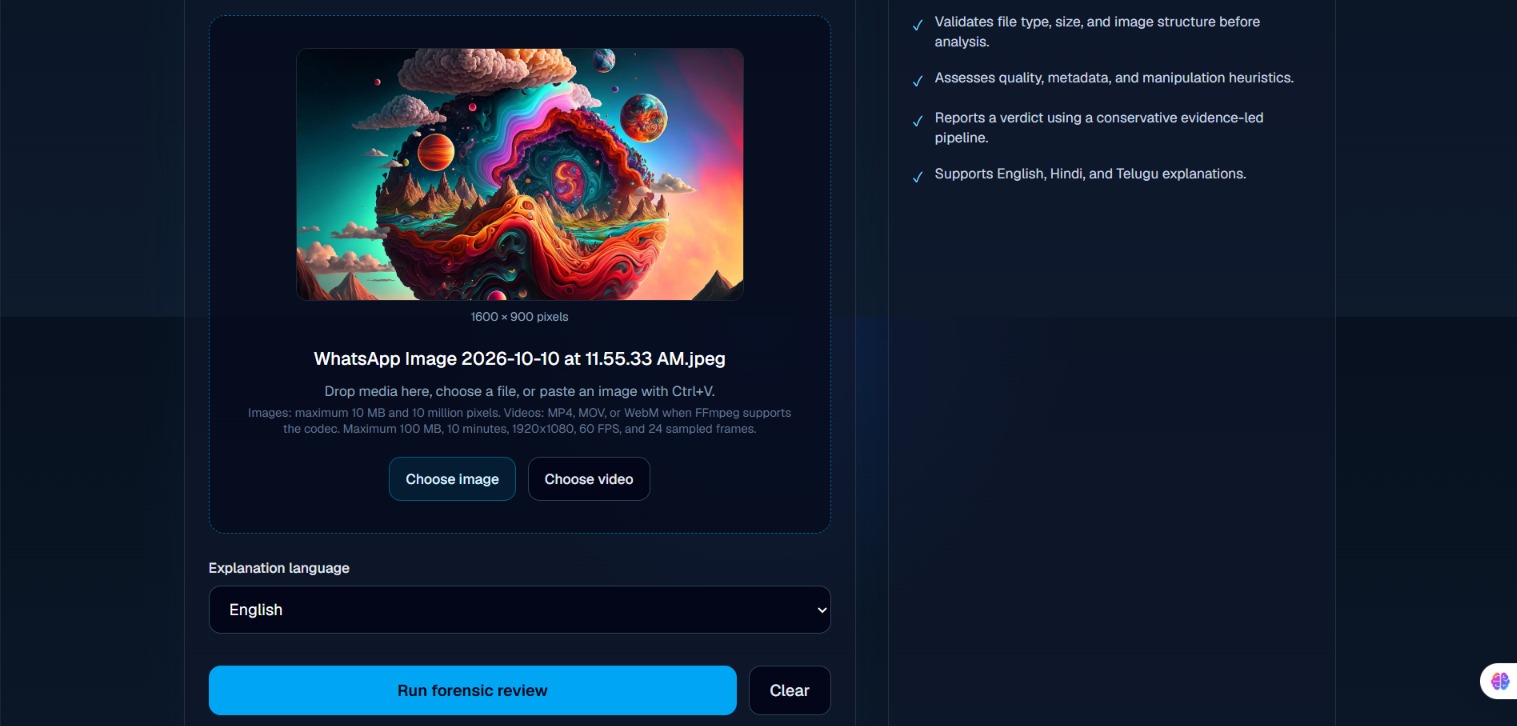
Uploading an image for analysis
-
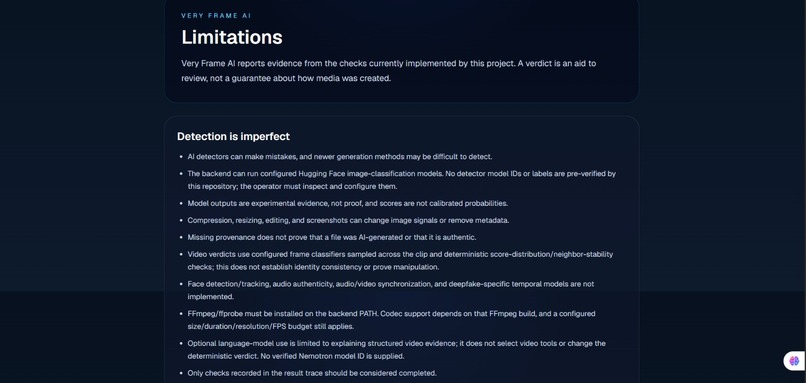
Analysis of image
-
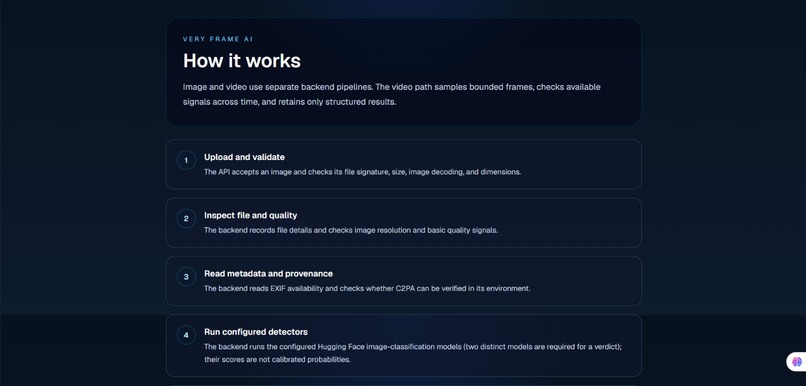
How model works?
-
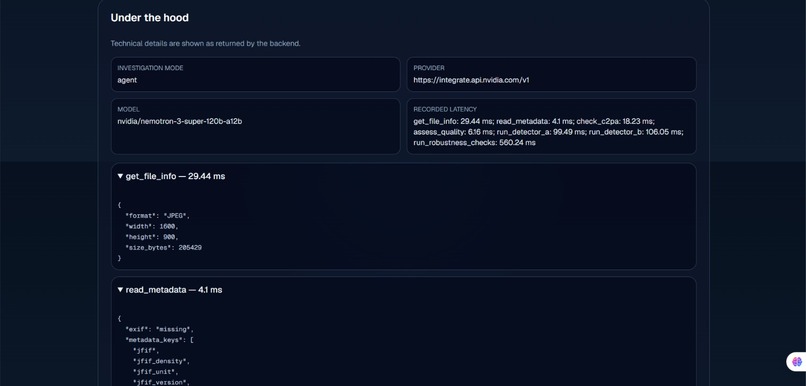
How they solved?
-
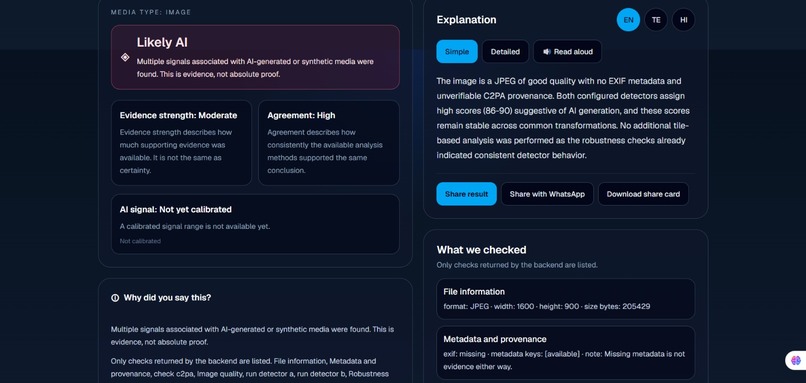
Analyse Ai video or not
-
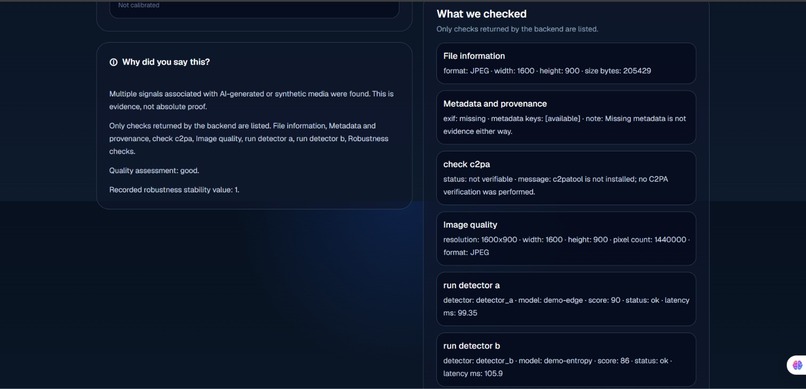
Reasons why it is AI?
-
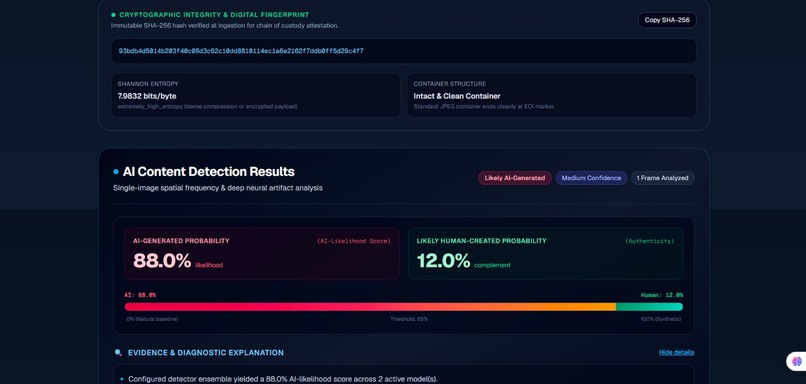
AI analysis detection results
-

Investigation Summary
-
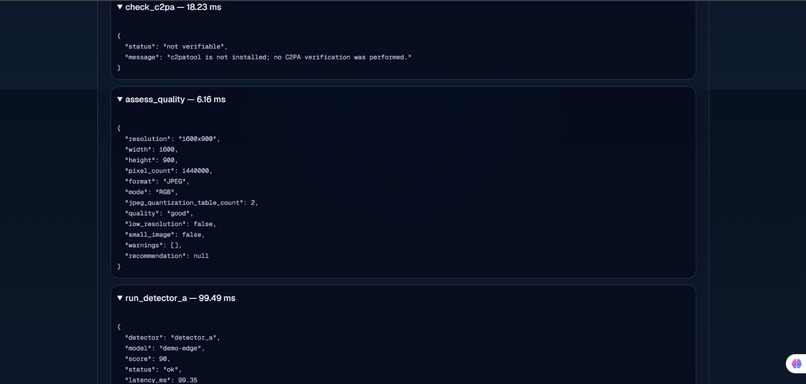
Grid
-
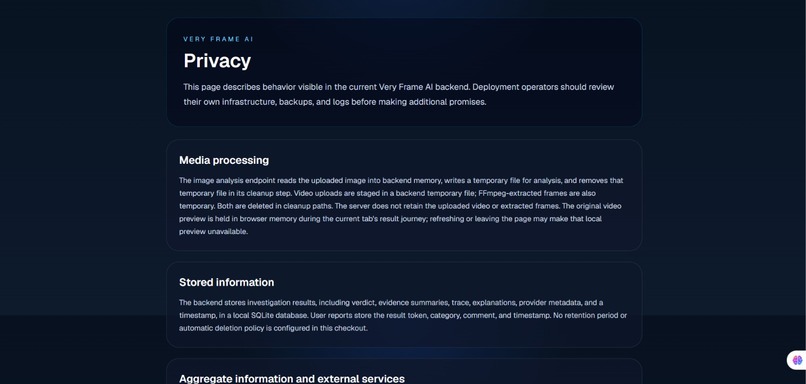
Privacy
-

Workspace




Inspiration
AI-generated images and manipulated media are becoming increasingly difficult to distinguish from authentic content. Misleading visuals can spread rapidly through social media and messaging platforms, making it challenging for ordinary users, students, teachers, and journalists to decide what to trust.
We created VERY FRAME AI to make digital media verification more accessible, transparent, and understandable.
What It Does
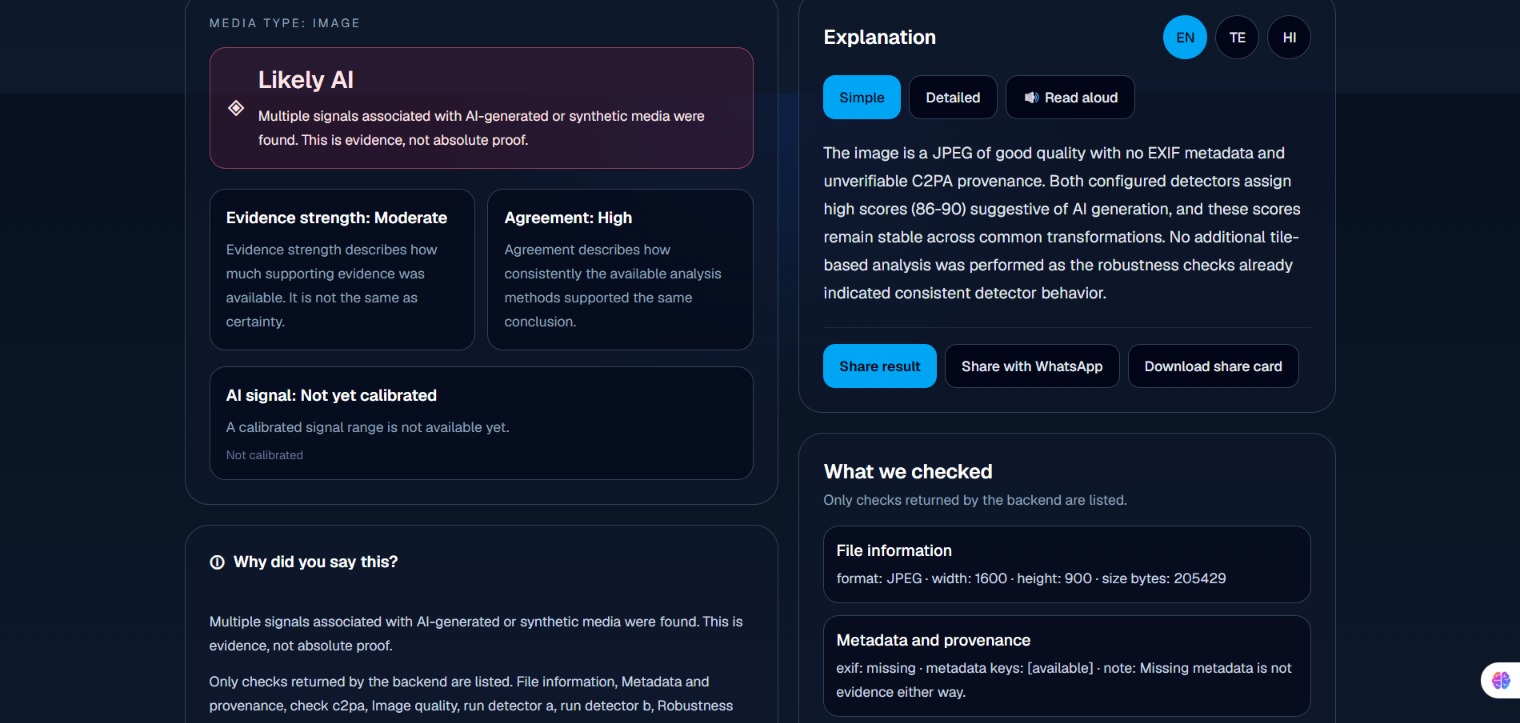
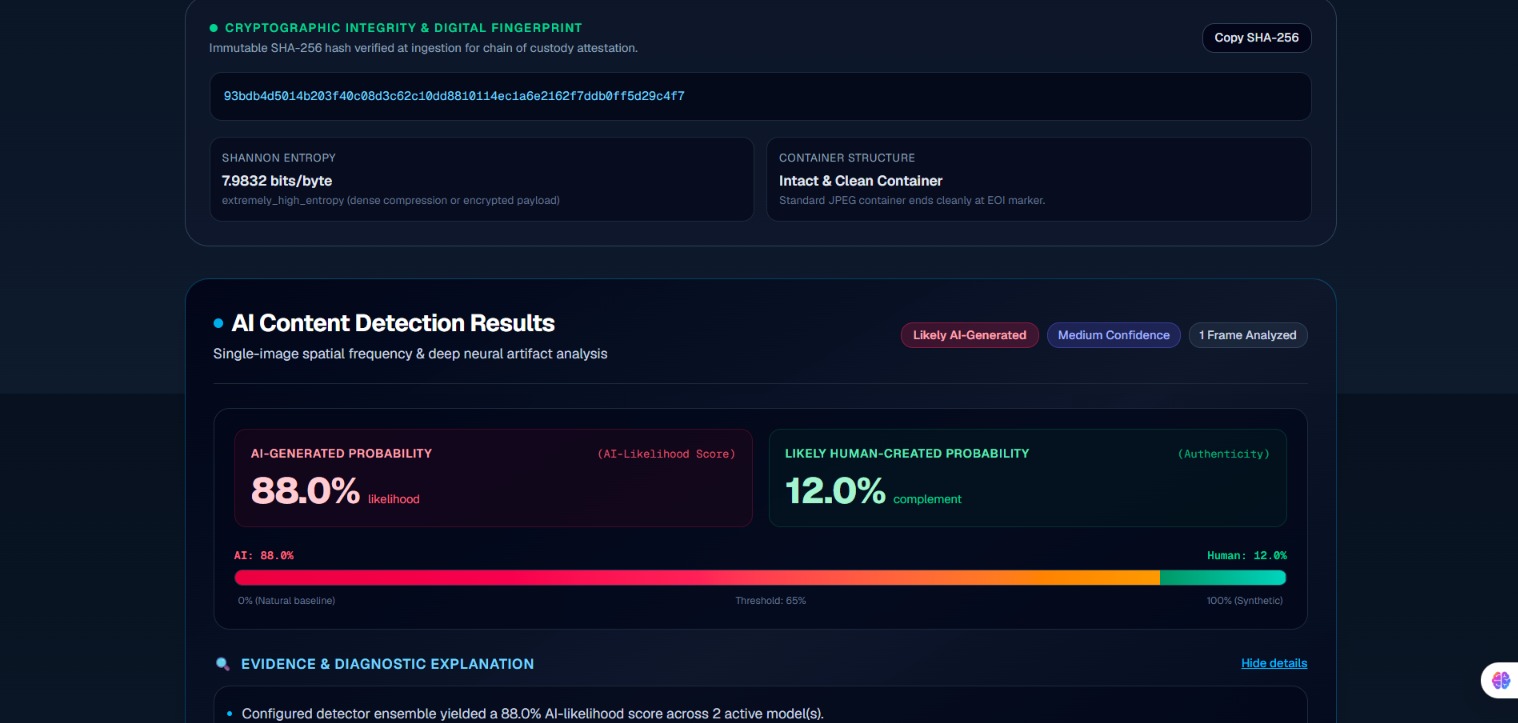
VERY FRAME AI is an AI-powered media investigation platform designed to help users examine images and identify potential signs of AI generation or manipulation.
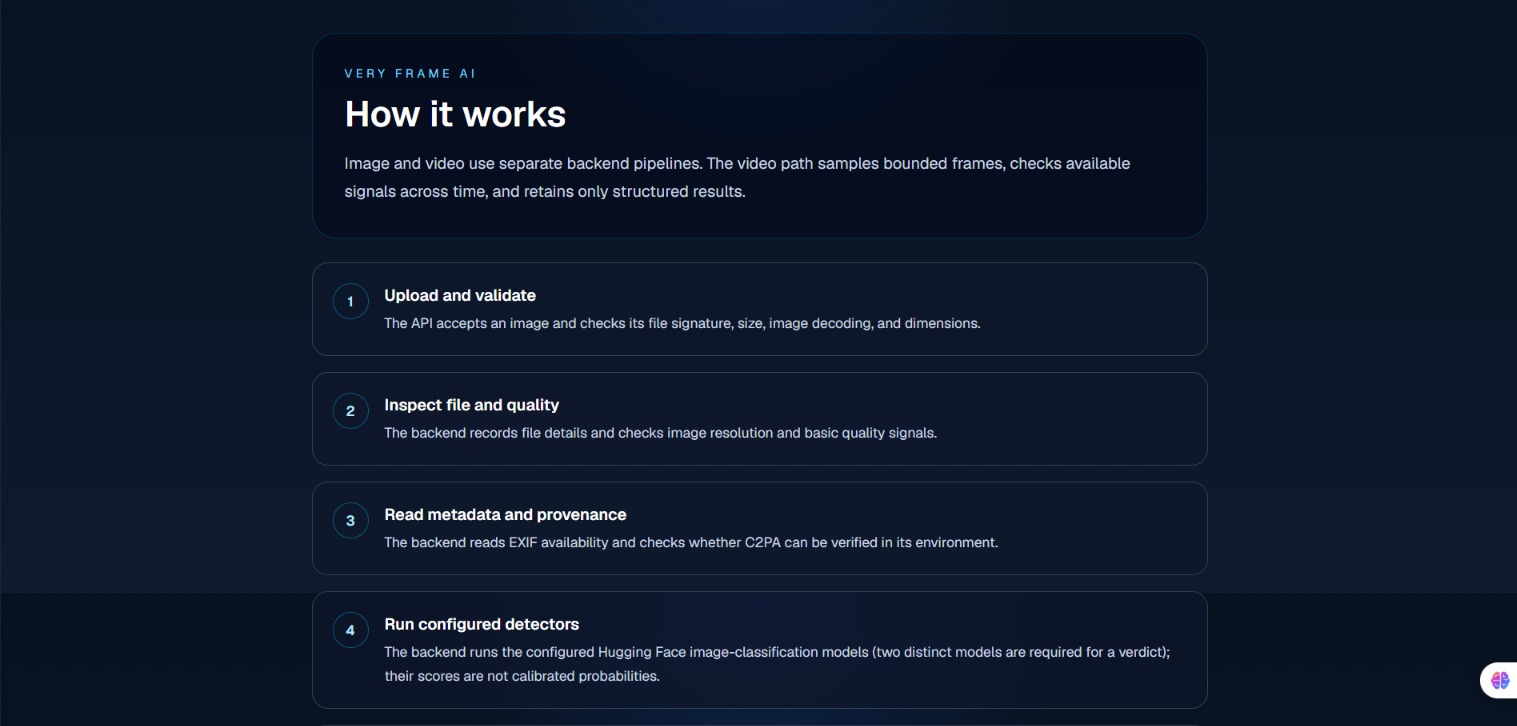
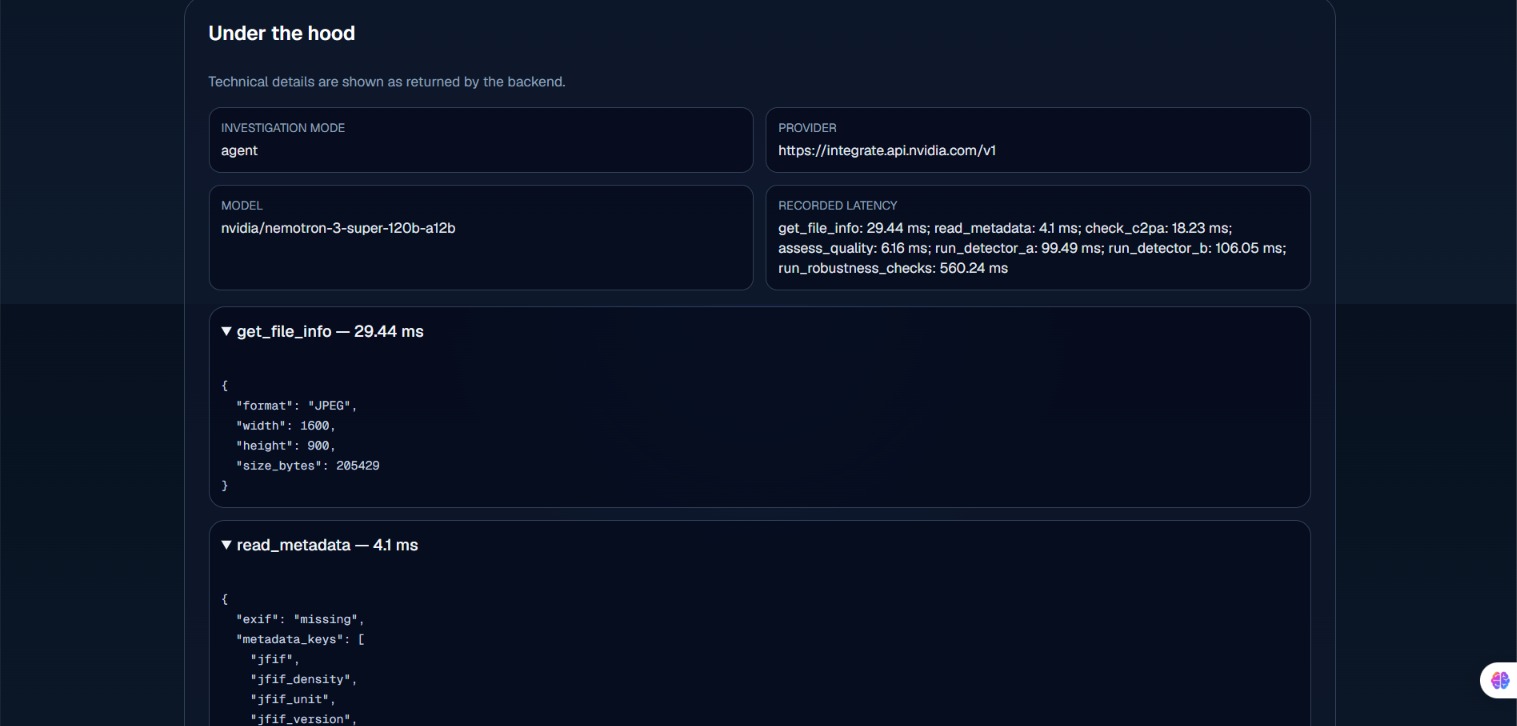
Rather than relying only on a single AI prediction, our approach combines forensic signals, available metadata, detector outputs, and an AI investigation agent powered by NVIDIA Nemotron. The goal is to provide evidence-based explanations instead of unsupported claims.
Our vision is to support video investigation through representative-frame sampling and temporal consistency checks, helping users examine suspicious signals across a video rather than judging the entire clip from a single frame.
Key Features
- AI Media Investigation: Examine uploaded images for potential signs of AI generation or manipulation.
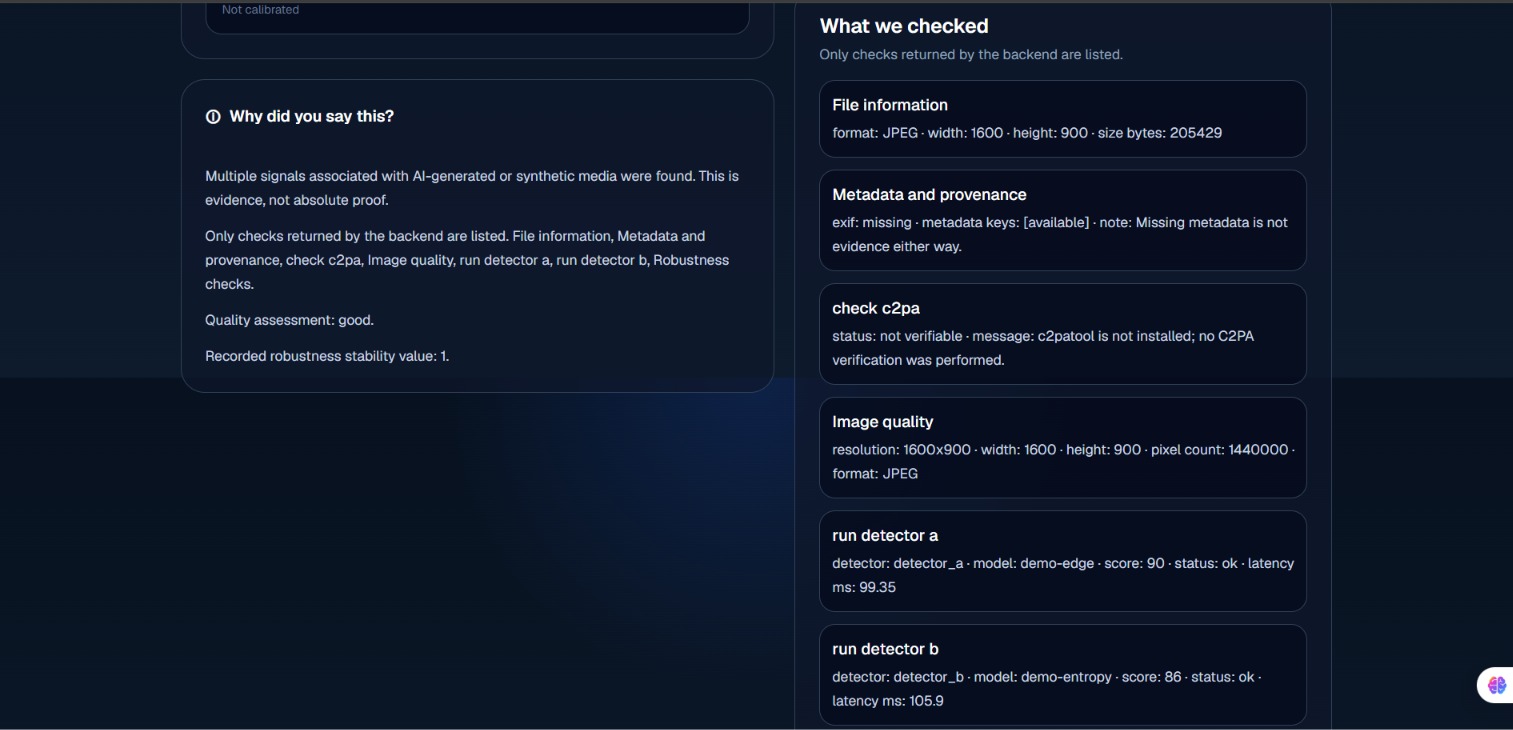
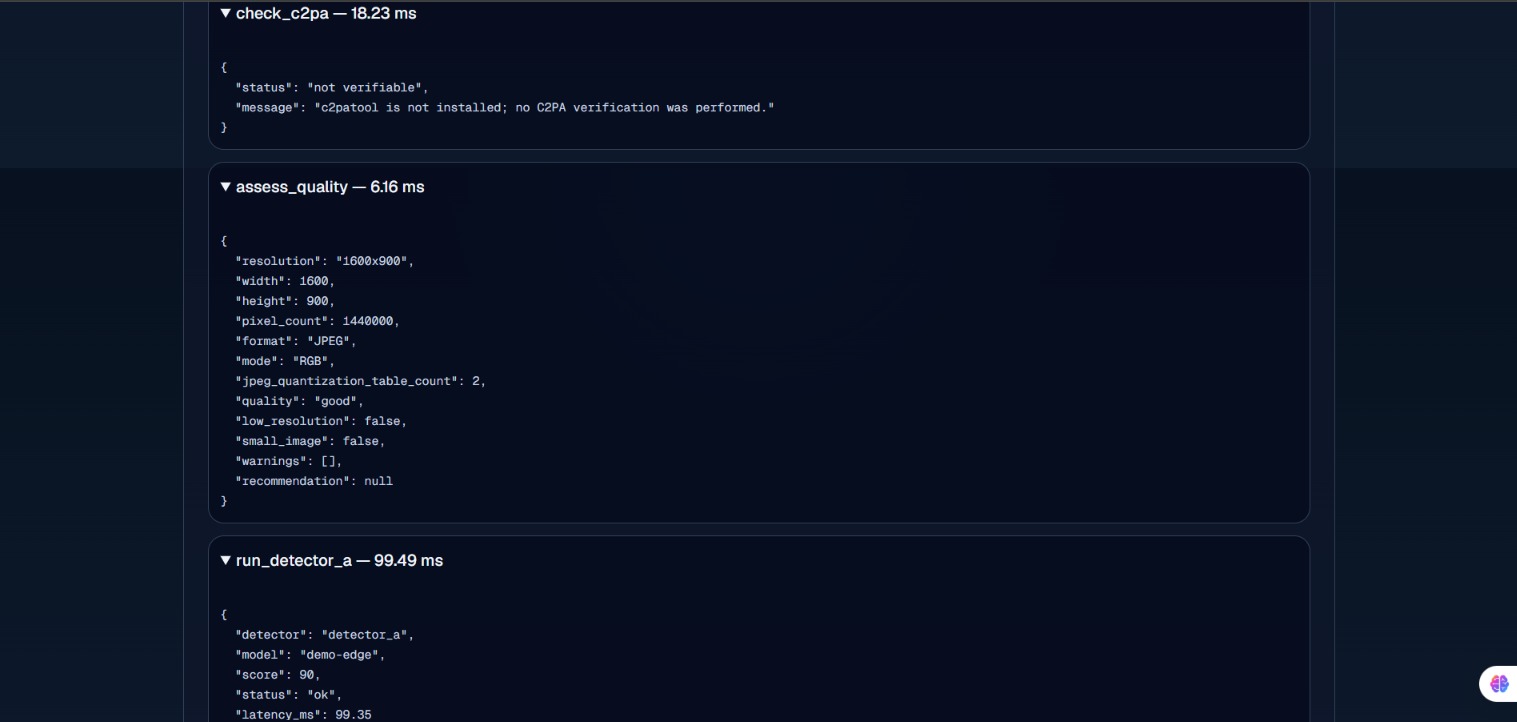
- Forensic Evidence: Combine available detector results, image-quality checks, and metadata where supported.
- Nemotron-Powered Investigation: Use NVIDIA Nemotron to help interpret structured findings and explain the available evidence.
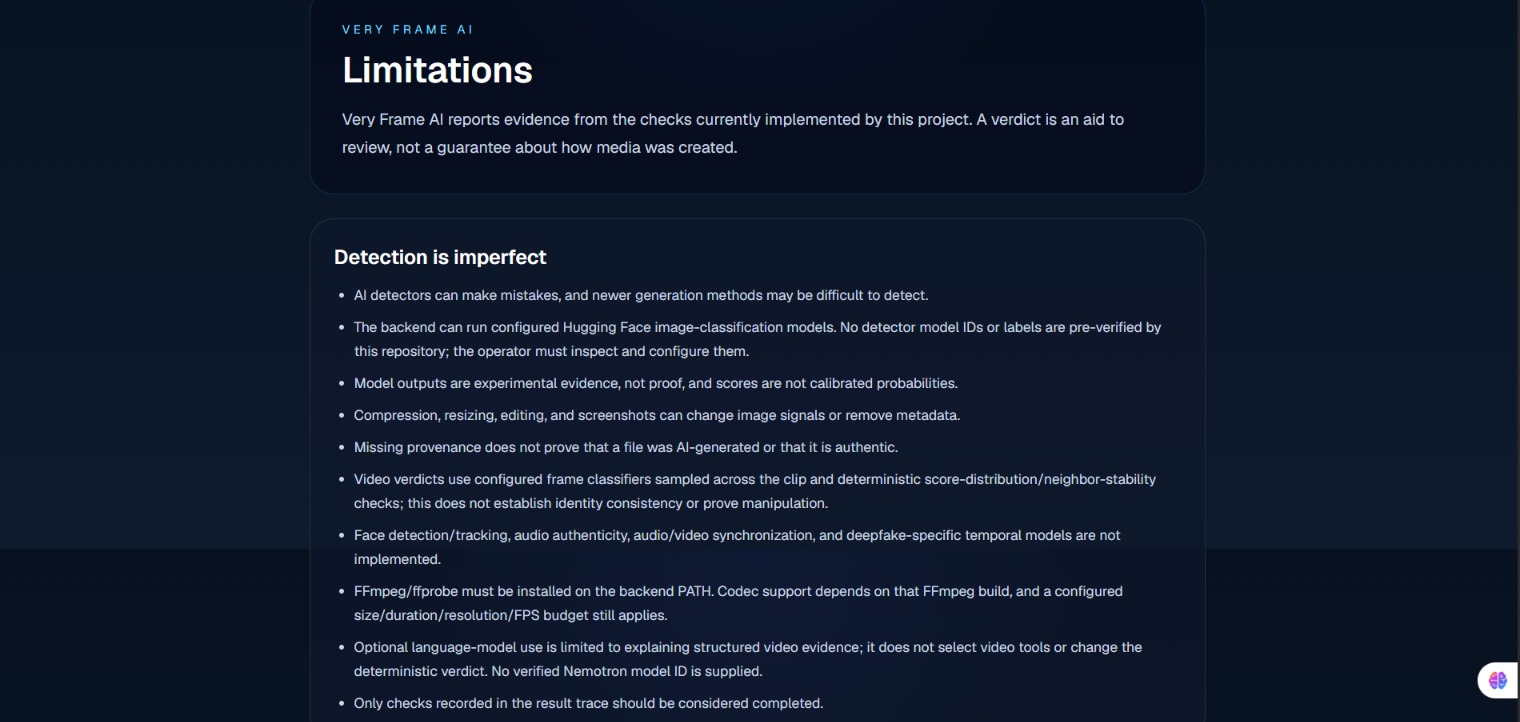
- Transparent Results: Present findings, uncertainty, limitations, and reasons behind an assessment.
- Multilingual Accessibility: Aim to make explanations accessible in English, Telugu, and Hindi.
- Privacy-Focused Processing: Minimize retention of uploaded media and temporary processing data.
How We Built It
The project is designed around a modern web interface and a Python-based backend for media analysis. The planned architecture combines image-processing utilities, forensic detector integrations, structured analysis tools, and NVIDIA Nemotron for evidence-based investigation and explanation.
The system separates forensic analysis from the language model's explanation. This helps prevent an AI-generated explanation from being treated as proof when the underlying evidence does not support it.
Challenges We Faced
One of our biggest challenges is that no single detector can reliably identify every AI-generated or manipulated image. Compression, resizing, image quality, and unfamiliar generation methods can affect predictions.
Another challenge is preventing an AI investigator from producing convincing but unsupported explanations. We address this by emphasizing structured evidence, detector agreement, uncertainty, and transparent limitations.
Supporting different media formats and making results understandable to non-technical users are also important engineering challenges.
What We Learned
This project reinforced that responsible AI detection is not just about producing a label. It is about evaluating evidence, communicating uncertainty, testing different cases, and being honest about what a system cannot determine.
Future Scope
Our next steps include expanding video analysis with intelligent frame sampling, scene-change detection, temporal consistency checks, and timestamp-based evidence timelines. We also plan to strengthen detector evaluation using real, AI-generated, manipulated, and compressed media datasets.
Impact
VERY FRAME AI aims to help people question suspicious media, investigate available evidence, and make more informed decisions before sharing potentially misleading content.
Our mission: Verify every frame, explain the evidence, and never confuse an AI prediction with absolute truth.
Built With
- ai
- computer-vision
- fastapi
- huggingface
- image-forensics
- next.js
- nvidia-nemotron
- python
- react
- tailwind-css
- typescript


