-
-
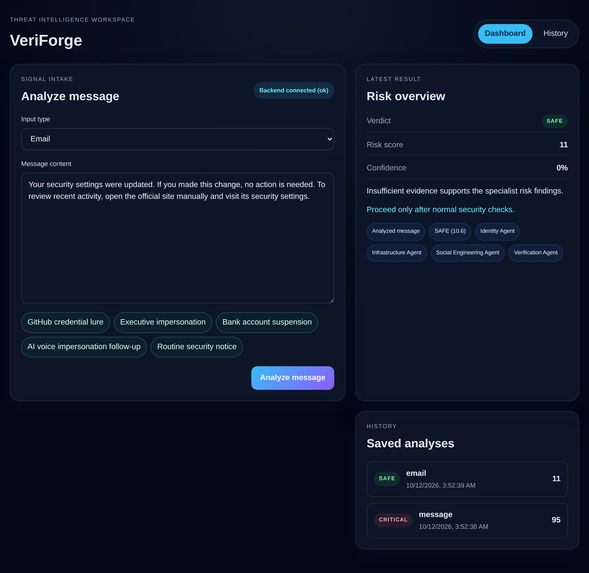
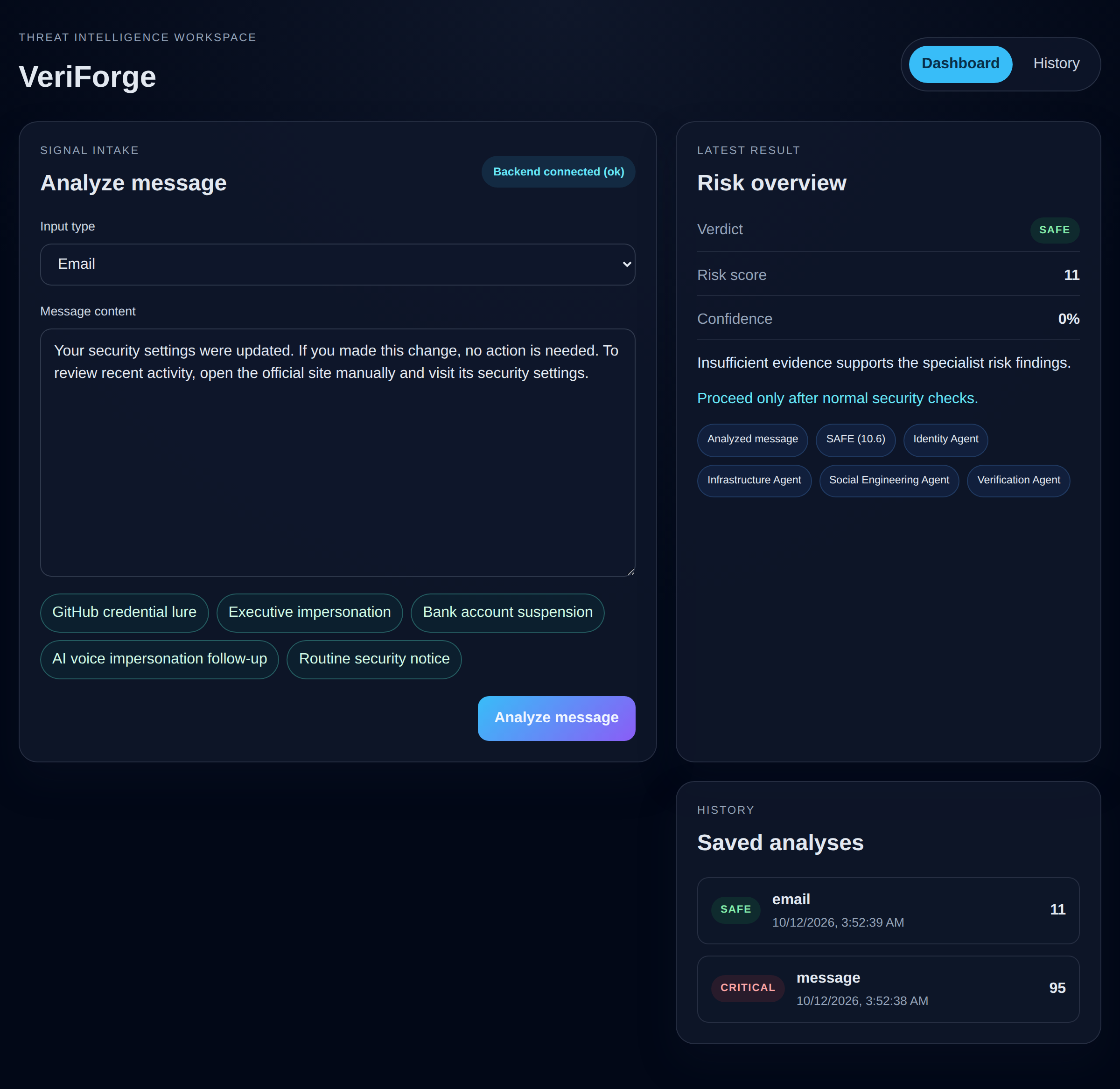
safe evidence
-
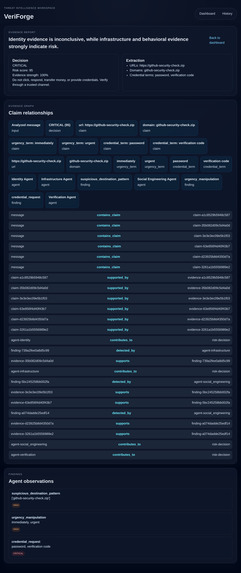
report
-
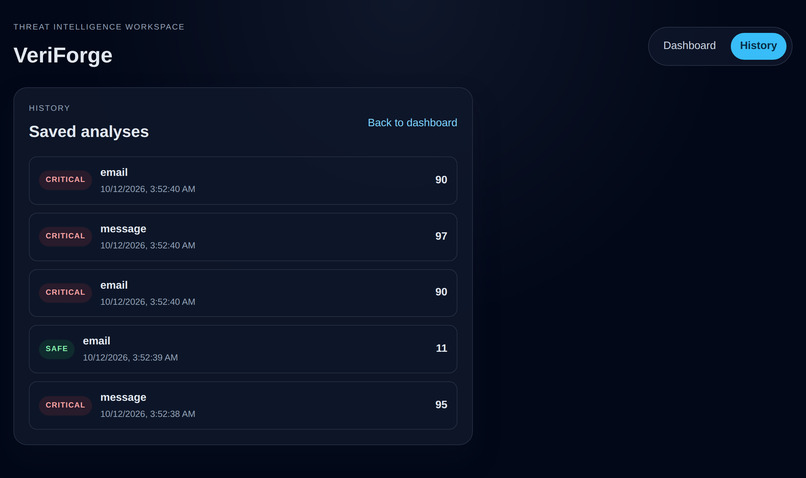
history
-
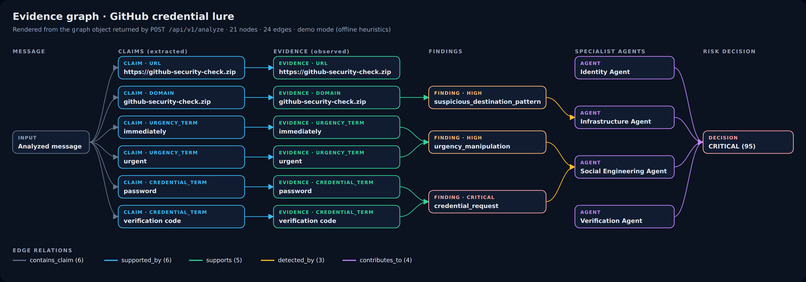
evidence
-
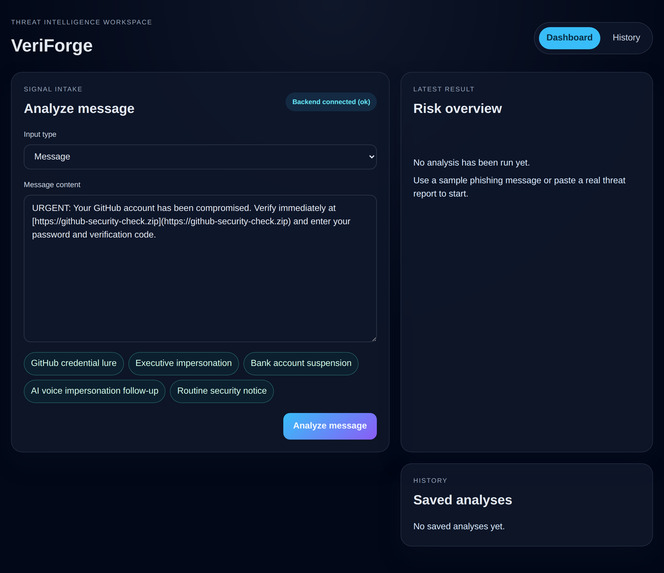
dashboard
-
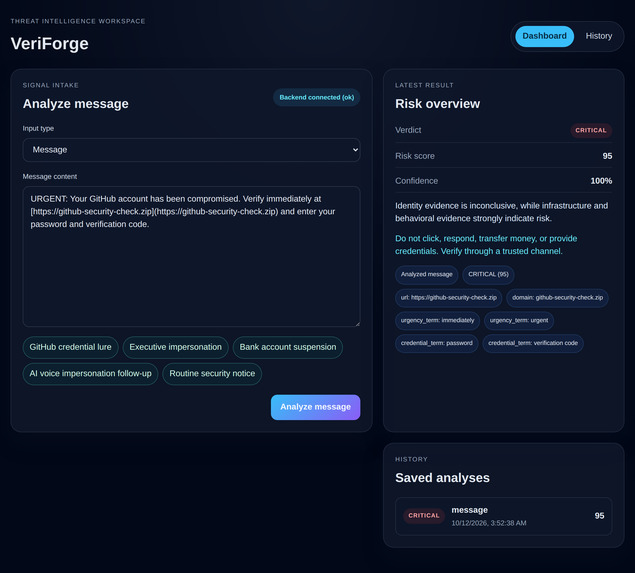
critical evidence
-
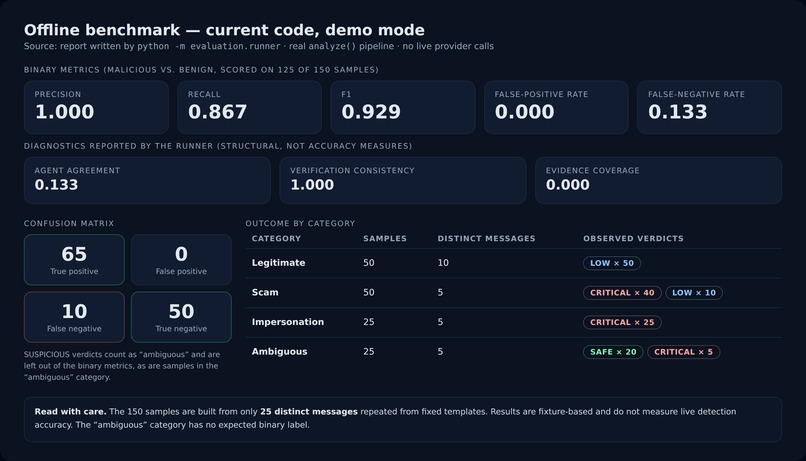
benchmark
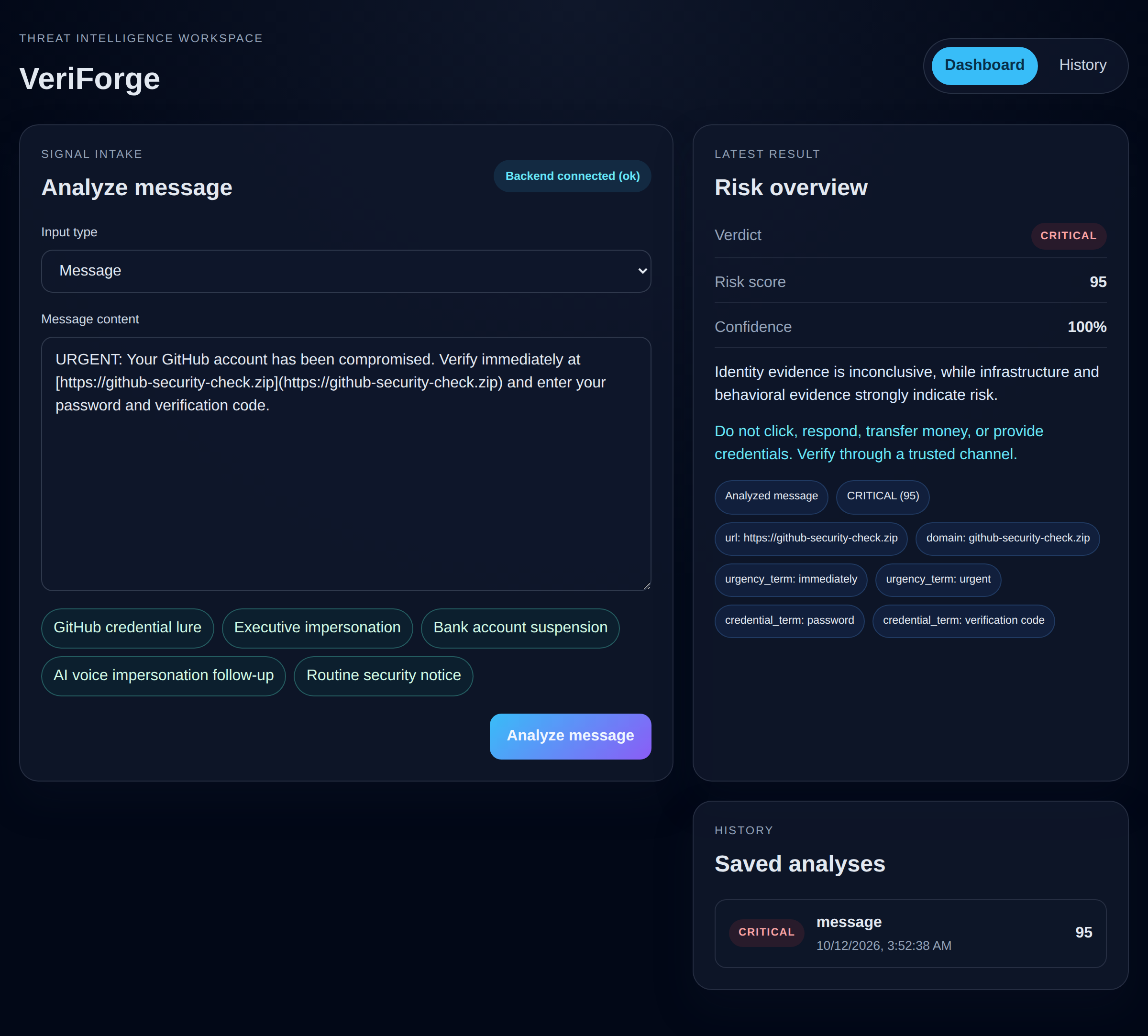
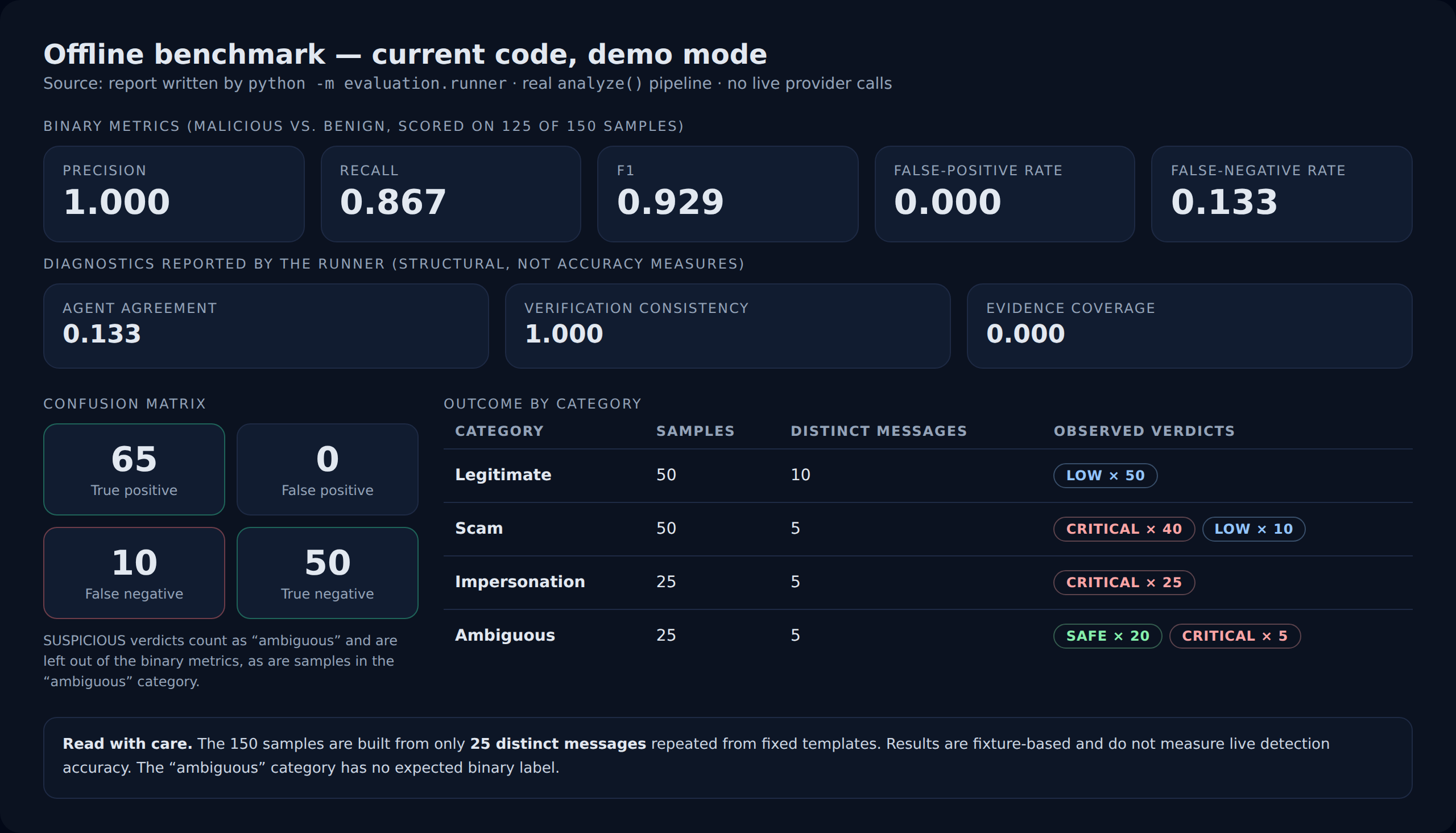
Inspiration
I built VeriForge from a simple concern: when a suspicious email, message, link, or impersonation attempt reaches someone, the hardest part is not noticing that something feels wrong; it is proving why it is wrong before acting. I wanted to build a verification layer that gathers evidence first, analyzes it from multiple security perspectives, and gives a clear, explainable decision. I built it because a security warning is only useful when a person can understand and verify the reasoning behind it. The project became an exercise in making AI useful without making AI blindly trusted.
What it does
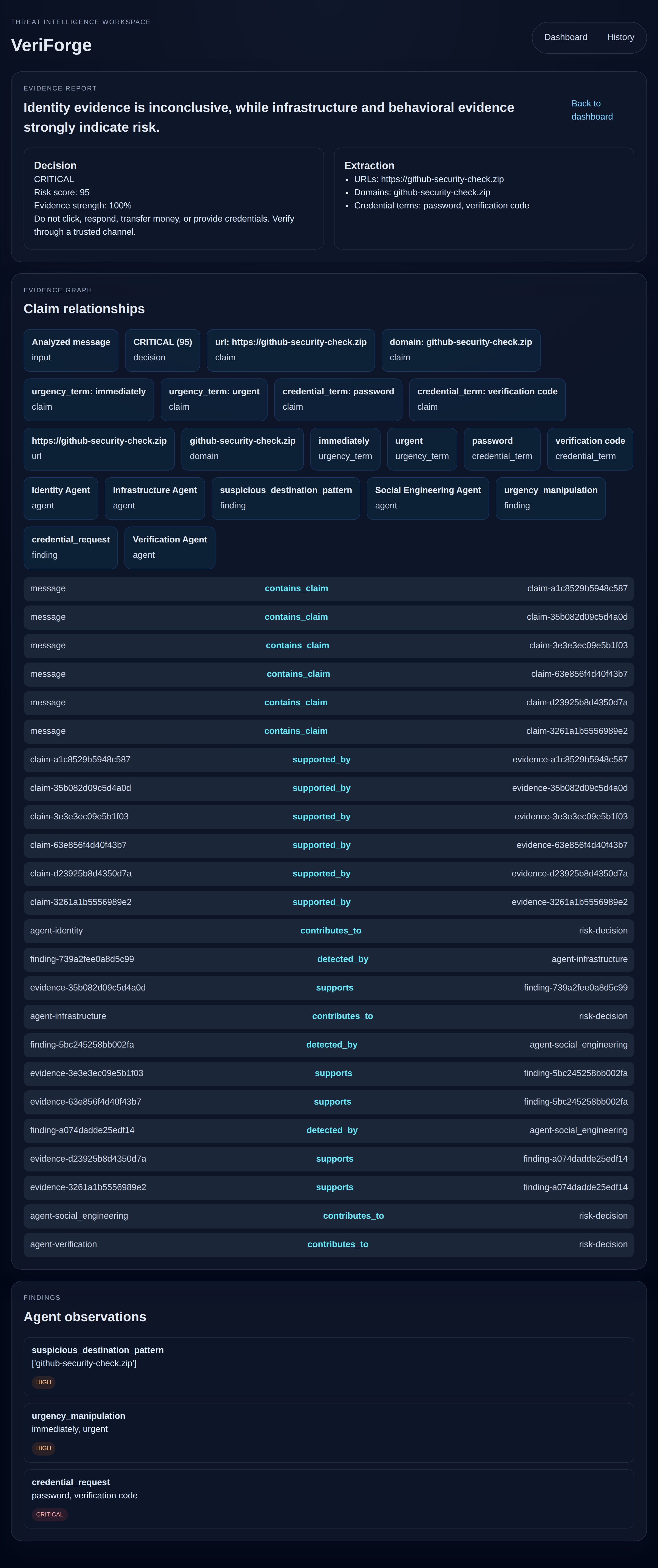
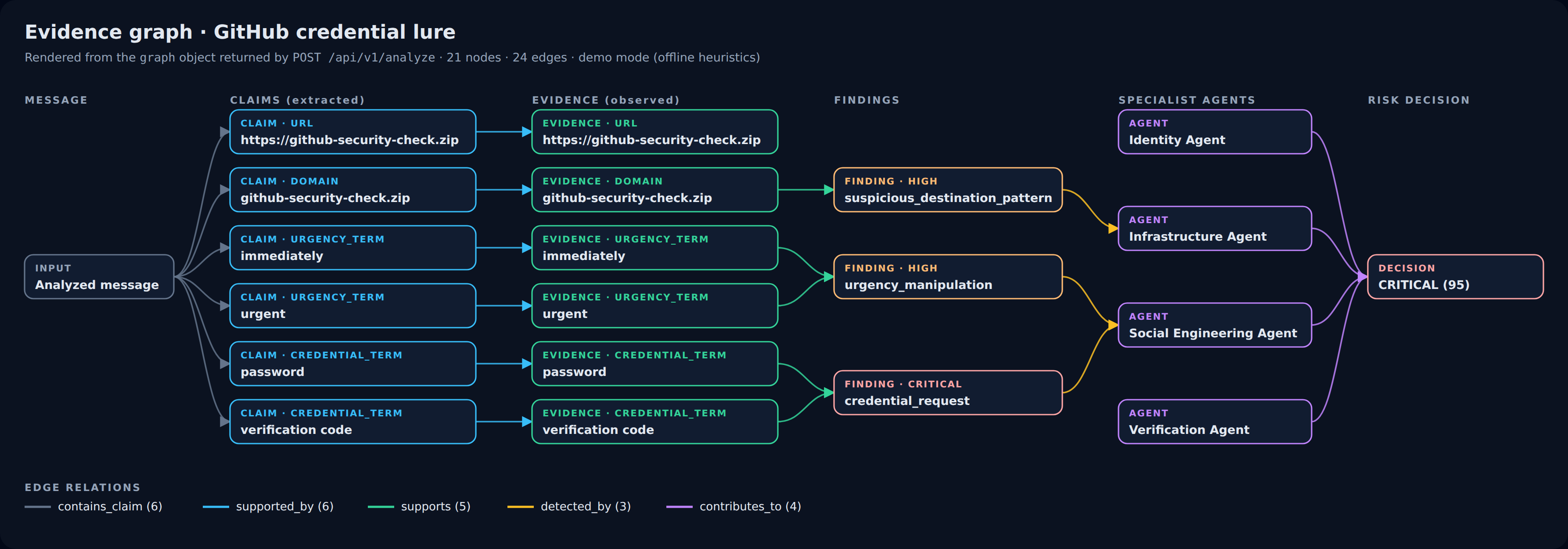
VeriForge analyzes suspicious content and turns scattered signals into an evidence-based verdict. It extracts claims, URLs, domains, credential requests, financial language, and social-engineering indicators, then sends evidence through specialist agents for identity, infrastructure, social engineering, and verification analysis. Instead of letting an LLM make the final decision, VeriForge combines validated findings with deterministic risk scoring and presents the reasoning through an evidence graph.
How we built it
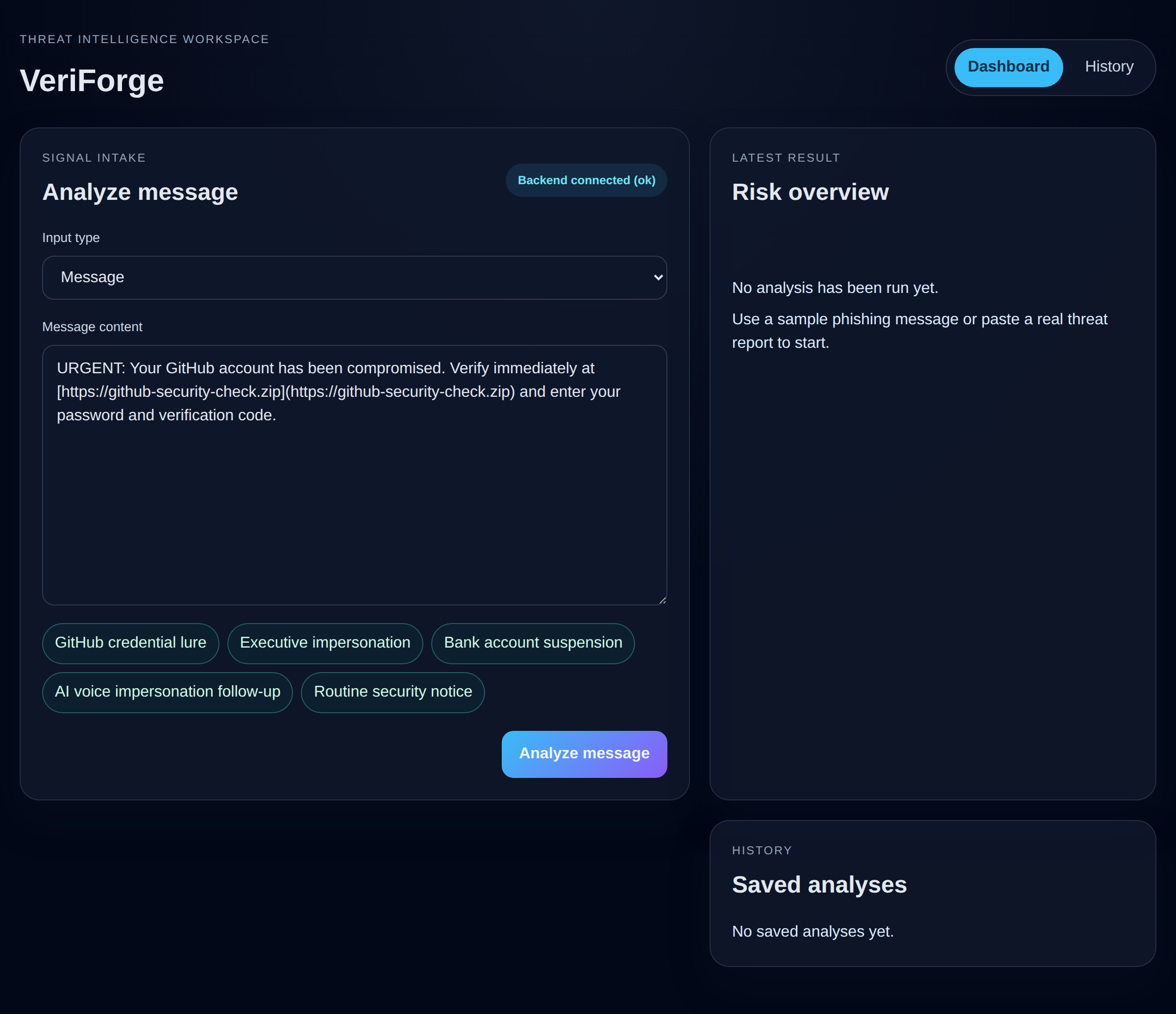
I built VeriForge as a standalone application with a FastAPI backend, typed Python models, specialist agents, deterministic risk scoring, SQLite persistence, and a React/TypeScript interface. Featherless provides the AI reasoning layer, while evidence handling, validation, scoring, and final decisions remain under application control. The core architecture follows one principle: evidence before intelligence.
Challenges we ran into
The biggest challenge was avoiding the temptation to make VeriForge another multi-agent chatbot. Real verification requires separating untrusted content from trusted system logic, validating AI output, handling conflicting evidence, and making decisions reproducible. The hardest part was designing clear boundaries between evidence collection, AI interpretation, verification, and final scoring.
Accomplishments that we're proud of
We are proud that VeriForge turns “this looks suspicious” into a traceable security decision. The evidence graph, deterministic risk layer, specialist agents, and safe-action recommendations make the result understandable to someone without deep security expertise.
What we learned
We learned that effective AI security systems need boundaries. AI is powerful for extracting and interpreting evidence, but it should not be the sole authority for high-impact decisions.
What's next for VeriForge
Next, I want to connect VeriForge with real email and threat-intelligence sources, expand its evaluation dataset, improve evidence correlation, and support continuous verification. The goal is to make VeriForge a practical security layer that helps people verify before they trust, click, respond, or act online.

Log in or sign up for Devpost to join the conversation.