Verified Resumes
Detecting resume inflation early, with auditable signals
Inspiration
Anyone who has interviewed candidates, or been interviewed, knows an uncomfortable truth:
resumes are optimized documents, not truthful ones.
Over time, we noticed a repeating pattern in hiring:
- Candidates oversell contributions to stay competitive.
- Recruiters compensate by adding more interview rounds.
- Good candidates suffer because trust is already broken.
Background checks happen late, are shallow, and rarely validate what someone actually did.
This gap between claims and trust is what inspired Verified Resumes.
We didn’t want another job portal.
We wanted a trust layer for resumes.
The Idea
“We detect resume inflation early, with auditable signals.”
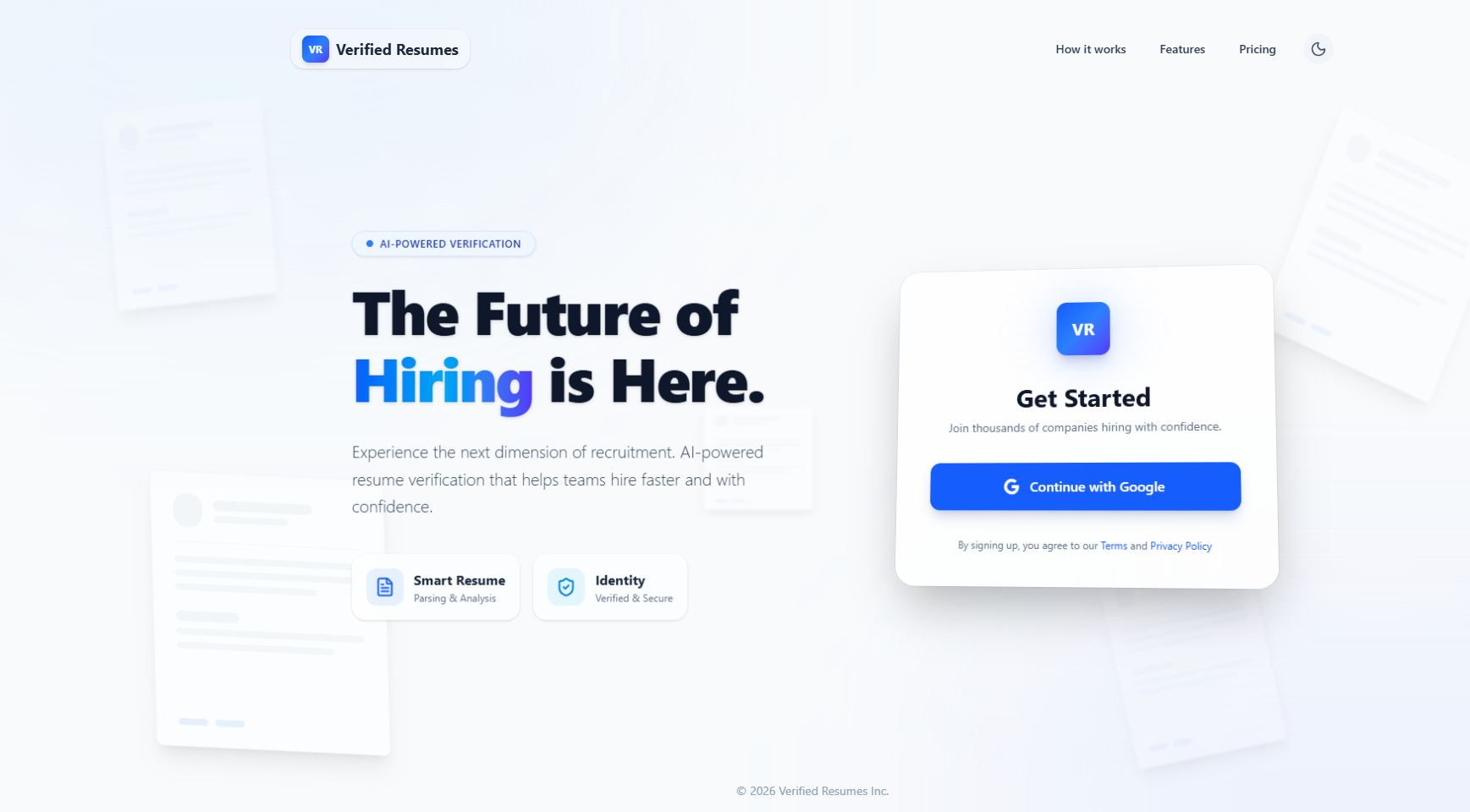
Verified Resumes is a hiring platform where:
- Resume claims are verified by the candidate’s past employer
- Verification is claim-level, not document-level
- No sensitive company data is shared between employers
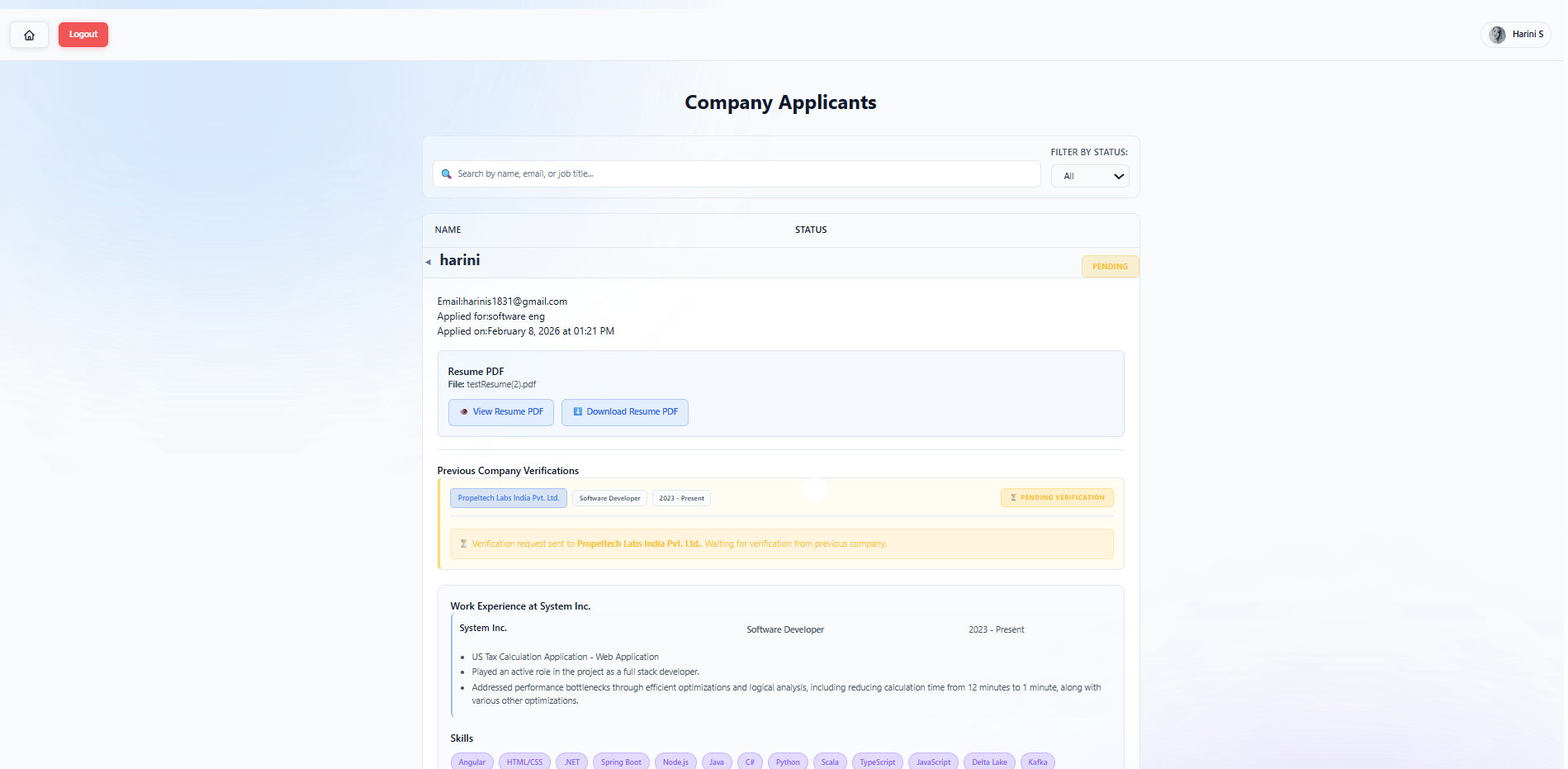
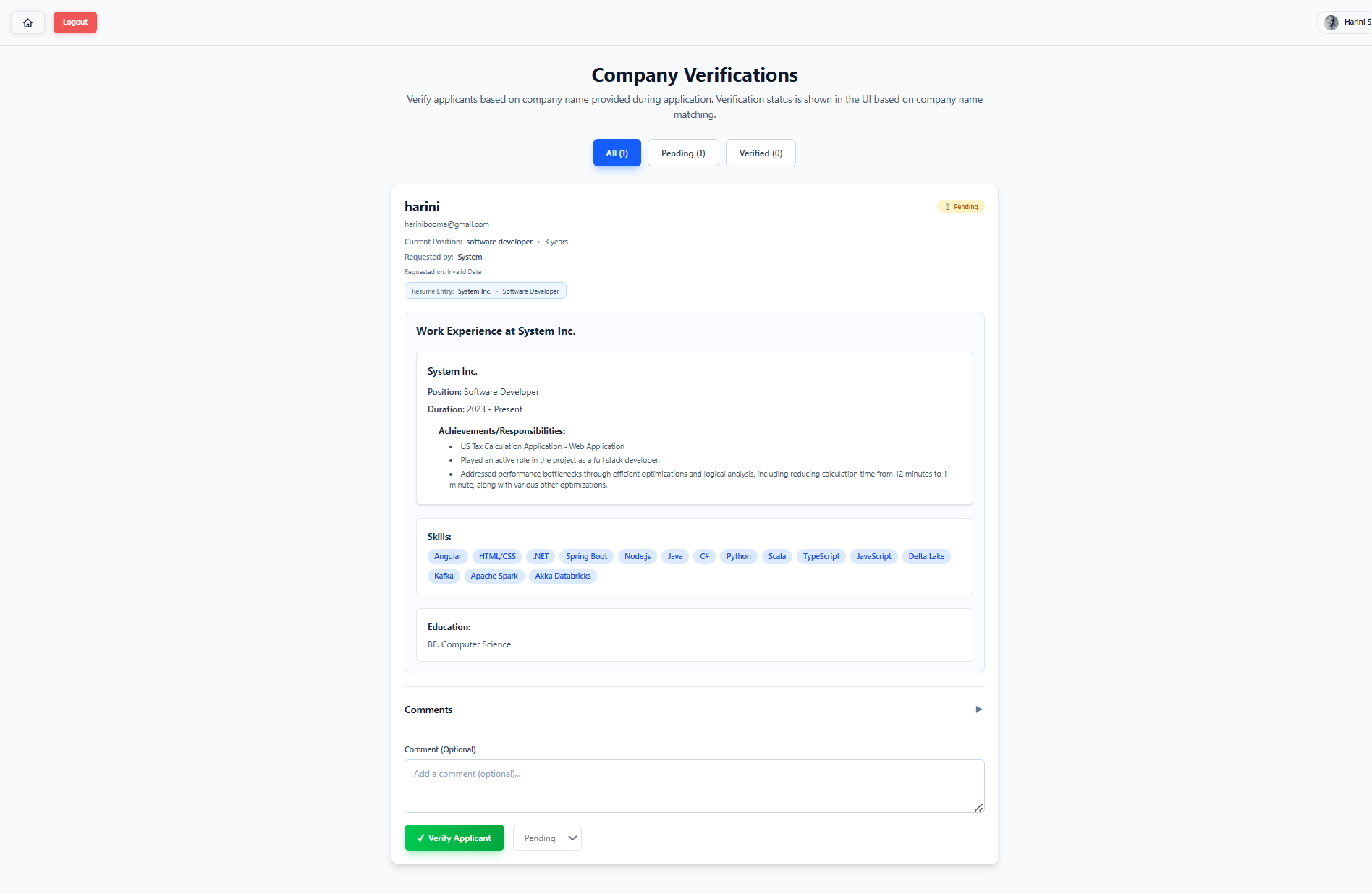
Each resume line is sent only to the company it refers to (Company A → Company A).
An HR/admin assigns the task to the relevant manager, who responds with a simple signal.
The hiring company (Company B) sees only the outcome, not internal details.
The goal is not to prove excellence, it’s to detect misrepresentation early.
How Verification Works
For every resume claim tied to Company A, the manager can respond with:
- ✅ No Misrepresentation
- ⚠️ Overstated
- ❌ False
- ⏭ Don’t Recall / Not Qualified to Judge
No explanations required.
No documents shared.
No cross-company leakage.
This avoids legal exposure while still giving recruiters a high-signal trust indicator.
Positive Feedback Loop Between Companies
The system is intentionally reciprocal:
- By spending a few minutes verifying candidates who worked for them,
- Companies gain access to pre-verified candidates from other companies.
Over time, this creates a positive feedback loop:
- Honest candidates benefit
- Resume inflation becomes risky
- Trust increases across the hiring ecosystem
Cheating becomes expensive.
Honesty becomes leverage.
What we Learned
Building this project forced me to rethink some assumptions:
- Truth is not binary, confidence and context matter
- Human incentives shape data quality more than UX
- Legal and privacy constraints are product constraints, not afterthoughts
- Hiring problems are rarely technical; they’re trust problems
Most importantly:
Verification isn’t about proving someone is great —
it’s about preventing silent dishonesty.
How I Built It
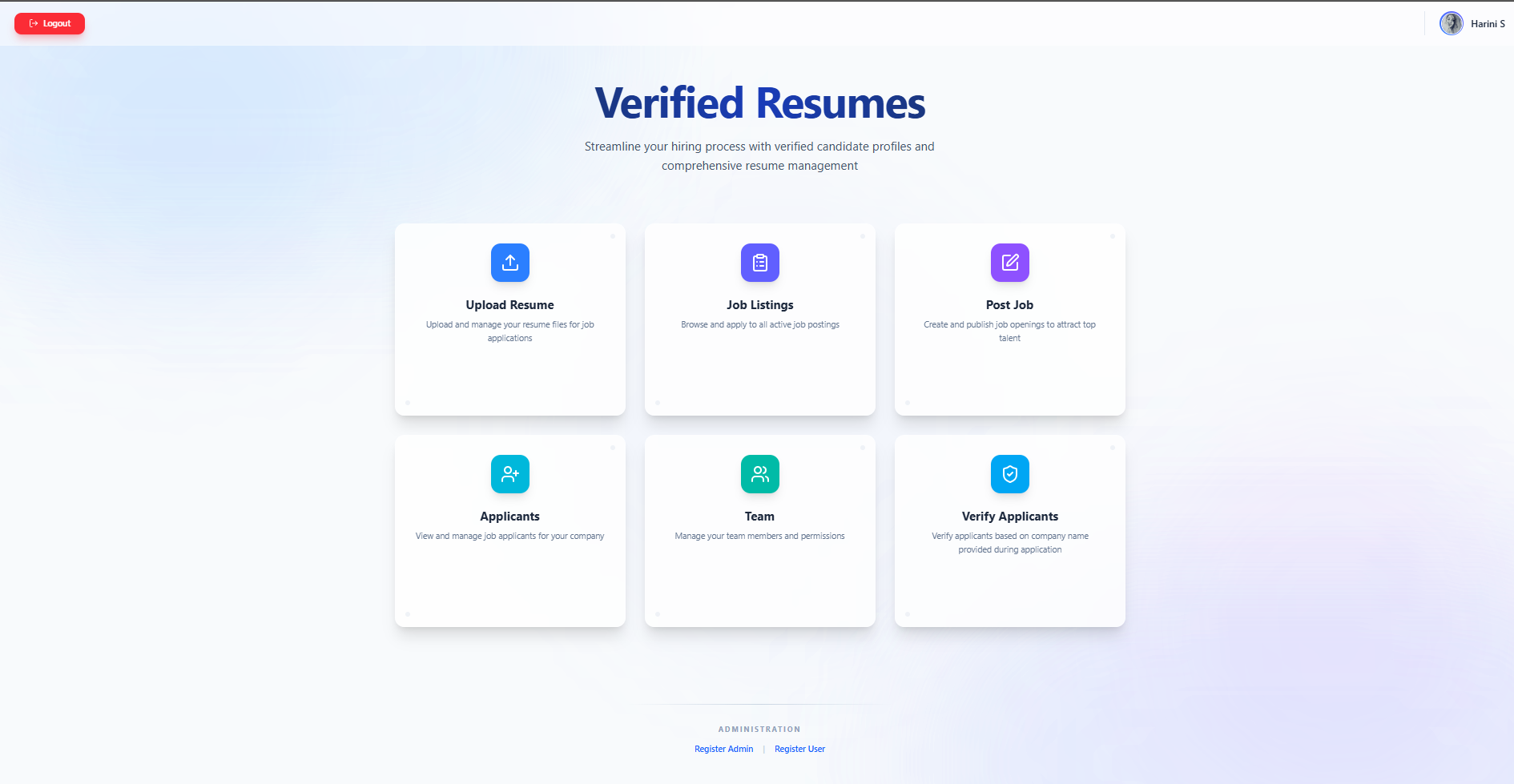
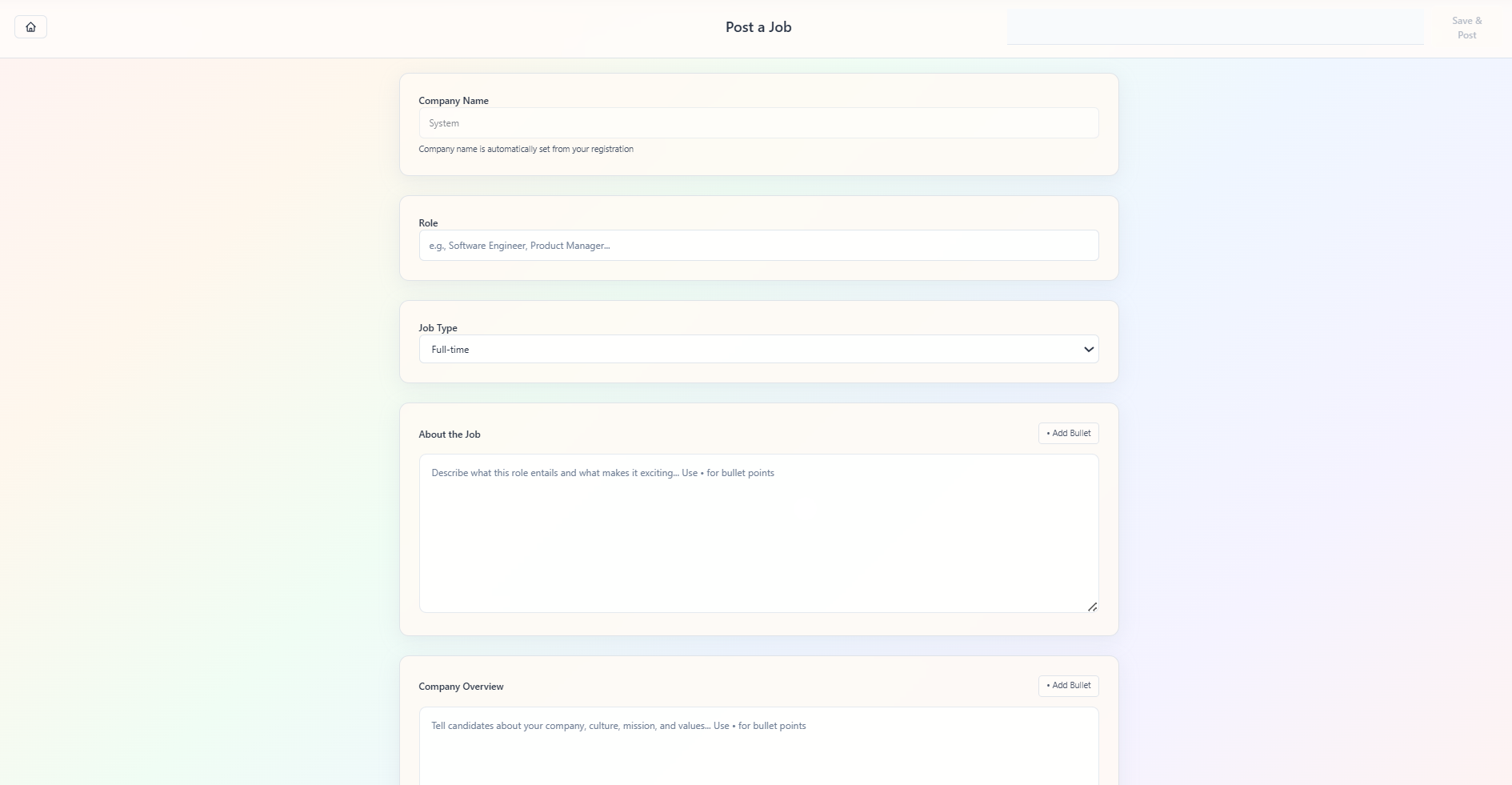
At a high level, the system consists of:
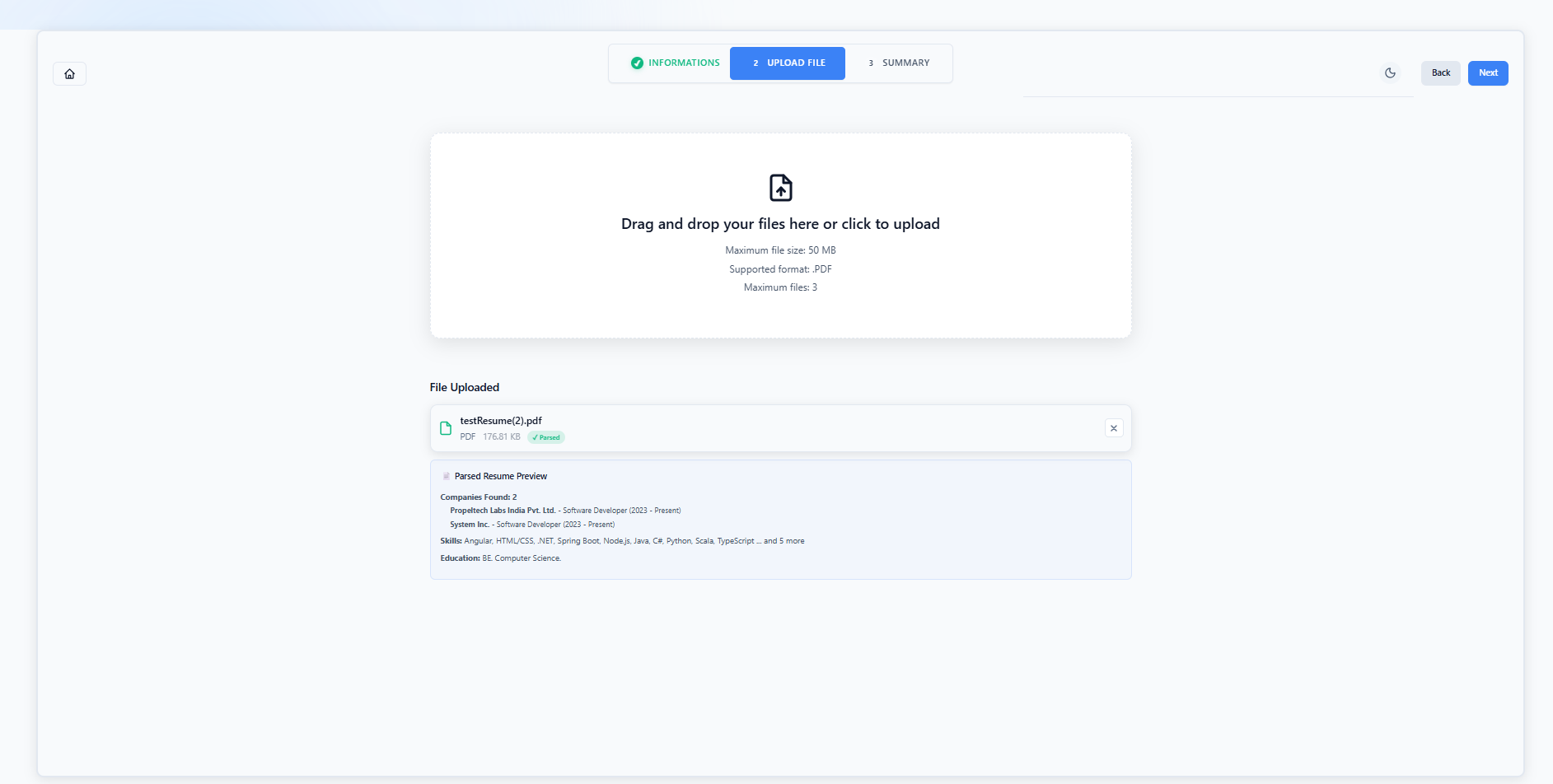
- Resume ingestion and claim extraction
- Claim-to-employer mapping
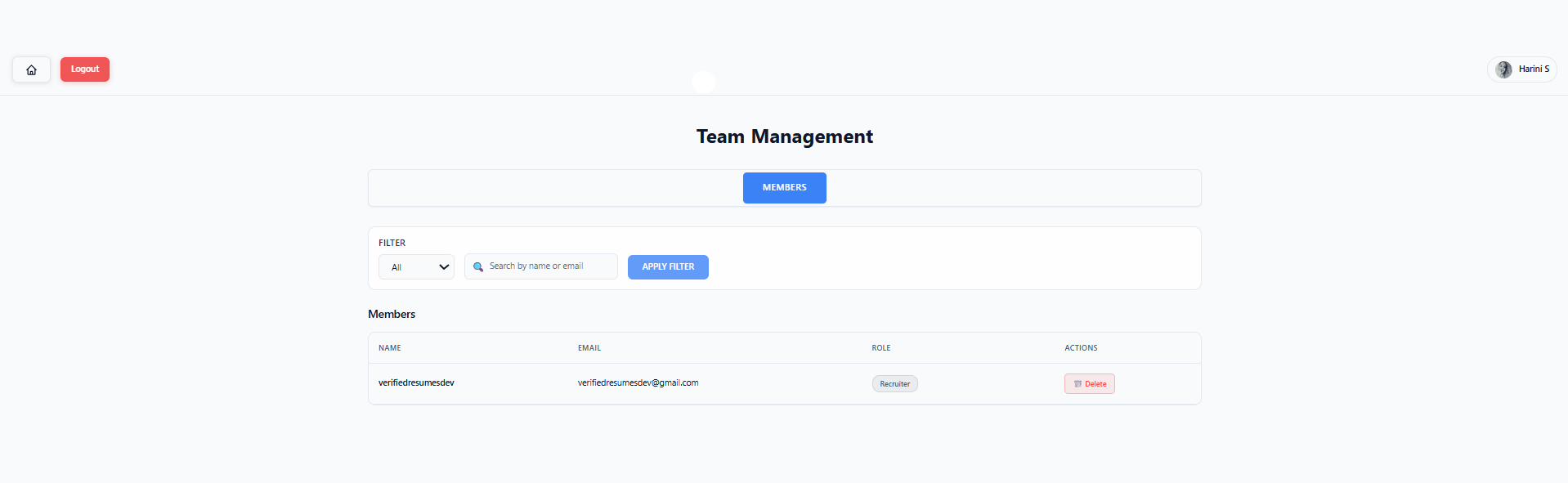
- Role-based verification workflows (HR → Manager)
- Aggregated trust signals for recruiters
- Full audit logs and explicit consent tracking
For the hackathon scope, the focus was on:
- End-to-end workflow clarity
- Clear trust signals
- Defensible architecture over scale
Mock integrations were used where real employer systems would exist.
Challenges Faced
1. Avoiding Legal and Privacy Pitfalls
Binary “Yes/No” verification creates legal risk.
We had to design responses that signal misrepresentation without declaring intent or wrongdoing.
2. Incentive Alignment
Why would companies help competitors hire better people?
The answer had to be reciprocal value, not goodwill.
3. Signal Quality vs Simplicity
Too much detail increases risk and friction.
Too little makes the system meaningless.
Finding that balance was the hardest part of the design.
Future Improvements
While the current system focuses on high-signal, low-friction verification, there are several clear paths to make the model stronger and more realistic at scale.
1. Multi-Manager Claim Assignment
In real organizations, a candidate’s work is rarely scoped to a single manager.
They may have:
- Worked across multiple projects
- Reported to different managers over time
- Collaborated under dotted-line ownership
To address this, future versions will allow:
- HR/Admins to split resume claims and assign them to different managers
- Managers to reassign a claim if someone else is better positioned to validate it
- Partial verification, where multiple managers contribute signals to a single claim
This increases accuracy while reducing the burden on any one individual.
2. Delegation & Escalation Paths
Verification should reflect organizational reality, not hierarchy.
Future improvements include:
- Allowing managers to delegate verification to tech leads or project owners
- Escalation flows when no single verifier is confident
- Explicit “Not my scope” handling without penalizing the candidate
This ensures claims are validated by the most informed person, not just the closest authority.
3. Aggregated Confidence from Multiple Signals
As multiple managers verify different parts of a candidate’s work:
- Individual claim signals can be aggregated
- Resume-level confidence can be derived transparently
- Recruiters get a clearer picture without raw internal data
This preserves simplicity while improving trust resolution.
These improvements push Verified Resumes closer to its long-term goal: making resume trust a shared, auditable, and collaborative process, without creating friction or legal risk.
Closing Thoughts
Verified Resumes is not about policing candidates.
It’s about restoring trust where it’s currently missing.
When resumes become auditable,
interviews become fairer,
and good candidates stop paying the price for bad actors.
This project is a step toward that future.


Log in or sign up for Devpost to join the conversation.