-
-
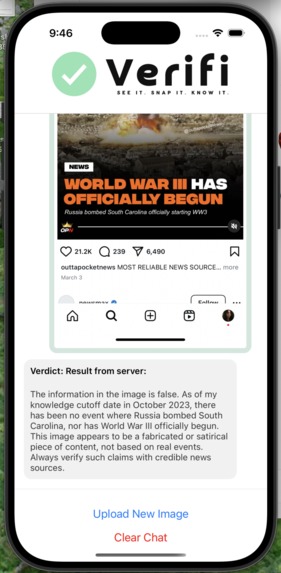
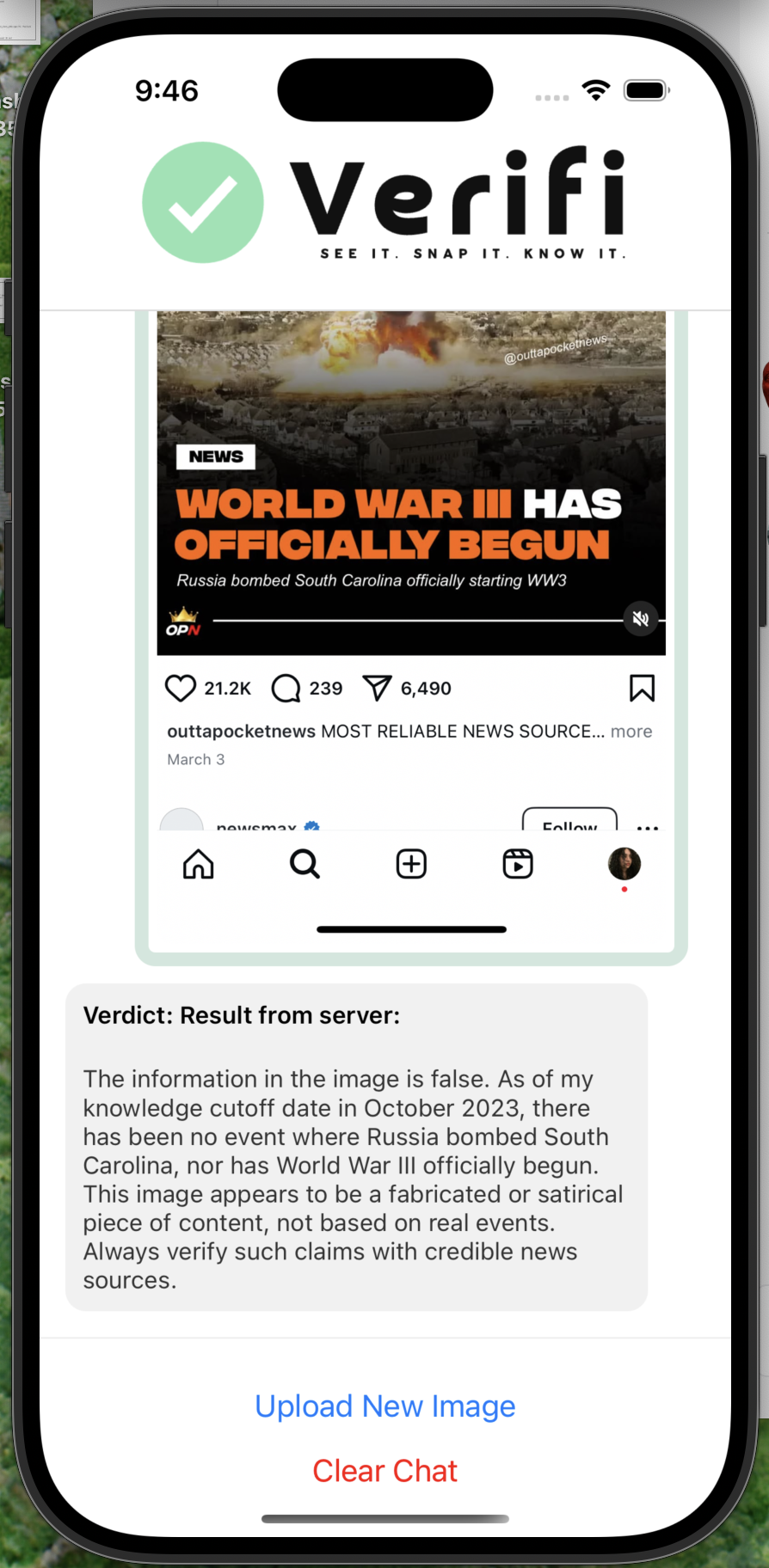
The Reponse given by the App reguarding an uploaded image
-
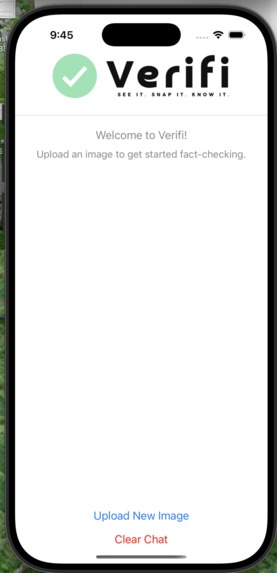
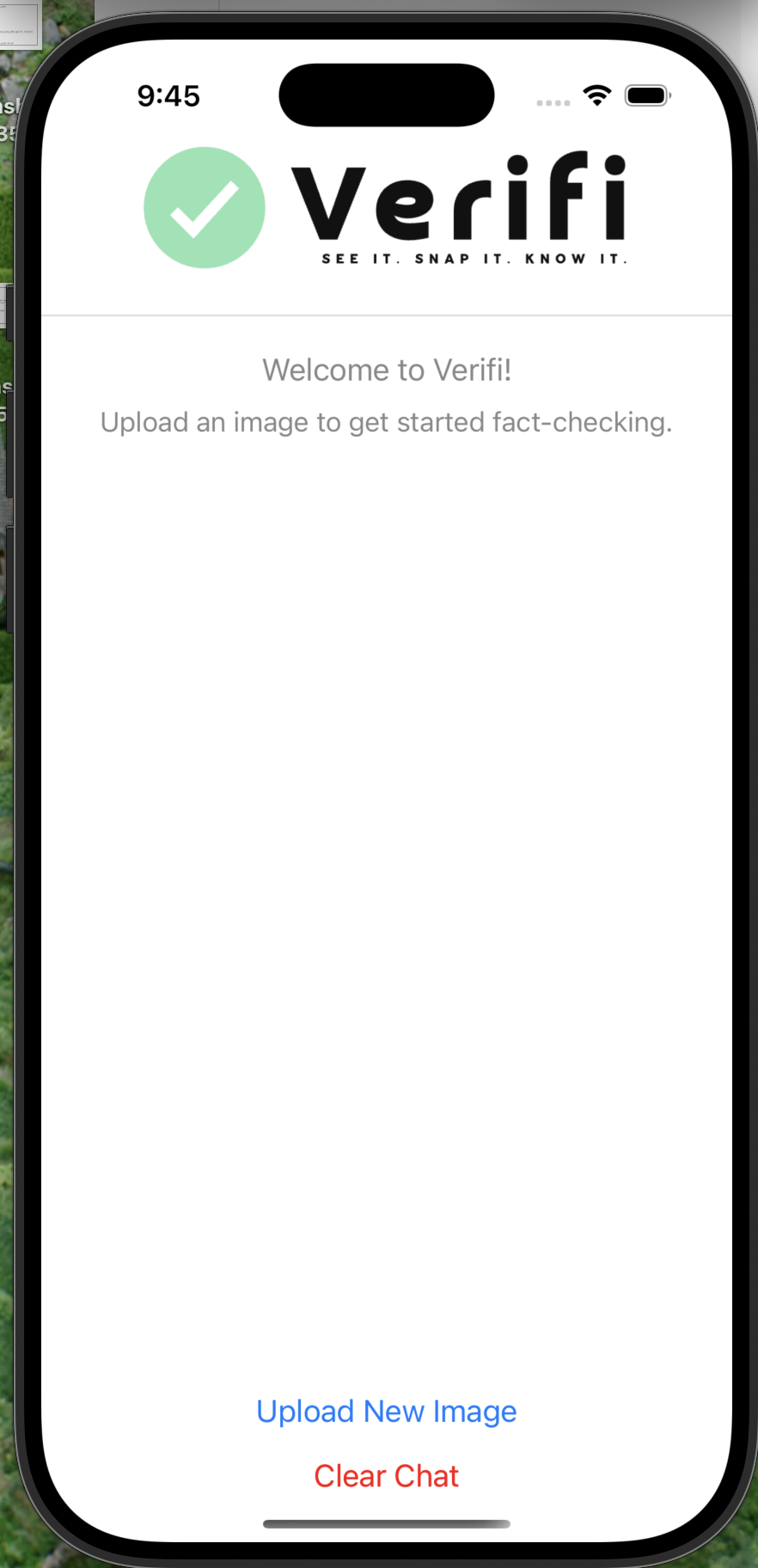
The landing page and main page of the app before uploading an image.
Verifi - AI-Powered Image Fact-Checking App
Inspiration
Misinformation has never been more easily available. As technology progresses, it becomes increasingly difficult to detect false or manipulated content. The rise of deepfakes, doctored images, and misleading visuals on social media has created a pressing need for reliable tools to verify what we see online. This inspired us to create Verifi — an app that empowers users to quickly fact-check images using AI, providing a solution to help navigate the growing problem of misinformation.
What it does
Verifi uses artificial intelligence to analyze images in real time and provide users with a quick, reliable fact-check. Users simply upload an image, and the app cross-references it with trusted sources, identifying whether the image has factual information. Whether it's to verify newsworthy content or assess the authenticity of user-generated images, Verifi helps users make more informed decisions and reduces the risk of spreading false information.
How we built it
To bring Verifi to life, we combined several key technologies:
- Frontend: Developed using Expo, Java Script, React Native, and TypeScript for a smooth, cross-platform mobile experience.
- Backend: We built a simple backend server using Java to host the app and handle API requests. The backend facilitates communication between the front-end, back-end, and OpenAI’s API for real-time fact-checking.
- Image Processing: Integrated AI-driven image recognition that assess the context and integrity of uploaded images.
- API Integration: The app leverages OpenAI's GPT-4 API to process image-related queries and provide fact-checked results.
- Data Validation: Integrated APIs and databases to pull relevant and up-to-date image data for verification.
Challenges we ran into
While building Verifi, we faced several challenges:
- OpenAI API limitations: OpenAI’s API has request rate-limiting and sometimes returns responses that require refinement. We are actively working on ways to enhance the quality of responses to ensure higher accuracy in image fact-checking.
- Accuracy of fact-checking: Ensuring that the AI correctly interprets the context of the images, particularly for ambiguous or rare images that may not match typical patterns.
- API rate-limiting: OpenAI's API limits the number of requests per minute, so we had to optimize the app's requests to avoid hitting these limits and impacting performance.
- User experience: Striking the right balance between accuracy and speed, providing users with quick, actionable results without sacrificing reliability.
Accomplishments that we're proud of
- Real-time image analysis: We achieved sub-5-second processing times for fact-checking images, providing a seamless user experience.
- Successful integration of OpenAI's API: The use of OpenAI's GPT-4 model enabled us to interpret context and generate insightful responses about the authenticity of images.
- User-friendly interface: We developed a clean, intuitive app interface that makes it easy for users to upload images and quickly receive feedback.
What we learned
Throughout the development of Verifi, we gained valuable insights:
- Image processing at scale: We learned how to efficiently handle and process large base64 images in mobile apps without compromising performance.
- AI training and fine-tuning: Understanding the intricacies of AI models, particularly in how they can be adapted to perform tasks like image verification, was a key learning experience.
- Backend optimizations: We explored ways to manage API rate-limiting, serverless computing, and real-time data validation to ensure smooth and reliable app performance.
- User-centric design: We learned the importance of designing with the user in mind, optimizing the app for simplicity and speed while delivering accurate results.
What's next for Verifi
Looking ahead, we have exciting plans to expand Verifi’s capabilities:
- Improving AI responses: We want to enhance the accuracy and quality of OpenAI’s responses, making the app even more reliable for fact-checking images.
- Multi-language support: Adding language options to make the app accessible to a global audience and help users from different regions verify content in their native languages.
- Video verification: Expanding the app’s capabilities to analyze videos and detect deepfakes or manipulated footage.
- Browser extension: Building a Chrome extension to allow users to quickly verify images they come across while browsing the web.


Log in or sign up for Devpost to join the conversation.