

Inspiration
The inspiration for VerifEye stemmed from the pressing need to combat the proliferation of fake news in today's digital landscape. The project aimed to empower users with a tool that could distinguish between credible and unreliable information sources.
What it does
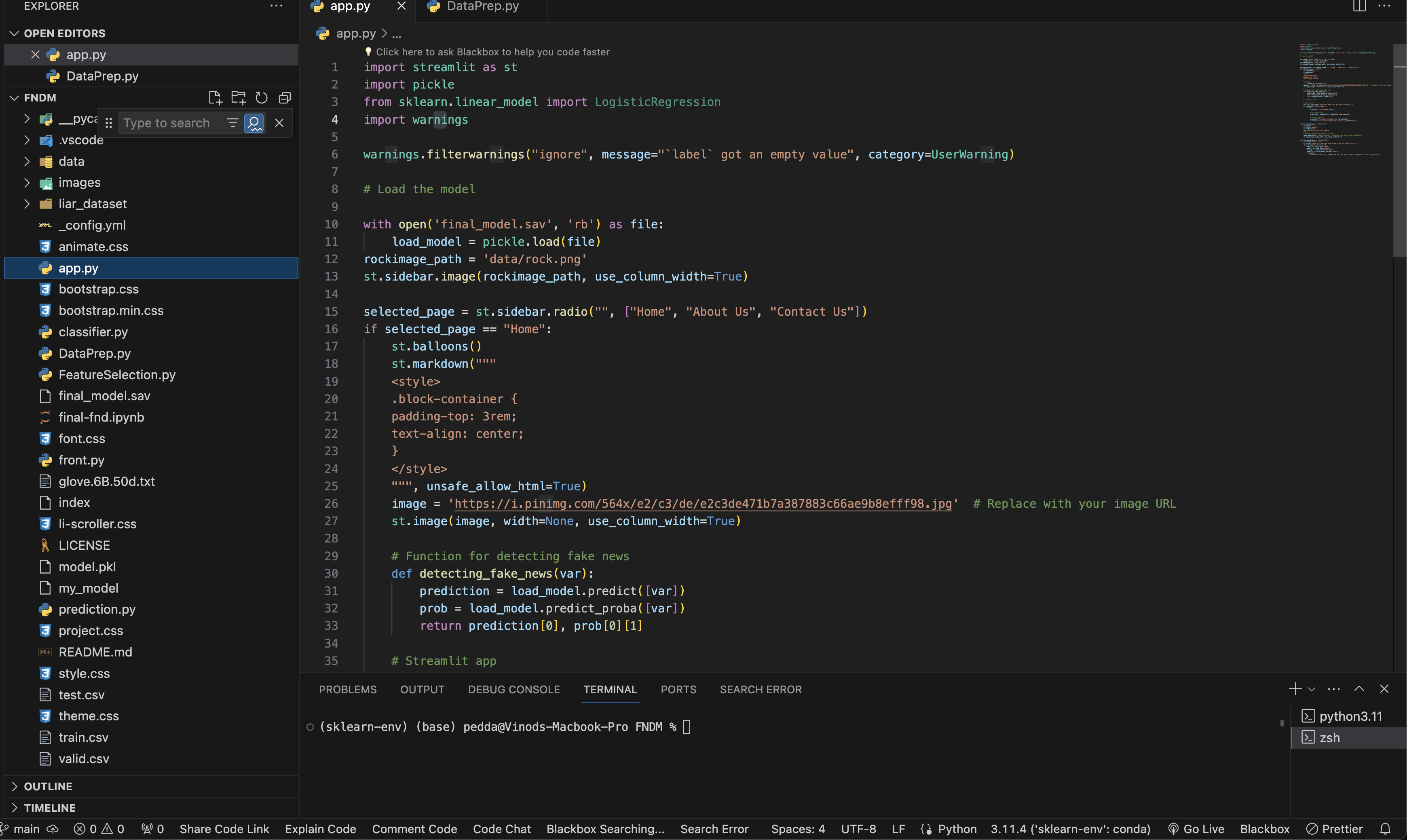
VerifEye is a fake news detection system that utilizes machine learning, natural language processing (NLP), and the Newspaper3k library. It processes news articles, extracting features such as word frequencies, sentiment analysis, and TF-IDF scores to identify potential misinformation.
How we built it
1. Data Collection
We collected a diverse dataset of news articles, encompassing both credible and fake sources. Utilizing the Newspaper3k library, we scraped articles from various news websites to ensure a representative sample for training and testing.
2. Data Preprocessing
Cleaning and preprocessing the data were crucial steps to enhance the model's performance. We handled missing values, removed irrelevant information, and tokenized the text to prepare it for feature extraction.
3. Feature Extraction
NLP techniques were employed to extract relevant features from the text, including word frequencies, sentiment analysis, and TF-IDF scores. These features served as inputs for the machine learning model.
4. Model Training
We experimented with several machine learning algorithms, including Naive Bayes, Support Vector Machines, and neural networks. The models were trained on the labeled dataset, with parameters adjusted to optimize performance.
5. Challenges we ran into
The project posed various challenges, including:
Data Quality: Ensuring the reliability of the labeled dataset was challenging, given the subjective nature of defining "fake news."
Algorithm Selection: Choosing the right algorithm required careful consideration of each model's strengths and weaknesses.
Ethical Concerns: Developing a system to identify and label news as "fake" raised ethical questions. Balancing accuracy with responsible AI usage was an ongoing consideration.
Accomplishments that we're proud of
We are proud to have developed a functional fake news detection system that demonstrates promising results in distinguishing between credible and fake news sources. The iterative process of model refinement and evaluation has yielded a tool that contributes to the fight against misinformation.
What we learned
Throughout the project, we gained valuable insights into machine learning, NLP techniques, and ethical considerations surrounding AI development. The complexities of addressing misinformation in the digital age became more apparent, deepening our understanding of the interdisciplinary nature of this challenge.
What's next for VerifEye
The future of VerifEye involves continuous improvement and expansion. We plan to explore advanced NLP techniques, enhance the model's robustness, and address emerging challenges in the ever-evolving landscape of misinformation. Additionally, we aim to engage with users and communities to gather feedback and iterate on the system's capabilities.
Built With
- machine-learning
- naive-bayes
- natural-language-processing
- python
- python-package-index
- scikit-learn
- seaborn
- streamlit
- support-vector-machine

Log in or sign up for Devpost to join the conversation.