-
-
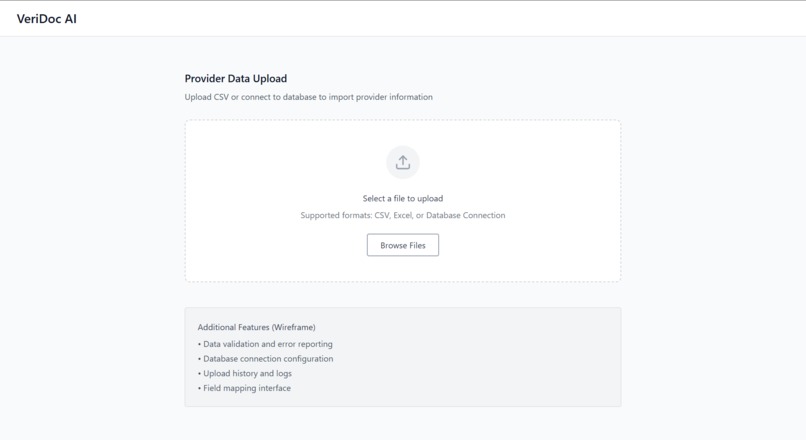
home screen
-
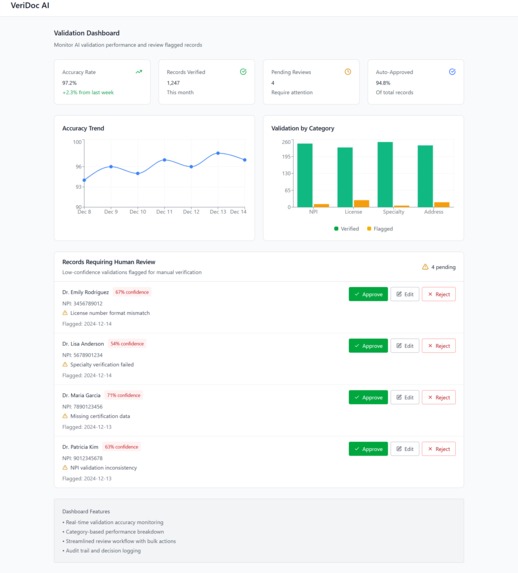
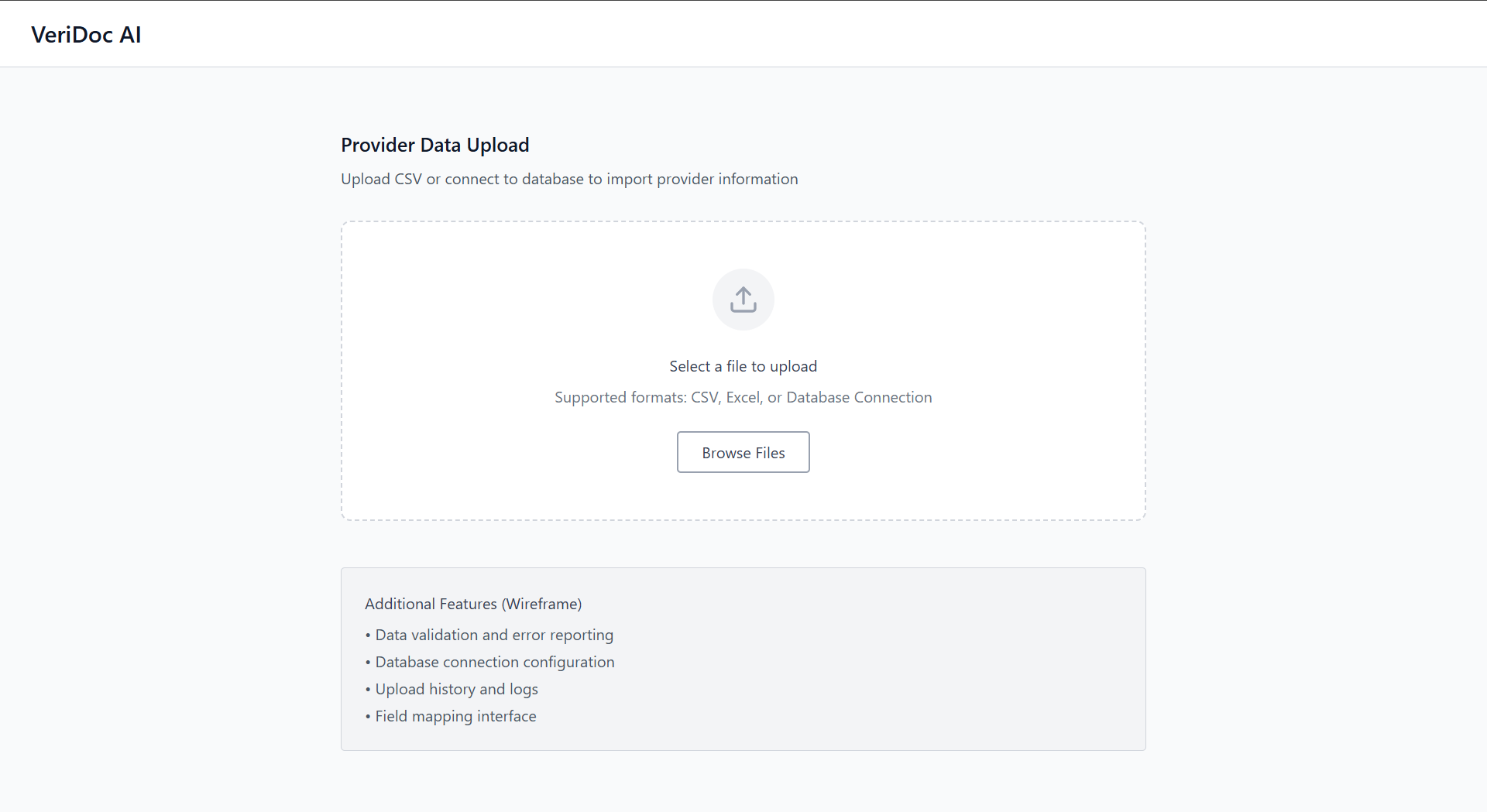
data upload section
-
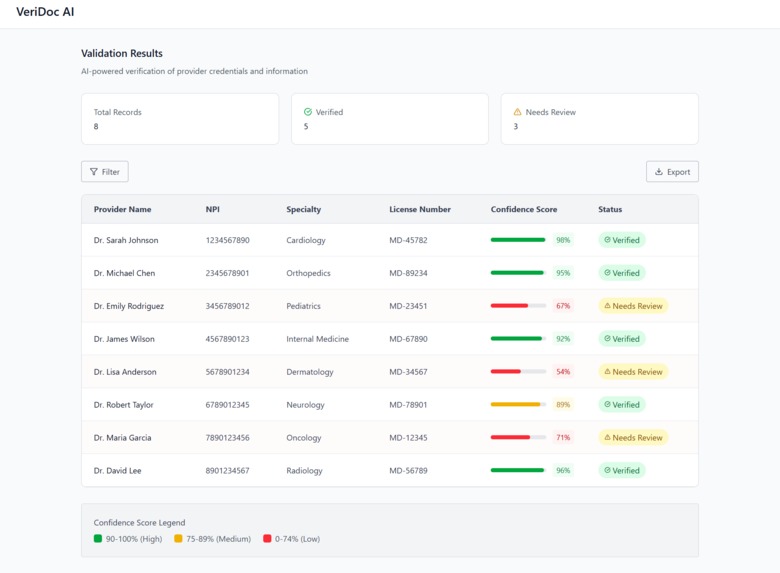
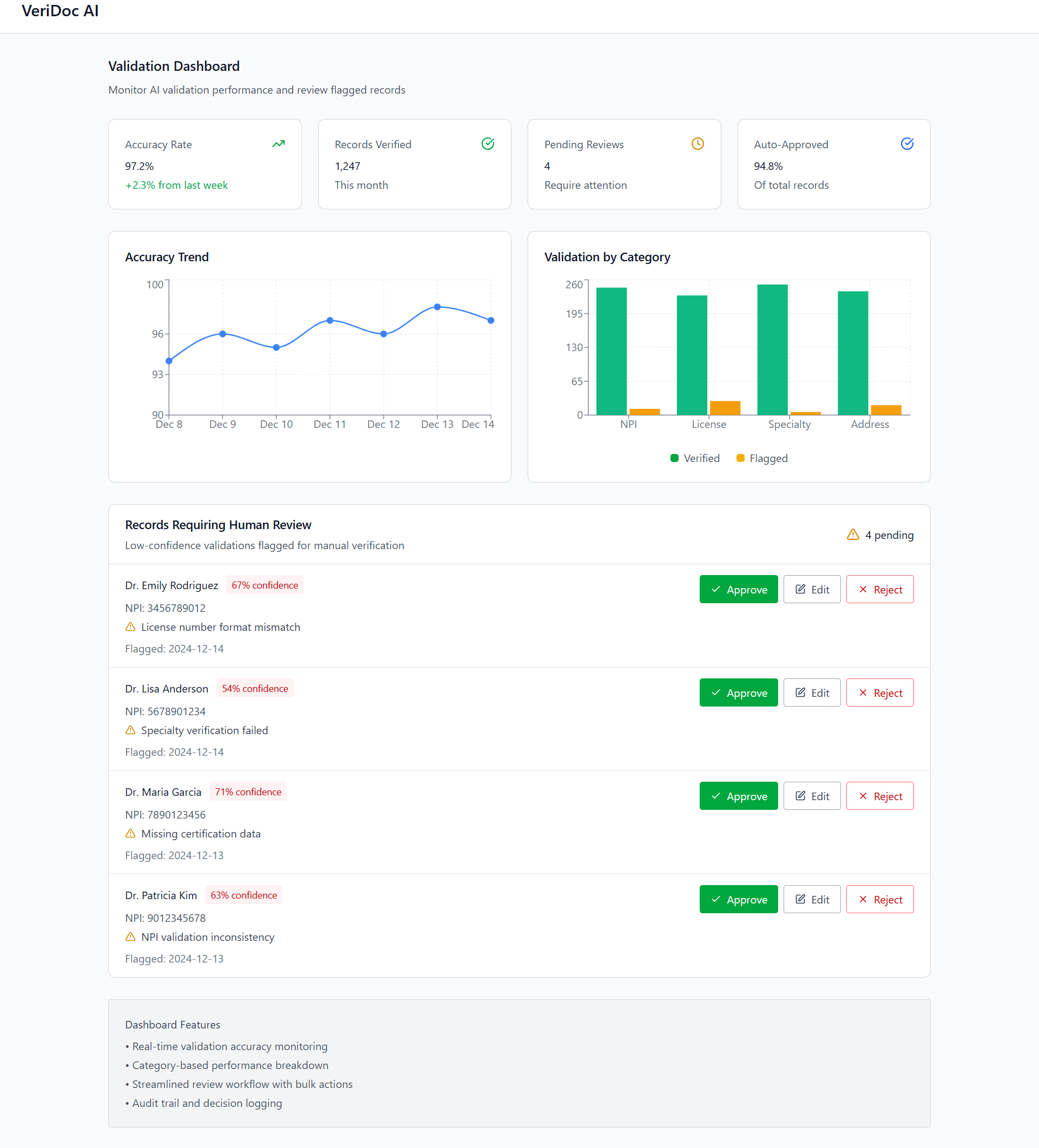
User Dashboard
VeriDoc AI – Intelligent Provider Data Validation System
Inspiration
Healthcare organizations rely on provider directories to help patients find the right doctors, clinics, and hospitals. Unfortunately, these directories often contain outdated or inaccurate information such as incorrect addresses, inactive phone numbers, expired licenses, or duplicate records. Maintaining this data manually is time-consuming, expensive, and prone to human error.
We built VeriDoc AI to solve this problem by leveraging Artificial Intelligence to automate provider data verification, improve directory accuracy, and reduce administrative workload.
What it does
VeriDoc AI is an AI-powered provider data validation platform that automatically verifies healthcare provider information using multiple trusted sources.
The platform can:
- Verify provider details from multiple public and trusted sources
- Detect outdated or inconsistent information
- Identify duplicate provider records
- Generate AI-based confidence scores for every verification
- Explain why a record was flagged using Explainable AI
- Send automated verification emails to providers
- Allow human reviewers to approve uncertain cases
The result is a cleaner, more reliable healthcare provider directory that improves operational efficiency and patient trust.
How we built it
We designed VeriDoc AI as a modular AI-powered web application.
Frontend
- React.js
- Tailwind CSS
Backend
- Python
- FastAPI
AI & NLP
- OpenAI API
- LangChain
- spaCy
Data Processing
- BeautifulSoup
- Selenium
- OCR (Tesseract)
Database
- PostgreSQL
Other Services
- SMTP Email Automation
- CSV Import & Export
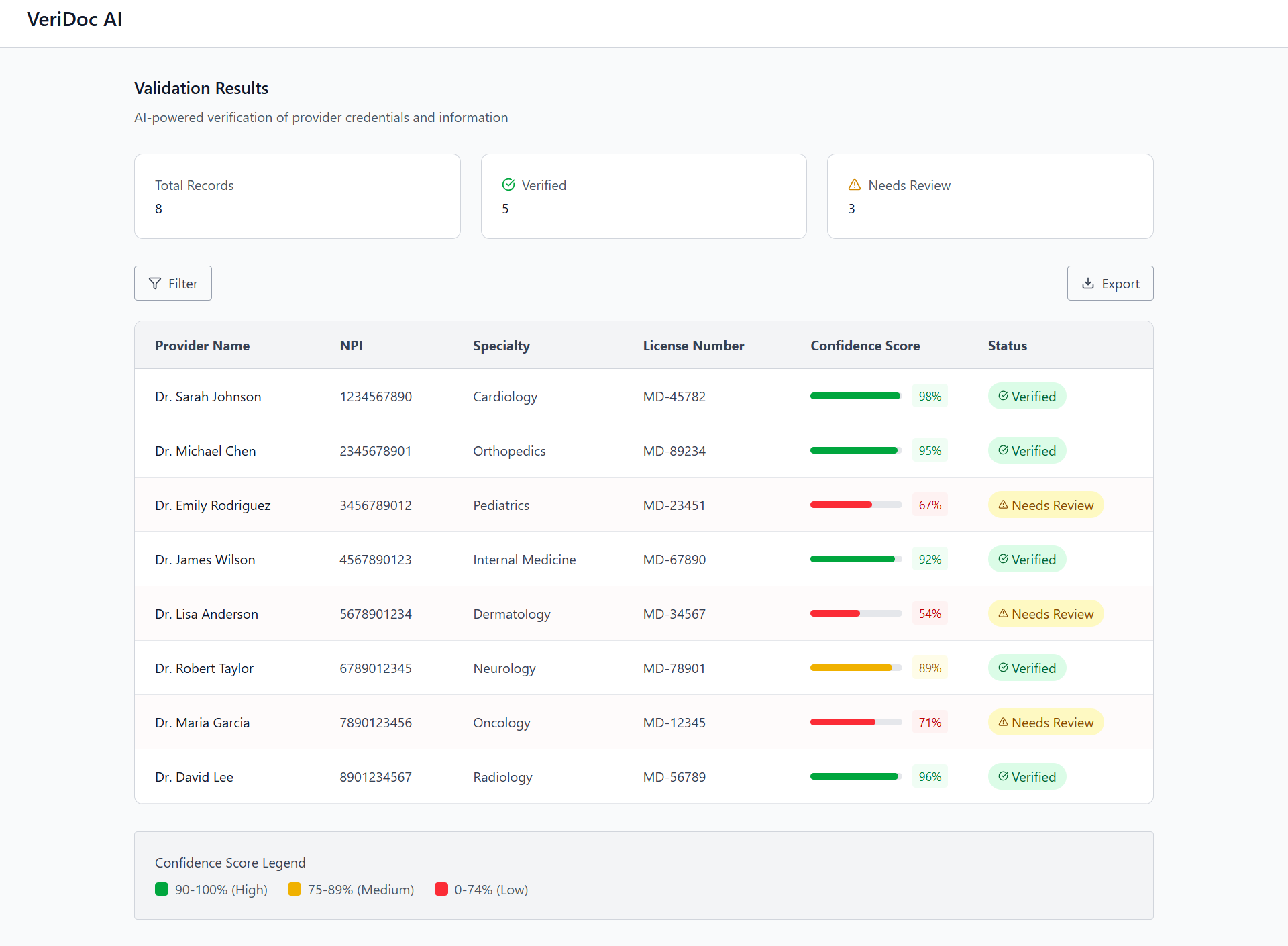
The application follows a pipeline where provider records are uploaded, validated using AI and multiple data sources, assigned a confidence score, and then presented on a dashboard for review.
Challenges we ran into
Building VeriDoc AI came with several challenges:
- Handling inconsistent provider data from multiple sources
- Designing an explainable AI workflow instead of a simple "correct/incorrect" prediction
- Managing duplicate provider records
- Balancing automation with human verification for low-confidence cases
- Creating a scalable architecture that can process large provider datasets efficiently
What we learned
Through this project we learned:
- Building production-ready AI workflows instead of standalone AI models
- Prompt engineering and integrating Large Language Models into real-world applications
- Multi-source data validation techniques
- Explainable AI concepts
- API integration and backend architecture
- Designing AI systems that support human decision-making rather than replacing it
Accomplishments that we're proud of
- Built an end-to-end AI-powered provider validation workflow
- Developed an explainable confidence scoring system
- Reduced the need for manual provider verification
- Created an intuitive dashboard for reviewing flagged records
- Designed a scalable architecture that can be extended to insurance, hospital, and healthcare organizations
What's next for VeriDoc AI
Our future roadmap includes:
- Real-time provider monitoring
- Integration with NPI and government healthcare databases
- Advanced fraud and anomaly detection
- AI-powered document verification
- Voice-assisted provider verification
- Predictive analytics for provider data quality
- Enterprise integrations with hospital and insurance management systems
We envision VeriDoc AI becoming a reliable AI assistant for healthcare organizations, helping maintain accurate provider directories while reducing operational costs and improving patient trust.


Log in or sign up for Devpost to join the conversation.