-
-
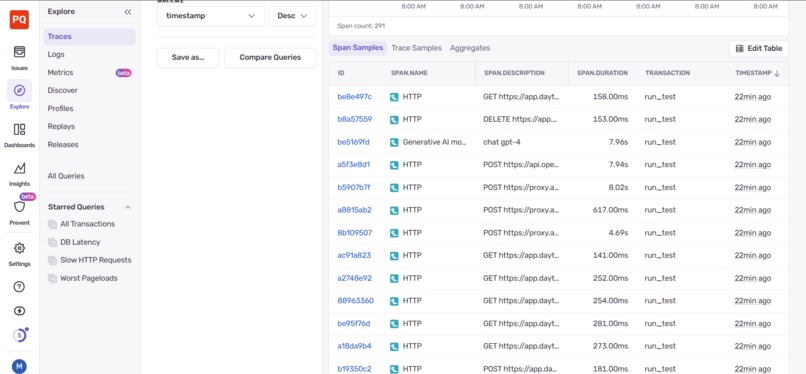
Sentry
-
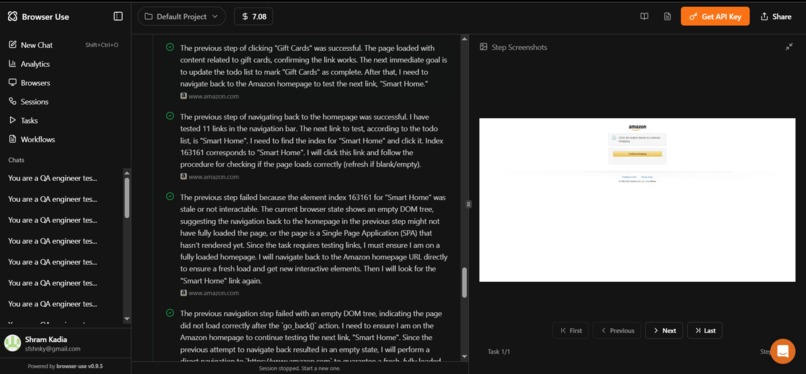
Browser-use
-
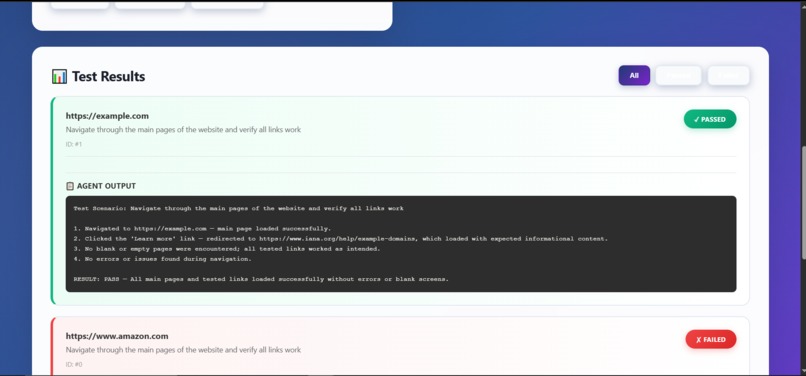
App
-
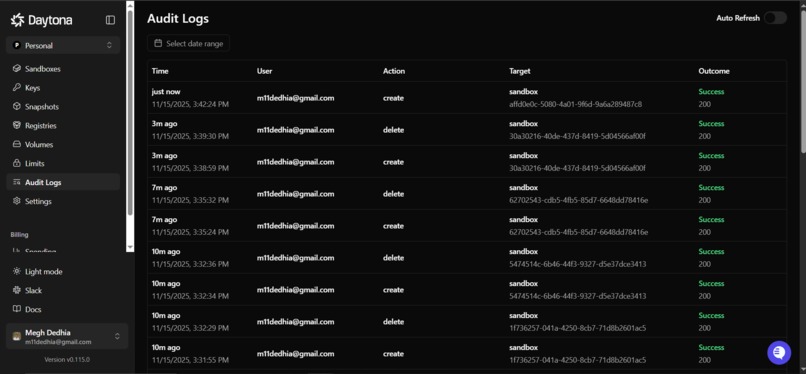
Daytona
Inspiration
Modern software teams ship code faster than ever, but quality assurance remains a bottleneck. Writing and maintaining brittle end-to-end test scripts takes valuable developer time, and these tests often break with even minor UI changes. As products become increasingly AI-driven and dynamic, traditional QA methods struggle to keep up.
We wanted to create a system that brings intelligence, adaptability, and automation to testing. This inspired Veridion, an AI-enabled QA Engineer that acts like a smart teammate, autonomously testing, diagnosing, and explaining application issues.
What it does
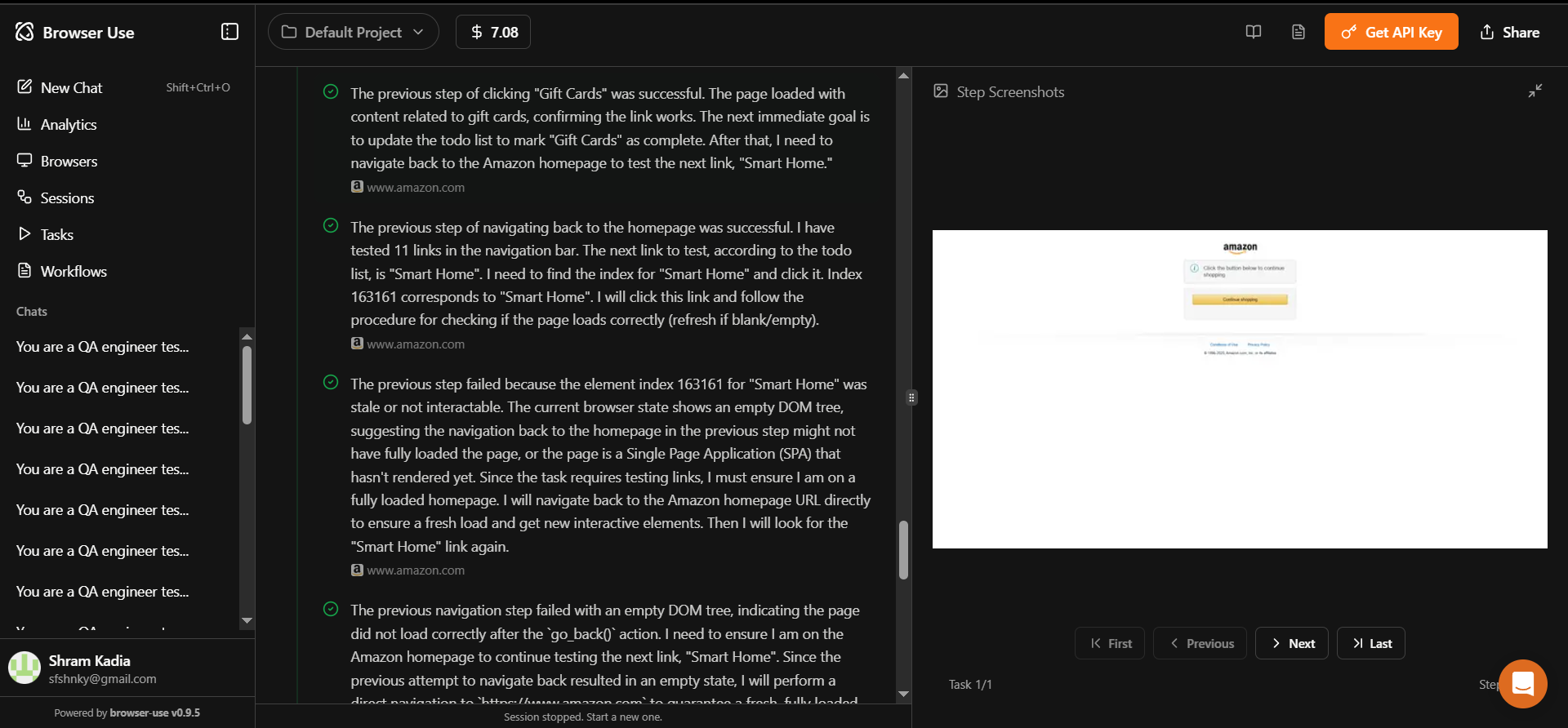
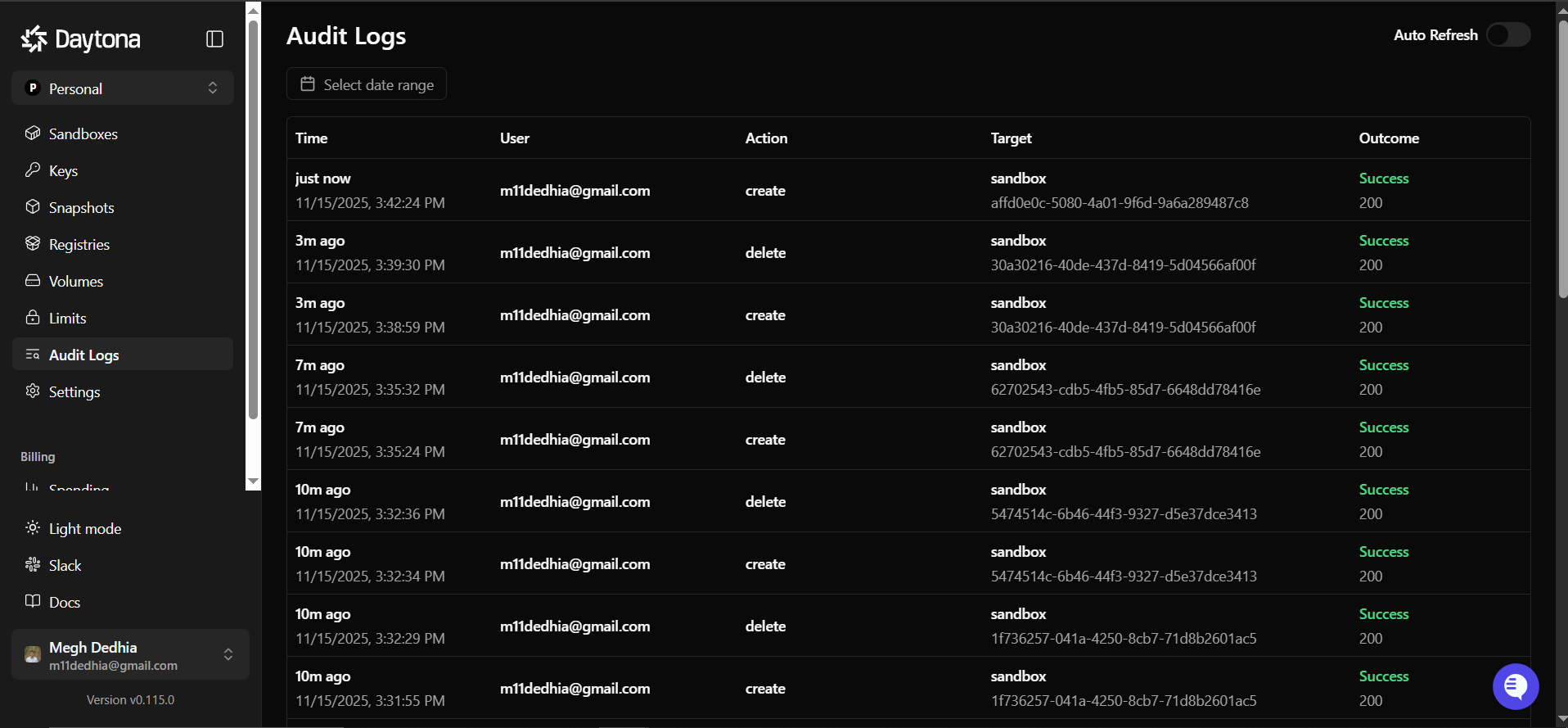
Veridion is an intelligent QA agent that performs real browser-based testing without requiring any pre-written test scripts. Each test run occurs inside a clean Daytona sandbox, where Veridion launches an autonomous Browser Use agent to navigate through a web application as if it were a real user.
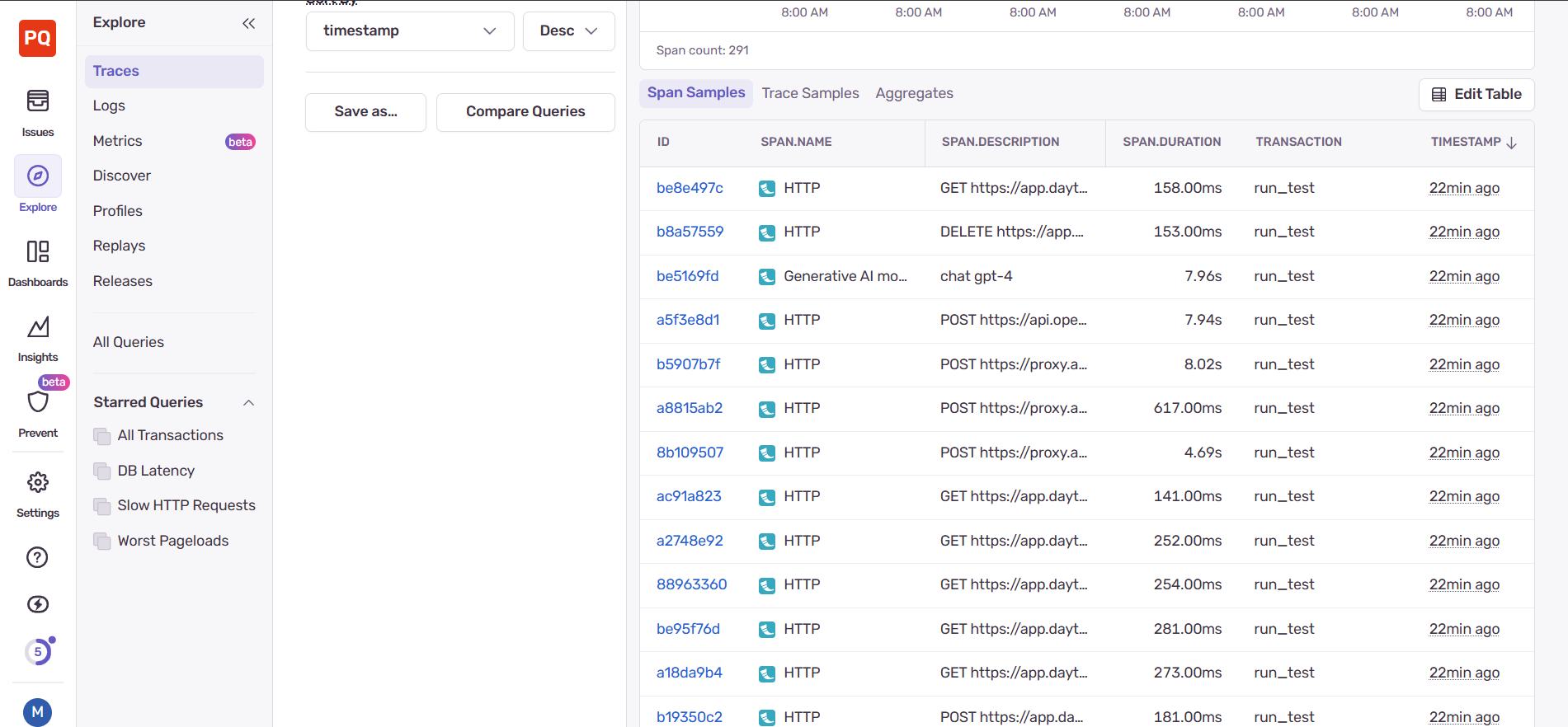
When Veridion encounters an error, it sends detailed reports to Sentry for monitoring and then uses Claude (Anthropic) or GPT-4 to analyze the failure, generate a plain-language root-cause explanation, and suggest potential fixes.
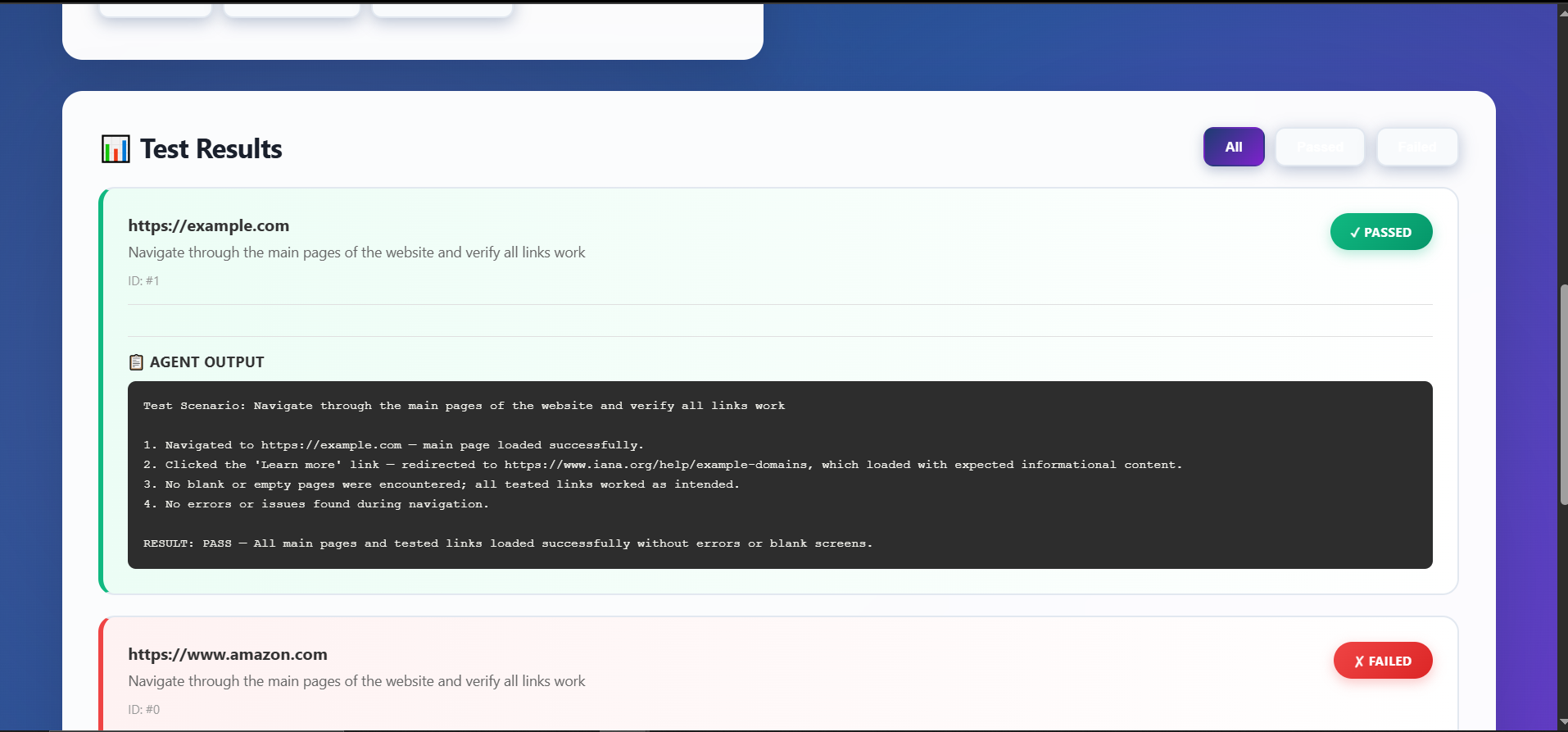
Developers can initiate test runs from a command-line interface or a lightweight web dashboard. Within minutes, Veridion delivers:
Real browser-based end-to-end test execution
Automatic error tracking and logging in Sentry
AI-generated failure analysis and resolution suggestions
Fully reproducible, disposable environments provided by Daytona
How we built it
The system is built primarily in Python.
Daytona provisions isolated and reproducible cloud sandboxes, ensuring consistent testing environments.
Browser Use provides the agentic browser interface, enabling LLM-driven interaction with websites.
Sentry SDK captures exceptions, browser logs, and context during test runs.
Claude (Anthropic) performs the failure analysis and generates human-readable explanations.
Flask powers the optional dashboard for running tests and viewing results.
Galileo is optionally integrated for tracing LLM behavior and evaluating test reasoning.
Each test cycle begins with a daytona up command, which launches a devcontainer containing the Veridion agent. The Browser Use agent runs inside this environment, interacts with the target application, and logs any issues. Upon detecting a failure, Sentry receives the trace, while Claude analyzes the issue and outputs a concise, actionable summary.
Challenges we ran into
Dependency setup: Browser Use depends on the uvx command for launching Playwright browsers. Missing this binary caused environment errors that required adjusting the Daytona container to install and configure it automatically.
Asynchronous orchestration: Running multiple Browser Use sessions concurrently while maintaining error capture and analysis pipelines required careful management of async tasks.
Prompt stability: Ensuring consistent and accurate explanations from LLMs demanded significant prompt tuning to minimize hallucinations.
Integration complexity: Coordinating API calls between Daytona, Sentry, and Claude while maintaining speed and reliability was non-trivial.
These challenges helped us refine Veridion into a stable and extensible platform.
Accomplishments that we're proud of
Built a fully functioning AI-enabled QA pipeline within 24 hours.
Seamlessly integrated Daytona, Sentry, Browser Use, and Anthropic tools into a single coherent system.
Demonstrated reproducible, environment-isolated QA workflows using Daytona’s infrastructure.
Created a foundation for scalable, intelligent QA that can evolve into a commercial product.
What we learned
Daytona is highly effective for creating ephemeral and reproducible environments for testing, eliminating “works on my machine” issues.
Browser Use allows LLMs to interact directly with web applications, which is transformative for automated testing and exploratory QA.
Sentry provides an essential backbone for structured error logging and contextual debugging.
Claude produces accurate and accessible technical analyses of errors, improving developer productivity.
Integrating deterministic tools with LLM-driven reasoning yields the best results in intelligent testing systems.
What's next for Veridion - An AI-enabled QA Engineer
Implementing multi-agent collaboration for distributed, parallelized testing across browsers and devices.
Introducing self-healing test generation, where the system automatically updates or creates new test cases based on previous failures.
Expanding the web dashboard into a full analytics interface with Galileo-powered LLM trace visualization.
Building Veridion Cloud, a QA-as-a-Service platform running entirely on Daytona infrastructure for scalable, on-demand testing.
Integrating Veridion into CI/CD pipelines such as GitHub Actions and GitLab CI, enabling AI-powered QA checks in automated deployments.


Log in or sign up for Devpost to join the conversation.